How To Describe Fishing: Tips For Vivid Writing
Fishing is more than putting bait on a hook and waiting. It is a mix of movement, weather, water, skill, and feeling. To describe fishing well in English, explain what the angler is doing, what the water looks like, what the fish are doing, and how the moment feels.
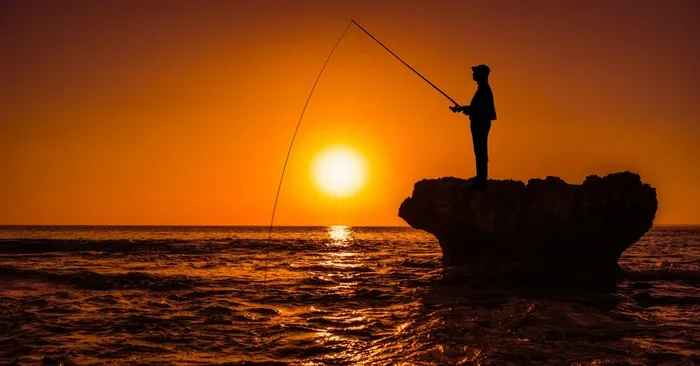
A clear description can be simple: “I stood on the bank at sunrise, cast a small spinner near the reeds, and felt a sharp tug.” A richer version adds detail: “The lake was still, the air was cool, and a bass struck just as the lure passed a fallen branch.” Both sentences help the reader see the scene.
This guide explains how to describe fishing in natural US English. It covers fishing words, useful verbs, gear terms, sensory details, common sentence patterns, fishing styles, species, emotions, and examples for school writing, stories, blogs, social posts, and everyday conversation.
Quick Answer: How Do You Describe Fishing in English?
To describe fishing, explain the setting, the angler’s actions, the gear, the fish, and the result. Use strong verbs such as cast, reel, drift, strike, hook, fight, and land. Add sensory details about the water, wind, light, sounds, and emotions. For example: “At dawn, I cast a soft plastic beside the dock. A bass struck hard, and I carefully reeled it to shore.”
The Main Parts of a Fishing Description
A strong fishing description usually has five parts: place, time, action, fish, and feeling. You do not need all five in every sentence, but using several makes the scene clear.
The place tells readers where the fishing happens. It may be a quiet lake, a rocky river, a busy pier, a wide beach, or a small farm pond. The time gives the scene a mood and may also explain the fishing conditions.
The action shows what the angler does. Fishing descriptions become more lively when they use exact verbs instead of weak phrases such as “did fishing” or “used a rod.”
Describe the Place
Start by naming the type of water. Common choices include:
- Lake
- Pond
- River
- Stream
- Creek
- Reservoir
- Canal
- Bay
- Pier
- Beach
- Marsh
- Inshore flat
- Offshore reef
- Ice-covered lake
Then add a few details. You might describe clear or muddy water, a rocky bottom, tall grass, docks, fallen trees, reeds, waves, or a strong current.
Compare these examples:
- “We went fishing at a lake.”
- “We fished from the north shore of a clear lake, near a patch of lily pads.”
- “We stood on a windy pier while small waves slapped against the pilings.”
The first sentence gives only the basic fact. The next two help readers picture the place.
Describe the Time and Weather
Time and weather often shape the whole fishing experience. Sunrise may bring calm water and soft light. Midday may bring bright sun and slower fish. A storm can make the water rough and the trip unsafe.
Useful time phrases include:
- Before sunrise
- At first light
- Early in the morning
- Around noon
- In the late afternoon
- At dusk
- After dark
- During the first hour of daylight
Useful weather words include:
- Sunny
- Cloudy
- overcast
– Windy - Calm
- Chilly
- Humid
- Hot
- Foggy
- Rainy
- Stormy
- Clear
- Breezy
You can also describe how the weather affects the water:
- “The wind pushed small waves toward the bank.”
- “A cold front had turned the lake gray and choppy.”
- “The calm surface reflected the orange sky.”
- “Light rain tapped on the brim of my hat.”
Describe the Angler’s Actions
Fishing has a clear chain of actions. The angler chooses a spot, prepares the tackle, casts, presents the bait or lure, watches the line, detects a bite, sets the hook, fights the fish, and lands or releases it.
Here are useful verbs:
| Fishing action | Meaning | Example |
|---|---|---|
| Cast | Throw the bait or lure with a rod | “She cast beyond the weed line.” |
| Retrieve | Bring a lure back through the water | “He retrieved the jig slowly.” |
| Drift | Let wind or current move the boat or bait | “We drifted across the flat.” |
| Jig | Lift and drop a lure in short movements | “He jigged near the bottom.” |
| Troll | Pull a lure behind a moving boat | “They trolled along the channel.” |
| Set the hook | Pull the line so the hook catches | “I set the hook when the line jumped.” |
| Reel in | Turn the reel handle to recover line | “She reeled in the fish carefully.” |
| Land | Bring the fish under control and out of the water | “He landed the trout with a net.” |
These verbs are more exact than “fish” alone. “I fished for bass” tells the reader the goal. “I cast a crankbait beside a dock and retrieved it slowly” shows the method.
Describe the Fish and the Result
A fishing description does not need a catch. Many trips include missed bites, quiet hours, or a fish that gets away. Describe what happened honestly.
For a successful catch, you can say:
- “A bluegill took the worm.”
- “The bass struck near the surface.”
- “A trout rose to the dry fly.”
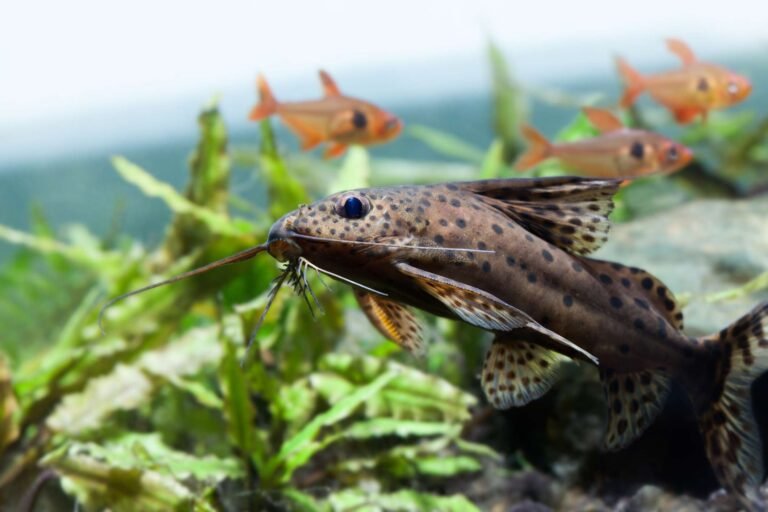
- “The catfish picked up the bait after dark.”
- “The redfish ran toward the grass.”
- “We landed a keeper walleye.”
For an unsuccessful trip, try:
- “I felt two taps but missed both fish.”
- “The fish followed the lure but did not strike.”
- “The hook pulled free beside the boat.”
- “We saw baitfish breaking the surface but caught nothing.”
- “The wind made it hard to feel the lure.”
Words such as keeper, short fish, and legal-size fish can have specific meanings under local rules. A keeper is a fish that meets the legal size and possession rules. Always check the rules before using that term.
Add Feeling and Personal Meaning
Fishing descriptions often include emotion. The feeling may come from the peaceful setting, the excitement of a strike, or the patience needed during a slow day.
Useful feeling words include:
- Peaceful
- Relaxing
- Exciting
- Tense
- Frustrating
- Rewarding
- Hopeful
- Calm
- Nervous
- Proud
- Surprised
- Focused
For example:
- “The quiet morning helped me slow down.”
- “My hands shook when the fish made its first run.”
- “Although we caught nothing, the day felt worthwhile.”
- “The long wait made the sudden strike even more exciting.”
A good description balances action and reflection. Too much action can feel rushed. Too much emotion can feel vague. Show what happened, then explain why it mattered.
Fishing Vocabulary You Need in English
The right vocabulary makes a fishing description sound natural. Start with basic words, then add terms for tackle, technique, fish behavior, and water conditions.
Fishing language can change by region and style. A bass angler, fly fisher, surf angler, and ice angler may use different words for similar actions. When a term may confuse a new reader, define it the first time you use it.
Rod, Reel, and Line Terms
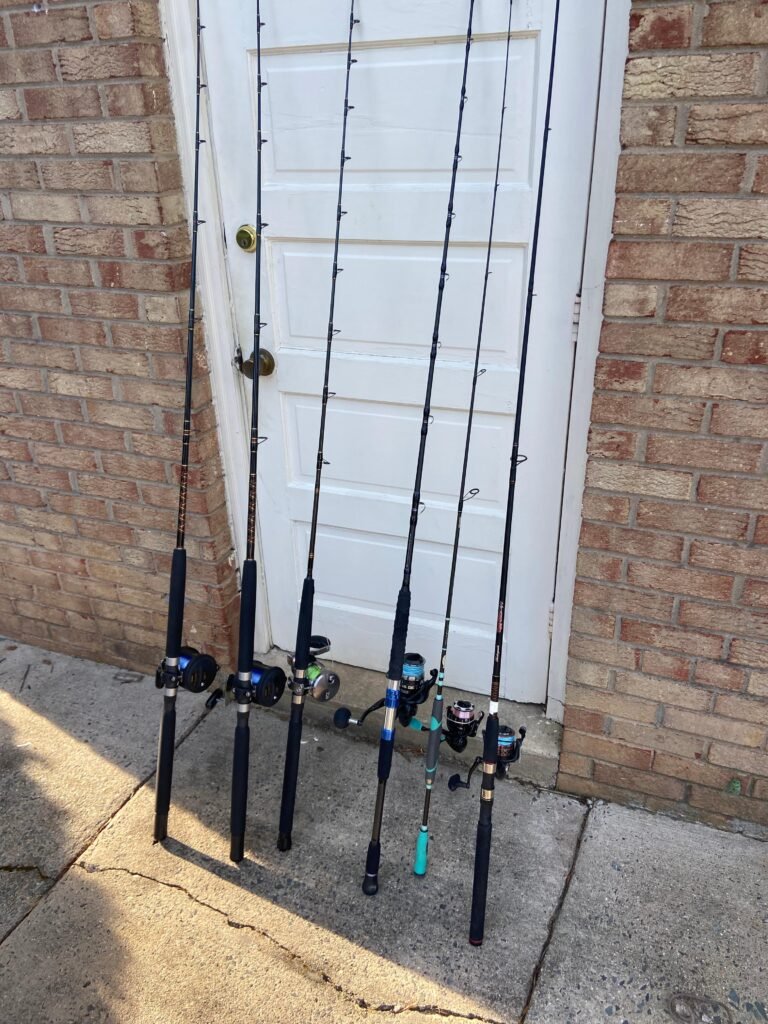
A fishing rod is the flexible pole used to cast and control line. A reel holds the line and helps the angler cast and retrieve it. The line connects the reel to the hook or lure.
A spinning reel hangs below the rod and is often easy for beginners. A baitcaster sits above the rod and gives skilled anglers strong control, but it can create backlash, which is a tangled loop of line caused by a spool spinning faster than the lure.
A spincast combo has a closed reel cover and a push-button cast. It is common for beginners and children because it is simple to operate. A fly rod uses a heavier fly line to cast a light artificial fly.
Rod terms also matter:
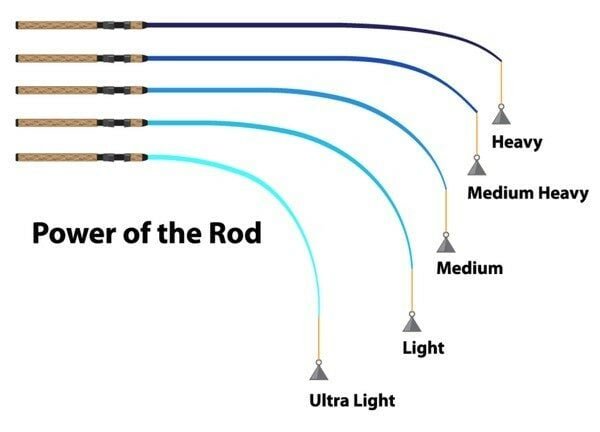
- Power means how much force it takes to bend the rod. Light power suits small fish. Medium and medium-heavy power suit many bass, walleye, and general freshwater setups.
- Action means where the rod bends. Fast action bends near the tip. Moderate action bends farther down the blank.
- Line test means the rated strength of fishing line, such as 6-pound or 20-pound test.
- Drag is the reel system that lets line leave under pressure. It helps protect light line during a strong run.
| Term | Simple meaning | Example sentence |
|---|---|---|
| Spinning reel | An open-face reel below the rod | “The beginner used a spinning reel.” |
| Baitcaster | A reel mounted above the rod | “He used a baitcaster for accurate casts.” |
| Fly rod | A rod made for casting fly line | “She lifted the fly rod over the river.” |
| Rod power | The force needed to bend a rod | “Medium power fits many bass lures.” |
| Rod action | The point where the rod bends | “Fast action gives a quick hook set.” |
| Drag | A reel setting that controls line release | “I loosened the drag during the fish’s run.” |
These terms help you explain not just what gear an angler owns, but how that gear behaves. For example, “a 7-foot medium-power, fast-action spinning rod” gives a much clearer picture than “a good rod.”
Line, Leader, and Terminal Tackle
Terminal tackle means the small items tied to the end of the line. It includes hooks, sinkers, bobbers, swivels, snaps, and leaders.
A leader is a short section between the main line and the hook or lure. Anglers use fluorocarbon leaders for low visibility and abrasion resistance, or wire leaders when sharp teeth may cut normal line.
The three common line types are:
- Monofilament: Stretchy, affordable, and easy to handle.
- Fluorocarbon: Low visibility underwater and more resistant to scraping.
- Braided line: Thin for its strength, with little stretch and high sensitivity.
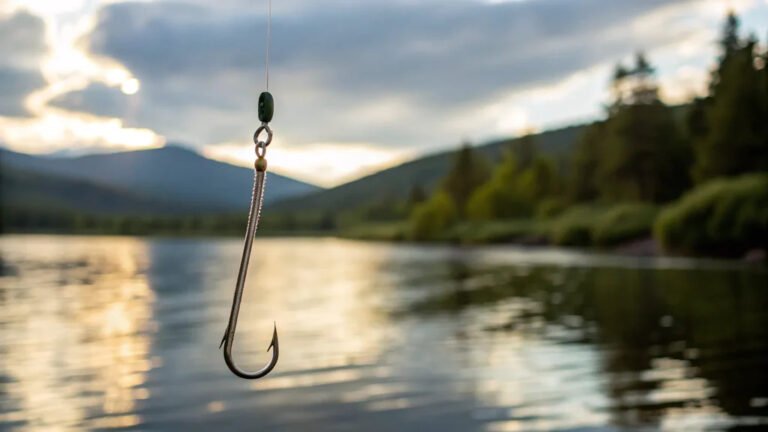
A hook holds bait or catches a fish that strikes a lure. A sinker adds weight. A bobber floats and can signal a bite. A swivel helps reduce line twist.
Example sentences:
- “I tied a small hook to a 6-pound monofilament leader.”
- “She added a split shot to keep the bait near the bottom.”
- “The bobber dipped twice before disappearing.”
- “He used braided line with a fluorocarbon leader.”
Do not use technical words only to sound advanced. Use them when they help the reader understand the setup or action.
Bait, Lures, and Presentations
Bait is a natural food or prepared substance used to attract fish. Common bait includes worms, minnows, shrimp, crayfish, cut bait, and dough bait.
A lure is an artificial bait. It may look or move like a small fish, insect, crayfish, or other prey. A presentation is the way the bait or lure is shown to the fish.
Common lures include:
- Soft plastics
- Crankbaits
- Jigs
- Spinnerbaits
- Spoons
- Topwater plugs
- Flies
- Swimbaits
You can describe a lure by its color, size, shape, movement, or depth:
- “I worked a green pumpkin worm slowly along the bottom.”
- “He burned a silver spinnerbait beside the grass.”
- “She paused the jerkbait near a submerged log.”
- “The fly landed softly on the surface.”
The verb worked is common in fishing. It means moving a lure in a chosen way. You can replace it with a more exact verb when possible, such as twitching, dragging, hopping, swimming, or burning.
How to Describe Different Fishing Styles
Fishing looks different in each setting. The best words for kayak fishing may not fit ice fishing or surf fishing. Mention the water type, the angler’s position, and the main method.
Freshwater Fishing
Freshwater fishing takes place in lakes, ponds, rivers, streams, and reservoirs. Common targets include bass, trout, catfish, panfish, and walleye.
Examples:
- “We fished a clear mountain stream for trout.”
- “I cast a small jig around the dock for crappie.”
- “He soaked cut bait on the muddy river bottom for catfish.”
- “We searched the weed edge for largemouth bass.”
Freshwater descriptions often focus on cover. Cover means objects where fish may hide, such as weeds, rocks, docks, brush, logs, or lily pads. Structure means the shape of the bottom, such as a drop-off, point, channel, hump, or ledge.
Saltwater and Surf Fishing
Saltwater fishing includes shore fishing, pier fishing, inshore fishing, kayak fishing, and offshore trips. Common targets include redfish, striped bass, flounder, snapper, tarpon, and many other species.
Surf fishing means casting from a beach into breaking waves. Describe the beach, tide, wind, current, and wave action.
Examples:
- “At low light, she cast a heavy spoon beyond the first sandbar.”
- “The surf was rough, so he used a longer rod and a pyramid sinker.”
- “We fished the grass flat on a rising tide.”
- “A redfish pulled hard toward the mangroves.”
Saltwater gear needs careful cleaning. Salt can damage metal guides, reels, hooks, pliers, and other tackle. If you describe a saltwater trip, mention rinsing and drying gear when that detail matters.
Fly Fishing
Fly fishing uses a fly rod, fly line, leader, and artificial fly. The fly may imitate an insect, baitfish, crayfish, or another food source.
Useful fly-fishing verbs include:
- Cast
- Mend
- Drift
- Float
- Rise
- Strike
- Set
- Play
- Release
Mending means moving the fly line on the water to improve the fly’s drift. A drift is the way the fly moves with the current.
Examples:
- “The dry fly drifted under the overhanging branches.”
- “A trout rose through the film and took the fly.”
- “She mended the line to keep the fly moving naturally.”
- “He played the fish on light tippet before releasing it.”
Ice Fishing
Ice fishing takes place through a hole cut or drilled in safe ice. Anglers may use short ice fishing rods, jigs, live bait, sonar, shelters, and tip-ups.
Examples:
- “We lowered a small jig into 18 feet of clear water.”
- “The tip-up flag sprang up, and my brother hurried across the ice.”
- “A cold wind swept across the lake as we watched the electronics.”
- “The bluegill bit lightly, so I watched the line for small movements.”
Ice fishing descriptions must include safety when relevant. Ice thickness can vary across one lake, especially near springs, inlets, outlets, weeds, and moving water.
⚠️ Safety Warning: Never assume ice is safe because other people are nearby. Check local ice reports, measure ice as you move, wear proper flotation and cold-weather gear, avoid moving water, and take an ice-safety course when possible. Tell someone your plan and expected return time.
Kayak, Shore, Pier, and Boat Fishing
The angler’s position changes the description. A kayak can reach shallow flats and narrow coves, but it has less space and stability than a boat. Shore and pier anglers may have limited casting angles. A boat can cover more water but requires more equipment and safety planning.
| Fishing setting | Details to describe | Gear or safety point |
|---|---|---|
| Shore fishing | Bank, rocks, weeds, access, current | Wear sturdy shoes and watch footing |
| Pier fishing | Pilings, tide, depth, crowd, wind | Use a landing net and secure hooks |
| Kayak fishing | Balance, paddle, current, launch point | Wear a US Coast Guard–approved PFD |
| Boat fishing | Route, motor, depth, weather, structure | Check fuel, weather, and safety gear |
| Surf fishing | Waves, sandbars, tide, wind | Avoid unsafe water and watch wave sets |
The setting also affects the verbs. A shore angler may walk the bank. A kayak angler may paddle into a cove. A boat angler may run to a point or drift across a flat.
How to Describe a Fishing Trip Step by Step
A trip description is easiest to follow when it moves in time. Start before the first cast, build toward the key moment, and end with the result or lesson.
1. Set the Scene
Begin with a time, place, and condition.
Examples:
- “Before sunrise, we launched at a quiet reservoir.”
- “On a warm Saturday afternoon, I walked to the pond behind the park.”
- “The river ran high after two days of rain.”
This opening gives the reader a frame. It also avoids a weak start such as “Fishing is fun.”
2. Explain the Setup
Tell readers what the angler prepared. Mention the rod, reel, line, bait, lure, hook, sinker, or bobber when those details support the story.
Examples:
- “I paired a 6-foot-6 medium spinning rod with 8-pound monofilament.”
- “She threaded a worm onto a size 8 hook and added a small bobber.”
- “He tied a fluorocarbon leader to braided line and clipped on a shallow crankbait.”
For a beginner audience, explain terms. For an experienced audience, exact details may be enough.
3. Describe the First Cast
The first cast can show skill, weather, and strategy.
Useful phrases include:
- “I cast upstream and let the bait drift down.”
- “She skipped the lure beneath the dock.”
- “He sent the bait past the drop-off.”
- “The fly landed beside a fallen branch.”
- “We cast into the wind and let the lure sink.”
You can describe distance with words such as short, long, close, far, across, and just beyond. Do not invent exact distance unless you know it.
4. Explain the Retrieve or Drift
The retrieve tells readers how the lure moved. Use simple, direct language:
- “I reeled slowly.”
- “She lifted the jig and let it fall.”
- “He paused the crankbait beside the weeds.”
- “We drifted with the current.”
- “I kept the bait near the bottom.”
- “She walked the topwater lure across the surface.”
The phrase near the bottom is often better than a technical depth if the exact depth is unknown.
5. Build Tension Before the Bite
A bite feels more exciting when the description shows small signs first.
Examples:
- “The line went tight for a second, then went slack.”
- “A swirl appeared beside the lure.”
- “The bobber trembled.”
- “The rod tip dipped.”
- “Something bumped the bait near the rocks.”
- “The line moved sideways.”
These details let the reader sense the moment before the strike.
6. Describe the Strike and Hook Set
A strike is the moment a fish attacks or takes the bait. The angler may then set the hook by pulling the rod or turning the reel at the right time.
Examples:
- “The bass struck with a hard jolt.”
- “The bobber vanished, and I lifted the rod.”
- “The trout sipped the fly from the surface.”
- “The line jumped, so she set the hook.”
- “The fish grabbed the bait and ran toward deeper water.”
Avoid saying that every hit becomes a catch. A fish can miss, drop the bait, or pull the hook free.
7. Describe the Fight
The fight is the struggle between the angler and the fish. Explain the fish’s movement and the angler’s response.
Useful verbs include:
- Run
- Pull
- Surge
- Dive
- Shake
- Roll
- Jump
- Turn
- Strip line
- Circle
- Head for cover
Examples:
- “The fish ran toward the reeds.”
- “It shook its head beside the boat.”
- “The trout made three short runs.”
- “I kept the rod tip high and guided the fish away from the rocks.”
- “The catfish stayed deep and pulled steadily.”
Do not claim that rod angle or drag settings always guarantee control. Conditions, hook placement, line strength, and fish size all matter.
8. Describe Landing, Release, or Loss
Use land when the angler brings the fish under control. A landing net can help protect the fish and reduce handling time.
Examples:
- “She guided the bass into the net.”
- “He lifted the small panfish carefully.”
- “We took one quick photo and released the trout.”
- “The fish shook free beside the boat.”
- “The hook pulled out just before the landing net reached it.”
For catch and release, describe good care:
- Wet your hands first.
- Support the fish’s body.
- Keep it out of water for as little time as possible.
- Remove the hook with pliers.
- Revive the fish in the water when needed.
- Release it gently.
🌿 Conservation Note: Follow local rules for size limits, bag limits, seasons, protected species, bait, hooks, and tackle. Check your state wildlife agency or local fisheries office before fishing. Dispose of old fishing line properly because loose line can harm birds, turtles, and other wildlife.
Strong Verbs Make Fishing Writing More Vivid
The verb fish is useful, but it does not show much action. Strong verbs help readers see each movement.
| Weak wording | Stronger wording | Why it works |
|---|---|---|
| “He did fishing.” | “He cast from the bank.” | Shows the action |
| “She used the lure.” | “She twitched the lure beside the weeds.” | Shows movement and place |
| “The fish came.” | “The bass struck near the dock.” | Shows the bite |
| “He got the fish.” | “He landed the trout in a net.” | Shows the result |
| “The fish fought.” | “The fish dove and stripped line.” | Shows how it fought |
| “They went fishing.” | “They drifted across the flat at dawn.” | Shows the trip |
Choose verbs that match the action. Do not use smashed if the fish only gave a light tap. Accurate language makes a description sound more trustworthy.
Action Verbs for Casting and Lure Control
Use these words when describing movement:
- Cast
- Pitch
- Flip
- Skip
- Lob
- Swing
- Drift
- Jig
- Hop
- Drag
- Twitch
- Pause
- Retrieve
- Burn
- Crawl
- Swim
- Drop
- Lift
Examples:
- “I pitched the jig beside the grass.”
- “She skipped the soft plastic under the dock.”
- “He dragged the bait across the rocky bottom.”
- “We burned the spinnerbait through shallow water.”
Verbs for Fish Behavior
Fish can:
- Strike
- Bite
- Tap
- Follow
- Chase
- Rise
- Jump
- Roll
- Splash
- Swirl
- Dive
- Run
- Turn
- Shake
- Spit the hook
- Throw the hook
“Spit the hook” is an informal phrase. It means the fish shook free or caused the hook to come out.
Verbs for the Angler’s Response
The angler may:
- Set the hook
- Keep tension
- Loosen the drag
- Tighten the drag
- Guide the fish
- Steer it away from cover
- Reach for the net
- Measure the fish
- Photograph the fish
- Release the fish
These verbs help create a clear chain of cause and effect.
How to Use Sensory Details in Fishing Writing
Sensory details make a fishing scene feel real. Use sight, sound, touch, smell, and temperature. Two or three strong details are often enough.
Sight
Describe:
- Silver flashes under the surface
- Green weeds swaying in the current
- A red bobber against dark water
- A bent rod
- A line cutting through the surface
- Birds diving over baitfish
- A fish’s spotted back
Example: “The line cut a thin V across the calm surface.”
Sound
Fishing sounds may include:
- Water tapping against a boat
- A reel clicking
- Waves breaking on the beach
- A drag singing
- Insects buzzing
- A lure splashing down
- A fish rolling near the bank
Example: “The reel clicked as the fish took line.”
Touch
Touch is useful during the bite and fight:
- A sharp tap
- A heavy pull
- A soft take
- A vibrating lure
- A rough fish’s scales
- A wet, cold handle
- A rod bending under pressure
Example: “The bite felt like a small stone hitting the line.”
Smell and Temperature
Fishing places have clear smells:
- Wet leaves
- Mud
- Salt air
- Fish
- Cut bait
- Fresh rain
- Pine trees
- Boat fuel
You can describe temperature with simple phrases:
- “The morning air felt cold on my hands.”
- “Heat rose from the aluminum deck.”
- “A damp breeze came off the river.”
Avoid adding many details that do not support the scene. A short description can be stronger than a long list.
Fishing Words for Common Species
The target species affects the gear, method, and language. Use species-specific details only when you know they are accurate.
| Species | Common description words | Typical setting or method |
|---|---|---|
| Bass | Aggressive strike, jump, cover, weeds, docks | Soft plastics, crankbaits, jigs |
| Trout | Rise, sip, current, riffle, spotted, delicate | Flies, spinners, small bait |
| Catfish | Heavy pull, deep, bottom, whiskers, night | Cut bait, worms, stink bait |
| Panfish | Light bite, small, schooling, bobber | Worms, small jigs, crickets |
| Walleye | Low light, deep, rocky, slow retrieve | Jigs, live bait, crankbaits |
| Redfish | Copper sides, shallow flat, powerful run | Soft plastics, shrimp, spoons |
Species names should be specific when possible. “Fish” is fine when the species is unknown. Do not guess a species from a quick glimpse.
Bass Fishing Descriptions
Bass fishing often includes cover and active lure work:
- “I skipped a green soft plastic under the dock.”
- “The bass followed the spinnerbait out of the grass.”
- “A largemouth exploded on the topwater lure.”
- “The fish buried itself in the weeds.”
Bass can jump, but not every bass does. Describe what you actually saw.
Trout Fishing Descriptions
Trout descriptions often focus on current, clear water, and careful presentation:
- “The trout rose through the current and took the dry fly.”
- “I drifted a small spinner past the boulders.”
- “The fish flashed beneath the surface before turning away.”
Catfish Fishing Descriptions
Catfish trips may involve waiting, bottom fishing, and strong runs:
- “We cast cut bait into a deep bend and waited.”
- “The rod tip bounced in the dark.”
- “The catfish pulled hard toward the channel.”
Panfish Descriptions
Panfish include bluegill, crappie, perch, and related species. They are often good for children and new anglers because a bobber gives a clear visual signal.
- “The bobber slid under beside the reeds.”
- “A bluegill tugged at the worm.”
- “We caught small crappie near the brush pile.”
Fishing Adjectives: How to Describe Size, Speed, and Conditions
Adjectives add detail, but they should serve a clear purpose. Instead of using many general words, choose one exact word.
Size
Use:
- Small
- Hand-sized
- Long
- Heavy
- Thick-bodied
- Slender
- Keeper-sized
- Trophy-sized
Be careful with informal words such as monster or giant. They show excitement, but they do not give a reliable size.
Speed and Force
Use:
- Slow
- Fast
- Sudden
- Steady
- Powerful
- Gentle
- Violent
- Subtle
- Strong
- Relentless
Examples:
- “The bite was subtle.”
- “The fish made a sudden run.”
- “The current pushed the bait downstream at a steady pace.”
Water Conditions
Use:
- Clear
- Stained
- Muddy
- Deep
- Shallow
- Cold
- Warm
- Still
- Choppy
- Swift
- Slow-moving
- Weedy
- Rocky
Stained water has reduced clarity but is not fully muddy. Choppy water has short, rough waves caused by wind or boat movement.
Sentence Patterns for Describing Fishing
Sentence patterns can help beginners write with confidence. Change the pattern as your description grows.
Basic Pattern: Person + Action + Place
- “I cast near the dock.”
- “She fished beside the reeds.”
- “He dropped a jig into the hole.”
Pattern With Time and Weather
- “At sunrise, we cast into a calm bay.”
- “After the rain, I fished a muddy creek.”
- “On a windy afternoon, she worked a spoon from the pier.”
Pattern With a Bite
- “The bobber sank, so I set the hook.”
- “The line tightened, and the fish ran.”
- “A bass struck as the lure passed the log.”
Pattern With Emotion
- “I felt nervous when the fish moved toward the rocks.”
- “The quiet morning made the slow fishing enjoyable.”
- “I was disappointed when the hook pulled free.”
Pattern With Cause and Effect
- “Because the current was strong, we used a heavier sinker.”
- “The wind pushed us toward the bank, so we changed our drift.”
- “The water was clear, so I used a thin fluorocarbon leader.”
These patterns work in essays, stories, product descriptions, and social posts. They also help you avoid repeating “I went fishing” in every sentence.
Examples of Short Fishing Descriptions
Short examples are useful for learning tone and structure. Each one gives the reader a place, action, result, and feeling.
Simple Beginner Example
“I went fishing at a small lake with my dad. We used spinning rods, worms, and bobbers. After a few quiet minutes, my bobber disappeared. I pulled up and caught a bluegill. The fish was small, but I felt proud.”
More Detailed Example
“At dawn, we stood on the rocky bank of a clear river. I tied a small spinner to 6-pound monofilament and cast upstream. The lure moved through the current and flashed beside a boulder. A trout struck, shook its head, and ran downstream. I guided it into the net, took a quick photo, and released it.”
Exciting Example
“The surface exploded beside the dock. I lifted the rod and felt a heavy pull. The bass ran beneath the boards, and the drag clicked as line left the spool. I kept steady pressure and guided the fish into the net. Its dark green sides shone in the afternoon sun.”
Peaceful Example
“Fishing gave me a quiet place to think. I sat beside the pond while a light breeze moved across the water. The bobber rocked near the reeds, but no fish took the bait. Even without a catch, the slow morning felt calm and useful.”
Social Media Example
“Cold morning, calm water, and one solid bass before breakfast. I caught it on a jig near the grass, took a quick photo, and released it.”
How to Describe Fishing Gear Clearly
Gear descriptions should explain the purpose of each item. This helps beginners, gift buyers, and experienced anglers compare setups without confusion.
A starter freshwater setup might include a 6- to 7-foot medium-light or medium spinning rod, a 1000- to 2500-size spinning reel, 6- to 10-pound line, hooks, small sinkers, bobbers, and simple lures. Exact reel sizes vary by brand, so check the current product page before buying.
A bass setup may use a 6-foot-6 to 7-foot-3 medium or medium-heavy rod, a spinning reel or baitcaster, 10- to 20-pound line, and lures such as jigs, crankbaits, or soft plastics. A trout setup often uses lighter gear. Surf fishing may need a longer rod, heavier line, larger sinkers, and corrosion-resistant components.
| Angler or trip | Practical starting gear | Best fit and limitation |
|---|---|---|
| Beginner or child | Spincast combo, 6- to 8-pound line, bobber, small hooks | Easy to learn; limited for large fish |
| General freshwater angler | 6- to 7-foot medium spinning combo, 6- to 10-pound line | Versatile for panfish, bass, and walleye |
| Bass angler | Medium or medium-heavy rod, spinning reel or baitcaster, 10- to 20-pound line | Good for cover and larger lures |
| Trout angler | Light or ultralight spinning rod, 2- to 6-pound line | Sensitive; less suited to heavy cover |
| Saltwater shore angler | Longer rod, saltwater-rated reel, leader, heavier terminal tackle | Better for surf and inshore use; needs rinsing |
| Fly angler | Fly rod, matching fly line, leader, tippet, flies | Designed for fly casting; different learning curve |
A gift buyer should match gear to the person’s age, target fish, and fishing place. A child who fishes a local pond may need a simple spincast combo, not a complex baitcaster. An experienced saltwater angler may value corrosion resistance, line capacity, and a strong drag more than extra accessories.
👪 Parent or Gift-Buyer Note: Choose a complete setup only after checking the angler’s target species and water type. A short telescopic rod is portable, but it may not feel as smooth or last as long as a one-piece or two-piece rod. Ask a local tackle shop if you are unsure.
Common Mistakes When Describing Fishing
Many weak descriptions use broad words, incorrect terms, or too much detail. Small changes can make the writing clearer.
Saying “I Did Fishing”
In English, say:
- “I went fishing.”
- “I fished from the shore.”
- “I spent the morning fishing.”
- “I went bass fishing.”
Do not say “I did fishing.” The phrase sounds unnatural in US English.
Using “Catch” for Every Fish Contact
A strike is not always a catch. Use the right word:
- Bite: The fish takes or touches the bait.
- Strike: The fish attacks the lure or bait.
- Hooked: The hook catches the fish.
- Landed: The angler brings the fish under control.
- Released: The fish returns to the water.
- Lost: The fish gets away before landing.
Confusing Rod and Reel
The rod is the long flexible tool. The reel holds and controls the line. A simple sentence is: “I used a spinning rod and reel.”
Overusing “Big”
Try to describe the fish with a comparison or measurement when you know it:
- “The bass was about 18 inches long.”
- “The trout was thick through the shoulders.”
- “The catfish felt heavy on the line.”
Do not invent a weight. Say “a heavy fish” if you did not measure it.
Ignoring Safety and Rules
Fishing descriptions should not encourage unsafe actions. Do not suggest wading into strong current, fishing on unsafe ice, or boating without a PFD. Also mention the need for a fishing license and local rules when the context calls for it.
How to Describe Fishing in School Writing
For a school essay, use a clear beginning, middle, and end. A personal narrative can follow the order of the trip.
A simple outline is:
- Explain when and where the trip happened.
- Introduce the people and gear.
- Describe the first casts.
- Build toward a bite or problem.
- Explain the result.
- Share what you learned or felt.
Example opening:
“Last Saturday, my uncle took me to a small lake outside town. The morning was cool, and a thin fog covered the water. We used simple spinning rods with worms under bobbers. I had never caught a fish by myself, so I watched the red float closely.”
Example middle:
“After nearly an hour, the bobber moved toward the reeds. It dipped once, rose, and disappeared. My uncle told me to wait, so I counted to three and lifted the rod. The line tightened, and a bluegill pulled against the rod tip.”
Example ending:
“I held the fish with wet hands while my uncle removed the hook. We took one photo and released it near the bank. I learned that fishing takes patience, but paying attention matters just as much.”
This structure works because it gives the reader a clear path through the event.
How to Describe Fishing in a Story or Novel
Fiction can use more sensory detail and inner thought. Still, the fishing action should remain easy to follow.
Instead of writing:
“John fished and caught a fish.”
Try:
“John cast beyond the shadow of the cypress tree. The lure landed with a soft splash and began to wobble back. Halfway to the bank, the line stopped. He raised the rod, and something heavy pulled deep into the green water.”
The second version uses setting, action, timing, and tension. It does not need a long explanation of every item in the tackle box.
Give each detail a job. A clicking drag can show danger. A rising wind can create worry. A quiet bobber can show patience or disappointment.
How to Describe Fishing for a Product Review or Blog
A gear description should tell readers what the product does, who it suits, and where it has limits. Avoid saying a rod, reel, lure, or tackle box is “the best” without naming the angler and use case.
A useful product description includes:
- Rod length, power, and action
- Reel type and approximate size
- Line test and material
- Drag feel and adjustment
- Weight and portability
- Freshwater or saltwater use
- Target species
- Ease of use
- Build materials
- Weak points and care needs
- Current price range
- Better alternatives
For example:
“This 6-foot-6 medium-power spinning combo suits beginners who fish for bass, trout, and panfish in lakes and rivers. Its moderate length is easy to handle from shore, while 8-pound monofilament keeps the setup simple. It is not the right choice for heavy surf or large saltwater species. Rinse any saltwater exposure and check the current listing for exact reel size, drag rating, line capacity, and included line.”
This style helps beginners, experienced anglers, and gift buyers make a fair choice.
Price, Portability, and Durability in Fishing Descriptions
Fishing gear can cost less than a family meal or more than a small boat. Price alone does not tell you whether a product fits the angler.
| Price level | What buyers often get | Best for |
|---|---|---|
| Budget | Basic spincast or spinning combo, simple tackle | Beginners, kids, occasional pond trips |
| Midrange | Better guides, smoother reel, stronger materials | Regular freshwater anglers |
| Premium | Refined drag, lighter blank, improved components | Frequent or specialized anglers |
| Travel-focused | Telescopic rod, compact case, small tackle | Hikers and travelers; may sacrifice feel |
| Saltwater-focused | Sealed or protected parts, corrosion-resistant materials | Pier, surf, kayak, and inshore anglers |
Budget gear can work well when matched to the right fish and conditions. What often breaks first is not always the rod blank. Hooks can rust, line can weaken, reel gears can suffer from dirt or salt, and guides can crack if treated roughly.
A telescopic rod is useful when space matters. A two-piece rod often gives a better mix of portability and performance. A one-piece rod may feel more direct but is harder to transport.
Current pricing changes by brand, sale, included line, and local store. Check the latest listing for updated features, warranty terms, weight, line capacity, and saltwater ratings.
Gear Care Words for Fishing Descriptions
Gear care can become part of the story or review. Good care helps protect the investment.
Mention these actions:
- Rinse saltwater gear with fresh water.
- Dry reels before storage.
- Remove wet bait from tackle boxes.
- Replace rusty hooks.
- Check line for nicks.
- Store rods away from heat and direct sun.
- Loosen the drag before long-term storage.
- Cut away damaged line.
- Keep pliers and tools dry.
- Dispose of old line in a recycling bin when available.
A simple care sentence might say: “After the trip, I rinsed the reel, dried the rod guides, and stored the tackle box with the lid open.”
Do not spray heavy oil into every reel part. Some reels need specific grease or service steps. Follow the manufacturer’s instructions or ask a trusted tackle shop.
Useful Fishing Idioms and Informal Expressions
Fishing has many informal expressions in US English. Use them in conversation or relaxed writing, not in every formal essay.
- The one that got away: A fish that was lost before landing.
- A slow day: A day with few bites or no catches.
- A hot bite: A period when fish are biting often.
- Fish on: A call that means someone has hooked a fish.
- Tight lines: A friendly fishing wish.
- Skunked: Catching nothing.
- A keeper: A fish that meets legal rules and may be kept.
- A limit: The legal number or amount an angler may possess.
- Old reliable: A bait or lure that often earns confidence.
- To get a bite: To have a fish take or touch the bait.
Examples:
- “We got skunked, but the sunset was beautiful.”
- “The one that got away pulled the hook near the boat.”
- “The bite turned hot just before dark.”
- “My friend called ‘fish on,’ and everyone turned to watch.”
Some expressions can exaggerate. Keep the rest of the description factual.
Fishing Rules, Ethics, and Safe Language
Fishing descriptions should respect laws and the resource. Rules vary by state, water, species, season, and method.
Before fishing, check:
- Fishing license requirements
- Open and closed seasons
- Minimum and maximum size limits
- Daily bag and possession limits
- Protected species
- Legal bait
- Hook rules
- Barbed or barbless requirements
- Lead tackle restrictions
- Special rules for trout waters
- Boat, kayak, and access rules
📜 Check Local Regulations: Regulations change by location. Confirm current information with your state wildlife agency, local fisheries office, park authority, or tribal resource agency. A general article cannot replace local rules.
Safe fishing language also matters. Mention a U.S. Coast Guard–approved PFD for boating, kayak fishing, and situations where falling into the water is possible. Wear a life jacket. Check weather before launch. Tell someone where you are going and when you expect to return.
For wading, use a wading belt, move slowly, and avoid water that is too deep or fast for your skill. For hooks and knives, keep points covered when not in use. For heat, drink water, use sun protection, and take breaks.
FAQs About Describing Fishing in English
Q: What is the easiest way to describe fishing?
A: Name the place, explain the action, mention the bait or lure, describe the bite, and state the result. For example: “I fished from the bank with a worm under a bobber. A bluegill pulled the float down, and I reeled it in.”
Q: What is the correct phrase: “do fishing” or “go fishing”?
A: Use “go fishing,” “fish,” or “spend time fishing.” Say, “I went fishing yesterday,” not “I did fishing yesterday.”
Q: How do you describe catching a fish?
A: Use verbs such as bite, strike, hook, fight, and land. Example: “The bass struck near the reeds. I set the hook, kept pressure on the line, and landed it with a net.”
Q: How do you describe fishing when you catch nothing?
A: Say, “We caught nothing,” “We had no luck,” “The fish did not bite,” or “We got skunked.” You can still describe the weather, water, wildlife, and peaceful setting.
Q: What is the difference between a rod and a reel?
A: The rod is the long, flexible tool. The reel holds and controls the line. A common phrase is “a spinning rod and reel.”
Q: What does “fish on” mean?
A: “Fish on” means an angler has hooked a fish. It is a quick phrase often used in a boat or group setting.
Q: How do you describe a fishing lure?
A: Describe its type, color, size, movement, and depth. Example: “I used a small silver spoon and retrieved it just above the weeds.”
Q: How do you describe fly fishing?
A: Mention the fly rod, fly line, leader, drift, current, and fish response. Example: “The trout rose from the current and took the dry fly during a smooth drift.”
Q: How do you describe fishing for children?
A: Use simple words and clear actions. Example: “We sat beside the pond and watched the bobber. When it went under, I lifted the rod and caught a bluegill.”
Q: How do you describe a large fish without exaggerating?
A: Use a measured length or weight when available. You can also describe its body and strength: “The fish was 22 inches long and pulled hard toward the rocks.”
Q: What tense should you use for a past fishing trip?
A: Use the past tense: “I cast,” “the fish struck,” “we landed it,” and “we released it.” Use the present tense for general facts: “A spinning reel is easy to use.”
Q: How do you describe catch and release?
A: Explain that the angler landed the fish, handled it with wet hands, removed the hook, took a quick photo if needed, and returned it to the water.
Q: What fishing terms should beginners learn first?
A: Start with rod, reel, line, hook, bait, lure, cast, retrieve, bite, set the hook, land, and release. Then learn more specific terms such as leader, drag, action, power, and terminal tackle.
Q: How do you describe saltwater fishing?
A: Mention the tide, waves, current, beach, pier, flats, boat, or target species. Include saltwater gear care because rinsing and drying help reduce corrosion.
Final Advice for Writing About Fishing
The best way to describe fishing is to make the reader feel present without making the language hard to follow. Start with the place and time. Show the cast, the retrieve, the bite, and the angler’s response. Then explain whether the fish was landed, released, or lost.
Use exact words when they help. Say spinning reel instead of just reel. Say a slow retrieve near the bottom instead of used a lure. Say the line moved sideways instead of a fish was there. Clear details create strong writing.
Fishing can be quiet for hours and intense for seconds. Your description should leave room for both parts. A calm lake, a ticking reel, a sudden pull, and a careful release can tell a complete story in only a few lines.