How To Fish A River From Shore: Easy Fishing Tips
Fishing a river from shore is one of the simplest ways to start catching freshwater fish. You do not need a boat, fish finder, or expensive tackle. You need a safe place to stand, a rod that fits the water, a basic rig, and a plan for reading current.
The best riverbank anglers do more than cast toward the middle. They look for seams, deep holes, eddies, undercut banks, wood, rocks, and calm water beside fast flow. Fish often rest in these areas because they can find food without fighting strong current all day.
This guide explains how to fish a river from shore for bass, trout, catfish, panfish, walleye, and other common species. It covers gear, bait, lures, casting, safety, changing water levels, beginner mistakes, and ways to help kids enjoy a day on the bank.

Quick Answer: How Do You Fish a River From Shore?
To fish a river from shore, choose a safe bank near current breaks, use a 6.5- to 7-foot medium-light or medium spinning rod, spool 6- to 10-pound line, and cast upstream or across the current. Let your bait or lure drift near seams, deep water, rocks, wood, and eddies. Move often, watch your line, and follow local license and fishing rules.

The best way to start is with a spinning combo. A 6.5- to 7-foot rod with medium-light power works for trout, panfish, small bass, and light catfish rigs. A medium rod gives more strength for largemouth bass, walleye, channel catfish, and heavier sinkers.
Use live bait when you want a simple presentation. Worms, minnows, nightcrawlers, and prepared catfish baits can all work, depending on local rules. Use lures when you want to cover water and learn how fish react to movement.
What You Need for Riverbank Fishing
River fishing from shore requires less gear than boat fishing. Still, a small set of useful tools makes the day safer and more productive. Carry only what you can walk with, especially if you plan to explore several hundred yards of bank.

| Item | Practical starting choice | Why it helps |
|---|---|---|
| Rod and reel | 6.5- to 7-foot spinning combo | Easy casting and broad species range |
| Main line | 6- to 10-pound monofilament | Low cost and simple handling |
| Leader | 2- to 4-foot fluorocarbon leader | Less visible near clear water |
| Hooks | Size 6 to 10 for bait; 1/0 to 3/0 for larger bait | Matches small and medium river species |
| Sinkers | Split shot, egg sinkers, or bank sinkers | Keeps bait near the target depth |
| Landing tools | Rubber net, pliers, and line cutters | Helps land fish and remove hooks safely |
| Carry system | Small tackle box or shoulder bag | Keeps gear light and organized |
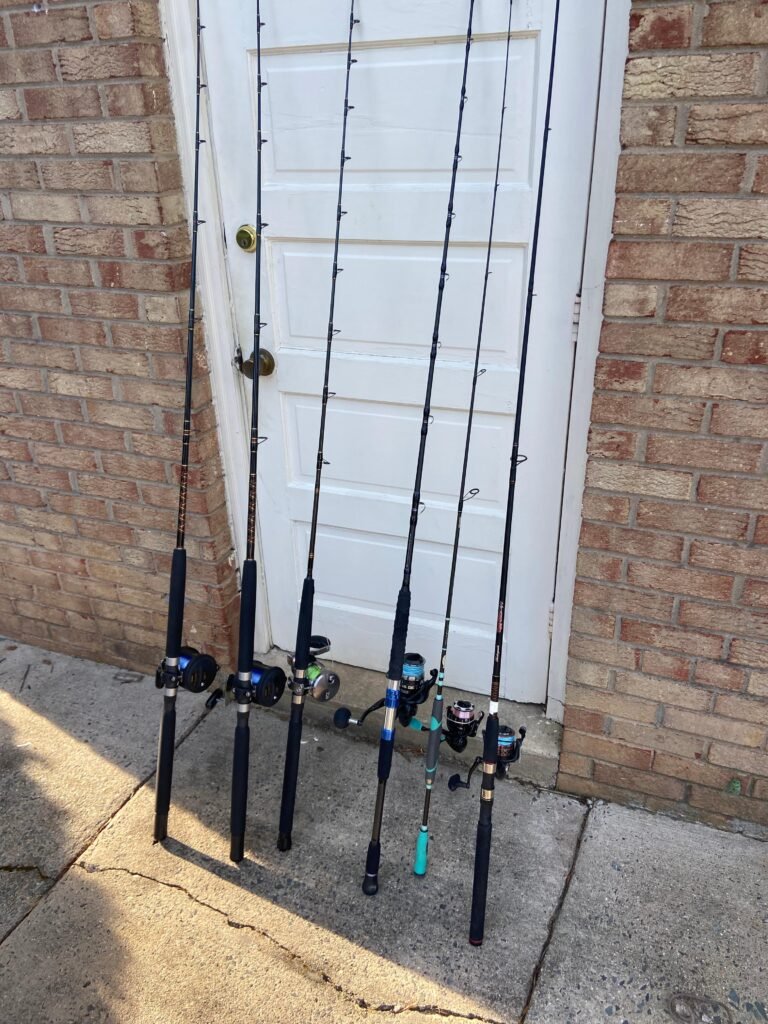
A spinning reel is the easiest reel for most beginners. It casts light lures well and does not create the backlash that can frustrate new baitcaster users. A spincast combo is even simpler for kids, but it often gives up casting distance and long-term durability.
Experienced anglers may prefer a baitcaster for bass fishing with heavier jigs, crankbaits, and soft plastics. A fly rod can be excellent for trout or smallmouth bass when the river has open casting room. It is less useful when trees, steep banks, or heavy brush block your back cast.
Choosing a Rod by Species and Water
Rod power means how much force the rod needs to bend. Light and medium-light rods bend easily with small fish and light lures. Medium and medium-heavy rods handle larger fish, thicker line, and heavier sinkers.
Rod action describes where the rod bends. A fast-action rod bends near the tip and feels sensitive. A moderate-action rod bends farther down the blank and helps keep treble-hook lures attached.
| Target fish or method | Rod size | Line and lure range |
|---|---|---|
| Panfish and small trout | 6- to 7-foot light or medium-light, fast action | 2- to 6-pound line; 1/32- to 1/8-ounce lures |
| Trout, smallmouth, and small bass | 6.5- to 7-foot medium-light or medium | 6- to 10-pound line; 1/8- to 3/8-ounce lures |
| Bass and walleye | 6.5- to 7.5-foot medium, fast action | 8- to 12-pound line; 1/4- to 1/2-ounce lures |
| Channel catfish | 7- to 9-foot medium or medium-heavy | 10- to 20-pound line; 1/2- to 3-ounce sinkers |
| Large catfish or strong current | 8- to 10-foot medium-heavy | 15- to 30-pound line; heavy bottom rigs |
These are starting points, not strict rules. A short telescopic rod is handy for hiking and travel, but many compact rods feel less sensitive and may not last as long as a two-piece rod. Check the rod’s lure rating before adding a heavy sinker.
For gift buyers, a 6.5- to 7-foot medium spinning combo is usually the safest choice. It works for many freshwater species and is easier to learn than a baitcaster. For a young child, choose a short spincast combo with a simple push-button reel and a soft practice plug for backyard casting.

Line, Leaders, Hooks, and Terminal Tackle
Terminal tackle means the small pieces at the end of your line. It includes hooks, sinkers, bobbers, swivels, snaps, and leaders. Keep several sizes because river depth and current can change during the day.
Monofilament is the best low-cost starting line. It stretches, floats slightly, and is easy to tie. Braided line has little stretch and casts well, but it can cut fingers under tension and may need a fluorocarbon or monofilament leader.
Fluorocarbon is harder for fish to see underwater and resists abrasion around rocks. It sinks more than monofilament. Use it as a leader when the water is clear or the bottom is rough.
| Line type | Strengths | Limits |
|---|---|---|
| Monofilament | Cheap, easy to tie, forgiving for beginners | More stretch and thicker diameter |
| Braided line | Thin, strong, sensitive, long casting distance | Can slip on spools and cut skin |
| Fluorocarbon | Abrasion resistance and low visibility | Stiffer and more costly for main line |
For bait fishing, use hooks that match the bait. A size 6 or 8 hook fits worms, corn where legal, and small pieces of bait. A 1/0 to 3/0 circle hook suits larger catfish bait in areas where circle hooks are allowed or required.
Circle hooks work best when fish take the bait and move away. Do not make a hard hookset with one. Apply steady pressure and let the hook turn into the corner of the fish’s mouth.

Safety and Shoreline Preparation
Riverbanks can be dangerous even on warm, calm days. Water levels can rise fast after rain, rocks can be slick, and deep holes may sit only a few feet from shore. Choose a stable bank before you unpack your tackle.

Wear shoes with good grip. Avoid standing on wet logs, loose gravel, undercut banks, or steep mud. Never assume shallow-looking water is safe to wade.
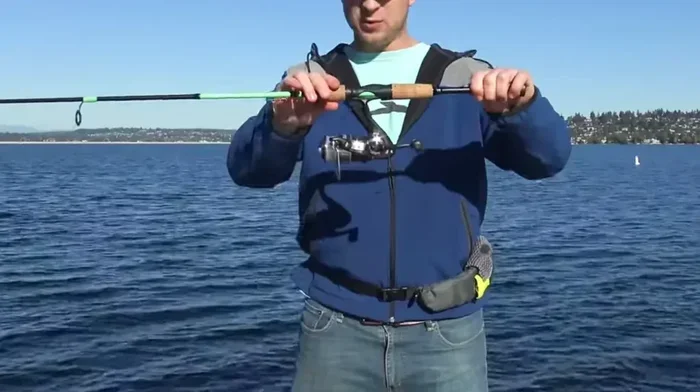
If you fish from a kayak near the bank, wear a properly fitted U.S. Coast Guard–approved personal flotation device. Tell someone where you plan to fish, check the weather, and carry a charged phone in a waterproof case.
⚠️ Safety Warning: Never fish under a low bridge during a storm or stand near a rising river. If water covers the bank you planned to use, leave and find higher ground. A river can change from calm to dangerous before the surface looks fast.

Check the Bank Before You Cast
Walk the area without casting for five minutes. Look for safe footing, open casting lanes, hanging branches, deep water, and places where a hooked fish may run.
Check behind you before every cast. Hooks can catch clothing, skin, trees, and other anglers. Keep pliers and a line cutter within reach, not buried at the bottom of a tackle box.
A landing net is useful on steep banks. Choose a rubber-coated net when possible. Rubber is gentler on fish slime and reduces hook tangles compared with rough nylon mesh.

Licenses and River Rules
You normally need a fishing license before fishing public freshwater in the United States. Rules may change by state, river, species, season, and section of water.
📜 Check Local Regulations: Confirm the current rules with your state wildlife agency before fishing. Check license needs, size limits, bag limits, closed seasons, bait restrictions, barbless-hook rules, lead restrictions, and whether live bait is allowed.
Some rivers cross state lines or include tribal, city, park, or private property. A license for one area may not cover another. Respect posted signs and ask a local tackle shop when boundaries are unclear.

How to Read a River From Shore
The main difference between fishing a lake and fishing a river is current. River fish often position themselves where food comes to them. Your job is to find places where current delivers food but does not force fish to spend too much energy.

Find Current Seams
A current seam is the line where fast water meets slow water. It may look like a change in surface texture, a line of foam, or a narrow strip of drifting leaves.
Cast just upstream of the seam and let the bait move into it. Fish may sit on the slower side and move a short distance to eat. Do not focus only on the center of the river; many good fish hold near the edge of strong current.

Fish Eddies, Pools, and Cut Banks
An eddy is a place where water circles back against the main flow. Eddies form behind rocks, bridge supports, points, and bends. Food can collect there, and fish may use the softer water.
Deep pools are common targets for catfish, walleye, trout, and bass. Cast along the edge of the pool instead of directly into the deepest point every time.
An undercut bank has a hollow space beneath the shore. It offers shade and cover, but it can collapse without warning. Fish the edge from a safe position and do not climb onto the hollow section.
| River feature | What it may offer fish | Useful presentation |
|---|---|---|
| Current seam | Food with reduced current | Drift bait or cast a jig along the line |
| Deep pool | Cooler water and shelter | Bottom rig, jig, or slowly worked soft plastic |
| Rock point | Ambush cover and oxygen | Cast upstream and retrieve near the rocks |
| Fallen tree | Shade and hiding cover | Pitch bait beside the wood; avoid snagging inside it |
| Inside bend | Slower, shallower water | Bobber, small spinner, or live bait |
| Outside bend | Deeper water and stronger flow | Heavier sinker, jig, or bottom rig |
| Eddy | Trapped food and calm water | Let bait drift through the rotating water |
Start with obvious cover, but do not ignore plain-looking water. Fish may hold in a subtle depression, a change in bottom gravel, or a narrow lane beside the bank. Watch how leaves and bubbles move. They often reveal the current better than the water color does.

Step-by-Step: How to Fish a River From Shore
A simple process prevents random casting. Begin with the closest water, fish likely holding spots, then move when the area stops producing activity.

1. Choose a Safe and Legal Spot
Pick a bank with clear access and enough room to cast. Avoid private property unless you have permission. Look for a place where you can land a fish without climbing down a dangerous slope.
The best shore spot is not always the prettiest. A plain gravel bank beside a deep seam may be better than a scenic shallow flat with no cover.
2. Set Up the Rod and Reel
Open the bail on a spinning reel and pull line through each guide. Tie your main line to a swivel, lure, or leader with a reliable knot such as an improved clinch knot or Palomar knot.
Set the reel drag before casting. Drag is the reel’s adjustable brake. It lets line leave the spool when a fish pulls hard.
A useful starting point is to set drag at about one-quarter to one-third of the line’s breaking strength. For 8-pound line, that means roughly 2 to 2.5 pounds of drag. You can use a small scale or pull line by hand with steady pressure.
3. Select a Bait or Lure
Use live bait when you want a relaxed, simple approach. Use lures when you want to search different depths and cover more water.
| Situation | Good starting choice | How to fish it |
|---|---|---|
| Trout in cool, clear water | Small spinner, worm where legal, or small jig | Cast upstream and retrieve slowly |
| Bass near wood or rocks | Soft plastic, jig, or small crankbait | Cast beside cover and vary the retrieve |
| Catfish in a deep pool | Cut bait, nightcrawler, or prepared bait where legal | Keep bait near bottom with an egg sinker |
| Panfish near calm edges | Worm under a bobber | Cast near weeds, shade, or slow current |
| Walleye in low light | Jig with a soft plastic or live bait | Bounce near bottom along a seam |
Match the lure weight to the rod and current. A lure that is too light may never reach the target. A lure that is too heavy can damage the rod or create a poor presentation.
4. Make a Short First Cast
Cast close before sending the bait across the river. Fish may hold within a few feet of shore, especially near grass, shade, rocks, and undercut banks. A long cast can spook fish in clear water and makes it harder to control your line.
For a bait rig, cast slightly upstream. The current will carry the bait downstream toward the fish. For a lure, cast across or slightly upstream and retrieve through the target zone.
5. Control the Drift
Keep only enough slack to let the bait move naturally. Too much slack makes it hard to detect a bite. Too little slack can drag the bait unnaturally through the water.
With a bobber, watch for a sideways glide, sudden dip, or stop. With bottom bait, watch the line for a tap, slow pull, or movement upstream.
The best drift often looks natural but remains controlled. Raise the rod tip to lift line off the water and mend the line if current creates a large bow.
6. Work the Water in Sections
Divide the riverbank into three zones: near bank, middle current, and far edge. Fish each zone for several casts before changing angle or depth.
Move upstream when possible. This helps you approach new water without walking through the area you plan to fish. It also lets you repeat a productive pattern as the river changes.
Do not stay in one place for hours without a reason. If you see no bait, cover, current break, or depth change, move 20 to 50 yards and try again.
7. Set the Hook Correctly
The hookset depends on the rig. With a lure and a single hook, lift the rod firmly while reeling. With treble hooks, use a controlled sweep rather than a violent jerk.
For a bobber, wait until the float goes under or moves in a clear direction. Then lift the rod. For a circle hook, reel down and apply steady pressure instead of snapping the rod.
Keep the rod at about a 30- to 45-degree angle. Let the drag work. Do not lock the drag and pull with all your strength.
8. Land, Handle, and Release the Fish
Move the fish toward calm water. Use a landing net when the bank is high, rocky, or steep. Do not swing a large fish onto dry ground.
Wet your hands before touching a fish. Support its body, remove the hook with pliers, and keep air exposure short. If you plan to release it, hold the fish facing into gentle current until it swims away.
🌿 Conservation Note: Pinch down barbs where legal, use circle hooks for many bait applications, and never leave old line, bait containers, or hooks on the bank. Discard used line in a recycling bin or tackle-shop collection tube.
Which Fishing Method Should You Use?
The right method depends on the species, current, depth, and amount of cover. A bobber is easy to see, but a bottom rig can reach deeper water. A lure covers more water, but bait may be easier for a new angler.
Bobber Fishing
Bobber fishing is one of the best methods for beginners and kids. A float suspends the bait above the bottom and shows when a fish takes it.
Set the bait 1 to 4 feet below the bobber in shallow water. In deeper pools, use a slip bobber. A slip bobber slides along the line and lets you fish deeper than a fixed float.
Use a small hook, light leader, and enough weight to keep the bait below the float. Too much weight makes the bobber sit low and can reduce sensitivity.
Bottom Fishing
Bottom fishing works well for catfish, carp, drum, suckers, and some walleye. Thread the main line through an egg sinker, tie on a swivel, add a leader, and attach the hook.
The sinker stays near the bottom while the bait moves slightly in the current. Use the lightest sinker that holds position. A heavy sinker can snag more often and may make the bait look unnatural.
A sliding sinker also lets a fish move with less resistance before you respond. Check local rules because some waters restrict certain weights, materials, or bait types.
Lure Fishing
Lure fishing is useful when you want to find active bass, trout, walleye, and panfish. Small spinners create flash and vibration. Jigs reach deeper water. Soft plastics can imitate worms, minnows, crawfish, and other prey.
Crankbaits work best when you have room to cast and retrieve them without constant snags. In rocky rivers, choose a lure that matches the depth and retrieve it just above the bottom.
Use a steady retrieve first. Then try pauses, small rod lifts, or changes in speed. Fish often strike when a lure changes direction or falls.
Fly Fishing From Shore
Fly rods work well on rivers with trout, smallmouth bass, and panfish. A 4- to 5-weight fly rod suits many small trout streams. A 6- to 8-weight setup gives more power for larger bass, wind, and larger flies.
You need room behind you. If trees block the back cast, use a roll cast or switch to a spinning rod. Wear polarized sunglasses to spot hazards and protect your eyes from flies.
Fly fishing takes more practice than a spinning combo. It can be rewarding, but it may not be the best first choice for a child or a buyer who wants a simple setup.
Bait and Lure Choices by Common River Fish
Different fish feed in different parts of the river. Your bait should match the fish’s food and the water depth.
| Species | Productive shore options | Common holding areas |
|---|---|---|
| Bass | Soft plastics, jigs, crankbaits, live minnows | Wood, rocks, current seams, eddies |
| Trout | Small spinners, flies, worms where legal, small jigs | Riffle edges, pools, shade, current seams |
| Catfish | Cut bait, nightcrawlers, prepared bait | Deep holes, outside bends, slow current |
| Panfish | Worms, small jigs, tiny spinners | Calm edges, weeds, shade, backwaters |
| Walleye | Jigs, minnows, soft plastics, crankbaits | Deep seams, rocky points, low-light areas |
| Carp | Corn where legal, bread where legal, dough baits | Slow flats, shallow edges, soft-bottom areas |
Use live bait with care. Keep it cool and lively, and never release unused nonnative bait into the river. Some states require baitfish to come from the same water or prohibit their release.
Freshwater Versus Saltwater River Mouths
A river mouth may contain freshwater species, saltwater species, or fish that move between both. Redfish, striped bass, flounder, and other coastal species may require stronger tackle than typical freshwater river fish.
If you fish a tidal river, expect current direction to change. Fish may feed during an incoming or outgoing tide. A 7- to 8-foot medium or medium-heavy spinning rod, 15- to 30-pound braided line, and a fluorocarbon leader may fit larger fish.
Saltwater requires more gear care. Rinse the rod, reel, pliers, and tackle with fresh water after each trip. Wipe them dry and loosen the drag before storage.
Common Riverbank Fishing Mistakes
Most poor shore-fishing days come from a few simple errors. Fixing these habits can matter more than buying new tackle.
| Mistake | What happens | Better choice |
|---|---|---|
| Casting only to the middle | You miss fish near shore and cover | Fish close water first |
| Using too much weight | The rig snags and looks unnatural | Use the lightest useful sinker |
| Standing in the best spot | Fish become alert or leave | Stay back and cast from cover |
| Ignoring current | Bait drifts too fast or hangs up | Fish seams and control line |
| Locking the drag | Line or hooks may fail | Set a smooth, moderate drag |
| Keeping hooks buried in a box | Tackle rusts and tangles | Dry and sort terminal tackle |
| Staying too long in dead water | Time is wasted | Move after a planned search |
| Leaving trash behind | Wildlife can suffer | Pack out line, bait, and plastic |
Do not assume bigger gear is better. A heavy rod can make small lures hard to cast and reduce bite detection. The strongest line also does not prevent snags; it may only transfer more force to your hook, lure, or rod.
Fixing Snags Without Breaking Your Gear
Point the rod directly at the snag. Do not pull hard with the rod tip. This can break the tip or damage the guides.
If you can reach the line safely, pull from the spool side while protecting your hand with a tool or cloth. You can also wrap the line around a dowel or lure retriever. Never wrap tight line around bare fingers.
🔧 Quick Fix: When a lure hangs on a rock, lower the rod tip, feed a little slack, and pull from a different angle. Many snags release when the hook moves backward instead of deeper into the cover.
Time, Cost, and Gear Care
A basic riverbank setup can cost less than a full boat trip. Current pricing ranges from about $30 to $70 for a simple spincast or spinning combo, $70 to $180 for a stronger rod and reel, and more for specialized bass, fly, or saltwater gear.
Budget gear can work well when you keep the reel clean and avoid forcing heavy sinkers beyond the rod rating. The parts that often fail first are reel bail springs, line rollers, drag washers, rod tips, and cheap hook points.
| Budget level | Typical setup | Best suited to |
|---|---|---|
| Under $50 | Spincast or entry spinning combo, monofilament, basic hooks | Kids, beginners, and casual panfish anglers |
| $50-$120 | Medium spinning combo, better line, small tackle box, net | Most new river anglers and gift buyers |
| $120-$250 | Higher-quality spinning reel, separate rod, braid and leaders | Frequent anglers and people upgrading |
| $250 and up | Specialized bass, trout, fly, or saltwater setup | Experienced anglers with a clear target |
Prices vary by brand, material, sales, and included accessories. Check the current listing for updated features. Do not pay for a high bearing count alone; smooth gearing, a reliable drag, good line lay, and corrosion resistance matter more.
A Simple Cleaning Routine
Wipe dirt and grit from the rod guides after each trip. Check the line near the lure for rough spots, especially after fishing around rocks, mussels, bridge rubble, or wood.
For freshwater, a light wipe with a damp cloth is often enough. Do not soak a reel or blast it with high-pressure water. If you fish saltwater, use a gentle freshwater rinse, dry the reel, and follow the maker’s lubrication instructions.
Store rods away from direct heat. Keep tackle dry. Replace rusty hooks, cracked leaders, and line with visible nicks.
Tips for Beginners, Kids, and Gift Buyers
A first river trip should feel simple. Give a new angler one rod, one rig, and one clear goal. Too many lures and knots can make fishing feel like homework.
Best Starting Setup for Beginners
Choose a 6.5- to 7-foot medium-light spinning combo. Spool it with 8-pound monofilament. Add a small tackle box with size 6 and 8 hooks, split shot, a few bobbers, 1/8-ounce jigs, small spinners, and line cutters.
This setup suits panfish, trout, small bass, and light catfish work. It is also easy to repair and replace. A beginner can learn casting, knot tying, bobber fishing, and lure retrieves without changing equipment.
Best Starting Setup for Kids
For a child, choose a 4.5- to 6-foot spincast combo with a comfortable grip and a simple button reel. Use a practice plug before adding hooks. Keep casts short and fish a calm bank with room behind the child.
👪 Parent or Gift-Buyer Note: Buy safety items with the rod. A child should have polarized sunglasses, a hat, grippy shoes, and adult help near the water. Keep hooks, knives, and pliers under adult control.
When an Experienced Angler Should Upgrade
Upgrade when your current gear limits a technique. A longer rod can improve casting distance and line control. Braided line can increase sensitivity around deep current. A better drag can help when targeting strong fish near rocks or wood.
Do not upgrade only because a package lists more bearings or a higher gear ratio. Gear ratio means how many times the spool turns with one handle turn. A faster ratio helps burn lures back quickly; a slower ratio gives more power for heavy resistance.
A Practical Riverbank Game Plan
Use this plan when you arrive at unfamiliar water:
- Check the rules and water level. Confirm the license, open season, bait rules, and safe access.
- Study the current. Find seams, eddies, pools, rocks, wood, and shade.
- Start close. Cast to the bank edge, then work outward.
- Choose one simple method. Try a bobber, bottom rig, or small lure for 15 to 20 minutes.
- Change one variable at a time. Adjust depth, weight, location, or retrieve.
- Move with purpose. Walk 20 to 50 yards when the water shows no signs of fish.
- Record what works. Note water level, weather, bait, depth, and time of day.
This process helps you learn the river instead of guessing. Think of the current as a moving conveyor belt. Fish often wait beside the belt, where food passes close but the water costs less energy.
When to Ask a Local Tackle Shop or Guide
A local tackle shop can answer questions that general internet advice cannot. Ask about current water levels, seasonal patterns, access points, bait rules, and safe bank areas.
A guide is useful when you want to learn a specific species, fly fishing, wading, kayak fishing, or a complex river system. Choose a licensed or permitted guide when required, and ask about safety equipment before booking.
Seek professional instruction for boating safety, swift-water wading, or ice safety. Never learn dangerous water skills alone from a short video.
Frequently Asked Questions
Q: What is the best rod for fishing a river from shore?
A: A 6.5- to 7-foot medium-light or medium spinning rod suits most beginners. Choose medium-light for trout, panfish, and small bass. Choose medium for larger bass, walleye, and light catfish rigs.
Q: How far should I cast from the bank?
A: Start with a short cast. Fish the water within 10 to 20 feet of shore before casting farther. Fish often hold near grass, rocks, shade, wood, and current breaks.
Q: Should I cast upstream or downstream?
A: Cast upstream or across the current in most situations. This lets bait and lures move with the flow. The correct angle depends on depth, current speed, and the species you target.
Q: Is bait or a lure better for river fishing?
A: Bait is often easier for beginners and works well for catfish, panfish, trout, and carp where legal. Lures help you search more water for bass, trout, walleye, and other active fish.
Q: What line should I use for riverbank fishing?
A: Use 6- to 10-pound monofilament for a general freshwater setup. Use 10- to 20-pound braid with a fluorocarbon leader when you need more sensitivity or abrasion resistance.
Q: How much weight should I use?
A: Use the lightest sinker that keeps the bait near the target depth. Start with split shot in slow water and move to a 1/4- to 1-ounce egg or bank sinker in deeper current. Stay within the rod’s lure rating.
Q: Can I fish a river without wading?
A: Yes. Many fish can be caught from dry land near seams, pools, eddies, rocks, and cover. Shore fishing is often safer than wading because you avoid slippery bottoms and sudden depth changes.
Q: Is a baitcaster better than a spinning reel for river fishing?
A: A baitcaster gives experienced anglers strong control with heavier bass lures. A spinning reel is easier for beginners, casts light tackle better, and creates fewer problems with backlash.
Q: How do I keep my lure from snagging rocks?
A: Fish slightly above the bottom, use a lighter lure, and retrieve with short lifts. When snagged, point the rod at the lure and pull from a different angle instead of bending the rod tip.
Q: Do I need a landing net from shore?
A: You do not always need one, but a net helps on steep banks and protects fish from being dragged over rocks. A rubber-coated net is a good choice for catch-and-release fishing.
Q: What should I do if the river rises?
A: Leave low banks and move to higher ground. Rising water can cover footing, change current speed, and carry logs or debris. Do not keep fishing just because the surface still looks calm.
Q: How long does a beginner fishing combo last?
A: A basic combo can last several seasons with normal freshwater use and proper storage. Rough handling, sand, saltwater, overloaded sinkers, and poor cleaning can shorten its life.
Q: Can children fish rivers safely?
A: Yes, when an adult chooses stable ground, keeps hooks and pliers controlled, checks weather, and stays close to the water’s edge. Use a short spincast combo and begin with a practice plug.
Q: Do I need polarized sunglasses?
A: They are not required, but they reduce glare and can help you see rocks, drop-offs, fish movement, and hazards. They also protect your eyes from hooks and flying lures.
Q: Can I eat fish caught from a river?
A: Follow local consumption advisories. Pollution, mercury, bacteria, and other risks vary by river. Check your state wildlife or health agency for current size, species, and meal limits.
Q: What is the most important skill in riverbank fishing?
A: Learning to read current is the most useful skill. Focus on seams, depth changes, cover, and calm water beside faster flow. Then place your bait or lure where fish can find it with little effort.
Final Advice for Fishing a River From Shore
Riverbank fishing rewards observation more than expensive gear. Start with a reliable spinning combo, simple monofilament, a few hooks and sinkers, and one or two proven lures. Fish close before casting far, work current seams, and move when the water gives you no reason to stay.
Keep safety ahead of the next cast. Check the rules, wear stable footwear, watch the weather, and leave rising water early. Handle released fish with wet hands, pack out old line, and treat the river as a shared resource.
With practice, each bend starts to make sense. Foam shows the current. Rocks reveal depth. A quiet edge becomes a feeding lane. The river does not give up every secret at once, but careful shore anglers learn how to listen.