How To Start A Fishing Blog: Easy SEO Guide
Starting a fishing blog can turn your time on the water into a useful online resource, a creative outlet, or a real business. You do not need a boat, a huge audience, or expensive camera gear. You need a clear topic, honest field experience, helpful photos, and a simple plan you can follow for several months.
A good fishing blog answers the questions anglers ask before, during, and after a trip. Beginners want to know which rod to buy. Parents need safe fishing ideas for kids. Experienced anglers compare reels, line, lures, electronics, and local techniques. Your job is to make those choices easier.
The strongest fishing blogs focus on a specific reader and type of fishing. A blog about bass fishing from a kayak will grow differently from a blog about fly fishing for trout or surf fishing for redfish. Start narrow enough to become useful, then expand as your knowledge and audience grow.

Quick answer: How do you start a fishing blog?
To start a fishing blog, choose a focused fishing niche, buy a domain name, set up a simple website, plan useful article topics, and publish reliable content on a steady schedule. Cover gear, techniques, locations, safety, regulations, and conservation. Use original photos and real experience. Build trust first, then earn through ads, affiliate links, digital products, guiding leads, or brand partnerships.
Choose a clear fishing blog niche
The best way to start a fishing blog is to choose one clear audience before you choose a logo or website theme. “Fishing” is too broad for a new site. “Bank fishing for bass in small lakes,” “beginner fly fishing,” or “family fishing trips in Texas” gives your content a sharper purpose.
A niche does not trap you forever. It gives search engines and readers a reason to understand your site. Once you build trust, you can add related subjects such as tackle reviews, fishing licenses, boat safety, or seasonal patterns.
Match the niche to your real experience
Write about fishing you can explain from direct experience. If you fish from shore, you can create better content about shore and pier fishing than someone who only fishes offshore. If you guide for trout, your advice on fly rods, leaders, waders, and stream safety can include details that product pages miss.
Use this simple test:
- What species do you fish most?
- Which water do you know best?
- Do you fish from shore, a boat, a kayak, or the ice?
- What questions do new anglers ask you?
- What gear have you used for more than one season?
- Which local regulations can you explain clearly?
- What fishing problem have you solved yourself?
A parent who takes children panfish fishing can build a strong blog around safe, low-cost trips. An experienced bass angler may focus on rod power and action, crankbaits, jigs, soft plastics, and seasonal patterns. A gift buyer may search for the best fishing gifts for beginners or kids.
Good fishing blog niches to consider
The table below shows focused ideas and the readers they serve. Choose a topic that gives you access to regular trips, photos, and honest examples.
| Fishing niche | Best audience | Useful content angles |
|---|---|---|
| Bass fishing | New and experienced freshwater anglers | Rods, baitcasters, jigs, crankbaits, seasonal tactics |
| Trout and fly fishing | Beginners and stream anglers | Fly rods, leaders, waders, flies, casting basics |
| Shore and pier fishing | Anglers without boats | Rigs, sinkers, surf rods, local access, tide planning |
| Kayak fishing | Budget-minded boat anglers | PFDs, stability, storage, fish finders, launch safety |
| Family fishing | Parents and gift buyers | Spincast combos, panfish, safety, simple tackle |
| Ice fishing | Cold-weather anglers | Ice rods, shelters, augers, ice thickness, clothing |
| Saltwater fishing | Pier, surf, and inshore anglers | Corrosion care, redfish, leaders, hooks, drag systems |
A narrow niche also helps you choose better keywords. “Best rod” is broad and competitive. “Best spinning rod for trout from shore” tells you the species, water type, technique, and likely buyer.

Check whether people search for the topic
Use search suggestions, fishing forums, state wildlife pages, tackle shop questions, and video comments to find real topics. Look for phrases such as:
- How to choose a fishing rod for beginners
- Best fishing setup for kids
- Spinning reel vs. baitcaster for bass
- How to spool braided line
- Best line for trout fishing
- How to fish from a pier
- What to bring kayak fishing
- Is a telescopic fishing rod worth it?
- How much does beginner fishing gear cost?
Do not copy questions without adding value. Test the method, explain limits, and give measurements when possible. Readers trust a guide that says a 6-foot, medium-light spinning rod suits small trout and panfish, while a 7-foot, medium-heavy rod fits many bass techniques.

Build the basic parts of your fishing blog
You need four main parts: a domain name, reliable hosting, a content management system, and a simple design. A domain is your web address. Hosting stores your website files. A content management system lets you publish articles without building every page from code.
WordPress is a common choice because it supports search tools, photo galleries, email forms, product links, and analytics. Other website builders can work if you prefer a simpler setup. The best platform is the one you can maintain.
Pick a useful domain name
Choose a name that is easy to say, spell, and remember. Avoid long strings of numbers, hard-to-spell slang, and names tied to one product brand. A local name can help if your goal is regional traffic, such as “Coastal Bank Angler.”
Good domain names are:
- Short enough to type on a phone
- Easy to pronounce
- Connected to fishing or your region
- Flexible enough for future topics
- Available on major social platforms, if possible
Do not spend weeks searching for a perfect name. A clear, useful blog can grow under an ordinary name. Your content matters more than a clever pun.
Create essential pages
Before publishing many articles, create a few trust pages. These pages help readers understand who you are and how you work.
Include:
- About: Explain your fishing experience and the people you help.
- Contact: Offer a simple email form.
- Privacy policy: Explain data collection and cookies.
- Affiliate disclosure: State when you may earn a commission.
- Terms of use: Set basic expectations for site use.
- Fishing disclaimer: Tell readers to confirm safety advice and local laws.
If you review fishing gear, explain how you use it. Say whether you bought it, received it, tested it on fresh or salt water, and used it from shore, boat, kayak, or ice. Never invent review counts, testing results, certifications, or product specifications.

Use a clean design
A fishing blog should load quickly and work well on a phone. Many readers check tackle advice at a boat ramp, in a parking lot, or inside a tackle shop. Use large text, clear headings, short paragraphs, and compressed images.
Your home page should quickly show:
- What the blog covers
- Who it helps
- Your newest or most useful articles
- A way to join your email list
- A link to your most important fishing guides
Avoid crowded backgrounds, autoplay music, flashing ads, and difficult menus. A clean page feels like an organized tackle box. Readers can find what they need.

Plan content around real angler problems
A strong fishing blog solves problems instead of filling a calendar. Start with a list of questions from beginners, experienced anglers, and gift buyers. Then group those questions into content categories.
Useful categories include:
- Beginner setups
- Rods and reels
- Fishing line and leaders
- Hooks, sinkers, swivels, and bobbers
- Lures and live bait
- Species techniques
- Fishing locations
- Seasonal patterns
- Safety and boat care
- Regulations and conservation
- Gear reviews and comparisons
Create topic clusters
A topic cluster is a group of related articles that support one main guide. For example, a beginner bass fishing guide might connect to articles about spinning reels, baitcasters, braided line, fluorocarbon leaders, soft plastics, jigs, and hook sizes.
This structure helps readers move through your site. It also shows that you understand a subject instead of publishing unrelated posts.
A simple cluster may look like this:
- Main guide: How to start bass fishing
- Supporting article: Best bass rod for beginners
- Supporting article: Spinning reel vs. baitcaster
- Supporting article: How to rig a Texas-rigged soft plastic
- Supporting article: Monofilament vs. braided line
- Supporting article: Catch-and-release bass handling
Link each supporting article back to the main guide. Add links between related pages when they help the reader.
Use a practical article format
Most fishing articles work well when they answer the main question early. Then explain the choices, show setup steps, discuss limits, and give a clear recommendation.
A useful article structure includes:
- A direct answer
- Who the advice suits
- Needed gear
- Setup or use instructions
- Costs and alternatives
- Safety and local rules
- Common mistakes
- Final recommendation
- Frequently asked questions
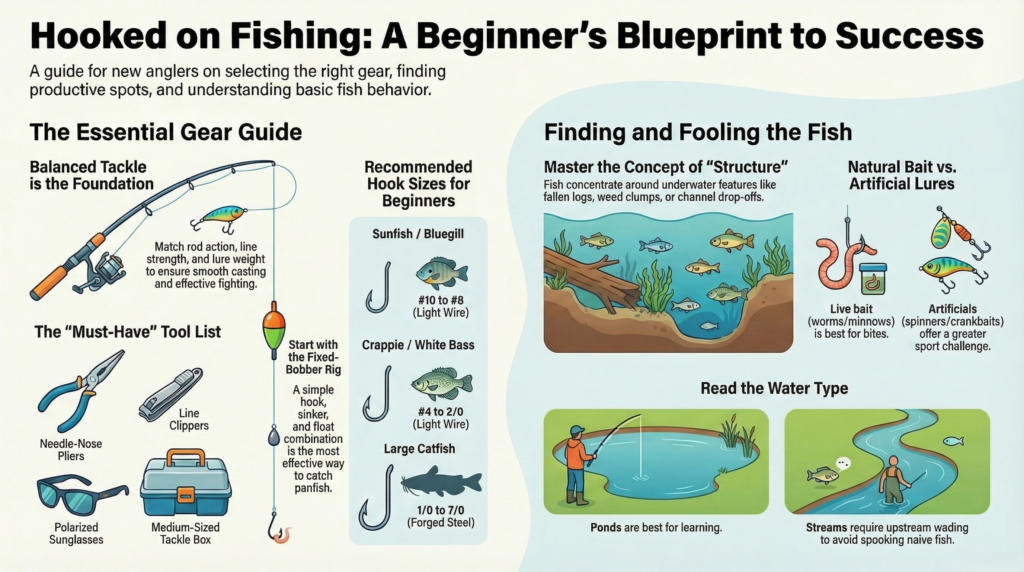
Use simple terms. Define jargon the first time it appears. Rod power means how much force it takes to bend a rod. Action means where the rod bends, such as near the tip or deeper into the blank. Drag is the reel system that lets line leave under pressure.
Build a realistic publishing schedule
You do not need to publish every day. One strong article each week is better than five rushed posts. Set a schedule that fits your fishing trips, editing time, and family or work duties.
For a new blog, try this 12-week plan:
| Weeks | Main work | Example content |
|---|---|---|
| 1–2 | Set up the site and research | About page, beginner gear list |
| 3–5 | Publish basic guides | Rod choice, line types, simple rigs |
| 6–8 | Add species content | Bass, trout, panfish, catfish |
| 9–10 | Add local and seasonal help | Shore access, spring patterns |
| 11–12 | Improve and connect posts | Internal links, updates, email signup |
The key takeaway is steady progress. Search traffic often takes time. Keep improving useful pages instead of deleting them after a few quiet weeks.
Learn what fishing readers need from gear content
Gear articles attract strong search interest, but they also require care. Readers want to know what a product does, who it suits, what breaks first, and whether it fits their budget. They do not need empty praise.
A good gear article connects the product to a real use. A 5-foot, 6-inch spincast combo may suit a child learning to cast for panfish. A 7-foot medium spinning rod with a 2500-size reel may suit a beginner targeting trout, bass, and walleye. A heavy surf rod serves a different angler and water type.
Explain fishing gear in plain language
Cover the details that affect use:
- Rod length, power, and action
- Reel type and gear ratio
- Max drag, if listed by the maker
- Line capacity
- Line test in pounds
- Monofilament, fluorocarbon, or braided line
- Freshwater-only or saltwater-rated construction
- Handle material and comfort
- Weight and travel size
- Warranty and replacement parts
A gear ratio tells you how many times the spool turns for one handle turn. A higher ratio picks up line faster. A lower ratio can provide more steady power for some presentations. Do not call a ratio “better” without naming the technique.
Explain which angler each product suits
Every recommendation should identify the user. This is one of the easiest ways to make a fishing blog more useful.
| Angler | Useful starting choice | Why it fits |
|---|---|---|
| Young child | Short spincast combo | Simple controls and manageable length |
| Adult beginner | Medium spinning combo | Easy casting and broad freshwater use |
| Bass angler upgrading | Medium-heavy baitcasting setup | More control for heavier lures |
| Stream trout angler | 7- to 9-foot fly rod | Supports fly line and light presentations |
| Surf angler | Longer surf rod and saltwater reel | Helps cast beyond breaking waves |
| Ice angler | Short ice rod | Fits tight shelters and close presentations |
Always mention who should choose an alternative. A baitcaster may suit an experienced bass angler but frustrate a first-time child. A telescopic rod travels well, yet its guides and joints need careful inspection. A fly rod is excellent for fly line, but it does not replace a spinning rod for most live-bait beginners.

Include honest pros and cons
Pros and cons help readers compare trade-offs. They also make your writing sound more balanced.
| Fishing blog approach | Pros | Cons |
|---|---|---|
| Personal field review | Shows real use and clear limits | Takes time and depends on your access |
| Product comparison | Helps buyers choose between options | Specs may change between versions |
| Local fishing guide | Useful for nearby anglers | Smaller audience outside the area |
| Beginner tutorial | Broad appeal and strong trust | Requires simple, careful explanations |
| Affiliate buying guide | Can earn income from useful links | Needs disclosure and regular updates |
A product can be a good choice without being right for everyone. State the main weakness near the main benefit. For example, braided line offers strength and sensitivity, but it may require a leader and careful knot work. Monofilament is affordable and forgiving, but it stretches more.

Use original experience, photos, and evidence
Fishing blogs stand out when readers can feel the water behind the advice. Take photos of your actual setup. Show a knot, a reel spool, a hook size, or a safe way to hold a fish. A phone camera is enough if the image is bright and clear.
Do not stage unsafe scenes for a photo. Never show a person holding a fish over rocks if a drop could harm it. Keep hooks covered when children are nearby. For kayak fishing, wear the PFD in every image where you are on the water.
Record useful details during each trip
Carry a small notebook or use a phone note. Record:
- Date and general location
- Water type and clarity
- Weather and wind
- Water temperature, if known
- Tide or lake level
- Rod and reel used
- Line test and leader size
- Hook, lure, or bait
- What worked and what did not
- Safety or access concerns
These details turn a vague story into a useful field report. They also help you compare your own results across seasons without promising that the same pattern will work every time.

Cite trustworthy fishing information
Use state wildlife agencies for licenses, seasons, bag limits, size limits, and bait rules. Use the U.S. Coast Guard for boating safety information. Use product pages and manuals for current specifications, warranty terms, and care instructions.
Check the date of every rule before publishing. Fishing regulations can change by water, species, season, and management zone.
📜 Check Local Regulations: Tell readers to confirm license requirements, size limits, bag limits, closed seasons, hook rules, and lead restrictions with their state or local wildlife agency before fishing.

Practice conservation in your content
Conservation is part of good fishing advice. Explain how to wet your hands before touching a fish, support its body, remove hooks quickly, and keep air exposure short. Use circle hooks where required or appropriate for live bait. Barbless hooks can make release easier, but local rules may differ.
Tell readers to cut line from snags and dispose of old monofilament and braid in a recycling tube or proper trash container. Never leave fishing line on a bank, dock, or boat ramp. It can injure birds, turtles, mammals, and other fish.
Make your fishing blog search-friendly
Search engine optimization helps the right reader find your work. It does not mean repeating the phrase “how to start a fishing blog” in every paragraph. It means making the page clear, useful, fast, and easy to understand.
Choose one main keyword per article
Select one main search phrase and several related questions. For example:
- Main keyword: best fishing rod for beginners
- Related terms: spinning rod, rod power, rod action, line test
- Related questions: best rod for kids, trout, bass, or shore fishing
Place the main phrase naturally in the page title, opening, URL, one heading, and description. Use related terms where they fit. Do not force them into every sentence.
Write titles that promise a clear answer
A useful title tells readers what they will learn. Examples include:
- How to Choose a Fishing Rod for Beginners
- Spinning Reel vs. Baitcaster for Bass Fishing
- Best Fishing Setup for Kids Under a Practical Budget
- How to Rig a Bobber for Panfish
- What to Bring Kayak Fishing for the First Time
- Monofilament vs. Braided Line: Which Fits Your Fishing?
Avoid titles that promise guaranteed results. Fish respond to weather, water, forage, pressure, and technique. Your article can explain sound choices without claiming that one lure will always work.
Improve readability and page structure
Use H2 headings for major ideas and H3 headings for smaller topics. Keep paragraphs short. Add tables when readers need to compare choices. Use numbered steps for setup tasks.
A good fishing article also includes:
- A short answer near the top
- Descriptive image text
- Internal links to related guides
- Links to official regulations
- A clear author identity
- Updated product information
- A visible affiliate disclosure when needed
Do not hide important advice under ads. Readers should see the answer before they see a wall of promotions.
Choose ethical ways to make money
A fishing blog can earn income, but trust comes first. Monetization works best when it supports advice you would give even without a commission.
Common income sources include:
- Affiliate links to rods, reels, tackle, and safety gear
- Display advertising
- Sponsored content
- Digital fishing guides
- Online courses
- Fishing trip referrals
- Local guide leads
- Membership communities
- Branded shirts or stickers
- Consulting for fishing businesses
Use affiliate links with care
An affiliate link may earn you a commission when a reader buys through it. The reader usually pays the same price, but you must disclose the relationship clearly.
Recommend products you understand. If you have not used an item, describe its listed features rather than writing a personal review. Tell readers to check the current product page because sizes, materials, line capacity, and included accessories can change.
Build products from repeated questions
When readers ask the same question many times, you may have a useful product idea. A local beginner fishing checklist, knot guide, seasonal lure calendar, or family fishing planner can solve a specific problem.
Do not create a long ebook just to have one. A short, accurate guide can be more helpful than a padded book. Include safety reminders, local regulation links, and gear limits.
Consider local services
A local fishing blog can send customers to guides, marinas, bait shops, tackle stores, kayak rentals, and conservation groups. Build these relationships slowly. Recommend businesses because they serve readers well, not only because they pay.
A tackle shop can also provide useful expert quotes, current bait information, or local access details. Credit the source and keep your advice independent.
Promote your fishing blog where anglers spend time
Publishing is only half the work. Share useful pieces where anglers already ask questions. Facebook groups, YouTube, Instagram, Pinterest, newsletters, and local forums can all help, but each channel works differently.
Turn one article into several formats:
- A short gear checklist
- A knot demonstration video
- A photo of a rig
- A seasonal reminder
- A simple comparison graphic
- A short email tip
- A local access or safety note
Do not spam groups with links. Answer the question first. Link to your full article only when it adds detail.
Start an email list early
Search traffic can change. Social platforms can change their reach. An email list gives you a direct way to contact readers who want your advice.
Offer a useful free item, such as:
- A first fishing trip checklist
- A printable knot card
- A panfish rig guide
- A kid-friendly tackle list
- A seasonal trout preparation sheet
Send useful messages, not only sales links. A short note about cleaning saltwater reels or checking a PFD may earn more trust than another product pitch.
Measure useful actions
Use analytics to learn what readers do. Track article views, search terms, email signups, affiliate clicks, and time on page. Do not judge every article by traffic alone. A small article that brings local guide leads can matter more than a broad article with many casual views.
Update pages that already receive impressions. Improve the opening answer, add missing details, replace broken links, and confirm current specs. Older content can become a strong asset when you care for it.
Keep a practical fishing blog budget
You can start cheaply, but some costs improve reliability. A domain, hosting plan, basic theme, email service, and a few simple tools may cost more than a free social page. A free page, however, gives you less control and may not build lasting search traffic.
The table below gives broad planning ranges. Actual prices vary by provider, plan, traffic, and features.
| Blog expense | Current planning range | What it covers |
|---|---|---|
| Domain name | About $10–$30 per year | Your web address |
| Basic hosting | About $5–$30 per month | Website storage and delivery |
| Email service | Free to $50+ per month | Subscriber forms and emails |
| Camera upgrade | $0–$500+ one time | Better photos or video |
| Keyword tools | Free to $100+ per month | Topic and search research |
| Freelance help | Varies widely | Editing, design, or technical work |
Start with the basic plan. Spend more when a clear problem appears, such as slow pages, low storage, or a need for email automation. Do not buy expensive camera gear before you prove that you enjoy publishing.
Protect your time
A fishing blog can consume every free hour if you let it. Set limits for research, writing, editing, photography, and social promotion. Batch similar work when possible.
For one article, you might use:
- 30 minutes to choose the question
- 60–90 minutes for research and notes
- 90–150 minutes to write
- 30 minutes to edit and format
- 30 minutes to create images and links
- 20 minutes to share and track it
These numbers are only a guide. A detailed gear comparison can take much longer than a short local update.
Avoid common mistakes new fishing bloggers make
Most new blogs do not fail because the writer lacks fishing knowledge. They fail because the content is too broad, too thin, hard to use, or difficult to trust.
Writing for everyone
A site that targets fly anglers, offshore boat owners, ice anglers, bass fishermen, parents, and gift buyers at once may feel scattered. Choose one main reader first. Add related audiences when your core content is strong.
Repeating product specifications
A manufacturer’s list does not equal a review. Explain what the specs mean on the water. A reel with a large line capacity may help surf anglers, but it may add weight for a child. A high max-drag number does not tell the whole story about smoothness, frame strength, or saltwater care.
Ignoring safety
Fishing includes hooks, knives, slippery banks, deep water, heat, storms, cold, and changing ice. A fishing blog should treat safety as a normal part of every trip.
⚠️ Safety Warning: Wear a U.S. Coast Guard–approved PFD when boating or kayak fishing. Check weather before leaving, tell someone your plan, and never assume thin ice is safe. Take a boating safety or ice safety course when appropriate.
Giving outdated regulations
A post with the wrong bag limit can harm fish and put readers at risk of a citation. Link to official sources and add a clear reminder to verify current rules.
Promising fish or income
No ethical fishing writer can guarantee a catch. No blog plan can guarantee revenue. Explain what a method is designed to do, then state the conditions and skill level that affect results.
Forgetting gear care
Saltwater residue can damage reels, guides, hooks, pliers, and fish finders. Tell readers to rinse saltwater gear with fresh water, dry it, and follow the maker’s care instructions. Do not blast reel seals with a strong hose stream.
Use this 90-day launch plan
A three-month plan gives you enough time to build a base without waiting for perfection.
Days 1–30: Set the foundation
Choose your niche, domain, platform, and visual style. Publish your About, Contact, Privacy, and Disclosure pages. Write three cornerstone articles that answer your audience’s biggest beginner questions.
For example, a family fishing blog might publish:
- How to choose a first fishing rod for a child
- A simple bobber rig for panfish
- What to pack for a safe family fishing trip
Days 31–60: Add depth
Publish supporting articles that link to your cornerstone guides. Add original photos, short videos, and local regulation links. Ask readers or friends which parts felt confusing.
Improve your article openings. The first few paragraphs should tell readers what the setup does, who it suits, what it costs, and what limitation matters most.
Days 61–90: Promote and improve
Start an email list. Share helpful excerpts in fishing communities. Contact local shops or guides for expert insight. Review analytics and update your best pages.
At the end of 90 days, you should have a small but useful library. That library gives search engines more context and gives readers a reason to return.
FAQs about starting a fishing blog
Q: How much does it cost to start a fishing blog?
A: A basic blog can start with a domain and low-cost hosting. Many beginners spend roughly $100 to $400 during the first year, depending on hosting, email tools, design, and photography. You can spend more later on editing, video, keyword tools, or freelance help. Your first investment should be consistency, not expensive gear.
Q: Do I need to be a professional fishing guide?
A: No. You need honest experience and clear limits. State what you have tested, where you used it, and which anglers it suits. A recreational angler may offer excellent advice on bank fishing, family trips, or budget tackle. Do not present yourself as a licensed guide unless you hold the required license.
Q: Can I start a fishing blog without showing my face?
A: Yes. You can use gear photos, water scenes, diagrams, voice-over videos, and written field notes. Showing your face can build trust, but it is not required. Your methods, sources, and clear disclosures matter more.
Q: What should my first fishing blog post be?
A: Start with a question your target reader asks often. A beginner blog might publish “How to Choose Your First Fishing Rod.” A local blog might start with “How to Fish From Shore at Local Lakes.” Choose a topic you can explain with specific gear, steps, costs, and safety advice.
Q: How often should I publish fishing articles?
A: Publish as often as you can maintain quality. One useful article per week or every two weeks works well for many new bloggers. A steady schedule helps you build skill and gives readers a reason to return. Do not publish thin posts simply to hit a number.
Q: Is a fishing gear review blog profitable?
A: It can earn money through affiliate links, advertising, sponsorships, guides, and digital products. Results vary by traffic, trust, topic, season, and audience. Gear reviews work best when they include real use, clear limitations, current pricing, alternatives, and the angler each product suits.
Q: Should I use affiliate links for rods and reels?
A: You can, if the links fit the article and you disclose them. Explain that prices and specifications can change. Compare products fairly, mention alternatives, and avoid recommending a reel only because it has a higher commission. Trust is the long-term asset of a fishing blog.
Q: What fishing topics get the most readers?
A: Beginners often search for rod and reel setups, line choice, simple rigs, fishing licenses, local access, and species techniques. Gift buyers search for fishing gear for kids and beginners. Experienced anglers look for comparisons, seasonal patterns, kayak fishing equipment, saltwater care, and technique details. Your audience and location will affect demand.
Q: Can I write about fishing locations?
A: Yes, but protect sensitive places when needed. Avoid publishing exact details about fragile spawning areas or crowded access points if disclosure could harm the fishery or land. Explain access rules, parking, safety, seasons, licenses, and conservation duties. Respect private property and local communities.
Q: How do I take better fishing photos?
A: Use good light, keep the lens clean, and take several angles. Show the full setup and close details such as the knot, hook, lure, or reel spool. Handle fish with wet hands, support the body, and keep the fish out of water for as little time as possible. Never sacrifice fish safety for a photo.
Q: Should I include fly fishing and bait fishing on one blog?
A: You can, but organize them into clear sections. Fly rods, fly line, leaders, and casting differ from spinning reels, bobbers, sinkers, and live bait. If both topics serve the same local audience, separate them with strong categories. If they serve unrelated readers, separate websites may be easier to manage.
Q: How do I keep fishing content accurate?
A: Use state and local wildlife agencies for rules. Use manufacturer manuals for product details. Test gear in the water when you call something a personal review. Add the date you checked regulations, update old pages, and say when a product specification is uncertain. Never fill a gap with an invented number.
Conclusion: Build trust one useful fishing answer at a time
Starting a fishing blog is less about having the largest tackle collection and more about helping anglers make sound choices. Pick a focused audience. Publish clear guides. Explain rod power, action, line test, reels, leaders, hooks, lures, and safety in plain English. Show what works for beginners, experienced anglers, and gift buyers.
Use your real trips as evidence, but stay honest about limits. Check regulations with the proper wildlife agency. Promote catch and release when suitable. Care for saltwater gear, respect access rules, and remind readers that conditions change.
Your first article may reach only a few people. That is normal. If it helps one new angler rig a line, one parent plan a safe trip, or one experienced angler choose a better setup, it has done useful work. Keep answering real questions, update what changes, and let your fishing blog grow like a well-tied knot: one careful connection at a time.