How To Find Fish When Ice Fishing: Best Tips For Success
Finding fish through a layer of ice can feel like searching for a needle under a frozen floor. The fish are still there, but winter changes where they travel, what they eat, and how fast they move. The best ice anglers do not simply drill holes at random. They read the lake, use maps and electronics, watch depth, and test several locations in a smart order.
The key is to find areas that offer food, oxygen, cover, and a comfortable depth. In early ice, fish may remain near shallow weeds and flats. In midwinter, many species move toward deeper water, basin edges, channels, and points. Late in the season, warming water and fresh oxygen can pull fish back toward shallow areas.
You do not need the most expensive fish finder or a large shelter to improve your results. A hand auger, a reliable ice fishing rod, a small tackle box, and a simple plan can take you far. This guide explains how to find fish when ice fishing for panfish, walleye, trout, bass, pike, and other freshwater species.

Quick Answer: How Do You Find Fish Under the Ice?
To find fish when ice fishing, study a lake map, identify depth changes and food areas, then drill a line of holes across the structure. Begin shallow during early ice, check deeper edges in midwinter, and look for moving water or fresh oxygen late in the season. Use a fish finder or flasher when possible, and move if no fish appear after a careful search.

Learn How Fish Use a Frozen Lake
Fish do not spread evenly across a lake in winter. They gather where food, shelter, depth, and safe water conditions meet. Your first goal is not to find one exact fish. It is to locate the type of habitat that the target species prefers.
A depth change is often more useful than a large flat area. A sharp drop-off, underwater point, weed edge, rock pile, or creek channel gives fish a reason to gather. These areas act like roads and rest stops beneath the ice.
Why depth matters
Depth affects light, temperature, oxygen, and food. Shallow water often warms first and grows more weeds. Deep water offers stable conditions and may hold baitfish or suspended plankton.
A depth change can be gradual or steep. A walleye may move along the edge of a flat at 15 feet, while lake trout may suspend over 80 feet of water. Panfish often hold in weeds early, then move to deeper weed edges or soft-bottom basins.
Do not assume that deeper always means better. The best depth is the depth where fish are active on that day. Weather, pressure, sunlight, fishing pressure, and available food can change the preferred depth.
Structure, cover, and food
Structure means the shape of the lake bottom. It includes points, humps, bars, drop-offs, saddles, and channels. Cover gives fish a place to hide or ambush prey. Weeds, rocks, wood, and soft bottom can all serve as cover.
Food may be the strongest clue. Yellow perch, shiners, ciscoes, insects, freshwater shrimp, and small crustaceans each use different parts of the lake. Predator fish often stay near these food sources.
Look for combinations rather than single features. A rocky point beside a deep basin is more promising than a bare rock point. A weed edge near a channel can attract more fish than weeds alone.
Match habitat to the species
Different fish have different winter habits. Use the table below as a starting point, not a guarantee. Local lake conditions can change the pattern.
| Target species | High-value winter areas | Common presentation |
|---|---|---|
| Panfish | Weeds, soft-bottom basins, deep flats, small inside turns | Small jig, soft plastic, waxworm, maggot |
| Walleye | Points, drop-offs, rock, saddles, creek channels | Jigging spoon, minnow, live bait, rattle bait |
| Trout | Deep basins, steep breaks, suspended bait, springs | Spoon, jig, live minnow, tube jig |
| Northern pike | Weed edges, bays, points, shallow flats | Tip-up with dead bait or live bait |
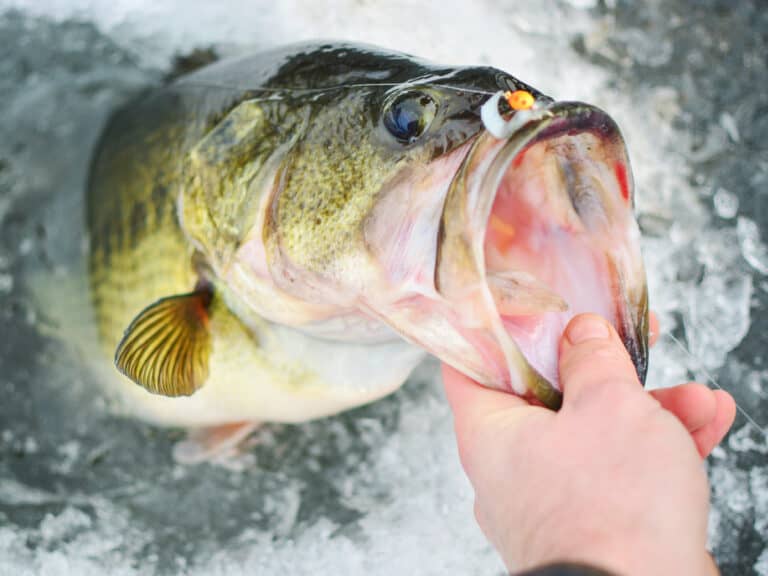
| Largemouth bass | Green weeds, wood, shallow-to-deep transitions | Jig, minnow, soft plastic |
| Smallmouth bass | Rock, gravel, steep breaks, hard-bottom flats | Jigging spoon, tube, blade bait |
Fish location is always species-specific. The best area for bluegill may be poor habitat for lake trout. Start with the species you want, then study its preferred food and depth.

Use Maps Before You Drill
A map can save time, energy, and fuel before you ever step onto the ice. Use a paper lake map, a digital mapping app, or a GPS unit with contour lines. You want to see how the bottom changes, not just the deepest number on the lake.
Contour lines close together show a steep drop. Lines spread far apart show a gradual slope. Mark points, saddles, humps, creek channels, flats, and areas where shallow water meets a deep basin.
Find high-percentage starting spots
The best starting spot usually offers access to more than one depth. A point that falls from 8 feet to 25 feet lets you test shallow, mid-depth, and deep water without walking a long distance.
Useful starting areas include:
- The outside edge of a weed bed
- A point beside a deep basin
- A saddle between two humps
- The first break outside a shallow flat
- A creek channel or old riverbed
- A rock-to-mud transition
- A sharp inside turn in a contour line
- A deep hole near a shallow feeding area
A good spot often has a “fish highway.” This is a route fish use to travel between feeding and resting areas. During low-light periods, walleye may move along a break to feed. Panfish may travel from weeds to a basin during the day.
Check maps against real conditions
Maps are useful, but they can be old or incomplete. Water levels may change. Weed growth may shift. A marked point may be less useful if it has no food or if heavy fishing pressure has changed fish behavior.
Use your sonar, auger, and eyes to confirm the map. If your map shows a weed edge at 12 feet, drill from 8 to 16 feet and check the bottom. The real edge may be several yards away from the mapped line.
Mark your productive holes
Use a GPS waypoint, phone map, or simple notes to record productive spots. Write down depth, bottom type, time, weather, bait, and fish response.
A note such as “bluegill at 22 feet over soft mud at noon” is more useful than “good spot.” Over time, these records reveal patterns that are hard to see during one trip.

Build a Hole Pattern Instead of Guessing
Drilling one hole and waiting all day is one of the slowest ways to locate fish. A better method is to create a search pattern. Drill several holes across a depth change, weed edge, or structure feature.
Your pattern should help answer a question. For example, you may want to learn whether fish are on the flat, on the break, or at the base of the break.
Use a depth-line pattern
For a slope, drill holes in a line that crosses several depths. A simple sequence might include:
- 8 feet
- 12 feet
- 16 feet
- 20 feet
- 24 feet
Space holes 10 to 30 yards apart, depending on the size of the structure. If you find fish at one depth, drill more holes along that same contour.
This pattern works well for walleye, perch, trout, and crappie. It also gives you a clear picture of how the bottom changes.
Use a grid on a flat
A grid works well when fish may roam across a large flat. Drill rows in one direction, then add cross-holes if needed. You do not need to cover every foot of water. Start with holes 20 to 40 yards apart, then tighten the spacing around fish or bait.
For panfish, a grid can reveal small soft-bottom depressions or weed pockets. For bass, it can help locate isolated cover.
Use a triangle around key structure
When you find a hump, point, or rock pile, drill three or more holes around it. Place one hole on top, one on the deep side, and one along the side or edge.
This tells you whether fish are using the structure itself or the nearby transition. Fish may sit on top during low light and slide down the edge as sunlight increases.
Let the auger provide clues
The ice auger does more than make a hole. Notice the water color, bottom feel, and plant material on the blade. Dark weeds, green stems, gravel, sand, and soft black mud each tell a story.
A manual ice auger costs less and works well for a small search area. A gas or electric auger helps when you need many holes or fish large lakes. For beginners and kids, a hand auger can be a simple and affordable way to learn location skills, but adults should handle the sharp blades and heavy drilling when needed.

Use a Fish Finder or Flasher Correctly
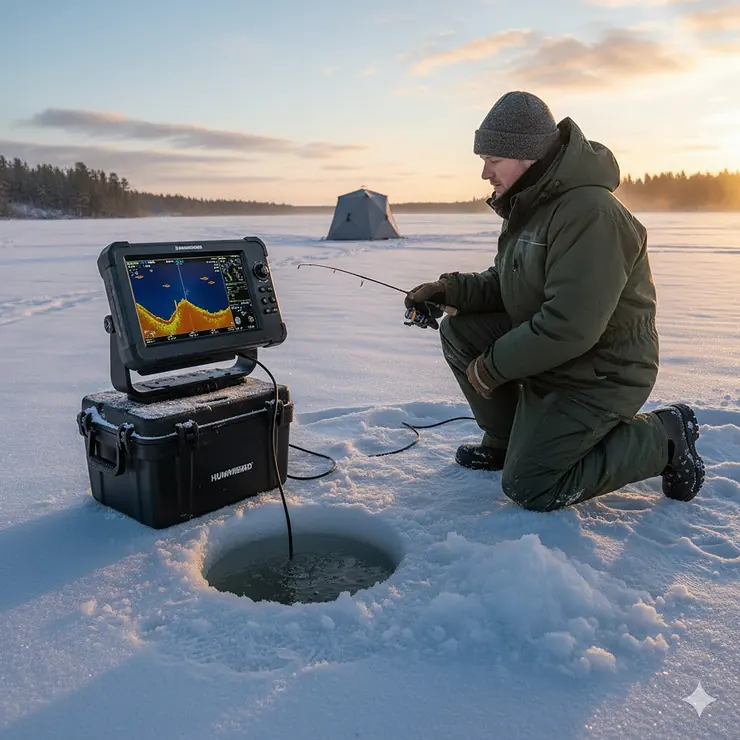
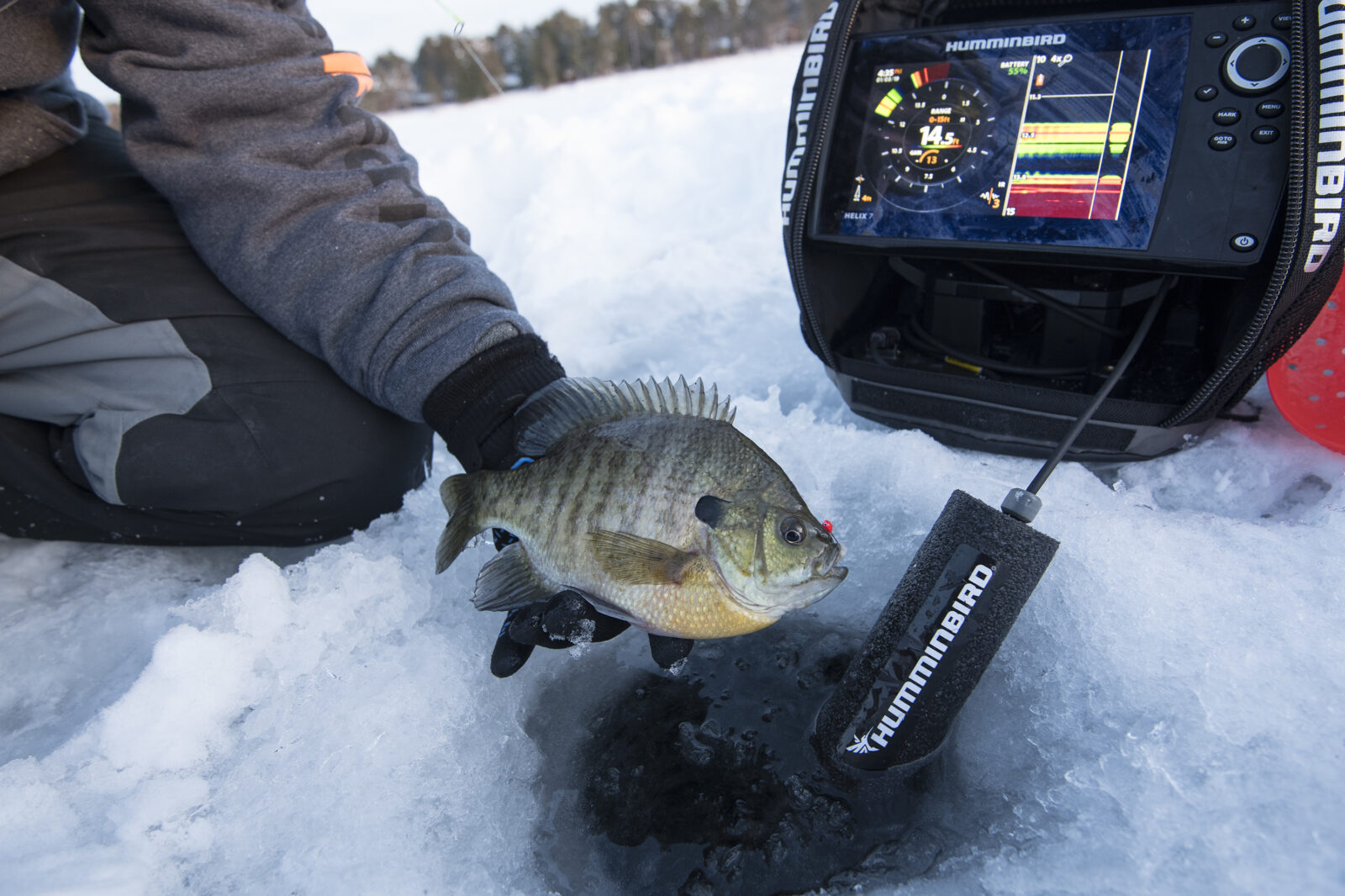
A fish finder can show depth, bottom hardness, weeds, bait, and fish. An ice flasher shows these signals in real time and is especially useful when jigging. Electronics do not replace good location skills, but they reduce the amount of empty water you fish.
Lower the transducer into the hole before you begin. Keep it level and free of ice. If the screen shows a hard bottom, thick weeds, or fish marks, stay long enough to test the area.
Flasher versus ice fish finder
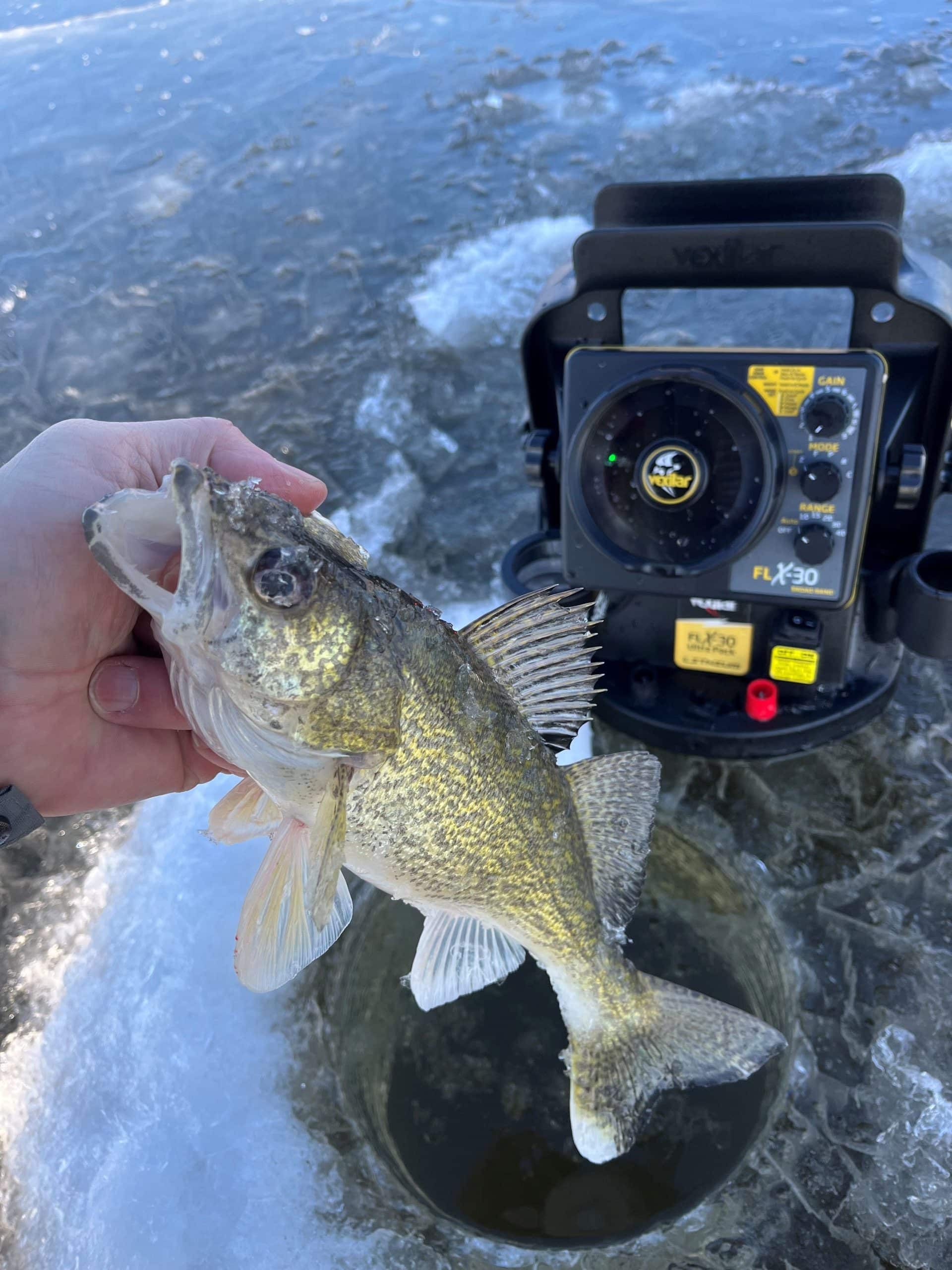
A flasher presents sonar signals in a circular or vertical display. It updates quickly and makes it easy to see your lure and fish rise toward it. Many experienced anglers like flashers for active jigging.
An ice fishing fish finder with a color screen may show a traditional graph, GPS map, side data, and stored waypoints. It can be more versatile, especially for anglers who also fish from a boat in summer.
| Electronics choice | Best suited to | Main strength |
|---|---|---|
| Basic depth finder | Beginners, short trips, budget setups | Shows depth and bottom |
| Ice flasher | Jigging anglers and active searchers | Fast lure and fish response |
| GPS fish finder | Mobile anglers and lake explorers | Maps spots and saves waypoints |
| Camera system | Clear water and visual learners | Shows fish and habitat directly |
A flasher is often the easiest tool for learning how fish react to a lure. A camera can be excellent for kids because it makes the underwater world visible, but murky water, deep water, and low light can reduce its value.
Read sonar marks with care
A fish mark does not always mean an active fish. Sonar may show weeds, bubbles, bait, or interference. Learn to separate your jig from other signals by watching how the mark moves when you raise and lower the lure.
Fish that rise several feet to inspect a bait are often worth targeting. Fish that remain on the bottom may need a slower presentation or a different bait. Fish that scatter from the hole may be spooked by noise, light, or repeated disturbance.
Use electronics to test behavior
Do not stare at a mark without changing anything. Raise the lure two feet. Pause. Drop it slowly. Switch from a spoon to a small jig. The fish response tells you more than the mark alone.
When a fish follows but does not bite, reduce the bait size, slow the motion, or add live bait. When fish disappear, check whether they moved higher, dropped to the bottom, or left the area.

Choose the Right Time of Winter
Fish location changes through early ice, midwinter, and late ice. These periods are useful guides, but weather and local water conditions matter more than the calendar alone.
| Ice period | Common fish locations | Productive search plan |
|---|---|---|
| Early ice | Shallow weeds, flats, bays, first breaks | Start shallow and move toward the edge |
| Midwinter | Deep basins, channels, stable break lines | Search deeper and use electronics |
| Late ice | Inlets, outlets, current areas, warming shallows | Check fresh oxygen and moving water |
These patterns are broad. A deep, clear lake may fish like midwinter even during early ice. A shallow lake can remain productive in weeds for much of the season.
Early ice
Early ice can be one of the best times to search shallow water. Green weeds still provide cover and may hold insects, minnows, and panfish. Walleye often use nearby breaks and points.
Fish may be more willing to move during low light. Start near shallow flats during dawn and dusk, then check the first drop as the sun rises.
Early ice is also the most dangerous part of the season. Ice thickness can vary greatly near shore, springs, current, bridges, channels, and inlets. Never assume that a frozen surface is safe because other people are on it.
Midwinter
As winter settles in, oxygen and food patterns change. Some weeds decay. Fish may move to deeper flats, basins, channels, and stable break lines.
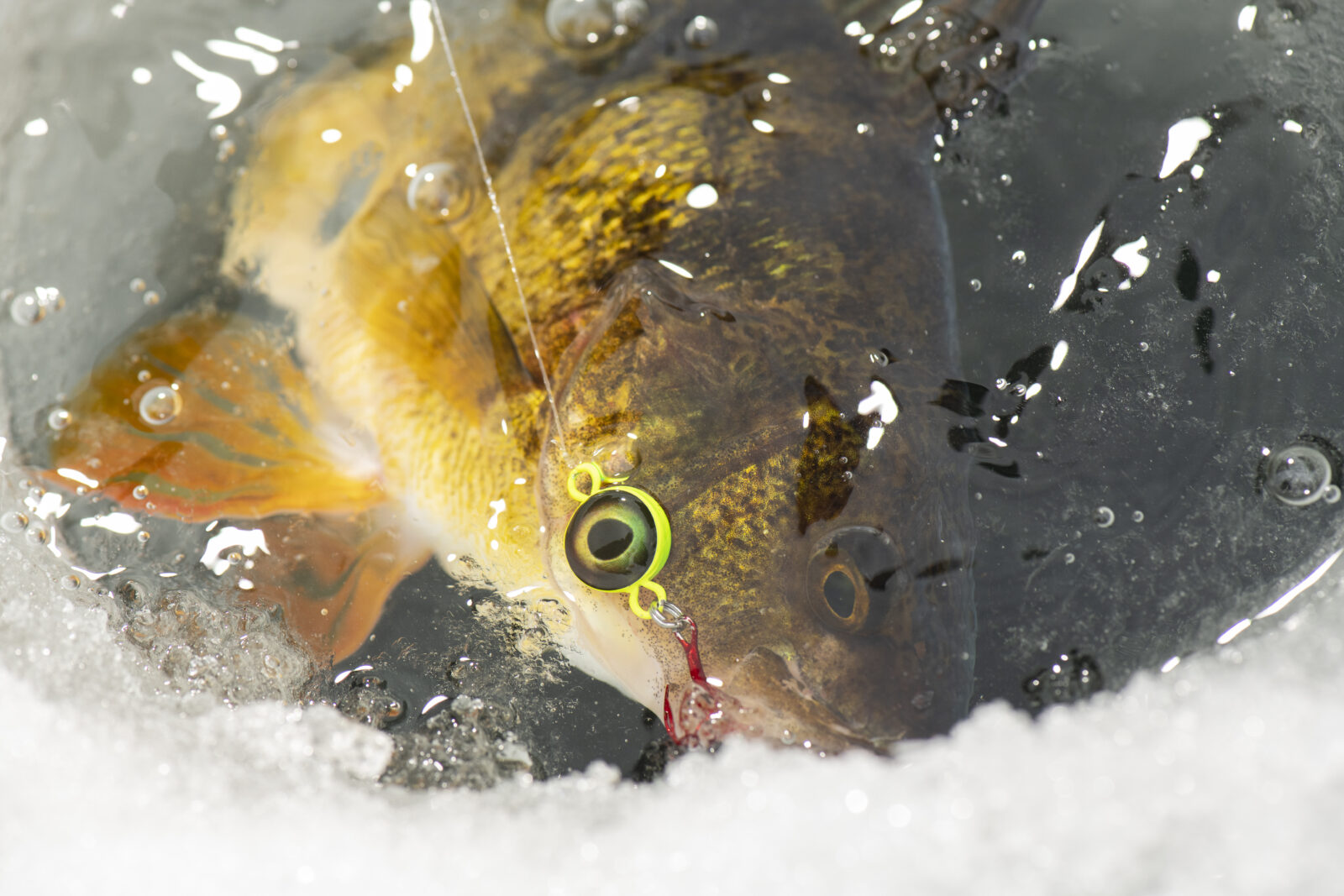
Panfish may suspend over deep water while following plankton. Walleye may hold near structure and make short feeding movements. Trout may travel through the water column rather than stay close to the bottom.
This is when an ice flasher or fish finder becomes especially useful. You can search different depths without guessing.
Late ice
Late ice brings longer days and rising water temperatures. Melting snow and runoff can add oxygen near inlets and shallow shorelines. Fish may move toward current, new food, or warming water.
Be careful around moving water. Ice near an inlet or outlet can be thin even when the main lake has thick ice. Late-season ice can also become soft and unstable across large areas.
💡 Pro Tip: When fish leave a spot in late winter, do not assume the bite is over. Check nearby current, fresh runoff, and the edge where shallow water meets deeper water. Fish may have shifted only a short distance.
Start With the Right Ice Fishing Gear
Finding fish is easier when your gear lets you move, test depths, and change presentations. You do not need a large collection of rods. One light setup and one medium setup cover many common situations.
An ice fishing rod is shorter than a summer rod. Common lengths range from 24 to 36 inches. Short rods are easy to use inside a shelter. Longer rods give more control outside and help absorb sudden runs.
Match rod power and action to the fish
Rod power describes the force needed to bend the rod. Ultralight and light power rods suit panfish and small trout. Medium-light rods handle walleye, bass, and larger trout. Medium or medium-heavy rods suit pike and larger lake trout.
Action describes where the rod bends. Fast action bends near the tip and gives a quick hook set. Moderate action bends farther down the blank and cushions light line or fragile bait.
| Target and method | Rod suggestion | Line suggestion |
|---|---|---|
| Bluegill and crappie | 24–30 in., ultralight or light, fast action | 2–4 lb mono or fluorocarbon |
| Perch and small trout | 26–32 in., light or medium-light | 4–6 lb mono or fluorocarbon |
| Walleye jigging | 28–36 in., medium-light, fast action | 6–10 lb braid with 4–8 lb leader |
| Pike and tip-ups | Medium to medium-heavy rod or tip-up | 10–20 lb line, with legal bite leader |
| Lake trout | 32–42 in., medium or medium-heavy | 10–20 lb braid with fluorocarbon leader |
These ranges are starting points. Check local rules before using special leaders, live bait, or tip-ups. Some waters limit the number of lines or restrict certain bait types.
Select line for cold conditions
Monofilament is affordable and flexible. It works well for beginners, kids, and small panfish. It also has stretch, which can protect light hooks from tearing free.
Fluorocarbon sinks and is less visible underwater. It can be useful in clear water, but it may become stiff in cold weather. Braid has little stretch and gives strong lure control, but it can freeze and may need a monofilament or fluorocarbon leader.
A leader is a short section of line tied between the main line and lure. It can improve abrasion resistance or reduce visibility. For pike, use a bite-resistant leader that follows local regulations.
Carry tools that support mobility
Keep your gear compact. A sled, five-gallon bucket, or small tackle box can hold most of what you need.
Bring:
- Ice auger and spare blades
- Ice scoop
- Ice fishing rods
- Spool of spare line
- Small jigs and spoons
- Live bait container if legal
- Pliers and line cutters
- Measuring tape
- Fish finder or flasher
- Landing net for larger fish
- Hand warmers
- Headlamp
- First-aid kit
- Throw rope and ice picks
A landing net is helpful for walleye, trout, and pike. Pliers protect your hands when removing treble hooks. Keep hooks covered when moving between holes.

Search With Lures Before You Set Deadlines
A moving lure helps you find fish faster than a stationary bait. Start with a small spoon, jigging rap-style lure, blade bait, or soft plastic. The exact lure depends on the species and local rules.
Use a lure that you can see on your electronics. If you cannot identify your bait, it is hard to understand fish behavior.
Begin with a simple jigging sequence
Lower the lure near the bottom. Lift it 6 to 12 inches with a sharp snap, then let it fall on a controlled line. Pause for two to five seconds. Repeat several times.
If fish appear, change the cadence:
- Slow lift and long pause
- Short shakes near the bottom
- High lift followed by a free fall
- Small circles with a jig
- Deadstill bait with tiny rod-tip movement
Many strikes happen during the fall or pause. Keep the line tight enough to feel contact, but do not pull the lure away from a fish that is inspecting it.
Use live bait when fish need a slower look
Live bait can help when fish are inactive or pressured. Minnows, waxworms, spikes, and nightcrawler pieces may be legal choices, depending on the water.
A small hook beneath a bobber can work for shallow fish. A jig tipped with a waxworm can work for panfish. A minnow beneath a tip-up can target pike or walleye.
Check bait laws before fishing. Some waters ban live bait or require baitfish to come from approved sources. Never release unused minnows into a lake.
Change one variable at a time
When fish do not bite, avoid changing everything at once. First change depth. Then change speed. Next try a smaller lure. After that, test a different color or bait.
This process shows you what caused the response. It also prevents you from making random changes without learning anything.

Know When to Stay and When to Move
Mobility is one of the strongest advantages in ice fishing. Fish may not be far away, but a small depth change can make a large difference. The challenge is knowing when a hole has earned more time.
A fish finder can speed up the decision. If the hole has no fish, bait, weeds, or useful bottom feature, move sooner. If you see fish but no bites, stay long enough to test a few presentations.
Use a practical waiting rule
For active search fishing, give a hole about 5 to 10 minutes if there are no marks. If you see fish, give it longer while changing your lure and movement.
For a stationary dead-bait setup, you may wait longer. A tip-up set near a known travel route can produce even when fish are not visible on sonar.
Do not treat these times as strict laws. Cold fronts, high pressure, and low activity can make fish slow. Your goal is to balance patience with coverage.
Follow signs from nearby anglers
Other anglers can reveal useful information, but do not crowd them or cross their lines. Look for clusters of people, active flags, or anglers who move between a few holes.
Ask polite questions. “Have you found them shallow or deep?” often works better than asking for an exact waypoint. Share general information when you can. A healthy fishing community helps everyone learn.
Follow the fish, not the crowd
Crowded areas may hold fish, but they can also have heavy pressure. Fish may move away from noise, bright holes, or repeated lure drops.
If a crowd is fishing one depth, try the next contour line. A small move can find less pressured fish. Keep a safe distance from other anglers and respect private property.
Use Ice Safety as Part of Your Fish-Finding Plan
No fish is worth taking an unsafe step. Ice thickness can change across the same lake. Current, springs, pressure cracks, snow cover, and moving water create hidden weak spots.
Before you go, check local ice reports, weather, and access conditions. Reports are helpful, but no report replaces checking the ice in front of you.
⚠️ Safety Warning: Wear a properly fitted U.S. Coast Guard–approved personal flotation device when conditions allow, especially during early or late ice. Carry ice picks around your neck, bring a throw rope, fish with a partner, and tell someone your exact plan and return time.
Test ice as you travel
Use a spud bar or ice chisel to test the ice ahead of you. Drill test holes as you move from shore or between areas. Watch for dark ice, slush, cracks, open water, and changes near current.
Do not rely only on thickness numbers. Clear, hard ice is stronger than white, honeycombed ice of the same thickness. Snow can hide weak areas and may insulate ice from further freezing.
Protect yourself from cold
Cold injuries can happen even when the fishing is good. Wear layered clothing, waterproof boots, insulated gloves, and a wind-resistant outer shell. Keep spare gloves and dry clothing in a waterproof bag.
A shelter can reduce wind, but it does not remove the need for ventilation. Heaters that burn fuel can produce carbon monoxide. Use only approved heaters, keep vents open, and install a working carbon monoxide alarm when appropriate.
Carry a simple emergency kit
A safe ice angler carries more than lures. Pack:
- Ice picks
- Throw rope
- Whistle
- Phone in a waterproof case
- Portable power bank
- First-aid kit
- Fire starter
- Extra dry layers
- Water and high-energy food
- Small flashlight
Take a boating safety or ice safety course if you are new to winter travel. Parents should stay close to children and keep them away from open holes and sharp tools.
Avoid Common Fish-Finding Mistakes
Most empty ice fishing trips do not happen because fish vanished. They happen because the angler searched too little water, used one depth, or failed to read the signs.
The table below connects common mistakes with direct fixes.
| Common mistake | What it causes | Better solution |
|---|---|---|
| Fishing one hole all day | Too little coverage | Drill a planned depth pattern |
| Choosing the deepest water only | Missed shallow feeding areas | Check flats, weeds, and first breaks |
| Ignoring the bottom | Missed food and structure | Learn hard, soft, rocky, and weedy areas |
| Jigging too fast | Spooks inactive fish | Add pauses and smaller movements |
| Using heavy line for tiny jigs | Poor lure action | Match line to species and lure size |
| Relying only on old GPS spots | Wrong depth or habitat | Confirm with sonar and current conditions |
| Crowding active anglers | Stress and poor etiquette | Ask first and give space |
A large lure is not always better. A heavy jig may sink quickly, but it can look unnatural to small panfish. A tiny jig may be hard to see on sonar and may not reach deep water efficiently.
Noise also matters. Drilling can attract or disturb fish, depending on the species and conditions. Drill your search holes first, then settle down and fish the best holes after the area rests.
Adjust Your Approach for Beginners, Kids, and Gift Buyers
The best setup depends on who will use it. A beginner needs simple controls and a clear plan. A child needs safe, light gear that feels manageable. An experienced angler may value fast electronics, multiple rods, and the ability to move quickly.
A starter plan for beginners
Start with a light or medium-light ice fishing rod between 26 and 32 inches. Pair it with a small spinning reel or an ice combo loaded with 4- to 6-pound monofilament.
Carry a small selection of:
- 1/32- to 1/8-ounce jigs
- Small spoons
- Soft plastic grubs
- Waxworms or other legal bait
- A compact bobber
- Small pliers
- An ice scoop
Learn one lake feature at a time. Begin with a point or weed edge. Drill holes across it. Watch your line and electronics. The goal is to understand the water, not to carry every lure in the store.
A safe setup for kids
For kids, choose a short rod with a soft tip and a simple spinning reel or spincast combo. A spincast combo has a covered reel and a push-button release, which can be easier for a child to manage than a baitcaster.
Use small hooks and barbless hooks when practical. Keep the child near an adult, away from the auger, and clear of open holes. A bright shelter, warm clothing, and short fishing sessions make the experience more enjoyable.
👪 Parent or Gift-Buyer Note: If you are buying a gift, ask whether the angler already owns an auger, flasher, shelter, or rod. Small items such as a quality ice scoop, insulated gloves, pliers, or a tackle box are safer gifts when you do not know the full setup.
An upgrade path for experienced anglers
Experienced anglers may benefit from a GPS fish finder, electric auger, multiple ice rods, and a sled system. A fast flasher can help when searching large flats or tracking suspended fish.
Do not upgrade only for more features. Buy the tool that solves your current problem. If you miss fish because you cannot see your lure, improve electronics. If you find fish but cannot move, improve transport or your auger.

Understand How Fish Finders Show Bottom and Fish
Sonar sends sound pulses into the water and reads the returning signal. Hard bottom returns a strong signal. Soft mud gives a weaker or thicker return. Weeds may appear as tall or uneven marks.
This information helps you find habitat even when fish marks are unclear. A soft-bottom basin may hold insects and bloodworms. A hard edge beside mud can attract perch and walleye.
Identify suspended fish
Suspended fish appear above the bottom. They may follow plankton, baitfish, or warmer water. Do not lower your lure all the way to the floor if fish are holding halfway up.
Start your lure above the fish and bring it toward them. Fish often respond better when a bait enters their field of view from above.
Read the bottom line
A thin, strong bottom line often suggests hard bottom. A thick or fuzzy bottom line may suggest softer material. Some sonar units change color or display settings, so learn your own device.
A rock-to-mud transition can be only a few feet wide. Drill several holes to find it. Small changes in bottom composition can create a productive edge.
Reduce sonar confusion
Electrical interference may create extra marks or a noisy display. Separate transducers when several anglers use electronics close together. Adjust sensitivity and screen settings according to the water depth.
Keep the transducer centered and below the ice. Remove slush from the hole. A tilted transducer can make the lure appear off to one side.

Find Fish in Different Water Types
Not every frozen lake fishes the same way. Clear lakes, stained lakes, shallow ponds, reservoirs, and deep natural lakes each need a slightly different search.
Shallow ponds and small lakes
Small ponds often warm and cool quickly. Fish may relate to weeds, creek mouths, old channels, and the deepest available water.
Panfish may be spread across a weed bed. Bass and pike may sit near the outside weed edge. If the lake has a small deep hole, check the slope leading into it.
Deep natural lakes
Deep lakes often offer more stable winter habitat. Look for basin edges, steep rock, suspended bait, and deep points.
Lake trout may roam above deep water, while walleye use rock and break lines. Electronics are valuable because fish may be far above the bottom.
Reservoirs
Reservoirs often contain old creek channels, submerged roadbeds, standing timber, and irregular depth changes. Water levels can create confusing shoreline maps, so use current mapping data when possible.
Old river channels can be productive travel routes. Be cautious near current areas and dam structures. Local rules may limit access or prohibit fishing in certain zones.
Clear and stained water
Clear water allows fish to see farther. Natural colors, smaller lures, and subtle movement may help. Stained water reduces visibility, so vibration, flash, sound, and scent may become more useful.
The best color depends on light and water clarity. Carry a few natural colors, one bright option, and one dark option. Change color after testing depth and movement.
Practice Catch and Release and Follow Local Rules
Ice fishing regulations vary by state, province, lake, and species. Rules may cover fishing licenses, open seasons, bag limits, size limits, hook types, live bait, tip-ups, line numbers, and the use of lead tackle.
📜 Check Local Regulations: Before fishing, confirm current rules with your state wildlife agency, tribal natural resources office, or local fisheries department. Check the specific water, not only the general state guide.
Handle fish with care. Wet your hands before touching them. Keep fish out of the air for as little time as possible, especially in freezing weather. A fish can suffer damage when its eyes, gills, or skin freeze.
Use barbless hooks when allowed and practical. Circle hooks can help with some bait methods, but they are not a universal choice for every ice fishing rig. Follow the rules for the species and water.
Dispose of broken line, hooks, bait containers, and plastic soft baits properly. Never leave fishing line on the ice. Birds and mammals can become tangled in it.
Release fish through the ice
If you plan to release a fish, prepare before lifting it from the hole. Clear slush. Remove the hook tools. Avoid dragging large fish across sharp ice.
Do not force a fish through a hole that is too small. Use a larger hole or an appropriate landing net for large trout, pike, and lake trout. Return the fish headfirst when safe and legal.
Keep only what you will use
Follow daily limits and possession rules. Keep fish cold and clean. If you do not need a fish, release it quickly rather than placing it on the ice for a photo.
Conservation protects the quality of the fishery for families, visitors, and future anglers. A healthy lake is the best long-term fishing tool.
Maintain Your Ice Fishing Gear
Cold, water, salt from roads, and repeated movement can damage gear. Freshwater ice fishing does not create the same corrosion risk as saltwater fishing, but reels, electronics, blades, and battery contacts still need care.
After each trip, dry your rods, reels, shelters, and electronics. Remove ice before storing gear. Do not pack wet clothing or a damp shelter for long periods.
| Gear | After-trip task | Storage task |
|---|---|---|
| Ice auger | Dry blades and shaft | Protect blades and check fasteners |
| Spinning reel | Wipe off water and ice | Store with light drag tension |
| Fish finder | Dry screen and cable | Remove battery or charge as directed |
| Rod and line | Check guides and knots | Store straight and dry |
| Shelter | Dry fabric fully | Store loose, not damp or compressed |
| Tackle box | Dry hooks and lures | Replace rusty terminal tackle |
If you also use your reel in saltwater, rinse it with low-pressure fresh water and follow the maker’s care directions. Saltwater-rated reels often use better corrosion protection, but no reel is corrosion-proof.
Replace line and hooks when needed
Signs it is time to replace line include rough sections, flat spots, memory coils, weak knots, or unexplained breaks. Replace rusty hooks and damaged split rings before the next trip.
Check auger blades for chips or dull edges. Dull blades make drilling harder and can increase fatigue. Store sharp blades with a cover and keep them away from children.
🔧 Quick Fix: If your reel feels stiff in the cold, do not pour hot water on it. Move it into a dry shelter, wipe away ice, and use lubricant approved for the reel and cold conditions.
A Simple Ice Fishing Search Plan
A repeatable plan keeps you from wasting the best part of the day. Use the same basic process whether you fish for bluegill in a pond or walleye on a large lake.
- Choose the target species. Decide whether you are looking for panfish, walleye, trout, pike, bass, or another fish.
- Study the lake map. Mark points, flats, weeds, drop-offs, channels, humps, and deep basins.
- Pick one structure feature. Start with a point, weed edge, break, or basin edge.
- Drill a line or grid. Cover several depths instead of fishing one hole.
- Check the bottom. Use your flasher, fish finder, lure, and auger clues.
- Search with a moving lure. Test depth and fish response.
- Change one variable. Adjust speed, bait size, color, or depth.
- Move when the evidence is weak. Do not remain over empty water without a reason.
- Mark useful information. Save depth, location, time, weather, and presentation.
- Fish safely and follow the rules. Conditions and regulations come before the bite.
This process turns ice fishing into a series of small questions. You are not asking, “Where are all the fish?” You are asking, “Which depth, structure, and presentation should I test next?”
Frequently Asked Questions
Q: What depth is best for ice fishing?
A: There is no single best depth. Panfish may use 5 to 30 feet, walleye often use points and breaks from 10 to 40 feet, and trout may use much deeper water. Start where the target species finds food and cover, then test several nearby depths.
Q: How long should I fish one ice hole?
A: If your sonar shows no fish, bait, weeds, or useful bottom, move after about 5 to 10 minutes during an active search. If you see fish, stay longer and change the lure or cadence. Stationary tip-ups may deserve more time near a known travel route.
Q: Do I need a fish finder for ice fishing?
A: No. You can find fish with maps, an auger, and a planned hole pattern. A fish finder or flasher makes the process faster by showing depth, bottom, lure position, and fish response. It is especially useful in deep water or when fish suspend.
Q: Are fish deeper in winter?
A: Some fish move deeper as winter progresses, but not all fish do. Early-ice panfish may stay in shallow weeds. Late-ice fish may move toward warming water and inlets. Depth depends on species, food, oxygen, light, and lake structure.
Q: What is the best lure for finding fish under the ice?
A: A small jigging spoon, blade bait, or compact jig can help you search because it covers water quickly and shows on sonar. Use a smaller jig with live bait or a soft plastic when fish are cautious. Local rules may limit lure or bait choices.
Q: Should I fish the bottom or suspend my lure?
A: Check both. Start near the bottom, then raise the lure in steps of 1 to 3 feet. Fish may hold above deep water while following bait or plankton. A flasher helps you place the lure at the same level as the fish.
Q: What line is best for ice fishing?
A: Monofilament is affordable and easy for beginners. Fluorocarbon can work well in clear water but may stiffen in cold weather. Braided line gives strong control and low stretch, but many anglers add a 2- to 10-pound leader depending on the species.
Q: What rod should a beginner use for ice fishing?
A: A 26- to 32-inch light or medium-light ice fishing rod is a useful starting point for panfish, perch, and small trout. Use a medium-light or medium rod for walleye. Match rod power to fish size and lure weight.
Q: Can I use a regular spinning reel for ice fishing?
A: Yes, a small spinning reel can work well, especially in a shelter. Wipe away ice and water after each trip. An ice fishing reel or combo may have features that suit cold use, but a basic spinning reel remains a practical budget choice.
Q: Is early ice safe for fishing?
A: Early ice is often less stable and more dangerous than established midwinter ice. Test the surface with a spud bar, wear ice picks, fish with a partner, and avoid current, springs, bridges, and inlets. Check local reports, but make your own safety decisions.
Q: Where do walleye go under the ice?
A: Walleye often use points, rock, saddles, drop-offs, creek channels, and the edges of shallow flats. They may move shallow during low light to feed and slide deeper during the day. Search travel routes instead of only the deepest basin.
Q: Where do panfish go in winter?
A: Panfish may hold in shallow weeds early, then move to deeper weeds, soft-bottom basins, or suspended water. Small depth changes matter. Use a light ice fishing rod, 2- to 6-pound line, and a small jig or bait.
Q: How do I find lake trout under the ice?
A: Look for deep basins, steep rock, suspended bait, and areas near major depth changes. Lake trout may travel high above the bottom. Use a medium or medium-heavy ice rod, stronger line, and a spoon or jig that reaches the fish.
Q: Should I use a tip-up or a jigging rod?
A: Use a jigging rod when you want to search and trigger fish with movement. Use a tip-up when you want to cover another location with live or dead bait, where legal. Many anglers use both, but local rules may limit the number of lines.
Q: How do I know when to move to another hole?
A: Move when a hole lacks fish, bait, cover, or a useful depth feature after you test a few presentations. Stay when fish appear, rise toward the lure, or react to changes. Productive ice fishing balances mobility with patience.
Final Advice for Finding Fish Under the Ice
The best way to find fish when ice fishing is to combine lake knowledge with active searching. Start with a map. Choose structure that gives fish access to food and safety. Drill across depth changes instead of relying on one hole. Use a flasher or fish finder when possible, but learn to read the bottom and water on your own.
Think in patterns. Early ice often rewards shallow weeds and first breaks. Midwinter can push fish toward stable deep water, channels, and basin edges. Late ice may bring fish toward current and warming shallows. These patterns guide your search, but your electronics, local reports, and daily observations should make the final call.
Keep your setup simple, stay mobile, and change one detail at a time. A careful plan helps beginners learn faster, gives kids a safer and more engaging experience, and lets experienced anglers spend more time over useful water. Most important, check ice conditions and local regulations before every trip. The strongest fishing strategy is the one that brings you home safely with a better understanding of the lake.