Best Fish Hook Sharpener: Sharpen Hooks Like A Pro
The SAMSFX Dual-Grit Diamond Stone is my top pick for sharp, portable, and versatile hook care.
A dull hook can turn a good cast into a missed fish. It may drag across a fish’s mouth instead of setting cleanly. I tested the key features that matter most in a fish hook sharpener: grit, groove shape, grip, size, portability, and control. The picks below cover simple hand files, multi-groove sharpeners, knife-and-hook tools, and one powered option. I also explain which sharpener fits small hooks, heavy saltwater hooks, boat kits, and budget tackle boxes.
See the differences between my top picks at a glance.
| Sharpener | Grit / surface | Best use | Portability | Buy |
|---|---|---|---|---|
| SAMSFX Dual-Grit | 200/400 diamond | All-around hook care | Excellent | View on Amazon |
| Kraken Bass | Diamond stone | Grooved hook and knife work | Very good | View on Amazon |
| Electric Sharpener | Powered abrasive tip | Fast touch-ups | Good | View on Amazon |
| Skylety 4-Pack | Fine and medium diamond | Shared tackle boxes | Excellent | View on Amazon |
| Rapala Hook File | File surface | Simple field use | Very good | View on Amazon |
| Skylety Double-Sided | Fine and medium diamond | Saltwater tackle | Excellent | View on Amazon |
| Smith’s DCS4 | Double-sided diamond | Hooks and outdoor tools | Excellent | View on Amazon |
| Miyake Hook Hone | 600/800 diamond | Fine finishing work | Excellent | View on Amazon |
| Lansky Multi-Groove | Multiple grooves | Different hook sizes | Very good | View on Amazon |
| Skylety 4-Pack Red | Fine and medium diamond | Backup files | Excellent | View on Amazon |
SAMSFX Dual-Grit Diamond Stone

The SAMSFX sharpener uses two diamond surfaces marked 200 and 400 grit. That gives me a coarse side for a worn point and a finer side for a final touch-up. Its three hook grooves help guide the point during short, controlled strokes. The four-inch body also fits well in a boat box or jacket pocket.
I like the steel keychain design for anglers who often move between shore spots. The two-pack format adds useful value because I can keep one in my main tackle bag and one in a backup kit. It also works on some knife edges, though it remains best suited to hooks and small pointed tools. Use light pressure, since heavy force can remove too much metal.
Pros:
- Two grit levels for repair and finishing
- Three grooves help guide hook points
- Compact four-inch design
- Useful steel keychain attachment
- Two-pack offers strong practical value
- Works for hooks and some small knives
Cons:
- The 200-grit side may feel aggressive on tiny hooks
- The slim body needs a firm grip in wet conditions
- It does not replace a full knife sharpening system
What Amazon Buyers Are Saying
Buyer feedback commonly focuses on the compact size, useful grooves, and the convenience of having two files. Users who want a basic hook tool tend to value its simple design. As with many small diamond files, some comments point to the need for light pressure and careful storage. Actual results can vary with hook metal, pressure, and cleaning habits.
My Recommendation
I recommend this as the best fish hook sharpener for most anglers. It balances control, grit choice, portability, and price. It is especially useful for freshwater and light saltwater tackle.
Kraken Bass Diamond Hook Sharpener
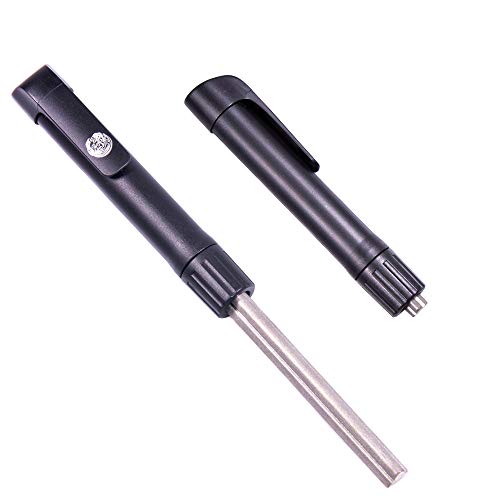
The Kraken Bass sharpener combines a diamond stone with a grooved hook surface. That design suits anglers who want one small tool for point work and quick knife touch-ups. The groove can help keep a hook point from sliding across a flat file. This matters when you sharpen beside the water and have little room to work.
The tool has a focused design rather than a large multi-tool body. I find that useful for bass hooks, treble hooks, and common freshwater sizes. It still requires a steady hand and gentle passes. The diamond surface should cut efficiently, so repeated hard strokes are not needed.
Pros:
- Grooved surface supports hook-point control
- Diamond surface cuts faster than a basic steel file
- Compact design suits tackle bags
- Can handle hook and small knife work
- Simple layout is easy to learn
Cons:
- One main tool may offer less grit choice
- Small size can feel tight for large hands
- Heavy corrosion may need more preparation first
What Amazon Buyers Are Saying
Common buyer comments emphasize the handy size and the grooved design. Anglers often look for a tool that can stay in a bass box without adding bulk, and this model fits that role. Some users may prefer a wider handle or more than one abrasive grade. Review results can differ based on the size and condition of the hook.
My Recommendation
This is a good choice for freshwater anglers who want a focused, grooved hook file. I would choose it over a plain file when point control matters more than grit variety.
Electric USB-Rechargeable Hook Sharpener

This USB-rechargeable model targets anglers who want powered sharpening with less hand work. A motor can make quick touch-ups feel simple, especially when several hooks need attention. It may suit a boat, garage, or shore kit where charging is easy. The compact format also avoids carrying a full bench grinder.
Powered tools need more care than hand files. I would start with short contact time and low pressure. Hold the hook steady, keep fingers clear, and check the point often. A motor can remove metal quickly, so it may not suit anglers who want maximum control on very small hooks.
Pros:
- Powered action reduces manual filing effort
- USB charging suits modern tackle kits
- Useful for quick repeat touch-ups
- Good option for anglers with limited hand strength
- Portable alternative to larger powered tools
Cons:
- Needs charging before a longer trip
- Less tactile control than a manual diamond file
- May be too aggressive for delicate points
What Amazon Buyers Are Saying
Buyer interest centers on speed and ease. People who dislike repeated hand filing may find the powered format appealing. The main points to consider are battery readiness, motor control, and the learning curve. Because powered hook sharpeners are more dependent on technique, careful use matters more than speed alone.
My Recommendation
I recommend this for anglers who value convenience and sharpen several hooks at once. For fine control, I still prefer a manual diamond sharpener. For fast maintenance, this model earns consideration.
Skylety Four-Pack Diamond Hook Files

This Skylety set includes four portable hook files with fine and medium diamond surfaces. A multi-pack works well for anglers who keep several tackle boxes or fish with family. The four-inch length gives enough body for a useful grip without taking much space. The handles also make the files easier to hold than a bare abrasive strip.
I see this set as a practical value choice. You can assign one file to freshwater hooks, one to saltwater gear, and keep the others as backups. The two grit options support both light shaping and final touch-ups. Still, you should rinse and dry each file after saltwater use.
Pros:
- Four files support several tackle kits
- Fine and medium surfaces cover common needs
- Handled design improves grip
- Compact four-inch format travels well
- Good value for shared use
Cons:
- Storage takes more space than one file
- Color and finish may vary by set
- Medium grit may feel coarse on tiny hooks
What Amazon Buyers Are Saying
Buyer feedback commonly values the number of files and the low-clutter size. The set appeals to anglers who want a backup in every bag. Some users may prefer a stronger single tool with a wider handle. As with all diamond files, cleaning away metal dust helps preserve smooth use.
My Recommendation
This is one of the best fish hook sharpener options for families, guides, and anglers with multiple tackle bags. It offers useful redundancy at a sensible price.
Rapala 4-Inch Hook File

The Rapala Hook File keeps the idea simple. It gives anglers a small file made for hook-point maintenance. The four-inch body fits in many lure boxes and pockets. Its simple design makes it easy to use without adjusting a clamp or learning a complex system.
This kind of tool works best when the hook only needs a light refresh. Make a few strokes from the shank toward the point, then test the tip with care. Do not scrub back and forth without checking your work. The file is a good match for anglers who want a trusted, compact tool rather than extra features.
Pros:
- Simple design suits new anglers
- Four-inch size travels easily
- Fast for routine touch-ups
- Fits many lure and tackle boxes
- Lightweight field tool
Cons:
- Less grit flexibility than double-sided files
- No large handle for heavy pressure
- Not ideal for badly damaged hook points
What Amazon Buyers Are Saying
Common buyer interest centers on the familiar brand, small size, and direct purpose. Anglers who want a basic file often prefer this low-fuss style. The main limitation is the lack of extra surfaces or grooves. Buyers should match the file to the condition and size of their hooks.
My Recommendation
I recommend the Rapala file for simple maintenance and emergency tackle-box use. It is not the most versatile option, but it is easy to carry and easy to understand.
Skylety Double-Sided Saltwater File

This Skylety hook hone has double-sided fine and medium diamond surfaces. Its rubber grip helps create a more secure hold during wet-weather work. A lanyard makes it easier to keep the tool attached to a vest, kayak, or tackle bag. That is useful when a small tool would otherwise disappear on a rocking boat.
The medium side can restore a worn point, while the fine side can smooth the result. I would use short strokes and inspect the point often. Saltwater anglers should rinse the tool with fresh water after use and let it dry fully. That care helps protect the file and the handle from early wear.
Pros:
- Fine and medium sides provide useful range
- Rubber grip supports wet-hand control
- Lanyard helps prevent loss
- Good match for shore and kayak fishing
- Portable four-inch body
Cons:
- Needs fresh-water rinsing after saltwater use
- Small handle may not suit heavy gloves
- Not designed for major hook reshaping
What Amazon Buyers Are Saying
Buyer comments often highlight the grip, lanyard, and double-sided design. These details matter to anglers who fish around water and need a file that stays close. Some users may want a heavier tool for large hooks. Care after saltwater exposure remains important for any portable sharpener.
My Recommendation
This is a strong choice for saltwater, kayak, and shore anglers. The grip and lanyard make it more practical in the field than a smooth, unprotected file.
Smith’s DCS4 Diamond Combination Sharpener

The Smith’s DCS4 is a small double-sided diamond sharpener made for more than fishing hooks. Its compact body can serve as a field tool for pointed items, small blades, and outdoor gear. That wider use makes it appealing to hikers, hunters, campers, and anglers. It offers a dependable backup when a hook file is not the only tool you need.
The flat diamond sides give good control, but this model may take more care around a tiny hook point. I prefer it for anglers who already know how to use a flat sharpener. It is light enough for a pocket kit and useful when space matters. Keep the strokes short and avoid changing the hook’s original shape.
Pros:
- Useful for hooks and other pointed tools
- Double-sided diamond construction
- Lightweight outdoor design
- Compact for emergency kits
- Versatile choice beyond fishing
Cons:
- Flat sides offer less hook guidance
- May require more technique on small hooks
- Not a dedicated multi-groove hook file
What Amazon Buyers Are Saying
Buyer interest often comes from the tool’s wider outdoor use. Users like products that can handle more than one task while taking little room. The most likely concern is the flat shape, since beginners may want a groove to guide a hook. It works best for buyers who value versatility and already use controlled strokes.
My Recommendation
Choose this model if you want a compact outdoor sharpener that also handles hook points. For hook-only use, a grooved file may feel easier.
Miyake Fine Diamond Hook Hone

The Miyake hook hone uses 600 and 800 diamond grit surfaces. Those fine grades suit final sharpening and light maintenance more than heavy repair. The four-inch length gives the hand a useful base for controlled strokes. Its slim profile also fits well in a lure box or pocket.
I would pair this tool with a coarser file if I often fish around rocks or heavy cover. For hooks that are only slightly dull, the finer surfaces can help preserve the point. They also reduce the risk of removing too much metal during routine care. Always inspect the point under good light before returning the lure to service.
Pros:
- Fine 600/800 grit range for finishing
- Good for light hook maintenance
- Compact four-inch design
- Supports careful point work
- Easy to store with small tackle
Cons:
- Not the best choice for badly damaged points
- Finer grit may need more passes
- Limited guidance compared with grooved files
What Amazon Buyers Are Saying
Buyer interest centers on the fine grit and small profile. Anglers who care about gentle finishing may prefer this style. The main limitation is clear: fine surfaces do not remove damage as quickly as coarse diamond grit. Buyers should use it as a finishing tool or for hooks that need only a small touch-up.
My Recommendation
I recommend the Miyake for careful anglers who already own a coarse file. It is a strong finishing tool, but not my first choice as a stand-alone sharpener.
Lansky Multi-Groove Hook Sharpener

The Lansky Multi-Groove sharpener focuses on hook-point control. Its different grooves can help anglers work with more than one hook size. That makes it useful for tackle boxes with small lures, larger plugs, and several styles of hooks. The guided design can also help new users avoid random filing angles.
I like multi-groove tools when I maintain many lure types during a trip. The key is to choose the groove that fits without forcing the hook into place. Use light pressure and follow the existing point angle. This type of sharpener may not offer the same grit flexibility as a double-sided diamond file, but its guidance can make the process easier.
Pros:
- Multiple grooves suit varied hook sizes
- Guided design improves consistency
- Good choice for lure-heavy tackle boxes
- Simple for beginners to learn
- Compact field-friendly format
Cons:
- Groove fit may vary by hook shape
- Less flexible than a two-grit flat file
- Large specialty hooks may not fit every groove
What Amazon Buyers Are Saying
Buyers commonly focus on the multi-groove layout and ease of use. Anglers with mixed tackle often value a guide that reduces guesswork. Some users may still prefer a flat diamond file for unusual hook shapes. The best results come from using the correct groove and keeping pressure low.
My Recommendation
This is a smart pick for beginners and anglers who carry many hook sizes. I would choose it when guided control matters more than having several abrasive grades.
Skylety Four-Pack Hook Files in Red

This red Skylety set offers four handled hook files with fine and medium diamond surfaces. The bright color can make the tools easier to spot inside a dark tackle bag. A four-pack also works for anglers who keep separate freshwater and saltwater supplies. The handled body gives more grip than a narrow, unprotected file.
The set is best for routine sharpening and shared use. Medium grit can help restore a point, while fine grit can smooth the final edge. I would mark or assign each file to a specific kit if I fish in several environments. Rinse the tools after saltwater trips and keep them dry before storage.
Pros:
- Four-file format offers useful backups
- Bright red color improves visibility
- Fine and medium surfaces add flexibility
- Handles support a steady grip
- Good value for several tackle bags
Cons:
- Four files may be excessive for one small kit
- Medium surface can be too strong for delicate hooks
- Needs cleaning after saltwater exposure
What Amazon Buyers Are Saying
Buyer interest commonly centers on the four-pack, visible color, and low storage cost per file. These features suit anglers who want a spare in different bags. Some buyers may prefer one premium tool instead of several basic files. Performance depends on using the right side and avoiding excess pressure.
My Recommendation
This is a practical budget pick for clubs, families, guides, and anglers with several tackle boxes. It offers the same basic role as the other Skylety set in a highly visible color.
How to Choose the Best Fish Hook Sharpener
Choosing the best fish hook sharpener depends on the hook size, damage level, fishing water, and your preferred control. A good file should remove little metal, follow the point angle, and fit your tackle kit. It should also stay easy to hold when your hands are wet or cold.
1. Match the Grit to the Hook’s Condition
Coarse diamond grit works better when a point has a flat spot or small nick. Medium grit suits regular repair and general maintenance. Fine grit works well for final honing and light touch-ups. A dual-grit model gives more choice in one tool. Do not use a coarse surface for every job. It can shorten the life of a good hook.
For most anglers, a medium surface plus a fine surface makes the best balance. A 200/400-style file can handle more repair work. A 600/800-style hone fits finishing work. If you fish around rock, docks, or heavy cover, carry a sharper repair file. If your hooks stay clean, a fine file may be enough.
2. Look for Control, Grip, and Hook Guidance
Hook points are small. Poor control can bend the point or create a weak edge. Grooves help guide the hook and can make the sharpening angle easier to repeat. A rubber handle or textured body helps when the tool gets wet. A lanyard can stop the sharpener from falling overboard.
Flat diamond files offer more freedom for unusual hooks. Multi-groove files offer more guidance for common sizes. Beginners often benefit from grooves. Experienced anglers may prefer a flat or double-sided file. In either case, hold the hook firmly and use short strokes that follow the original angle.
3. Compare Portability, Care, and Long-Term Value
A fishing sharpener should fit the way you fish. A kayak angler may want a small tool with a lanyard. A boat owner may prefer a two-pack for different storage areas. A guide may get more value from a four-pack. A powered model can save time, but it needs charging and careful use.
Clean diamond files with a dry or slightly damp cloth, based on the maker’s care advice. Rinse salt residue from tools that go near salt water. Dry them before closing the tackle box. Never share a file between rusty hooks and clean hooks without cleaning it first. Good care helps preserve the abrasive surface and prevents avoidable corrosion.
Final Verdict: Which Should You Buy?
The SAMSFX Dual-Grit Diamond Stone is my top overall pick. It offers two grits, hook grooves, a compact body, and two-tool value. Choose Lansky for guided grooves or Miyake for fine finishing.
The best fish hook sharpener is the one you will carry and use. Keep strokes light, check the point often, and replace badly damaged hooks when sharpening cannot restore them.
FAQs Of best fish hook sharpener
What is the best fish hook sharpener for most anglers?
The SAMSFX Dual-Grit Diamond Stone is the best all-around choice. It combines two grits, hook grooves, compact size, and useful portability.
Is a diamond file good for sharpening fishing hooks?
Yes. A diamond file removes metal in a controlled way and works well for small hook points. Use light pressure and short strokes.
Should I choose a grooved or flat hook sharpener?
Choose grooves for easier point guidance and flat surfaces for more freedom with unusual hook shapes. Beginners often find grooves simpler.
What grit should I use on a dull fishing hook?
Use a medium or coarse surface for a worn point, then use a fine surface to finish it. Avoid coarse grit on a sharp, delicate point.
How do I sharpen a fish hook without damaging it?
Follow the existing point angle, use light strokes toward the point, and check the tip often. Stop when it catches lightly on a fingernail.