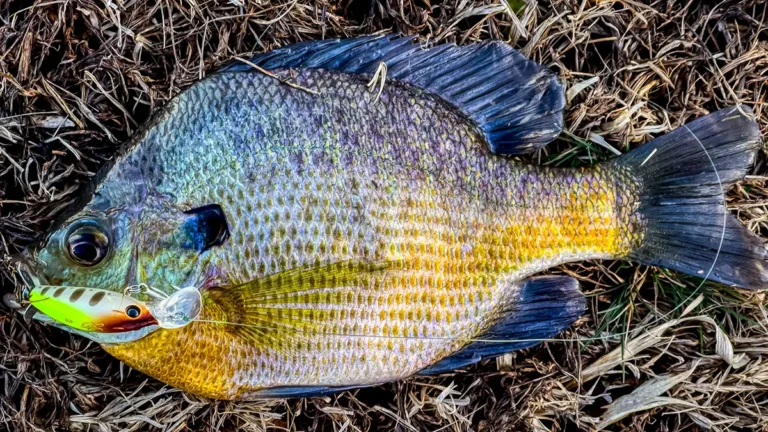
How To Fish Mountain Lakes: Best Fishing Guide
Mountain lakes can look simple, but they often fish unlike lowland ponds and warm reservoirs. Cold water, steep banks, sudden weather, clear water, and changing elevation all affect where fish feed. The best way to fish a mountain lake is to match your plan to depth, water temperature, structure, and the species that live there.
You do not need a boat, expensive electronics, or a large tackle collection. A light spinning rod, a few proven lures, live bait where legal, and a safe plan can be enough for trout, bass, kokanee, perch, and panfish. This guide explains how to find fish, choose gear, rig your line, fish from shore or a kayak, and protect the lake while you enjoy it.

Quick answer: how to fish mountain lakes
To fish a mountain lake, start at dawn or near sunset, check local rules, and look for food and cover near drop-offs, inlets, weed edges, and rocky points. Use a 6- to 7-foot light or medium-light spinning rod with 4- to 8-pound line for trout and panfish. Cast small spinners, spoons, jigs, soft plastics, or legal live bait, then change depth until you find active fish.

Mountain lakes reward patience. Fish may sit in only 5 feet of water one hour and move into 30 feet the next. Wind, sunlight, snowmelt, insects, and lake turnover can change the bite quickly.
What makes mountain lakes different
Mountain lakes are often deep, cold, clear, and surrounded by sharp changes in elevation. Many have little shallow cover, so fish use small areas that provide food, shelter, oxygen, or a temperature they can tolerate.
Cold water also slows fish digestion. Trout may feed on insects, minnows, and plankton for short periods. Bass and panfish may become active in warmer shallows during summer. In high-elevation lakes, ice can remain late into the season, while fall weather may arrive well before the calendar suggests.

Common fish in mountain lakes
The species in a mountain lake depend on its region, stocking history, habitat, and water temperature. Trout are common in cold, clear lakes. Bass, crappie, bluegill, perch, and walleye may live in larger or lower-elevation lakes.
Catfish are less common in very cold alpine water but can occur in warm mountain reservoirs. Kokanee, a landlocked form of sockeye salmon, may also live in deep lakes with suitable plankton and oxygen.
| Target fish | Where to look | Useful presentations |
|---|---|---|
| Trout | Inlets, shore breaks, points, cold tributaries | Spinners, spoons, flies, worms, dough bait |
| Bass | Rocky banks, timber, weed lines, warm coves | Jigs, soft plastics, crankbaits, topwater lures |
| Panfish | Weeds, docks, shallow rocks, calm coves | Small jigs, bobbers, worms, tiny spinners |
| Kokanee | Open water and deep summer areas | Spoons, hoochies, trolling rigs |
| Walleye | Points, humps, drop-offs, low-light zones | Jigs, minnows, crankbaits |
For a first trip, trout and panfish are usually the simplest targets. They often respond to light tackle and small baits. Bass and walleye require more work with depth, structure, and lure choice.
How altitude changes your fishing day
Higher lakes can have stronger sunlight, colder mornings, and fast weather shifts. Thin air can also make physical work feel harder, especially when you hike with a backpack and tackle box.
Plan for layers, water, sun protection, and extra time. A calm morning may turn windy by noon. A warm afternoon near the parking area does not mean the lake shore will feel warm.
The best times to fish mountain lakes
The best time to fish a mountain lake is often early morning, late evening, or during a period of stable weather. Low light makes fish less cautious, and cooler air often keeps trout and other cold-water species active near shore.
Spring can produce excellent shore fishing as water warms and insects appear. Summer often pushes trout deeper during bright days, while bass and panfish move into shallow cover. Fall may bring aggressive feeding before winter, but access can become difficult.

| Season | Fish location | Main approach |
|---|---|---|
| Spring | Inlets, shallow flats, warming banks | Small lures, worms, flies, slow retrieves |
| Summer morning | Shore breaks, weed edges, points | Spinners, topwater lures, live bait |
| Summer midday | Deep water, shade, cold inflows | Spoons, jigs, weighted bait, trolling |
| Fall | Rocky banks, points, creek mouths | Spoons, crankbaits, jigs, streamers |
| Winter | Safe ice, deep basins, spring areas | Ice jigs, bait, electronics, small spoons |
Weather can matter more than the calendar. A cloudy day may keep fish shallow longer. Wind can push insects and plankton toward one bank, which may bring baitfish and game fish with them.
Water temperature and fish behavior
Water temperature affects both fish location and feeding speed. Trout often prefer cold, oxygen-rich water. Bass usually become more active as water warms, though very hot water can reduce feeding during the day.
You do not need a temperature gauge to begin, but one can help. A small thermometer gives you useful information at different depths. Record the depth, temperature, weather, and lure that worked so your next trip starts with better clues.
Gear for shore fishing, boats, and kayaks
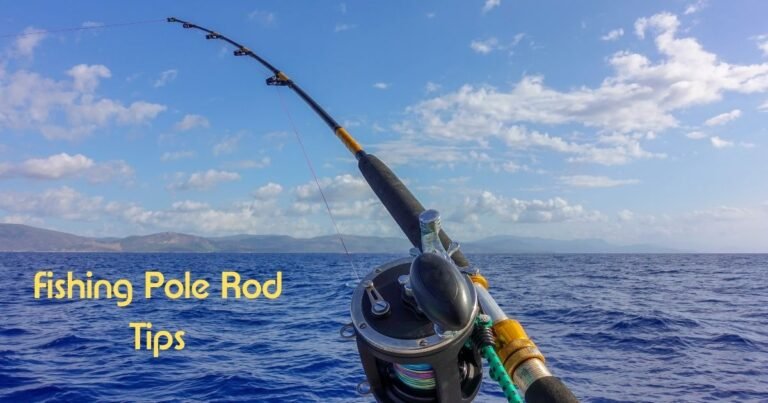
A 6- to 7-foot spinning rod is the most flexible choice for most mountain lake anglers. Light power suits trout and panfish. Medium-light power adds strength for larger trout, smallmouth bass, walleye, and light jigging.
“Power” describes how much force a rod needs to bend. “Action” describes where it bends. A fast-action rod bends near the tip and gives good lure control. A moderate action bends farther down and can help keep treble-hooked fish pinned.
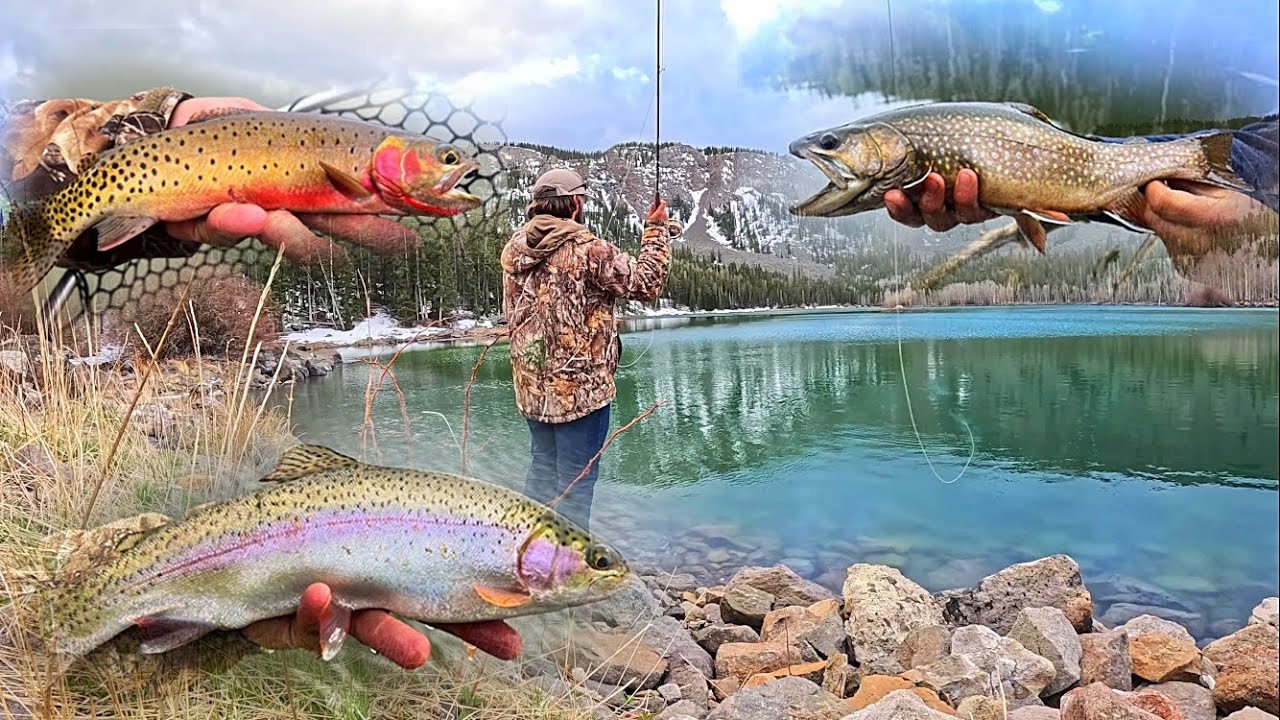
A practical starter setup
For a beginner, a 6-foot-6-inch light or medium-light spinning rod paired with a 2000- or 2500-size spinning reel is a strong starting point. Use 4- to 6-pound monofilament for trout and panfish, or 6- to 10-pound line for mixed species.
Monofilament is affordable, easy to tie, and slightly stretchy. Fluorocarbon is harder to see underwater and works well as a leader, which is the short section between your main line and hook or lure. Braided line is thin and sensitive, but it needs a fluorocarbon or monofilament leader in clear water.
| Fishing goal | Rod and reel | Line and leader |
|---|---|---|
| Trout and panfish | 6–7 ft light spinning rod, 1000–2500 reel | 4–6 lb mono or braid with 4–6 lb leader |
| Mixed species | 6’6”–7’ medium-light spinning rod, 2000–2500 reel | 6–10 lb mono or braid with 6–8 lb leader |
| Bass and walleye | 6’8”–7’2” medium spinning rod, 2500–3000 reel | 8–12 lb braid with 6–10 lb leader |
| Ice fishing | 24–32 in light ice rod | 2–6 lb mono or fluorocarbon |
| Fly fishing | 8’–9’ 4- to 6-weight fly rod | Matching floating line and tapered leader |
Spincast combos are easy for children and new anglers because they reduce line tangles. Telescopic rods pack well for hiking, but low-cost models may have weaker guides or joints. Fly rods are excellent for insect patterns and careful presentations, but they have a steeper learning curve than spinning gear.
Lures, bait, and terminal tackle
Terminal tackle means the small items at the end of your line. Useful pieces include hooks, sinkers, bobbers, swivels, split rings, snaps, and leaders.
Carry several sizes rather than one large collection. For trout, small spinners, spoons, inline lures, flies, and legal bait cover many situations. For bass, pack jigs, soft plastics, crankbaits, and small topwater lures. Panfish often respond to a tiny jig below a bobber.
| Item | Good starting range | Best use |
|---|---|---|
| Trout spinner or spoon | 1/16–1/4 oz | Shore casting and moving water |
| Small jig | 1/32–1/8 oz | Panfish, trout, and vertical fishing |
| Soft plastic | 1.5–4 in | Bass, perch, and walleye |
| Hook | Size 8–14 for bait | Trout and panfish |
| Bobber | Small fixed or slip style | Shallow bait fishing |
| Sinker | BB split shot to 1/4 oz | Adjusting bait depth |
Use the lightest weight that reaches the depth you need. Heavy sinkers can make bait look unnatural and may snag more often on rocky bottoms.
Reading the shoreline and lake map
The best way to find fish from shore is to identify places where depth, food, and cover meet. Look for points, steep banks, creek mouths, submerged rock, weed edges, fallen trees, and the edge of a shallow flat.
A lake map can reveal more than the shoreline. Use a paper map, mapping app, or fish finder to locate contour lines. Closely packed contour lines show a steep drop-off. Wide lines suggest a flatter area.

High-value locations
Inlets bring cold water and insects into the lake. Outlets can concentrate fish, but access may be restricted. Rocky points create current and break lines where fish can ambush prey.
Drop-offs are especially valuable in clear mountain lakes. Fish can move between shallow feeding areas and deep safety without traveling far. Cast along the edge instead of only casting straight into deep water.
How to search new water
Use a simple grid. Start near shore and make several casts parallel to the bank. Then cast at a 45-degree angle, followed by a long cast toward deeper water.
Change one factor at a time. Try a different depth before changing every lure in your box. If you change lure, color, speed, and location at once, you will not know what caused the result.
Effective mountain lake rigs and presentations
Your rig should match the species, depth, water clarity, and wind. A simple setup often works better than a complex one because it lets you cover water and detect light bites.
Bobber and bait rig
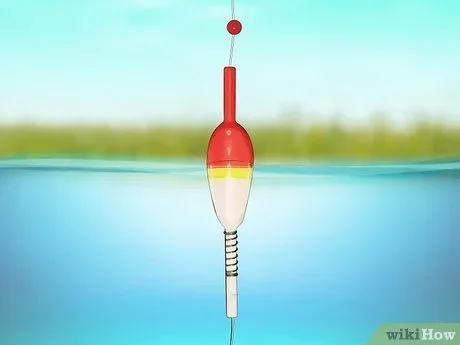
A bobber rig is a strong choice for beginners, kids, and trout anglers fishing from shore. Thread your main line through a small bobber, add a split shot 12 to 24 inches above the hook, and tie on a size 8 to 14 hook.
Use a worm, prepared bait, or another legal bait. Set the bait just above the bottom or suspend it near a visible drop-off. If the bobber lies flat, your bait may be resting on the bottom. Adjust the depth until the bait moves naturally.
Bottom rig for trout
A basic sliding-sinker rig keeps bait near the lake floor while allowing a fish to move with less resistance. Slide a small egg sinker onto the main line, add a swivel, then tie on 18 to 30 inches of leader and a small hook.
This rig works best on a clean bottom. Rocks, branches, and weeds can cause frequent snags. Use enough weight to hold position, but not so much that the bait becomes stuck.
Casting lures
Cast a spinner or spoon beyond the area you want to fish. Let it sink for a set count, then retrieve at a steady pace. Count down again on the next cast to test a different depth.
Many trout respond to a slow, steady retrieve with occasional pauses. Bass may prefer a jig hopped along rocks or a soft plastic dragged near cover. Watch your line closely because clear-water fish may follow a lure without striking until the final few feet.
Jigging deep water
Vertical jigging works from a boat, kayak, dock, or safe ice. Drop the jig to a likely depth, lift it 6 to 18 inches, pause, and repeat.
Use a fish finder if available, but do not treat it as a fish-catching machine. It shows depth, structure, and often marks fish. You still need the right lure, depth, speed, and hook set.
Step-by-step plan for your first mountain lake trip
A clear plan reduces wasted time. Follow these steps, then adjust based on signs from the lake.
- Check access and regulations. Confirm the lake is open, verify the fishing license rules, and review species limits, bait rules, hook restrictions, and boating requirements.
- Study the map. Mark inlets, points, drop-offs, parking areas, trails, boat ramps, and restricted zones.
- Pack for exposure. Bring layers, rain gear, water, food, sunscreen, polarized sunglasses, a first-aid kit, and a charged phone.
- Start with light tackle. Use a light or medium-light spinning setup unless you know the lake holds larger fish.
- Begin near structure. Fish an inlet, point, rocky bank, weed edge, or drop-off before walking to open shoreline.
- Cover three depths. Try near the surface, halfway down, and close to the bottom.
- Change speed before color. Slow a lure, pause it, or retrieve it faster before replacing it.
- Move after a focused search. Give an area 15 to 30 minutes if conditions are good. Move if you see no signs of life.
- Handle fish carefully. Wet your hands, support the fish, and keep it out of the water for only a short time.
- Leave the shore cleaner. Take line, bait containers, hooks, and trash home.

The goal of the first trip is not to test every lure. It is to learn how the lake is built and how fish use it. Keep notes on weather, water clarity, depth, lure, and result.
Fishing from shore versus a boat or kayak
Shore fishing is affordable and simple. It also limits your access to deep water and distant structure. A boat or kayak expands your range, but it adds safety tasks, transport needs, and weather risk.
Kayak fishing can be effective on mountain lakes because a kayak moves quietly. Choose a stable fishing kayak with enough capacity for your body, tackle, water, and safety gear. Never exceed the manufacturer’s weight limit.
| Fishing platform | Main advantage | Main limitation |
|---|---|---|
| Shore | Low cost and simple access | Limited range and depth |
| Canoe | Stable and easy to transport | Wind can push it across open water |
| Kayak | Quiet access to structure | Less room and higher capsize risk |
| Motorboat | Covers water quickly | Requires fuel, skill, and more equipment |
| Ice setup | Access during winter | Ice and weather create serious hazards |
Boat and kayak safety
Wear a U.S. Coast Guard-approved personal flotation device whenever you fish from a boat, canoe, or kayak. Cold mountain water can cause loss of movement within minutes, even on a warm day.
Check wind and storm forecasts before launching. Tell someone your route, launch point, and return time. Carry a whistle, light, phone in a waterproof case, paddle leash where suitable, and a way to signal for help.
⚠️ Safety Warning: Mountain weather can change fast. Do not launch on open water if strong wind, lightning, or poor visibility is moving in. A personal flotation device works only if you wear it.
Ice fishing on mountain lakes
Ice fishing can offer access to deep basins and winter fish, but ice is never automatically safe because it looks solid. Thickness can vary near inlets, outlets, springs, current, shorelines, and areas covered by snow.
Check local ice reports and learn from experienced anglers. Carry ice picks, a spud bar, flotation clothing where suitable, a rope, and a partner. Avoid fishing alone.
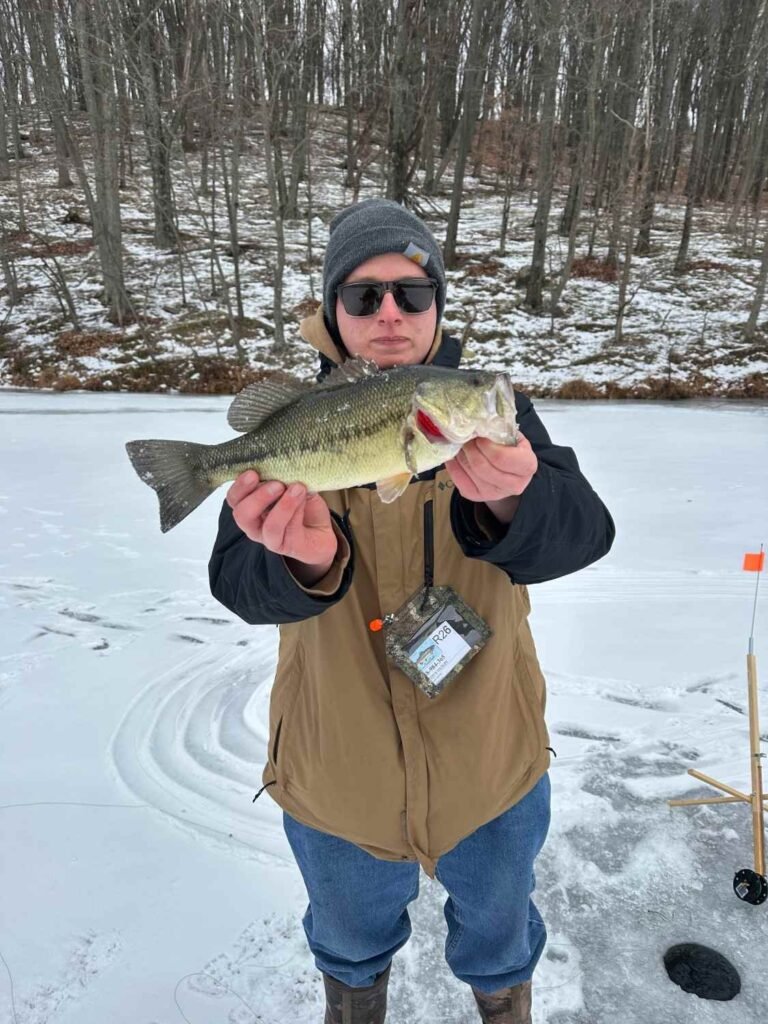
A short ice fishing rod, light line, small jig, and bait can catch trout, perch, and panfish. An ice flasher or fish finder helps you watch the lure and fish at different depths.
⚠️ Safety Warning: There is no single ice thickness that makes every situation safe. Test ice as you go, avoid unknown areas, and take a recognized ice-safety course before fishing unfamiliar water.
Common mistakes that slow down beginners
Most poor results come from fishing the wrong depth, moving too fast, or staying in one place without a plan. These mistakes are easy to correct.
| Mistake | Why it hurts | Better choice |
|---|---|---|
| Using heavy line in clear water | Fish may detect it and lures act poorly | Use lighter line or a clear leader |
| Fishing only the surface | Fish may be suspended or deep | Test three depth zones |
| Casting without a pattern | You learn little from each cast | Change one factor at a time |
| Using too much weight | Bait looks unnatural and snags | Use the lightest useful sinker |
| Ignoring wind | You miss food pushed to one bank | Fish the windward shoreline |
| Keeping a poor fish | Released fish may not survive | Follow careful catch-and-release steps |
Do not assume deep water always holds fish. Deep areas can be too cold, too dark, or low in oxygen. Fish use depth when it provides a benefit, not simply because it is available.
Do not overfill your tackle box. A small box with a few spinners, spoons, jigs, soft plastics, hooks, sinkers, swivels, and leaders is easier to carry and use.
How to handle and release fish
Catch and release works best when you plan for it before the first bite. Keep a landing net, long-nose pliers, and a dehooking tool ready. Barbless hooks can make release faster and reduce damage where legal.
Wet your hands before touching a fish. Avoid squeezing the body, touching the gills, or placing the fish on dry rocks. Keep the fish in the water while removing the hook when possible.
If you need a photo, support the fish with both hands and keep it close to the water. Return it gently and hold it facing into calm water until it swims away.
🌿 Conservation Note: Never leave fishing line, bait containers, hooks, or soft-plastic lures on the shore. Line can injure birds and wildlife, while discarded bait can spread disease or invasive species.
How much mountain lake fishing costs
Mountain lake fishing can cost less than many outdoor hobbies. A basic spinning combo may cost about $30 to $80, while a more durable rod and reel can range from $100 to $250 or more. Prices change by brand, materials, and current listings.
You may also need a license, line, hooks, lures, pliers, a net, polarized sunglasses, and transportation. A kayak, boat, fish finder, or camping equipment adds far more to the total.
| Budget level | Typical setup | Best for |
|---|---|---|
| Under $75 | Spincast or basic spinning combo, line, hooks, small lures | Kids, beginners, short shore trips |
| $75–$200 | Light spinning combo, tackle box, net, pliers, polarized glasses | Regular shore anglers |
| $200–$500 | Better rod and reel, braid, leaders, larger lure selection | Experienced anglers and mixed species |
| $500+ | Kayak or boat equipment, electronics, safety gear | Anglers who fish often and travel farther |
A low-cost setup is worthwhile when it matches the fish and water. Expensive gear cannot replace location, timing, or practice. For a gift buyer, a simple combo plus a local license gift card and a guided trip may be more useful than a complex reel.
Care and storage for mountain lake gear
Freshwater gear still needs care. Sand, silt, sunscreen, grit, and moisture can damage reel bearings, drag washers, guides, and hooks.
After each trip, wipe the rod and reel with a damp cloth. Loosen the drag before storage, but keep the reel dry. Check the line for nicks, especially after fishing around rocks.
Simple gear-care checklist
- Rinse mud and grit from the rod guides.
- Wipe the reel body with a clean, damp cloth.
- Inspect the first 3 feet of line for rough spots.
- Replace rusty, bent, or dull hooks.
- Dry soft plastics before storing them.
- Keep bait separate from clean tackle.
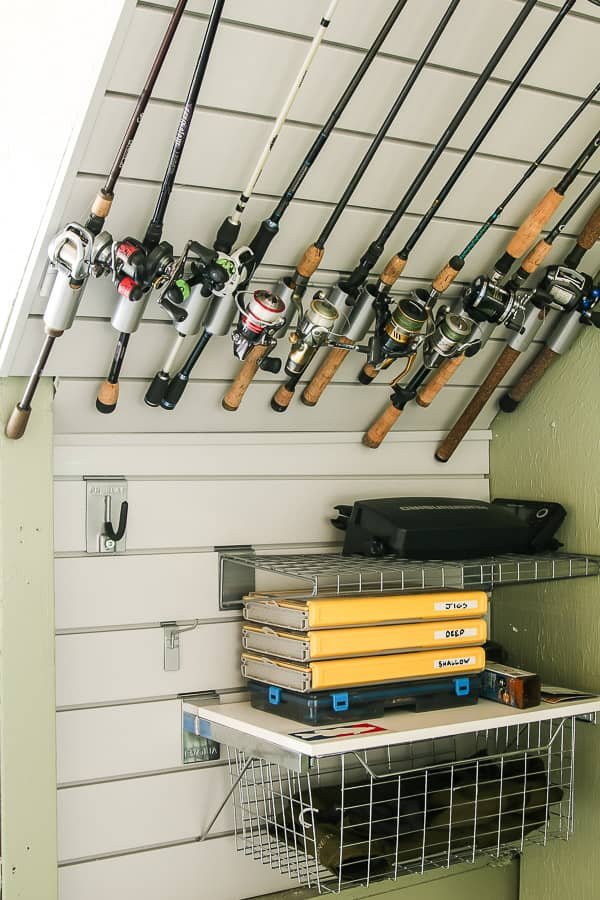
- Store rods in a cool, dry place.
- Do not leave a wet tackle box closed.
- Follow the reel maker’s instructions for oil and grease.
Braided line may last for several seasons, but the leader and terminal tackle often need replacement sooner. Monofilament should be replaced when it becomes brittle, curled, or damaged. Fluorocarbon can weaken after repeated abrasion and hard knots.
When to ask a local tackle shop or guide
A local tackle shop can save you hours by explaining lake access, current water conditions, legal bait, and productive depth ranges. Ask specific questions instead of asking only, “What is biting?”
Useful questions include:
- Which species are active from shore?
- What depth are anglers finding trout or bass?
- Are live bait and treble hooks allowed?
- Are there closed areas or private shorelines?
- Is the lake safe for a kayak this week?
- Which lure size matches the local forage?
- Is the launch open and suitable for a small boat?
A licensed guide is useful when you have limited time, fish unfamiliar water, or want to learn boat handling, fly fishing, trolling, or electronics. Choose a guide who follows local laws and explains the method rather than simply doing everything for you.
Regulations, licenses, and responsible access
Fishing rules vary by state, lake, species, and season. Some mountain lakes have special rules for bait, barbed hooks, artificial lures, harvest limits, cutthroat trout, bull trout, kokanee, or protected native fish.
Check the current regulations from the state wildlife agency before traveling. Confirm license requirements, size limits, bag limits, closed seasons, access rules, boating laws, and restrictions on lead tackle.
📜 Check Local Regulations: A lake’s general state fishing license may not cover every special rule. Read the lake-specific section and carry proof of your license when required.
Respect private land, campgrounds, closures, and wildlife areas. Use established trails, pack out trash, and clean boats, kayaks, nets, and waders before moving to another lake. Dry equipment fully to reduce the spread of invasive species.
Frequently asked questions
What is the best bait for mountain lake trout?
Worms, insects, prepared trout bait, and small minnows can work where legal. The best choice depends on the lake, season, and local rules. Keep bait near the depth where trout are feeding, not automatically on the bottom.
What lure size should I use in a mountain lake?
Start with a 1/16- to 1/4-ounce spinner, spoon, or jig. Use smaller lures for panfish, pressured trout, and clear water. Increase size when wind, depth, or larger forage calls for it.
Can I fish mountain lakes with a regular spinning rod?
Yes. A 6- to 7-foot light or medium-light spinning rod works for many trout, panfish, bass, and perch. Use a stronger medium rod when the lake holds large bass, walleye, pike, or heavy cover.
Is braided line good for clear mountain lakes?
Braid offers strong, thin line and excellent sensitivity, but fish may see it in clear water. Use a 2- to 6-foot fluorocarbon leader, matched to the target species and local cover.
Should I fish deep or shallow in summer?
Try shallow water at dawn and dusk. During bright, warm periods, trout may move deeper, while bass and panfish may remain near shade, weeds, rocks, or cover. Test several depths rather than guessing.
Are mountain lakes good for kids?
Yes, especially when you choose easy shore access, calm weather, and panfish or stocked trout. A spincast combo, small bobber, simple hook, and legal bait can keep the setup easy. Adults should handle hooks, knives, and fish handling until the child is ready.
Do I need a fish finder?
No. A fish finder helps locate depth, structure, and suspended fish from a boat or kayak, but shore anglers can use maps, visual clues, and a systematic casting plan. Learn to read the lake before buying electronics.
How do I fish a mountain lake without a boat?
Walk to points, creek mouths, rocky banks, drop-offs, and accessible weed edges. Cast parallel to shore and vary depth. A small tackle box and a light spinning rod make hiking easier.
What is the best knot for mountain lake fishing?
The improved clinch knot is simple for many hooks and lures. The Palomar knot works well with braid and fluorocarbon when tied correctly. Check every knot after catching a fish or snagging a rock.
How long does fishing line last?
Line life depends on storage, sunlight, abrasion, and use. Replace monofilament when it becomes brittle or badly coiled. Replace any line with cuts, flat spots, or severe wear before your next trip.
Can I use saltwater fishing gear in a mountain lake?
You can, but it may be heavier than needed. Saltwater-rated gear is designed to resist corrosion, yet its size and line capacity may reduce sensitivity for trout and panfish. Freshwater gear is usually lighter and easier to carry.
What should I do if I hook a fish deeply?
Do not pull hard or tear the hook free. If the hook is deep, cut the line close to the hook and release the fish if regulations allow. A local fisheries agency or guide can provide species-specific advice.
Final advice for fishing mountain lakes
Start with a safe, simple plan. Use a light spinning rod, modest line, small lures or legal bait, and a few hours to test depth and structure. Fish early or late, watch the weather, and let the lake tell you what to change.
The most useful skill is not owning more tackle. It is learning to connect clues: a cold inlet, a windy bank, a rocky point, a drop-off, an insect hatch, or a change in light. Take notes, protect the fish and water, and each trip will make the next one easier.