What Length Fishing Rod Do I Need? Find the Perfect Size Fast
Choosing the right fishing rod length can make or break your time on the water. Whether you’re casting from a boat, riverbank, or shoreline, rod length affects casting distance, accuracy, and control. This guide breaks down everything you need to pick the perfect size for your fishing goals.
Walk into any tackle shop, and you’ll see walls of fishing rods in every size imaginable. Some are short and stubby. Others look like they could double as vaulting poles. So how on earth do you figure out what length fishing rod you need?
It’s one of the most common questions anglers ask — and honestly, one of the most important. The right rod length affects everything from how far you can cast to how well you can fight a fish. Pick the wrong size, and you’ll spend your day frustrated. Pick the right one, and fishing feels effortless.
In this guide, we’ll walk you through everything. You’ll learn how rod length impacts your fishing, what size works for different species and environments, and how to find your perfect match without overthinking it. Let’s dive in.
- Rod length matters for casting distance: Longer rods cast farther, while shorter rods offer better accuracy and control in tight spaces.
- Match rod length to your fishing environment: Use shorter rods (5–6 feet) for small streams and longer rods (7–12 feet) for surf fishing or open water.
- Species plays a role: Bigger fish and heavier lures call for longer rods with more backbone, while panfish and trout do well with shorter, lighter setups.
- Your experience level counts: Beginners often benefit from medium-length rods (6–7 feet) that are easier to handle and more forgiving.
- Rod power and action work alongside length: The ideal rod combines the right length with the appropriate power and action for your target species.
- Transport and storage are practical concerns: Consider whether a long rod will fit in your vehicle, boat, or storage space before buying.
- You don’t need a rod for every scenario: One well-chosen, versatile rod (around 7 feet) can handle most freshwater fishing situations.
📑 Table of Contents
- Why Fishing Rod Length Matters More Than You Think
- Choosing the Right Rod Length by Fishing Environment
- Matching Rod Length to Your Target Species
- Rod Length for Different Skill Levels
- Understanding the Relationship Between Rod Length, Power, and Action
- Quick Tips for Choosing Your Rod Length
- Common Mistakes When Choosing Rod Length
- Rod Length Comparison Table
- Expert Insights on Rod Length Selection
- Conclusion: Finding Your Perfect Rod Length
Why Fishing Rod Length Matters More Than You Think
Rod length isn’t just a number printed on the blank. It directly influences your casting performance, hook-setting power, and overall control. Think of it like choosing the right golf club — each one has a purpose.
Here’s the basic rule: longer rods cast farther, and shorter rods give you more precision. That’s because a longer rod creates a wider arc during your cast, which generates more line speed and distance. A shorter rod keeps things tight and controlled, which is perfect when you need to drop a lure into a specific spot.
But it goes beyond casting. Rod length also affects how you fight fish. A longer rod gives you more leverage, which helps with bigger species or when you need to keep a fish away from structure. A shorter rod puts you closer to the action, which can be an advantage when you’re using light tackle for smaller fish.
How Rod Length Affects Casting Distance
If you need to reach fish that are far from shore or your boat, a longer rod is your best friend. An 8-foot or 9-foot rod can add 10 to 20 feet of casting distance compared to a 6-foot rod. That might not sound like much, but when fish are holding at the edge of a drop-off, those extra feet matter.
Longer rods also help with line management. They keep more line off the water, which reduces drag and lets your lure travel farther. This is especially useful for surf fishing or pier fishing where you need to punch through wind and reach distant sandbars.
How Rod Length Affects Accuracy
On the flip side, accuracy improves with shorter rods. When you’re fishing around docks, under overhanging trees, or in narrow creeks, you don’t want a long rod swinging around. A 5-foot or 6-foot rod lets you place your bait exactly where you want it.
This is why many bass anglers who fish heavy cover choose shorter rods. They can skip lures under docks and flip into thick vegetation with pinpoint precision. It’s a completely different game from open-water casting.
Choosing the Right Rod Length by Fishing Environment
Where you fish should be the first thing you consider. Your environment dictates rod length more than almost anything else. Let’s break it down by the most common fishing scenarios.
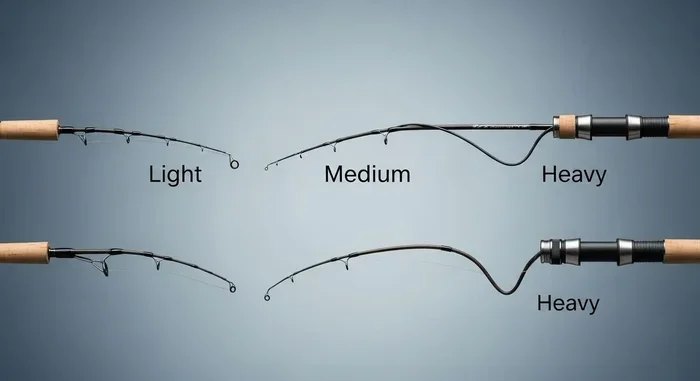
Visual guide about fishing rod length comparison
Image source: spinningpole.com
Small Streams and Creeks (5–6 Feet)
If you’re wading through a narrow trout stream with trees on both sides, a short rod is essential. Rods in the 5 to 6-foot range let you cast without snagging branches. They’re also lighter, which makes them less tiring on long days in the water.
Short rods pair perfectly with ultralight or light power ratings. This combination is ideal for targeting trout, panfish, and small bass in tight spaces. You’ll feel every bite, and the fights are incredibly fun on light gear.
If you’re just getting started with stream fishing, check out our Fishing Guide For Beginners to learn the basics before you hit the water.
From a Kayak or Canoe (5.5–7 Feet)
Fishing from a small watercraft presents unique challenges. You have limited space, and a long rod becomes a liability. Every paddle stroke risks hooking your rod on something. That’s why most kayak anglers prefer rods between 5.5 and 7 feet.
A 6.5-foot medium power rod is arguably the most popular kayak fishing setup. It’s long enough to cast a decent distance but short enough to manage easily from a seated position. It also gives you enough leverage to fight fish without leaning over the side.
Bank Fishing and Shore Fishing (6.5–8 Feet)
When you’re fishing from shore with open space around you, you can go longer. A 7-foot rod is the sweet spot for most bank anglers. It offers a great balance of casting distance and accuracy, and it works well for a variety of species.
If you’re targeting catfish or carp from a riverbank, consider a 7.5 or 8-foot rod. The extra length helps with longer casts and gives you more control when fighting heavy fish near structure like rocks or fallen trees.
Surf Fishing and Pier Fishing (9–14 Feet)
Surf fishing is where long rods truly shine. To cast bait past the breaking waves and reach fish feeding in deeper water, you need serious length. Most surf anglers use rods between 9 and 12 feet, with some specialised setups reaching 14 feet.
These rods also need heavy power and a strong backbone to handle the weight of sinkers and bait. If you’re interested in getting into this style of fishing, our Saltwater Fishing Tips guide covers everything you need to know about ocean fishing gear and techniques.
Boat Fishing and Trolling (6–8 Feet)
From a boat, rod length depends on what you’re doing. For trolling, shorter rods around 6 to 7 feet work well because they spread out behind the boat and prevent line tangles. For casting or jigging from a boat, a 7 to 8-foot rod gives you better reach and control.
Offshore boat fishing for larger species like tuna or mahi-mahi often uses shorter, heavier rods in the 5.5 to 6.5-foot range. These “stand-up” rods are designed for fighting big fish with harnesses and heavy drag systems.
Matching Rod Length to Your Target Species
The fish you’re after should influence your rod length decision. Different species require different approaches, and the right rod length helps you execute those approaches effectively.
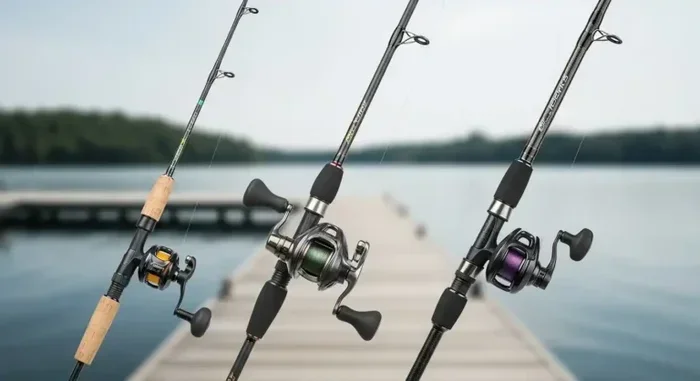
Visual guide about fishing rod length comparison
Image source: smartfishinggear.com
Trout and Panfish (4–7 Feet)
Smaller freshwater species like trout, bluegill, and crappie are best targeted with shorter rods. A 5 to 7-foot ultralight or light rod lets you cast small lures and baits with precision. It also makes fighting these fish more enjoyable since you’ll feel every head shake and run.
If you’re fly fishing for trout, rods are typically even longer — 8 to 9 feet is standard. But for the spinning gear, keep it short and light.
Bass Fishing (6.5–7.5 Feet)
Bass fishing is where rod length gets interesting because it depends on your technique. Here’s a quick breakdown:
- Topwater and moving baits: 6.5 to 7 feet — good for walking baits, spinnerbaits, and buzzbaits
- Jigs and Texas rigs: 7 to 7.5 feet — extra length helps with hook sets on longer casts
- Flipping and pitching: 7 to 7.5 feet — gives you leverage to pull bass out of heavy cover
- Crankbaits: 7 to 7.5 feet — longer rods absorb the shock of strikes and keep fish hooked
Most bass anglers can get by with two rods: a 7-foot medium-heavy for general use and a 7.5-foot heavy for flipping. Everything else is a luxury.
Catfish (7–9 Feet)
Catfish rods tend to be on the longer side. A 7 to 8-foot rod works well for channel cats, while an 8 to 9-foot rod is better for flatheads and blues. The longer length helps with casting heavy sinkers and bait rigs, and it gives you more control when fighting strong fish in current.
If you’re fishing for cats in rivers or reservoirs, a longer rod also helps keep your line above the water and reduces drag from the current.
Saltwater Species (6.5–12 Feet)
Saltwater fishing covers a huge range of species and techniques. Inshore fishing for redfish, snook, and seatrout typically uses 7 to 7.5-foot rods. Offshore trolling for billfish uses shorter, heavier rods around 5.5 to 6.5 feet. And surf fishing for species like striped bass or corbina requires 9 to 12-foot rods.
The key is matching your rod length to the specific saltwater technique you’re using. Our Best Fishing Tips Every Angler guide has additional advice that applies across all fishing styles.
Rod Length for Different Skill Levels
Your experience level should factor into your rod length choice. Beginners and advanced anglers have different needs, and there’s no shame in starting with what’s comfortable.
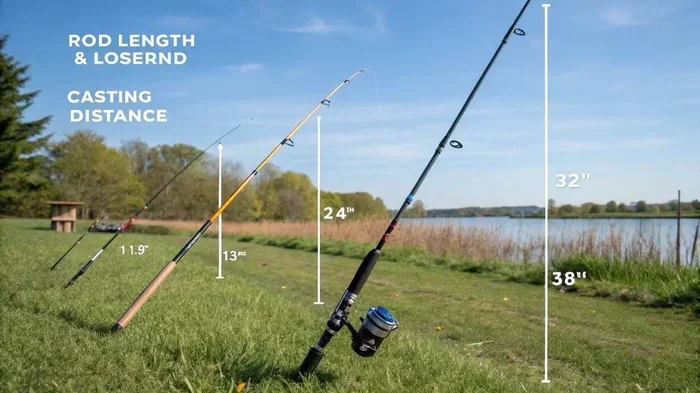
Visual guide about fishing rod length comparison
Image source: crazyfishinggear.com
Beginners: Stick to 6.5–7 Feet
If you’re new to fishing, a medium-length rod around 6.5 to 7 feet is your best starting point. These rods are forgiving, easy to cast, and versatile enough for most freshwater situations. They’re not too long to be unwieldy, and not too short to limit your casting distance.
A 7-foot medium power, fast action spinning rod is arguably the single best rod for a beginner. It can handle everything from bass to walleye to panfish. Learn on this rod, and you’ll quickly develop a feel for what you want in a more specialised setup later.
Intermediate Anglers: Build a Small Collection
Once you’ve got the basics down, start adding rods for specific techniques. A good intermediate setup might include:
- A 6.6-foot medium-light rod for finesse techniques
- A 7-foot medium-heavy rod for general bass fishing
- A 7.5-foot heavy rod for flipping or frog fishing
This covers about 90% of freshwater fishing scenarios without overwhelming your budget or your rod locker.
Advanced Anglers: Specialise
Experienced anglers often own rods for very specific purposes. You might have a 6-foot 10-inch rod for drop shots, a 7-foot 3-inch rod for jigs, and a 7-foot 11-inch rod for long-cast topwater. At this level, every inch matters, and you choose lengths based on years of experience and tournament-tested setups.
Understanding the Relationship Between Rod Length, Power, and Action
Rod length doesn’t exist in isolation. It works together with rod power (how much force it takes to bend the rod) and rod action (where the rod bends). Understanding this relationship helps you make a smarter choice.
Rod Power Explained
Rod power ranges from ultralight to extra heavy. Light power rods are great for small fish, while heavy power rods handle big fish and heavy lures. Generally, longer rods tend to have more power because the extra length provides more leverage.
Rod Action Explained
Action describes where the rod flexes. Fast action rods bend near the tip, giving you better sensitivity and hook-setting power. Slow-action rods bend throughout the entire blank, which is better for fighting fish on light line and casting lighter lures.
Here’s how length interacts with these factors:
- Longer rods with fast action maximise casting distance and hook-setting power at distance
- Shorter rods with fast action give you precision and sensitivity for close-range work
- Longer rods with moderate action are great for crankbaits and treble-hook lures because they absorb head shakes
- Shorter rods with slow action are perfect for ultralight fishing and light line applications
Quick Tips for Choosing Your Rod Length
Before you buy, run through these quick checks to make sure you’re choosing wisely.
- Consider where you’ll fish most often. Your primary fishing spot should drive your decision more than anything else.
- Test before you buy. If possible, hold the rod and practice a casting motion in the store. Does it feel balanced? Is it too long for your comfort?
- Think about transport. A 12-foot surf rod won’t fit in a compact car. Make sure you can actually get your rod to the water.
- Match your reel to your rod. A spinning reel that’s too large or too small for your rod will throw off the balance and hurt your casting.
- Don’t overthink your first rod. A 7-foot medium rod works for dozens of species and techniques. You can specialise later.
- Check the rod’s recommended line and lure weight. These ratings help ensure your line and lures match the rod’s design.
Common Mistakes When Choosing Rod Length
Even experienced anglers make these errors. Here’s what to watch out for.
Mistake #1: Buying the Longest Rod Available
More length isn’t always better. A 10-foot rod might sound impressive, but if you’re fishing small ponds or creeks, it’s a nightmare to use. Choose length based on your actual fishing conditions, not marketing hype.
Mistake #2: Ignoring Your Physical Comfort
If a rod feels heavy or awkward in your hands, you won’t fish well with it. This is especially important for anglers with shoulder issues or smaller frames. A shorter, lighter rod that feels comfortable will always outperform a longer rod that causes fatigue.
Mistake #3: Not Considering Your Fishing Technique
Different techniques demand different lengths. If you’re going to fish topwater frogs in lily pads, you need a heavy-power rod around 7.5 feet. If you’re drop-shotting for bass, you need a lighter, longer rod around 7 feet. One rod can’t do everything perfectly.
Mistake #4: Forgetting About Rod Holders and Storage
Long rods need long rod holders, long rod tubes, and enough space in your vehicle. If you’re fishing from a small jon boat, a 9-foot rod might hit the other side of the boat every time you stand up. Plan.
Rod Length Comparison Table
Here’s a quick reference guide to help you compare common rod lengths and their best uses:
| Rod Length | Best For | Pros | Cons |
|---|---|---|---|
| 4–5 ft | Kids, ultralight trout, small creeks | Very lightweight, easy to control | Limited casting distance |
| 5.5–6.5 ft | Kayak fishing, small streams, panfish | Good balance of control and distance | Not ideal for long casts |
| 7 ft | All-around freshwater, beginners | Versatile, easy to cast, widely available | Not specialised in any one technique |
| 7.5–8 ft | Bass fishing, bank fishing, and catfish | Great casting distance, good leverage | Can be unwound in tight spaces |
| 9–10 ft | Surf fishing, carp fishing, steelhead | Excellent casting distance | Heavy, requires open space |
| 11–14 ft | Specialised surf fishing, long-distance casting | Maximum casting distance | Very heavy, needs special storage |
Expert Insights on Rod Length Selection
Professional anglers and fishing guides often have strong opinions about rod length. Here’s what the experts tend to agree on.
Versatility wins for most anglers. Unless you’re competing at a high level, you don’t need a dozen rods. One or two well-chosen rods in the 7 to 7.5-foot range will cover the vast majority of freshwater fishing situations.
Length should match your dominant casting style. If you’re an overhead caster, you can handle longer rods more easily. If you prefer sidearm or roll casts, a shorter rod might feel more natural.
Don’t overlook rod material. Graphite rods are lighter and more sensitive, which helps offset the weight of longer rods. Fibreglass rods are more durable but heavier, which can make long rods feel like a workout. For more on getting the most out of your gear, our Fishing Pole Rod Tips guide is packed with practical advice.
When in doubt, go slightly longer. Most anglers regret buying a rod that’s too short more than one that’s slightly too long. A little extra length gives you more options on the water.
Conclusion: Finding Your Perfect Rod Length
So, what length fishing rod do you need? The answer depends on where you fish, what you’re targeting, and your experience level. But here’s the good news — you don’t need to overthink it.
If you’re a beginner, grab a 7-foot medium power spinning rod and hit the water. It’s the most versatile setup in fishing, and it’ll teach you what you like and don’t like. As you gain experience, you’ll naturally figure out which specialised rods to add to your collection.
Remember the key principles: longer rods for distance and open water, shorter rods for accuracy and tight spaces. Match your rod to your environment and your target species. And most importantly, choose a rod that feels good in your hands.
The perfect rod length is the one that helps you catch more fish and have more fun doing it. Now stop reading and get out there!
Frequently Asked Questions
What is the best all-around fishing rod length?
A 7-foot medium power rod is widely considered the best all-around length for freshwater fishing. It offers a great balance of casting distance, accuracy, and versatility. This length works well for bass, walleye, panfish, and many other species.
Does rod length affect casting distance?
Yes, longer rods cast farther than shorter rods. A longer rod creates a wider casting arc, which generates more line speed. The difference can be 10 to 20 feet or more when comparing a 6-foot rod to an 8-foot rod.
What length rod is best for beginners?
Beginners should start with a rod between 6.5 and 7 feet. This length is easy to handle, forgiving of casting mistakes, and versatile enough for most fishing situations. A 7-foot medium power spinning rod is the ideal starting point.
Can I use one rod for all types of fishing?
While one rod can handle many situations, it won’t excel at everything. A 7-foot medium rod is versatile enough for most freshwater fishing, but specialised techniques like surf fishing or heavy flipping require different lengths. Most anglers benefit from owning two or three rods for different scenarios.
What length rod is best for surf fishing?
Surf fishing typically requires rods between 9 and 12 feet long. The extra length helps you cast bait past the breaking waves and reach fish feeding in deeper water. Beginners to surf fishing should start with a 10-foot rod as a good middle ground.
How do I know if a rod is too long for me?
If you can’t comfortably cast without hitting obstacles, or if the rod feels unwieldy when fighting fish, it’s probably too long. A rod that’s too long will also feel tip-heavy and cause fatigue faster. Try holding the rod and practising your casting motion before buying.