How To Stop Fish Dying In A Pond: Easy Pond Care Tips
Fish dying in a pond is upsetting, but the cause is often something you can find and fix. Most fish kills come from low dissolved oxygen, poor water quality, sudden temperature changes, disease, overcrowding, or toxic runoff. A dead fish is a warning sign. Several dead fish mean the pond needs quick action.
The best way to stop fish from dying in a pond is to test the water, add safe aeration, remove dead fish, stop feeding, and look for the source of stress. Do not add random chemicals or replace all the water at once. Fast changes can harm fish that are already weak.
This guide explains how to save pond fish, prevent future fish kills, choose the right aeration system, and manage common species such as bass, bluegill, trout, catfish, koi, and goldfish. It also covers backyard ponds, farm ponds, stormwater ponds, and small fishing ponds.

Quick answer: How do you stop fish from dying in a pond?
To stop fish from dying in a pond, increase oxygen with an aerator or fountain, stop feeding, remove dead fish, test dissolved oxygen, ammonia, nitrite, pH, and temperature, and inspect for algae blooms or pollution. Use a partial water change only when safe. Keep livestock, fertilizer, pesticides, and runoff out of the pond, and avoid overstocking.
Why fish die in ponds
Fish die in ponds when the water no longer gives them enough oxygen, food, space, or stable living conditions. The most common cause is low dissolved oxygen, especially after hot weather, heavy rain, cloudy days, or an algae bloom. Water quality problems can also damage fish gills and make them more likely to die from disease.
A pond is a living system. Fish, algae, plants, bacteria, insects, mud, and leaves all use or add oxygen. When one part changes quickly, the whole system can become unstable.
Low dissolved oxygen is the leading cause
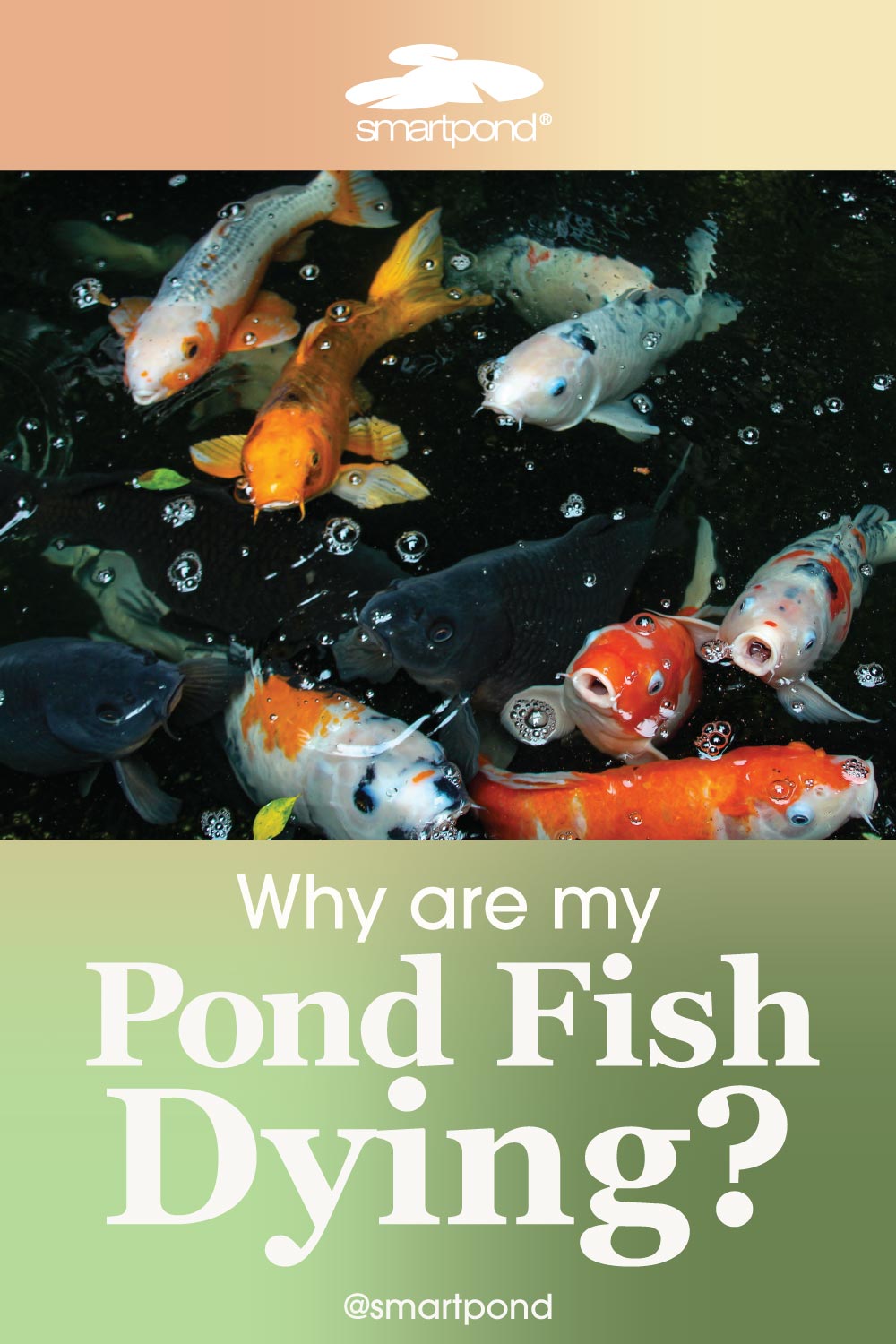
Dissolved oxygen is the oxygen mixed into the water. Fish take it in through their gills. Most pond fish do best when dissolved oxygen stays near or above 5 milligrams per liter, though the exact need varies by species, temperature, and fish size.
Warm water holds less oxygen than cool water. Large fish also need more oxygen than small fish. When oxygen falls, fish often gather near a fountain, waterfall, pipe, or pond edge. They may gasp at the surface, move slowly, or stop reacting when you approach.
Algae blooms can remove oxygen at night
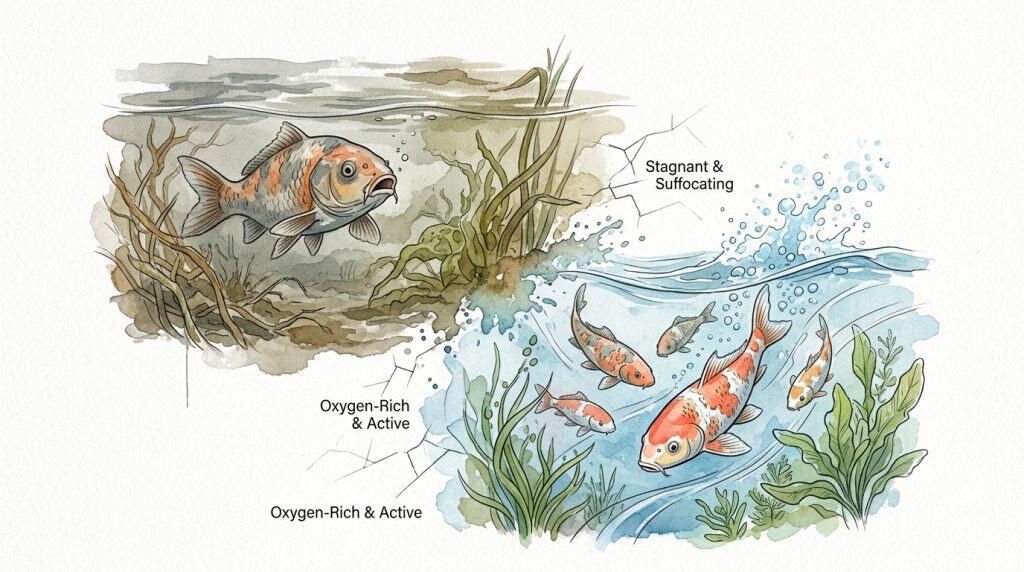
Algae produce oxygen during daylight, but they use oxygen at night. A heavy algae bloom can cause oxygen levels to fall sharply before sunrise. The greatest risk often comes after several cloudy days, when algae produce less oxygen but still respire.
When a large algae bloom suddenly dies, bacteria break down the dead algae. This decay uses even more oxygen. The result can be a fish kill that seems to happen overnight.

Ammonia and nitrite damage fish
Fish release waste into the water. Uneaten food, dead plants, and dead fish also decay. Beneficial bacteria normally convert toxic ammonia into nitrite and then into less harmful nitrate.
If the pond lacks enough healthy bacteria, ammonia or nitrite can rise. Ammonia can burn fish gills and skin. Nitrite interferes with the blood’s ability to carry oxygen. Fish may act as if they are suffocating even when the water contains some oxygen.
Sudden temperature changes cause stress
Pond fish can handle normal seasonal change, but fast temperature shifts are dangerous. A cold rain can cool shallow water very quickly. A sudden water replacement can also shock fish, especially koi and goldfish in small ponds.
Trout need cool, well-oxygenated water. Warmwater species such as bass, bluegill, catfish, and panfish tolerate higher temperatures, but they still need enough oxygen. Species should match the pond’s climate and depth.

Overcrowding creates a constant oxygen problem
Too many fish produce too much waste and consume too much oxygen. This issue is common when pond owners add fish without measuring pond size or considering adult fish length.
A small pond stocked with large bass, bluegill, koi, or catfish can become unstable. Fish may grow well for a while, then begin dying during the first hot summer or after a long cloudy period.
Poison and runoff can enter without warning
Pesticides, herbicides, fertilizers, septic leaks, road salt, fuel, paint, cleaning products, and manure can all harm pond fish. Stormwater can carry chemicals into a pond even when the spill happens far away.
A sudden fish kill after heavy rain points to runoff as a possible cause. Look for dead insects, dead frogs, unusual foam, an oily sheen, a strong chemical odor, or dying plants around the inflow.
What to check first when fish are dying
Start with the fish and the water, then inspect the pond’s edges and inflow points. Write down what you see. The timing, weather, fish behavior, and location of dead fish can help identify the cause.
Do not wait for a perfect diagnosis before adding gentle aeration. In a true oxygen emergency, restoring oxygen is often the safest first move.
Signs and likely causes
The pattern of fish behavior can narrow the problem. No single sign proves the cause, so use a water test and professional help when the event is severe.
| What you see | Likely cause | First response |
|---|---|---|
| Fish gasp at dawn | Low dissolved oxygen | Add surface agitation and aeration |
| Fish die after heavy rain | Runoff, low oxygen, or rapid temperature change | Inspect inflows and test water |
| Fish have red gills | Ammonia, nitrite, toxins, or disease | Stop feeding and test water |
| Fish flash against objects | Parasites, irritation, or poor water quality | Inspect fish and seek diagnosis |
| Only large fish die | Oxygen shortage or heat stress | Aerate and check temperature |
| Fish die after treatment | Chemical overdose or rapid water change | Stop adding products and contact an expert |
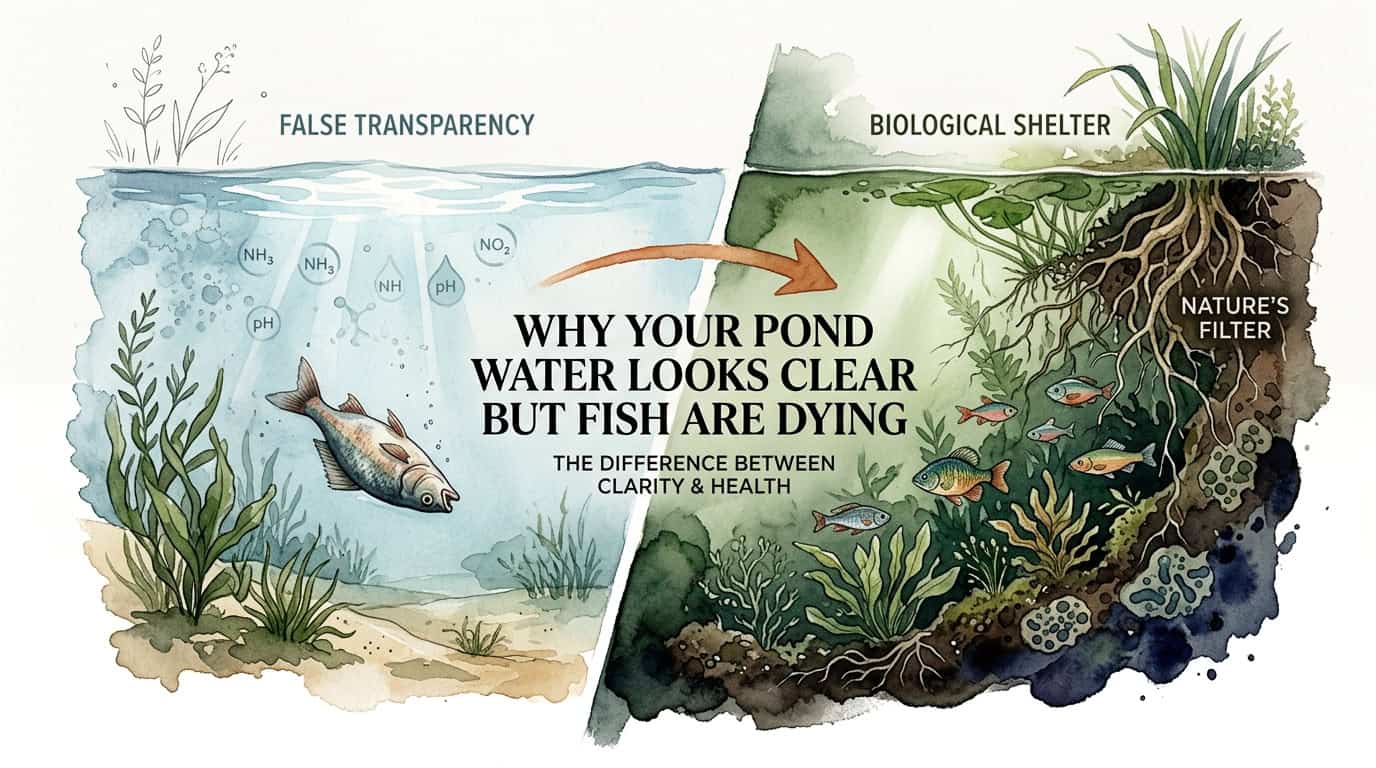
These clues are useful, but water testing matters more than guesswork. A pond can look clear and still have dangerous ammonia, nitrite, or low oxygen.

Check the pond at dawn
Measure the pond as early as possible, before sunlight raises oxygen. Dawn is often the most stressful time for fish after a warm night.
Record the water temperature at the surface and, if possible, near the bottom. In a deep pond, temperature and oxygen can differ greatly between layers. A pond may have oxygen-rich surface water and oxygen-poor deep water.

Look for a turnover event
Pond turnover happens when layers of water mix. In warm weather, deep water may hold little oxygen. A strong wind or cold rain can mix that low-oxygen water through the pond.
Fish may die soon after the mixing event. Turnover is more common in deep ponds, especially when they have poor circulation. Aeration can reduce this risk, but a new bottom aerator should be started slowly in a stratified pond.

Emergency steps to save pond fish
Act in a calm order. The goal is to add oxygen, reduce waste, prevent more contamination, and avoid sudden chemical changes.
1. Add oxygen right away
Turn on an existing aerator, fountain, waterfall, or circulation pump. If you do not have one, use a temporary pump to spray water into the air, but keep electrical equipment away from people and water unless it is designed and installed for pond use.
Surface movement helps oxygen enter the pond. A bottom-diffused aerator also moves oxygen-rich water through the pond, but it can disturb low-oxygen bottom water if started too fast.
For an emergency, place a temporary pump so the discharge breaks the surface. Do not point a powerful jet directly at weak fish. The aim is broad surface movement, not a strong current.

2. Stop feeding fish
Stop feeding for at least 24 to 48 hours during a fish stress event. In warm water, fish may survive several days without feed, while uneaten pellets can quickly worsen ammonia.
Do not feed fish that are gasping, lethargic, or gathering at the surface. Resume feeding only when fish behave normally and water tests show stable conditions.

3. Remove dead fish and decaying material
Use a landing net, pond net, or long-handled skimmer to remove dead fish, leaves, dead algae, and other rotting material. Wear gloves, and wash tools after use.
Dead fish decay fast in warm water. They add ammonia and consume oxygen. Keep a record of the number, size, and species of dead fish. This information can help a fisheries biologist or aquatic veterinarian.

4. Block new pollution
Stop fertilizer, manure, pesticide, and herbicide use near the pond. Divert dirty runoff if you can do so safely. Check ditches, culverts, drains, and streams that enter the pond.
Keep pets and livestock away from the water during a suspected contamination event. Do not enter a pond with unknown chemicals, and do not touch dead fish with bare hands.
5. Test the water
Use a reliable test kit or contact a pond management company, county extension office, fisheries agency, or water-quality lab. Test dissolved oxygen, ammonia, nitrite, pH, temperature, and alkalinity.
Take samples from more than one area if possible. Collect one near the surface and one in deeper water. Follow the test kit instructions closely, since old reagents can give poor results.
| Water measurement | Useful target or concern | Why it matters |
|---|---|---|
| Dissolved oxygen | Around 5 mg/L or higher is generally safer | Fish need oxygen for gill function and activity |
| Ammonia | As close to 0 as possible | Toxicity rises with higher pH and temperature |
| Nitrite | As close to 0 as possible | Reduces oxygen transport in fish blood |
| pH | Often about 6.5 to 9 for common pond fish | Extreme or fast changes cause stress |
| Temperature | Depends on species | Warm water holds less oxygen |
| Alkalinity | Stable moderate levels support water balance | Helps resist sudden pH swings |
These are general management targets, not a diagnosis for every pond. Trout, koi, goldfish, bass, and catfish have different needs. Ask a local fisheries professional to interpret results for your species and region.
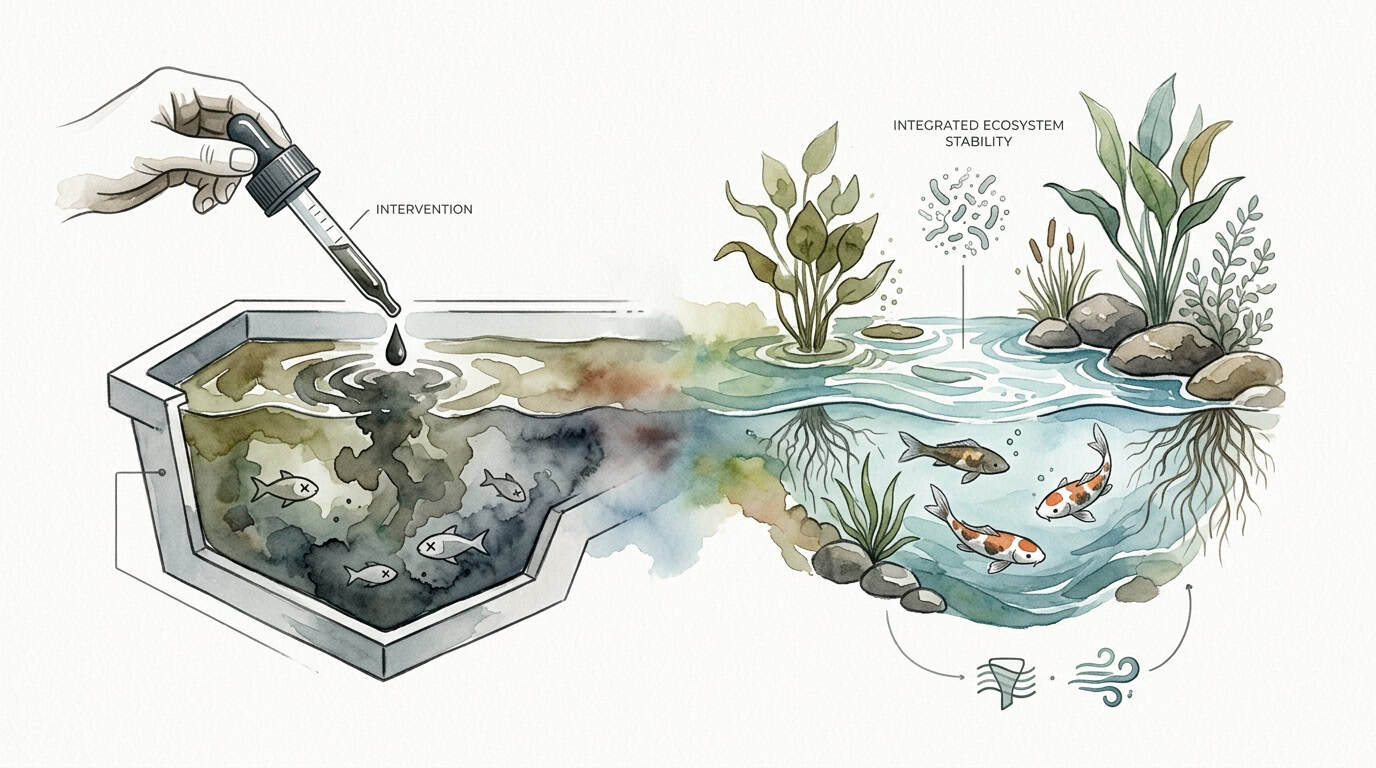
6. Use a water change with care
A partial water change can help in a small pond with high ammonia or a known contaminant. Use dechlorinated water. Chlorine and chloramine in tap water can kill fish and beneficial bacteria.
Avoid changing all the water at once. A large change can cause temperature shock, pH shock, or sudden mineral changes. In a large pond, a water change may be impractical and may spread pollution if the source is not fixed.
💡 Pro Tip: If you use city water, ask the utility whether it contains chlorine, chloramine, or both. A standard chlorine remover may not treat chloramine unless the label says it does.

How to improve pond oxygen levels
Aeration is the most reliable long-term tool for preventing low-oxygen fish kills. It does not replace good stocking, water testing, plant control, or runoff management. It works best as part of a full pond plan.
Choose the right aeration system
A fountain adds oxygen near the surface and gives a pond attractive water movement. It can work well in small ornamental ponds and shallow fishing ponds.
A bottom-diffused system uses an air pump, weighted airline, and diffuser. The diffuser releases fine bubbles near the bottom. Rising bubbles lift water and create circulation through the pond.
A waterfall or stream return can add oxygen if it moves enough water. A small decorative trickle may not provide enough oxygen for a pond with many fish.
| Aeration option | Best use | Main limit |
|---|---|---|
| Fountain | Small to medium ponds and visible surface movement | May not mix deep water well |
| Bottom diffuser | Deep ponds and long-term oxygen management | Needs careful startup in stratified water |
| Waterfall return | Lined ponds and garden water features | May add little oxygen if flow is weak |
| Temporary spray pump | Emergency oxygen boost | Not a complete permanent system |
| Windmill aerator | Remote ponds without grid power | Depends on wind and battery or backup design |
Choose equipment based on pond volume, depth, shape, fish load, climate, and power access. A pump rated for a small ornamental pond may not protect a large bass pond.
Start bottom aeration slowly
In a deep pond, do not immediately run a new bottom diffuser at full power. Start it for short periods near the surface or in shallow water. Increase the run time over several days.
This gradual approach reduces the risk of mixing oxygen-poor bottom water through the entire pond. During a fish kill, surface aeration remains useful while the deeper system starts gradually.
Run aeration at the right time
Night and early morning are high-risk periods during hot weather or an algae bloom. Many pond owners run aeration overnight and during the early morning hours.
Use a timer only after observing the pond. Some ponds need continuous aeration in summer. Others need more circulation after storms, during heat waves, or when fish numbers are high.
Fix water quality problems before adding more fish
A clear pond is not always a healthy pond. Water can look clean while ammonia, nitrite, or low oxygen harms fish. Test the water before buying new bass, bluegill, koi, goldfish, trout, or catfish.
Control algae without causing a second fish kill
Do not kill a large algae bloom all at once unless a qualified pond professional has planned the treatment. Dead algae can use a large amount of oxygen as they decay.
Use aeration, reduce nutrient runoff, remove excess organic matter, and provide shade where suitable. Mechanical removal is often safer for small ponds. Chemical products must match the algae type, pond size, fish species, and water use.
Do not use an herbicide near irrigation, livestock, swimming areas, or fish harvest unless the label allows it. Follow the product label exactly.
Reduce nutrient runoff
Fertilizer and manure add nitrogen and phosphorus. These nutrients feed algae and aquatic weeds. Create a grass buffer around the pond, keep soil covered, and direct clean water away from manure piles and chemical storage.
A buffer strip of native grass can slow runoff. Avoid mowing every plant to the water’s edge. Some shoreline plants absorb nutrients and provide cover, but too much plant growth can also consume oxygen at night.
Keep leaves and sludge under control
Leaves, grass clippings, dead weeds, and sediment feed bacteria. Remove floating debris before it sinks when practical. A leaf net can help in a backyard pond.
Do not stir deep black muck during a fish emergency. Disturbing bottom sediment can release low-oxygen water, ammonia, and other compounds. Large dredging projects need careful planning.
Balance aquatic plants
Some aquatic plants help by providing shade and fish cover. Dense plant beds, however, can create oxygen swings and trap decaying material.
A common management goal is to avoid letting plants cover most of the pond. The correct amount depends on the species, pond purpose, depth, and local climate. Do not remove all plants at once if fish depend on them for cover.
Prevent disease and parasite problems
Disease is more likely when fish face poor oxygen, crowding, dirty water, or sudden temperature changes. Healthy water management is the first line of defense.
Quarantine new fish
Keep new fish in a separate tank or pond for at least two to four weeks when practical. Watch for sores, white spots, torn fins, bloating, abnormal swimming, and heavy breathing.
Buy fish from a reputable hatchery or pond supplier. Ask about transport time, water temperature, health screening, and acclimation instructions. Do not release aquarium fish or baitfish into a natural pond.
Acclimate fish slowly
Float a sealed transport bag to equalize temperature. Then mix small amounts of pond water into the bag over time. Follow the supplier’s instructions.
Do not pour transport water into the pond. It may contain waste, pathogens, or treatment chemicals. Use a net to move fish when possible.
Recognize common disease signs
Fish with parasites may rub against the pond bottom, rocks, or plants. Bacterial problems may cause ulcers, red patches, fin damage, or cloudy eyes. Viral diseases can produce unusual swimming, spinal deformity, or sudden death.
These signs overlap. Do not guess at a medication. Some treatments harm plants, beneficial bacteria, amphibians, or invertebrates. A fish health specialist can examine a fresh, chilled specimen.
🌿 Conservation Note: Never move live fish, water, plants, or mud from one lake or pond to another. This can spread invasive species and fish disease.
Stock pond fish for the habitat, not the wish list
The right fish depend on pond size, depth, climate, habitat, water quality, and management goals. A species that thrives in a large farm pond may fail in a shallow backyard pond.
Match species to water conditions
Bass and bluegill are common in managed fishing ponds, but they need enough space, oxygen, and forage. Catfish can do well in many ponds, yet large catfish add a heavy waste load. Trout need cool water and often struggle in warm, shallow ponds.
Koi and goldfish are popular in ornamental ponds. They need filtration, oxygen, shade, and protection from predators. They also grow larger than many new pond owners expect.
| Pond goal | Fish that may fit | Key requirement |
|---|---|---|
| Small ornamental pond | Koi or goldfish in suitable numbers | Strong filtration and aeration |
| Warmwater fishing pond | Bass, bluegill, or sunfish | Correct stocking balance and habitat |
| Catfish pond | Channel catfish where suitable | Oxygen, feed control, and harvest planning |
| Coolwater pond | Trout in a suitable climate | Cold, clean, oxygen-rich water |
| Panfish-focused pond | Bluegill or other legal sunfish | Predator balance and harvest control |
| Wildlife pond | Native species only where allowed | Low disturbance and no invasive releases |
Stocking rates vary by region and pond type. Get local advice before purchasing fish. A state wildlife agency, county extension office, fisheries biologist, or licensed pond manager can help.
Add habitat with care
Brush piles, rocks, artificial fish habitat, and native plants give fish shelter. They can also trap leaves and make netting or maintenance harder.
Place habitat where it will not block aeration, swimming, boating, or emergency access. Mark underwater structures for anyone using a kayak or small boat.
Seasonal pond care prevents fish kills
Fish needs change with the season. A pond that seems stable in spring can become dangerous during summer heat or winter ice.
| Season | Main risk | Useful task |
|---|---|---|
| Spring | Turnover, runoff, spawning stress | Test water and inspect inflows |
| Summer | Heat, algae, low dawn oxygen | Run aeration and reduce feeding |
| Fall | Leaves and turnover | Remove debris and service equipment |
| Winter | Ice cover and gas buildup | Keep a small opening with safe aeration |
| After storms | Pollution and rapid mixing | Check color, odor, inflows, and fish behavior |
Seasonal maintenance does not need to be complicated. A short inspection each week can reveal problems before fish begin to die.
Summer
Run aeration during hot weather, especially overnight if the pond has algae or many fish. Provide shade for ornamental ponds, but do not cover the whole water surface.
Feed less during heat stress. Remove uneaten food after a short period. Check fish at dawn rather than only in the afternoon.
Winter
Ice blocks gas exchange. Fish can die under long periods of solid ice, especially when snow blocks sunlight and plants decay below the surface.
Do not walk on thin pond ice. Use a properly installed deicer or aerator designed for winter conditions. Never chop a hole with force near fish, people, pets, or structures. If the pond is large or used for skating, learn ice safety and check thickness with a qualified local authority.
⚠️ Safety Warning: Keep electrical cords, pumps, and extension connections away from standing water unless the system is made for outdoor pond use and protected by a ground-fault circuit interrupter. Wear a U.S. Coast Guard–approved PFD when working from a boat or kayak, and tell someone your plan.
A simple pond maintenance schedule
Regular care is easier than emergency rescue. Keep a notebook with water tests, fish additions, treatments, weather events, and mortalities.
| Timing | Check or task | Action if abnormal |
|---|---|---|
| Daily during hot weather | Fish behavior and surface gasping | Add aeration and stop feeding |
| Weekly | Water clarity, odor, algae, plants, and equipment | Test water and remove debris |
| Monthly | Pumps, airlines, diffusers, nets, and electrical parts | Clean or replace worn parts |
| After heavy rain | Inflows, runoff, foam, oil, and dead fish | Block pollution and test water |
| Before stocking | Pond volume, oxygen, habitat, and species plan | Ask a local fisheries expert |
| Before winter | Deicer, aerator, cords, and access plan | Repair equipment before ice forms |
The first parts that often fail are air pumps, clogged diffusers, cracked airline fittings, worn impellers, damaged cords, and dirty filters. Keep spare tubing, clamps, fuses, and a backup air pump for small ponds.
Common mistakes that make fish kills worse
Many well-meaning pond owners act too fast. The wrong treatment can add stress when fish are already near their limit.
| Mistake | Why it causes trouble | Better choice |
|---|---|---|
| Adding fish during a heat wave | Fish face transport and temperature stress | Stock during suitable local conditions |
| Treating all algae at once | Decay can remove oxygen | Treat in sections with aeration |
| Dumping tap water into the pond | Chlorine can damage gills | Dechlorinate and change water slowly |
| Feeding during a fish kill | Adds waste and ammonia | Stop feed until fish recover |
| Adding random medication | May harm fish and pond life | Diagnose before treatment |
| Running a new bottom aerator at full power | Can mix low-oxygen water upward | Start gradually |
| Removing every plant | Reduces cover and can upset habitat | Manage plants in stages |
| Releasing aquarium fish | Spreads disease and invasive species | Use legal, approved stocking sources |
The most important rule is simple: do not add a product unless you know what problem it treats, how much pond volume it covers, and whether it is safe for your fish and other pond users.
When to call a pond professional
Call for help when many fish die, the cause is unclear, or the pond may contain a toxin. Professional help is also wise when fish die after a treatment, livestock enter the water, or a large natural pond is affected.
A fisheries biologist can assess stocking, habitat, oxygen, and fish health. A water-quality lab can test for pesticides, metals, ammonia, and other contaminants. An aquatic veterinarian can examine fish tissue and recommend treatment.
Bring clear notes and photographs. Record the weather, time of death, water color, odor, fish species, recent treatments, feeding, rainfall, and any changes near the pond.
Fishing and pond access after a fish kill
Wait before fishing heavily after a fish kill. Fish that survive may still be weak. Avoid handling them more than needed.
If you fish from shore, a pier, or a kayak, use clean gear. Rinse landing nets, pliers, stringers, waders, and bait containers before using them in another pond. Do not move water, bait, weeds, or mud between waters.
For bass, trout, catfish, panfish, walleye, or other sport fish, use tackle that limits handling time. A spinning reel, spincast combo, baitcaster, fly rod, telescopic rod, or ice fishing rod may suit different conditions, but no setup can correct poor pond water.
Use the right line test, hook size, leader, sinker, bobber, lure, or live bait for the target species. A landing net and barbless or circle hooks can reduce injury when catch and release is planned. Keep fish wet, support the body, and limit air time.
📜 Check Local Regulations: Before stocking, moving, catching, or releasing fish, check your state wildlife agency for fishing license rules, species restrictions, size and bag limits, closed seasons, bait rules, and limits on lead or barbed hooks. Rules also may govern pond chemicals and fish transport.
Frequently asked questions
Why are my pond fish dying but the water looks clear?
Clear water can still have low oxygen, ammonia, nitrite, or toxic chemicals. Test the water at dawn and inspect the pond for recent rain, fertilizer, pesticide use, algae die-off, or dead organic matter.
How fast can low oxygen kill pond fish?
A severe oxygen crash can kill fish within hours. Large fish often die first because they need more oxygen. Hot nights, algae blooms, heavy stocking, and sudden turnover can make the problem worse.
Will a fountain stop fish from dying?
A fountain can raise oxygen near the surface and help in a small or shallow pond. It may not provide enough circulation for a deep or heavily stocked pond. Match the system to pond size and fish load.
Should I add salt when pond fish are sick?
Salt can help with some freshwater fish problems, but it is not a cure for low oxygen, ammonia, pesticides, or every disease. Some plants, amphibians, and species are salt-sensitive. Test the water and get expert advice first.
Should I change all the water in my pond?
Usually, no. A full water change can cause temperature, pH, and mineral shock. It can also spread contamination. A carefully planned partial change with properly treated water is safer for many small ponds.
Can too many pond plants kill fish?
Yes. Plants produce oxygen in sunlight but use it at night. Dense plants also decay and add organic waste. Manage plants in stages, keep aeration working, and avoid removing all cover at once.
How often should I test pond water?
Test weekly during hot weather, after major storms, after adding fish, and whenever fish behave oddly. For a stable pond, monthly testing may be enough. Test immediately during a fish kill.
Can I use aquarium medicine in an outdoor pond?
Do not assume aquarium medicine is safe for an outdoor pond. Pond volume is easy to miscalculate, and products may harm plants, frogs, insects, or beneficial bacteria. Use only products labeled for the species and pond use.
What should I do with dead pond fish?
Remove them with a net while wearing gloves. Place them in a sealed bag or follow local disposal guidance. Do not eat fish that died from an unknown cause, and do not move dead fish to another body of water.
How do I stop fish from dying in a pond during winter?
Keep safe gas exchange through a properly installed aerator or deicer. Do not seal the pond under deep snow if fish need light, but never walk on unsafe ice. Avoid forcefully breaking ice, which can injure fish and people.
Are koi and goldfish able to live with bass and bluegill?
They may not be a good match. Bass can eat small goldfish, koi, and young bluegill. Different species also have different habitat and feeding needs. Plan stocking around pond size, predator pressure, and local regulations.
How long should I wait before adding new fish after a fish kill?
Wait until the cause is known, water tests are stable, oxygen is reliable, and no new deaths occur. This may take days in a small pond or weeks in a larger system. Adding fish before fixing the cause often repeats the loss.
Can a fishing pond recover after a fish kill?
Many ponds recover if the cause is corrected. Fish numbers, species balance, habitat, and water quality may change after a kill. A professional survey can show whether restocking is needed or whether surviving fish can rebuild the population.
Final steps to keep pond fish alive
The best long-term plan is steady care, not emergency chemicals. Test water, maintain aeration, control runoff, remove decaying material, manage plants, and stock fish at a level the pond can support.
Watch fish at dawn during hot weather. Keep equipment clean and ready. Use slow changes when adding water or starting deep aeration. If a fish kill is large or unexplained, contact a local fisheries professional before treating or restocking.
A healthy pond should have stable oxygen, suitable fish numbers, clean inflows, and a management plan that fits its size. When you treat the pond as a living system, you give fish a far better chance to survive every season.