How To Prevent Fish Kills In A Pond: Essential Tips
Fish kills in a pond are distressing, costly, and often preventable. The first sign may be fish gasping at the surface in the early morning. You may also see dead fish near the bank, foul water, a sudden algae bloom, or a sharp change in water color. These signs point to stress in the pond, not always to one single disease.
The most common cause is low dissolved oxygen. Warm water holds less oxygen, while fish, plants, algae, and decaying matter continue to use it. A storm, algae crash, pond turnover, chemical runoff, or heavy stocking can push oxygen levels below what fish need.
The best way to prevent fish kills is to manage oxygen, nutrients, water quality, fish numbers, and runoff before trouble starts. A simple test kit, a reliable aeration plan, and regular pond checks can protect bass, bluegill, catfish, trout, koi, and other pond fish.

Quick answer: How do you prevent fish kills in a pond?
To prevent fish kills, keep dissolved oxygen above about 5 milligrams per liter when possible, run aeration before dawn during hot or cloudy weather, control excess algae and aquatic weeds, reduce nutrient runoff, avoid overfeeding, and remove decaying organic matter. Test water after storms, fish kills, algae crashes, or chemical treatments. Never add chemicals without checking the label and local pond conditions.

Why fish kills happen in ponds
Most pond fish kills begin with stress. Fish need oxygen, stable water temperature, safe pH, and enough space. When one or more of these factors changes fast, fish may weaken or die within hours.
Dissolved oxygen is the main issue in many summer fish kills. Fish use oxygen, but so do bacteria that break down leaves, grass, dead algae, manure, and uneaten feed. Oxygen levels often reach their lowest point just before sunrise because photosynthesis stops at night.
Low dissolved oxygen is the leading cause
Dissolved oxygen, or DO, is the oxygen mixed into the water. Fish take it in through their gills. Most pond fish become stressed when DO falls below about 3 milligrams per liter, though the exact danger point varies by species, water temperature, and fish size.
A reading near 5 milligrams per liter or higher gives many fish a safer margin. Warm water holds less oxygen than cool water. This is why a shallow pond with heavy algae growth can become dangerous during a hot, still night.
Signs of low oxygen include:
- Fish gasping at the surface
- Fish gathering near an aerator, spillway, or inlet
- Fish swimming slowly or losing balance
- Fish staying near the bank in the early morning
- Large fish dying before smaller fish
- A rotten-egg smell from the mud
- Dead algae floating after a bloom collapses
Algae blooms can help, then hurt
Algae produce oxygen during daylight through photosynthesis. At night, algae use oxygen instead. A heavy bloom can create a large daily swing in oxygen levels.
The greatest risk comes when an algae bloom dies suddenly. Dead algae sink and decay. Bacteria consume oxygen during that process. A cloudy day, several days of rain, or a cold front can make the problem worse by reducing sunlight and mixing oxygen-poor water.
Blue-green algae, also called cyanobacteria, can create another danger. Some blooms produce toxins that harm fish, pets, wildlife, and people. You cannot identify a toxic bloom by color alone.
Pond turnover changes the whole water column
Pond turnover happens when layers of water mix. In summer, warm surface water often sits above cooler, oxygen-poor bottom water. In fall, the surface cools and becomes heavy enough to sink. This can mix low-oxygen water throughout the pond.
Turnover is natural, but it can kill fish in a fertile pond with a large oxygen shortage. Fish may appear healthy one day and die after a strong wind or rapid temperature change.
Too many fish create too much demand
Every fish uses oxygen. A pond with too many bass, bluegill, catfish, carp, or koi may look healthy until hot weather arrives. Large fish need more oxygen than small fish, and a large population produces more waste.
Fish kills may also follow a stocking mistake. Adding many fish at one time can overload a small pond. Moving fish from another pond can introduce disease, parasites, or unwanted species.
Runoff brings nutrients and pollutants
Rain can carry fertilizer, manure, soil, grass clippings, septic waste, pesticides, and road salt into a pond. Nutrients such as nitrogen and phosphorus feed algae and aquatic plants. Pesticides and other chemicals may harm fish directly or reduce their food supply.
A pond does not need to be next to a farm to receive polluted runoff. A lawn, driveway, pasture, construction site, or failing septic system can affect water quality.

Water quality problems that put pond fish at risk
Water quality is more than clear water. A clear pond may still have low oxygen, harmful ammonia, or an unsafe pH. A green pond may support fish for months, then suffer a rapid algae crash.
Regular testing helps you see changes before fish show distress. Test at the same time of day when possible. Early morning readings are useful because oxygen is often lowest then.
| Water factor | What it affects | Warning signs |
|---|---|---|
| Dissolved oxygen | Fish breathing and decay | Gasping, slow fish, surface gathering |
| Temperature | Oxygen storage and fish stress | Heat stress, sudden cold shock |
| pH | Gills, metabolism, and toxicity | Stress after rain or treatment |
| Ammonia | Gills and internal organs | Red gills, poor swimming, deaths |
| Nitrite | Blood oxygen transport | Weak fish and sudden losses |
| Turbidity | Light, feeding, and gill function | Muddy water, poor growth |
A basic pond test kit can measure pH, ammonia, nitrite, nitrate, and sometimes dissolved oxygen. An electronic DO meter gives faster readings but costs more. For a valuable fishery, hire a fisheries biologist or water-quality professional to test the pond.
Ammonia becomes more dangerous in warm water
Fish waste, decaying plants, and uneaten feed release ammonia. Beneficial bacteria can convert ammonia into less harmful forms, but that process slows when oxygen is low.
The toxic form of ammonia increases as pH and temperature rise. This means a hot, high-pH pond can become dangerous even if the total ammonia reading does not seem extreme. Never judge ammonia without also checking pH and temperature.
Nitrite can damage fish even when oxygen looks normal
Nitrite enters the bloodstream through the gills. It can interfere with the blood’s ability to carry oxygen. Fish may act as if they are suffocating even when the DO reading is acceptable.
Chloride can reduce nitrite uptake, but adding salt is not a universal pond fix. Salt may harm freshwater plants, some fish, soil, and downstream water. Use it only with a clear diagnosis and correct dose from a qualified source.
pH can swing with algae and weather
Pond pH often rises during the day as algae remove carbon dioxide. It falls at night as organisms release carbon dioxide. A large pH swing can stress fish and make ammonia more toxic.
A pH between about 6.5 and 9 is tolerated by many pond fish, but species differ. Trout need cooler, well-oxygenated water. Koi and goldfish may tolerate wider conditions, but they still suffer from poor oxygen and waste buildup.

The most effective pond fish-kill prevention plan
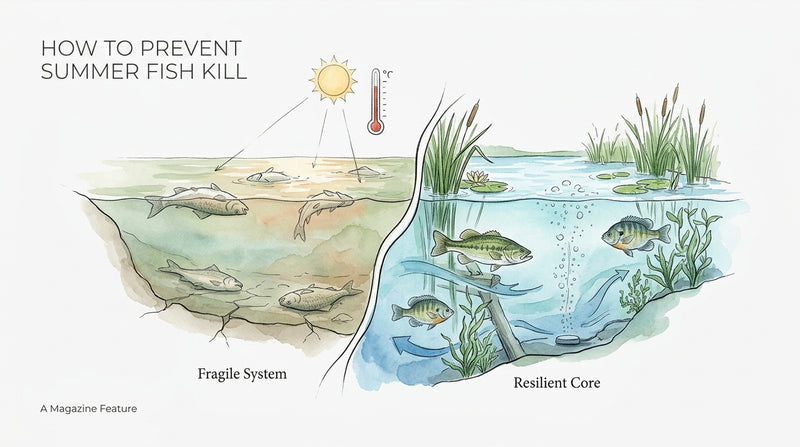
The best prevention plan combines aeration, runoff control, vegetation management, fish-population balance, and regular testing. No single product can correct every pond problem.
Think of pond care like caring for a small boat. You do not wait for a leak during a storm. You check the hull, drain plug, battery, and weather before trouble begins.
Build a reliable aeration system
Aeration adds oxygen and helps circulate water. Common systems include surface agitators, bottom diffusers, fountain aerators, and paddlewheel units.
A bottom-diffused system sends air through a diffuser placed near the pond floor. Rising bubbles lift water upward and create circulation. This design can improve oxygen distribution, but it must be installed and started carefully.
A surface aerator splashes water into the air. It adds oxygen quickly near the surface and can help during an emergency. It may not mix a deep pond as evenly as a properly sized bottom diffuser.
| Aeration option | Best use | Main limitation |
|---|---|---|
| Bottom diffuser | Long-term mixing and oxygen support | Needs correct placement and gradual startup |
| Surface agitator | Emergency oxygen and open-water circulation | May cover a smaller area |
| Fountain aerator | Small ponds and visual appeal | Decorative models may be underpowered |
| Paddlewheel | Large, shallow ponds | Uses more power and needs open space |
Choose an aerator based on pond size, depth, shape, fish load, climate, and power access. A decorative fountain may look active but still fail to protect a deep pond. Ask for a design based on gallons or surface area, not just motor size.
Run aeration when fish need it most
During summer, run aeration at night or continuously if the system is designed for that schedule. Start before dawn during heat waves, heavy cloud cover, or after an algae crash.
Do not suddenly turn on a powerful bottom diffuser after months of inactivity. It may bring oxygen-poor bottom water to the surface and cause a rapid pond-wide oxygen drop.
Start with the diffuser in shallow water for a few hours. Move it deeper over several days while watching fish behavior and DO readings. A pond professional can create a safer startup plan.
💡 Pro Tip: Keep a backup plan for power outages. A generator, battery aerator, emergency surface pump, or tractor-powered pump may protect fish during a hot night when the main system fails.
Reduce nutrient runoff before it enters
The best algae treatment is often a cleaner watershed. Keep fertilizer, manure, pet waste, and grass clippings away from the pond edge. Use a wide strip of native grass, shrubs, or other plants to slow runoff.
A vegetated buffer can trap soil and nutrients before they reach the water. Do not mow every plant to the edge. A rough, planted shoreline often protects fish better than a short lawn.
Useful runoff controls include:
- Grass buffer strips
- Small settling basins
- Silt fences during construction
- Diversion swales
- Livestock exclusion fencing
- Stable pond banks
- Rain gardens near inflow areas
- Proper septic maintenance
Remove leaves and organic debris
Leaves, dead grass, branches, and aquatic weeds become food for decay bacteria. A thick layer of organic mud also stores nutrients that can feed future algae blooms.
Use a pond rake or skimmer to remove floating debris. Dispose of it away from the shoreline so rain cannot wash nutrients back into the pond. Never dump cut weeds on the bank where they can slide back into the water.
Balance the fish population
A healthy pond needs a balanced food chain. In a bass and bluegill pond, too many bass may reduce forage fish. Too many bluegill may create stunted fish. Too many carp may stir sediment and damage plants.
Keep records of fish stocked, fish harvested, and fish observed. Anglers can help by measuring length and weight, taking photos, and noting catch rates. A fisheries survey using electrofishing equipment may be needed for a clear population picture.
Do not stock fish based only on advice from a neighbor. Pond size, depth, fertility, water temperature, and goals all matter.

What to do when fish are gasping or dying
A fast response can reduce losses, but rushing can make the problem worse. First observe the pond. Look at the time of day, weather, water color, fish location, odor, and recent treatments.
Do not immediately add algaecide, herbicide, lime, salt, or other products without identifying the problem. Killing algae or weeds during an oxygen shortage can increase decay and cause more deaths.
Emergency response steps
- Check fish behavior. Look for gasping, rolling, weak swimming, or fish gathering near an inlet.
- Measure dissolved oxygen if possible. Test near the surface and at several depths.
- Start emergency aeration. Use a surface aerator, pump, or other safe device that moves water.
- Add fresh water only if it is safe. Use a clean, legal water source, and avoid warm, polluted runoff.
- Stop feeding fish. Uneaten feed adds waste and oxygen demand.
- Remove dead fish. Collect them with a net and dispose of them according to local rules.
- Record the event. Note weather, water temperature, fish species, treatments, and timing.
- Call an expert. Contact your state wildlife agency, county extension office, or fisheries biologist.
Do not stand in deep water near a running pump or homemade electrical setup. Keep cords, plugs, and generators away from water. Use ground-fault protection and follow the equipment instructions.
⚠️ Safety Warning: Never use a boat, pump, or electrical aerator in unsafe weather. Wear a U.S. Coast Guard–approved personal flotation device when working from a boat, and tell someone your plan. A boating safety course is a wise choice for anyone operating equipment from the water.
How to collect fish for testing
If a disease or poison is suspected, save fresh dead fish in a clean bag and keep them cool. Do not freeze samples unless the testing laboratory tells you to do so. Take several fish that died recently, not only fish that have been dead for days.
Photograph the pond, water surface, algae, lesions, and fish behavior. Write down all products used in or near the pond. This information can help a lab or fisheries professional find the cause.

Common pond problems and practical solutions
Many fish kills follow a familiar pattern. The table below can help you connect a symptom with a likely cause, but it cannot replace water testing.
| Problem or symptom | Likely cause | First action |
|---|---|---|
| Fish gasp at dawn | Low dissolved oxygen | Start safe aeration and test DO |
| Fish die after algae treatment | Oxygen loss from decay | Aerate and stop further treatments |
| Fish die after heavy rain | Runoff, turnover, or contamination | Test water and inspect inflows |
| Fish show red gills | Ammonia, nitrite, or irritation | Test ammonia, nitrite, pH, and DO |
| Fish die after stocking | Transport stress or poor acclimation | Check temperature and stocking records |
| Only one species dies | Disease, toxin, or species sensitivity | Save samples and contact an expert |
| Water smells like rotten eggs | Oxygen-poor bottom mud | Increase aeration gradually |
| Fish die after lawn work | Pesticide or fertilizer runoff | Block inflow and contact authorities |
Do not assume every fish kill is a disease. Disease often affects certain species or size groups, while low oxygen may kill many species at once. A professional can separate these patterns more reliably.
When to suspect pesticides or other toxins
A toxin may cause rapid deaths across several species. Fish may show frantic swimming, twitching, excess mucus, bleeding, or sudden loss of balance. Birds, frogs, turtles, or insects may also be affected.
Look for recent lawn spraying, crop work, road treatment, painting, construction, sewage overflow, or a broken chemical container. Keep people and pets away from suspicious water. Contact local environmental or wildlife officials quickly.
When to suspect a disease
Disease signs can include sores, cotton-like growth, swollen eyes, unusual skin color, missing scales, bloating, and poor coordination. However, these signs can also follow chemical irritation or poor water quality.
Do not move sick fish to another pond. Do not release baitfish, aquarium fish, koi, or live bait into natural water. Contact a fish health laboratory, state wildlife agency, or aquatic veterinarian for advice.

How pond plants and algae affect fish survival
Plants are not automatically bad for a pond. Healthy aquatic plants provide cover, food, shade, and spawning habitat. The risk comes when plants or algae cover too much of the pond or die in large amounts.
A pond with excessive plant growth can experience large oxygen swings. Dense vegetation may produce oxygen in sunlight but consume oxygen after dark. It can also make fish surveys, fishing, and emergency response harder.
Keep plant coverage within a safe range
Many pond managers aim to keep aquatic plant coverage below roughly 20% to 30% of the surface, but the right amount depends on fish goals and plant type. A bass pond may need more cover than a swimming pond. A koi pond may need different control methods than a farm pond.
Identify the plant before choosing a treatment. Emergent plants, floating plants, submerged weeds, filamentous algae, and blue-green algae require different approaches.
Use herbicides with care
Aquatic herbicides can work, but they must be used correctly. Read the label for water volume, target plant, temperature limits, fish restrictions, swimming restrictions, irrigation limits, and waiting periods.
Treat only part of a heavy infestation at one time. A common safe approach is to treat a smaller section, allow it to decay, and wait before treating another area. The exact amount depends on the product and pond conditions.
Never use a land herbicide in water unless the label specifically permits aquatic use. Do not guess the pond volume. An incorrect dose can harm fish, wildlife, and downstream water.
📜 Check Local Regulations: Aquatic herbicides, fish stocking, water transfers, and shoreline work may require permits or label compliance. Check your state wildlife agency, environmental agency, and local extension office before treatment.
Mechanical control may be safer for small ponds
Raking, cutting, skimming, and shading can reduce plants without adding chemicals. These methods take more labor and may not solve the nutrient problem, but they can work well in small ponds.
Remove cut vegetation from the water. Leaving it on the shoreline may still return nutrients through rain and decay.

A seasonal schedule for preventing fish kills
Pond care changes with the seasons. A short inspection each month can reveal problems before fish reach a crisis point.
| Season | Main risk | Useful prevention task |
|---|---|---|
| Spring | Runoff, turnover, rapid plant growth | Inspect banks, test water, service aerators |
| Summer | Heat, algae crashes, low dawn oxygen | Run aeration, monitor DO, limit feeding |
| Fall | Turnover, leaf buildup, cooling stress | Remove leaves and adjust diffuser placement |
| Winter | Ice cover and gas buildup | Keep an opening with safe aeration methods |
| After storms | Sediment and chemical runoff | Inspect inflows and test affected water |
Spring is a good time to inspect electrical lines, pumps, diffusers, anchors, and intake screens. Repair eroding banks before heavy rain moves soil into the pond.
Summer requires the closest watch. Check fish at dawn during heat waves. Feed less when fish stop eating. A feeding ring can keep pellets from washing to shore.
Fall brings leaf drop and possible turnover. Remove leaves from shallow coves. Avoid placing a strong diffuser too deep if the pond has a large oxygen-poor bottom layer.
Winter ice can block gas exchange. Rotting plants under ice release gases, while sunlight cannot reach the water. Never walk onto thin ice to open a hole. Use safe surface aeration or seek advice from an ice-safety professional.

Feeding fish without damaging pond water
Feeding can support growth, but overfeeding is a common source of poor water quality. Feed only what fish consume in a few minutes. Remove leftover feed and reduce the amount during cold, hot, or cloudy weather.
Use a feed made for the fish species in the pond. Do not rely on bread, kitchen scraps, or livestock feed. These foods add waste and may create nutrient problems.
Stop feeding if fish are gasping, water quality is poor, or a fish kill is in progress. Food will not correct an oxygen shortage.
A simple feeding rule
Start with a small amount once per day. Watch the fish. If pellets remain after several minutes, reduce the next feeding. If fish consume the feed quickly and water quality remains stable, adjust slowly.
Do not feed trout, bass, bluegill, or koi on the same schedule without considering water temperature. Fish metabolism changes with temperature, and some species stop feeding during cold conditions.
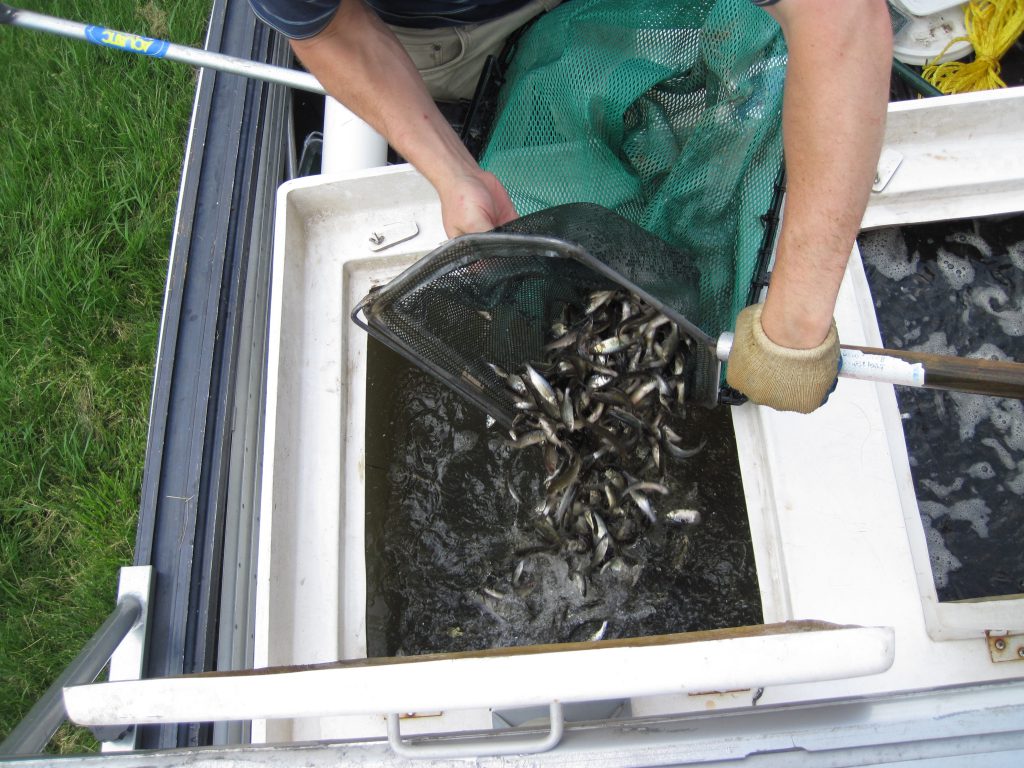
Pros and cons of common fish-kill prevention tools
Each prevention tool solves a different part of the problem. The right mix depends on pond size, fish species, budget, and access to power.
| Tool or practice | Pros | Cons |
|---|---|---|
| Bottom-diffused aeration | Supports long-term circulation and oxygen | Costs more to install and needs careful startup |
| Surface aerator | Adds oxygen fast during emergencies | Can be noisy and may cover less water |
| Water test kit | Helps find oxygen, pH, and nutrient issues | Requires correct sampling and regular use |
| Vegetated buffer | Reduces runoff without power | Takes space and needs trimming |
| Mechanical weed removal | Avoids chemical treatment | Labor intensive and temporary |
| Professional fish survey | Shows fish balance and stocking needs | Costs more than a home inspection |
| Partial herbicide treatment | Can control targeted plants | Misuse may increase oxygen demand or harm wildlife |
Use tools as part of a system. An aerator cannot fix a leaking septic system. A buffer strip cannot replace oxygen during a severe algae crash. Testing helps you choose the right response instead of guessing.

How to monitor a pond throughout the year
A written pond log is one of the simplest ways to prevent repeat fish kills. Record water temperature, rainfall, fish behavior, algae, plant coverage, aerator hours, feed, treatments, and unusual odors.
Measure dissolved oxygen at the same time and location when comparing readings. Dawn readings often show the lowest oxygen. A daytime reading may look safe while the pond becomes dangerous overnight.
Keep these pond tools ready
A basic pond emergency kit may include:
- Dissolved oxygen meter or test kit
- pH, ammonia, and nitrite test supplies
- Long-handled dip net
- Pond rake or skimmer
- Thermometer
- Rubber gloves
- Sample bags and labels
- Flashlight
- Extension cord rated for outdoor use
- Backup aeration plan
- Written contact list for local experts
Do not store electrical equipment where it can get wet. Check air lines for cracks and clean pump filters as directed. Replace worn cords, damaged plugs, and weak anchors before the next hot spell.
Inspect the pond edge
Walk the shoreline after heavy rain. Look for muddy inflows, dead grass, manure, chemical containers, eroded banks, and blocked spillways. Check fences if livestock are nearby.
Watch for sudden water level changes. A low water level can make a pond warmer and shallower. A broken dam or blocked overflow can also create safety and water-quality problems.

Fish stocking, harvest, and habitat balance
Stocking should match the pond’s goals. A family fishing pond may focus on bass and bluegill. A cool spring-fed pond may suit trout. A decorative pond may hold koi or goldfish. Catfish, walleye, and other species need specific habitat and water conditions.
Do not mix species without a plan. Some fish compete for food, stir mud, eat young fish, or reproduce faster than expected. Grass carp, for example, are regulated in many states and may require permits.
Harvest can protect the balance of a sport fishery. Removing some small or overabundant fish may improve growth and reduce oxygen demand. The correct harvest rate depends on survey data and local recommendations.
Catch and release also has a role. Wet your hands before touching fish. Use barbless hooks or pinch down barbs when allowed. Keep fish out of water for as little time as possible. Use a landing net with soft, fish-friendly mesh.
Do not use stringers during a fish kill or in very warm water. Crowding stressed fish together can increase injury and disease spread.
🌿 Conservation Note: Never move fish, bait, aquatic plants, or water from one pond to another. This can spread disease and invasive species. Dispose of fishing line, hooks, and dead fish responsibly.
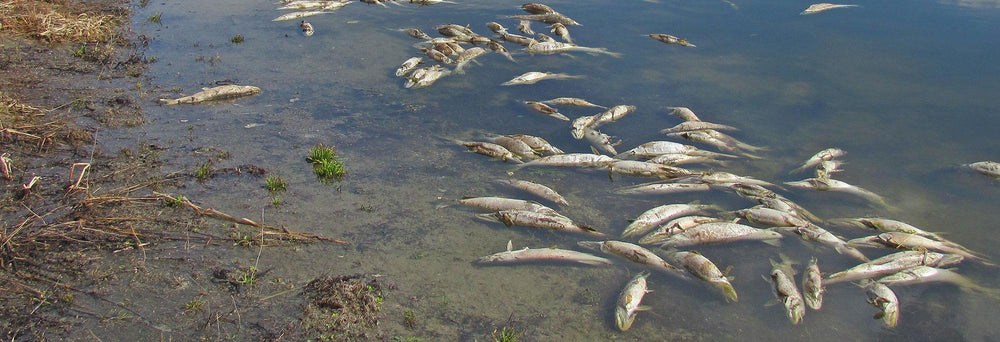
How to prevent fish kills in small backyard ponds
Small ponds can change faster than large ponds. A small amount of decaying material may create a large oxygen demand. Shade, depth, fish load, and water movement matter more than pond appearance.
Use a properly sized pump or aerator. Keep leaves and grass out. Avoid adding too many koi or goldfish. A pond that looks roomy in spring may become crowded as fish grow.
For a backyard pond, test after major weather changes and before adding fish. Quarantine new koi or goldfish when practical. Use a net to keep predators out, but do not seal the pond so tightly that gas exchange stops.
A small pond may benefit from partial water changes, but only if the replacement water is safe and close in temperature. Large, sudden changes in pH or temperature can stress fish. Treat tap water for chlorine or chloramine before adding it to a pond.
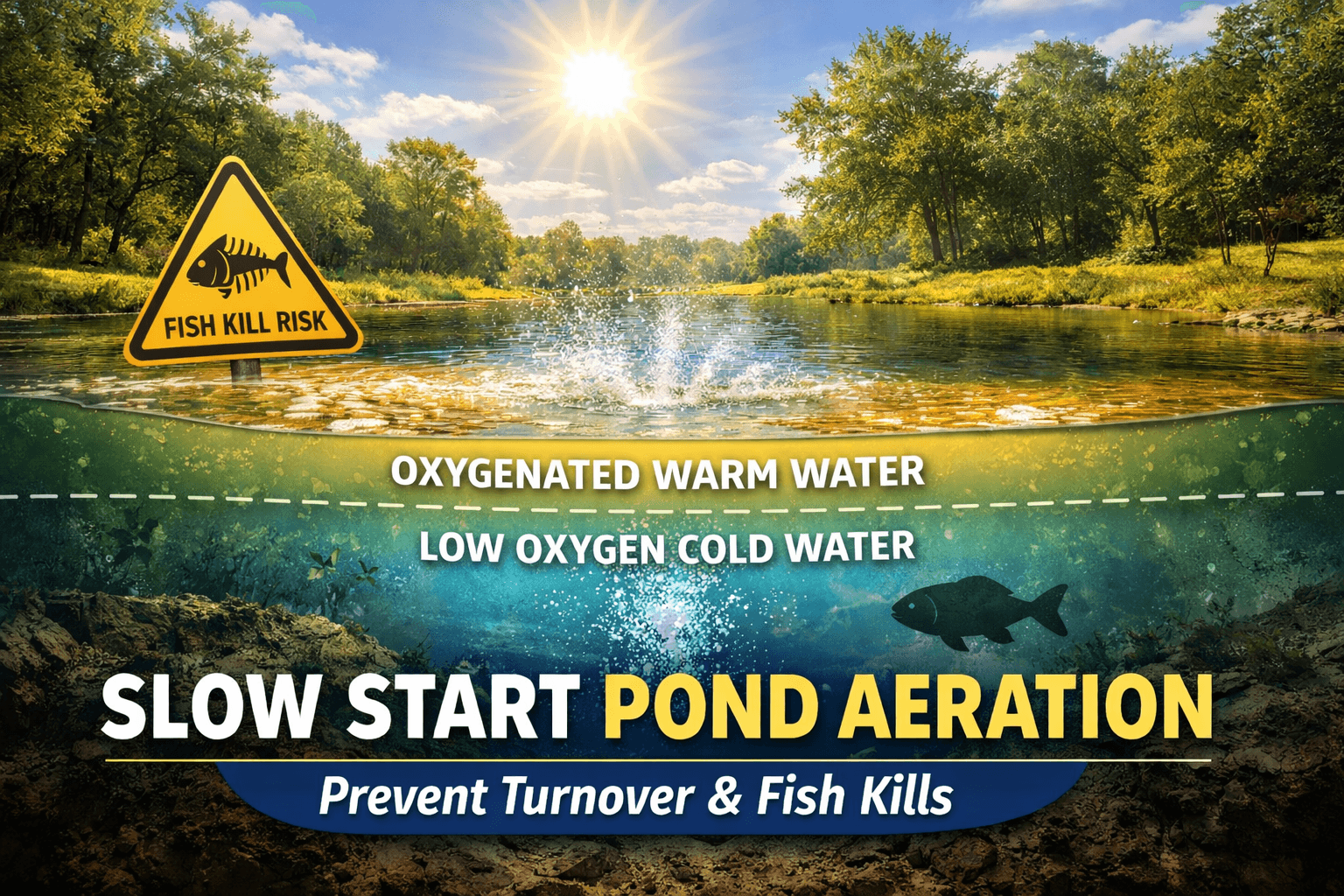
Common mistakes that lead to fish kills
The fastest way to improve pond care is to avoid a few repeated errors. Most mistakes come from acting too late, adding too much, or treating the wrong problem.
Mistake 1: Treating all algae at once
A large algae treatment may kill a heavy bloom and create a wave of decay. The bacteria breaking down that algae can use more oxygen than the pond can replace.
Treat small areas. Aerate first when possible. Follow the label and ask a professional if fish are already stressed.
Mistake 2: Starting deep aeration too fast
A dormant diffuser placed in the deepest part of a pond can mix oxygen-poor water through the entire pond. Start shallow and increase depth gradually.
Mistake 3: Adding lime, salt, or chemicals by guesswork
Pond products are not interchangeable. Lime may raise alkalinity or pH. Salt may affect plants and freshwater organisms. Herbicides may carry irrigation or swimming restrictions.
Test first. Calculate pond volume carefully. Follow the product label.
Mistake 4: Overfeeding
Uneaten feed becomes waste. It can raise ammonia, increase algae, and use oxygen as it decomposes.
Mistake 5: Ignoring the watershed
Cleaning the pond without fixing runoff treats the symptom. Nutrients will continue to enter after each storm.
Mistake 6: Stocking without records
Unknown fish numbers make it hard to manage oxygen demand and predator-prey balance. Keep receipts, dates, species, and quantities.
Mistake 7: Relying on water clarity
Clear water does not prove that oxygen, pH, or ammonia are safe. Test the water and observe fish behavior.
When to call a pond professional
Call a fisheries biologist, aquatic consultant, extension specialist, or state wildlife agency when fish are dying quickly, several species are affected, a toxin is possible, or the pond has repeated kills.
Professional help is also useful when you need:
- A fish population survey
- A stocking or harvest plan
- Aeration sizing
- Algae or plant identification
- Disease testing
- Pond volume calculations
- Runoff control design
- Dam or spillway inspection
- Advice after a chemical spill
Ask what information the professional needs before arriving. Photos, water tests, fish samples, stocking records, weather details, and product labels can save time.
If a pond supplies drinking water, supports livestock, or drains into a stream, seek expert advice before making major changes. The risks extend beyond the pond itself.
Maintenance checklist for healthy pond water
A regular checklist turns pond care into a small task instead of a crisis. Adjust the schedule to your climate and pond type.
| Task | Suggested timing | Why it matters |
|---|---|---|
| Watch fish at dawn | During heat and algae events | Finds low oxygen early |
| Inspect aeration | Monthly and before summer | Prevents equipment failure |
| Test DO, pH, and ammonia | After storms or unusual behavior | Finds invisible water stress |
| Remove leaves and dead plants | Fall and as needed | Reduces decay and oxygen use |
| Check runoff areas | After heavy rain | Finds fertilizer, mud, and manure |
| Review fish records | Each season | Supports stocking and harvest choices |
| Inspect banks and spillway | Spring and after storms | Reduces erosion and flooding risk |
Keep the checklist near the pond shed or equipment panel. Assign one person to check it during vacations, heat waves, and power outages.
Frequently asked questions
Q: What is the most common cause of fish kills in ponds?
A: Low dissolved oxygen is the most common cause. It often follows hot weather, heavy algae growth, cloudy days, pond turnover, or the decay of dead algae and aquatic plants. Fish may gasp at the surface, especially just before sunrise.
Q: Can aeration prevent every fish kill?
A: No. Aeration can reduce low-oxygen risk, but it cannot correct pesticides, disease, extreme ammonia, overstocking, or contaminated runoff by itself. The system must also be sized and operated correctly.
Q: Should I run my pond aerator all night?
A: Many systems can run at night, and nighttime operation helps protect against dawn oxygen lows. Some ponds need continuous aeration. Follow the equipment design and start gradually if the diffuser has been off for a long time.
Q: Can too much algae kill pond fish?
A: Yes. Algae produce oxygen during sunlight but use oxygen at night. When a large bloom dies, decay can remove oxygen quickly. Dense algae can also create harmful daily oxygen swings.
Q: Should I add salt when fish are dying?
A: Not without a diagnosis. Salt may help with some freshwater problems, but it will not solve low oxygen, pesticides, or all diseases. It can harm plants and downstream water if used incorrectly.
Q: How often should I test pond water?
A: Test at least seasonally and after heavy rain, algae crashes, chemical treatment, fish stocking, or unusual fish behavior. During hot weather, test dissolved oxygen at dawn more often.
Q: Can fish kills happen in a clear pond?
A: Yes. Clear water can still have low dissolved oxygen, harmful ammonia, nitrite, or an unsafe pH. Water appearance is only one part of pond health.
Q: Is it safe to eat fish from a pond after a fish kill?
A: Do not eat fish from a pond affected by an unknown fish kill until local health or wildlife officials advise you. A chemical spill, disease, or harmful algae may create a human health risk.
Q: What should I do with dead fish?
A: Remove them with gloves and a net when practical. Keep fresh samples cool if testing is needed. Follow local guidance for disposal, especially if disease or a toxin is suspected.
Q: Can I prevent winter fish kills under ice?
A: Reduce organic matter before winter, avoid overstocking, and use safe aeration that maintains gas exchange. Never walk onto unsafe ice or operate electrical equipment near water without proper protection.
Q: Do I need a permit to stock fish or use an aquatic herbicide?
A: Rules vary by state and location. Check your state wildlife agency, environmental agency, and the product label. Some fish species, grass carp, water transfers, and aquatic chemicals require permits.
Q: What pond fish are most sensitive to low oxygen?
A: Trout often need cooler, well-oxygenated water. Large fish may also die before smaller fish because they use more oxygen. Sensitivity varies by species, temperature, fish size, and water chemistry.
Q: Can rain cause a fish kill?
A: Heavy rain can cause runoff pollution, pond turnover, sediment movement, or rapid temperature change. Inspect inflows after storms and test water if fish show stress.
Q: How long does it take a pond to recover after a fish kill?
A: Recovery may take days, weeks, or months. It depends on the cause, fish losses, water quality, weather, and whether the source problem was corrected. Do not restock until tests and expert advice show that conditions are stable.
Final advice for protecting pond fish
Preventing fish kills starts with watching the pond before it looks sick. Check fish at dawn during hot weather. Keep aeration ready. Reduce runoff, remove decaying material, control algae in small sections, and avoid feeding or stocking beyond the pond’s capacity.
When fish show distress, act carefully. Add oxygen, stop feeding, test the water, and avoid guessing with chemicals. If the cause is unclear or the losses are severe, contact a fisheries professional or local wildlife agency.
A healthy pond is not always crystal clear or free of weeds. It is a balanced system with enough oxygen, manageable nutrients, stable habitat, and a fish population suited to its size. Small checks made often can protect the fish, the water, and the fishing you enjoy.