How To Fly Fish Small Rivers: Easy Tips
Small rivers can be some of the finest places to fly fish. They are close, quiet, and often full of trout, panfish, small bass, and other wild fish. They also demand more care than a wide river. A fish may be only 20 feet away, and one careless step can send it running.
The key is to think small. Use a shorter leader, a light fly rod, and a simple fly pattern. Keep a low profile, cast only as far as needed, and let the current carry your fly. Small-stream fly fishing is less about long casts and more about hiding, reading water, and making a clean first presentation.

Quick answer: how to fly fish small rivers
The best way to fly fish small rivers is to use a 7- to 8-foot 3-weight or 4-weight fly rod, floating line, a 7.5- to 9-foot leader, and small dry flies, nymphs, or streamers. Move slowly, stay low, approach from downstream when possible, and cast upstream. Fish the nearest water first, keep casts short, and release fish with wet hands.

A small river rewards a careful angler. You may need only 20 feet of line outside the rod tip. Long casts often create drag, where the fly moves at a different speed from the current. Drag can make trout refuse a fly that looked perfect seconds before.
This style suits beginners because the water is easy to read and the gear is light. It also suits experienced anglers who enjoy close-range tactics. Parents and gift buyers should look for a short, light rod that is easy to hold, not a long rod built for large rivers.
Why small rivers fish differently
Small rivers have narrow channels, shallow runs, overhanging brush, undercut banks, and many areas with broken current. Fish use these features for food and shelter. A trout may hold behind a rock, under a branch, beside a weed bed, or in a deep pocket near the bank.
The fish often see danger before they see your fly. Your shadow, bright clothing, heavy footsteps, and false casts can end the fishing in one pool. Stealth is not an advanced trick. It is the basic skill that makes every other skill work.

Where fish hold in narrow water
Fish do not need a large pool to feel safe. Look for places where the current slows or where food collects.
Common holding water includes:
- The head of a pool, where fast water enters
- The tail of a pool, where water leaves
- The soft seam between fast and slow current
- The downstream side of a rock
- Deep slots beside shallow riffles
- Undercut banks
- Log edges and root wads
- Foam lines and bubble paths
- Shade beneath trees and brush
A current seam is the visible line between two speeds of water. Food often gathers there, and fish can hold on the slow side while watching the faster water. Cast your fly so it enters the seam without pulling across it.

Small rivers are close-range fisheries
Many small streams are best fished with casts of 10 to 30 feet. This can feel strange if you learned on a large river or lake. Your main challenge is often not distance. It is placing the fly without touching brush, lining the fish, or creating drag.
A shorter cast also gives you better control. You can mend the line, lift it from a branch, and set the hook quickly. A long cast may leave too much line on the water and make a light take hard to detect.
The best approach direction
Approach from downstream when the river allows it. Fish usually face into the current, so they often look upstream for food. From downstream, your body stays behind the fish’s normal view.
If the bank is open, stay low and use grass, rocks, and trees as cover. If you must move upstream, step into shallow water only when needed. Walk slowly, avoid scraping stones, and pause after each move so the water can settle.
Gear for small-river fly fishing
The right small-stream setup should be light, short, and easy to control. A 3-weight rod is a good choice for small trout and delicate dry flies. A 4-weight rod gives more power for wind, larger flies, smallmouth bass, and light streamers.
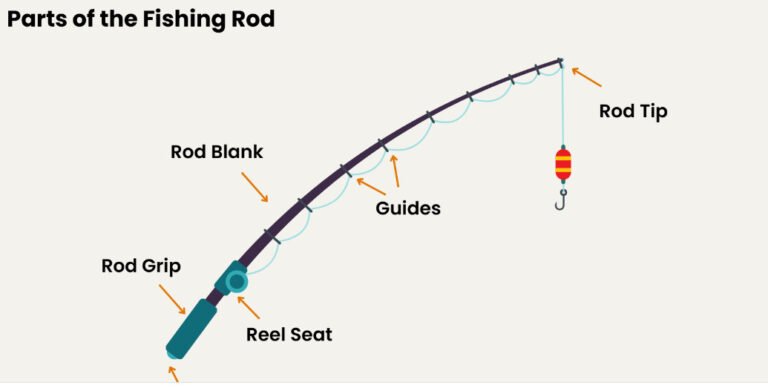
A fly rod’s weight rating describes the fly line it is designed to cast. Rod action describes how much of the rod bends. A moderate or medium-fast action is often easier for beginners because it loads with short casts. Fast-action rods can be accurate, but they may feel less forgiving at close range.

Recommended rod, reel, and line setup
The following combinations cover most small-river situations. Choose based on the fish, brush, and size of flies you expect to use.
| Target and water | Rod and action | Line and leader |
|---|---|---|
| Small trout in tight brush | 7- to 7.5-foot 3-weight, moderate action | Weight-forward floating line, 7.5-foot 5X leader |
| General trout and panfish | 8- to 8.5-foot 4-weight, medium-fast action | Floating line, 9-foot 4X or 5X leader |
| Smallmouth bass and larger flies | 8- to 9-foot 5-weight, medium-fast action | Floating line, 7.5- to 9-foot 2X to 4X leader |
| Tiny wild trout and soft presentations | 7- to 8-foot 2- or 3-weight | Floating line, fine 5X to 6X leader |
The reel matters less than the rod and line for small rivers. A simple large-arbor reel with a smooth drag is enough for most trout. The drag is the reel system that controls how easily line leaves the spool. Look for a reel that balances the rod and resists corrosion if you fish brackish water.

Leader and tippet choices
A leader is the tapered section between the fly line and the fly. Tippet is the thin final section that you replace as you change flies. A 7.5- to 9-foot leader works well on most small rivers.
Use 4X or 5X tippet for typical trout. Use 6X for very small flies and wary fish, but check it often because thin tippet breaks more easily. Use 2X or 3X for smallmouth bass and larger streamers.
| Tippet size | Approximate diameter | Common use |
|---|---|---|
| 3X | About 0.008 inch | Bass, large flies, strong current |
| 4X | About 0.007 inch | Medium trout flies and light streamers |
| 5X | About 0.006 inch | Dry flies and small trout nymphs |
| 6X | About 0.005 inch | Tiny dry flies and very clear water |
These sizes are general guides. Diameter and breaking strength vary by brand. Check the spool when matching tippet to a fly size or target species.

Do you need a reel with a strong drag?
Usually, no. Most small-river trout can be managed with the rod and your line hand. A reliable drag still helps when a fish reaches a log, enters fast water, or makes a sudden run.
For trout, a smooth drag and low weight are more useful than a high maximum drag rating. For smallmouth bass, a stronger reel can be helpful. Avoid a reel that makes the outfit tip-heavy, because that can cause hand fatigue during a full day.
Clothing and useful accessories
You do not need a large tackle box. A small fly box, nippers, forceps, floatant, spare leaders, and tippet fit in a chest pack or sling pack.
Useful items include:
- Polarized sunglasses to reduce glare
- A brimmed hat for sun and fly protection
- Rubber-mesh landing net
- Hemostats or forceps
- Line nippers
- Small stream thermometer
- Waterproof phone case
- Insect repellent
- Water and a basic first-aid kit
- Wading staff for uneven bottoms
Waders are not always needed. In warm, shallow water, wet-wading shoes may be safer and more comfortable. If you wear waders, use a snug wading belt and avoid deep crossings.
💡 Pro Tip: Carry a small spool of 4X and 5X tippet, even if you expect to use only one size. A leader can become short after several fly changes, and one damaged section can ruin a good presentation.

Flies that work in small rivers
Small rivers often have a wide mix of food. Trout may eat mayflies, caddisflies, stoneflies, midges, aquatic insects, ants, beetles, and small baitfish. You do not need every pattern. A small box with a few sizes and shapes is more useful.
Start with flies that match the river’s main food and the water depth. Dry flies imitate insects on the surface. Nymphs imitate insects below the surface. Streamers imitate baitfish, leeches, and other larger prey.

A simple small-stream fly box
Carry a few proven patterns in sizes 10 through 18. Use smaller flies in clear water or during low flows. Use larger flies when the river is high, stained, or full of larger insects.
| Fly type | Useful patterns | When to try them |
|---|---|---|
| Dry flies | Elk hair caddis, Adams, stimulators, ants, beetles | Rising fish, shade, summer, visible insects |
| Nymphs | Pheasant tail, hare’s ear, zebra midge, stonefly nymph | Fish are not rising or water is deeper |
| Streamers | Woolly bugger, muddler, small zonker | High water, cloudy conditions, bass, aggressive fish |
Carry a mix of dark and light colors. Dark flies create a clear outline in low light. Light flies are easier for you to see in bright conditions. A small foam indicator can help track a nymph, but some small streams are too shallow for one.

Choosing a dry fly
Use a dry fly when you see rising fish, insects on the water, or a calm surface with food drifting through. A high-floating pattern is easy to see and can support a small nymph.
The elk hair caddis is useful in many streams because it floats well and imitates several caddis shapes. An Adams gives you a general mayfly shape. Ants and beetles work near grassy banks and under trees.
Apply a small amount of floatant to the fly body and hackle. Keep floatant away from CDC feathers unless the product is made for CDC. Too much floatant can make a fly look unnatural or coat the tippet.
Fishing nymphs in deeper pockets
Nymphing works when fish feed below the surface. Cast slightly upstream and let the fly drift through the pocket. Watch the leader, sighter, or indicator for a pause, twitch, or sideways movement.
Use only enough weight to reach the fish. A heavy split shot can snag often and may be restricted in some waters if it contains lead. Check local rules before using weighted flies or added sinkers.
When to use a streamer
A streamer can draw a strike from trout, smallmouth bass, and other predatory fish. Cast across or slightly upstream, then let the fly swing and strip it in with short pulls.
Keep the streamer small on narrow water. A size 8 to 12 woolly bugger is often easier to cast than a large articulated pattern. Fish it beside undercut banks, below logs, and along current seams.
How to cast in tight quarters
Small rivers often have trees behind you. A standard back cast may catch branches. Use a roll cast, sidearm cast, or bow-and-arrow cast instead.
A roll cast uses the line’s surface tension to load the rod without a back cast. It works well when the current is smooth and there is no room behind you. A bow-and-arrow cast uses the rod and fly line like a bent bow. Pinch the line, pull the rod tip back, aim, and release carefully.

The roll cast
To make a roll cast:
- Lift the rod tip slowly.
- Bring the line behind you until it forms a small D loop.
- Stop the rod tip high.
- Drive the rod forward with a smooth stroke.
- Let the loop roll across the water.
Do not rush the forward stroke. The D loop provides the energy. If the cast collapses, allow more line to settle behind the rod before moving forward.
The bow-and-arrow cast
The bow-and-arrow cast is useful beside bushes and steep banks. Keep the fly secure while drawing the line back. Never point the hook at your hand, face, or another person.
Release the line with the rod aimed at the target. This cast works best at short range. It is not a good choice in crowded areas or when a strong wind can push the fly toward you.
Keep false casts to a minimum
A false cast is a cast made without letting the fly land. It helps dry the fly and adjust distance, but it also alerts fish. In tight water, one false cast may be enough. Often, a roll cast or short pickup-and-laydown cast is better.
A step-by-step method for fishing a small river
The most effective small-stream plan is simple: observe, approach, fish the nearest water, and move carefully. Do not walk past good water to reach a famous pool. The fish at your feet may be the least disturbed.

1. Check the river before you step in
Stand back from the bank for a few minutes. Look for rising fish, insect activity, foam lines, deep slots, and shaded edges. Watch how the current moves around rocks.
Check the water level and color. High, dirty water may push fish close to the bank. Low, clear water may require a longer leader, smaller fly, and a lower profile.
2. Plan your first cast
Choose a target that is close and easy to reach. Start with the water nearest you. If you cast over it first, your line and leader may disturb fish before you get a chance to fish that area.
Aim for the edge of a seam, the head of a pocket, or the soft water behind a rock. Avoid landing the fly hard on the fish’s holding spot.
3. Begin with the nearest water
Fish the water within a few feet of the bank before moving. Keep the rod low and make a short cast upstream. Let the fly drift past you if needed, then lift it before it reaches brush or shallow gravel.
Work the water in a fan pattern. Cover the near edge, center, far edge, and deeper spots. Move only after you have covered the likely lanes.
4. Present the fly upstream
An upstream cast gives the fly time to drift naturally toward you. It also keeps your line behind the fly and away from the fish. This is called a drag-free drift.
For a dry fly, mend the line upstream if the current starts pulling it. A mend is a small repositioning of line on the surface. Make the mend early and gently. A large splash can end the drift.
5. Set the hook with the line hand
When a trout takes a dry fly, lift the rod with a calm, short motion. Do not make a large bass-style hook set. Fine tippet can break if you jerk hard.
For a nymph, watch the indicator or leader. Set when it stops, dips, or moves in an unusual direction. If you are unsure, a small lift is safer than waiting too long.
6. Fight the fish with side pressure
Keep the rod bent and use the river to your advantage. Point the rod to the side rather than straight up. Side pressure can turn a fish away from logs and fast current.
Do not hold the rod at a sharp angle behind your head. A high angle can put too much stress on the tip. Let the reel drag work if the fish runs.
7. Land, photograph, and release quickly
Wet your hands before touching the fish. Keep it in the water as much as possible. Support the belly and avoid squeezing the body or touching the gills.
Remove the hook with forceps. If the hook is deep, cut the tippet close to the fly rather than causing more injury. Take a quick photo at water level, then let the fish swim away under its own power.
🌿 Conservation Note: Barbless hooks make release easier and reduce handling time. Pinch the barb with pliers before fishing, unless local rules require a different setup.

Reading current and depth
Reading water is the heart of small-river fly fishing. You are looking for places where a fish can spend little energy while food comes to it. The best lies often have a mix of current, depth, cover, and oxygen.
Fast riffles can hold trout, especially in warm weather, but fish may sit in softer pockets within them. Deep pools offer security during low water. Banks and logs provide cover from birds and other predators.

Riffles, runs, and pools
A riffle is shallow, broken water over gravel or rock. A run is smoother and often deeper. A pool is slower and deeper than the water around it.
Fish may move among all three areas during the day. In bright weather, trout often use shade and depth. During an insect hatch, they may move into shallow water to feed.
| Water feature | What to look for | Good first presentation |
|---|---|---|
| Riffle | Broken surface, gravel, oxygen-rich flow | Small nymph or dry-dropper |
| Run | Even current with depth changes | Upstream dry or nymph |
| Pool | Slow water, soft edges, deeper center | Dry at the head, nymph or streamer deeper |
| Undercut bank | Dark edge beneath grass or soil | Short upstream cast near cover |
| Log or rock | Cushion of slow water behind structure | Drift beside or just behind the object |
Start at the top of a pool and work toward the tail. Fish often hold in the head because food enters there. The tail can also be productive, but it usually demands a quiet approach.

Watch the surface for clues
Rings on the surface suggest rising fish. Tiny dimples may indicate small midges. Splashy rises often point to larger insects, caddis, or aggressive feeding.
No surface activity does not mean no fish. Trout may feed below the surface all day. If a dry fly gets no response after careful drifts, switch to a nymph instead of casting harder.
Fishing in different seasons
Small rivers change quickly. Water temperature, insect life, shade, and flow all affect where fish hold. Always check local conditions before traveling.
Spring
Spring runoff can make small rivers cold, fast, and cloudy. Fish often move close to banks, slow eddies, and deep seams. Larger nymphs and streamers can be useful when visibility is low.
Wear proper wading gear and avoid crossing fast water. A river that looks shallow can be much stronger than it appears.
Summer
Summer offers good dry-fly fishing in many trout streams. Early morning and evening may provide cooler water and better surface activity. During hot periods, fish may become stressed.
Check water temperature where regulations or local guidance recommend it. If the water is unusually warm, consider stopping trout fishing and targeting warm-water species such as bass or panfish instead.
Fall
Fall can bring lower flows and clear water. Fish may become cautious, and longer leaders may help. Keep a low profile and avoid walking through spawning areas.
Some trout species spawn in the fall. Watch for clean gravel beds and avoid stepping on them. Follow seasonal closures and special regulations.
Winter
Winter fishing can be slow, but deep pools and slow seams may still hold fish. Use small nymphs, keep your hands warm, and avoid breaking ice from the bank into the river.
Cold water increases the risk of hypothermia. Wear layers and tell someone where you will be. Do not wade alone in remote areas.
Small-river fly fishing for beginners
A beginner does not need a costly outfit or a large fly collection. A 9-foot 5-weight outfit can work, but an 8-foot 4-weight is often easier in narrow streams. If you are buying a first setup, choose a medium-fast rod, a balanced reel, floating line, and a simple leader system.
Practice on grass before fishing. Learn to form a loop, stop the rod, and control line with your non-casting hand. Ten minutes of practice can prevent a frustrating first hour on the water.
A simple first setup
For a beginner targeting trout, use:
- 8-foot 4-weight fly rod
- Lightweight reel with smooth drag
- Weight-forward floating fly line
- 9-foot 4X leader
- 5X tippet
- Size 12 to 16 dry flies
- Size 12 to 18 nymphs
- Rubber-mesh net
- Nippers and forceps
- Polarized sunglasses
This setup is light enough for small rivers but useful on many medium streams. It is also a practical gift for a new adult angler. For a child, choose a shorter 7- or 8-foot rod with a soft action and a simple casting lesson.
👪 Parent or Gift-Buyer Note: A good beginner gift includes instruction, not just equipment. Add a basic casting class, a local guide trip, or a visit to a fly shop. A shop can match the rod weight and leader to local fish.
Common beginner casting problems
If the line piles up, slow down and stop the rod higher. If the loop opens too wide, shorten the casting stroke and avoid using too much force. If the fly lands with a splash, soften the final forward motion.
Do not try to cast the entire fly line. Small-river fishing often needs only the leader, a short section of fly line, and a controlled drift. Accuracy matters more than distance.
Small rivers for experienced anglers
Experienced anglers can improve by reducing movement and changing the angle of approach. Try a downstream presentation when fish are feeding toward you. Use a reach cast to place the line upstream and delay drag.
You can also fish with a dry-dropper rig. This uses a larger dry fly as a surface pattern and strike indicator, with a small nymph tied below it. The rig can cover two depths, but it is harder to cast around brush.
Reach casts and curve casts
A reach cast places the rod and line upstream as the fly lands. This gives the fly more slack and can extend a drag-free drift. It is useful when fast water lies between you and the target.
A curve cast bends the leader around an obstacle or away from a fish. It takes practice and should be used only when you can control the fly safely. Do not force a curve cast if it makes the hook unpredictable.
High-sticking and short-line nymphing
High-sticking means keeping most of the fly line off the water while guiding a nymph through a short drift. It works well in pocket water and tight channels.
Keep the rod tip high, the leader tight enough to detect a take, and the fly moving at the speed of the current. Do not hold the rod so high that it forms a sharp angle. Watch for branches and overhead power lines.
When a longer rod helps
A longer 9-foot 5-weight rod can improve line control in open sections. It can also help with mending and longer drifts. However, it is harder to use in heavy brush and may be tiring for young anglers.
The best length depends on the river. A short rod is not always better, and a long rod is not always more powerful in a useful way. Match the tool to the bank, casting room, and species.
Mistakes that stop small-river success
Most problems come from noise, poor approach, or too much line. Small rivers leave little room for correction. Fix the first mistake before changing flies.
| Mistake | Why it hurts | Better choice |
|---|---|---|
| Wading before fishing the bank | Spooks fish in shallow water | Cast from shore first |
| Casting too far | Creates drag and poor control | Use short, accurate casts |
| Wearing bright clothing | Makes your outline clear | Wear muted colors |
| False casting over fish | Warns fish and moves the fly | Use a roll cast or one false cast |
| Using heavy tippet | Limits fly movement | Match tippet to fly and species |
| Changing flies too often | Prevents careful observation | Improve drift before changing |
| Stepping on gravel beds | Can harm spawning fish | Walk around and follow closures |
Do not blame the fly first. A good fly with a poor drift often fails. A simple fly with a natural drift can work well when fish are willing to feed.
Landing flies in trees
Branches are part of small-river fishing. Carry a small retrieval tool or use a careful sidearm cast. Do not yank hard when the fly is stuck. The hook may come free toward you.
Always wear eye protection. Polarized sunglasses help you see the surface and protect your eyes from hooks. If another angler is nearby, move to a clear area before practicing casts.
Losing fish at the net
Many fish are lost when the angler reaches with the net too soon. Keep the fish in the water and guide its head toward the net. Do not chase the fish with the net.
A rubber-mesh net is kinder to fish and reduces hook tangles. Choose a small model that fits your pack but has enough depth for the species you target.
Safety, access, and local rules
Fly fishing small rivers has real risks. Slippery rocks, cold water, steep banks, ticks, storms, and remote locations can turn a pleasant trip into an emergency.
Tell someone where you are going and when you expect to return. Check the weather before leaving. Carry water, a charged phone, basic first aid, and a way to reach help.
⚠️ Safety Warning: Wading is never risk-free. Use a wading belt, move one foot at a time, and test each step with a staff. If you fall, keep your feet downstream and turn toward shore. Never wade above your comfort level.
Wear a U.S. Coast Guard–approved personal flotation device when fishing from a boat, raft, or kayak. A PFD does not replace safe boating. Take a boating safety course if you use a craft on larger water, and tell someone your float plan.
Licenses and stream access
You may need a fishing license, trout stamp, or special permit. Rules can differ by river section. Some waters restrict bait, barbed hooks, lead tackle, harvest, or the use of felt-soled boots.
📜 Check Local Regulations: Before fishing, confirm license rules, open seasons, size limits, bag limits, access rights, and tackle restrictions with your state wildlife agency or local fisheries office. Private land may border public water, so check access laws too.
Protecting small rivers
Small streams can be fragile. Avoid trampling plants, spreading invasive species, and leaving line or packaging behind. Clean, drain, and dry waders, boots, nets, and boats before moving to another watershed.
Release fish with wet hands and minimal air exposure. Keep fish in the water for most photos. If you plan to keep fish, follow the legal limit and use a stringer only where allowed. A landing net and forceps make careful handling easier.
Cost and buying advice
A basic fly-fishing setup can cost less than many high-end spinning combos, but prices vary widely. Current pricing ranges from roughly $100 to $250 for a basic complete outfit, $250 to $600 for a stronger midrange setup, and more for premium rods and reels.
A complete outfit is often the simplest choice for beginners and gift buyers. Experienced anglers may prefer to choose the rod, line, and reel separately. The fly line deserves special attention because a poor line can make a good rod feel difficult to cast.
| Budget level | What you can expect | Best for |
|---|---|---|
| About $100–$250 | Complete 3- to 5-weight outfit, basic reel, floating line | Beginners, kids with adult help, casual trips |
| About $250–$600 | Better rod feel, smoother reel, improved line and warranty | Regular anglers and thoughtful gift buyers |
| Above $600 | Lighter materials, refined action, premium components | Experienced anglers who know their preferred setup |
Prices change by brand, sales, and included components. Check the current product listing for warranty details, rod sections, spare tips, and whether the fly line is included.
What should you spend on first?
Spend first on a usable fly line and a rod that fits the water. A low-cost reel can work if its drag is smooth and it balances the outfit. A costly reel cannot fix a poor casting line or a rod that is too long for the river.
For children, comfort and durability matter more than low weight. Fiberglass rods can be forgiving and resilient, while graphite rods are light and crisp. Composite designs sit between those traits. Check the maker’s current specifications rather than relying only on material labels.
Fly rod versus spinning gear
A fly rod uses the weight of the fly line to make the cast. A spinning rod uses the weight of a lure or bait. Both can work in small rivers, but fly gear is well suited to presenting light dry flies and nymphs.
A 5- to 6-foot ultralight spinning rod with 2- to 6-pound monofilament can be a good alternative for beginners, kids, and anglers who want to use live bait or small jigs. Spinning reels are easier to learn at first. Fly fishing becomes more useful when you enjoy quiet presentations and matching insects.
When to ask a guide or fly shop
A local fly shop can save you time. Staff can explain access, flows, hatch timing, leader sizes, and flies that fit the river. This is especially helpful when regulations change between nearby waters.
A guide is worth considering if you are new to wading, traveling to unfamiliar water, or struggling with casting and presentation. A two- or four-hour lesson can teach approach, knots, reading water, and fish handling faster than trial and error.
Ask a shop or guide:
- Which sections are open to the public?
- What species are common here?
- Are barbless hooks required?
- What leader and tippet sizes work now?
- Is wading safe at current flows?
- Are there spawning closures?
- Which access points have parking rules?
- What should I do if the river rises?
A reputable guide will not promise fish. The value is sound instruction, local knowledge, and safer decisions.
Frequently asked questions
Q: What size fly rod is best for small rivers?
A 7- to 8-foot 3-weight or 4-weight rod works well for many small trout streams. Choose a 5-weight if you also target smallmouth bass, face wind, or cast larger streamers. Shorter rods suit brushy banks, while longer rods improve line control in open water.
Q: Is a 5-weight fly rod too large for a small river?
Not always. A 5-weight is versatile and can be a smart first rod if you fish small and medium rivers. It may feel heavy for tiny wild trout and small dry flies. For a dedicated small-stream setup, a 3- or 4-weight often gives a lighter, more delicate feel.
Q: How far should I cast on a small river?
Most casts are 10 to 30 feet. Fish the closest water first and cast only as far as needed. Short casts improve fly control, reduce drag, and help you avoid branches.
Q: What flies should a beginner use?
Start with an elk hair caddis, Adams, ant, beetle, pheasant-tail nymph, hare’s-ear nymph, zebra midge, and small woolly bugger. Carry several sizes from about 10 through 18. Match the fly to visible insects, water color, and depth.
Q: Should I fish upstream or downstream?
Upstream is the standard choice because fish often face into the current. It helps you stay behind the fish and gives the fly a natural drift. Downstream presentations can work when conditions, structure, or fish position make an upstream approach difficult.
Q: Do I need waders for small-river fly fishing?
No. Many small rivers can be fished from shore or while wet-wading in warm weather. Waders help in cold water but add risk if they fill during a fall. Use a snug wading belt and avoid deep or fast crossings.
Q: What is the best tippet for trout in small streams?
Use 4X or 5X for most trout. Use 6X for tiny dry flies and clear, low water. Use 3X or 4X when casting larger flies or fishing around heavy cover. Check tippet for nicks after every fish or snag.
Q: Can I use a dry-dropper rig on a small river?
Yes, if the water is deep enough and local rules allow it. A larger dry fly can support a small nymph and show strikes. In very shallow water, a single dry or short-line nymph is often easier and less likely to snag.
Q: How do I avoid spooking fish?
Stay low, wear muted colors, approach from downstream, and avoid unnecessary wading. Fish the nearest water before moving. Limit false casts and keep your shadow off the pool when possible.
Q: Is fly fishing small rivers good for kids?
It can be, especially in safe, shallow water with adult supervision. A short 3- or 4-weight rod, simple casting lesson, polarized glasses, and barbless flies make the experience easier. Focus on learning and exploring rather than expecting a catch.
Q: How much does a small-river fly-fishing setup cost?
A basic complete outfit often costs about $100 to $250. A midrange setup may cost $250 to $600. Add leaders, flies, a net, forceps, and polarized glasses. Prices vary, so check current listings and what each package includes.
Q: Can I use a spinning rod instead?
Yes. A light spinning setup is a practical alternative for live bait, small lures, and beginners who find fly casting difficult. A 5- to 6-foot ultralight rod, 2- to 6-pound line, and small lures can cover many of the same small rivers.
Q: How do I release a trout safely?
Wet your hands, keep the fish in the water, support its body, and avoid touching the gills. Remove the hook with forceps. If it is deeply hooked, cut the line close to the fly. Let the fish swim away on its own.
Final advice for fishing small rivers
Small-river fly fishing becomes easier when you slow down. Watch the water before casting. Start close, stay low, and let the current do most of the work. A short 3- or 4-weight outfit, floating line, simple leader, and a small box of flies can cover a surprising range of conditions.
Your first goal should be a clean approach and a natural drift. Fish may come later, and some days they will not. The reward is learning to see the river as a living map of current, cover, food, and shelter. When you protect that map through careful wading, legal fishing, and respectful release, small rivers can remain generous for the next angler too.