How To Fish For Salmon In The Ocean: Proven Tips
Salmon fishing in the ocean is a moving puzzle. Salmon follow bait, tides, temperature, current, light, and river conditions. The fish may be close to shore one day and several miles offshore the next. That change is what makes saltwater salmon fishing both exciting and challenging.
The good news is that you do not need the most costly boat or a giant tackle collection to begin. A sturdy rod, a smooth reel, strong line, the right lure, and a safe plan can take you a long way. Shore anglers, pier fishers, kayak anglers, and boat anglers can all target salmon when local rules allow it.
This guide explains how to fish for salmon in the ocean from shore and from a boat. You will learn how to find salmon, choose tackle, read tides, rig lures and bait, fight fish, land them, and care for saltwater gear. It also covers salmon species, seasonal patterns, beginner mistakes, safety, and conservation.

Quick answer: how to catch salmon in the ocean
The best way to fish for salmon in the ocean is to match your tackle and lure to the salmon species, depth, current, and local bait. Use a 9- to 10-foot medium or medium-heavy rod, a saltwater-rated spinning or conventional reel, 20- to 40-pound braided line, and a 15- to 30-pound leader. Troll, cast, jig, or drift live bait near bait schools, structure, temperature breaks, and tidal current.

Ocean salmon fishing works because salmon often gather where food is easy to find. Anchovies, herring, sand lance, squid, and smelt can draw salmon near points, rips, kelp edges, reefs, river mouths, and underwater shelves.
The exact method depends on the species. Chinook salmon often prefer deeper water and larger bait. Coho salmon may feed higher in the water and respond well to faster-moving lures. Pink, chum, and sockeye salmon behave differently again, and some may be protected in marine waters.
Always check the current rules before you fish. Regulations can change by species, area, season, hook type, bait, size, and daily bag limit.
Know the salmon species in saltwater
Salmon species do not all use the ocean in the same way. Learning the basic differences helps you select the right depth, lure size, line strength, and fishing speed.
Chinook salmon
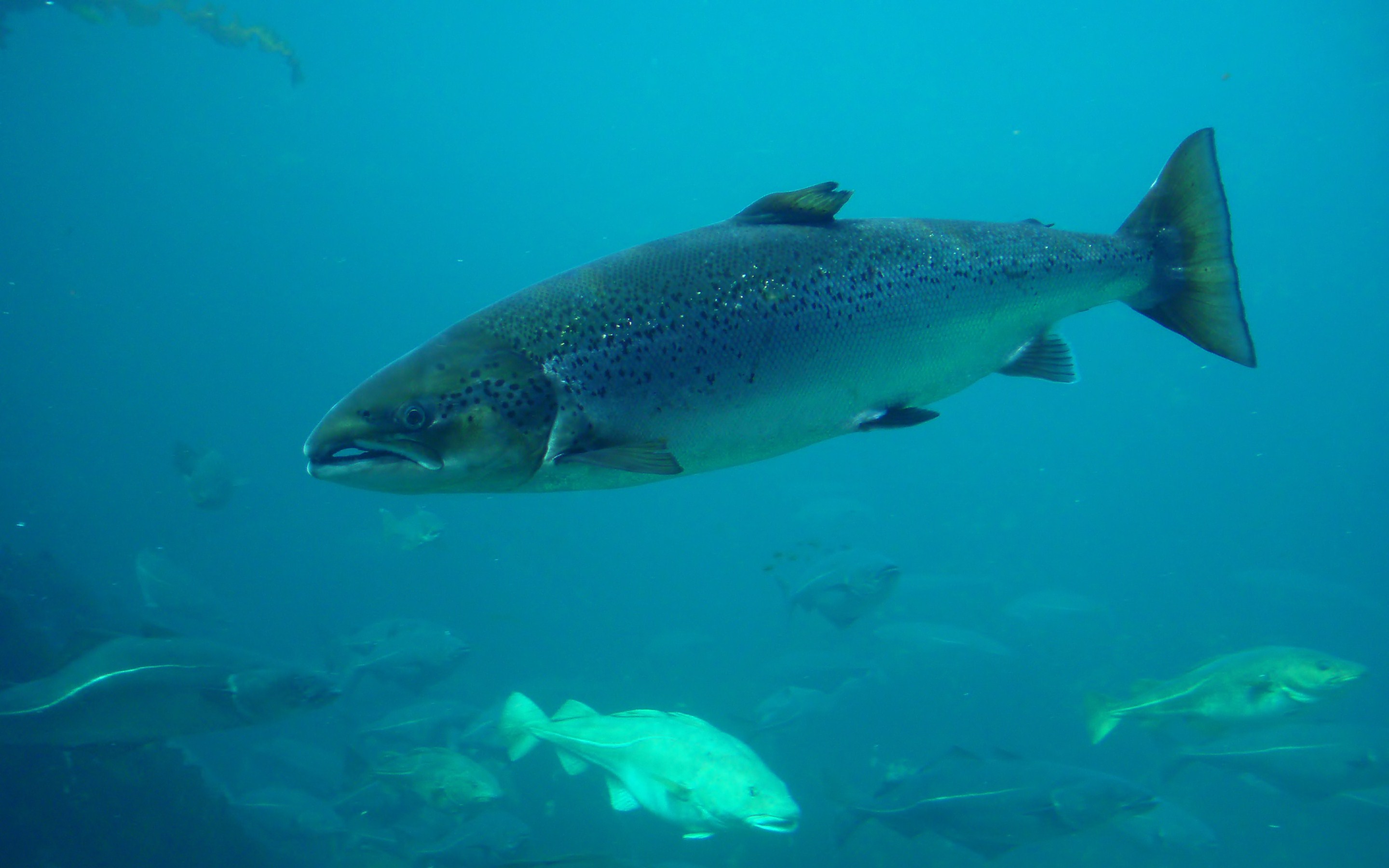
Chinook salmon, also called king salmon, are large, strong fish. They often hold near the bottom, around bait schools, ledges, reefs, and deep current seams. In many areas, anglers troll cut-plug herring, spoons, hoochies, plugs, or bait behind a flasher.
Chinook can make long runs and powerful head shakes. A 9-foot medium-heavy rod with a strong butt section is a good choice for boat anglers. Use a reel with a smooth drag and enough line capacity for a long run.
Coho salmon
Coho salmon, or silver salmon, often feed with speed and aggression. They may travel near the surface, especially around bait schools, current edges, and birds working over the water. Cast spoons, spinners, jigs, or small plugs from shore, a pier, or a boat.
Coho often respond to bright colors, chrome finishes, and quick retrieves. Still, water clarity and local forage matter more than color alone. A medium spinning rod can work well for smaller coho, while larger fish call for stronger tackle.
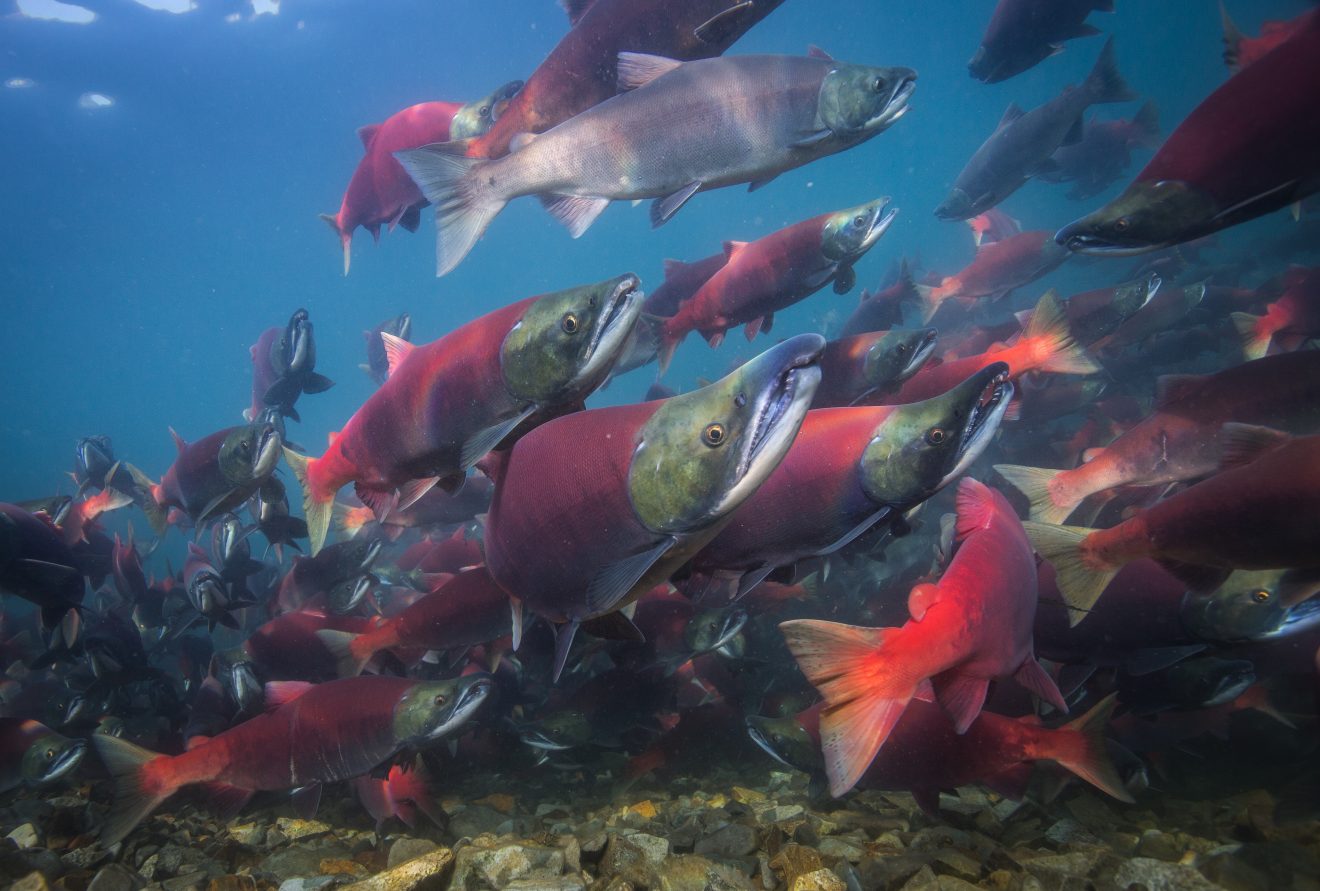
Pink, chum, and sockeye salmon
Pink salmon are usually smaller than Chinook and may hit small spoons, jigs, and spinners. Chum salmon are powerful fish that can be aggressive in some coastal areas. Sockeye often focus on plankton and may not strike conventional lures as readily as Chinook or coho.
Do not assume that every salmon species is legal to keep. Some fisheries protect certain species or allow only specific methods.
| Species | Common ocean pattern | Useful presentation |
|---|---|---|
| Chinook | Deep water, bait schools, reefs, current seams | Herring, spoons, plugs, hoochies |
| Coho | Upper water, current lines, bait near shore | Spoons, jigs, spinners, small plugs |
| Pink | Nearshore water and seasonal runs | Small jigs, spoons, spinners |
| Chum | Coastal current and river-mouth areas | Spoons, bait, flies where legal |
| Sockeye | Plankton-rich water and migration routes | Specialized local methods |
Chinook usually need stronger tackle and deeper presentations. Coho are often more approachable for shore anglers because they may feed in shallow water.
Choose the right rod, reel, and line
The best salmon setup is strong enough for the fish and light enough to cast or hold for hours. Saltwater adds another demand: every reel, guide, hook, and metal part must resist corrosion.
Rod power and action
Rod power describes lifting strength. Light, medium, medium-heavy, and heavy are common power ratings. Rod action describes where the rod bends. A fast-action rod bends near the tip, while a moderate-action rod bends farther down the blank.
For general ocean salmon fishing, look for a 9- to 10-foot medium or medium-heavy rod. A longer rod helps with casting distance, line control, and keeping line away from rocks. A moderate-fast action can cushion sudden runs and reduce pulled hooks.
For pier and shore fishing, a 9- to 11-foot rod may be useful. For trolling from a boat, a 7- to 9-foot conventional rod often offers better control in a rod holder. Kayak anglers should avoid a rod so long that it becomes hard to manage around the cockpit.
Spinning reels and conventional reels
A saltwater-rated spinning reel is the easiest choice for many beginners. It casts well, handles spoons and bait, and does not create the backlash that can occur with a baitcaster. Backlash is a tangled loop of line caused by a spool spinning faster than the lure.
A conventional reel offers strong cranking power and good control for trolling. Experienced anglers often prefer it for downriggers, deep trolling, and large Chinook. A baitcaster can also work, but it requires more skill and careful spool control.
A spincast combo is simple for panfish, bass, and light freshwater use. It is usually not the best choice for large ocean salmon because saltwater can damage the reel and the drag may lack the needed strength.
Line, leader, and drag
Braided line gives high strength with a small diameter. It also has little stretch, so you can feel a lure and set a hook at depth. Use 20- to 40-pound braid for many salmon situations.
Attach a fluorocarbon or monofilament leader. A leader is the short section between the main line and the lure or hook. Fluorocarbon is harder for fish to see underwater and resists abrasion. Monofilament has more stretch and can help protect hooks during sudden runs.
Set the drag at about one-quarter to one-third of the line’s practical breaking strength. A 20-pound line may use an initial drag setting near 5 to 6 pounds, but the right setting depends on knots, leader strength, rod power, and local conditions.
| Fishing situation | Rod and reel choice | Line and leader |
|---|---|---|
| Shore or pier coho | 9–10 ft medium spinning rod | 20–30 lb braid, 12–20 lb leader |
| Boat trolling for Chinook | 7–9 ft medium-heavy conventional rod | 30–50 lb braid or mono, 20–40 lb leader |
| Kayak salmon fishing | 7–9 ft medium spinning rod | 20–30 lb braid, 15–25 lb leader |
| Light nearshore salmon | 8–9 ft medium rod | 15–25 lb braid, 10–20 lb leader |
A beginner should start with a saltwater spinning combo that has a sealed or protected drag and enough line capacity. An experienced angler may prefer a conventional reel for trolling. A parent buying for a teenager should favor simple controls, a strong rod butt, and a reel that is easy to rinse.
Select hooks, lures, bait, and terminal tackle
Terminal tackle means the small items at the end of your line. It includes hooks, swivels, leaders, sinkers, snaps, beads, and attractors. Good terminal tackle prevents many lost fish.

Spoons and jigs
Spoons are metal lures that wobble or flash as they move. They are simple to cast and work well for coho, pink salmon, and other nearshore fish. Choose a size that matches local bait, often between 1/2 and 2 ounces for shore use.
Jigs are weighted lures that can be cast, lifted, and allowed to fall. Use them around current seams and bait schools. A fast lift-and-drop can work in deep water, while a steady retrieve may work near the surface.
Plugs, hoochies, and flashers
Plugs imitate baitfish and are common for trolling. Hoochies are soft plastic squid-like bodies. Many anglers troll them behind a flasher, which adds flash and vibration.
A flasher creates drag, so use a rod and reel with enough backbone. Check the leader length recommended for the lure and flasher combination. Too much leader can reduce the action. Too little can make the lure move unnaturally.
Herring and other bait
Cut-plug herring is a classic salmon bait. The angled cut makes the bait spin. A slow, tight spin is usually better than a wild roll. Fresh, firm bait stays on the hook longer than soft bait.
Some areas allow live bait, while others restrict bait types or require artificial lures. Never transport or release live bait without knowing the local rules.
| Tackle item | Purpose | What to check |
|---|---|---|
| Swivel | Reduces line twist | Smooth rotation and suitable strength |
| Flasher | Adds flash and vibration | Correct size for rod and current |
| Sinker or weight | Reaches depth | Local weight limits and bottom contact |
| Treble hook | Holds some lures well | Whether barbless rules apply |
| Single hook | Easier release and safer handling | Correct gap and wire strength |
| Leader | Connects line to lure or bait | Abrasion resistance and fresh knots |
Use hooks that match the bait and fish size. Replace hooks that are dull, rusty, bent, or opened by pressure. A small hook file can restore a lightly dull point, but badly damaged hooks should be replaced.
Find salmon by reading water and bait
The best way to find ocean salmon is to locate their food first. Salmon may appear on a fish finder, but bait, birds, current, and temperature often reveal the pattern before the fish do.
Look for bait schools
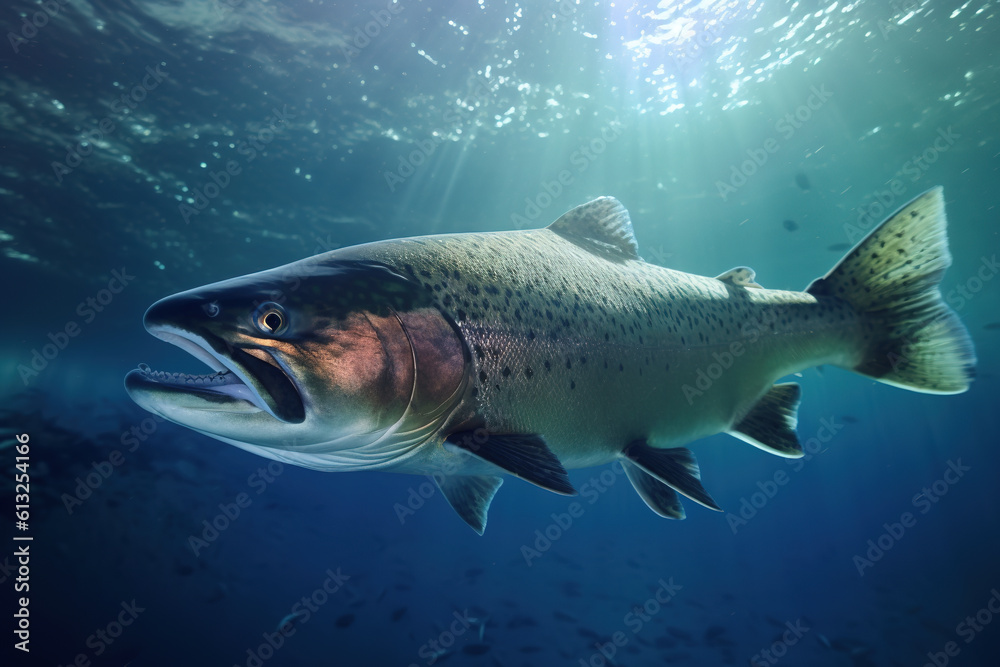
Use your eyes, fish finder, and local reports. Bait may show as dense marks on a sonar screen. Birds diving into the water often indicate anchovies, herring, or sand lance below.
Watch for nervous water, small bait jumping, and surface disturbances. Salmon may push bait to the surface, but they can also feed below it. Do not leave an area just because you cannot see surface action.
Fish current edges and structure
Current brings food and oxygen. Salmon often hold where fast water meets slow water. These edges can form near points, reefs, kelp lines, underwater shelves, river mouths, and harbor entrances.
A depth change can be just as important as visible structure. If bait marks sit at 60 feet, start your lure near that level. Change depth before changing lures.
Use a fish finder wisely
A fish finder shows depth, bottom shape, and possible fish marks. It does not identify every mark with certainty. Learn to read the water column, not only the large arches on the screen.
Experienced anglers use GPS to mark bait, strikes, temperature changes, and productive current lines. Beginners can keep a simple note on time, tide, depth, lure, and speed.
Match the method to your fishing location
Ocean salmon can be caught from a boat, beach, pier, jetty, kayak, or rocky shore. Each location demands a different approach and different safety plan.
Boat trolling
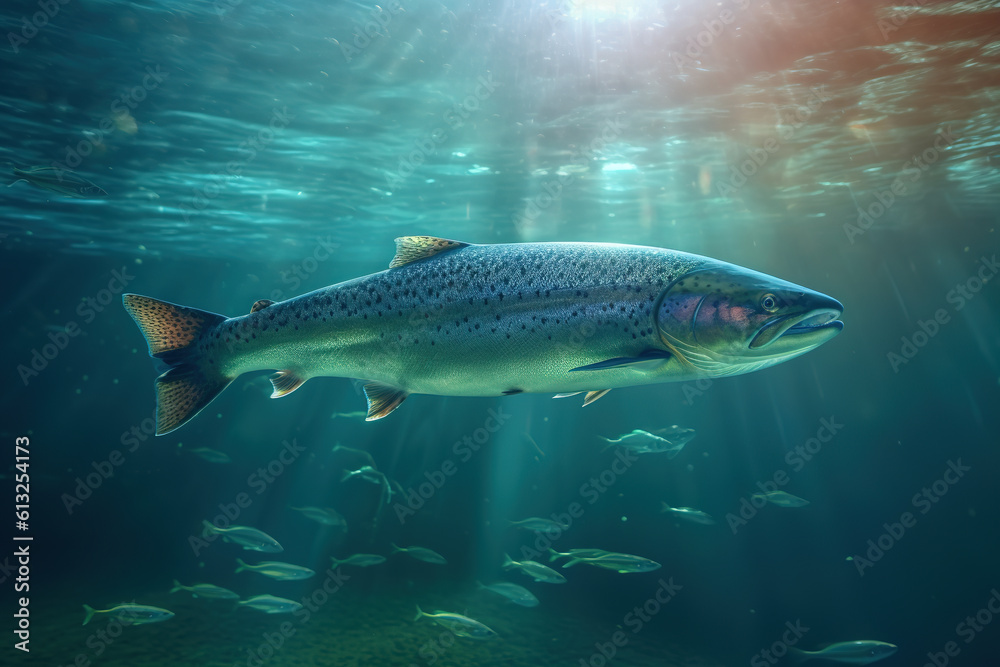
Trolling means moving a lure or bait behind a boat. It is one of the most reliable ways to cover water and keep a lure at a chosen depth. Run several lines only when local rules, boat space, and your skill allow it.
Use a downrigger, diver, weighted line, or sinker to reach depth. A downrigger uses a heavy ball and release clip to place the lure at a set depth. Keep lines organized to reduce tangles.
A common trolling speed may range from 1.5 to 3 miles per hour, but the correct speed depends on the lure, current, bait, and salmon species. Watch the rod tip. A steady lure should show a clear, repeatable action.
Shore and pier fishing
Shore anglers should focus on points, river mouths, beaches near bait, rock edges, and areas where current moves past structure. Cast up-current or across the current, then allow the lure to sweep through the likely holding water.
A 9- to 11-foot spinning rod can improve casting distance. Use a lure heavy enough to reach the target depth but not so heavy that it damages the rod or violates local rules.
Pier anglers should keep the landing area clear. A long-handled landing net is often more useful than trying to lift a salmon with the rod.
Kayak fishing
Kayak fishing can place you close to salmon, but it leaves little room for error. Keep hooks, knives, pliers, and loose line secured. Use a rod leash and a personal flotation device.
Choose a stable kayak rated for your body weight, clothing, tackle, and catch. A narrow kayak may travel well but can be less forgiving when a salmon pulls beside the boat.
| Location | Main advantage | Main limitation |
|---|---|---|
| Boat | Covers depth and distance | Costs more and needs boating skills |
| Shore | Low cost and easy access | Limited casting range and changing tides |
| Pier | Elevated casting position | Crowds, snags, and limited landing space |
| Kayak | Quiet access to nearshore water | Weather, capsize, and storage risks |
| Jetty or rocks | Access to current and structure | Slippery footing and strong waves |
The best location is not always the one with the most famous name. Start with safe access, legal fishing, visible bait, and a plan for landing the fish.
Use tides, seasons, and weather to improve your timing
Salmon fishing changes with the tide, season, water temperature, wind, and light. There is no single perfect tide for every coast, but moving water often increases feeding activity.
Tides
Incoming water can push bait toward shore and into bays. Outgoing water can pull food from estuaries and river mouths. Some salmon feed best during a tide change when current speed shifts.
Record your results. Note the tide stage, time, wind, water color, bait, and depth. A personal log can become more useful than a general fishing report.
Water temperature
Salmon have preferred temperature ranges that vary by species and life stage. A sudden temperature break can gather bait and create a clear fishing edge. A temperature gauge on a fish finder can help you locate these changes.
Do not treat temperature as a guarantee. Current, forage, clarity, oxygen, and fishing pressure also matter.
Light and weather
Low light can help salmon feed near the surface. Overcast skies may reduce glare and make fish less cautious in shallow water. Strong wind can create food movement but may make small boats unsafe.
Never fish a dangerous forecast for the sake of a tide window. The ocean will offer another opportunity.
| Season or condition | Common opportunity | Useful adjustment |
|---|---|---|
| Spring | Nearshore bait and warming water | Search shallow structure and current |
| Summer | Strong bait activity and boat access | Troll deeper or follow bait schools |
| Fall | Migration and river-mouth movement | Check rules and focus on legal zones |
| Low light | Surface feeding may increase | Try shallow lures and slower starts |
| Rough weather | Bait can move and current changes | Fish only from a safe location |
Many salmon fisheries close or change rules during migration periods. Check the local wildlife agency before each trip, even if you fished the same place last week.
Follow this step-by-step salmon fishing plan
A repeatable plan helps you avoid random lure changes. Start with the environment, then adjust depth, speed, and presentation in a clear order.

- Check the regulations. Confirm the fishing license, open season, species rules, size limits, bag limits, hook rules, bait rules, and closed areas.
- Check the forecast. Review wind, waves, tide, current, visibility, and water temperature. Tell someone where you will fish and when you expect to return.
- Inspect your tackle. Test the drag, check guides, replace damaged line, sharpen hooks, and rinse old salt from the reel.
- Find bait or structure. Look for birds, bait marks, current seams, temperature changes, reefs, points, and depth breaks.
- Choose a starting depth. Begin near the depth of the bait. If you see no activity, change depth before changing everything else.
- Select a matching lure or bait. Match size and movement to the local forage. Start with a proven spoon, plug, hoochie, or herring rig.
- Control speed. Troll or retrieve at a speed that gives the lure a clean action. Watch the rod tip and adjust in small steps.
- Change one variable. Change depth, speed, color, or lure size one at a time. This helps you learn what made the difference.
- Set the hook with control. Follow local hook rules. Apply steady pressure instead of violent swings, especially with braided line.
- Fight the salmon patiently. Keep the rod bent, maintain line tension, and let the drag work. Do not tighten the drag during a sudden run.
- Land the fish safely. Use a suitable net. Keep the fish in the water for release or dispatch it quickly and humanely if regulations allow harvest.
- Rinse and record your gear. Use fresh water, dry the tackle, and note what happened.
How to troll a herring rig
Rig a fresh herring so it spins slowly and evenly. Use a strong leader, a quality swivel, and the hook size required by local rules. Lower the bait to the target depth and watch the rod tip.
If the rod tip stops moving, the bait may be fouled. If it spins wildly, adjust the cut or replace the bait. A clean, steady roll is easier for salmon to track.
How to cast a spoon from shore
Cast across or slightly up-current. Let the spoon sink to the chosen depth, then retrieve it with a steady pace. Add short pauses or small rod lifts when the water is deep.
When a salmon follows without striking, change speed before changing color. A short pause can trigger a fish, but too many pauses may let the lure snag bottom.
How to use a flasher and hoochie
Run the flasher ahead of the hoochie with the leader length recommended for the setup. Keep the lure moving at a speed that gives the flasher a strong pull and the hoochie a natural roll.
Check the rig after every strike or snag. Salmon teeth, rocks, and rough structure can damage the leader without showing a clear break.
Land, handle, and release salmon with care
Landing a salmon is the final technical part of the fight. Many fish are lost at the boat or shoreline because the angler lifts them with the rod, grabs the leader, or waits too long before using the net.

Keep the net in an easy-to-reach place. Lead the fish headfirst into the net. Do not chase it with the net, because sudden movement can spook the fish and create slack line.
For catch and release, wet your hands first. Keep the fish in the water as much as possible. Support the belly, avoid squeezing the gills, and remove the hook with long pliers.
If the fish is legal to keep, follow local harvest rules. Use a sharp, legal tool and handle the fish with respect. Keep it cold as soon as possible.
🌿 Conservation Note: Discarded fishing line can injure birds, seals, and other wildlife. Cut damaged line into short pieces and place it in a recycling bin or trash container. Never leave hooks, bait bags, or line on the beach.
Avoid the most common ocean salmon mistakes
Most poor results come from a small group of errors. Fixing these basics often matters more than buying another lure.
| Common mistake | Why it hurts | Better choice |
|---|---|---|
| Fishing without checking rules | You may target a closed species or area | Check the local agency before launching |
| Using freshwater-only gear | Salt can damage bearings, drag, and guides | Use saltwater-rated tackle and rinse it |
| Ignoring bait depth | Salmon may be far above or below the lure | Match the depth shown by sonar or reports |
| Setting drag too tight | Strong runs can break line or hooks | Start light and adjust only when needed |
| Lifting fish with the rod | The rod, line, or hook can fail | Use a landing net |
| Changing five things at once | You cannot learn what worked | Change one variable at a time |
| Leaving hooks dull | Poor hook points reduce solid hookups | Sharpen or replace them |
Beginners often spend too much time changing lure colors. Depth and speed usually deserve attention first. An expensive lure at the wrong depth is still in the wrong place.
Experienced anglers can make the opposite mistake by overcomplicating the spread. A simple two-rod pattern, when legal, can teach you more than a crowded set of lines.
Clean and store saltwater fishing gear
Saltwater gear can last for years if you treat it well. Corrosion often starts in hidden places, such as under the spool, inside the line roller, around guide wraps, and in hook eyes.
Rinse rods and reels with low-pressure fresh water after every trip. High-pressure spray can push salt deeper into bearings and seals. Wipe the gear dry, then loosen the drag before storage if the reel maker recommends it.
Wash leaders, flashers, lures, pliers, landing nets, and tackle boxes. Dry hooks before closing a box. Store soft plastics away from hooks and heat, because some plastics can react with other materials.
Do not soak a reel unless its instructions allow it. Apply reel oil and grease only where the manufacturer suggests. Too much oil can attract sand and salt.
| Gear | After each trip | Before long storage |
|---|---|---|
| Rod | Rinse lightly and wipe dry | Check guides and reel seat |
| Spinning reel | Rinse with low pressure | Clean line roller and lubricate as directed |
| Hooks and lures | Rinse and dry | Replace rusted or bent hooks |
| Braid and leader | Inspect for frays | Cut back damaged sections |
| Net and pliers | Rinse and dry | Oil hinges and check handles |
| Tackle box | Remove salt and bait | Leave dry and ventilated |
Signs it is time to replace line include flat spots, frays, rough sections, faded knots, and unexplained breakage. Replace leaders often when fishing around rocks, barnacles, or large Chinook.
Choose gear by angler type and budget
A useful setup fits the person, location, species, and amount of use. The most expensive rod is not automatically the best choice for a beginner or child.

| Angler | Practical setup | Why it fits |
|---|---|---|
| First-time shore angler | 9–10 ft medium spinning rod, 20–30 lb braid | Simple casting and good reach |
| Experienced boat angler | 7–9 ft medium-heavy conventional rod | Strong control for trolling |
| Kayak angler | 7–9 ft medium spinning rod, compact tackle | Easier handling in a small cockpit |
| Teen angler | 8–9 ft medium spinning combo | Manageable weight and useful strength |
| Gift buyer | Saltwater-rated combo and basic terminal kit | Easy to understand and ready to use |
| Heavy Chinook specialist | 8–9 ft medium-heavy setup | More lifting power and drag control |
Current pricing ranges from about $100 to $200 for basic saltwater spinning combos, $200 to $500 for stronger mid-range setups, and more for specialized boat or guide-grade tackle. Prices vary by brand, materials, drag system, and included features.
A budget setup can be worthwhile if you rinse it after each use and avoid lifting fish with the rod. A premium reel may offer better sealing, smoother drag, and longer service life, but it will not replace sound location and presentation skills.
👪 Parent or Gift-Buyer Note: For a young angler, choose a medium spinning combo rather than a baitcaster. Add polarized sunglasses, pliers with a lanyard, a small tackle box, and a properly sized U.S. Coast Guard–approved life jacket for boat or kayak use.
Compare spinning reels, baitcasters, and fly rods
The main difference between these reel and rod styles is ease of use, casting control, and the type of presentation they handle best.

| Setup | Best use | Limitation |
|---|---|---|
| Spinning reel | Shore casting, piers, beginner use | Less direct control for heavy trolling |
| Baitcaster | Accurate casts and lure control | Backlash takes practice |
| Conventional reel | Deep trolling and large salmon | Less simple for casual casting |
| Fly rod | Specialized surface and nearshore methods | Needs casting skill and suitable conditions |
| Spincast combo | Very simple light fishing | Usually underpowered for ocean salmon |
Fly fishing for ocean salmon can be highly effective in the right place, especially around shallow bait and calm water. Use a saltwater fly rod, corrosion-resistant reel, strong backing, and a leader suited to the species. This method requires more casting space and skill than a spinning setup.
Telescopic rods are portable and useful for travel, but many have lower durability and less consistent action than a one-piece or two-piece rod. They can suit a traveler who values pack size, but they are not always the first choice for large salmon.
Ice fishing rods are built for short-range vertical fishing and are not suitable for ocean salmon casting. Bass, trout, catfish, panfish, walleye, and redfish setups may also need major changes before saltwater salmon fishing.
Stay safe on the ocean
Ocean salmon fishing carries risks that are not present in a calm pond. Waves, cold water, slippery rocks, hooks, knives, boat traffic, and sudden weather changes all deserve a plan.
⚠️ Safety Warning: Wear a properly fitted U.S. Coast Guard–approved PFD on a boat, kayak, or other small craft. Check the marine forecast, carry a charged phone or radio, tell someone your plan, and avoid fishing from rocks when waves can cover your escape route.
Use polarized sunglasses to reduce glare and protect your eyes from hooks. Wear non-slip footwear on piers and rocks. Keep pliers and knives secured, and cut the hook or leader rather than pulling hard when a hook is deeply lodged.
Boat anglers should carry required safety gear and know how to use it. Kayak anglers should practice capsize recovery and consider a boating safety course. Wading anglers should use a wading belt and avoid water that can sweep them off balance.
Never rely on a stringer in heavy current or around predators. A cooler with ice is safer for legal harvest, but check its weight before carrying it over rocks or into a kayak.
Check licenses, seasons, and conservation rules
Fishing regulations protect salmon stocks and prevent accidental harvest of protected fish. Rules may vary between state waters, federal waters, rivers, bays, and special management zones.
📜 Check Local Regulations: Confirm your fishing license, salmon endorsement if required, open season, species identification rules, size limit, bag limit, hook type, bait restrictions, lead rules, barbless requirements, and closed areas with your state or local wildlife agency.
Carry a regulation guide or save the agency page on your phone. Learn how to identify salmon species before fishing. If you cannot identify a fish, keep it in the water and ask for help before making a decision.
Use barbless or circle hooks when required or when practicing catch and release. Circle hooks work best when allowed and when you let the fish load the rod instead of making a hard, sweeping hook set.
Respect other anglers. Do not cross lines, block a landing area, crowd a pier, or leave bait and packaging behind. Good etiquette keeps access open for everyone.
Frequently asked questions
What is the best bait for ocean salmon?
Cut-plug herring is a common and effective bait for many ocean salmon fisheries. Anchovies, sand lance, squid, and local baitfish may also work. The best legal bait depends on the species, season, water depth, and local rules.
What size rod is best for salmon in the ocean?
A 9- to 10-foot medium or medium-heavy spinning rod is a strong general choice for shore fishing. Boat trolling often uses a 7- to 9-foot medium-heavy conventional rod. Choose a stronger setup for large Chinook or heavy current.
Can you catch salmon from the beach?
Yes, where salmon move close to shore and regulations allow it. Focus on points, troughs, river mouths, current seams, bait schools, and beaches near deeper water. Use a long spinning rod and a lure heavy enough to reach the feeding zone.
Is braided line better than monofilament for salmon?
Braided line offers high strength, thin diameter, and good sensitivity. Monofilament has more stretch and can be forgiving during sudden runs. Many anglers use braid as the main line with a monofilament or fluorocarbon leader.
How deep should you fish for ocean salmon?
Fish near the depth of the bait. Salmon may feed on the surface, in the middle of the water column, or near the bottom. A fish finder, local reports, water temperature, and lure control can help you choose the starting depth.
Are salmon hard to catch in saltwater?
Salmon can be challenging because they move with bait, current, temperature, and tide. A clear plan improves your odds, but no method guarantees a fish. Local knowledge often helps more than a large tackle collection.
Can kids fish for salmon in the ocean?
Kids can fish for salmon with close adult supervision, suitable tackle, and safe access. A medium spinning combo is easier than a baitcaster. Use a PFD on boats and kayaks, keep hooks controlled, and teach safe fish handling.
How do you clean a salmon fishing reel?
Rinse the reel with low-pressure fresh water, wipe it dry, and lubricate it according to the maker’s instructions. Do not use high-pressure water or soak a reel unless it is designed for that treatment. Store it dry with the drag set as recommended.
Should you use a flasher for salmon?
A flasher can add light, vibration, and attraction while trolling. It works best when matched with the right leader length, lure, depth, and speed. A flasher is not required for every fishery or shore presentation.
When should you replace a salmon leader?
Replace a leader when it has nicks, cloudy sections, abrasion, stretched knots, or damage from rocks and fish. Large salmon and rough structure justify frequent leader checks. If you feel roughness between your fingers, cut back the damaged section.
Final thoughts
Successful ocean salmon fishing starts with a simple chain: find the bait, read the water, choose the right depth, control your lure, and handle the fish with care. A medium spinning setup is the easiest starting point for most beginners, while a conventional trolling outfit suits boat anglers who target deeper water and larger Chinook.
Keep your first trips focused. Learn one area, one tide pattern, and one or two presentations before buying more gear. Check regulations every time, put safety before the bite, and rinse your equipment after every saltwater trip.
The ocean rewards patience. When your tackle, timing, and presentation line up, you are ready for the powerful run that makes salmon fishing unforgettable.