How To Fish A Small River: Expert Tips For Success
Small rivers can offer some of the most rewarding fishing in freshwater. You do not need a large boat, expensive fish finder, or heavy tackle. A light rod, a few simple lures, and the skill to move quietly can be enough. Small rivers often hold bass, trout, panfish, catfish, walleye, and other fish near current breaks, deep pools, cover, and shaded banks.
The challenge is that small water gives fish fewer places to hide. A loud step, bright clothing, or poorly placed cast can send them away. Learning how to fish a small river means reading current, approaching with care, choosing light tackle, and presenting bait or lures in a natural way. This guide explains the full process for beginners, kids, traveling anglers, and experienced fishermen who want to refine their river approach.

The Best Way to Fish a Small River
The best way to fish a small river is to work upstream, stay low and quiet, and cast to places where slow water meets moving water. Use a 5- to 7-foot spinning rod, 4- to 8-pound line, and small jigs, spinners, soft plastics, or live bait. Start with easy-to-reach pools, undercut banks, rocks, wood, and shaded edges.

Small rivers reward careful movement more than long casts. Fish often sit close to cover because current costs energy. They wait for food to drift past.
You can fish from shore, wade, or use a small kayak where the river is safe and legal. Shore fishing is the simplest choice for beginners and kids. Wading offers better access but adds safety risks. Kayak fishing can reach quiet banks, yet it requires stronger planning and proper flotation gear.
Quick facts for small-river fishing
The table below gives a simple starting point. Adjust it for the fish, water clarity, current speed, and local rules.
| Item | Good starting choice | Why it works |
|---|---|---|
| Rod | 6-foot light or medium-light spinning rod | Casts small lures and protects light line |
| Reel | 1000 to 2500 size spinning reel | Light, simple, and easy to control |
| Line | 6-pound monofilament | Affordable and forgiving for beginners |
| Leader | 2 to 4 feet of 4- to 6-pound fluorocarbon | Less visible near clear water |
| Lures | 1/16- to 1/8-ounce jigs, small spinners, soft plastics | Matches small prey and shallow water |
| Bait | Worms, minnows, crickets, or local legal bait | Useful for mixed species |
| Landing tool | Small rubber landing net | Helps protect fish and reduce handling |
For a child, a spincast combo can be easier than a spinning reel. For an experienced angler, a light spinning reel with braid and a fluorocarbon leader can improve sensitivity. A fly rod also works well when the river has open banks and active trout or panfish.
Read the River Before You Cast
The most important small-river skill is learning to read water. Fish do not spread evenly across a river. They choose spots that provide food, shelter, and a break from strong current.

Walk a short distance before fishing. Look for changes in depth, water color, surface speed, cover, and bank shape. These clues often reveal where fish spend time.
Current seams
a current seam forms where fast water meets slow water. You may see a clear line on the surface, a change in foam, or leaves that move at different speeds.
Fish often hold beside the seam. They can face into the current, grab food, and use less energy than they would in fast water. Cast upstream of the seam and let your lure drift along its edge.
Pools and deep bends
A pool is a deeper section of river. It may form below a riffle, outside a bend, behind a large rock, or near a fallen tree.
Pools are good places to slow down. Begin with the shallow edge. Then cast toward the center. Trout may hold near the head of a pool, while bass and catfish may use the deeper tail or shaded bank.
Riffles and runs
Riffles are shallow, fast sections with a broken surface. They add oxygen and carry food. Trout, smallmouth bass, and panfish may use them, especially during cooler weather or low-light periods.
A run is deeper and smoother than a riffle. Fish often sit along the bottom, behind rocks, or beside the bank. Small jigs and drifting bait work well in these areas.
Cover and structure
Cover gives fish shade and protection. Structure changes the river floor or current. Common examples include:
- Fallen trees
- Root balls
- Large rocks
- Bridge pilings
- Undercut banks
- Weed beds
- Beaver dams
- Deep holes
- Steep clay banks
- Overhanging grass
Cast near cover, but do not throw directly into every branch. Start at the edge. Many fish sit where they can move from cover into current.
River features and likely fish locations
This table helps connect visible water features with common fishing targets. Local species can differ, so use it as a guide rather than a rule.
| River feature | Fish may hold | Useful presentation |
|---|---|---|
| Deep pool | Trout, bass, catfish, walleye | Jig, worm, soft plastic, live bait |
| Fast riffle | Trout, smallmouth bass, panfish | Small spinner, fly, drifting bait |
| Undercut bank | Bass, trout, catfish | Worm, jig, weedless soft plastic |
| Fallen tree | Bass, crappie, bluegill | Small jig, minnow, soft plastic |
| Current seam | Trout, bass, walleye | Drifted bait, crankbait, spinner |
| Shallow flat | Panfish, bass, carp | Bobber rig, small lure, fly |
| Rock ledge | Bass, walleye, catfish | Bottom jig, craw soft plastic, bait |
Do not ignore shallow water. Fish may move into only a few inches of water to feed, especially early in the morning, near dusk, or after rain.
Choose Tackle That Fits Small Water
Light tackle works well in small rivers because casts are short and lures are often small. It also makes panfish and small bass more enjoyable. However, you still need enough strength for larger fish, thick weeds, wood, and strong current.

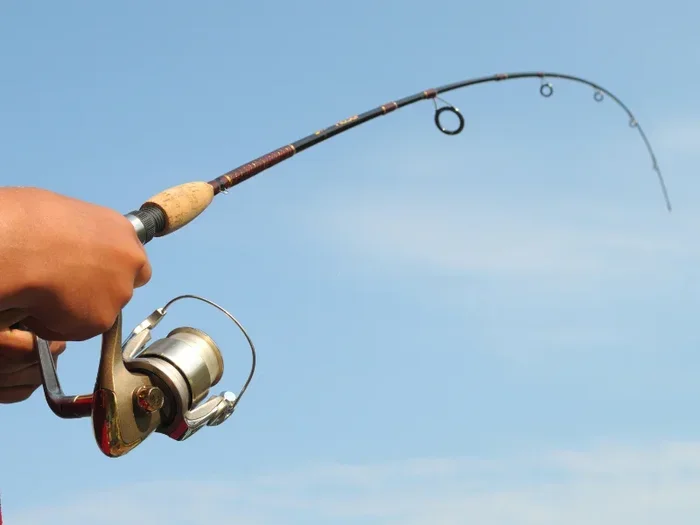
A 6- to 7-foot spinning rod is the most useful choice for many anglers. Look for light or medium-light power and a fast or moderate-fast action. Power describes how much force it takes to bend the rod. Action describes where the rod bends.
A practical rod and reel setup
For a general small-river setup, use:
- A 6- to 7-foot light spinning rod
- A 1000 or 2500 size spinning reel
- 4- to 8-pound monofilament
- A 2- to 4-foot fluorocarbon leader when water is clear
- A small landing net
- Needle-nose pliers or fishing forceps
- A compact tackle box
A light rod is a strong choice for trout, panfish, and small bass. A medium-light rod gives more control around wood and can handle larger smallmouth bass, walleye, and channel catfish.
Spinning reels, spincast combos, and baitcasters
A spinning reel is the best all-around option for most small-river anglers. It casts light lures well and does not create the backlash common with baitcasters. Backlash is a tangle that forms when a baitcasting spool spins faster than line leaves the reel.
A spincast combo is a good first setup for young anglers. It has a closed face and a simple push-button cast. It may not cast as far or last as long as a quality spinning reel, but it is easy to learn.
A baitcaster suits experienced anglers who want precise casts and strong control. It works well with heavier jigs, crankbaits, and bass tackle. It is usually less practical for tiny lures and first-time anglers.
Line choices for small rivers
Monofilament is affordable, easy to tie, and slightly stretchy. That stretch can protect light hooks and reduce sudden break-offs. It is a strong choice for beginners and kids.
Fluorocarbon is less visible underwater and sinks. Many anglers use it as a leader rather than fill the whole spool because it can be stiff and costly.
Braided line has little stretch and offers strong sensitivity. A 10- to 15-pound braid with a 4- to 8-pound fluorocarbon leader works well for experienced anglers fishing around weeds or wood. Braid can cut into soft rod guides on poor-quality equipment, so inspect the guides and knots often.
Rod and line pairing
Use this table to match tackle to common small-river goals. A heavier setup may be useful where rivers hold large catfish or powerful bass.
| Fishing goal | Rod and line pairing | Best suited to |
|---|---|---|
| Trout and panfish | Light rod with 4- to 6-pound mono | Beginners, kids, clear water |
| Mixed river species | Light or medium-light rod with 6-pound mono | Most shore anglers |
| Bass near wood | Medium-light rod with 8-pound mono or 10-pound braid | Experienced anglers |
| Small catfish | Medium-light rod with 8- to 10-pound mono | Bait anglers |
| Clear water finesse | Light rod with braid and fluorocarbon leader | Anglers who want sensitivity |
| Heavy cover | Medium-light or medium rod with 10- to 15-pound braid | Skilled anglers with strong knots |
The lightest line is not always the best line. Choose line based on cover, fish size, current, and your ability to land fish without forcing them into branches.
Pack Only the Gear You Will Use
Small rivers often require walking. A large tackle box becomes a burden. Carry a small shoulder bag, waist pack, or backpack with only the lures and tools you need.

A compact kit also helps you move. Fish one spot for a few casts, then step to the next likely area. This style is often more effective than sitting in one place and casting without a plan.
Essential terminal tackle
Terminal tackle means the small items at the end of your line. Pack:
- Size 6 to 10 hooks for worms, crickets, and panfish bait
- Size 1 to 4 hooks for larger live bait
- 1/16- to 1/8-ounce jig heads
- Small split shot sinkers
- Small sliding egg sinkers
- Bobbers
- Barrel swivels
- Snap swivels
- Fluorocarbon leader
- Soft plastics
- Small spinners
- Crankbaits
- Inline jigs
Use the smallest sinker that reaches the fish. Heavy weight can make bait drag along the bottom and look unnatural.
Useful tools and clothing
Bring polarized sunglasses, which reduce surface glare and help you see rocks, depth changes, and fish. Wear shoes with strong grip if you walk on wet rocks. Waders can keep you dry, but they can also fill with water if you fall.
A small landing net is useful for trout, bass, and fish with delicate mouths. Pliers help remove hooks. A stringer is legal in some areas but not others, and it is not suitable for fish you plan to release.
💡 Pro Tip: Carry two small lure boxes instead of one large box. Use one for moving baits, such as spinners and crankbaits, and one for jigs, hooks, and soft plastics. This keeps your hands free and speeds up lure changes.
Gear for shore, wading, and kayak fishing
| Fishing style | Helpful gear | Main concern |
|---|---|---|
| Shore fishing | Long pants, grippy shoes, small net, polarized glasses | Slippery banks and limited casting space |
| Wading | Wading boots, wading belt, staff, net | Falling, fast current, and rising water |
| Kayak fishing | U.S. Coast Guard-approved PFD, paddle leash, dry bag, whistle | Capsizing, strainers, and changing weather |
| Traveling on foot | Small pack, telescopic rod, water, first-aid kit | Heat, ticks, and getting lost |
| Fishing with kids | Spincast combo, barbless hooks, sun protection | Hook safety and close supervision |
A telescopic rod is convenient for travel but can be less durable than a one-piece or two-piece rod. Check each guide and joint before casting. For gift buyers, a simple 5- to 6-foot spincast combo is often easier for a child than a long bass rod.
⚠️ Safety Warning: Never wade based only on water depth. Current can push hard, and slippery rocks can cause a fall. Wear a wading belt, use a staff, avoid water above your knees when unsure, and leave the river if water rises or turns muddy. Tell someone your route and return time.
Approach the River Without Spooking Fish
Small-river fish can detect movement, sound, and shadows. Your approach often matters more than the lure. Think of the riverbank as a doorway: enter slowly, and you may get several chances; rush in, and the fish may disappear.

Start downstream and work upstream when conditions allow. Fish usually face into the current. From downstream, your body is less likely to appear directly in their view, and your lure can drift toward them naturally.
Move slowly and stay low
Avoid walking on the edge of the water when fish can see you. Stay behind grass, bushes, rocks, or trees. Keep your shadow off the target water.
Do not stomp on loose gravel. Sound travels through water well. If you must cross the river, cross only at a safe, shallow area and do it before fishing the section you want to cast.
Make the first cast count
The first cast can be your best cast. Begin with the closest likely target before walking farther along the bank.
Cast to:
- The near edge of a pool
- The downstream side of a rock
- The edge of a fallen tree
- The seam between fast and slow water
- The shade under an overhanging branch
- The deepest part of the bend
Do not wade into a pool before fishing its edge. You may disturb fish you could have caught from shore.
Use Simple Presentations That Match the Current
A good small-river presentation puts the lure or bait where fish expect food. The current should help create movement. You do not need to work every lure with complex rod motions.

Start with a small spinner, jig, soft plastic, or natural bait. Change one thing at a time. If you change lure, depth, speed, and location together, you will not know what caused a bite.
Drift live bait naturally
A bobber rig works well for panfish, trout, and smaller bass in calm pools. Set the bait just above the bottom. Adjust the depth as the pool changes.
For faster water, use a small hook, one or two split shot, and a natural drift. Cast slightly upstream. Let the current carry the bait downstream while keeping enough line control to detect a bite.
Common bait choices include:
- Worms
- Minnows
- Crickets
- Grasshoppers
- Crawfish
- Small pieces of legal cut bait
Check local rules before using live bait. Some waters ban live minnows or restrict the movement of bait between rivers.
Fish a jig near the bottom
A 1/16- to 1/8-ounce jig can catch bass, trout, walleye, crappie, and other species. Tip it with a soft plastic, worm, grub, or legal natural bait.
Cast upstream or across the current. Let the jig sink while keeping slight contact with the line. Lift it gently, then let it fall. Many strikes happen as the jig drops.
Retrieve a small spinner
Inline spinners work well in riffles, runs, and shallow pools. Cast upstream or across the current. Begin a slow retrieve as the lure sinks.
The blade should turn without racing. If the spinner rises to the surface, slow down or use a slightly heavier model. If it drags the bottom, speed up or choose a lighter lure.
Use soft plastics around cover
Small craws, grubs, worms, and minnow-shaped soft plastics can imitate common river prey. Rig them on a light jig head or weedless hook.
Cast beyond the target and bring the lure past the cover. A soft plastic that bumps a rock, pauses, and moves again can look natural. Keep the hook point clear of thick branches when possible.
Try small crankbaits in deeper runs
Small crankbaits can search water quickly. Choose a model that runs above the bottom in the depth you are fishing. Crankbaits with natural colors suit clear water. Darker or brighter colors may help when water is stained, but fish response can vary.
Do not run a crankbait through every log. Start along the outside edge of cover. Use a medium-light rod if treble hooks and stronger fish are common.
Match presentation to water speed
| Water condition | Cast direction | Presentation |
|---|---|---|
| Slow pool | Across or slightly upstream | Bobber, soft plastic, slow jig |
| Fast riffle | Upstream | Spinner, fly, drifting bait |
| Current seam | Upstream of the seam | Drift bait or swing a small lure |
| Deep bend | Upstream along the bank | Jig, crankbait, live bait |
| Heavy cover | Past the edge of cover | Weedless jig or soft plastic |
| Clear shallow water | Long cast from cover | Small spinner, fly, light leader |
The main goal is control. You should know where the lure is and how fast it moves. If you lose contact, change weight, line angle, or retrieve speed.
Fish by Species and Water Type
Different fish use small rivers in different ways. Species can also shift location with temperature, water level, and food supply.

Use general patterns as a starting point. Then watch what the river shows you. A smallmouth bass river may also hold trout in cold tributaries, while a slow lowland river may favor catfish, panfish, and largemouth bass.
Trout
Trout often prefer cool, oxygen-rich water. Look in riffles, pool heads, current seams, and shaded banks. Small spinners, flies, worms, and tiny jigs can work where legal.
Approach from downstream. Trout are alert and may spook from movement or line flash. Use 4- to 6-pound line in clear water and keep air exposure short during release.
Smallmouth bass
Smallmouth bass often use rocks, current breaks, deep runs, and wood. Try small crankbaits, tube-style soft plastics, grubs, jigs, and live crayfish where legal.
A medium-light spinning rod is a useful choice. Use 6- to 10-pound line, depending on cover. Cast upstream and let the lure cross the current near rocks.
Largemouth bass
Largemouth bass often favor slower water, weeds, shade, wood, and soft banks. Try a weedless worm, small spinnerbait, compact crankbait, or live bait.
Fish the shade first on bright days. On cloudy days, bass may move farther from cover. Avoid noisy entry near shallow banks.
Panfish
Bluegill, sunfish, and crappie are good targets for beginners and kids. Use a light spinning or spincast combo with a small hook, bobber, worm, cricket, or tiny jig.
Panfish often gather near weeds, brush, quiet eddies, and shallow cover. Keep the rig simple. A bobber that dips is easy for a new angler to understand.
Catfish
Channel catfish and bullheads often use deep holes, slow bends, and areas with soft bottom. Use a small hook with worm, cut bait, or other legal bait. Add a light sinker to hold the bait near the bottom.
A medium-light rod with 8- to 10-pound line provides more control. Check local rules on bait, hook numbers, and set lines.
Walleye
Walleye may use deeper pools, shaded banks, rocky bottoms, and current breaks. They are often more active in low light. Try a jig, minnow, small crankbait, or live bait where legal.
Small rivers may hold walleye seasonally rather than all year. Local reports and wildlife agency information can help identify the best times.
Follow a Step-by-Step Small-River Plan
A repeatable plan keeps you from rushing and helps you learn. Start with high-percentage water, then expand if fish do not respond.

Use the following sequence on a new stretch of river.
1. Check the river and weather
Look at water level, clarity, current speed, air temperature, and weather. Avoid fishing near rising water, storms, or flood conditions. Rain can change a small river in minutes.
2. Confirm access and regulations
Make sure you have permission to enter the bank or launch a kayak. Carry the required fishing license. Check size limits, bag limits, seasons, bait rules, hook rules, and special regulations.
3. Start with a quiet observation
Stand back for several minutes. Watch for baitfish, insects, rising trout, surface swirls, bird activity, and current seams. This short pause can show you where food is moving.
4. Pick the closest target
Fish the near bank, shallow edge, and closest cover first. Do not walk into the river until you have worked the water you can reach.
5. Make three to five casts
Use a few angles. Try upstream, across current, and slightly downstream. Keep the lure near the target but avoid repeated casts that create noise.
6. Change depth before changing location
If fish follow but do not strike, slow the lure or let it sink deeper. If you feel bottom too often, raise the lure or use less weight.
7. Move a short distance
If no fish respond, move 10 to 30 yards. Small rivers often have many small holding areas. Cover water without racing past good spots.
8. Set the hook with control
Do not jerk hard with light tackle. Sweep the rod firmly to remove slack. Keep steady pressure and guide the fish away from wood or fast current.
9. Land and release the fish safely
Wet your hands before touching a fish. Support its body. Keep it out of water only as long as needed for a quick photo. Remove the hook with pliers and return the fish facing into gentle current.
10. Record what worked
Write down the water level, time, lure, depth, weather, and fish location. A small notebook can teach you more than buying another box of lures.
Avoid the Most Common Small-River Mistakes
Most poor results come from approach, location, or presentation errors. The good news is that these problems are easy to fix.

The table below connects common mistakes with practical solutions.
| Problem | Why it hurts | Better choice |
|---|---|---|
| Walking into the pool first | Spooks fish near the bank | Fish the edge before wading |
| Casting only downstream | Misses upstream holding water | Work upstream and across current |
| Using heavy sinkers | Makes bait look unnatural | Use the lightest weight that reaches depth |
| Wearing bright colors | Creates a strong bank-side outline | Use muted clothing and stay low |
| Changing lures too often | Prevents useful learning | Change one variable at a time |
| Fishing only deep water | Misses feeding fish in shallows | Check riffles, edges, and flats |
| Pulling fish through rocks | Causes break-offs and damage | Keep steady pressure and use a net |
| Leaving line on the bank | Harms wildlife | Collect and dispose of line properly |
Do not assume a quiet river has no fish. Fish may be inactive, holding in a different depth, or responding to a presentation you have not tried.
Pros and cons of fishing small rivers
Small rivers have clear benefits, but they also demand care. The table below gives a balanced view.
| Pros | Cons |
|---|---|
| Low travel cost and easy shore access | Banks can be steep, muddy, or private |
| Light tackle is affordable | Larger fish may reach cover quickly |
| Good for beginners and kids | Fish can spook easily |
| Many species in one stretch | Water levels can change fast |
| No boat is required in many areas | Casting space may be limited |
| Excellent catch-and-release practice | Wading can be dangerous |
For a beginner, the easy access and simple tackle are major advantages. For an advanced angler, the limited space and wary fish create a technical challenge.
Fish Safely Around Water
Small rivers can look calm while hiding strong current, deep holes, slippery rocks, and strainers. A strainer is a tree or branch that lets water pass but can trap a person or kayak.

Do not fish alone in remote areas. Tell someone where you will park, which section you plan to fish, and when you expect to return.
Wading safety
Wear a wading belt with chest waders. Use a wading staff in unfamiliar water. Take short steps and keep your feet pointed upstream in moving water. If you lose balance, turn onto your back with your feet downstream and move toward shore when safe.
Never wade during rising water. Water that is only a few inches deeper can create much more force.
Kayak safety
Wear a U.S. Coast Guard-approved personal flotation device every time. Keep a whistle, paddle, phone in a waterproof case, and basic first-aid kit close at hand.
Learn how to exit and reenter your kayak in calm water before fishing moving water. Avoid narrow channels with fallen trees, low bridges, or strong current unless you have suitable training.
Sun, heat, and insects
Small-river trips often involve long walks. Bring water, sunscreen, insect repellent, a hat, and a first-aid kit. Check for ticks after fishing in tall grass or brush.
Storms can arrive quickly. Leave exposed banks and open water when thunder is present.
Respect Regulations and River Conservation
Fishing rules protect fish, habitats, and future access. Rules vary by state, river, species, and season. A license that works in one state may not work in another.

Check your state wildlife agency or local fisheries department before fishing. Confirm license requirements, size limits, bag limits, closed seasons, bait restrictions, tackle rules, access laws, and special catch-and-release sections.
📜 Check Local Regulations: Regulations may restrict barbed hooks, lead sinkers, live bait, treble hooks, or the number of rods. Confirm the current rules with the state or local wildlife agency before you fish.
Practice careful catch and release
Use barbless hooks where required or where practical. You can also pinch down barbs with pliers. Barbless hooks often come out faster and may reduce handling time.
Wet your hands before touching fish. Do not squeeze the belly or hold a fish by the gill covers. For larger fish, support the body with one hand and the tail with the other.
Keep fish in the water for photos when possible. If a fish is deeply hooked, cut the line close to the hook rather than causing more damage through forceful removal, unless local guidance says otherwise.
Protect the riverbank
Stay on durable paths when available. Do not cut live trees for rod holders. Pack out hooks, bait containers, line, plastic worms, and food waste.
🌿 Conservation Note: Discarded fishing line can injure birds, turtles, and mammals. Coil used line and place it in a proper recycling bin or trash container. Never leave it on the bank.
Know What Small-River Fishing Costs
You can start with a modest budget. The biggest cost differences come from rod and reel quality, waders, footwear, and specialized lures.

Current pricing ranges from basic youth combos to advanced lightweight setups. Prices change by brand and season, so check current listings before buying.
| Budget level | Typical setup | Best for |
|---|---|---|
| Entry level | Spincast or basic spinning combo, mono, small tackle box | Kids, beginners, occasional trips |
| Mid-range | Light spinning rod, 1000-2500 reel, better line and net | Regular shore anglers |
| Advanced | Sensitive rod, quality reel, braid, leaders, specialized lures | Frequent anglers and technical fishing |
| Wading add-on | Boots, belt, staff, waterproof pack | Anglers who wade often |
| Kayak add-on | PFD, paddle gear, dry storage, safety equipment | Experienced kayak anglers |
A budget setup is worth buying when it matches your fishing goals. Do not spend on a baitcaster, fish finder, or expensive waders if you mostly fish from shore for panfish.
For gift buyers, a ready-to-fish spincast combo, a small tackle box, polarized sunglasses, and a license gift card can form a useful package. Add barbless hooks if the angler fishes catch-and-release water.
Maintain Your Small-River Gear
Freshwater rivers are less harsh than saltwater, but mud, sand, grit, and moisture still damage gear. Good care helps a reel last longer and keeps hooks safe.

After each trip, wipe the rod and reel with a dry or slightly damp cloth. Do not soak a spinning reel unless the manufacturer says it is designed for that care. Check the line for rough spots after fishing around rocks.
Simple gear-care checklist
| Item | After every trip | Monthly or seasonal check |
|---|---|---|
| Rod | Wipe dirt and inspect guides | Check guide inserts and ferrules |
| Spinning reel | Dry exterior and loosen drag | Clean, oil, and service as directed |
| Line | Check for nicks and abrasion | Replace if stiff, faded, or damaged |
| Hooks | Dry before storage | Replace rusty or dull hooks |
| Tackle box | Remove wet items | Clean rust and sort terminal tackle |
| Waders | Hang dry away from heat | Test for leaks and inspect seams |
| Landing net | Rinse mud and debris | Check frame, handle, and mesh |
Replace line when it feels rough, coils badly, or shows sun damage. Replace hooks when points are dull, bent, or rusty. A hook file can restore some points, but damaged hooks should be discarded.
Saltwater gear care is more demanding. If you use freshwater tackle around redfish, surf fishing, piers, or brackish water, rinse it with fresh water and dry it fully. Salt can corrode stainless parts, aluminum frames, reel bearings, and hooks.
Improve Your Results Without Buying More Gear
Better river fishing usually comes from better observation. Notice which side of the river holds insects, where baitfish gather, and how water changes after rain.

Use your feet before using your wallet. Walk, watch, and test. A simple jig placed in the right current can outperform a large collection of expensive lures placed in the wrong water.
Three useful upgrades
- Improve your knots. Learn the improved clinch knot for hooks and lures and the double uni knot for joining lines.
- Carry a landing net. A net helps you land fish with less pressure and fewer dropped fish.
- Use polarized glasses. They help you read structure and protect your eyes from hooks.
When a fish finder helps
A fish finder is usually unnecessary for walking a small river. It may help from a kayak on a wider, deeper river. Even then, learn to read current and structure by sight.
For beginners and kids, a fish finder can distract from learning basic water skills. For experienced kayak anglers, it can show depth, drop-offs, and submerged structure. Always secure the unit and protect it from water.
When a fly rod makes sense
A fly rod is a strong choice when insects hatch, fish feed on the surface, or banks allow back casts. A 3- to 5-weight fly rod suits many trout and panfish streams. A 5- to 6-weight rod handles larger bass flies and stronger wind.
Fly fishing has a learning curve. A spinning rod with a small float or casting bubble can be an easier alternative for someone who wants to present flies without learning a full fly cast.
Small-River Fishing FAQs
Q: What is the best rod length for a small river?
A 5- to 7-foot rod works well. Choose 5 to 6 feet for tight banks, brush, and children. Choose 6 to 7 feet for longer casts, better line control, and open shorelines.
Q: What line strength should I use in a small river?
Start with 4- to 8-pound line for trout, panfish, and average bass. Use 8- to 12-pound line around heavy wood, larger catfish, or strong current. Local fish size and cover matter more than a fixed rule.
Q: Is monofilament or fluorocarbon better for small-river fishing?
Monofilament is easier and cheaper for beginners. Fluorocarbon is less visible and sinks, so many anglers use it as a leader. Both can work well when matched to water clarity and cover.
Q: Should I fish upstream or downstream?
Fish upstream when possible. Many fish face into the current, and an upstream approach helps keep you behind them. Casting upstream also creates a natural drift.
Q: What bait catches the most fish in a small river?
Worms are a useful starting bait for mixed species, but no bait works everywhere. Minnows, crickets, crawfish, and legal cut bait may suit specific rivers and species. Check local bait rules first.
Q: Can I fish a small river after rain?
You can, but use caution. A light rain may increase food flow and improve fishing. Heavy rain can make water rise fast, turn muddy, and create unsafe current. Avoid wading in rising water.
Q: Are small crankbaits good for river fishing?
Yes. Small crankbaits work well in deeper runs, current seams, and rocky pools. Select a model that runs at the depth you want and avoid throwing treble-hook lures into dense wood.
Q: What is the best setup for a child?
A 5- to 6-foot spincast combo with 6-pound monofilament is a practical choice. Use a bobber, small hook, and worm or cricket. Supervise closely around hooks, water, and slippery banks.
Q: Do I need waders to fish a small river?
No. Many small rivers can be fished from shore. Waders improve access but add safety risks. If you buy them, use a wading belt, wear suitable boots, and learn safe wading habits.
Q: How should I release a trout or bass?
Wet your hands, keep the fish close to the water, support its body, and remove the hook quickly. Avoid touching the gills. If a hook is deeply embedded, cut the line rather than forcing it out.
Q: Is kayak fishing safe on a small river?
It can be safe with the right conditions and training. Wear a U.S. Coast Guard-approved PFD, check the forecast, avoid strainers and flood water, carry a whistle, and tell someone your plan. Take a paddling or boating safety course if you are new to moving water.
Q: What should I do if my lure keeps snagging?
Use a lighter lure, raise the rod tip, change the casting angle, or switch to a weedless hook. Do not wrap line around your hand to pull free. Point the rod at the snag and pull from a safe position.
Q: How long does small-river fishing gear last?
A basic rod and reel can last several seasons or longer with normal care. Sand, grit, poor storage, and damaged line shorten its life. Clean gear after trips and replace line, hooks, and leaders when they show wear.
Start Small and Let the River Teach You
The best way to learn how to fish a small river is to choose one manageable stretch and fish it often. Start with a light spinning or spincast setup, six-pound line, a few small lures, and simple live bait. Work upstream, fish the nearest cover first, and pay close attention to current seams, pools, riffles, and shaded banks.
Small rivers reward patience. They also reward respect. Wear the right safety gear, follow local fishing regulations, release fish with care, and leave the bank cleaner than you found it. With each trip, you will read the water faster, make quieter approaches, and understand why the smallest bend or rock can hold the most memorable fish.