How Deep To Fish For Salmon: Best Depth Tips
Salmon rarely stay at one depth all day. Their position changes with water temperature, light, current, food, wind, tide, and the stage of their migration. That is why the right answer to “how deep to fish for salmon” is not one fixed number.
As a starting point, fish 10 to 30 feet deep in lakes, near the bottom in rivers, and 20 to 80 feet deep in saltwater, then adjust from there. In cold water, salmon may feed high in the water column. In warm water, they often move deeper to find better oxygen and comfort.
The most reliable approach is to use a fish finder when fishing from a boat, watch the depth of baitfish, and change your lure or bait depth in small steps. Shore anglers can do the same by testing different casting angles, sinker weights, and countdown times. The goal is to place your presentation where salmon are holding or feeding, not simply to fish as deep as possible.
Quick answer: How deep should you fish for salmon?
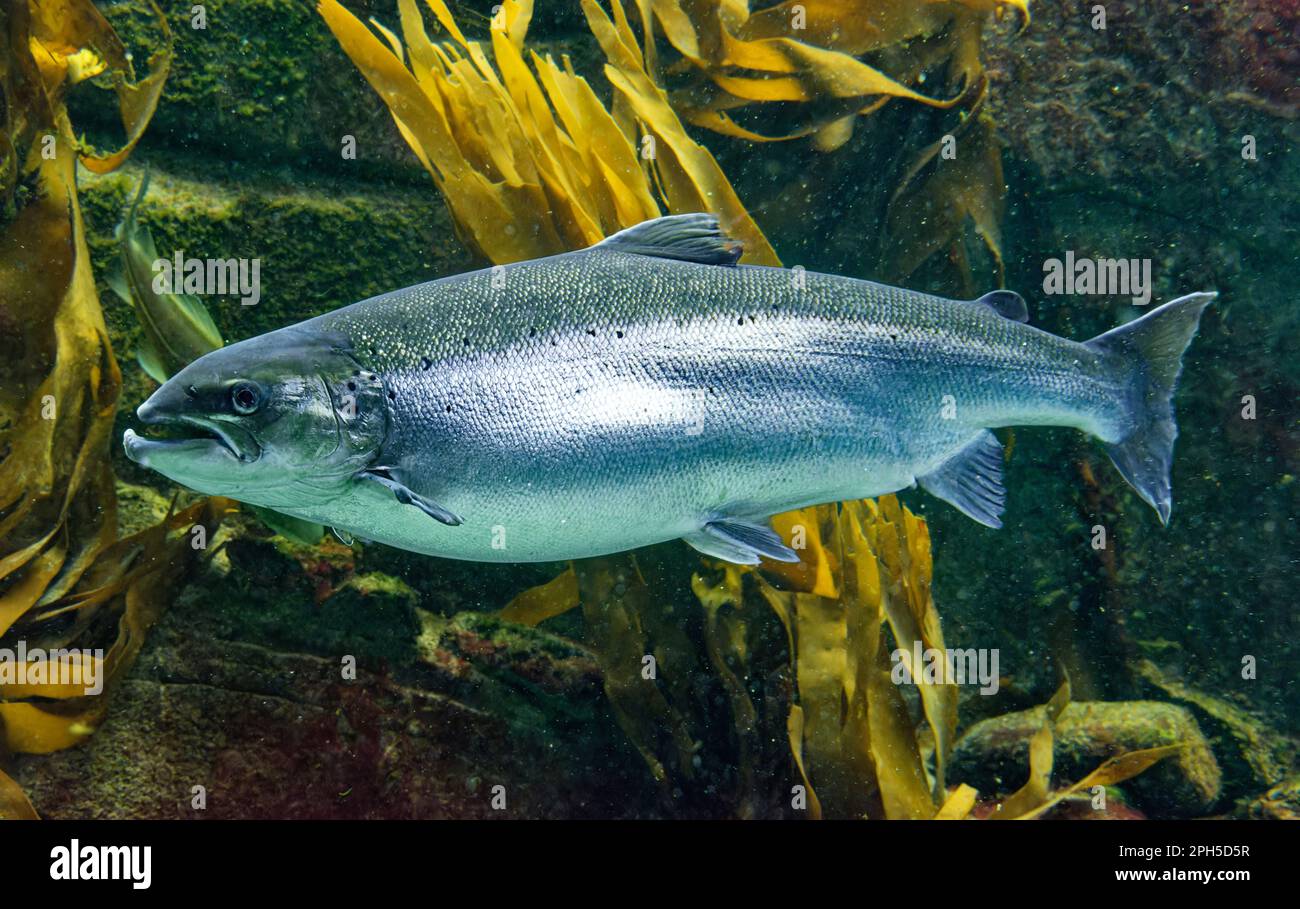
Fish for salmon at the depth where they are holding, feeding, or traveling. In lakes, begin at 10–30 feet and test deeper water down to 60 feet or more. In rivers, place bait near the bottom or just above it. In saltwater, salmon often hold 20–80 feet deep, but depth can change with tides and bait. Use a fish finder, current speed, water temperature, and lure sink rate to adjust.

Why salmon depth changes so often
Salmon depth depends on what the fish need at that moment. They may move higher to chase bait, drop deeper to escape bright sunlight, or hold near the bottom while resting in current. A salmon may also change depth when a cold front, strong wind, or rising river level changes the water.
Salmon are built for travel. They spend part of their lives in freshwater and, for many species, part in saltwater. Chinook, coho, sockeye, pink, and chum salmon do not always use the same depth in the same place.
Temperature controls the comfort zone
Water temperature is one of the best clues for salmon depth. Cold-water fish often prefer a narrow temperature range, though the exact range varies by species and season.
In a lake, warm surface water can push salmon into a deeper layer called the thermocline. The thermocline is the zone where water temperature changes fast with depth. It often holds plankton and baitfish, which can attract salmon.
Look for bait near the thermocline. If bait is at 35 feet, salmon may be close by, even if the bottom is 70 feet deep. Do not assume salmon are on the bottom just because the lake is deep.

Light and weather affect the strike zone
Bright sun often drives salmon deeper, especially in clear water. Low light at dawn, dusk, or under cloud cover can bring them higher. Wind can also push plankton and bait toward one side of a lake, creating a better feeding area.
Rain and cloud cover may make shallow water productive. Calm, clear days often favor deeper presentations. These are patterns, not rules, so use them as a starting point.
Current tells you where salmon can rest
In rivers, salmon must manage energy. They may face into the current but avoid the fastest flow. Look for seams, pools, cut banks, deep slots, and the softer water behind rocks or logs.
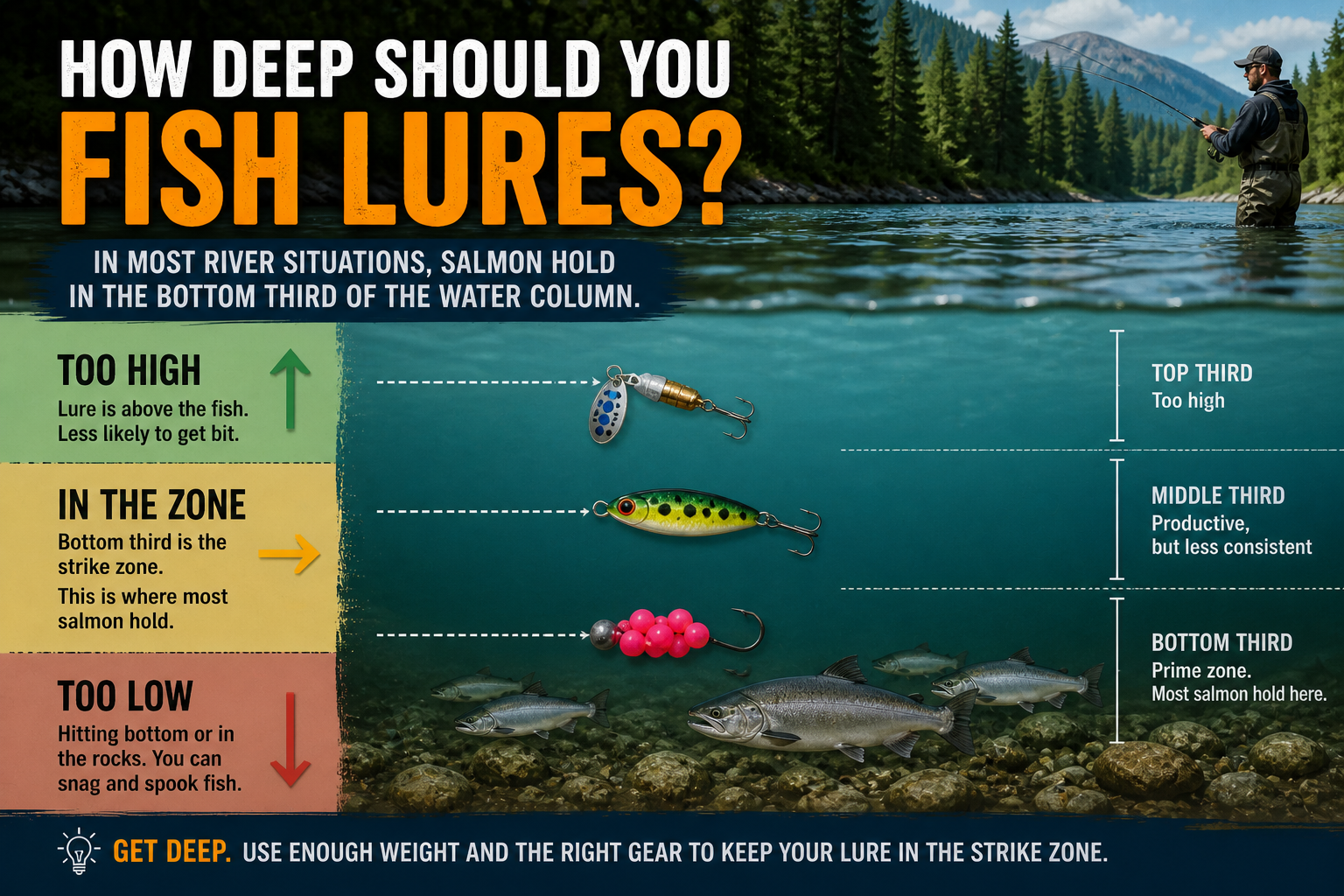
A salmon may sit near the bottom because current speed is lower there. Your bait should move through that zone at a natural pace. If your rig drifts too high, the fish may never see it. If it drags hard on the bottom, it may snag or look unnatural.
Salmon depth by water type
The water you fish has a major effect on the right depth. A river salmon, a lake salmon, and a king salmon in saltwater may all be at very different levels on the same day.
| Water type | Starting depth | Main clue |
|---|---|---|
| River or stream | Near bottom to 3 feet above it | Current seams, pools, and resting spots |
| Lake or reservoir | 10–30 feet | Bait, temperature layers, and sonar marks |
| Nearshore saltwater | 10–50 feet | Tides, bait schools, and water color |
| Offshore saltwater | 30–100+ feet | Downrigger depth, bait, and temperature |
These numbers are starting points, not promises. Salmon may be much shallower during low light or much deeper when bait drops. Check local reports and watch what nearby anglers are doing without copying unsafe or illegal methods.

River salmon depth
For river salmon, begin by placing your bait or lure within 1 to 3 feet of the bottom. The fish may hold in a deeper slot, behind a rock, or along the inside edge of a current seam.
Use enough weight to reach the strike zone, but not so much that your rig constantly drags. A drift rig with a leader, hook, swivel, and small sinker can work well when legal. Adjust the sinker until the rig ticks the bottom now and then rather than hanging up every cast.
In clear, low water, salmon may move deeper or hold close to cover. In dirty, rising water, they may move toward the bank because they have trouble seeing in strong current. That is when a brighter lure, scent, or larger profile may help them find your offering.
Lake salmon depth
Lake salmon often suspend above deep water instead of sitting on the bottom. Chinook and lake trout may hold at 20 to 80 feet, while coho may run higher when chasing bait.
A fish finder can show bait clouds, arches, and temperature layers. Set your lure slightly above the fish when possible. Salmon often look up to strike, and a lure that runs several feet over their heads may draw more attention than one that drags below them.
If you do not have sonar, use a simple search pattern. Start shallow at first light, then move deeper in 5- to 10-foot steps. Track how long your lure sinks and repeat the count when you find a productive depth.
Saltwater salmon depth
In saltwater, salmon depth can change with the tide. Moving water may concentrate bait near a point, reef edge, current line, or underwater shelf. Salmon often follow that bait rather than staying at one exact depth.
Downriggers make depth control easier for boat anglers. A downrigger uses a weighted ball to carry your lure to a measured depth. Without one, use lead-core line, weighted steel line, a diving planer, or a heavy jig, depending on local rules.
For shore and pier anglers, salmon may pass within casting range at 10 to 40 feet. A long cast does not always mean a deep presentation. Count your lure down, vary the retrieve, and note the tide stage when fish appear.

The best depth by salmon species
Species matter because salmon differ in size, feeding style, migration path, and preferred water. The same lure at the same depth may work for one salmon species and miss another.
| Salmon species | Common depth pattern | Useful starting presentation |
|---|---|---|
| Chinook or king salmon | Deep to mid-depth; often 20–80 feet in lakes or saltwater | Downrigger plug, spoon, cut bait, or trolling flasher |
| Coho or silver salmon | Often higher in the water column | Casting spoon, spinner, plug, or shallow trolling lure |
| Sockeye salmon | Mid-depth near plankton and traveling schools | Small spoon, fly, or legal trolling setup |
| Pink salmon | Shallow to mid-depth during migration | Small bright spoon, jig, or fly |
| Chum salmon | River pools and slower current edges | Drifted bait, fly, or weighted lure where legal |
These are broad patterns. Local water temperature, bait, season, and regulations may matter more than species averages. Ask a local tackle shop where fish were caught, then ask the key follow-up question: “At what depth did they strike?”

Chinook salmon depth
Chinook salmon are often the deepest-running salmon in lakes and coastal waters. When trolling, many anglers start between 30 and 60 feet, then work deeper if bait and fish marks appear below that level.
Large Chinook may hold near the bottom in deep water. If the bottom is 90 feet deep, try 75 to 85 feet before running directly on the lake floor. This keeps your lure in the zone while reducing snags.
In rivers, Chinook may rest in deep pools and travel lanes. A heavy spoon or drifted bait may need to reach the lower part of the water column, but it should still move naturally.
Coho salmon depth
Coho often feed higher than Chinook, especially when chasing herring or other small baitfish. Start 10 to 30 feet deep in lakes or nearshore saltwater, then adjust based on bait and light.
Coho can also strike close to the surface during early morning or low light. A floating plug, spinner, spoon, or fly may work better than a deep rig when fish are visibly rolling or chasing bait.
Sockeye, pink, and chum salmon depth
Sockeye often follow plankton and may suspend in open water. Pink salmon commonly feed in shallow to medium depths, while chum salmon may hold in slower river water or deeper pools.
Small lures are often a good match for pink and sockeye, but the legal method varies by location. Some waters restrict snagging, weighted flies, bait, barbed hooks, or certain types of gear. Always confirm the rules before fishing.
How to find salmon depth with a fish finder
A fish finder helps you see depth, bottom shape, bait, and possible salmon marks. It does not identify every fish correctly. A mark can be a salmon, baitfish, debris, or a signal artifact.
Begin by studying the bottom. Look for sudden depth changes, humps, shelves, drop-offs, and creek channels. Then look for bait near those structures. Salmon often relate to food and temperature rather than to the deepest water alone.
Read the water column, not only the fish icons
Many fish finders show a fish symbol when they detect a target. These icons can help beginners, but raw sonar arches and bait clouds often provide better information.
A salmon mark that appears at 42 feet is useful only if your lure reaches 42 feet. If your spoon runs at 25 feet, you are fishing above it. That may still work, but you should know the difference.
Match lure depth to sonar depth
When trolling, change one variable at a time. If you see salmon at 50 feet, lower the lure to 45 or 48 feet rather than dropping it directly to the bottom.
Speed affects lure depth. A faster troll may lift some lures, while a slower speed may let them dive deeper. Line diameter, current, lure weight, and leader length also change running depth.
💡 Pro Tip: Mark the depth, speed, lure, and direction each time you get a strike. A short note on your phone can reveal a pattern faster than memory.
Gear that helps you control salmon depth
Depth control starts with the right terminal tackle. Terminal tackle means the small items at the end of your line, such as leaders, hooks, swivels, sinkers, and lures.
Your rod and reel do not create depth by themselves, but they affect how well you cast, troll, fight fish, and manage weight. A beginner may prefer a spinning reel because it is simple to use. An experienced boat angler may prefer a line-counter reel and downrigger setup for repeatable depth.
| Depth-control tool | How it works | Best suited to |
|---|---|---|
| Split shot or sliding sinker | Adds modest weight for drift or casting | Beginners, rivers, and shore fishing |
| Diving planer | Pulls a lure down while trolling | Small boats and anglers without downriggers |
| Lead-core line | Sinks by color-coded sections | Trolling anglers who need moderate depth |
| Downrigger | Carries a lure to a measured depth | Boat anglers targeting deep salmon |
| Heavy jig or spoon | Sinks quickly for vertical or long casts | Piers, boats, and deep open water |
Each tool has limits. Sinkers can snag. Planers need room to turn. Lead-core line needs careful knots and storage. Downriggers add cost, weight, and setup time.
Rod and reel choices
For river salmon, a medium-heavy spinning rod from 8 to 10 feet gives casting distance and leader control. A moderate or moderate-fast action bends through more of the blank and can help protect lighter line.
For large Chinook or heavy current, choose a rod rated for the lure weight and line test you plan to use. A common setup may include 20- to 30-pound braided line with a 12- to 25-pound fluorocarbon or monofilament leader, but local fish size and rules should guide the final choice.
For trolling, a line-counter spinning reel or baitcasting reel helps you repeat the same amount of line. A reel with a smooth drag is important. Drag is the adjustable resistance that lets a fish take line without breaking it. Set it below the line’s breaking strength and check it often.
Beginners and kids may do best with a medium spinning combo. A spincast combo is even simpler for young anglers, but it may not handle large salmon or heavy trolling gear well. Gift buyers should match the setup to the fish size, not just the angler’s age.
Line, leader, hooks, and lures
Braided line has a thin diameter and little stretch. It can help you feel bottom contact and control deep lures. Monofilament has more stretch and floats more, which can help with shock absorption. Fluorocarbon is less visible underwater and sinks, but thick fluorocarbon can be stiff.
Use a leader that matches the water and fish. Clear water may call for a lighter or less visible leader. Heavy cover, sharp rocks, or large salmon may require more strength.
Spoons, spinners, plugs, jigs, flies, and live bait can all work where legal. Choose the lure based on depth, current, bait size, and water clarity. A bright spoon may stand out in stained water, while a smaller natural lure may suit clear water.
Depth tactics for shore, pier, kayak, and boat fishing
The best depth method depends on how you reach the fish. A boat gives you more control over depth and location. A shore angler must work with casting distance, current, bank slope, and access.
| Fishing method | Depth strategy | Useful gear |
|---|---|---|
| Shore fishing | Count lure down and vary sinker weight | Spinning reel, spoons, sinkers, long rod |
| Pier fishing | Fish tide changes and cast near current edges | Medium-heavy rod, jig, spoon, landing net |
| Kayak fishing | Use sonar and stay within safe depth control | PFD, fish finder, rod leash, anchor system |
| River wading | Drift bait near bottom without dragging | Waders, wading belt, drift rig, polarized glasses |
| Boat trolling | Set measured depths and repeat passes | Line-counter reel, downrigger, net, sonar |
Kayak anglers should focus on stable, simple setups. A long rod or large downrigger can create problems in a small boat. Wear a properly fitted U.S. Coast Guard–approved personal flotation device, even on calm water.
Shore anglers should avoid standing in deep or fast water to gain a few extra yards. A landing net with a long handle can help, but never wrap line around your hand or body while fighting a fish.

Fishing from shore
Start with a lure that sinks at a known rate. If a lure drops about 1 foot per second, a 10-second count gives a rough starting depth of 10 feet. Current and line angle make this estimate imperfect, but it gives you a repeatable system.
Fan-cast the area. Cast left, center, and right. Change the countdown by three to five seconds on each series. This helps you cover several depths without changing too many things at once.
Fishing from a pier
Piers often give access to deeper water. Salmon may travel close to pilings, along the edge of a current, or through the zone where bait gathers.
Watch the tide and keep hooks away from people below you. Use a landing net that can reach the water, and check whether local rules allow treble hooks, bait, or weighted lures.
Fishing from a kayak
A kayak lets you reach water that shore anglers cannot, but depth control must not compromise balance. Keep rods secured, store hooks in a closed tackle box, and avoid standing unless the kayak is designed for it and you have practiced in calm water.
A compact fish finder can show depth and bait. Use a rod leash when practical. Tell someone your route and expected return time, and check wind and weather before launching.
Fishing while wading
Wading anglers should fish the current seam rather than walking into the strongest flow. A wading belt can slow water from entering your waders if you fall, but it cannot make unsafe water safe.
Use polarized sunglasses to reduce glare and spot rocks, drop-offs, and fish movement. Carry pliers in a secure sheath, and keep hooks covered while moving.
⚠️ Safety Warning: Wear a wading belt, avoid wading alone, and turn back when water becomes too deep or fast. If you fall, point your feet downstream, release your gear if needed, and move toward shallow water.
A step-by-step method for dialing in salmon depth
A repeatable process is more useful than guessing. Use these steps whether you fish a lake, river, pier, or boat.
- Check the rules first. Confirm your fishing license, salmon season, size limit, bag limit, bait rules, hook rules, and closed areas.
- Study the water. Look for current seams, bait, temperature changes, drop-offs, weeds, points, and deep pools.
- Start with a realistic depth. Try 10 to 20 feet in a lake, near-bottom water in a river, or 20 to 40 feet in saltwater.
- Choose a lure that reaches that depth. Use a sinker, planer, jig, diving plug, fly line, or downrigger as needed.
- Fish one depth long enough to learn. Make several casts or passes before changing.
- Adjust in small steps. Move 5 to 10 feet deeper or shallower, or change your countdown by three to five seconds.
- Change speed and direction. A turn can make a trolling lure rise, fall, or change its action.
- Record every contact. Note depth, time, tide, speed, lure, water temperature, and location.
- Land fish with care. Keep a net ready and avoid dragging salmon over rocks or dry ground.
- Reset after a strike. Return the lure to the same depth and path before changing your pattern.
This method works because it limits random changes. You learn whether depth, speed, lure type, or location caused the result.
Common depth mistakes salmon anglers make
Many anglers fish too deep because they assume salmon always stay near the bottom. Others fish one depth for hours even when the bait has moved. The best correction is to treat depth as a changing part of the presentation.
| Mistake | What happens | Better choice |
|---|---|---|
| Fishing only the bottom | Misses suspended salmon | Search several depths |
| Using too much weight | Snags and poor lure action | Use the least weight that reaches the zone |
| Ignoring bait depth | Presentation stays away from food | Follow bait on sonar or by sight |
| Changing five things at once | You cannot learn what worked | Change one factor at a time |
| Trolling too fast | Lure rises or looks unnatural | Match speed to the lure |
| Standing in unsafe current | Fall risk increases | Fish from shore or a safer position |
The goal is not to reach the deepest water. It is to keep the lure in front of salmon long enough to be noticed.
Fishing too deep
A lure below the fish may be hard to see. It may also collect weeds, drag on rocks, or move with poor action. If sonar shows fish at 35 feet, try 30 to 35 feet before going deeper.
Fishing too shallow
Shallow water still deserves attention during dawn, dusk, cloud cover, wind, and active bait movement. Coho and other salmon may move high when feeding. Do not abandon shallow water simply because the lake is deep.
Using the wrong sinker size
A sinker that is too light may keep your bait above the fish. A sinker that is too heavy may make the rig look stiff or cause snags.
Use a sliding sinker when you want a fish to move with less resistance. Use split shot when you need small adjustments. Check that your hook remains sharp and your leader is not twisted.
Relying only on a fish finder
A sonar screen is a tool, not a fish-catching machine. Fish can be hard to mark, especially in shallow water, rough waves, or heavy cover. Water temperature, current, bait, and recent strikes still matter.
Seasonal salmon depth patterns
Season changes affect light, water temperature, bait, river flow, and migration. Salmon depth may shift each month, and even a warm or cold weather swing can change the pattern.
| Season | Common depth trend | What to watch |
|---|---|---|
| Spring | Shallow to mid-depth as water warms | Bait, creek mouths, warming bays |
| Summer | Often deeper during daylight | Thermocline, low light, cool water |
| Fall | River lanes and migration routes | Rising water, current seams, staging pools |
| Winter | Slow, deep, or localized activity | Stable water, safe access, legal seasons |
These trends vary by region. A Pacific Northwest river, Great Lakes salmon fishery, and Alaska coastal inlet can have very different seasonal patterns.
Spring
Spring salmon may move shallow when bait enters warming water. Start near creek mouths, flats, points, and windblown banks. Bright lures can work in stained spring water, while natural colors may suit clear water.
Summer
Summer often pushes salmon deeper during the day. Fish early, late, or during low-light periods when salmon rise. During midday, use sonar to find the thermocline and bait.
Fall
Fall salmon may focus on river travel and staging areas. In rivers, fish deeper pools and current edges. Avoid harassing salmon that are actively spawning or fish that local rules protect.
Winter
Winter fishing can be slow and dangerous. Ice, cold water, and poor weather create serious risks. Check ice thickness with local experts, carry safety picks where appropriate, and never fish alone on unfamiliar ice.
Rig choices for different depths
Your rig should present bait or a lure at the depth you can control. A simple setup often teaches more than an expensive one.
| Target depth | Rig or lure choice | Why it fits |
|---|---|---|
| Surface to 5 feet | Floating plug, fly, unweighted bait | Keeps the presentation high |
| 5–20 feet | Spoon, spinner, light jig, split shot | Covers shallow and mid-depth water |
| 20–50 feet | Diving plug, heavier jig, planer | Reaches deeper water from a boat or pier |
| 50 feet and deeper | Downrigger, lead-core line, heavy jig | Provides more exact depth control |
Check lure action after adding weight. A spoon should flutter or wobble as designed. A spinner should turn. A plug should track without rolling unless that action is intended.

Drift fishing in rivers
Drift fishing uses the current to carry bait or a lure through a target lane. Cast upstream or across the current, then manage line so the rig travels near the bottom without dragging.
A swivel can reduce line twist. A leader gives you a replaceable section when rocks or fish damage the line. Use a hook size that matches the bait and local rules.
Trolling in lakes and saltwater
Trolling works best when you can repeat speed, direction, and depth. A line-counter reel helps you release the same amount of line. A downrigger gives more direct depth control.
Use a landing net large enough for the salmon you target. Keep pliers, spare leaders, and a towel or rubberized net close by. Avoid storing wet saltwater gear in a closed tackle box.
Casting spoons and jigs
Spoons and jigs are useful for searching several depths. Let the lure sink, then use a steady retrieve with occasional lifts or pauses. Salmon may strike as the lure falls, so stay ready during the drop.
A medium-heavy spinning setup suits many shore anglers. Choose braid and leader strength based on fish size, rocks, current, and local tackle rules.
Budget, skill, and gear choices
You do not need a full boat setup to learn salmon depth. A basic spinning rod, reel, line, a few spoons, swivels, sinkers, hooks, and a landing net can cover many shore and river situations.
Experienced anglers may gain value from a fish finder, line-counter reel, downrigger, temperature probe, or trolling motor. These tools improve repeatability, but they do not replace knowledge of local water.
| Angler | Practical setup | Main limit |
|---|---|---|
| Beginner | 8–9 foot medium-heavy spinning combo | Less exact depth control |
| Child or gift buyer | 5–7 foot medium spincast or spinning combo | Best for smaller salmon and supervised use |
| River specialist | 9–10 foot medium-heavy spinning rod | Designed for drift and current control |
| Boat troller | 8–9 foot moderate rod with line counter | More gear and setup cost |
| Advanced deep-water angler | Downrigger, sonar, and temperature tools | Requires boat skills and maintenance |
Parents and gift buyers should avoid buying a heavy salmon rod for a child who mainly fishes for panfish, trout, or bass. The best gift is the setup that fits the water they can safely reach.
👪 Parent or Gift-Buyer Note: Ask where the angler fishes, the usual salmon size, and whether they fish from shore, a kayak, or a boat. Those three answers matter more than brand name or bearing count.
Salmon conservation and fishing rules
Salmon populations can be sensitive to harvest, warm water, habitat loss, and migration barriers. Follow the law and handle fish with care, whether you keep a legal fish or release it.
📜 Check Local Regulations: Before fishing, confirm the current rules with your state wildlife agency, provincial agency, tribal fishery authority, or local water manager. Check license needs, salmon identification rules, seasons, size limits, bag limits, closed waters, bait restrictions, lead rules, barbless-hook rules, and whether snagging is prohibited.
For catch and release, wet your hands before touching the fish. Keep it in the water when possible, support its body, and limit air exposure to a few seconds. Use a rubberized landing net and cut the line if a deeply swallowed hook cannot be removed safely.
Do not leave braided line, monofilament, hooks, or soft plastics on the bank. Dispose of damaged line in a recycling bin or tackle shop collection box when available. Keep only the fish you can legally and responsibly use.
🌿 Conservation Note: If water temperatures are unusually warm, salmon may be stressed before you hook them. Follow local closures and voluntary temperature guidance, even when fishing remains technically open.
FAQs about salmon fishing depth
Q: How deep should I fish for salmon in a lake?
A: Start at 10 to 30 feet, then check deeper water if you see bait or fish marks below that range. Chinook may be 40 to 80 feet deep, while coho may stay higher. Use water temperature and sonar to find the active layer.
Q: Do salmon stay on the bottom?
A: Not always. River salmon often hold near the bottom because current is weaker there. Lake and saltwater salmon may suspend over deep water while following bait. Always test both bottom and mid-water zones.
Q: How deep should I troll for Chinook salmon?
A: Try 30 to 60 feet as a starting range, then adjust based on bait, temperature, and sonar marks. In deep lakes or saltwater, Chinook may run below 60 feet. A downrigger or line-counter reel makes depth easier to repeat.
Q: How deep should I fish for coho salmon?
A: Begin in the upper 10 to 30 feet, especially at dawn, dusk, or when bait is near the surface. Coho may move deeper in bright light or strong wind. Watch for surface activity and bait schools.
Q: How do I know how deep my lure is running?
A: Use a fish finder, line-counter reel, downrigger, lead-core line, or a known sink rate. Trolling speed, current, line diameter, lure weight, and leader length all change the actual depth.
Q: Should salmon bait sit on the bottom?
A: Usually, bait should be near the bottom rather than buried in it. In rivers, keep it about 1 to 3 feet above the bottom when possible. Too much weight can make the rig snag and look unnatural.
Q: What line is best for deep salmon fishing?
A: Braided line offers low stretch and a thin diameter. Monofilament gives more stretch, while fluorocarbon is less visible and sinks. Many anglers use braid with a monofilament or fluorocarbon leader.
Q: Is a fish finder necessary for salmon fishing?
A: No. A fish finder helps boat anglers locate depth, bait, and temperature layers, but shore and river anglers can learn depth with countdowns, current reading, and repeated casts. Local knowledge is also valuable.
Q: Can I fish too deep for salmon?
A: Yes. A lure below the fish may be hard to see and can snag the bottom. Start at or slightly above the depth where bait and salmon appear. Move in small steps instead of dropping straight to the deepest water.
Q: What depth is best for salmon from shore?
A: Fish the depth you can reach with your lure. Start with a 5- to 15-second countdown, then vary it by three to five seconds. Points, drop-offs, creek mouths, current seams, and pier edges are good places to test.
Q: How deep are salmon in rivers?
A: Salmon often hold in the deepest nearby pool or in a slot near the bottom. They may travel through shallow water but rest in slower current. Focus on current seams and keep your presentation close to the bottom without dragging.
Q: Is lead-core line safe for all salmon waters?
A: Not necessarily. Tackle rules differ by state, province, lake, and fishery. Some places restrict lead or require specific gear. Check the current local regulations before using lead-core line or weighted tackle.
Q: What rod is good for salmon fishing?
A: A medium-heavy spinning rod from 8 to 10 feet suits many river and shore anglers. Boat trolling often uses a moderate-action rod matched to lure weight and salmon size. Choose power and action based on water, technique, and line strength.
Final thoughts
The best salmon depth is the depth that matches the fish, food, water, and presentation on that day. Begin with a sensible range, then let evidence guide you. Look for bait, read current, check temperature, use sonar when available, and change depth in small steps.
For most anglers, a useful starting plan is simple: fish near the bottom in rivers, 10 to 30 feet in lakes, and 20 to 80 feet in saltwater. Then adjust for species, season, light, tide, and water temperature.
Depth is only one part of salmon fishing. A natural lure action, sharp hook, steady retrieve, safe boat position, and legal method all matter. Keep careful notes, respect the fishery, and treat each outing as a chance to learn how that water works.