How To Fish Points: Proven Bass Fishing Tips
Fishing a point means targeting a piece of land, rock, gravel, or bottom structure that reaches from the bank into deeper water. Points are valuable because they connect shallow feeding areas with deeper escape water. Bass, walleye, trout, catfish, and many other fish often use them as travel lanes.
A point can look obvious, such as a rocky bank that sticks into a reservoir. It can also hide below the surface. An underwater point may show on a lake map but look like open water from shore. Learning how to find and fish both types will help you make better casts, choose the right lure, and avoid wasting time on empty water.
This guide explains how to fish points from shore, a boat, a kayak, or a pier. It covers point shape, depth, current, wind, water clarity, seasonal patterns, rod and line choices, lure selection, boat position, and common mistakes. It also explains how beginners, kids, and experienced anglers can use the same basic plan with different levels of gear.

The Quick Answer: How to Fish a Point
To fish a point, first find where shallow water extends into deeper water. Study the point from the bank, a map, or a fish finder. Start on the shallow tip, then cast along both sides and across the drop-off. Use a moving lure when fish are active and a jig, soft plastic, or live bait when fish are slow. Change depth before changing spots.

What Makes a Point Good for Fishing?
A good fishing point gives fish at least two useful things: food and a safe route to deeper water. The best points often have a sharp depth change, rocks, gravel, submerged brush, grass, or current. Wind can also push plankton and baitfish against one side of the point.
Not every point holds fish. A smooth, flat point with no depth change may be less useful than a smaller point with rock and a steep drop. The key is to look for the features that make one point different from the next.
Main Types of Fishing Points
Points come in several forms. Each type calls for a slightly different approach.
| Point type | What it looks like | Best feature to find |
|---|---|---|
| Main-lake point | Reaches into the main basin | Deep water nearby |
| Secondary point | Sits inside a creek arm or cove | Bait and seasonal shelter |
| Rocky point | Has rock, gravel, or hard bottom | Crayfish and ambush cover |
| Clay or mud point | Has a soft bottom | Warmer water and feeding fish |
| Underwater point | Shows on a map but not above water | A hidden drop or old channel |
| River point | Forms where current bends or splits | Current seams and eddies |
Main-lake points often hold fish during changing weather because they offer fast access to deep water. Secondary points can be better in spring, fall, or during strong bait movement. Underwater points are especially useful when visible shore cover receives heavy fishing pressure.

Why Fish Use points
fish use points as highways, rest stops, and feeding stations. A bass may move from a shallow flat to a creek channel by following a point. Walleye may slide along the edge of a rocky point as low light approaches. Catfish may use the deeper side of a river point where current delivers food.
The point itself is not always the target. The important area may be the tip, the base, one side, or the first breakline. A breakline is a sharp change in depth, bottom type, water temperature, or cover.
Fish may sit on the up-current side to feed, behind the point to rest, or along the edge where shallow and deep water meet. This is why you should fish a point from several angles rather than make one cast and leave.

Reading a Point Before You Cast
The best way to fish a point is to read it before making a cast. Look at the bank, water color, wind, current, and nearby depth. Then make a plan that covers the highest-value water first.
Walk the bank if you are shore fishing. From a boat or kayak, use a lake map and fish finder to find the tip and the deeper side. Mark any sharp depth change, brush pile, rock pile, weed edge, or channel swing.
Identify the Point Shape
A long, gradual point usually has a broad shallow top. Fish may spread across it when water warms or bait is abundant. A short, steep point often concentrates fish along the tip and deep side.
An irregular point is often better than a perfectly smooth one. Look for small cuts, shelves, rocks, trees, and changes in bank angle. These features create extra edges where fish can hide or attack prey.
A point can also have more than one tip. An underwater ridge may split into two fingers. Each finger can act as a separate ambush area.
Find the Deep-Water Connection
Depth is one of the most important clues. A point that drops into a creek channel, river channel, or main-lake basin gives fish an easy escape route.
Use a contour map when available. Closely spaced contour lines show a steep drop. Wide-spaced lines show a gradual slope. On a fish finder, watch for the point rising from the bottom and then falling into deeper water.
Do not assume the visible tip is the best spot. The deep end may extend well beyond the bank. A cast past the point and worked back across the drop can reach fish that never move into the shallows.
Watch Wind, Current, and Light
Wind pushes surface water and small food items toward one side of a point. That side can become more active, especially in lakes and reservoirs. A moderate wind also breaks up the surface and makes fish less cautious.
Current changes the answer in rivers and tidal water. Fish often face into moving water and wait for food to come past. Focus on the current seam, the downstream side of an obstruction, and the slower water behind the point.
Low light can move fish higher on a point. Bright sun often sends them deeper or closer to cover. Cloud cover, wind, and water color can make fish more willing to chase a lure.

A Simple Gear Setup for Fishing Points
Most anglers can fish points with a medium or medium-heavy spinning or baitcasting setup. The best choice depends on the species, cover, lure weight, and water type.
For bass, a 6-foot-8-inch to 7-foot-3-inch medium-heavy rod with fast action is a useful all-around choice. Power describes how much force a rod needs to bend. Action describes where the rod bends, such as near the tip or deeper into the blank.
A 2500- or 3000-size spinning reel works well for beginners, light lures, trout, walleye, and smaller bass. A low-profile baitcaster gives better control with heavier jigs, crankbaits, and soft plastics, but it takes more practice. Spincast combos are simple for kids and new anglers who want fewer line problems.
Rod, Reel, and Line Pairings
These pairings are starting points, not strict rules. Adjust them for local fish size, cover, lure weight, and regulations.
| Target and situation | Rod and reel | Line and leader |
|---|---|---|
| Panfish or small trout | 6–7 ft light spinning rod | 4–8 lb monofilament |
| Walleye or clear-water bass | 6 ft 10 in–7 ft 3 in medium spinning rod | 8–10 lb braid with 6–10 lb fluorocarbon leader |
| Bass around rock and brush | 7 ft medium-heavy baitcaster | 12–17 lb fluorocarbon or 20–30 lb braid |
| Catfish on a large point | 7–8 ft medium-heavy spinning or casting rod | 20–40 lb braid or monofilament |
| Redfish near a coastal point | 7–7 ft 6 in medium-heavy spinning rod | 20–30 lb braid with 20–30 lb leader |
| Ice-fishing point or reef edge | Short medium-light ice rod | 4–8 lb monofilament or fluorocarbon |
Monofilament floats and has stretch, which can help beginners. Fluorocarbon sinks and is harder for fish to see in clear water, but it can be stiff. Braided line has little stretch and strong diameter, but it may need a leader around rocks or clear water.
The right line test is the line’s rated strength in pounds. More strength is not always better. Heavy line can reduce lure action and casting distance, while light line can break around sharp rock, wood, or mussels.

Lures and Terminal Tackle
Terminal tackle means the small items at the end of the line. It includes hooks, sinkers, swivels, snaps, bobbers, and leaders. Carry several weights because the depth and current at a point can change quickly.
Useful point-fishing choices include:
- Jigs tipped with soft plastics
- Texas-rigged worms or creature baits
- Ned rigs for light cover
- Crankbaits for rocky banks
- Spinnerbaits in wind or stained water
- Swimbaits for suspended baitfish
- Live minnows for walleye or crappie
- Cut bait for catfish
- Spoons and jigs for deeper water
- Topwater lures during low light
A jig is a weighted hook designed to reach a chosen depth. A soft plastic is a flexible artificial bait that can imitate a worm, crawfish, baitfish, or other prey. Start with a lure you can feel and control. If you cannot tell whether the lure is on the bottom, in grass, or stuck in rock, use a lighter or more visible presentation until you learn the area.

Step-by-Step: How to Fish a Point
A repeatable process saves time. Work from shallow to deep, cover the point in sections, and pay attention to where the first bite occurs.
1. Start With the Highest-Percentage Area
Begin with the tip, the side facing the wind, or the side closest to a deep channel. These areas often combine depth, food, and movement.
Make your first casts beyond the target zone. Retrieve the lure across the point rather than landing it directly on top of the fish. This helps you learn the bottom and keeps your lure away from fish until it enters the strike zone.
If you are shore fishing, cast parallel to the bank first. This keeps the lure in the same depth for a longer time. Then cast at a 45-degree angle across the point and finish with casts toward deeper water.

2. Fan-Cast in Several Directions
Fan casting means covering different angles like the spokes of a wheel. Make casts to the left side, tip, right side, shallow top, and deep side.
Change the angle before changing lures. A fish may ignore a lure moving straight over its head but strike when the same lure crosses its line of sight.
When fishing from a boat, position the boat in deeper water and cast toward the point. This keeps the boat away from shallow fish and lets you work the lure down the slope. In a kayak, move slowly and avoid scraping the hull over rock or shallow gravel.

3. Check the Bottom With a Jig
A jig or weighted soft plastic can tell you what lies below. Let it fall on a semi-tight line and count the seconds until it reaches bottom. Repeat the cast at different distances.
A hard tap may mean rock. A soft, heavy feel may mean mud or weeds. A sudden loss of weight can show that the bottom falls away. Keep notes on depth and bottom type.
Do not drag blindly through heavy cover. Lift the jig, shake it, and swim it a short distance before allowing it to fall again. Many fish strike during the fall.

4. Fish the Drop-Off
After covering the shallow top, focus on the first deep break. This may be a 2-foot change near shore or a 10-foot ledge near the tip.
Use a slow presentation when fish are inactive. Drag a jig, hop a worm, or swim a soft plastic just above the bottom. In warmer water, try a crankbait, swimbait, spinnerbait, or vibrating lure along the break.
Keep the lure near the depth where fish appear on the fish finder. If fish are suspended above the bottom, do not force a bottom presentation. Count the lure down and retrieve it through the fish zone.

5. Work Both Sides of the Point
One side may receive wind, current, shade, or warmer water. The other side may be calm and clear. Fish can prefer one side by a wide margin.
In a lake, fish the windblown side first when conditions are mild. In strong wind, the calm side may be easier to fish and can still hold fish near the current or bait pushed around the point.
In a river, begin on the upstream side and then check the downstream eddy. Fish often hold where fast water meets slow water. Cast upstream and let the lure move naturally with the current when targeting trout or smallmouth bass.

6. Slow Down After Contact
If you feel a bite, snag, or unusual bottom change, slow down and fish that area again. Fish often group around the best piece of structure rather than spread evenly across the point.
Make several casts from different angles. Try a smaller lure, a slower fall, or a different depth. A single bite can reveal a pattern, but it does not prove that all nearby water holds fish.
Use a landing net when appropriate. Keep pliers ready for hooks. If you plan to release the fish, wet your hands, support its body, and keep it out of the air for as little time as possible.

Best Point-Fishing Presentations by Water Type
The same point can require a different presentation in a lake, river, reservoir, coastal inlet, or ice-fishing setting. Match the lure to depth, current, clarity, and the fish’s likely food.
| Water type | Productive presentation | Useful adjustment |
|---|---|---|
| Clear lake | Jig, drop-shot, small swimbait | Use natural colors and a long leader |
| Stained reservoir | Spinnerbait, crankbait, jig | Add vibration and brighter contrast |
| River point | Drifted bait, jig, small crankbait | Match current speed and cast upstream |
| Coastal point | Paddle-tail swimbait, spoon, live bait | Use corrosion-resistant hooks and rinse gear |
| Shore point | Bobber rig, worm, jig, Texas rig | Cast parallel before casting far out |
| Ice-covered point | Jigging spoon, minnow, small jig | Check ice thickness and fish below the hole |
A spinning reel is often the easiest option for shore anglers because it casts light lures well and has less risk of backlash. A baitcaster is useful when you need accurate casts around cover or must control a heavier lure. A telescopic rod can help travelers, but inspect each guide and joint for damage before use.
Saltwater anglers need extra gear care. Rinse rods, reels, hooks, pliers, and landing nets with fresh water after each trip. Dry them fully before storage. Saltwater-rated reels often use better sealing and corrosion-resistant parts, but no reel should be left wet and salty.

How to Fish Points for Different Species
Fish use points for different reasons. Bass often use them as ambush sites. Walleye may travel along a contour. Trout may focus on current and oxygen. Catfish often prefer food-rich deep water.
Bass
For largemouth bass, start with a spinnerbait, crankbait, jig, or soft plastic. Fish rocky points with a craw-style jig or crankbait. Fish grassy points with a Texas-rigged worm, swim jig, or weedless swimbait.
Smallmouth bass often favor rock, gravel, current, and clear water. A tube, Ned rig, small jig, or suspending jerkbait can work well. Keep the lure near the bottom when fish are holding tight, then move it higher if baitfish are visible.
A medium-heavy rod with 12- to 17-pound fluorocarbon suits many bass point situations. Around thick wood or grass, 20- to 30-pound braid with a leader can provide more control.
Walleye
Walleye often use points near creek channels, rocky flats, and drop-offs. They may move shallow during low light and slide deeper as the sun rises.
Try a jig with a minnow or soft plastic, a suspending jerkbait, a bottom bouncer, or a live-bait rig where legal. Keep the presentation near the bottom, but avoid dragging so fast that it loses contact.
A 6-foot-10-inch to 7-foot-3-inch medium-light or medium spinning rod offers useful sensitivity. Use 6- to 10-pound line in clear water and check local rules for live bait, hook size, and transport.
Trout
Stream trout often hold around current seams formed by a point, rock, or bank projection. Cast upstream and let a bait, small spinner, or fly drift through the feeding lane.
Lake trout may use underwater points, humps, and sharp breaks. Jigging spoons and vertical presentations can reach them in deep water. A fish finder helps locate depth, but learn to read the bottom and mark productive areas.
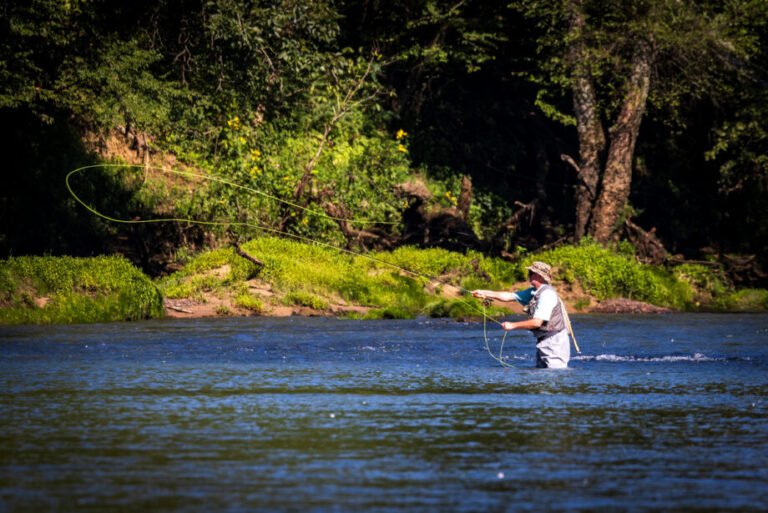
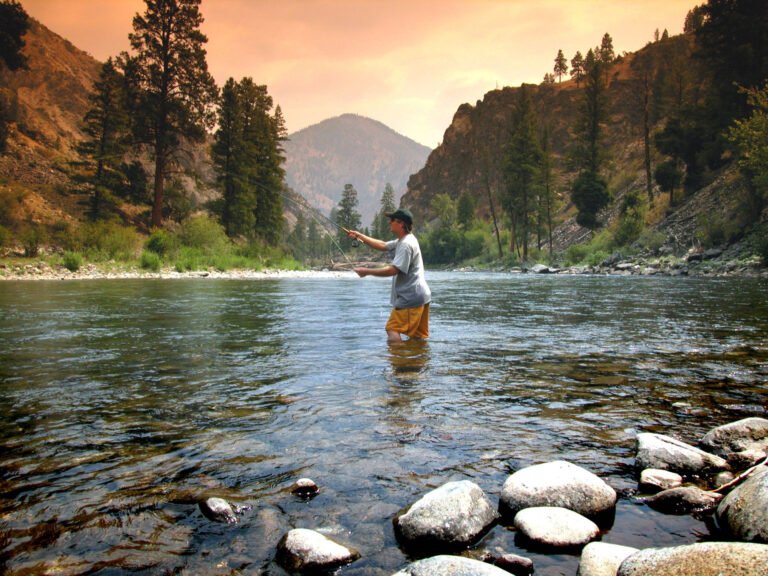
For fly fishing, a 9-foot 5-weight fly rod works for many freshwater trout situations, but rod choice should match species, wind, fly size, and local water. Wading anglers need felt or rubber soles as allowed by local rules, a wading belt, and a plan for safe crossings.
Catfish
Catfish often use the deep side of points, especially where a channel meets a flat. Fresh cut bait, live bait, stink bait, or prepared bait may work where regulations allow.
Use a strong hook, a sinker heavy enough to hold bottom, and a swivel to reduce line twist. A 7- to 8-foot medium-heavy rod gives casting range and lifting power. Check your knots often because rock and mussels can weaken line.
Panfish
Crappie, bluegill, and perch may use points near brush, weeds, docks, or submerged timber. A small jig under a bobber is easy for beginners and kids. It also lets you adjust the depth with a stop.
Use a 6- to 7-foot light spinning rod with 4- to 8-pound monofilament. Small hooks, split shot, and live bait can be effective, but follow bait and size rules.

Seasonal Point Fishing Patterns
Points change with water temperature, daylight, wind, and fish movement. Seasonal patterns are useful, but local weather can move fish earlier or later than expected.
| Season | Where fish may hold | Productive approach |
|---|---|---|
| Spring | Warm shallow side and nearby drop | Slow jig, worm, jerkbait, live bait |
| Early summer | Tip, shade, grass, and channel edge | Crankbait, swimbait, jig |
| Hot summer | Deep side, current, and low-light shallows | Deep jig, drop-shot, topwater at dawn |
| Fall | Windblown side and baitfish route | Spinnerbait, crankbait, jigging spoon |
| Winter | Deepest break and stable water | Slow jig, blade bait, live bait |
In spring, fish may move onto shallow points when the sun warms the water. In summer, many fish shift toward deeper edges during the day. In fall, points that intersect a creek or baitfish path can become important.
Winter fish often move less and may sit close to the bottom. Slow your retrieve and use a lure that stays in the strike zone. Ice anglers should use an ice fishing rod, a sharp auger, and safe access plans rather than walking onto uncertain ice.
Boat, Kayak, and Shore Position
Your position controls the angle, depth, and speed of every presentation. The right lure can fail if the boat sits directly over the fish or the cast crosses the wrong part of the point.
From a boat, approach with the trolling motor at low speed. Stop well away from the shallow tip, then use casts to map the area. Keep the sun and wind in mind. Some angles create better lure control than others.
From a kayak, use a stake-out pole or anchor only when safe and legal. Avoid standing in unstable watercraft unless the kayak is designed for it and you have practiced. Keep a whistle, paddle, phone in a waterproof case, and a properly fitted personal flotation device.
From shore, walk before casting. Many anglers throw as far as possible and miss the water at their feet. Fish may hold near the bank, especially where the point drops quickly or shade covers the edge.
💡 Pro Tip: Mark the exact spot where you get a bite, feel a hard bottom change, or see baitfish. Return to that spot from another angle. A point is often a small target hidden inside a large area.
Common Mistakes When Fishing Points
Point fishing becomes easier when you avoid a few common errors. Most problems come from fishing too fast, using one depth, or ignoring the bottom.
| Mistake | Why it hurts | Better choice |
|---|---|---|
| Casting only to the tip | Fish may hold on a side or deep break | Fan-cast the full point |
| Using one retrieve | Fish activity changes | Try fast, slow, and dead-still |
| Ignoring wind | Bait may collect on one side | Start on the windblown edge |
| Staying too shallow | Fish may sit on the drop | Check deeper water early |
| Using line that is too light | Rock and wood cause breakoffs | Match line to cover |
| Leaving after one cast | Fish may need a better angle | Change angle before leaving |
The first mistake is assuming every visible point is the same. A point with rock and a channel nearby is not equal to a flat clay point with no depth change.
Another mistake is changing lures before changing depth. Fish may ignore a lure because it is too high, too low, too fast, or too far from cover. Test the water column before filling the deck with new tackle.
Pros and Cons of Fishing Points
Points are useful because they concentrate structure and make a large body of water easier to break down. They also have limits, especially when many anglers know about them.
| Pros | Cons |
|---|---|
| Easy to identify from maps and shore | Popular points may receive heavy pressure |
| Connect shallow and deep water | Fish can move away with weather changes |
| Work for many freshwater species | A smooth point may hold little cover |
| Can be fished from shore or boat | Wind and waves can make casting hard |
| Offer many depth and angle options | Snags are common around rock and wood |
The main advantage is efficiency. You can search a large area by focusing on a feature that fish often use. The main limitation is that a point is only a starting clue, not a promise of fish.
How Much Point-Fishing Gear Costs
You do not need expensive equipment to learn this technique. A basic spinning combo, a small tackle box, several hooks, sinkers, bobbers, and a few lures can cover many shore and freshwater trips.
Current pricing ranges from about $25 to $60 for simple spincast or light spinning combos. A stronger bass spinning or baitcasting setup may cost $80 to $200 or more. Higher prices can bring lighter graphite blanks, smoother drag systems, better guides, and improved corrosion resistance, but skill and location still matter more than brand names.
| Budget level | Typical setup | Best suited to |
|---|---|---|
| Entry level | Spincast or light spinning combo, mono line | Kids, gifts, panfish, simple shore fishing |
| Mid-range | Medium spinning or baitcasting setup, braid and leader | Beginners upgrading, bass, walleye |
| Advanced | Specialized rod, quality reel, multiple line setups | Frequent anglers and changing conditions |
A gift buyer should match the setup to the person, not just the fish. A child may need a short 5- to 6-foot rod, a simple reel, and a soft tackle bag. An experienced angler may value a specific rod action, reel gear ratio, or line capacity.
Safety, Regulations, and Conservation
Fishing a point may involve slippery rocks, deep water, boat traffic, hooks, knives, heat, and changing weather. Wear polarized sunglasses to protect your eyes and reduce glare. Use a landing net and long-nose pliers when fish have deep hooks.
Anyone in a boat, kayak, or unstable craft should wear a properly fitted U.S. Coast Guard-approved personal flotation device. Check the forecast, tell someone your plan, carry water, and avoid fishing exposed points during lightning or unsafe wind.
Wading anglers should use a wading belt and test each step with a staff. Never cross fast water just because it looks shallow. Ice anglers must check local ice conditions, carry ice picks, avoid alone trips, and take a recognized ice-safety course when possible.
📜 Check Local Regulations: Fishing laws can set license rules, size limits, bag limits, closed seasons, bait restrictions, hook rules, and lead-tackle limits. Confirm current rules with your state wildlife agency or local fisheries office before fishing.
Catch-and-release anglers should wet their hands, support the fish, avoid squeezing the gills, and limit air exposure. Use barbless hooks where allowed or flatten the barb when appropriate. Circle hooks can help with some live-bait methods, but use them as required by local rules.
Do not leave monofilament, braid, hooks, bait containers, or plastic on the bank. Snip old line into short pieces and place it in a trash or recycling container that accepts fishing line. Healthy points depend on clean water, living cover, and careful handling.
🌿 Conservation Note: Keep only legal fish that you will use. Release stressed fish in the water when possible, and do not move live fish or bait between waters unless local rules clearly allow it.
When to Ask a Local Tackle Shop or Guide
Ask for local help when a point has strong current, difficult navigation, heavy boat traffic, or complex regulations. A nearby tackle shop can often explain which depths, bait types, and line strengths fit the local water without pushing expensive gear.
A guide is useful when you want to learn electronics, river safety, kayak positioning, fly fishing, or a specialized species such as trophy bass or redfish. A short lesson can prevent lost tackle and unsafe decisions.
Take photos of your map, lure, rod, and line before visiting the shop. Be clear about whether you fish from shore, a kayak, a bass boat, or an ice shelter. Also share your target species and budget.
Frequently Asked Questions
Q: What is the best lure for fishing a point?
A: There is no single best lure for every point. Use a jig or soft plastic to learn the bottom, then try a crankbait, spinnerbait, swimbait, or live bait based on depth, cover, water clarity, and species. A small jig under a bobber is a strong starting choice for kids and panfish.
Q: Should I fish the tip or the sides of a point?
A: Fish both. The tip often reaches deeper water and may hold traveling fish. The sides can have shade, wind, current, grass, rock, or a sharper drop. Fan-cast the tip, both sides, and the deep edge before leaving.
Q: How do I fish a point from shore?
A: Begin with casts parallel to the bank. Then cast at an angle across the point and toward deeper water. Use a bobber, jig, worm, crankbait, or soft plastic. Walk quietly, keep your shadow off the water, and search different depths.
Q: What rod power and action work for bass points?
A: A 6-foot-8-inch to 7-foot-3-inch medium-heavy fast-action rod suits many bass point situations. Use a medium rod for lighter lures and open water. Use heavier power around thick wood, grass, or large fish.
Q: Is braid or fluorocarbon better for fishing points?
A: Each has a role. Braid casts far and has little stretch, which helps with deep contact and hooksets. Fluorocarbon sinks and handles clear water well. Many anglers use 10- to 30-pound braid with a 6- to 17-pound fluorocarbon leader.
Q: How deep should I fish a point?
A: Start shallow and work toward the first major break. The right depth depends on species, season, light, bait, and water temperature. If you see fish on a fish finder, keep your lure at or above that depth rather than always dragging bottom.
Q: Can I fish points with live bait?
A: Yes, where local rules allow it. Minnows, worms, crawfish, and cut bait can work for different species. Match hook size and bait type to the target fish, and check rules for bait collection, transport, and release.
Q: Are underwater points better than visible points?
A: Underwater points can be excellent because they may hold fish away from shore pressure. Use contour maps and a fish finder to find them. They are harder to fish without a boat, but long casts from shore can reach some submerged structure.
Q: How do I fish a rocky point without losing lures?
A: Use weedless hooks, lighter contact, and a lure designed to move over rock. Do not pull hard the instant you feel resistance. Lower the rod, change the angle, and gently shake the lure free. Keep spare hooks, sinkers, and leaders in your tackle box.
Q: What is the best point setup for a beginner?
A: A 6- to 7-foot medium spinning combo with 8- to 10-pound monofilament is simple and versatile. Carry small jigs, bobbers, soft plastics, hooks, sinkers, and one or two moving lures. This setup works for many panfish, trout, bass, and walleye situations.
Q: How do I fish a point in strong wind?
A: Start on the windblown side if you can cast safely. Use a heavier lure, lower rod angle, and tighter line control. A spinnerbait, crankbait, jig, or weighted soft plastic can help you maintain contact. Move away if waves make the bank or boat unsafe.
Q: Do fish stay on the same point all day?
A: Fish may move between the shallow top, sides, and deep base as light, wind, temperature, and bait change. A point can remain useful while the fish shift within it. Recheck the depth and retrieve instead of assuming the morning pattern will last.
Q: How long should I fish a point before moving?
A: Give a promising point enough time to test several angles and depths. Ten to twenty minutes may be enough for a quick search. Stay longer when you find bait, a depth change, cover, or a bite. Leave when the point lacks those features or conditions change.
Q: Do I need a fish finder to fish points?
A: No. A map, careful observation, and repeated casts can reveal much of a point. A fish finder helps locate underwater extensions, channels, suspended fish, and exact depth. Beginners can learn the technique from shore before buying electronics.
Final Advice
To fish points well, stop treating them as single spots. Treat each point as a small underwater neighborhood with a tip, sides, base, shallow top, deep break, and nearby cover. Test those areas in a clear order.
Start with the wind, current, depth, and bottom. Use a medium spinning setup if you are learning, and choose a presentation you can control. Make casts from several angles, change depth before changing locations, and record what the bottom tells you.
The best point is not always the biggest or most visible. It is the one that connects useful depth with food, cover, current, or a seasonal travel route. With practice, a map and a few careful casts can turn a wide stretch of water into a focused, fishable plan.