How Do I Know If I Can Fish Somewhere: Legal Guide
Before you cast a line, you need to know two things: whether fishing is allowed and whether you may legally reach the water. These are not always the same. A lake may hold bass, trout, or panfish, yet the bank may be private, the park may be closed, or a local rule may ban fishing from that spot.
The safest answer comes from checking the land manager, state wildlife agency, posted signs, and current fishing rules. Do not rely only on a map pin, an old social media post, or the fact that someone else is fishing there. Access laws and fishing rules can change from one shoreline, county, or season to the next.
The quick answer: check permission, access, and fishing rules
You can usually fish somewhere legally when you have lawful access to the shore or launch point, the water is open to fishing, you hold the required fishing license, and your bait, tackle, season, size, and bag limits follow local rules. Public water does not always mean public shoreline access.
Start by asking who manages the land and water. Then check the current rules from the state wildlife agency, park office, private owner, tribal authority, or local government. If signs conflict with an online map, follow the signs and contact the land manager before fishing.
A simple test helps:
- Can I legally reach this place?
- Is fishing allowed here today?
- Do I have the right license or permit?
- Is my method legal for this water?
- Can I leave without crossing private land or blocking others?
If you cannot answer all five questions, wait before casting.
Understand the difference between public water and public access
Public water and public access are different legal ideas. A river, lake, or reservoir may be owned or managed for public use, but the land beside it may belong to a private owner. You may not cross a private yard, farm, dock, or posted path just because the water itself is public.
Some states allow limited travel on navigable rivers. That does not always give you permission to walk along the bank, cross a private streambed, tie to a private dock, or fish from private land. Water-access law differs widely across the United States.
Public land is often the easiest choice
Public parks, wildlife areas, national forests, national lakeshores, state forests, and public fishing access sites often provide the clearest path to legal fishing. Look for a marked parking area, boat ramp, fishing pier, trail, or shoreline access sign.
Even public land can have limits. A park may close at sunset. A wildlife refuge may ban fishing in part of the property. A city reservoir may allow fishing only from a marked bank. A boat ramp may require a launch fee or separate permit.
Private water requires clear permission
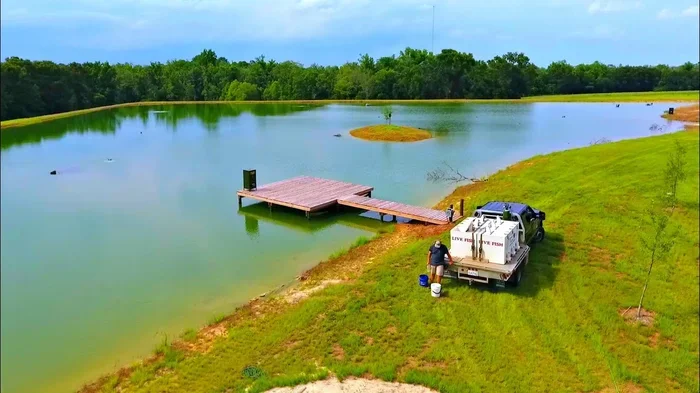
Ask the owner before fishing on private land or in a private pond. Permission should cover the place, date, people, and method when possible. If you are fishing with a child, dog, group, kayak, or boat, mention that when asking.
A verbal “yes” may be enough in some situations, but written permission is safer. A text message, email, or signed note can prevent confusion. Follow the owner’s rules about parking, gates, fires, bait, keeping fish, and leaving at a certain time.
📜 Check Local Regulations: A “No Trespassing” sign, locked gate, or private dock should end the discussion unless you have direct permission. Do not enter first and ask later.
Navigable water can still have access limits
The term navigable water often relates to public rights of travel, commerce, or boating. It does not create one simple fishing rule for every state. Some rivers have public access below an ordinary high-water mark. Others have private streambeds or strict rules about where anglers may stand.
Do not assume that floating through a river gives you the right to stop and fish anywhere. Ask the state wildlife agency, local access office, or landowner when the rule is unclear.
| Location type | What it may allow | What you still need to check |
|---|---|---|
| Public fishing pier | Fishing from a marked structure | Hours, license, species rules, crowd limits |
| State wildlife area | Shore fishing and sometimes boating | Seasonal closures, parking permit, access gates |
| Private pond | Fishing with owner permission | Written permission, harvest rules, safety hazards |
| River access site | Launching and bank fishing | Boundary lines, downstream private land, local rules |
| City reservoir | Fishing from approved areas | Water-supply rules, hours, bait limits |
Public access is usually the lowest-risk option for beginners, families, and travelers. Experienced anglers may find better water through private permission, but they must manage access and legal details more carefully.
Check the fishing license and permit rules
Most states require a fishing license for adults who fish in public waters. Some states also require a separate trout stamp, salmon stamp, saltwater license, freshwater license, or special permit. Rules may change by age, residency, military status, disability status, or land type.
Buy the license from the official state wildlife agency or an approved seller. Keep a digital or printed copy if the state allows it. Some areas require the license to be on your person while fishing.
License rules vary by angler
Children may fish without a license in some states, but the age limit differs. A parent may still need a license if the adult holds the rod, sets the hook, or assists with the catch. Some states count fish caught by a child toward the adult’s daily limit.
Nonresidents often pay more than residents. A short-term license can suit travelers, while an annual license may cost less for someone who fishes often. Saltwater and freshwater rules may also use separate licenses.
Special waters may need special permits
You may need more than a standard fishing license for:
- Trout streams with special regulations
- Great Lakes waters
- Marine or tidal water
- Commercial piers
- Private lakes managed by an association
- Wildlife refuges
- National parks
- Tribal lands
- Hatchery waters
- Designated urban fishing lakes
- Tournament fishing
- Night fishing in restricted areas
The agency that manages the land may have rules in addition to the state fishing code.
| Angler or trip | License question to ask | Why it matters |
|---|---|---|
| Resident adult | Do I need a freshwater, saltwater, or combined license? | Some states split license types |
| Visiting angler | Is a nonresident short-term license available? | A regular resident license may not apply |
| Parent with child | Who must be licensed, and whose limit counts? | Adult assistance may affect the rules |
| Kayak angler | Does the launch require a permit or registration? | Access can have separate fees |
| Fly angler | Are barbless hooks or special flies required? | Some waters limit tackle |
| Ice angler | Is the lake open for ice fishing? | Seasonal closure and safety rules may apply |
Read the current state regulations before your trip. A tackle-shop employee can explain common local practice, but the wildlife agency remains the final source for legal rules.
Learn the local limits on fish, seasons, and tackle
Having a license does not mean every fish is legal to keep. Most fisheries use some mix of open seasons, closed seasons, size limits, daily bag limits, possession limits, and gear rules.
A bag limit is the number of fish you may keep in one day. A possession limit is the number you may have in your control, which can include fish at home, in a cooler, or at camp. These limits may differ.
Size and slot limits protect fish populations
A minimum size rule means you must release fish below a certain length. A maximum size rule protects larger breeding fish. A slot limit lets you keep fish within a set range but requires release of fish outside that range.
Measure fish with the mouth closed when the rule says to do so. Use a legal measuring board. Do not guess by sight, especially with species such as walleye, redfish, trout, or striped bass.
Closed seasons and protected waters matter
A lake may be open all year while one nearby stream has a closed trout season. A reservoir may close during spawning season. A river section below a dam may have a year-round bait ban.
Watch for special closures after storms, fish kills, wildfires, flooding, algae blooms, or water-supply problems. Temporary notices can appear at the ramp before they appear on older maps.
Bait and tackle rules can be very specific
Local rules may limit:
- Live bait or minnows
- Treble hooks
- Barbed hooks
- Lead sinkers and jigs
- Number of rods
- Number of hooks
- Cast nets
- Dip nets
- Spearfishing
- Bowfishing
- Set lines
- Chumming
- Fish finders
- Use of artificial lures
- Use of scented soft plastics
- Keeping baitfish
For example, a lake may allow spinning reels and monofilament line but ban live bait. A trout stream may require artificial flies with barbless hooks. A coastal area may limit circle hooks when using natural bait.
🌿 Conservation Note: If you plan to release fish, wet your hands, support the fish’s body, keep it out of the air, and remove the hook with pliers. Pinch down barbs when legal and safe.
Use official sources before trusting maps and apps
Fishing apps can help you find ramps, contour lines, reports, and nearby tackle shops. They are useful planning tools, but they are not always legal access guides. A marked “fishing spot” may be old, mislabeled, private, or closed.
The best source depends on the water. State wildlife agency pages often list regulations and public access sites. Park offices control park rules. The U.S. Army Corps of Engineers may manage reservoirs. Cities, counties, water districts, tribal governments, and private associations may control other sites.
What to search online
Use specific searches instead of broad phrases such as “best fishing near me.” Try:
- “[State] fishing regulations bass lake”
- “[Lake name] public fishing access”
- “[River name] boat ramp rules”
- “[Park name] fishing permit”
- “[County] public fishing pier”
- “[Reservoir name] shoreline fishing”
- “[Water name] tribal fishing regulations”
- “[Water name] fishing closure”
Look for a page updated for the current season. Read the full rule page, not only the search snippet.
Call when the rule is unclear
A short phone call can save a long drive and a trespassing ticket. Ask:
- Is fishing open at this site today?
- Where may anglers park and enter?
- Is bank fishing allowed, or only boat fishing?
- What license and permit are required?
- Are there special bait, hook, or harvest rules?
- Are there closures, construction areas, or private boundaries?
Local bait shops often know which ramps are open and which roads flood. Use that local knowledge as a guide, then confirm the legal rule with the managing agency.
| Information source | Best use | Main limitation |
|---|---|---|
| State wildlife agency | Licenses, seasons, limits, tackle rules | May not explain every private boundary |
| Park or refuge office | Hours, closures, permits, access paths | Staff may not manage nearby water |
| County or city website | Local lakes, piers, parking, ordinances | Pages can be spread across departments |
| Fishing app | Maps, reports, ramps, depth data | User entries may be wrong or outdated |
| Local tackle shop | Recent conditions and practical access tips | Advice is not official legal permission |
| Landowner | Private access and property rules | Permission applies only as stated |
Use at least two sources for unfamiliar water: one official rule source and one access source. This is especially important for travel, saltwater fishing, and remote rivers.
Know who owns or manages the shoreline
The shoreline may be controlled by a state, county, city, federal agency, tribe, utility, homeowners association, marina, campground, or private landowner. Each manager can set different access rules within the law.
A public road beside a lake does not always create a fishing access point. Pulling onto a narrow shoulder may block traffic or place you on private land. A boat ramp may be public but limited to launching, with no bank fishing around the parking area.
Common land managers and their rules
State parks often allow fishing from marked areas. They may charge an entry fee, restrict hours, or close sections for swimming.
Wildlife management areas may offer excellent fishing access. They can have seasonal gates, hunting closures, parking permits, and special conservation rules.
National parks and national forests do not share one fishing policy. A national forest may allow fishing with a state license, while a national park may require a federal permit or ban certain bait.
Tribal lands may use tribal fishing licenses and rules. State licenses may not be enough. Follow tribal signs and contact the tribal natural resources office.
Private marinas and campgrounds may allow fishing for guests only. Ask before using a dock, parking lot, or launch.
Water-supply reservoirs may ban shoreline entry, wading, swimming, or boating even when the lake looks open.
| Manager | Common access rule | What to verify |
|---|---|---|
| State park | Fish from marked banks, piers, or ramps | Entry fee, hours, swimming zones |
| Wildlife area | Access may change by season | Gates, hunting dates, parking permits |
| City or county lake | Fishing may be allowed in posted zones | Local ordinance, hours, bait rules |
| Federal reservoir | Rules can differ by shoreline section | Launch fees, closures, federal permits |
| Tribal property | Tribal rules may control fishing | Tribal license and access permission |
| Private marina | Fishing often limited to customers | Dock permission, fees, guest rules |
If you see a fence, gate, no-trespassing sign, or private dock, stop and find another route. A longer drive to a legal access point is better than a short walk into a property dispute.
Shore fishing, boat fishing, and wading have different rules
Where you fish affects both access and safety. Bank fishing is often the simplest choice for beginners and families, but it may be limited to marked areas. Boat fishing can reach more water, yet it adds launch, registration, navigation, and life-jacket rules.
Wading creates another legal question. You may be allowed to enter the water from a public access point, but not to walk across private land to reach the next bend. Some rivers also ban wading near dams, fish ladders, spawning beds, or power stations.
Shore and pier fishing
Before setting up, check:
- Whether the bank is public
- Whether fishing is allowed at that hour
- Whether casting toward swimmers or boat traffic is banned
- Whether the pier has a rod limit
- Whether cleaning fish is allowed
- Whether fires, grills, or coolers are restricted
- Whether a fee or permit applies
Use a short spinning setup for crowded banks. A 6- to 7-foot medium-light or medium spinning rod with 6- to 10-pound monofilament suits many panfish and trout situations. For bass, a 6-foot-6 to 7-foot medium fast-action rod with 8- to 12-pound line offers more control.
Boat and kayak fishing
A boat launch does not always mean the lake is open to every type of boat. The site may limit motor size, prohibit gas engines, require a launch permit, or ban kayaks during a rowing event.
Wear a properly fitted U.S. Coast Guard–approved personal flotation device, or PFD, while boating and kayak fishing. Carry a whistle, charged phone in a waterproof case, light, paddle, and basic first-aid supplies. Tell someone where you plan to launch and when you expect to return.
Wading
Waders can help in cold water, but they do not make fast current safe. Wear a wading belt, use a staff in unfamiliar water, and avoid crossing water above your knees when current is strong. Felt soles are banned in some areas because they can spread invasive organisms.
Check weather, water releases, and river gauges. A river that looks calm at sunrise can rise quickly after rain or an upstream dam release.
⚠️ Safety Warning: Never fish below a dam, near a spillway, or in a restricted water zone unless signs and the managing agency clearly allow it. Keep hooks, knives, pliers, and sinkers secured around children and pets.
Watch for signs, boundaries, and restricted areas
Signs have legal and practical value. A “No Fishing” sign may protect swimmers, water intakes, dams, wildlife, or private operations. A “No Trespassing” sign controls land access, not just fishing.
Look for boundary markers such as:
- Fence lines
- Yellow property signs
- Buoys
- Rope lines
- Posted trees
- Locked gates
- Dock signs
- Painted trail markers
- Park boundary posts
- Restricted-water notices
Do not move a sign, climb a gate, cut a fence, or park beyond a locked barrier. Do not treat a missing sign as permission. If a boundary is unclear, stay on the public side and ask.
Docks and bridges need special care
A public bridge may permit fishing, but the road shoulder may be unsafe or private. A private dock is not public property just because it extends over public water. Ask before casting from it, tying up, or using its ladder.
Bridges can also create hazards. Do not fish where you block traffic, stand on railings, or cast over vehicles. Some bridges prohibit stopping or fishing under local transportation rules.
Swimming and boating zones can be closed to fishing
Parks often separate fishing areas from swimming beaches. Marinas may ban casting near fuel docks. Busy channels can make a lure dangerous to boaters.
Follow the most specific sign at the exact location. A general “fishing allowed” notice does not override a nearby “closed area” sign.
Match your gear to the place and the legal method
Knowing you can fish somewhere is only part of planning. Your gear must fit the water, species, access route, and rules.
For a small pond, a spincast combo with 6- to 10-pound monofilament is easy for a first-time angler or child. For bass from shore, a spinning reel on a 6-foot-6 to 7-foot medium fast-action rod works with soft plastics, jigs, crankbaits, or live bait where legal.
A rod’s power describes how much force it takes to bend the rod. Light and medium-light rods suit panfish and trout. Medium and medium-heavy rods suit bass, walleye, catfish, and larger lures.
A rod’s action describes where it bends. Fast action bends near the tip and helps with hook control. Moderate action bends farther down and can help keep treble-hook fish pinned.
Simple gear pairings by water type
| Fishing place | Practical starter setup | Useful terminal tackle |
|---|---|---|
| Small pond | 5- to 6-foot-6 spincast or spinning combo | Size 6–10 hooks, small bobber, split shot |
| Bass lake | 6-foot-6 to 7-foot medium spinning setup | 8–12 lb line, soft plastics, jigs |
| Trout stream | 7- to 9-foot light spinning or fly rod | 4–6 lb line, small spinners, flies |
| Catfish bank | 7- to 9-foot medium-heavy rod | 15–30 lb line, sinker, circle hook |
| Saltwater pier | 7- to 10-foot saltwater-rated spinning rod | 15–30 lb braid, leader, hooks, sinkers |
| Surf beach | 9- to 12-foot surf rod | 20–40 lb line, pyramid sinker, saltwater rig |
| Ice hole | 24- to 36-inch ice fishing rod | 2–8 lb line, small jig, spring bobber |
Use saltwater-rated reels and rinse them with fresh water after every saltwater trip. Braided line has high strength for its diameter, but it may need a fluorocarbon or monofilament leader. A leader is a short section between the main line and hook or lure.
Keep a basic access kit
A tackle box should hold more than lures. Pack line cutters, pliers, extra hooks, sinkers, bobbers, a measuring board, a small first-aid kit, sunscreen, water, and a trash bag.
A landing net can reduce fish handling, especially for larger bass, trout, redfish, and walleye. Polarized sunglasses cut glare and help you see shallow hazards. They also protect your eyes from a flying hook.
Avoid these common assumptions
Many access problems begin with a reasonable-sounding assumption. The fact that a site appears open does not prove fishing is allowed. The fact that you saw a photo online does not prove the photo was taken legally.
“The lake is public, so I can fish anywhere”
A public lake may have private shorelines, closed coves, restricted water intakes, and limited public entry. Use marked access points unless you have permission.
“Someone else is already fishing”
Other anglers may be trespassing, ignoring a rule, or fishing under a special permit. Their behavior is not legal guidance.
“The map shows a public road”
A road may cross private property or end at a locked gate. Check the access point, not just the road name.
“I am only staying for five minutes”
Trespassing rules do not usually depend on how long you stay. A quick cast can still be an unlawful entry.
“Catch and release means no license is needed”
In many places, attempting to catch fish requires a license even if you release every fish. Check the rules before you start.
| Assumption | Safer question |
|---|---|
| Public water means public bank | Where is the legal public entry point? |
| A map pin proves access | Who manages this exact parcel? |
| A local report is current | Is the site open under today’s rules? |
| Release fishing needs no license | Does attempting to fish require a license? |
| A boat ramp allows any boat | Are my boat, motor, and launch permit allowed? |
| A private pond is unused | Who owns it, and can I get permission? |
These checks take a few minutes. They can protect your money, your gear, and your relationship with landowners and other anglers.
Ask a local tackle shop the right questions
A good tackle shop can help you understand local conditions, but ask focused questions. Instead of asking, “Where can I fish?” ask, “Which public bank access is open for bass this week, and what license and lure rules apply?”
Useful questions include:
- Which public access point has legal parking?
- Is bank fishing allowed at this ramp?
- Is the water freshwater, tidal, or both?
- What species may I keep?
- Are live minnows legal?
- Do I need a trout or saltwater stamp?
- Is the shoreline safe for children?
- Is the site crowded at sunrise?
- Does the water have current, deep mud, or steep banks?
- Where can I dispose of fishing line?
Tell the staff your skill level, target species, budget, and travel distance. A beginner may need a simple spinning or spincast combo. An experienced angler may want a specific leader, jig weight, or rod action. A gift buyer should ask for a durable setup that fits the angler’s age and target fish.
Plan for safety before you choose a fishing spot
Legal access does not always mean safe access. A steep bank, deep mud, unstable rocks, heat, lightning, fast current, or poor cell service can turn a simple trip into an emergency.
Check the forecast before leaving. Avoid exposed banks during lightning. Bring water, sun protection, insect repellent, and shoes with good grip. Tell someone your route, parking spot, target water, and return time.
Safety needs by location
| Fishing setting | Main risks | Smart preparation |
|---|---|---|
| Shoreline | Slips, heat, hooks, poison plants | Grippy shoes, water, pliers, first aid |
| Pier | Falls, crowds, swinging hooks | PFD for children near edges, eye protection |
| Kayak | Capsizing, wind, cold water | U.S. Coast Guard–approved PFD, whistle, leash |
| Wading | Current, deep holes, rising water | Wading belt, staff, river gauge check |
| Ice | Thin ice, cold shock | Local ice check, flotation, ice picks, buddy system |
| Surf | Rip currents, waves, sharp shells | Watch surf, avoid isolated beaches, carry water |
| Dam area | Sudden releases, strong current | Obey signs, stay outside restricted zones |
For ice fishing, never judge ice thickness by color alone. Conditions can vary across one lake. Ask local authorities or experienced guides, check several areas, and carry ice picks and flotation. A professional ice-safety course is a wise choice for new anglers.
Keep children and new anglers close
Young anglers need a short, simple setup and a safe casting space. A 5- to 6-foot spincast combo is often easier for kids than a baitcaster. Teach them to look behind them before casting and to carry hooks point-down.
👪 Parent or Gift-Buyer Note: The best first fishing spot is not always the one with the biggest fish. Choose a legal place with a flat bank, shade, restrooms, low traffic, and room to cast safely.
Follow access etiquette and protect the fishery
Good etiquette keeps access open for everyone. Park only in approved spaces. Keep gates clear. Do not block boat ramps, leave bait containers behind, or discard fishing line. Pack out hooks, soft-plastic baits, food wrappers, and broken tackle.
Give other anglers room. Ask before moving close to someone’s spot. Do not cast across another angler’s line. Keep music low and control dogs near hooks, water, and wildlife.
Practice careful catch and release when you do not plan to keep fish. Use a rubber landing net when suitable. Wet your hands, avoid squeezing the fish, and release it quickly. Cut the line near a deeply swallowed hook when removing it would cause more harm, unless local rules require another method.
Do not move fish, baitfish, plants, or water between lakes. Invasive species can spread through wet boots, live wells, kayaks, nets, and buckets. Clean, drain, and dry gear after each trip.
Use a simple decision process before casting
A repeatable process helps you make good choices at new water. Save it in your phone or write it on a card in your tackle box.
The five-minute access check
-
Identify the exact water.
Record the lake, river section, pier, park, or access road. -
Find the manager.
Look for the state, city, county, federal, tribal, or private owner. -
Check current regulations.
Review license, season, size, bag, bait, hook, and rod rules. -
Confirm physical access.
Check parking, gates, trails, shoreline boundaries, and hours. -
Inspect conditions.
Look at weather, water level, current, ice, heat, boat traffic, and cell service. -
Pack the right gear.
Match rod power, action, line test, hooks, sinkers, leaders, and safety gear to the site. -
Leave if anything feels unclear.
Choose a marked public site or call the manager.
| Check | Yes means | No means |
|---|---|---|
| Legal access | You can reach the spot lawfully | Find another route or ask permission |
| Open fishing | Fishing is allowed at that time | Do not cast |
| Valid license | You meet license rules | Buy the correct license first |
| Legal tackle | Your bait and hooks comply | Change the rig |
| Safe conditions | You can fish without undue risk | Delay or choose safer water |
This process works for a neighborhood pond, a trout stream, a public pier, a kayak launch, or a distant saltwater trip. It also gives gift buyers and parents a clear way to judge whether a fishing location suits a new angler.
Know when to choose another spot
Leave and find a different location when you see unclear boundaries, aggressive private warnings, unsafe currents, poor weather, thin ice, no legal parking, or signs that conflict. You should also leave when the area is crowded enough that casting may endanger others.
A better spot may be less famous but more practical. A small public pond with clear rules can offer a better first trip than a remote river that requires wading and private-land navigation.
Experienced anglers sometimes seek hard-to-reach water for solitude or bigger fish. That can be rewarding, but it raises the need for navigation, communication, safety gear, and detailed regulation checks.
Frequently asked questions
Q: Can I fish in a public lake from any shoreline?
A: No. The lake may be public while the shoreline is private. Fish from a marked public access point, public pier, public park, or another place where you have clear permission.
Q: How do I know if a river is public?
A: Check the state’s access rules and identify the exact river section. Public navigation rights do not always allow you to walk or fish on private banks. Ask the state wildlife agency or landowner when the boundary is unclear.
Q: Do I need a fishing license for catch and release?
A: Often, yes. Many states require a license when you attempt to catch fish, even if you release them. Confirm the rule with your state wildlife agency.
Q: Can I fish from a bridge?
A: Only when local rules and safety conditions allow it. Check for signs, traffic laws, private property, and restrictions on stopping or casting from the bridge.
Q: Can I fish from a private dock if it extends over public water?
A: Not without permission. The dock and the land around it may be private. Use a public pier or ask the owner.
Q: Is a fishing app enough to prove I have legal access?
A: No. Apps can contain old or user-submitted information. Confirm access with the property manager and confirm fishing rules with the official wildlife agency.
Q: Can I fish in a city reservoir?
A: Maybe. Some reservoirs allow fishing only from marked areas. Others ban public entry because they supply drinking water. Check the city or water district’s current rules.
Q: What is the best rod for fishing a new public pond?
A: For many beginners, a 6- to 7-foot medium-light or medium spinning combo with 6- to 10-pound monofilament is flexible. A child may find a 5- to 6-foot spincast combo easier to cast.
Q: Can I use live bait anywhere I can fish?
A: No. Some waters ban live bait, restrict minnows, or require baitfish from approved sources. Check the local tackle rules before buying or collecting bait.
Q: Can I fish on tribal land with a state license?
A: Not always. Tribal governments may require their own license and may set separate seasons, limits, and access rules. Contact the tribal natural resources office.
Q: What should I do if a sign and website disagree?
A: Follow the posted sign for the immediate area and contact the land manager. Do not fish until you know which rule applies.
Q: Can I park along the road near a fishing spot?
A: Only where parking is legal and safe. Do not block traffic, gates, driveways, boat ramps, emergency access, or private property.
Q: How do I know if ice is safe for fishing?
A: You cannot judge safety from appearance alone. Check current local reports, ask authorities or experienced guides, test conditions carefully, use a buddy system, and carry flotation and ice picks. When in doubt, stay off.
Q: Do I need a permit for kayak fishing?
A: You may need a launch permit, parking permit, watercraft registration, or invasive-species inspection. Check both the water manager and your state boating agency.
Q: Can I keep fish from any public water?
A: No. Species limits, size limits, seasons, possession limits, and closed areas control what you may keep. Measure fish and check the current rules before placing them in a cooler.
Q: What is the safest choice for a first fishing trip?
A: Choose a marked public access site with clear rules, legal parking, flat ground, shade, and low boat traffic. A simple spincast or spinning combo, pliers, water, sunscreen, and a small tackle box are enough for many first trips.
Knowing whether you can fish somewhere comes down to more than spotting water and seeing fish. Confirm lawful access, check the current license and regulation rules, respect signs and landowners, and plan for the actual hazards of the site.
When in doubt, choose a marked public fishing area and call the agency that manages it. A few minutes of checking can turn an uncertain stop into a safe, legal, and enjoyable day on the water.