How Does Pollution Kill Fish: Causes And Effects
Pollution kills fish in several linked ways. It can poison their bodies, remove oxygen from the water, damage their gills, block spawning areas, and change food webs. Some pollutants kill fish within hours. Others build up slowly and reduce growth, fertility, or survival over many years.
A fish does not need to swallow a toxic chemical to be harmed. Polluted water touches its gills, skin, eggs, and fins all day. Fish also take in pollutants through the insects, plankton, worms, and smaller fish they eat. That makes pollution both a direct threat and a hidden threat that moves through the food chain.
For anglers, a polluted lake, river, estuary, or coast can mean more than a poor day of fishing. It can mean unsafe fish to eat, closed waters, damaged habitat, and fewer bass, trout, catfish, panfish, walleye, redfish, and other species in the future. Understanding how pollution kills fish helps anglers spot warning signs, follow health advisories, and protect the water they use.

Quick answer: How does pollution kill fish?
Pollution kills fish by reducing oxygen, releasing poisons, damaging gills, raising water temperature, spreading disease, and destroying food and spawning habitat. Fertilizer can cause algae blooms that later decay and use up oxygen. Oil, metals, pesticides, sewage, plastics, and industrial chemicals can harm fish directly or build up in their bodies. Young fish and eggs are often the most sensitive.
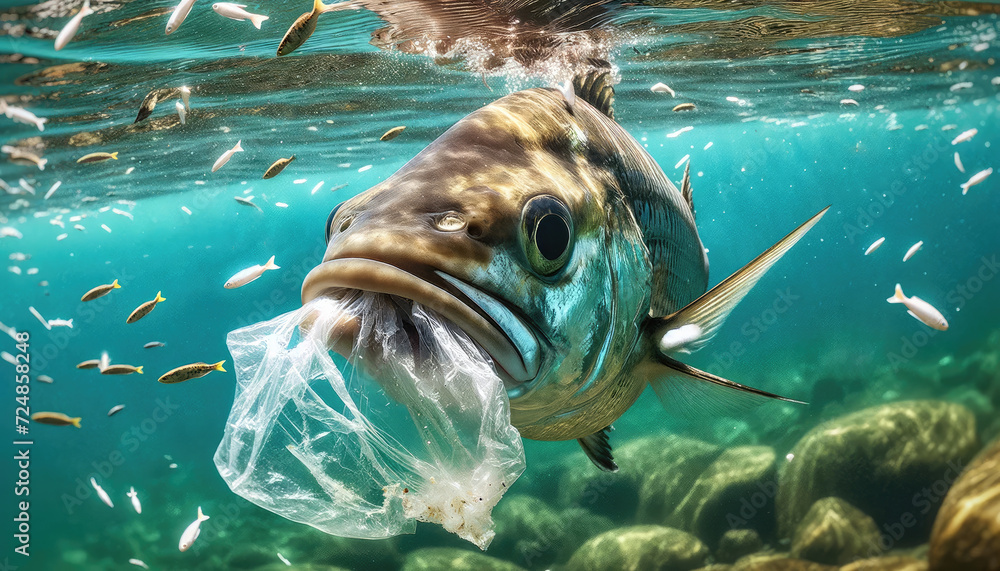
The main ways pollution harms fish
Pollution rarely acts through only one pathway. A fertilizer spill may cause an algae bloom, which blocks light and later creates low oxygen. A factory discharge may add both toxic metals and warm water. A storm may wash oil, bacteria, road salt, trash, and soil into the same stream.
Fish live in a narrow range of water conditions. They need enough dissolved oxygen, a safe temperature, clean gills, suitable food, and places to hide or spawn. Pollution can push one or more of these needs beyond safe limits.
| Pollution pathway | What happens to fish | Typical result |
|---|---|---|
| Oxygen loss | Fish cannot get enough oxygen through their gills | Gasping, weak swimming, or mass death |
| Direct poisoning | Chemicals damage organs, nerves, gills, or cells | Fast death or long-term illness |
| Habitat damage | Silt, trash, heat, or construction removes shelter and spawning areas | Fewer young fish and lower populations |
The key point is simple: fish can die from what is in the water, what is missing from the water, or what the pollution does to their home.
Low dissolved oxygen
Dissolved oxygen is the oxygen mixed into water. Fish pull it across their gills as water flows over thin blood vessels. When oxygen levels fall too low, fish may swim near the surface, gather near moving water, or gasp at the air-water line.
Warm water holds less oxygen than cold water. This makes hot weather and thermal pollution especially dangerous. Large fish often suffer first because they need more oxygen than small fish.
Many fish become stressed when dissolved oxygen drops below about 5 milligrams per liter. Some species can handle lower levels for short periods. Trout and salmon usually need cool, oxygen-rich water. Carp, bullheads, and some catfish can tolerate poorer conditions, but no fish can live without oxygen for long.
Toxic chemicals damage fish from the inside
Pesticides, petroleum products, solvents, ammonia, cyanide, and some industrial chemicals can poison fish. The effect depends on the chemical, dose, water temperature, species, and exposure time.
Some toxins damage the gills. Others affect the nervous system, liver, kidneys, or reproductive organs. A fish may look normal while a pollutant slowly weakens its immune system or reduces its ability to produce healthy eggs.
Ammonia is one common example. It can enter waterways from sewage, animal waste, fertilizer, and industrial discharge. High ammonia levels burn fish gill tissue and make it harder for fish to remove toxic waste from their blood.
Pollution can destroy fish habitat
Fish need more than water. They need cover, clean gravel, aquatic plants, deep pools, riffles, wetlands, and stable shorelines. Sediment can fill spaces between gravel stones where trout and salmon eggs need flowing water. Trash can cover bottom habitat. Dredging and contaminated soil can remove feeding areas.
A fish may survive a short pollution event but still lose the habitat needed for the next generation. This is one reason a river can look clean after a spill and still have fewer fish months or years later.
Oxygen depletion causes many sudden fish kills
Low oxygen is one of the most common causes of a sudden fish kill. A fish kill is an event in which many fish die in one area over a short time. These events often happen after algae blooms, sewage releases, heavy storms, or hot, calm weather.
Fish do not breathe air in the same way people do. Their gills work only when water carries enough dissolved oxygen. If oxygen falls too far, fish may suffocate even though the water still looks wet and clear.
How fertilizer creates a dead zone
Nitrogen and phosphorus are plant nutrients. Farms, lawns, septic systems, wastewater plants, and storm drains can carry them into rivers and lakes. In small amounts, these nutrients support normal plant growth. In excess, they can trigger eutrophication, which is excessive nutrient enrichment.
The process often follows this pattern:
- Rain washes fertilizer or waste into a waterway.
- Algae and microscopic plants grow rapidly.
- Thick algae reduce light and may cover the surface.
- Algae die and sink.
- Bacteria break down the dead material.
- Bacteria use dissolved oxygen during decay.
- Fish become stressed or die when oxygen runs out.
A “dead zone” is an area with oxygen levels too low for most fish and many bottom animals. Coastal dead zones can cover large areas where rivers carry farm nutrients into bays and the ocean.
Why algae blooms can kill fish
Not every algae bloom is toxic. Even a non-toxic bloom can kill fish by using oxygen as it decays. Some cyanobacteria, often called blue-green algae, produce toxins that harm fish, birds, pets, wildlife, and people.
A bloom may also block sunlight. Underwater plants then struggle to grow. When those plants die, their decay adds even more organic matter to the water.
| Cause of oxygen loss | Where it often occurs | Fish response |
|---|---|---|
| Decaying algae | Warm lakes, ponds, bays, and slow rivers | Fish gather at the surface or shoreline |
| Sewage or animal waste | Streams below treatment failures or runoff | Gasping, illness, and rapid mortality |
| Thermal pollution | Rivers below power plants or industrial sites | Stress increases as warm water holds less oxygen |
| Water-column mixing | Deep lakes during seasonal turnover | Sudden movement of low-oxygen water can kill fish |
For anglers, a strong rotten-egg smell, cloudy green water, dead fish along the bank, or fish gulping at the surface can signal an oxygen problem. Do not wade or handle dead fish until officials identify the cause.
Toxic pollutants enter fish through gills, skin, and food
Fish absorb chemicals in three main ways: through their gills, through their skin, and by eating contaminated food. Water flows across the gills all day, so even a low level of pollution can matter when exposure lasts for weeks or months.
Some chemicals dissolve in water. Others attach to mud, sand, or organic matter. Bottom-feeding fish such as catfish, carp, and some suckers may face greater exposure when pollutants settle into sediment.
Heavy metals and industrial chemicals
Mercury, lead, cadmium, copper, and other metals can harm fish. Mining, factories, old industrial sites, stormwater, batteries, paint, and burning fuels may release them.
Mercury is a major concern because it can change into methylmercury in aquatic systems. Small organisms take it in. Small fish eat those organisms. Larger fish eat many small fish. The concentration can rise at each step, a process called biomagnification.
Large, old predatory fish often carry more mercury than young fish. Bass, walleye, northern pike, and some saltwater predators may be listed in local consumption advisories. That does not mean every fish is unsafe. It means anglers should check species-specific and water-specific advice.
Lead can affect fish behavior, growth, and nerve function. It may enter water from old mining areas, industrial waste, discarded tackle, and urban runoff. Anglers should never leave lead sinkers, line, hooks, or soft-plastic packaging on the bank.
Pesticides and herbicides
Pesticides can reach water through farm runoff, lawn treatments, irrigation return flows, spills, and spray drift. Some kill insects that fish eat. Others affect the fish directly.
Pesticide exposure may cause:
- Loss of balance
- Fast or irregular swimming
- Trouble feeding
- Gill damage
- Reduced growth
- Poor egg development
- Weak immune response
- Death during high exposure
A stream does not need to smell strange for pesticide pollution to be present. Many chemicals have no strong smell at levels that can harm aquatic life.
Oil and fuel
Oil coats gill surfaces and reduces normal gas exchange. It can also damage skin, eggs, larvae, feathers, and aquatic insects. Gasoline contains compounds that can be toxic even when the slick is small.
Oil pollution may come from a tanker accident, pipeline leak, storm drain, marina, boat bilge, or fuel spill at a launch. Used motor oil dumped on pavement can travel into a creek during the next rain.
| Pollutant | Common source | Possible harm to fish |
|---|---|---|
| Mercury | Mining, coal combustion, industrial sites | Nerve damage and food-chain buildup |
| Lead | Batteries, old industry, tackle, urban runoff | Growth and behavior problems |
| Pesticides | Farms, lawns, spills, spray drift | Gill, nerve, immune, and reproductive damage |
| Oil and fuel | Boats, roads, pipelines, marinas | Gill coating, poisoning, and egg damage |
| Ammonia | Sewage, manure, fertilizer, industry | Gill burns and blood chemistry problems |
Never assume dilution makes a spill harmless. Water can spread pollution far from its source, while sediment can store some contaminants for years.
Temperature pollution changes the whole aquatic system
Fish are cold-blooded animals. Their body temperature changes with the water around them. Warm water speeds up their metabolism while reducing the amount of oxygen the water can hold. This creates a dangerous mismatch: fish need more oxygen at the same time that less oxygen is available.
Cold-water species face the greatest risk. Trout, salmon, whitefish, and some darters need cool, clean water. A small rise in stream temperature can reduce feeding, growth, and spawning success.
Where excess heat comes from
Thermal pollution can come from power plants, factories, wastewater plants, dams, paved surfaces, and the removal of streamside trees. A dark parking lot can heat stormwater before it reaches a creek. A cleared bank can lose the shade that once kept summer water cool.
Warm water also changes the species that can live in an area. Bass and carp may expand into waters that once favored trout. Invasive species may gain an advantage. Aquatic insects may hatch at the wrong time, leaving young fish without enough food.
💡 Pro Tip: When fishing a warm stream for trout, keep the fish in the water and avoid the hottest part of the day. If water temperatures reach unsafe levels for the target species, switch to another fishery or stop. Protecting stressed fish matters more than one extra cast.
Cold shock can also kill fish
Pollution is not always about water becoming too warm. A sudden release of very cold water from a dam or industrial system can shock fish and change insect activity. Sudden temperature shifts can be harmful even when the final temperature falls within a normal range.
Fish handle gradual seasonal change better than abrupt change. Stable flows, shaded banks, wetlands, and healthy floodplains help reduce extreme temperature swings.
Sediment and trash damage gills, eggs, and feeding areas
Sediment is loose soil carried by water. Some sediment occurs naturally, but construction, logging, mining, farm fields, road work, and damaged shorelines can send far more into a stream.
Fine silt can clog fish gills. It can also cover insect larvae and smother eggs. Trout and salmon often lay eggs in gravel. When silt fills the spaces between stones, water cannot flow through the nest. Eggs may suffocate or fail to develop.
Plastic pollution creates a different set of problems. Fish may swallow small plastic pieces because they resemble food. Plastic can block the digestive tract or reduce the fish’s ability to absorb nutrients. Fishing line, hooks, bags, and foam can also entangle fish, turtles, birds, and mammals.
| Habitat pollutant | Damage to the waterway | Species often at risk |
|---|---|---|
| Fine silt | Covers eggs and fills gravel | Trout, salmon, darters |
| Plastic fragments | Can be swallowed or enter food webs | Fish of many sizes |
| Lost fishing line | Causes entanglement or cuts | Fish, turtles, birds |
| Trash and debris | Removes cover and blocks movement | Shoreline and bottom fish |
Anglers can help by carrying line cutters or pliers, picking up discarded line, and using a tackle box instead of loose packaging. A small piece of line can cause a large injury when wildlife becomes wrapped in it.
Sewage and pathogens make water unsafe
Untreated sewage adds bacteria, viruses, parasites, nutrients, pharmaceuticals, and organic waste to water. Fish may not die at once, but sewage can reduce oxygen, spread disease, and alter the food web.
Wastewater may enter waterways through broken sewer lines, combined sewer overflows, failing septic systems, illegal dumping, and treatment plant failures. Heavy rain can overwhelm old systems and push untreated water into rivers and coastal areas.
Fish exposed to polluted sewage water may develop lesions, fin damage, poor growth, or unusual behavior. Humans can also become ill from contact with contaminated water or from eating fish that were not handled and cooked safely.
Why antibiotics and medicines matter
Many medicines pass through the human body and reach wastewater. Treatment plants can remove much of the pollution, but not every compound. Trace drugs may affect fish behavior, hormones, development, or reproduction.
Antibiotic residues can also contribute to the spread of resistant bacteria. This issue is complex, and effects vary by chemical and concentration. Still, clean wastewater and proper disposal reduce the risk.
📜 Check Local Regulations: Follow posted water-contact warnings, fish-consumption advisories, closures, and fishing license rules. State wildlife agencies often list safe meal limits by species and waterbody. Confirm current information before keeping bass, trout, catfish, walleye, redfish, or other fish.
Plastic and chemical pollution move through the food chain
Pollution does not stop with one fish. It can move from water to plankton, from plankton to minnows, and from minnows to larger predators. This is why top predators may carry high levels of certain pollutants even when the water seems clear.
Bioaccumulation means a pollutant builds up in one organism over time. Biomagnification means its concentration increases as it moves up the food chain. These terms matter most for pollutants that remain in the body or break down very slowly.
Microplastics and persistent chemicals
Microplastics are plastic pieces smaller than 5 millimeters. They come from larger plastic waste, synthetic clothing fibers, tires, packaging, and industrial materials. Fish may swallow them directly or eat prey that contains them.
Microplastics can cause physical irritation. They may also carry chemicals on their surfaces or release additives. Researchers continue to study the full effect on wild fish, but reducing plastic entering water is a clear conservation step.
Persistent chemicals such as PCBs, some flame retardants, and certain “forever chemicals” can remain in the environment for a long time. Some collect in body fat. Others can affect hormones, development, immunity, or reproduction.
How anglers reduce food-chain pollution
Anglers can make practical choices:
- Keep all line, hooks, bait containers, and soft plastics out of the water.
- Use lead-free tackle where local rules require or encourage it.
- Do not release live bait unless regulations allow it.
- Dispose of dead bait in a trash bin, not in another lake.
- Clean fish on land and pack waste away from the shoreline.
- Follow consumption advisories.
- Use circle hooks when appropriate for catch and release.
- Wet hands before touching a fish.
- Keep air exposure short.
🌿 Conservation Note: Catch and release is not risk-free, especially in warm water. Use barbless hooks when practical, land fish with a rubberized landing net, support the body, and release it quickly. If a fish is deeply hooked, cut the line close to the hook rather than causing more damage by pulling hard.
Saltwater pollution harms fish in bays, estuaries, and the open coast
Saltwater fish face many of the same pollutants as freshwater fish. The difference is that tides, currents, salinity, and large food webs can spread or reshape the problem.
Estuaries are especially important. They are nursery areas for redfish, striped bass, flounder, shrimp, crabs, and many other species. Rivers carry runoff into these partly enclosed waters. Pollution can remain trapped in mud or move with each tide.
Oil spills, sewage, excess nutrients, dredging, port activity, plastics, and warming water can all reduce fish survival. Low-oxygen zones may form in bays after nutrient-rich water enters from rivers.
Why estuaries are vulnerable
Young fish often grow in shallow marshes and seagrass beds. These areas provide food and shelter. Sediment, boat traffic, shoreline construction, and chemical pollution can damage them.
When wetlands disappear, the water loses a natural filter. Wetlands slow runoff, trap sediment, absorb nutrients, and reduce flood energy. Protecting them helps both fish and coastal communities.
For surf fishing and pier fishing, anglers should watch for beach closures, red tide notices, fish consumption advisories, and signs of sewage or oil. Do not fish or collect bait in closed areas.
How pollution affects fish eggs and young fish
Eggs, larvae, and juvenile fish are often more sensitive than adults. They have small bodies, developing organs, and limited ability to move away from poor water. A pollutant level that does not kill adult fish may still reduce hatch rates or deform young fish.
Pollution can affect reproduction in several ways:
- Damage eggs before they hatch
- Reduce sperm quality
- Change hormone signals
- Alter spawning time
- Remove clean gravel or vegetation
- Reduce insect and plankton food
- Increase disease in crowded or stressed fish
- Cause abnormal growth in larvae
This explains why a fishery may appear healthy for a while after a pollution event. Adult fish may remain, but the next generation may be missing. The decline becomes clear only after older fish die from age or harvest.
| Life stage | Common pollution risk | Likely effect |
|---|---|---|
| Eggs | Silt, toxins, low oxygen | Poor hatch rate or suffocation |
| Larvae | Chemicals, heat, missing plankton | Deformity, slow growth, or death |
| Juveniles | Low oxygen, disease, habitat loss | Weak survival and poor recruitment |
| Adults | Toxins, heat, low oxygen | Stress, illness, poor spawning |
“Recruitment” means the number of young fish that survive long enough to join the adult population. Good recruitment is the bridge between a healthy spawning season and future fishing.
Pollution can make fish unsafe to eat
A fish may look, smell, and taste normal while carrying mercury, PCBs, PFAS, or other contaminants. Cooking may kill bacteria, but it does not remove most heavy metals or persistent chemicals.
State health agencies publish fish consumption advisories for specific lakes, rivers, bays, and species. Advisories may recommend eating smaller fish, removing skin and fat, limiting meals, or avoiding certain fish for children and pregnant people.
The advice can differ within the same state. A bass from one lake may have a different advisory than a bass from another lake. Always check the exact waterbody, species, and size range.
Current fishing rules may also cover:
- Fishing license requirements
- Daily bag limits
- Size limits
- Closed seasons
- Gear restrictions
- Bait rules
- Lead tackle
- Barbed hooks
- Protected species
- Waterbody closures
Safe habits for keeping fish
If local rules allow you to keep fish, chill them soon after harvest. Use clean tools. Keep raw fish separate from other food. Wash hands and surfaces after cleaning.
Do not eat fish from a fish kill unless public health officials clearly say they are safe. Dead fish may have died from toxins, disease, low oxygen, or an unknown spill.
What fish kills look like and what anglers should do
A fish kill may involve hundreds of dead fish or only a few sensitive species. You may see dead fish along a bank, fish gasping at the surface, birds feeding heavily in one area, oily sheens, unusual foam, or a strong chemical odor.
Some signs are less obvious. Fish may stop feeding, lose their balance, develop sores, or gather near an inflow. A sudden absence of insects can also suggest water quality trouble.
| Sign | Possible cause | Safe response |
|---|---|---|
| Fish gasping at the surface | Low oxygen or gill damage | Leave the area and report it |
| Oily sheen or fuel smell | Petroleum pollution | Avoid contact and notify authorities |
| Green scum or surface mats | Algae or cyanobacteria bloom | Keep people and pets away |
| Many dead fish | Spill, disease, heat, or oxygen loss | Do not handle or eat them |
| Sudden cloudy runoff | Sediment or waste discharge | Photograph from a safe distance |
Do not touch unknown chemicals. Keep children and dogs away. Do not launch a kayak into visibly polluted water. A U.S. Coast Guard–approved PFD is still needed for kayak fishing, but a life jacket does not protect you from contaminated water.
Report the event to the state environmental agency, wildlife agency, local health department, or emergency spill line. Record the date, location, weather, water color, odor, fish species, and photographs from shore. Do not trespass or risk exposure to collect samples.
⚠️ Safety Warning: Do not wade, swim, or fish near a suspected chemical spill, sewage discharge, or large fish kill. Wear gloves only when officials say handling is safe, and wash exposed skin with clean water. Tell someone where you are if you investigate a remote shoreline.
How anglers and communities can reduce fish pollution
Pollution control works best before contaminants reach the water. Individuals cannot solve every industrial or farm source, but daily choices still matter. A clean launch, careful boat, and responsible tackle routine protect the fishery you return to.
Actions at home
- Use lawn fertilizer only when soil tests show a need.
- Keep fertilizer away from storm drains and ditches.
- Maintain septic systems.
- Never pour paint, oil, medicine, or chemicals down a drain.
- Take used motor oil and batteries to proper collection sites.
- Choose phosphate-free products where suitable.
- Plant native vegetation near ponds and streams.
- Pick up pet waste before rain carries it away.
Actions on the water
- Refuel boats slowly and use absorbent pads.
- Check fuel lines and tanks for leaks.
- Keep bilge water free of oil.
- Carry a small trash bag in a tackle box or kayak.
- Recycle or return used fishing line.
- Remove invasive plants and bait from boats before moving waters.
- Use a landing net and fish grips correctly.
- Follow local no-wake and protected habitat rules.
Community and policy measures
Healthy rivers need working sewage systems, stormwater controls, stream buffers, wetland protection, responsible mining, and effective enforcement. Communities can support water testing, restoration projects, fish passage, and clean marina practices.
Anglers have useful local knowledge. They often notice changes before routine testing does. Reporting unusual water color, dead fish, algae blooms, and fish disease gives agencies a better chance to respond.
💡 Pro Tip: Keep your state wildlife agency and environmental agency contact numbers in your phone. A clear report with photos, exact location, time, and species is far more useful than a general claim that “the lake is polluted.”
Pollution prevention by water type
Different waters face different risks. A small farm pond may struggle with fertilizer and low oxygen. A mountain stream may face sediment and acid drainage. A coastal bay may face sewage, oil, algae, and stormwater.
| Water type | Common pollution threat | Helpful angler habit |
|---|---|---|
| Farm pond | Fertilizer, manure, algae, low oxygen | Avoid fishing during severe blooms |
| Small stream | Sediment, road salt, sewage | Keep banks planted and report discharges |
| Large river | Industry, stormwater, sewage, metals | Check advisories before keeping fish |
| Lake | Nutrients, algae, mercury, runoff | Follow consumption limits |
| Estuary or bay | Sewage, oil, plastics, low oxygen | Check closures and red tide notices |
| Surf or pier | Plastics, sewage, beach runoff | Pack out line and bait waste |
No single fishing setup solves a water-quality problem. A spinning reel, baitcaster, spincast combo, fly rod, telescopic rod, or ice fishing rod is only a tool. The best equipment choice is the one that helps you fish responsibly in the water you use.
The pros and limits of common pollution controls
Water-quality tools can reduce pollution, but each one has limits. A treatment plant may remove waste but struggle with storm surges. A wetland may trap nutrients but cannot safely absorb unlimited contamination.
| Control measure | Main benefit | Main limitation |
|---|---|---|
| Riparian buffer | Filters runoff and shades streams | Needs space and long-term care |
| Wastewater treatment | Removes much sewage and organic waste | Some chemicals may remain |
| Wetland restoration | Traps sediment and nutrients | Cannot replace all treatment systems |
| Erosion control | Reduces silt and egg smothering | Fails if poorly installed |
| Boat spill prevention | Limits fuel and oil pollution | Depends on careful operation |
| Fish consumption advisory | Reduces human exposure | Does not remove pollution from fish |
The best results come from several controls working together. Clean water is not created by one product or one agency. It comes from prevention, monitoring, enforcement, and daily care.
Common misconceptions about fish pollution
Many pollution myths sound reasonable but can lead to unsafe choices. Clear water is not always clean water, and a dead fish is not always proof of a chemical spill.
“If I cannot see pollution, it is not there”
Mercury, dissolved chemicals, bacteria, and many pesticides are invisible. Water can look clear while carrying contaminants. Testing and official advisories are more reliable than appearance.
“A little pollution cannot hurt a big fish”
Large fish may survive a short exposure, but they can store pollutants for years. Their size may also place them high in the food chain, where bioaccumulated toxins are more concentrated.
“Boiling makes polluted fish safe”
Boiling can kill some microbes. It does not remove mercury, PCBs, PFAS, or many other chemical contaminants. Follow fish consumption advice instead.
“All algae are toxic”
That is not true. Some blooms are harmless, while others produce toxins. Because it is hard to identify a bloom by sight, keep people, pets, and fishing gear away until officials provide guidance.
“Fish can swim away from pollution”
Some fish can move, but eggs, larvae, bottom fish, and slow species may not escape. Pollution can also spread through currents, sediment, and the food web.
Frequently asked questions
Q: What type of pollution kills the most fish?
A: There is no single answer for every region. Low dissolved oxygen causes many large fish kills, often after nutrient pollution and algae decay. Toxic spills, sewage, pesticides, heat, and disease can also kill fish. The main cause depends on the waterbody, season, species, and pollutant.
Q: Can fertilizer runoff kill fish?
A: Yes. Fertilizer adds nitrogen and phosphorus to water. These nutrients can cause algae blooms. When algae die, bacteria use oxygen while breaking them down. Fish may suffocate when oxygen levels fall too low.
Q: Why do fish die after heavy rain?
A: Heavy rain can wash fertilizer, oil, soil, sewage, road salt, and chemicals into waterways. It can also stir polluted sediment and change water temperature. In some areas, stormwater can overwhelm sewer systems and cause untreated sewage releases.
Q: Does polluted water always smell bad?
A: No. Some pollutants have little or no smell. Mercury, pesticides, bacteria, and many industrial chemicals may not change the odor of water. Smell is a warning sign when present, but no smell does not prove the water is safe.
Q: Can fish recover after a pollution event?
A: Some fish populations recover if the pollution source stops and habitat remains. Recovery may take weeks, years, or decades. Eggs, food insects, wetlands, and spawning gravel must also recover. Repeated pollution can prevent a full recovery.
Q: Are fish from a fish kill safe to eat?
A: No. Do not eat fish found dead or dying during a fish kill. The cause may be toxins, disease, low oxygen, or another hazard. Wait for guidance from the state health or wildlife agency.
Q: How do I know whether fish are safe to eat?
A: Check the current fish consumption advisory for the exact waterbody and species. Your state health department or wildlife agency is the best source. Follow meal limits, size guidance, preparation instructions, and closure notices.
Q: Can catch and release prevent pollution damage?
A: Catch and release reduces harvest pressure, but it cannot remove pollution from the water. Handle fish gently, keep them wet, limit air exposure, and avoid fishing during extreme heat or official closures. Good release practices improve survival when water conditions are suitable.
Q: Does fishing line pollute water?
A: Yes. Lost monofilament, fluorocarbon, braided line, hooks, and soft plastics can entangle or injure fish and wildlife. Store used line in a container and place it in a recycling bin or trash program that accepts it.
Q: What should I do if I see dead fish?
A: Do not touch them or fish nearby. Take photos from a safe place and record the location, time, weather, water appearance, and number of fish. Report the event to your state environmental or wildlife agency.
Q: Can a fish finder detect pollution?
A: A fish finder can show depth, bottom structure, and sometimes suspended material. It cannot identify most toxins, bacteria, mercury, or safe eating conditions. Use official water-quality reports and advisories for pollution information.
Final thoughts
Pollution kills fish by attacking the basic needs of aquatic life. It can take oxygen from the water, poison gills and organs, raise temperature, cover eggs with silt, spread disease, and remove food and shelter. The damage may appear as a sudden fish kill or as a slow decline in young fish and future catches.
Anglers are often the first people to notice changes on the water. Use that position well. Check local advisories, report pollution, protect fish during release, pack out line and tackle waste, and support clean shorelines and healthy habitat. A dependable rod, reel, line, leader, hooks, lures, landing net, pliers, and tackle box help you fish. Careful habits help ensure there are fish left to catch.