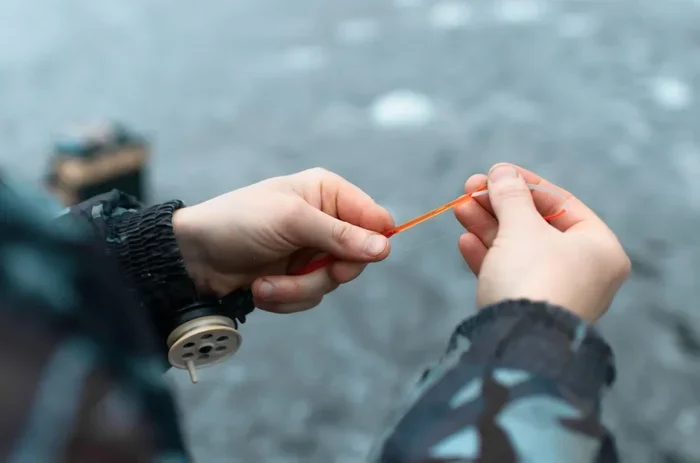
How To Fish For Bluegill: Best Fishing Guide
Bluegill are among the best fish for learning how to fish. They live in ponds, lakes, slow rivers, and small streams across much of the United States. They often feed near shore, respond to simple baits, and fight hard for their size. That makes bluegill a great target for new anglers, kids, and experienced fishermen who want steady action on light tackle.
The basic method is simple: use a light spinning, spincast, or telescopic rod, add 2- to 6-pound monofilament line, place a small hook below a bobber, and bait it with worms, crickets, or small artificial lures. The hard part is not casting. It is finding the fish, choosing the right depth, and changing your presentation when the bite slows.
This guide explains how to fish for bluegill from shore, a boat, kayak, dock, or pier. You will learn which gear works, how to rig live bait, where bluegill hide, how seasons change their behavior, and how to handle them with care. You will also find advice for beginners, kids, gift buyers, and anglers who want to upgrade their panfish setup.

Quick Answer: How Do You Catch Bluegill?
The best way to catch bluegill is to fish a small hook, light line, and a live worm or cricket under a bobber. Start in 2 to 6 feet of water near weeds, docks, brush, rocks, or shaded banks. Set the bait 1 to 3 feet below the bobber, cast quietly, and wait for the float to move. If nothing happens after 10 minutes, change depth or location.
Understanding Bluegill Behavior
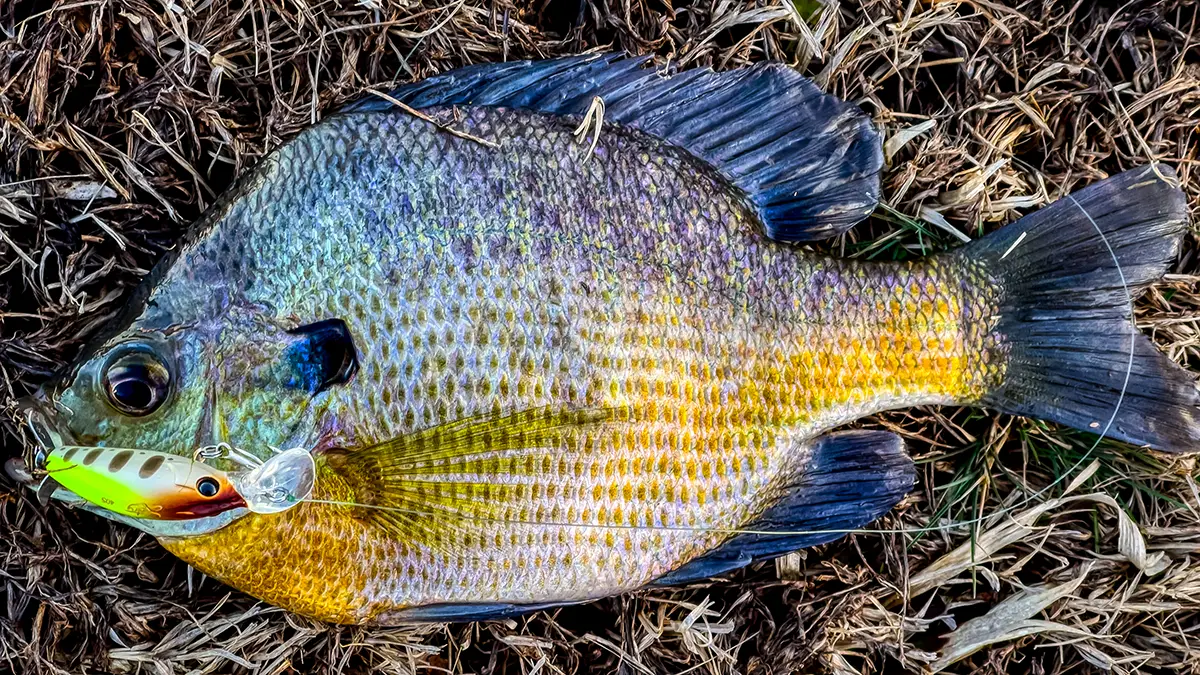
Bluegill are freshwater panfish related to bass, crappie, and other sunfish. They have deep, round bodies, small mouths, and a dark spot near the rear edge of the dorsal fin. Their small mouths explain why tiny hooks and small baits work better than large bass lures.
Bluegill eat insects, larvae, worms, small crustaceans, and tiny fish. They may feed on the surface, in the middle of the water, or near the bottom. Their feeding depth changes with light, water temperature, wind, cover, and the time of year.
Bluegill often travel in groups. If you catch one fish near a dock or weed edge, more may be nearby. Still, do not assume the fish will stay in one spot all day. A change in sun or fishing pressure can move them.
Where Bluegill Hold
The best bluegill spots offer food and protection. Look for cover that gives fish a place to hide from bass and other predators. Bluegill also use structure as a place to rest, spawn, and ambush insects.
Search these areas first:
- Weed lines and lily pads
- Fallen trees and brush
- Dock posts and boat ramps
- Rock edges and riprap
- Shaded banks
- Small coves
- Inlets and slow current
- Drop-offs near shallow flats
- Areas with overhanging trees
- Beds or pale circular patches during spawning season
In clear water, bluegill may stay deeper or under shade during bright midday sun. In stained water, they may move into shallower areas because cover gives them confidence. A calm morning can bring fish close to the surface, while wind may push insects and plankton toward one bank.

How Bluegill Use Depth
Depth is one of the most important parts of bluegill fishing. Many beginners set a bobber at one depth and leave it there all day. That can work, but changing the depth often solves a slow bite.
Start with the bait 1 to 3 feet below the bobber in shallow water. If you see bluegill near the bank but receive no bites, lower the bait by 6 to 12 inches. Continue until you find the feeding level.
In deeper lakes, bluegill may suspend over 10 to 20 feet of water. The fish may still feed 4 feet below the surface. A fish finder can help locate suspended schools, but you do not need electronics for most shore fishing.

Bluegill Compared With Other Panfish
Bluegill are often confused with other sunfish. They share many habits, but species can differ in size, location, and mouth shape. Knowing the difference helps you follow local regulations and release the right fish properly.
| Fish | Common clues | Typical fishing approach |
|---|---|---|
| Bluegill | Dark ear flap, blue or green face, small mouth | Worms, crickets, tiny jigs, small spinners |
| Redear sunfish | Red or orange edge on the ear flap | Worms near the bottom, especially around hard cover |
| Green sunfish | Larger mouth, thick body, bright blue markings | Small jigs, worms, and insects near cover |
| Pumpkinseed | Orange or red markings on the ear flap | Worms, flies, and tiny lures in shallow water |
| Crappie | Larger mouth, taller body, often deeper | Small minnows and jigs under floats or near brush |
Bluegill can share water with bass, trout, catfish, and walleye. A bluegill rig may also catch other panfish. Use the right tackle for the species you may encounter, especially if larger bass or catfish are common.

Bluegill Gear for Shore, Boat, and Kayak Fishing
Bluegill do not need expensive gear. A balanced setup makes casting easier and lets you feel light bites. For most anglers, a 5- to 6-foot light or ultralight rod paired with a small spinning or spincast reel is enough.
Rod power describes how much force a rod needs to bend. Ultralight and light rods bend easily under small fish. Rod action describes where the rod bends. A fast-action rod bends near the tip, while a moderate action bends farther down the blank.
For young children, a short spincast combo is often the easiest choice. The push-button reel has fewer steps than a spinning reel. Adults and older children may prefer a 5- to 6-foot ultralight spinning combo because it casts small lures well.
Rod and Reel Choices
| Setup | Useful specifications | Best for |
|---|---|---|
| Spincast combo | 4.5- to 5.5-foot light rod, 4- to 8-pound line | Young kids, first-time anglers, simple bait fishing |
| Spinning combo | 5- to 6.5-foot ultralight or light rod, 2- to 6-pound line | Beginners, shore anglers, small lures, general bluegill fishing |
| Telescopic rod | 5- to 7 feet when extended, compact when closed | Travel, hiking, stored gear, gift buyers with limited space |
| Fly rod | 3- to 5-weight rod, floating fly line | Surface insects, skilled anglers, quiet presentations |
| Ice fishing rod | 24- to 36-inch light rod | Bluegill through the ice, small jigs, sheltered shelters |
A baitcaster is usually unnecessary for bluegill. Baitcasting reels work well with heavier lures and stronger line, but small lures can be difficult to cast without backlash. Backlash is a tangle caused when the spool spins faster than the lure pulls line away.

Line, Hooks, and Terminal Tackle
Terminal tackle means the small items at the end of your line. For bluegill, this includes hooks, bobbers, sinkers, swivels, and leaders.
Use 2- to 6-pound monofilament for most situations. Monofilament floats, stretches, and is easy to tie. It is also inexpensive, which makes it useful for beginners and kids who may lose rigs.
Fluorocarbon sinks and is less visible underwater. A 2- to 4-pound fluorocarbon leader can help in clear water, but it is stiffer and can be harder to tie. Braided line is thin and sensitive, but it floats and may need a fluorocarbon or monofilament leader for a natural bait presentation.
Choose size 6 to 12 hooks. Hook sizing works backward: a size 12 is smaller than a size 6. Use a size 8 or 10 hook for worms and a size 10 or 12 hook for small crickets or tiny pieces of bait.

Basic Tools and Accessories
A small tackle box is enough for bluegill. You do not need a large bass-style bag with dozens of trays. Carry spare hooks, split-shot sinkers, bobbers, swivels, line, bait, scissors, and pliers.
A landing net helps when fishing from a high bank, dock, or kayak. Polarized sunglasses cut glare and help you see shallow fish, beds, weeds, and submerged cover. Keep a small pair of pliers nearby to remove hooks safely.
| Item | Why it helps | Priority |
|---|---|---|
| Small bobbers | Shows light bites and suspends bait | Essential for beginners |
| Split-shot sinkers | Adds casting weight and keeps bait down | Essential for bait fishing |
| Size 6–12 hooks | Fits the small mouth of bluegill | Essential |
| Long-nose pliers | Removes hooks and protects fingers | Strongly recommended |
| Landing net | Helps with high banks and larger fish | Useful |
| Polarized sunglasses | Reduces glare and reveals shallow cover | Useful |
| Stringer or livewell | Holds legal fish for the table | Optional and regulated |
| Fish finder | Shows depth and suspended fish | Useful for boats and kayaks |
A stringer is only appropriate when you plan to keep legal fish for food. Do not leave a fish on a stringer if you intend to release it. Use a wet hand, remove the hook quickly, and return the fish to the water.

The Best Bluegill Baits and Lures
Live bait is the simplest place to start. Worms, pieces of nightcrawler, crickets, grasshoppers, and mealworms all work in the right conditions. Keep the bait small enough for a bluegill to swallow without struggling.
A whole nightcrawler is often too large. Pinch off a piece about 1 to 2 inches long. Thread the hook through the bait once or twice, and leave a small piece free to move.
Crickets are excellent when bluegill feed near the surface or around vegetation. Hook a cricket lightly behind the collar or through the lower body. Avoid crushing it, because natural movement can attract fish.
Live Bait Options
| Bait | Best use | Notes |
|---|---|---|
| Worm piece | General bait fishing | Easy to find and good for beginners |
| Cricket | Shallow water and warm weather | Works well near grass, docks, and banks |
| Mealworm | Small hooks and kids’ setups | Clean and easy to store |
| Grasshopper | Surface or shallow presentations | Good near overhanging grass |
| Small minnow | Larger panfish and mixed species | Check local bait rules first |
| Bread or corn | Some ponds and stocked waters | Use only where regulations allow |
Do not release unused live bait into a lake or stream. Non-native bait can harm local fish and habitats. Dispose of bait properly or follow local bait-keeper guidance.

Artificial Lures for Bluegill
Artificial lures are useful when you want to cover water. Tiny jigs, soft plastics, inline spinners, small crankbaits, and fly patterns can all catch bluegill.
Use a 1/64- to 1/16-ounce jig with a small soft plastic grub or insect shape. Cast near cover and retrieve it slowly. Add a tiny bobber if the lure is too light to cast or if you want a suspended presentation.
Small inline spinners create flash and vibration. Choose the lightest model you can cast. A spinner may attract bluegill, crappie, bass, and trout, so be prepared for a mixed catch.
Fly anglers can use small dry flies, wet flies, nymphs, and poppers. A 3- to 5-weight fly rod works well for bluegill. Cast beside shade, weed edges, and overhanging branches. Let the fly sit before moving it.

Three Reliable Bluegill Rigs
A rig is the way you arrange your line, hook, sinker, bobber, and other terminal tackle. The best bluegill rig depends on water depth, wind, cover, and how the fish feed.
The float rig is the best starting point for most anglers. It keeps the bait at a known depth and gives a clear visual signal when a fish bites.
1. Bobber and Hook Rig
Tie a small hook to the end of your line. Pinch one or two small split-shot sinkers 6 to 12 inches above the hook. Place a fixed bobber 1 to 3 feet above the sinkers.
Cast beyond the target and slowly move the bait into position. Watch the bobber. A bluegill may pull it under, tilt it, twitch it, or move it sideways.
Do not jerk the rod at the first tiny movement. Wait until the bobber stays under or moves away. Then lift the rod with a smooth motion.

2. Slip-Bobber Rig
A slip bobber slides along the line until it reaches a stop. This lets you fish deeper than a fixed bobber allows. It is useful from a dock, boat, or deep shoreline.
Thread a bobber stop onto the line. Add a bead, slip bobber, small weight, swivel, leader, and hook. Set the stop at the depth you want.
Use a slip bobber when bluegill hold 6 feet or more below the surface. It also works well when wind makes a fixed bobber hard to cast.
3. Small Jig Rig
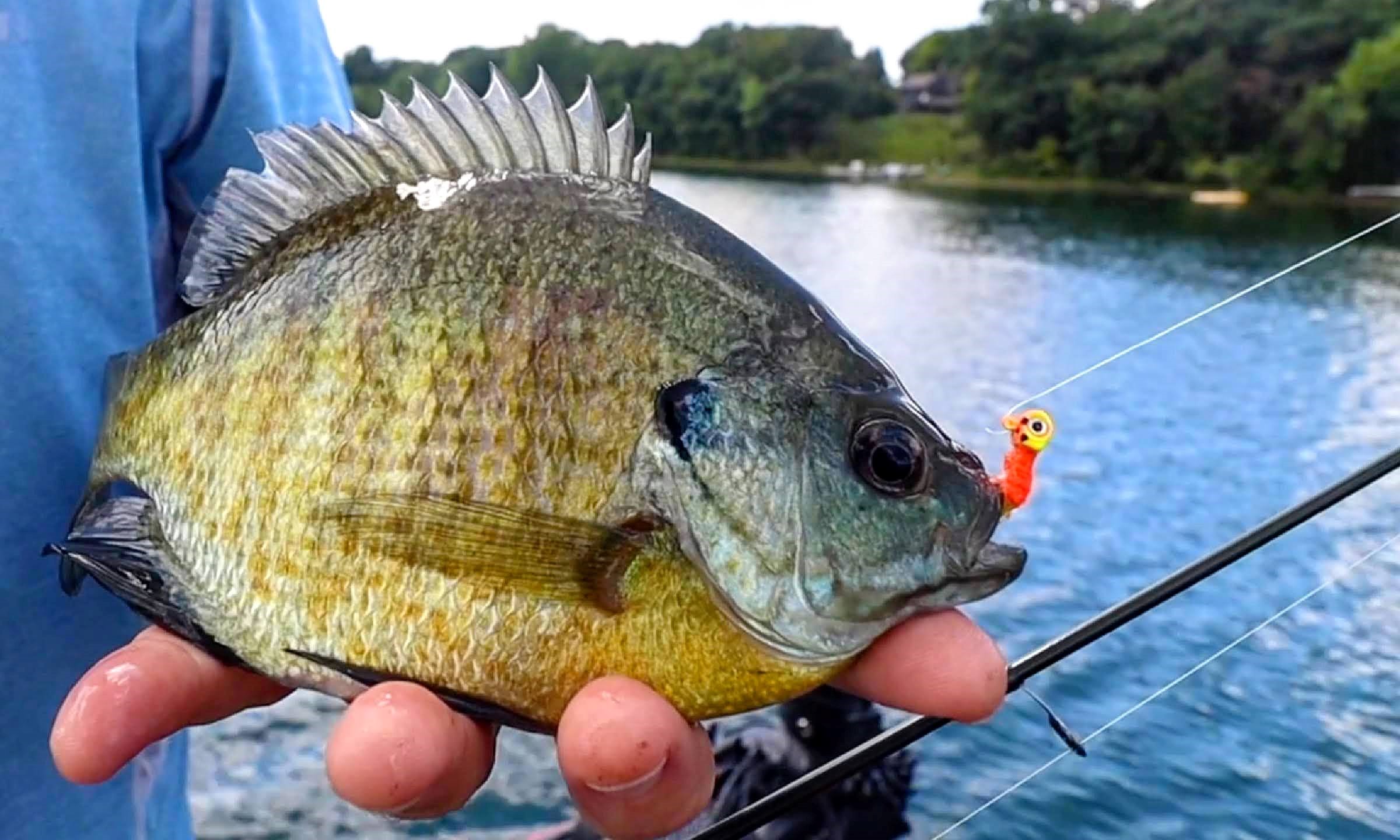
Tie a 1/64- to 1/16-ounce jig directly to your line. Add a small soft plastic, hair body, or live bait if local rules allow it. Cast near cover and let the jig fall.
Use short lifts of 2 to 6 inches. Pause after each lift. Many bluegill bite while the jig falls, so watch the line for a slight jump or sideways movement.
A jig is a good choice for experienced anglers who want to find active fish. It is also a practical upgrade for beginners who have learned to cast and watch line movement.

Seasonal Bluegill Fishing Patterns
Bluegill can bite throughout the year, but their location and depth change with the seasons. Water temperature affects feeding, spawning, and movement. Local weather can shift the pattern by several weeks.
The table below offers a starting point, not a promise. Clear water, fishing pressure, cold fronts, and food supply can change what you find.
| Season | Where to look | Productive approach |
|---|---|---|
| Spring | Warm coves, shallow flats, creek mouths | Worms, crickets, small jigs |
| Early summer | Spawning areas, weed edges, docks | Bobbers, live bait, small flies |
| Summer | Shade, deeper edges, early and late shallows | Slip bobbers, tiny jigs, worms |
| Fall | Weed lines, remaining cover, sunny banks | Small spinners, jigs, bait |
| Winter | Deep water, brush, slow areas, ice holes | Tiny jigs, waxworms, light ice rods |
Spring often brings bluegill into shallow water. Males may guard spawning areas, and fish can be visible in clear water. Keep your distance and avoid walking through shallow beds when possible.
Summer fishing is usually best early and late in the day. During hot, bright periods, try shade, deeper water, or the side of a dock that blocks the sun.
In fall, bluegill may feed more actively before cold weather. Look near weeds that remain green and around structure close to deeper water. In winter, slow down and use tiny baits.
How to Fish for Bluegill Step by Step
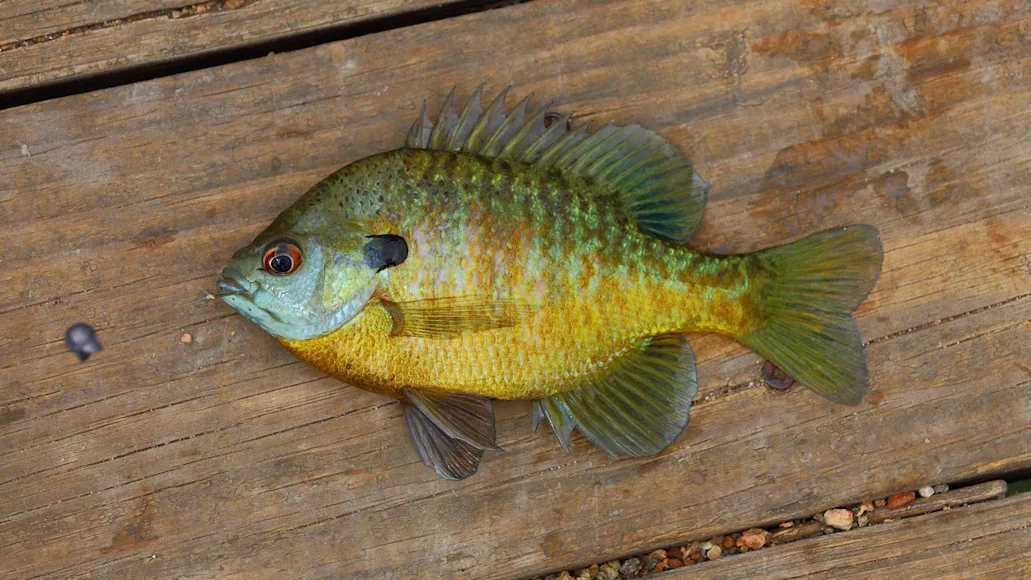
A clear plan saves time. Start with a simple rig, fish high-probability cover, and change only one variable at a time. That way, you learn what caused the bite to improve.
1. Check the Rules Before You Fish
Buy the required fishing license before you start. Check the state wildlife agency for seasons, daily bag limits, size limits, bait rules, and hook restrictions.
Some waters prohibit live bait, lead tackle, barbed hooks, or the use of fish as bait. Rules may differ between a public lake, private pond, city park, and special regulation water.

2. Choose a High-Probability Location
Look for cover near food. A shaded dock beside weeds is usually more promising than a bare bank with no depth change. In a pond, try the edge of vegetation, a small point, or an inflow.
Approach quietly. Keep your shadow off the water when possible. Avoid stomping on docks or scraping rocks along the bank.
3. Set Up the Rod and Reel
Spool a spinning reel with 2- to 6-pound monofilament. Fill the spool to about 1/8 inch below the rim. Too little line reduces casting distance. Too much line can create loops and tangles.
For a spincast reel, follow the reel maker’s line capacity. Use a light rod with a flexible tip. Check the drag before casting. Drag is the reel system that lets line slip when a fish pulls hard.
4. Tie the Rig
Tie on a size 8 or 10 hook with an improved clinch knot. Add one or two split-shot sinkers 6 to 12 inches above the hook. Attach a small bobber 1 to 3 feet above the bait.
Wet the knot before pulling it tight. Trim the tag end close, but leave enough line to prevent the knot from slipping.
5. Add a Small Bait
Use a worm piece about 1 to 2 inches long. Cover the hook point enough to keep the bait secure, but avoid making a large ball. For crickets and mealworms, use a small hook and light pressure.
If small fish keep stealing the bait, make it smaller. If the bait falls off during the cast, slow your casting motion and check the hook point.
6. Cast Beside Cover
Aim near, not directly into, weeds, brush, dock posts, and rocks. A cast that lands 1 to 3 feet beside cover may produce more than one that gets stuck in it.
Let the rig settle. Keep the line slightly tight so you can see movement. Do not constantly reel the bobber across the spot.
7. Change Depth and Location
Fish a spot for 5 to 10 minutes. If you see no signs of life, change the depth by 6 to 12 inches. If that does not help, move 10 to 30 yards along the bank.
Bluegill can be close to shore but still inactive. You may need to move to a sunny patch, a shaded patch, a windblown bank, or a deeper edge.
8. Set the Hook Smoothly
When the bobber goes under, lift the rod firmly but gently. Bluegill have small mouths, so a hard hookset can tear the hook free or break light line.
Keep steady pressure as you reel. Let the rod bend. If the fish runs, allow the drag to work rather than pulling against it with full force.
9. Handle and Release the Fish
Wet your hands before touching a bluegill. Support its body and avoid squeezing the belly. Remove the hook with pliers, especially if the fish swallowed the bait.
Keep the fish out of water for only a few seconds. If you plan to release it, lower it into the water and let it swim away under its own power.
Common Bluegill Fishing Mistakes
Bluegill fishing is simple, but small errors can reduce bites. Most problems come from using oversized gear, fishing one depth too long, or making too much noise.
| Problem | Likely cause | Practical fix |
|---|---|---|
| No bites near shore | Wrong depth or inactive fish | Change depth and move along the bank |
| Fish steal bait | Bait is too large or hook is too big | Use a smaller bait and size 10–12 hook |
| Bobber drifts too fast | Wind or current | Add a small sinker or fish a sheltered area |
| Missed bites | Hookset is too late or too hard | Lift smoothly when the bobber stays down |
| Frequent snags | Casting into heavy cover | Cast beside cover and shorten the leader |
| Line tangles | Reel is overfilled or line is loose | Remove excess line and keep light tension |
| Fish shake off | Loose pressure or weak hook | Keep the rod bent and check the hook point |
Do not use a giant bobber for small fish. A heavy float can resist a bluegill and cause it to drop the bait. Choose the smallest bobber that remains visible.
Do not use a heavy bass rod unless you need it for a mixed-species situation. Heavy gear can make bluegill feel like small weights rather than living fish.
💡 Pro Tip: When the bite stops, change one thing at a time. Try depth first, then bait size, then location. This gives you useful information instead of creating a confusing mix of changes.
Choosing Bluegill Gear by Angler Type
The right setup depends on who will fish, where they will fish, and how much they want to spend. A child on a dock needs a different rod than an adult who wants to cast tiny jigs from a kayak.
Best Setup for Beginners
A 5- to 6-foot light spinning combo is the most flexible beginner setup. Pair it with 4- or 6-pound monofilament, size 8 to 10 hooks, small bobbers, and split-shot sinkers.
A spincast combo is easier for a young beginner. It reduces line-management problems and has a simple push-button cast. The tradeoff is that spinning reels usually cast small lures farther and offer more upgrade potential.
Best Setup for Kids
Choose a short rod that fits the child’s height and strength. A 4.5- to 5.5-foot spincast combo is often easier to control than a long adult rod.
Use a simple bobber rig. Keep hooks covered when walking, and teach children to look behind them before casting. Adults should handle hook removal if the hook is deeply set or near a child’s hand.
👪 Parent or Gift-Buyer Note: A useful fishing gift does not need to be expensive. A child-sized rod, a small tackle box, forceps, polarized sunglasses, and a license or guided trip can be more valuable than a large lure kit the child cannot use.
Best Setup for Experienced Anglers
Experienced anglers may prefer an ultralight spinning rod with a fast or moderate-fast action. Use 2- to 4-pound line for small jigs and tiny spinners. A light fluorocarbon leader can help in clear water.
A 3- to 5-weight fly rod is a good alternative for anglers who enjoy surface presentations. Fly fishing takes more practice, but it offers excellent control over small flies and quiet water.
Best Setup for Travel
A telescopic rod fits in a backpack, vehicle console, or suitcase. Check the guides, joints, and reel seat before each trip. Telescopic rods can be convenient, but the small sections need more care than a one-piece rod.
For travel, carry a compact tackle box, a few pre-tied leaders, spare line, and a small container for hooks. Keep hooks capped or stored in a closed box.
Bluegill Fishing From Different Water Types
Bluegill fishing changes with access and structure. You can catch them from shore, a dock, a boat, or a kayak, but each setting has different safety and gear needs.
Shore and Pier Fishing
Shore fishing is the most affordable way to start. Walk slowly and scan the water before casting. Fish along weed edges, reeds, docks, and shaded banks.
A long rod can help you reach deeper water, but a short rod is easier around trees and brush. Wear shoes with good grip near wet rocks and steep banks.
Pier fishing may require a longer leader or slip bobber if the water below is deep. A landing net is helpful when the pier sits several feet above the surface.
Boat and Kayak Fishing
A small boat or kayak gives you access to suspended fish, offshore brush, and deeper structure. Use a fish finder if available, but learn to read the shoreline and water first.
In a kayak, keep hooks, pliers, and rods organized. A snagged lure can create a safety problem if you reach too far or stand in unstable water. Stay seated unless the craft is designed for standing.
Wear a U.S. Coast Guard-approved personal flotation device. Check weather, wind, and water conditions before launching. Tell someone where you plan to go and when you expect to return.
⚠️ Safety Warning: Never trade balance for a cast. Wear your life jacket on a boat or kayak, keep hooks and knives secured, and leave the water if storms or strong winds approach. A boating safety course is a smart choice for new boat operators.
Ice Fishing for Bluegill
Bluegill are popular ice-fishing targets where safe ice forms. Use a 24- to 36-inch light ice fishing rod, a small jig, and a waxworm or soft plastic.
Ice safety comes first. Ice thickness can vary near springs, inlets, moving water, bridges, weeds, and shorelines. Never judge safety by appearance alone. Check local ice reports, carry safety picks, fish with a partner, and tell someone your plan.
How Much Does Bluegill Fishing Cost?
Bluegill fishing can cost less than many other forms of fishing. A basic setup may include a rod and reel, line, hooks, bobbers, split shot, bait, and a small tackle box. Current pricing ranges from low-cost starter kits to premium ultralight combos with better components and smoother reels.
Do not pay for features you will not use. Extra bearings, large drag ratings, and high-speed gear ratios matter more for some lure and species applications than for simple bluegill bait fishing.
| Budget level | What you can expect | Best for |
|---|---|---|
| Low-cost starter | Spincast combo, basic line, simple tackle | Kids, gifts, occasional pond trips |
| Mid-range | Light spinning combo, better drag, smoother reel | Beginners and regular shore anglers |
| Higher-end ultralight | Light graphite rod, refined reel, improved sensitivity | Experienced anglers and small-lure fishing |
| Specialized | Fly setup, compact travel rod, ice setup, fish finder | Specific techniques or water types |
A more expensive rod may feel lighter and transmit small bites better. It will not replace good location choice or a properly sized hook. For many beginners, upgrading line and hooks first gives more value than buying a premium reel.
Bluegill Conservation and Local Regulations
Responsible bluegill fishing protects the fishery for future anglers. Before each trip, check your state or local wildlife agency for the current fishing license, bag limit, size limit, closed season, and bait rules.
Some waters have special limits to protect large breeding fish. Others encourage harvest because bluegill populations are crowded. Follow the rules for the exact lake or pond, not just the general state rules.
📜 Check Local Regulations: Confirm whether your water allows live bait, treble hooks, barbed hooks, lead sinkers, fish stringers, or the use of bluegill as bait. Regulations can vary by lake, county, state, and land manager.
Catch-and-Release Practices
Use barbless hooks when practical, or press the barb down with pliers. Barbless hooks are easier to remove and may reduce handling time. They also require steady line pressure during the fight.
Wet your hands before touching the fish. Keep fingers away from the gill covers. Do not place fish on dry soil, hot boards, or rough rocks.
Release the fish near the surface. If it appears tired, hold it gently in the water and point it into a mild current until it swims away. Never throw a fish back.
Keeping Bluegill for Food
Bluegill can be excellent table fare when handled and stored properly. Keep only the legal number you plan to eat. Use a clean livewell, cooler, or legal stringer, and chill the fish soon after harvest.
Do not leave fish in warm water for hours. Follow local rules for cleaning, transport, and possession. Dispose of fishing line in a recycling bin or trash container, never in the water or bushes.
🌿 Conservation Note: Removing loose line, bait containers, and damaged hooks protects birds, turtles, mammals, and fish. A few seconds of cleanup can prevent years of harm.
Bluegill Gear Care and Storage
Simple care helps a rod and reel last longer. Rinse dirt from the handle, guides, and reel after each trip. Freshwater gear still collects sand, grit, sunscreen, and plant matter.
Loosen the drag before storing a spinning or spincast reel. Store rods in a dry place away from direct heat. Do not leave a wet telescopic rod collapsed, because moisture can remain inside the sections.
Saltwater-rated gear is not needed for normal bluegill fishing. Bluegill are freshwater fish, and saltwater corrosion resistance matters more for redfish, surf fishing, piers, and coastal kayak use. If you use the same gear in saltwater, rinse it with fresh water and dry it fully.
A Simple Maintenance Checklist
| Task | When to do it | Reason |
|---|---|---|
| Wipe rod and reel | After each trip | Removes dirt and grit |
| Check line for nicks | Before each trip | Prevents breaks near cover |
| Check hook points | Before use | Helps ensure solid hooksets |
| Rinse saltwater gear | After every saltwater trip | Slows corrosion |
| Loosen reel drag | Before storage | Reduces drag wear |
| Replace old monofilament | When cloudy, stiff, or nicked | Restores strength and casting |
| Store hooks dry | After each trip | Prevents rust |
Signs it is time to replace line include visible frays, rough sections, deep coils, discoloration, or repeated break-offs. Replace hooks when points are dull, bent, or rusty.
Frequently Asked Questions About Bluegill Fishing
Q: What is the best bait for bluegill?
A: A small piece of worm is the best all-around bait for many beginners. Crickets, mealworms, and grasshoppers also work well. Match the bait to the hook size. A large bait on a large hook can be too difficult for a bluegill to swallow.
Q: What size hook should I use for bluegill?
A: Start with a size 8 or 10 hook. Use a size 6 for larger bait or larger sunfish. Use a size 10 or 12 for small worms, mealworms, and crickets. Hook sizes vary by brand, so compare the actual hook shape and wire size.
Q: How deep should I fish for bluegill?
A: Start with your bait 1 to 3 feet below a bobber. Change the depth in 6- to 12-inch steps until you find fish. In deeper water, bluegill may suspend several feet down or hold near brush and drop-offs.
Q: Can I catch bluegill without a bobber?
A: Yes. You can fish a small jig, fly, or worm near the bottom without a float. A bobber helps beginners see light bites, but it is not required. Use a tight line and watch for small jumps or sideways movement.
Q: Is monofilament or fluorocarbon better for bluegill?
A: Monofilament is the easiest and most affordable choice. It floats and works well with bobbers. Fluorocarbon is less visible and sinks, but it is stiffer and costs more. Use fluorocarbon when clear water or a sinking presentation makes it useful.
Q: Is braided line good for bluegill?
A: Braided line offers high sensitivity and small diameter, but it can be too visible for clear-water bait fishing. If you use braid, add a 2- to 6-pound monofilament or fluorocarbon leader. Braid also costs more and requires careful knot choice.
Q: What rod is best for bluegill fishing?
A: A 5- to 6-foot ultralight or light spinning rod is the most flexible choice. A short spincast rod is often better for young children. A fly rod works well for anglers who want to use dry flies, nymphs, and small poppers.
Q: Can a child use the same bluegill gear as an adult?
A: A child can use the same basic rig, but a shorter rod and spincast reel are usually easier. Choose a setup the child can hold and cast without strain. Keep the hook small, use a simple bobber rig, and provide close adult supervision.
Q: Are bluegill good to eat?
A: Bluegill can be good table fish when taken from clean, legal waters and handled correctly. Follow local health advisories, size rules, and bag limits. Keep only what you plan to eat and chill the fish soon after harvest.
Q: Can I use bluegill as bait for bass or catfish?
A: Only if local regulations allow it. Some states allow live bluegill as bait in certain waters, while others prohibit it or limit the species and size. Check the current rules from your state wildlife agency before using any fish as bait.
Q: Why do bluegill keep stealing my bait?
A: Your bait may be too large, your hook may be too big, or you may be missing the bite. Use a smaller bait and a size 10 or 12 hook. Watch for the bobber to stay under before setting the hook.
Q: How long does bluegill fishing gear last?
A: Basic gear can last for years with normal care. Monofilament may need replacement each season or sooner if it becomes rough or brittle. Rod guides, reel gears, drag washers, and telescopic joints wear faster when exposed to dirt, water, and poor storage.
Q: Do I need a fish finder to catch bluegill?
A: No. Many bluegill live near shore, docks, weeds, and visible cover. A fish finder helps locate deeper or suspended fish from a boat, but it does not replace knowledge of depth, structure, weather, and seasonal movement.
Final Thoughts
The best way to learn how to fish for bluegill is to keep the first trip simple. Use a light rod, small hook, fresh bait, and a bobber. Fish near cover, test different depths, and move when the water stays quiet.
Beginners should focus on a spincast or spinning combo that feels comfortable. Kids need short, simple gear and close supervision. Experienced anglers can explore tiny jigs, fly rods, slip bobbers, and deeper suspended fish.
Bluegill fishing rewards attention more than expensive equipment. Watch the water, respect local rules, handle fish with wet hands, and leave the shoreline cleaner than you found it. Over time, those habits will help you catch more fish responsibly and enjoy nearly every kind of freshwater fishing.