What Are Fishing Rods Made Of? Surprising Materials Explained
Fishing rods are made from a variety of materials — including graphite, fiberglass, bamboo, and composite blends — each offering unique advantages in strength, sensitivity, and flexibility. Understanding what your rod is made of helps you choose the right one for your fishing style, target species, and budget. This guide breaks down every major rod material so you can make a smarter purchase.
Have you ever picked up a fishing rod and wondered what it’s actually made of? It might seem like a simple question, but the answer is surprisingly complex — and fascinating. The material your rod is built from affects everything from how far you cast to how well you feel a fish nibble your bait.
Fishing rods are made from several core materials, including graphite, fiberglass, bamboo, carbon fiber, and composite blends. Each material brings its own strengths to the table. Some rods are featherlight and ultra-sensitive. Others are nearly indestructible. And a few are handcrafted works of art that have been around for centuries.
In this guide, we’ll break down every major fishing rod material, explain how each one performs, and help you figure out which is best for your style of fishing. Whether you’re a weekend warrior or a seasoned tournament angler, understanding rod materials will make you a better fisherman.
Let’s dive in.
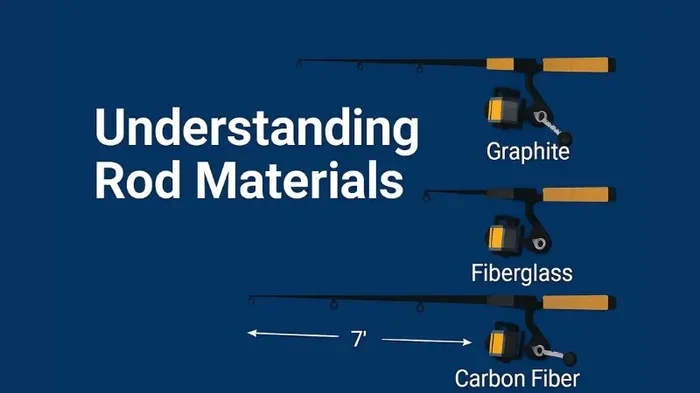
- Graphite rods are the most popular choice for sensitivity and lightweight performance, ideal for detecting subtle bites.
- Fiberglass rods are extremely durable and flexible, making them perfect for beginners and heavy-duty saltwater fishing.
- Bamboo rods are a classic, handcrafted option prized by traditional anglers for their smooth, slow action and nostalgic appeal.
- Composite rods blend graphite and fiberglass to balance sensitivity with toughness — a great all-around option.
- Carbon fiber and boron are premium materials used in high-end rods for maximum strength-to-weight ratios.
- Rod material directly affects action, power, casting distance, and price — choosing the right one depends on your fishing goals.
- Modern rod construction also involves resin systems, blank designs, and guide materials that influence overall performance.
📑 Table of Contents
- A Brief History of Fishing Rod Materials
- Graphite Fishing Rods: The Modern Standard
- Fiberglass Fishing Rods: The Tough Workhorses
- Bamboo Fishing Rods: The Classic Choice
- Composite Fishing Rods: The Best of Both Worlds
- Premium Materials: Carbon Fiber, Boron, and Beyond
- Other Components That Affect Rod Performance
- How to Choose the Right Rod Material for Your Fishing Style
- Common Mistakes When Choosing a Rod Material
- Expert Insights: What the Pros Say
- The Future of Fishing Rod Materials
- Conclusion
A Brief History of Fishing Rod Materials
Fishing rods have come a long way since our ancestors first fashioned sticks into crude fishing tools. The evolution of rod materials tells a story of innovation, craftsmanship, and the relentless pursuit of better performance.
From Wood and Bamboo to Modern Composites
The earliest fishing rods were simply long, sturdy sticks — often cut from trees near the water’s edge. As fishing became more sophisticated, anglers turned to bamboo. Tonkin cane, a specific species of bamboo grown in China, became the gold standard for fly rods and surf rods throughout the 18th and 19th centuries.
Bamboo rods were split into strips, glued together into hexagonal or octagonal shapes, and carefully tapered to create a smooth, progressive action. Many anglers still swear by bamboo today. There’s something magical about the slow, deliberate flex of a well-made cane rod.
The mid-20th century brought a revolution. Fiberglass emerged in the 1940s and 1950s as the first synthetic rod material. It was cheaper to produce, more consistent, and far more durable than bamboo. Then graphite arrived in the 1970s, and everything changed again. Graphite rods were lighter, stiffer, and more sensitive than anything before them.
Today, we have an incredible range of materials — from nano-resin carbon fiber to advanced composite blends. The options can be overwhelming, but that’s actually a good thing. It means there’s a perfect rod out there for every angler.
Graphite Fishing Rods: The Modern Standard
Visual guide about various fishing rod materials
Image source: cdn.shopify.com
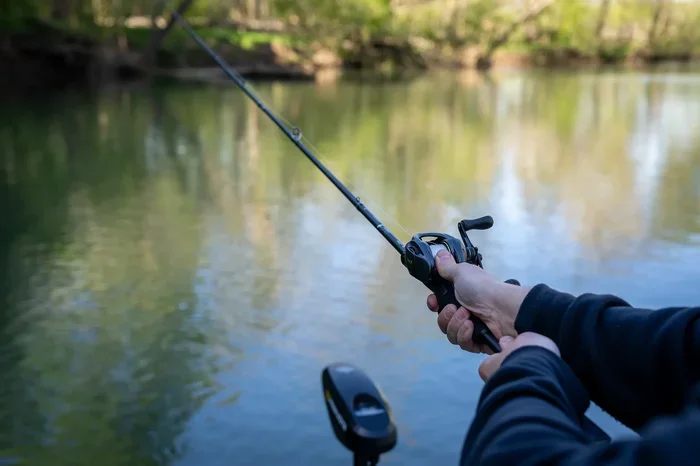
If you walk into any tackle shop, the majority of rods on the shelf will be graphite. Graphite rods dominate the fishing world for good reason — they offer an outstanding balance of sensitivity, lightness, and performance.
What Is Graphite?
Graphite, in the context of fishing rods, refers to carbon fiber sheets that are rolled around a mandrel (a metal rod) and cured under heat and pressure. The result is a thin, lightweight blank with excellent stiffness and responsiveness.
The quality of graphite is measured by its modulus — essentially, how stiff the material is relative to its weight. Higher modulus graphite is stiffer and lighter, but also more brittle. Most quality rods use a blend of modulus ratings to achieve the right balance.
Advantages of Graphite Rods
- Exceptional sensitivity: You’ll feel even the lightest bites, making graphite ideal for techniques like drop-shotting, jigging, and finesse fishing.
- Lightweight design: You can fish all day without arm fatigue. This matters more than most anglers realize.
- Fast action: Graphite rods tend to have fast or extra-fast actions, which means they load quickly and deliver powerful hook sets.
- Casting distance: The stiffness of graphite allows for longer, more accurate casts.
- Versatility: Graphite rods are available in every power and action combination imaginable.
Disadvantages of Graphite Rods
- Brittleness: High-modulus graphite can snap under sudden, heavy impact. Slamming a graphite rod in a car door is a heartbreaking experience.
- Price: Premium graphite rods can be expensive, especially those using high-modulus or IM8/IM10 graphite.
- Less forgiving: The fast action means less margin for error during the fight. A sudden surge from a big fish can snap your line if your drag isn’t set properly.
Best Uses for Graphite Rods
Graphite excels in freshwater bass fishing, walleye fishing, trout fishing, and any situation where sensitivity matters. If you’re fishing with artificial lures and need to detect subtle strikes, graphite is your best friend.
For those just getting started, our fishing guide for beginners covers the basics of choosing your first rod and reel combo.
Fiberglass Fishing Rods: The Tough Workhorses
Visual guide about various fishing rod materials
Image source: jingsourcing.com
Before graphite took over, fiberglass was king. And while it may not get as much hype today, fiberglass rods remain an excellent choice for many fishing applications.
What Is Fiberglass?
Fiberglass rod blanks are made from woven glass fibers embedded in a resin matrix. The process is similar to graphite construction, but the resulting material is heavier, more flexible, and significantly more durable.
Advantages of Fiberglass Rods
- Incredible durability: You can bend a fiberglass rod almost in half without breaking it. They’re practically indestructible under normal fishing conditions.
- Slow to moderate action: Fiberglass rods have a smooth, parabolic bend that absorbs shock and keeps fish pinned.
- Forgiving nature: The flex acts as a cushion, reducing the chance of pulled hooks and broken lines.
- Affordable: Fiberglass rods are generally less expensive than graphite, making them budget-friendly.
- Great for live bait: The slow action is perfect for live bait presentations where you want the fish to eat before feeling resistance.
Disadvantages of Fiberglass Rods
- Heavier weight: Fiberglass rods are noticeably heavier than graphite, which can lead to fatigue during long sessions.
- Less sensitive: You won’t feel bites as clearly, which can be a disadvantage with certain techniques.
- Shorter casts: The slower action doesn’t generate the same casting distance as graphite.
Best Uses for Fiberglass Rods
Fiberglass shines in saltwater fishing, trolling, crappie fishing, and any situation where toughness matters more than sensitivity. Many experienced anglers keep a fiberglass rod in their arsenal specifically for throwing big baits for pike, musky, or large catfish.
If you’re heading to the coast, check out our saltwater fishing tips for advice on gear and techniques.
Bamboo Fishing Rods: The Classic Choice
Visual guide about various fishing rod materials
Image source: fishingmood.com
There’s a special place in fishing history for bamboo rods. Handcrafted from Tonkin cane, bamboo rods represent the pinnacle of traditional rod building. They’re not for everyone, but for those who appreciate the craft, nothing else compares.
What Makes Bamboo Special?
Tonkin cane (Arundinaria amabilis) is a specific species of bamboo that grows in a small region of China. It has an unmatched combination of strength, flexibility, and natural taper that makes it ideal for rod building.
A quality bamboo rod is split into strips, planed to precise dimensions, and glued into a hexagonal or octagonal cross-section. The builder carefully tapers each strip to create the rod’s action. This process can take 40 to 80 hours for a single rod.
Advantages of Bamboo Rods
- Beautiful, smooth action: Bamboo rods have a slow, progressive flex that feels incredible in your hand.
- Traditional appeal: There’s a deep sense of connection to fishing history when you cast a bamboo rod.
- Handcrafted quality: Each rod is a unique work of art, built by a skilled craftsman.
- Excellent for fly fishing: The slow action is perfect for delicate fly presentations.
Disadvantages of Bamboo Rods
- Very expensive: A quality bamboo rod can cost anywhere from $500 to $5,000 or more.
- High maintenance: Bamboo needs to be stored properly and cared for to prevent warping or damage.
- Heavy: Bamboo rods are heavier than graphite and even fiberglass.
- Limited versatility: They’re primarily suited for fly fishing and light freshwater applications.
Who Should Consider Bamboo?
Bamboo rods are for the angler who values tradition, craftsmanship, and the pure experience of fishing. If you’re a fly fisher who appreciates the art of the sport, a bamboo rod is a lifetime investment.
Composite Fishing Rods: The Best of Both Worlds
Can’t decide between graphite and fiberglass? Composite rods blend both materials to create a rod that balances sensitivity with durability. They’re one of the most versatile options on the market.
How Composite Rods Are Made
Composite rods use layers of both graphite and fiberglass in the blank construction. The ratio of graphite to fiberglass determines the rod’s characteristics. A rod with more graphite will be lighter and more sensitive. One with more fiberglass will be tougher and slower in action.
Some manufacturers use a graphite core with a fiberglass outer layer, while others weave the two materials together throughout the blank. The engineering behind these rods has become incredibly sophisticated.
Advantages of Composite Rods
- Balanced performance: You get decent sensitivity without sacrificing durability.
- Versatile action: Composite rods can be designed with moderate to fast actions.
- Good value: They often cost less than premium graphite while offering more toughness.
- Great all-around choice: Perfect for anglers who fish multiple techniques and don’t want to own a dozen specialized rods.
Disadvantages of Composite Rods
- Jack of all trades: They won’t outperform a dedicated graphite rod in sensitivity or a fiberglass rod in toughness.
- Heavier than graphite: The fiberglass content adds weight.
Best Uses for Composite Rods
Composite rods are ideal for anglers who want one rod that can handle a variety of situations. They’re popular among bass anglers who fish both soft plastics and hard baits, and among saltwater anglers who need a rod that can take a beating.
Premium Materials: Carbon Fiber, Boron, and Beyond
At the high end of the fishing rod market, you’ll find materials that push the boundaries of performance. These premium materials deliver extraordinary strength-to-weight ratios but come with premium price tags.
Carbon Fiber
While graphite is technically a form of carbon, the term “carbon fiber” in the fishing world usually refers to advanced, high-modulus carbon materials used in top-tier rods. These blanks are incredibly light and stiff, offering maximum sensitivity and power.
Some manufacturers use carbon fiber in the form of woven sheets, while others use unidirectional carbon fiber for specific performance characteristics. The result is a rod that feels almost weightless in your hand.
Boron
Boron is an extremely stiff, lightweight material that was briefly popular in fishing rods during the 1990s and early 2000s. Boron rods were incredibly sensitive and powerful, but they were also very expensive and prone to breaking under impact.
Today, boron is sometimes used as a reinforcing material in combination with graphite or carbon fiber. It adds stiffness and responsiveness without adding significant weight.
Nano-Resin Technology
One of the most exciting developments in rod building is nano-resin technology. Traditional resins used to bind carbon fibers together add weight and can create weak points. Nano-resins use microscopic particles that fill gaps between fibers more effectively, resulting in a stronger, lighter blank.
Brands like G. Loomis, Shimano, and Daiwa have all developed proprietary nano-resin systems that give their rods a significant performance edge.
Titanium and Other Exotic Materials
Some manufacturers experiment with titanium wire guides, titanium frame inserts, and even Kevlar reinforcement in rod blanks. While these materials don’t make up the rod itself, they enhance performance and durability in meaningful ways.
Other Components That Affect Rod Performance
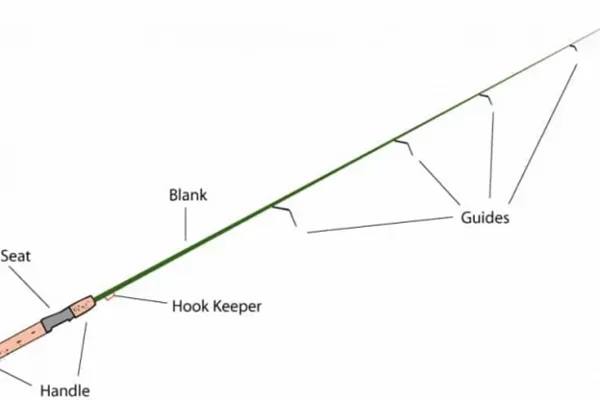
The blank material is only part of the story. Several other components play a critical role in how a fishing rod performs.
Rod Guides
Guides are the rings that line the length of your rod and guide your fishing line. They’re made from various materials:
- Stainless steel: Durable and affordable, but heavier than premium options.
- Aluminum oxide: A ceramic material that’s smooth and reduces line friction.
- Silicon carbide (SiC): The gold standard for guide inserts — extremely hard, smooth, and lightweight.
- Titanium: Lightweight and corrosion-resistant, ideal for saltwater rods.
The quality and material of your guides affect casting distance, line longevity, and overall rod feel. Cheap guides can fray your line and cost you fish.
Reel Seats
Reel seats are typically made from graphite-reinforced plastic, aluminum, or carbon fiber. A good reel seat holds your reel securely without adding unnecessary weight. Some high-end rods use exposed-blank reel seats that let you feel the rod blank directly, increasing sensitivity.
Handles and Grips
Handle materials include:
- Cork: The traditional choice — lightweight, comfortable, and provides excellent grip even when wet. High-quality cork is graded by density and appearance.
- EVA foam: Durable, affordable, and available in various densities. It doesn’t absorb water and is easy to clean.
- Hypalon: A synthetic rubber that’s extremely durable and provides a secure grip. Common on saltwater rods.
- Carbon fiber handles: Found on premium rods for maximum sensitivity and minimal weight.
Rod Tips
The tip of your rod is one of the most important and vulnerable parts. Rod tips are often made from the same material as the blank but may include additional reinforcement. A damaged tip can ruin your entire fishing experience, so it’s worth investing in quality.
For more on maintaining your gear, check out our article on fishing pole rod tips to keep your equipment in top shape.
How to Choose the Right Rod Material for Your Fishing Style
Now that you understand the materials, how do you choose? The right rod material depends on what you’re fishing for, how you’re fishing, and your budget.
Freshwater Bass Fishing
For bass fishing, graphite is the go-to choice. The sensitivity helps you feel the bottom structure and detect subtle strikes. A medium-heavy, fast-action graphite rod is the most versatile bass rod you can own.
If you’re throwing crankbaits or live bait, consider a moderate-action graphite or composite rod. The slower action keeps fish pinned and prevents pulled hooks.
Saltwater Fishing
Saltwater environments are tough on gear. Fiberglass and composite rods are popular choices because they can handle the abuse of big fish, rough conditions, and corrosive saltwater. Graphite rods work well for inshore species like redfish and trout, but make sure they have corrosion-resistant guides.
Fly Fishing
Fly rods are most commonly made from graphite, offering the perfect combination of light weight and casting performance. Bamboo fly rods remain a beloved choice for traditionalists, especially for small-stream trout fishing.
Ice Fishing
Ice fishing rods are typically short and made from graphite or fiberglass. Sensitivity is key since you’re watching a tiny rod tip for bites. Graphite is generally preferred for panfish, while fiberglass works well for larger species like pike and walleye.
Budget Considerations
- Under $50: Fiberglass or basic graphite rods. Great for beginners and casual anglers.
- $50–$150: Quality graphite or composite rods from reputable brands. Excellent performance for the price.
- $150–$300: Premium graphite with advanced features like nano-resin blanks and high-end guides.
- $300+: Top-tier rods with the best materials, craftsmanship, and technology available.
For more advice on getting the most from your gear, our best fishing tips for every angler cover techniques that work with any rod material.
Common Mistakes When Choosing a Rod Material
Even experienced anglers make these errors. Here’s what to watch out for:
- Choosing based on price alone: The cheapest rod isn’t always the best value. A mid-range graphite rod will outperform a budget rod in every way.
- Ignoring the fishing application: A fast-action graphite rod is terrible for live bait fishing. Match your rod material to your technique.
- Overlooking durability: If you fish in rocky areas or travel frequently, a fragile high-modulus graphite rod might not be practical.
- Buying too much rod: Beginners often buy heavy, powerful rods when a lighter, more sensitive rod would serve them better.
- Neglecting the guides and handle: A great blank with cheap guides is a waste of money. Pay attention to the whole package.
Expert Insights: What the Pros Say
Professional anglers and rod builders consistently emphasize one point: the best rod is the one that matches your fishing style. There’s no single “best” material.
Bass pro Kevin VanDam has long favored graphite rods for their sensitivity in detecting bottom composition and subtle bites. Meanwhile, many saltwater guides prefer fiberglass for its ability to handle big fish without breaking.
Custom rod builder Chris Carlin of Tackle Advisors notes that modern composite rods have closed the gap significantly. “Today’s composites are so well-engineered that most anglers can’t tell the difference in a blind test,” he says. “The key is finding the right action and power for what you do.”
The Future of Fishing Rod Materials
Rod building technology continues to evolve. Here are some trends to watch:
- Graphene integration: Graphene — a single layer of carbon atoms arranged in a hexagonal lattice — is being explored for rod blanks. It’s incredibly strong and lightweight.
- 3D-printed components: Some manufacturers are experimenting with 3D-printed reel seats and guide frames for custom fits.
- Sustainable materials: As environmental awareness grows, companies are exploring bio-based resins and recycled materials in rod construction.
- Smart rods: Embedded sensors that measure casting speed, fish strikes, and rod stress are in development. The future might include rods that connect to your phone.
Conclusion
Understanding what fishing rods are made of gives you a real advantage when choosing your next rod. Each material — graphite, fiberglass, bamboo, composite, carbon fiber, and beyond — brings something unique to the table.
Graphite offers unmatched sensitivity and light weight. Fiberglass delivers bulletproof durability. Bamboo connects you to centuries of fishing tradition. And composite rods give you a versatile middle ground.
The best approach is to match your rod material to your fishing style, target species, and budget. Don’t be afraid to own multiple rods for different situations. That’s part of the fun.
Now that you know the surprising range of materials used in modern fishing rods, you’re ready to make a smarter choice at the tackle shop. Pick the right rod, hit the water, and enjoy every cast.
Frequently Asked Questions
What is the most common material for fishing rods?
Graphite is the most common material for modern fishing rods. It offers an excellent balance of sensitivity, lightweight design, and casting performance. You’ll find graphite rods in virtually every fishing category, from bass fishing to trout fishing.
Are fiberglass rods better than graphite rods?
Neither is universally better — it depends on your needs. Fiberglass rods are more durable and forgiving, making them great for beginners and heavy-duty applications. Graphite rods are lighter and more sensitive, making them ideal for techniques that require feeling subtle bites.
Why are bamboo fishing rods so expensive?
Bamboo rods are expensive because they’re handcrafted from Tonkin cane, a specific species of bamboo that requires skilled labor to split, plane, glue, and taper. A single rod can take 40 to 80 hours to build, and the craftsmanship involved is considered an art form.
What does rod modulus mean?
Rod modulus refers to the stiffness of the graphite or carbon fiber material used in the blank. Higher modulus means the material is stiffer and lighter, but also more brittle. Most quality rods use a blend of modulus ratings to achieve the right balance of performance and durability.
Can a fishing rod be made of metal?
While some experimental rods have used aluminum or titanium, metal is not a practical material for fishing rod blanks. It’s too heavy and doesn’t flex properly. However, titanium is commonly used in high-end rod guides and guide frames for its lightweight and corrosion-resistant properties.
How long do fishing rods last?
With proper care, a quality fishing rod can last decades. Graphite rods are more susceptible to impact damage, while fiberglass rods are nearly indestructible. Store your rods in a cool, dry place, use rod socks or tubes for transport, and inspect guides regularly for wear.