How To Find A Good Ice Fishing Spot: Expert Tips
Finding a good ice fishing spot starts before you step onto the ice. Fish do not spread evenly across a frozen lake. They gather near food, cover, depth changes, current, and places that give them a safe route through the water column. Your job is to find those features and confirm that the ice is safe.
The best ice fishing spot may be a deep basin, a weed edge, a point, a channel, or a small hump. The right location depends on the fish you want, the season, the lake shape, and the available food. A little map study and careful drilling can save hours of sitting over empty water.

Quick Answer: How to Find a Good Ice Fishing Spot
The best way to find a good ice fishing spot is to study a contour map, identify depth changes and fish-holding cover, then drill several test holes along a planned route. Look for points, drop-offs, weed edges, humps, creek channels, and basin areas. Use a fish finder or underwater camera to confirm fish activity. Always check ice thickness, local rules, weather, and access before fishing.

Start With the Fish You Want to Catch
The target species should guide your search. Panfish, walleye, trout, northern pike, bass, and lake trout often use different parts of a lake. A productive spot for bluegill may be poor for walleye, while a deep basin that holds lake trout may not be ideal for shallow-water pike.
Before leaving home, answer three basic questions:
- Which species are you targeting?
- What food does that species eat in winter?
- Where can that food gather under the ice?
Fish still need food in winter. Their movement may slow, but they continue to use predictable areas. Smaller fish may gather near weeds, plankton, mud, or insects. Larger predators often stay close to those food sources.
Panfish and Perch
Bluegill, crappie, yellow perch, and sunfish often relate to weeds, soft-bottom flats, creek channels, and basin edges. Early in winter, panfish may remain near green weeds. As winter continues, they can move toward deeper water and soft-bottom areas where insect larvae gather.
Look for a depth of 8 to 25 feet first, but do not treat that range as a rule. Clear lakes may hold panfish deeper. Dark or stained lakes may have active fish in much shallower water.
A small tungsten jig tipped with a wax worm, maggot, or small soft plastic works well for many panfish situations. Use light line, such as 2- to 4-pound monofilament or fluorocarbon, when the water is clear and the fish are cautious.

Walleye
Walleye often use points, inside turns, saddles, rock piles, and drop-offs. They may feed on shallow flats during low light, then move toward deeper water as daylight grows. A good walleye spot often has a travel route between shallow feeding areas and nearby deep water.
Search for a depth change near:
- A rocky point
- A submerged roadbed
- A creek mouth
- A reef
- A sharp inside turn
- A flat next to a deep basin
Many anglers begin in 10 to 20 feet of water during dawn and dusk. During bright midday periods, nearby depths of 20 to 35 feet may be more useful. Exact depths vary by lake and season.
A medium-light ice fishing rod with a fast action works for jigging smaller spoons, rattle baits, and live-bait rigs. “Action” describes how much of the rod bends. A fast-action rod bends mostly near the tip, which helps detect light bites.

Northern Pike and Bass
Northern pike often patrol weed edges, shallow bays, points, and areas near baitfish. Green weeds can provide oxygen and cover during winter. A pike may sit beside a weed line and wait for a weakened minnow to pass.
Bass may use similar areas, especially during early ice. Search near steep banks, rock, wood, and the edge of a flat. In some lakes, largemouth bass stay in shallow cover. Smallmouth bass often use rock, gravel, and sharper depth breaks.
Tip-ups with live or dead bait are common for pike and bass. Follow local rules for the number of lines, bait types, and hook styles. Use a wire or heavy fluorocarbon leader when targeting pike because their teeth can cut light line.

Trout and Lake Trout
Brook trout, rainbow trout, brown trout, and lake trout often use deeper water than panfish. Stream trout may cruise near springs, creek mouths, steep shorelines, and underwater points. Lake trout commonly suspend over deep basins or patrol rocky structure.
A fish finder is especially useful for trout. A trout may appear several feet above the bottom, so do not assume every fish must be on the lake floor. Jigging spoons, small tubes, rattle baits, and live minnows can all work, depending on local rules.
For lake trout, search deep basins, humps, saddles, and sharp rock edges. If fish appear suspended, keep your lure at their level. A sonar unit can show this without requiring constant guesswork.

Read a Lake Map Before You Drill
A contour map is one of the most useful ice fishing tools. It shows changes in depth with lines called contours. Tight contour lines mean a steep drop. Wide lines usually indicate a flatter area.
You can use a paper map, a printed lake map, or a digital mapping app. Modern lake maps may show depth, vegetation, boat ramps, access points, and underwater structure. Check the source and update date when possible because water levels and maps can vary.
Start by marking five types of areas:
- Steep breaks
- Points and inside turns
- Humps and reefs
- Weed flats and weed edges
- Deep basins and channels
Then choose a route that lets you fish several depths. A route is better than a single hole because fish may shift a few feet or move as light and weather change.
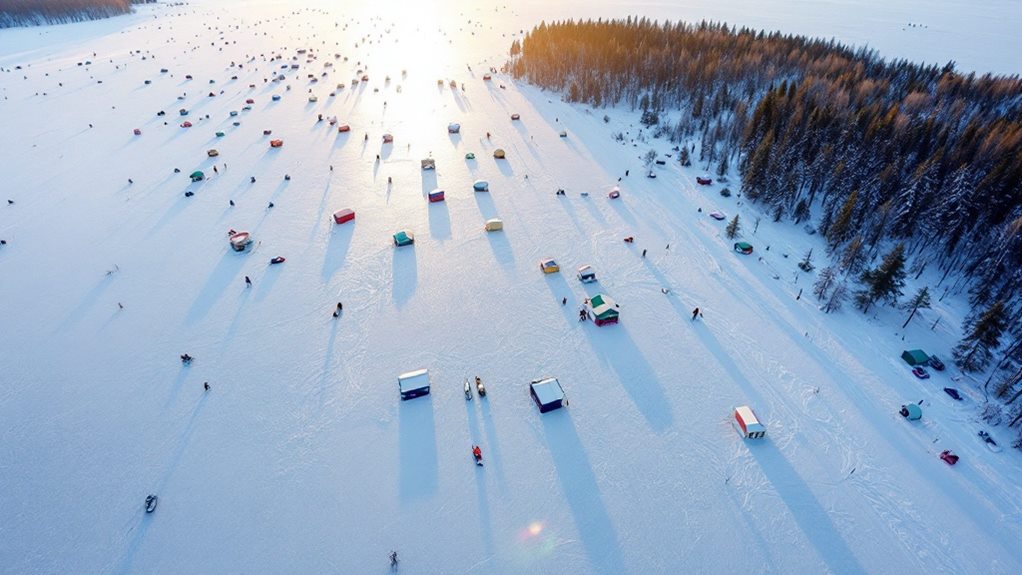
Learn the Main Map Features
A point extends from shore into deeper water. Fish may use both sides of a point, especially where wind, current, or baitfish move past it.
An inside turn is a curved section where a flat meets a deeper area. It can act like a hallway for fish. A saddle is a shallow connection between two deeper areas. Predators may use it as a travel route.
A hump is an underwater rise surrounded by deeper water. Humps can hold fish because they provide food and a change in depth. A basin is a broad, deep area. Panfish and trout may gather over soft mud in a basin, especially when insect larvae are available.
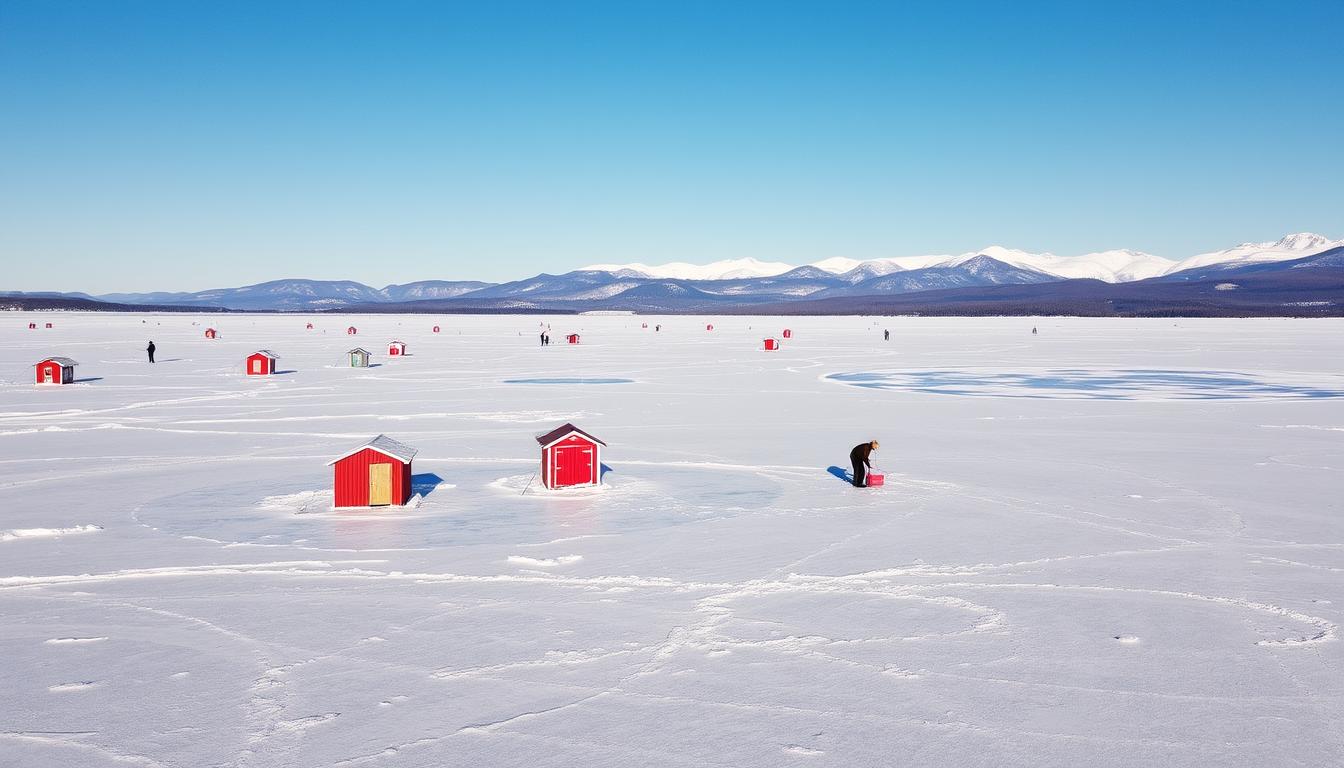
Use Digital Maps With Real-World Checks
Digital maps are helpful, but they are not perfect. Some maps are based on limited surveys. A contour line may be off by several feet, especially in shallow water or areas with changing water levels.
Use your depth finder to confirm the map. Drill a hole at the edge of a feature, record the depth, then move across it. This process shows whether the actual bottom matches the map.
A simple depth record can look like this:
| Hole location | Depth and bottom | Fishing meaning |
|---|---|---|
| Shoreward edge | 8 feet, weeds | Possible panfish and pike |
| First break | 16 feet, gravel | Travel route for walleye |
| Deep edge | 28 feet, mud | Possible basin fish and trout |
The key lesson is to fish the change, not only the deepest water. A depth shift from 12 to 16 feet may matter more than a flat area that stays at 16 feet for a long distance.

Look for Structure, Cover, and Food
Structure means the shape of the bottom. Cover means objects or growth that give fish shade, shelter, or ambush points. Food includes baitfish, insects, crayfish, and other prey.
The strongest ice fishing spots often combine two or more of these factors. A rocky point beside a deep basin is stronger than a plain rock area. A green weed edge near a creek channel gives fish both cover and a travel path.
Weed Edges
Weeds can be excellent in early and midwinter. Green weeds produce oxygen and hold insects, minnows, and small crustaceans. Do not focus only on the thickest weeds. Fish may sit along the outer edge where they can move between cover and open water.
Drill holes:
- Inside the weed bed
- Along the outside edge
- Just beyond the weed line
- Near a nearby depth change
Check whether the weeds are green or brown. Thick dead weeds may still provide cover, but they often hold less active life than healthy vegetation.

Rock, Gravel, and Wood
Rock and gravel attract crayfish, minnows, and other food. They also create small current breaks and ambush spots. A rocky point near a drop-off can be a strong location for walleye, smallmouth bass, and perch.
Wood cover may hold crappie, bass, and pike. However, wood can snag jigs, spoons, and treble hooks. Use a simple jig or single-hook presentation when fishing near heavy cover.
If you fish a new lake, mark productive cover on your mapping app. Your notes can become more useful each season.

Soft Mud and Insect Beds
Deep soft-bottom areas can hold insect larvae. Yellow perch, bluegill, crappie, and trout may visit these areas to feed. A mud basin may look featureless on a map, but it can be highly productive when food is present.
Use a fish finder to look for suspended marks or fish close to the bottom. Lower a small jig and watch how fish respond. Sometimes the best presentation is a slow lift of only 2 to 4 inches.
A light ice fishing rod, 2- to 4-pound line, and a small jig can help you fish this pattern with control. Avoid heavy terminal tackle unless wind, depth, or current requires it.
Choose a Starting Depth
Depth is a useful starting point, not a guarantee. The right depth changes with species, water clarity, forage, light, weather, and fishing pressure.
Begin by covering a range instead of drilling every hole at the same depth. For example, drill holes at 8, 12, 16, 20, and 25 feet along a structure. This gives you a fast view of how fish use the area.
| Target fish | Starting depth range | Common location |
|---|---|---|
| Bluegill and crappie | 8–25 feet | Weeds, basin edges, soft bottom |
| Walleye | 10–35 feet | Points, breaks, reefs, flats |
| Northern pike | 5–20 feet | Weed lines, bays, shallow points |
| Trout | 10–40 feet | Springs, creek mouths, basins |
| Lake trout | 30–100+ feet | Deep basins, humps, steep rock |
These ranges are broad starting points. Lake trout may live much deeper in large lakes, while trout in a small pond may stay shallow. Confirm local patterns through current reports and conversations with a local tackle shop.

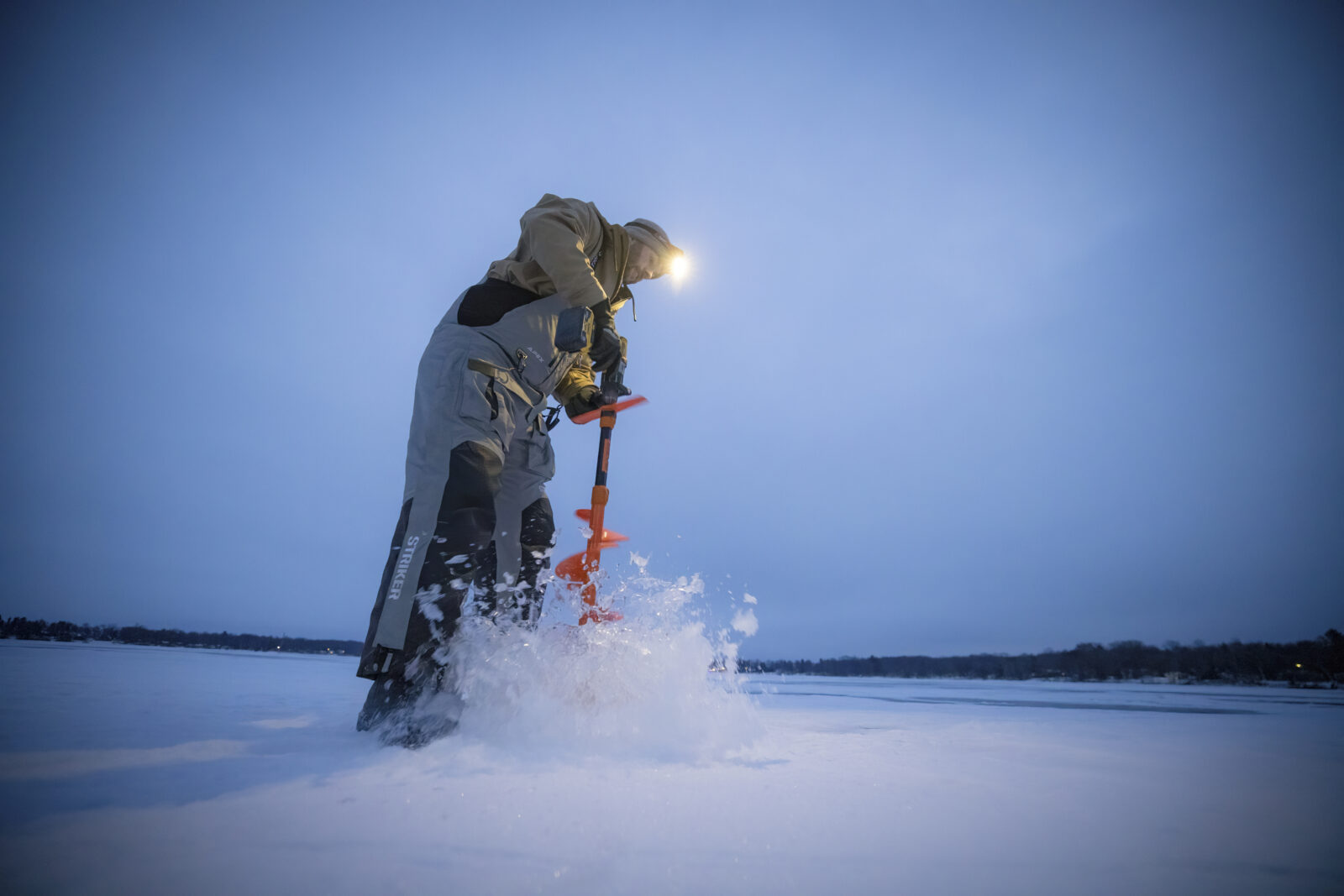
Drill a Grid Instead of Guessing
A grid helps you cover water in an organized way. Drill holes across a depth change, weed edge, or point. Space holes 10 to 30 feet apart when searching a small feature. Spread them farther apart on a large flat.
Start with four to eight holes. Use your depth finder at each hole. Record:
- Depth
- Bottom type
- Weed presence
- Fish marks
- Water temperature, if available
- Bait or forage signs
- Your lure and fish response
Do not spend an hour at the first hole because it looks promising. Search first, then settle down after finding fish or strong structure.
Use a Search Route
A search route may begin in shallow water and move deeper. Another route may cross a point from one side to the other. The best route depends on the feature.
Try this basic plan:
- Drill two holes on the shallow side of the structure.
- Drill two holes on the break.
- Drill two holes in deeper water.
- Check each hole with sonar.
- Fish the holes with marks, cover, or the best bottom change.
- Move if you see no life after a reasonable test.
This approach works for beginners because it reduces random movement. It also helps experienced anglers test a location with clear data.

How Many Holes Should You Drill?
There is no fixed number. A small point may need six holes. A large flat may need 20 or more. Ice thickness, weather, crowding, and your physical condition also matter.
Avoid drilling more holes than you can safely manage. Carry a slush scoop to keep holes clear, and place auger blades where no one can step on them. An electric or gas auger saves effort, but an ice chisel or hand auger may work well for thin early ice and short trips.

Use Electronics to Confirm Fish Activity
A fish finder shows depth, bottom, lure position, and fish marks. An ice-specific sonar unit often has a flasher mode that updates quickly. A portable unit can also work if the transducer sits correctly in the hole.
A fish finder does not replace location skills. It tells you what is under one hole. You still need to choose the right area and move when the evidence is poor.
An underwater camera can show weeds, bottom type, fish size, and fish behavior. Cameras work best in clear water and calm conditions. In dark or stained water, sonar is often more useful.
Read the Bottom
A hard bottom often creates a stronger, sharper sonar return. A soft mud bottom may create a wider or weaker return. This difference can help you locate transitions.
Bottom transitions are important because they bring different food sources together. A hard gravel edge beside soft mud may attract feeding fish. A sand-to-rock change can also create a useful travel line.
Read Fish Marks Carefully
A fish mark does not always mean an active fish. It may show a small baitfish, debris, or interference. Watch whether the mark follows your lure, rises, or changes position.
Active fish often move toward the lure. Neutral fish may stay near the bottom or rise only a few inches. Inactive fish may need a smaller bait, slower movement, or a pause.
Do not abandon a spot only because fish do not bite at once. Change one factor at a time:
- Lure size
- Color
- Jigging height
- Cadence
- Bait
- Line size
- Depth
Check Ice Safety Before Searching for Fish
A good fishing spot is never worth unsafe ice. Ice thickness can vary across the same lake. Springs, current, creek mouths, narrows, bridges, vegetation, and pressure cracks can weaken ice.
No ice is completely safe. Clear, hard ice is stronger than white or honeycombed ice, but thickness alone cannot remove all risk.
Basic Ice Thickness Guidance
The following figures are general guidance for clear, new ice. They are not a guarantee of safety.
| Activity | General minimum guidance |
|---|---|
| One person on foot | About 4 inches |
| Small group or light gear | About 5–7 inches |
| Snowmobile or ATV | About 8–12 inches |
| Small vehicle | 12 inches or more |
White ice may have much less strength than clear ice. Current and moving water can create thin spots even when nearby ice looks thick.
⚠️ Safety Warning: Check ice thickness as you go. Carry ice picks around your neck, wear a flotation suit or personal flotation device designed for cold water, and fish with a partner. Tell someone your exact access point and return time. Consider an ice safety course before fishing unfamiliar water.
Avoid High-Risk Areas
Stay away from:
- Inlets and outlets
- Moving water
- Springs
- Areas near bridges
- Pressure ridges
- Dark or wet-looking ice
- Shorelines with flowing water
- Areas with recent open water
- Unmarked vehicle tracks
Never assume that another angler’s path is safe. Test the ice yourself with a spud bar or chisel, especially near shore and when early ice is forming.
Plan Access, Weather, and Travel
The best fishing location must also be reachable. A remote basin may look perfect on a map but become unsafe or exhausting if you must cross rough ice with heavy gear.
Check the forecast for wind, snow, freezing rain, and falling temperatures. Wind can create dangerous travel conditions and move shelters or gear. Snow can hide thin ice and make walking difficult.
Bring equipment that fits the trip:
- Ice cleats
- Warm layered clothing
- Waterproof gloves
- Ice picks
- Spud bar
- Ice scoop
- Auger
- Fish finder
- Seat or bucket
- Tackle box
- Pliers
- First-aid kit
- Food and water
- Fully charged phone and backup power bank
A portable shelter helps in severe weather, but it can reduce visibility and make it harder to hear warnings. Secure the shelter well and leave before conditions become dangerous.
Use Local Reports Without Copying Blindly
Local bait shops, guides, fishing clubs, and wildlife agencies can provide useful information. Ask specific questions instead of asking only, “Where are they biting?”
Useful questions include:
- What depth are anglers finding panfish?
- Are fish on weeds, mud, or rock?
- Are walleye feeding at dawn or after dark?
- Is the access safe?
- Are there bait restrictions?
- What ice conditions are people reporting?
- Are there closed areas or special regulations?
Reports can become outdated after a cold front, snowfall, fishing pressure, or a change in forage. Use them as clues, then confirm the pattern yourself.
A local tackle shop can also help match a rod, line, lure, and bait to the lake. This is useful for beginners, parents buying gear for kids, and experienced anglers visiting new water.
Match Gear to the Location
Your gear should fit the depth, fish size, lure weight, and weather. A heavy setup can hide light panfish bites. An ultralight setup may not control a large walleye or pike.
For many panfish trips, a 24- to 32-inch ultralight or light ice rod works well. Use 2- to 4-pound monofilament or fluorocarbon. For walleye, a 28- to 36-inch medium-light rod with 4- to 8-pound line gives more control.
For pike, use a medium or medium-heavy rod, stronger main line, and a bite-resistant leader. For lake trout, a medium or medium-heavy rod with 8- to 15-pound line may suit deep water and heavier spoons.
“Power” describes how much force a rod needs to bend. Ultralight, light, medium-light, medium, and medium-heavy are common ratings. Choose the lightest power that still handles the fish and lure.
Spinning Reels and Other Options
A small spinning reel is easy for beginners and kids. It handles light line well and works for jigging and live-bait rigs. A spincast combo is simple and helps reduce line tangles, though it may offer less control and durability than a good spinning reel.
Baitcasters can offer strong control for heavier lures, but they need more skill. A fly rod is usually not the first choice for standard ice fishing, although some anglers adapt fly line or leaders for special presentations. Telescopic rods are compact for travel, but inspect the joints for ice and wear.
| Fishing need | Useful starting setup | Best suited to |
|---|---|---|
| Small panfish | 24–32 inch ultralight rod, 2–4 lb line | Beginners, kids, perch, bluegill |
| Walleye jigging | 28–36 inch medium-light rod, 4–8 lb line | Intermediate and experienced anglers |
| Pike tip-ups | Medium or medium-heavy rod, strong line, leader | Anglers using live bait |
| Deep lake trout | Medium to medium-heavy rod, 8–15 lb line | Anglers fishing deep water |
These are starting points, not fixed rules. Check local species size and the current lure rules. A parent buying a first setup should favor simple controls, a comfortable handle, and a reel that is easy to operate with gloves.
Select Presentations for the Spot
A jig is a weighted hook that moves up and down under the ice. A spoon is a curved metal lure that flashes and flutters. A rattle bait creates sound and vibration. Live bait includes minnows, wax worms, spikes, and other legal bait.
Use a presentation that matches the fish and depth:
- Small tungsten jigs for deep panfish
- Spoons for walleye and trout
- Rattle baits for active predators
- Tip-ups for pike and walleye
- Soft plastics for clean, repeatable presentations
- Live bait for cautious or inactive fish
A swivel connects sections of line and can reduce line twist. A leader is a short section between the main line and hook or lure. A sinker adds weight. A bobber shows a bite and can suspend bait at a set depth.
Test the lure at the same depth where you see fish. If fish appear 4 feet above the bottom, do not keep the bait on the floor.
Find Fish Through the Day
Fish may move as light changes. Low light can bring walleye and pike toward shallow feeding areas. Bright midday light may push some fish deeper, especially in clear lakes.
A simple daily plan can help:
| Time | Area to check | Presentation |
|---|---|---|
| Before sunrise | Shallow point or flat | Rattle bait or spoon |
| Midday | Break, basin edge, or deeper water | Small jig or live bait |
| Late afternoon | Shallow route near deep water | Jig, spoon, or tip-up |
Weather can change this pattern. Wind, clouds, snow, and pressure shifts may affect fish movement. Watch the fish finder instead of relying only on a schedule.
Common Ice Fishing Location Mistakes
Finding a good spot is often less about a secret location and more about avoiding poor habits. Many anglers sit too long in one hole, ignore depth changes, or fish only where they see other people.
Fishing the Crowd Without Checking the Area
A group of anglers may have found fish, but they may also be fishing a known access point for convenience. Crowds can increase pressure and spook fish. Check the edges of the crowd and nearby structure.
Choosing the Deepest Water Every Time
Deep water can hold fish, but it is not always the best water. Fish need food, and food may gather on a shallow flat or weed edge. Search the transition between shallow and deep areas.
Drilling Only One Hole
One hole gives you one depth and one bottom sample. Drill a small pattern so you can compare conditions.
Ignoring the Bottom
Depth alone does not explain why fish use an area. Gravel, mud, weeds, rock, wood, and sand can all change the value of a location.
Using Heavy Gear for Small Fish
Heavy line and a stiff rod can reduce sensitivity. Match the setup to the target. A light rod is more enjoyable for panfish, while a stronger outfit gives control over pike and lake trout.
| Mistake | Why it hurts | Better choice |
|---|---|---|
| Staying at one depth | Fish may be nearby but elsewhere in the water column | Drill and fish several depths |
| Following crowds blindly | The area may be pressured or convenient only | Study structure and edges |
| Ignoring ice changes | Thickness can vary across short distances | Check as you move |
| Using one lure all day | Fish response can change | Vary size, color, and cadence |
| Leaving trash or line | It harms fish and wildlife | Pack out all waste |
These changes do not require expensive equipment. A hand auger, simple sonar, basic rod, and careful map study can produce a strong search plan.
Choose a Spot by Angler Type
Beginners should choose safe, accessible water with a clear map and known ice reports. A small lake with nearby parking can be better than a large, remote reservoir. Simple trips help new anglers learn how to drill, read depth, and manage cold-weather gear.
Experienced anglers may prefer less-pressured water or complex structures. They can use mapping tools, underwater cameras, GPS waypoints, and multiple presentations to test a location.
Gift buyers and parents should focus on comfort and safety. A child may enjoy a simple spinning reel, short ice rod, warm clothing, and a sheltered location more than advanced electronics.
Best Approach for Beginners
Start with a species that is common in the lake, such as perch, bluegill, or crappie. Ask a local shop for a legal bait and a basic depth range. Use a small jig, a light rod, and a sonar unit if your budget allows.
Fish with an experienced adult or guide. Learn to check ice, clear holes, handle hooks, and release fish before trying a remote lake.
Best Approach for Experienced Anglers
Build a milk run of several spots. A milk run is a series of locations you check during the day. Include a shallow flat, a break, a point, and a deep basin.
Mark productive spots on your GPS or phone map. Record weather, ice conditions, depth, bottom type, bait, and fish response. Over time, your own notes can become more useful than general reports.
Best Approach for Kids and Families
Choose safe access and short travel distances. Fish during comfortable daylight hours. Use a shelter only if adults can manage ventilation, heat, and exits safely.
Keep terminal tackle simple. Barbless hooks or crimped barbs can make release easier, but always follow local rules. Store hooks, knives, pliers, and bait where children cannot reach them without help.
👪 Parent or Gift-Buyer Note: The best first ice fishing spot for a child is safe, warm, and easy to leave. A modest trip with bites and hot drinks builds better memories than a long day on dangerous or uncomfortable ice.
Follow Regulations and Protect the Fishery
You need a valid fishing license in most U.S. states. Rules may set limits for species, size, seasons, line numbers, bait, hooks, lead tackle, and tip-ups. Some waters have special regulations for walleye, trout, bass, or lake trout.
Check the current rules from your state wildlife agency before fishing. Do not rely only on an old paper guide or a social media post.
📜 Check Local Regulations: Confirm the fishing license, open season, bag limit, size limit, hook rules, bait restrictions, and maximum number of lines for the specific water. State rules can change from one lake to the next.
Practice Careful Catch and Release
Use wet hands before touching a fish. Keep the fish out of the air for as little time as possible. Support its body, remove the hook with pliers, and return it gently to the water.
Avoid laying fish on dry ice or rough snow. If you plan to keep fish, follow the legal size and bag limits. Keep only what you can use.
Dispose of monofilament, braided line, bait containers, and broken tackle properly. Line can injure birds, mammals, and fish.
Frequently Asked Questions
What makes a good ice fishing spot?
A good spot usually combines food, cover, structure, and a useful depth. Look for weed edges, points, drop-offs, humps, creek channels, rock, gravel, soft mud, or basin edges. Confirm the area with a depth finder, underwater camera, or careful hole pattern.
How do I find fish under thick ice?
Study a contour map first, then drill holes across likely structure. Use a fish finder to check depth, bottom, and fish marks. If you see no life, move to another depth or feature instead of waiting all day.
Is deep water always better for ice fishing?
No. Deep water can hold trout, walleye, and panfish, but shallow flats and weed edges may be better during low light or early winter. Fish the depth change between shallow and deep water.
What depth is best for walleye through the ice?
Many anglers start around 10 to 20 feet near dawn and dusk, then check deeper water as light increases. Points, reefs, breaks, and flats near deep water are useful places to search. Local lake patterns can vary widely.
Where do panfish go in winter?
Panfish often use green weeds, soft-bottom basins, creek channels, and basin edges. They may move deeper as winter progresses. Small jigs, light line, and slow movements work well in many panfish situations.
Should I fish where other anglers are gathered?
Crowds can provide clues, but do not assume they found the best spot. Check nearby structure and depth changes. Fishing pressure may also make the fish less willing to bite.
Do I need a fish finder for ice fishing?
No, but a fish finder can save time and show depth, bottom, lure position, and fish marks. Beginners can start with a map, hand auger, and simple tackle. Electronics become more useful as the water gets deeper or the structure becomes harder to read.
How far apart should ice fishing holes be?
Space holes about 10 to 30 feet apart when searching a small structure. Use wider spacing on a large flat. Drill enough holes to compare depths, but avoid unnecessary work and always manage augers and open holes safely.
What line should I use for ice fishing?
Use about 2- to 4-pound line for many panfish applications, 4- to 8-pound line for walleye, and stronger line for pike or lake trout. Monofilament is forgiving and affordable. Fluorocarbon is less visible in clear water. Braided line offers strength and sensitivity but may need a leader.
Are tip-ups better than jigging?
Neither is always better. Tip-ups cover more water with live bait or dead bait. Jigging gives you direct control and helps locate active fish. Many anglers use both when local rules allow multiple lines.
How thick should ice be before I fish?
Many safety guides use about 4 inches of clear, new ice for one person on foot, but no ice is guaranteed safe. White ice is weaker, and springs or current create hidden hazards. Check thickness as you move, carry ice picks, and avoid fishing alone.
How do I choose a safe ice fishing lake?
Choose water with current ice reports, clear access, no nearby moving water, and a known contour map. Avoid unfamiliar areas with springs, inlets, outlets, pressure cracks, or recent open water. Tell someone where you are going and when you plan to return.
Final Advice: Search With a Plan
The best way to find a good ice fishing spot is to combine fish behavior, map study, hole drilling, electronics, and safe decisions. Start with the species, identify likely food and structure, then test several depths instead of committing to one hole.
A productive location often has more than one reason to hold fish. A weed edge beside a drop-off, a gravel point near a basin, or a soft mud flat near deep water can all be strong starting points.
Keep notes from every trip. Record depth, bottom type, weather, ice conditions, lure, and fish response. With time, the lake will feel less like a blank sheet and more like a map with familiar roads. Always place safety and conservation ahead of one more hole or one more fish.