Can You Repair A Broken Fishing Rod: Quick DIY Guide
Yes, most fishing rods can be repaired, depending on break type and location.
If you’ve ever snapped a tip on a dock post or cracked a blank under a heavy load, you’ve asked yourself: can you repair a broken fishing rod? As a rod builder and weekend tournament angler, I’ve fixed dozens. In this guide, I’ll show you what is repairable, when it’s worth it, and how to do clean, strong repairs that keep you on the water.

Can you repair a broken fishing rod? What is fixable and what is not
Let’s clear this up first. Many breaks are fixable. Some are not. Your plan depends on where and how it failed.
Common parts that break or come loose:
- Tip top The metal tube and ring at the very end.
- Guides The line rings along the blank.
- Ferrules The joint where multi-piece rods connect.
- Blank The carbon or fiberglass tube itself.
- Reel seat The part that holds the reel.
- Handle and butt The cork, EVA, or foam grip and end cap.
What is often repairable:
- Tip top snap within the last 2 to 4 inches.
- Clean mid-blank break that fits back together well.
- Cracked or splintered blank that still lines up.
- Loose or chipped guide ring.
- Spinning reel seat or grip that twists.
- Loose butt cap.
What is risky or not worth it:
- Shattered sections with long, crushed fibers.
- Breaks near high-stress zones like the first guide or ferrule.
- Severe salt corrosion under the reel seat.
- Ultra-light, high-modulus blanks with long delamination.
If you ask, can you repair a broken fishing rod, the honest answer is yes for many cases. But it must be safe, smooth, and aligned so it does not cut line or fail again.
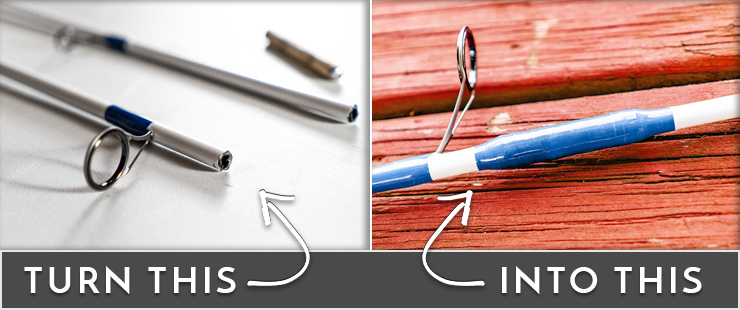
Assess the damage step by step
Before glue or thread, inspect. A few minutes here saves hours later.
- Clean the area with alcohol wipes.
- Check alignment. Dry-fit the pieces. Do they meet cleanly?
- Look for long crushed zones or white stress lines.
- Flex the area. Listen for fiber crackle.
- Run a cotton swab through guides. Snags mean chips or grooves.
- Note distance from the tip and nearest guide.
Decision guide:
- Tip-only snap If action still feels good, a new tip top is easy.
- Clean break Sleeve splice inside or outside will work.
- Cracks or splinters Wrap with thread and epoxy over a sleeve.
- Guide damage Replace the guide. Do not fish chipped rings.
- Seat or grip twist Re-glue with slow-cure epoxy.
If you still wonder, can you repair a broken fishing rod after this check, you likely can if parts align and fibers are not crushed over a long area.
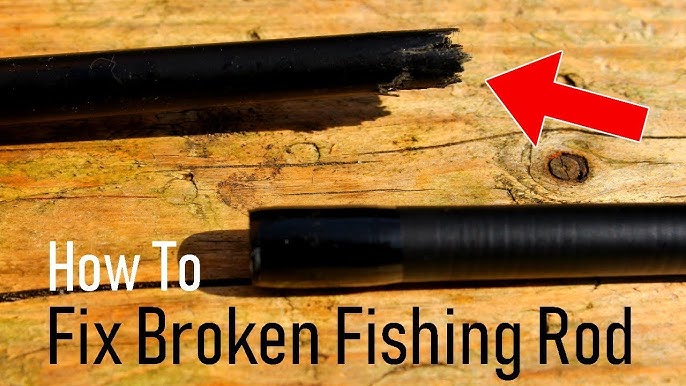
Tools and materials you will need
You do not need a full rod shop. A small kit does the job.
Core materials:
- Two-part slow-cure epoxy 24-hour cure for strength.
- Tip-top adhesive Hot melt or gel super glue for quick sets.
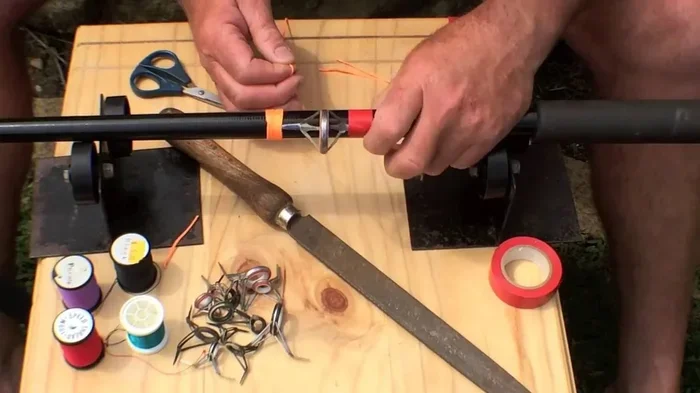
- Thread Size A or D rod wrapping thread.
- Carbon or fiberglass sleeve Or a section of scrap blank for inserts.
- Heat gun or lighter For tip removal.
- Sandpaper 220 to 400 grit.
- Masking tape, alcohol wipes, nitrile gloves Clean work and alignment.
- Small clamps or zip ties Gentle pressure during cure.
- Burnishing tool Or a smooth spoon for thread.
- Razor blades and a fine file Clean cuts and edges.
Safety:
- Eye protection and a dust mask.
- Work in a ventilated area.
With these, can you repair a broken fishing rod at home? Yes, and it can look pro-level with patience.

Repair methods by break type
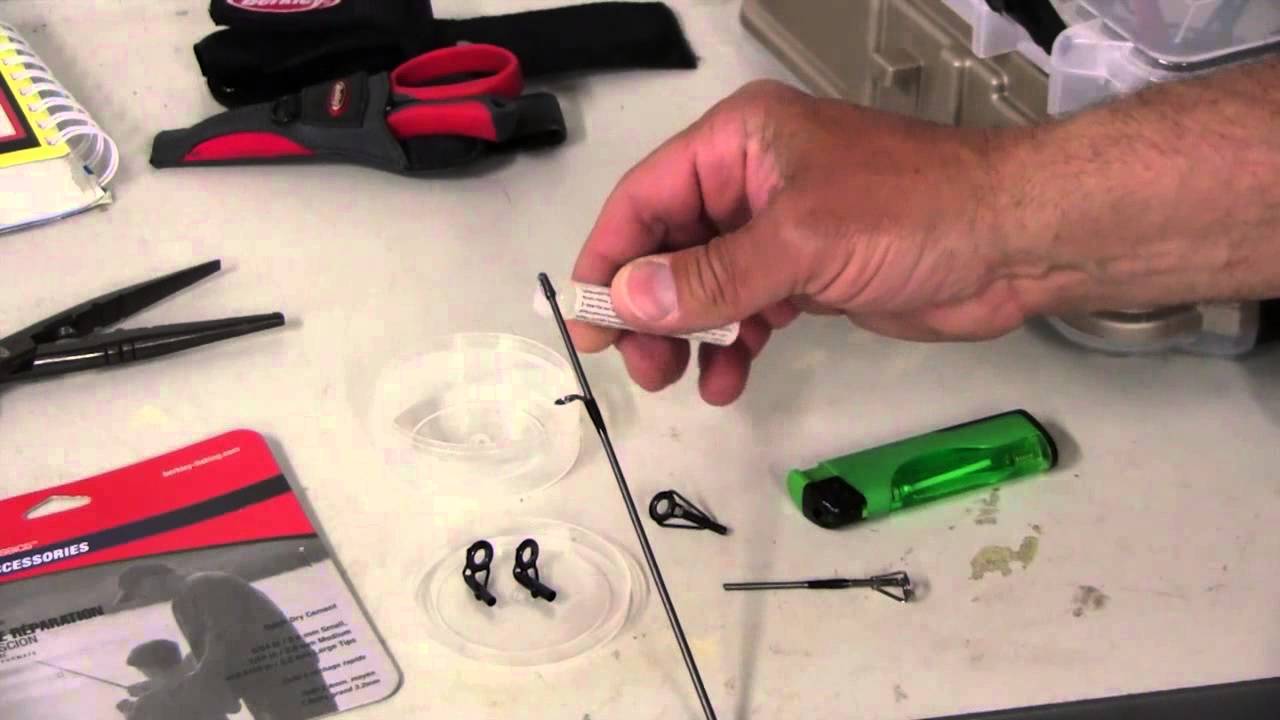
Broken tip within the top 2 to 4 inches
This is the most common fix and very fast.
- Heat the old tip top for a few seconds and pull it off with pliers.
- Square the new tip of the blank with a fine file.
- Add tip-top adhesive to the tube. Slide it on while warm.
- Align with the guides. Hold till set. Clean any squeeze-out.
Result You lose a bit of length and a touch of softness in the tip.
Clean mid-blank snap
Use an internal sleeve (spigot) for a slim, strong fix.
- Find a scrap blank piece that fits snug inside the broken area.
- Sand the sleeve lightly. Test-fit both sides. Aim for 1 to 2 inches insertion per side.
- Mix slow-cure epoxy. Wet the sleeve and the blank insides.
- Insert the sleeve into one side. Then press the other side on. Align guides.
- Wrap the joint with thread 0.5 to 1 inch past the break on both sides.
- Coat wraps with epoxy. Rotate for an even finish while curing.
Tip A tight internal sleeve preserves the rod’s look and balance.
Cracked or splintered blank
Use an external sleeve plus a thread wrap.
- Cut a thin external carbon sleeve that overlaps the crack by at least 1 inch each side.
- Lightly sand the blank. Clean with alcohol.
- Wet the area with epoxy. Slide the sleeve on. Press smooth.
- Wrap with thread over the sleeve ends to secure and blend.
- Apply finish epoxy over the wrap. Let it cure level.
This adds stiffness in that zone. Expect a small change in action.
Guide ring chipped or insert missing
Replace the guide. Do not sand chips. They will cut line.
- Cut old wraps. Peel off the guide.
- Position the new guide. Tape in place.
- Wrap with thread to cover the feet.
- Apply finish epoxy in two thin coats.
Spinning or casting reel seat loose
If the seat spins but the blank is sound:
- Remove the foregrip if needed or access from the butt if possible.
- Inject slow-cure epoxy under the seat with a syringe.
- Clamp gently. Wipe excess. Refit grips.
If the seat is cracked, replacement is better, but it is a larger job.
Loose grip or butt cap
- For grips, inject epoxy under the grip and rotate to spread.
- For a butt cap, sand and re-glue with epoxy.
So, can you repair a broken fishing rod across all these cases? Yes, with the right sleeve, wrap, and epoxy method.
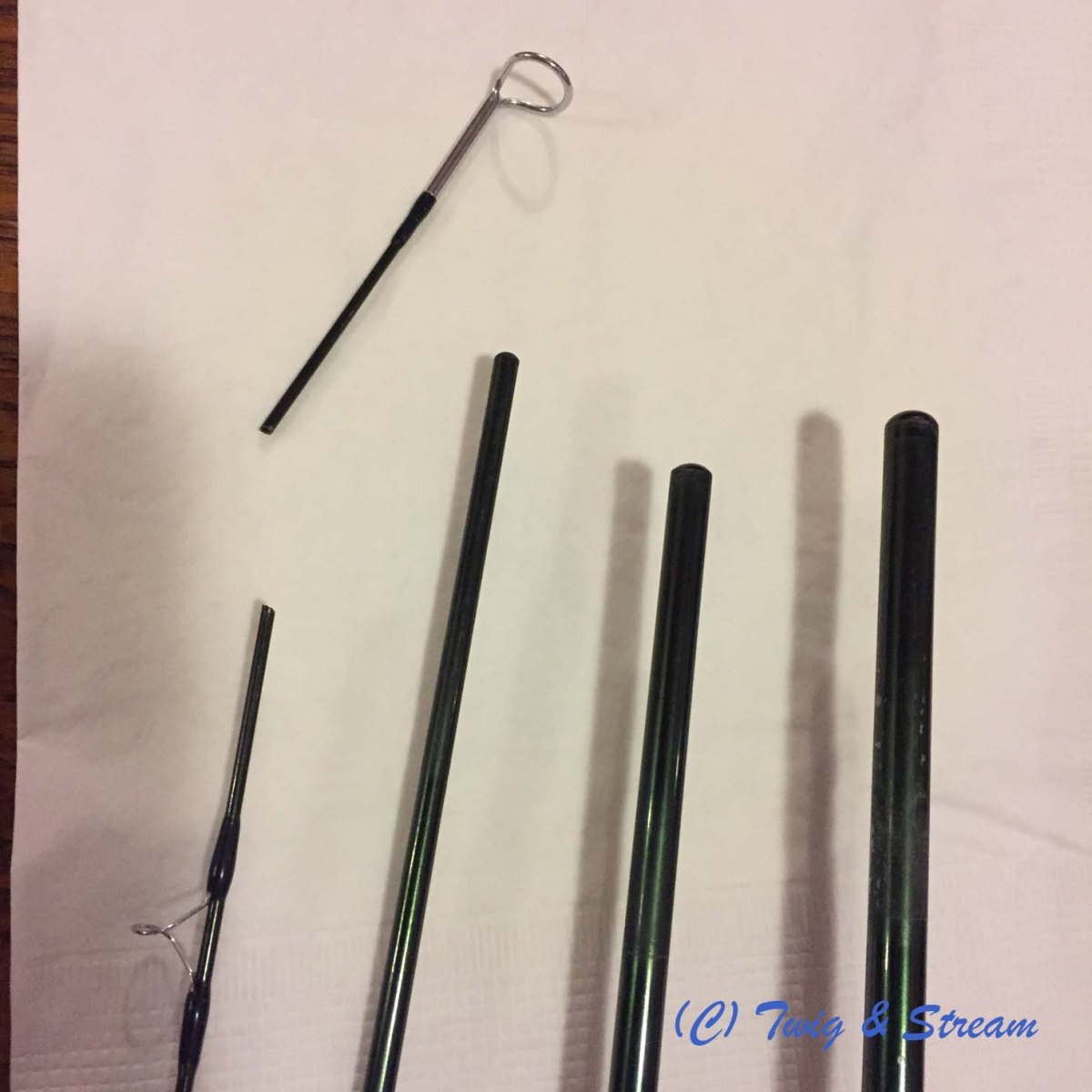
Strength, action, and performance after repair
A good repair can be very strong. Many internal sleeves are stronger than the original wall. Still, expect small changes.
What to expect:
- Slight stiffness at the joint due to extra material.
- A touch more weight, which can shift balance.
- Minor change in casting feel, often only at high loads.
Tips to keep feel close:
- Use the smallest, lightest sleeve that is still safe.
- Keep epoxy coats thin and even.
- Re-space or add a small runner guide near a stiff repair to spread load.
If you fear a big downgrade and ask, can you repair a broken fishing rod without ruining the action, the answer is yes in most cases, if you minimize added mass.

When to repair vs replace
Use cost, time, and safety to decide.
Repair makes sense when:
- Tip-only damage New tip top takes minutes and costs very little.
- Clean snap on a favorite rod Sentimental or custom build value.
- Out of warranty Replacement is pricey.
Replace or claim warranty when:
- The break sits at a ferrule or right by the first guide.
- Long crush damage over several inches.
- Ultra-light or high-end blank where action is key and you want it perfect.
- Manufacturer offers a fair replacement program.
Typical costs:
- Tip top 5 to 15 dollars.
- Guide replacement 10 to 25 dollars each.
- Internal sleeve repair 25 to 60 dollars in parts. More if shop labor.
- Reel seat or full rebuild 60 to 150 dollars or more.
Think long term:
- Repair keeps gear out of landfills.
- It builds skills and saves trips.
- It can be a fast fix on a travel day.
If your main question is can you repair a broken fishing rod for less than a new one, most of the time, yes.
Real-world examples and mistakes to avoid
From my bench to your boat, here is what I learned.
Wins:
- A snapped crankbait rod at mid-blank fished two full seasons after a slim internal sleeve and two thin epoxy coats.
- Kids’ combo with a tip snap fixed in five minutes. We were back casting by sunset.
- A surf rod with a chipped stripper guide stopped cutting braid after a simple guide swap.
Mistakes to avoid:
- Too much heat on a tip top. It can loosen nearby wraps.
- Thick epoxy coats. They add weight and sag. Use two thin coats.
- Poor alignment. Sight down the guides before cure. Mark a line with tape.
- Skipping the thread wrap over a sleeve. It helps spread stress.
So, can you repair a broken fishing rod and trust it on your next trip? Yes, if you prep well, align true, and keep the work clean and light.

Care and prevention tips to avoid future breaks
Most breaks are not bad luck. They come from small habits.
Simple habits:
- Use a rod sleeve during travel.
- Never high-stick. Keep the rod angle under 60 degrees under load.
- Match line and lure ratings on the blank.
- Point and pull on snags. Do not sweep the rod.
- Rinse with fresh water after salt use. Dry before storage.
- Check guides with a cotton swab often.
- Store vertical or on a wide rack. Do not lean tips into corners.
With these steps, the question can you repair a broken fishing rod may come up less often.
Frequently Asked Questions of can you repair a broken fishing rod
Can you repair a broken fishing rod at the tip yourself?
Yes. A tip-top repair is simple and cheap. With a new tip and glue, you can finish in minutes.
Can you repair a broken fishing rod that snapped in the middle?
Often, yes. Use an internal sleeve with slow-cure epoxy, then wrap and finish. Done right, it is strong and neat.
Can you repair a broken fishing rod without changing the action?
You can keep it close. Use light sleeves, thin epoxy coats, and good guide spacing. A small change is normal.
How much does it cost to repair a broken fishing rod?
Parts for common fixes run from a few dollars to under sixty. Labor at a shop adds more but still beats many new rods.
Is it safe to fish a repaired rod with braided line?
Yes, if guides are smooth and wraps are sound. Check for chips and burrs before use to protect the line.
Can warranties cover a broken fishing rod?
Many brands offer replacement programs for a fee. Read your policy first, since DIY work can void coverage.
Can you repair a broken fishing rod that is very old?
You can, but parts may be hard to match. Consider a modern guide set and accept a small style change.
Conclusion
You can repair a broken fishing rod in many cases, and the fix can last. Focus on a clean sleeve fit, tight wraps, thin epoxy, and careful alignment. Know when to fix, when to claim a warranty, and when to replace.
If you have a break on your bench right now, pick one method here and start. Share your results, ask questions, or request a step-by-step for your exact break. Want more tips? Subscribe for new repair guides and on-the-water tricks.