How To Teach Kids To Fish: Fun Family Guide
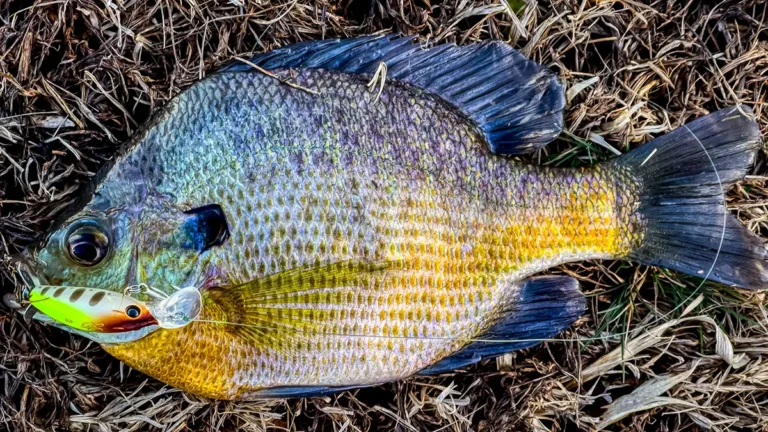
Fishing is a great way to teach children patience, focus, and respect for nature. A child does not need expensive gear or expert skills to enjoy a day by the water. The best first fishing trip is simple, safe, and built around small wins, such as learning to cast, watching a bobber, or holding a bluegill.
The key is to match the trip to the child’s age, attention span, and comfort level. A short shore trip with a simple spincast combo may work well for one child. Another may prefer kayak fishing, fly fishing, or catching panfish from a dock. Start small, keep the mood light, and let the child learn at a steady pace.

The Best Way to Teach Kids to Fish
The best way to teach kids to fish is to use simple gear, choose a safe location with common fish, and focus on fun before technique. Begin with a short trip of one to two hours. Teach one skill at a time, such as casting, watching the bobber, or reeling in line. Praise good habits, not just fish caught.

A child’s first fishing trip should feel like an adventure, not a test. Fish may not bite, even when you do everything right. The goal is to help children enjoy being outdoors and feel confident near the water.
Choose the Right Age and Attention Span
Children can start fishing at almost any age when an adult provides close supervision. Toddlers may enjoy touching bait, looking at minnows, or helping with a small net. Children ages 4 to 7 often enjoy short trips with a bobber and live bait. Older children may be ready to learn lure choice, knot tying, fish identification, and catch-and-release skills.
Use this guide when planning the first trip:
| Child’s age or stage | Best first activity | Trip length |
|---|---|---|
| Ages 2–4 | Watch, touch safe gear, help release fish | 30–60 minutes |
| Ages 5–7 | Use a spincast combo and bobber | 1–2 hours |
| Ages 8–11 | Learn casting, knots, and basic rigs | 2–3 hours |
| Ages 12 and older | Try species tactics, lures, or fly casting | 2–4 hours |
Short trips are often better than long ones. End while the child is still interested. That leaves room for excitement on the next outing.
Set a Simple Goal
Set one clear goal before leaving home. The goal might be “learn to cast five times” or “find three kinds of fish.” A fish is a welcome bonus, not the only measure of success.
Children often remember the details adults overlook. They may talk about a frog, a turtle, a bird, or the sound of line moving through the guides. Leave room for those moments.
Understand the Young Angler You Are Teaching
Every child learns fishing in a different way. Some children enjoy action and want to cast often. Others need time to watch and ask questions. The right approach depends on age, confidence, sensory needs, patience, and past experience.
Parents should observe what keeps the child engaged. Gift buyers should also ask the child’s parent about size, skill level, and the kind of water they visit. A rod that suits a small pond may not suit a beach, pier, or large lake.
Match Fishing to the child
use the child’s interests to guide your plan:
- Active children: Try lure fishing, casting games, or dock fishing.
- Patient children: Use a bobber, live bait, and a stable shore spot.
- Creative children: Let them choose lure colors or decorate a tackle box.
- Nature-focused children: Add bird watching, fish identification, and water testing.
- Older children: Teach knots, maps, fish finders, and simple weather checks.
- Nervous children: Start on dry land with practice casting and no hooks.
Do not force a child to hold a fish. Some children dislike the texture, movement, or smell. Let them use a landing net or watch from a short distance.
Choose Gear That Fits Small Hands
A child-sized rod can help, but very short toy rods may have weak reels and poor line control. For many beginners, a 5- to 6-foot light or ultralight spinning rod works well. A spincast combo is often easier for young children because one button controls the cast.
Rod power describes how much force the rod needs to bend. Ultralight and light power rods bend with small fish. Rod action describes where the rod bends. A moderate or moderate-fast action gives beginners a smooth feel and can help keep hooks pinned.
| Gear choice | Strengths | Best suited to |
|---|---|---|
| Spincast combo | Simple button cast and low learning curve | Young beginners and gift buyers |
| Spinning combo | Better control and room to grow | Children ages 8 and older |
| Telescopic rod | Packs small for travel | Families with limited storage |
| Fly rod | Builds timing and line control | Patient older children |
| Ice fishing rod | Short and easy to manage on ice | Families with ice-fishing experience |
A baitcaster usually comes later. It offers strong control for bass fishing, but it can create a backlash, which is a tangled line caused by the spool turning faster than the lure. Most young beginners should start with a spincast or spinning reel.
Build a Safe and Simple First Setup
A basic freshwater setup can be inexpensive and easy to use. For panfish such as bluegill, crappie, and perch, start with a 5- to 6-foot light-power rod, a size 1000 to 2500 spinning reel or a spincast reel, and 4- to 8-pound monofilament line.

Monofilament is a stretchy nylon line that is affordable and easy to knot. It is a strong first choice for kids because it handles small mistakes better than thin braided line. Fluorocarbon leaders can be useful later, but they are often stiff and harder for small hands to tie.
Starter Gear Checklist
| Item | Suggested beginner choice | Why it helps |
|---|---|---|
| Rod and reel | 5–6 feet, light power, spincast or spinning | Fits small hands and common freshwater fish |
| Main line | 4–8 pound monofilament | Easy to cast, knot, and replace |
| Hook | Size 6–10 for panfish | Works with worms and small bait |
| Bobber | Small fixed bobber | Shows bites clearly |
| Sinker | Small split shot | Helps bait reach the right depth |
| Bait | Worm pieces, corn where legal, or small soft plastics | Simple and easy to find |
| Tools | Pliers, nail clippers, and landing net | Helps with hooks and fish handling |
A leader is a short section of line between the main line and the hook or lure. For a first panfish trip, a separate leader is not always needed. In clear water or when targeting larger fish, a fluorocarbon leader may help, but check local rules and choose a size that matches the target species.
Assemble a Basic Bobber Rig
A bobber rig gives children something easy to watch. When the bobber moves, dips, or slides away, the child has a clear signal that a fish may be interested.
Use this simple order:
- Thread the line through the rod guides.
- Attach a small fixed bobber.
- Tie on a size 6 to 10 hook.
- Pinch one small split shot onto the line 6 to 12 inches above the hook.
- Add a small piece of worm or another legal bait.
- Set the bobber 1 to 3 feet above the hook.
- Check that the hook point is covered only when local rules allow that bait setup.
Teach the child to lift the rod slowly when the bobber goes down. A hard, fast pull can remove the bait or cause the hook to swing toward someone.
Teach One Knot First
A Palomar knot is strong and fairly simple, but a child may find it hard to tie at first. The improved clinch knot is another useful choice for hooks and swivels. Pick one knot and practice at home with a large plastic hook or a piece of rope.
Do not rush knot lessons on the first trip. Parents can tie the hook while the child learns to cast and watch the water. Later, knot practice can become its own short activity.
Prepare Before You Reach the Water
Good preparation prevents many problems. Rig the rods at home, cut spare line, pack snacks, and check the weather before leaving. Children often become frustrated when adults spend the first 30 minutes searching for hooks or untangling reels.

Choose a location with easy access, shade, a flat place to stand, and a clear casting area. A small pond, stocked lake, calm dock, or managed urban fishery can be better than a large remote lake for a first trip.
Pack a Kid-Friendly Fishing Kit
Bring only what the child needs. A large tackle box can overwhelm a beginner and create more sharp-object risks.
Pack these items:
- Child-sized rod and reel
- Spare monofilament line
- Extra hooks and bobbers
- Split shot and swivels
- Legal bait or simple lures
- Needle-nose pliers or hemostats
- Small landing net
- Hand towel
- Water and snacks
- Sunscreen and insect repellent
- First-aid kit
- Polarized sunglasses
- Hat and light layers
- Trash bag for line and bait containers
Polarized sunglasses reduce surface glare. They can help children see shallow rocks, weeds, and fish. They also protect eyes from hooks, which makes them an important safety item.
Practice Casting Away From Water
Practice casting in a yard or open field before using a hook. Remove the hook and use a rubber casting plug, a practice weight, or a yarn ball. Mark a target with a bucket or hula hoop.
Teach three simple rules:
- Look behind before casting.
- Keep both hands on the rod when needed.
- Press the reel button or open the bail only when the casting area is clear.
The bail is the wire arm on a spinning reel. Opening it lets line leave the spool. A spincast reel uses a push button instead, which many children find easier.
⚠️ Safety Warning: Hooks can move fast and cause serious eye injuries. Everyone near the casting area should wear eye protection, and the child should never cast until an adult confirms the area is clear.
Teach Casting in Small Steps
Casting is easier when children learn one movement at a time. Begin with short casts. Accuracy matters more than distance, and a short cast near cover may catch more fish than a long cast into open water.

Stand behind the child at first. Give calm instructions and avoid grabbing the rod unless safety requires it. Too much correction can make a child feel that every cast is wrong.
The Basic Spincast Cast
For a spincast reel:
- Hold the rod with the reel below the rod.
- Place the thumb on the push button.
- Keep the lure or practice plug about 6 to 12 inches from the rod tip.
- Point the rod toward the target.
- Press and hold the button.
- Move the rod forward in a smooth motion.
- Release the button when the rod points toward the target.
- Turn the handle to retrieve the line.
Use a large target at first. Move closer if the child struggles. A successful short cast builds more confidence than repeated long casts that land in weeds.
The Basic Spinning Reel Cast
A spinning reel takes one extra step:
- Hold the rod with the reel below it.
- Hook the line against the rod with the index finger.
- Open the bail.
- Point the rod at the target.
- Move the rod forward smoothly.
- Release the line from the finger.
- Close the bail by hand after the lure lands.
- Turn the handle to retrieve.
Closing the bail by hand can reduce wear and help prevent line loops. Children may need several short practice sessions before the motion feels natural.
Turn Casting Into a Game
Games can make practice feel less like a lesson. Try casting into hoops, near a marker, or beside a safe dock post. Give points for smooth motion, safe casting, and stopping the lure near the target.
Avoid games that reward wild casts or speed. Safe habits should always earn the most praise.
Help Kids Catch and Handle Fish Responsibly
A child may remember the first fish for years. Help them see the fish, keep it wet, and handle it with care. The fish should not be squeezed, dropped, or held by the gills unless a trained angler knows the species and proper method.

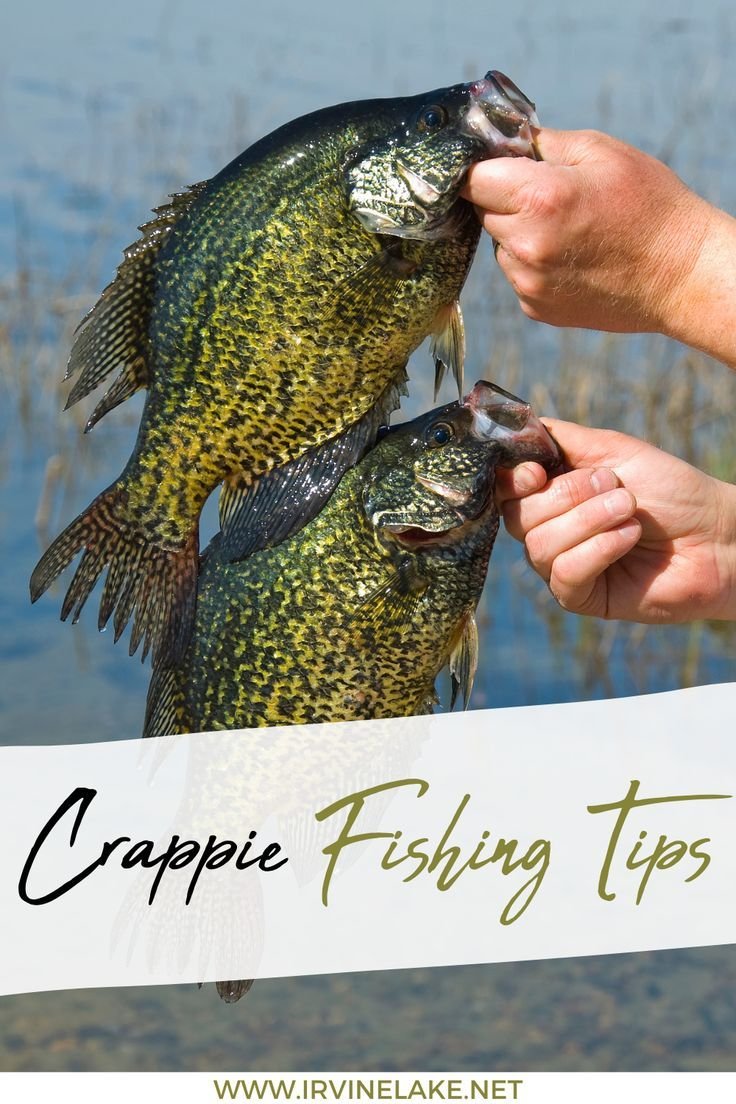
For small panfish, wet your hands before touching the fish. Support its body, remove the hook with pliers, and return it to the water quickly. If the fish has swallowed the hook, cut the line close to the mouth rather than pulling hard.
Use a Landing Net
A landing net protects both fish and angler. It also gives a child a safe role. The adult can guide the fish while the child helps hold the net handle.
Rubber or rubber-coated nets are gentle on fish and reduce tangles. Avoid lifting heavy fish by a small hook or thin line. The hook can tear the mouth, and the line may break.
Teach Catch-and-Release
Catch-and-release means returning a fish to the water with the least harm possible. Teach these habits:
- Wet hands before touching the fish.
- Keep the fish close to the water.
- Limit air exposure to a few seconds.
- Use barbless hooks when practical and legal.
- Use circle hooks for some live-bait situations where regulations recommend them.
- Cut the line if a swallowed hook will not come out easily.
- Revive the fish in the water when needed.
- Never leave fishing line, bait containers, or hooks on shore.
🌿 Conservation Note: Ask your state wildlife agency about local fish handling rules. Some waters require barbless hooks, restrict live bait, or have special rules for bass, trout, walleye, catfish, and redfish.
Let Children Choose the Release
Some families keep legal fish for food. Others release every fish. Explain the plan before the trip, and follow local size and bag limits. Do not make a child feel guilty for either legal choice, but teach them to respect the resource.
Choose the Right Fishing Spot and Target
The best place to teach a child is usually close, safe, and likely to offer action. You do not need a remote lake or a boat. Shore and pier fishing can provide a good first experience when the area has clear rules and safe footing.

Panfish are common beginner targets because they often take small bait and light tackle. Trout, bass, catfish, and crappie can also be good targets when local conditions support them.
| Fishing location | Good beginner targets | Key planning point |
|---|---|---|
| Small pond | Bluegill, bass, catfish | Choose a clear bank with shade |
| Stocked lake | Trout, catfish, panfish | Check stocking dates and bait rules |
| Dock or pier | Panfish, flounder, small saltwater species | Watch gaps, railings, and tides |
| Shoreline | Bass, crappie, walleye, trout | Look for weeds, rocks, and moving water |
| Surf beach | Croaker, perch, whiting, redfish | Start with short casts and watch waves |
| Ice shelter | Panfish and perch | Use a guide or course if new to ice |
Saltwater fishing needs more gear care. Rinse rods, reels, hooks, pliers, and tackle with fresh water after each trip. Dry everything fully before storage. Salt can damage bearings, line guides, and metal parts even when corrosion is not visible.
Pick the Right Time
Fish are often easier to approach during mild weather and low wind. Early morning and late afternoon can be comfortable, but the best time depends on species, season, water temperature, and local fishing pressure.
For children, comfort matters more than a perfect fishing window. A cool, shaded morning may be better than a hot midday trip with more fish activity.
Make Safety Part of the Lesson
Water safety must come before fishing skill. Children should remain within arm’s reach near deep water, slippery banks, fast current, and boat ramps. A child who can swim still needs close supervision.

If fishing from a boat, kayak, or paddle craft, every child should wear a properly fitted U.S. Coast Guard–approved personal flotation device, or PFD. Do not treat a PFD as a substitute for supervision.
Shore and Pier Safety
Teach children to:
- Walk near the water instead of running.
- Stay away from steep or muddy banks.
- Keep hooks in a tackle box when not in use.
- Never climb railings or lean over a pier.
- Watch for changing water levels and waves.
- Tell an adult before moving to another spot.
- Stay clear of other anglers’ casting zones.
- Keep pliers and knives closed when not in use.
A life jacket may still be wise on a dock, riverbank, or steep shoreline. Follow the site’s rules and use extra caution when water is cold or moving.
Boat, Kayak, and Ice Safety
Kayak fishing can be exciting for older children, but it adds risks from wind, current, cold water, and limited space. Use a stable craft with a stated weight capacity that includes the child, adult, gear, and any cooler or tackle box. Take a boating safety course before taking a child onto unfamiliar water.
Ice fishing requires special care. Ice thickness can vary across one lake, near inlets, and around vegetation. Check local ice reports, carry safety picks, avoid going alone, and tell someone your plan. A professional ice safety course is a smart choice for families new to frozen water.
📜 Check Local Regulations: Each state and water body may set different rules for fishing licenses, youth exemptions, size limits, bag limits, closed seasons, bait, lead sinkers, treble hooks, and barbed hooks. Confirm the current rules with your state or local wildlife agency before fishing.
Keep the Cost Under Control
Teaching a child to fish does not require a full collection of rods and lures. A basic freshwater setup can cost less than many family activities, especially when you share gear. Current pricing ranges from low-cost spincast combos to higher-priced spinning outfits with better components and longer service life.
| Budget level | What it may include | Best for |
|---|---|---|
| Under $30 | Basic spincast combo, line, bobber, hooks | First short trip or young beginner |
| $30–$75 | Better spincast or spinning combo, small tackle box | Regular pond and lake use |
| $75–$150 | Durable spinning combo, net, pliers, sunglasses | Older child who fishes often |
| $150 and above | Species-specific rod, quality reel, advanced tools | Committed young angler or family sharing gear |
Prices vary by brand, materials, sales, and included tackle. Check the latest product listing for current features and line capacity. A more expensive rod is not automatically better for a child.
Spend Money on the Right Items
Prioritize safety and useful tools:
- A rod that fits the child.
- A reel that casts smoothly.
- Spare monofilament line.
- Pliers and a landing net.
- Eye protection.
- A comfortable PFD when near a boat or deep water.
- A small tackle box with secure compartments.
You can save money on lures and accessories. Children often learn more from one bobber rig than from a crowded box of crankbaits, jigs, soft plastics, and spinnerbaits.
Know What You Can Skip
Do not buy a fish finder for a child’s first shore trip. You also do not need a baitcaster, expensive braided line, a large cooler, or a professional fly outfit at the start.
These tools can become useful later. Add them when the child has a clear interest and the fishing situation requires them.
Avoid Common Teaching Mistakes
Adults often make fishing harder by trying to teach too much at once. Children need time to watch, try, fail, and try again. A calm teacher can turn a tangle into a lesson instead of a crisis.

The most common mistake is measuring success by the number of fish. Weather, water clarity, bait, fishing pressure, and fish location all change results. A child can have a successful trip without a bite.
| Common mistake | Better approach |
|---|---|
| Fishing for too many hours | Stop after one to three hours |
| Using complex tackle | Begin with a bobber and simple bait |
| Correcting every cast | Offer one small tip at a time |
| Ignoring snacks and shade | Pack water, food, sunscreen, and a hat |
| Handling fish roughly | Use wet hands and quick releases |
| Bringing too much gear | Pack only the items needed |
| Fishing in unsafe weather | Check forecasts and leave early |
Children may also lose interest when adults spend too long tying knots. Prepare extra rigs at home. Store them on foam spools or small rig holders so a broken line does not end the day.
Do Not Force the Child to Fish
Some children enjoy being near the water but do not want to cast. Let them take photos, use a landing net, identify fish, or collect litter with gloves. Their interest may grow after they feel accepted.
Fishing should create good memories. Pressure can turn a peaceful activity into a chore.
💡 Pro Tip: Bring a non-fishing backup activity, such as a nature journal, small binoculars, or a scavenger hunt. It keeps the day enjoyable when the bite slows.
Help Kids Grow Into New Fishing Skills
Once a child is comfortable with a bobber rig, add one new skill at a time. Progress should feel natural. Do not move to complicated tackle just because another young angler uses it.

Older children may enjoy bass fishing with soft plastics, trout fishing with small spinners, catfish rigs with circle hooks, or fly casting on an open lawn. Each method teaches a different skill.
A Practical Skill Path
Follow this general path:
- Learn safe handling of the rod.
- Practice casting without a hook.
- Cast a bobber rig with live bait.
- Learn to reel at a steady pace.
- Practice a simple knot.
- Identify common fish.
- Learn to remove a hook with pliers.
- Try a small lure.
- Learn how weather, depth, and cover affect fishing.
- Keep a simple fishing log.
A fishing log can include date, location, weather, water color, bait, depth, and fish caught. It teaches observation without making the activity feel like school.
Introduce Lures Carefully
A lure is an artificial bait designed to attract fish through movement, flash, sound, or shape. Small jigs, inline spinners, soft plastics, and crankbaits can work for many freshwater species. Start with one lure that is easy to cast and retrieve.
Avoid giving young children a large treble-hook lure without close supervision. A treble hook has three points and can snag clothing, skin, or a landing net.
Consider Fly Fishing Later
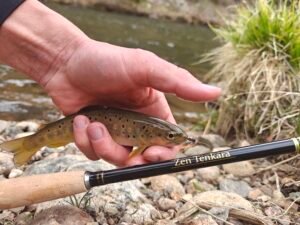
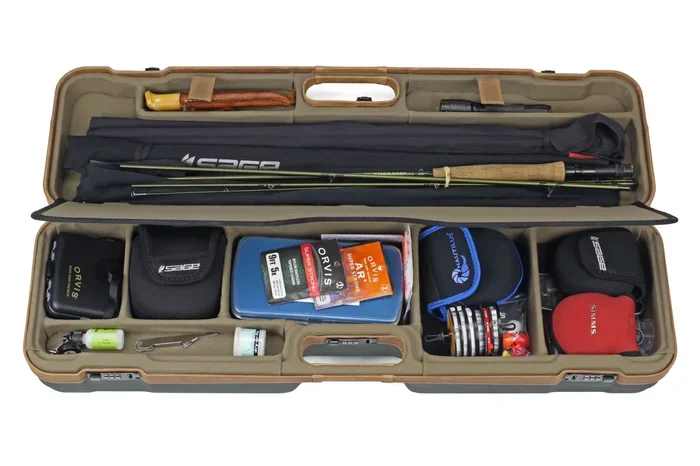
Fly fishing teaches rhythm and patience. A 7- to 8-foot 4- or 5-weight fly rod can suit many freshwater trout and panfish situations, but the setup is less simple than a spinning combo. A child should first practice casting with a yarn fly or hookless trainer.
Fly fishing is a good match for older children who enjoy movement, repetition, and learning a new casting style. It may frustrate a child who wants quick action.
Maintain and Store Kids’ Fishing Gear
Simple gear can last for years when it is cleaned and stored well. Children should help with gear care. This builds ownership and helps them notice problems before the next trip.

After freshwater fishing, wipe the rod and reel with a clean cloth. Check the line for rough spots, rinse dirt from the guides, and store the rod in a dry place. Loosen the drag before long-term storage.
Drag is the reel system that lets line leave under pressure. A loose drag reduces stress on internal parts while the reel sits unused. Tighten it again before the next trip.
Use This Gear-Care Checklist
| When | Care task | Reason |
|---|---|---|
| After every trip | Wipe rod and reel | Removes dirt and moisture |
| After saltwater use | Rinse with fresh water and dry | Reduces corrosion |
| Before each trip | Check line, guides, and knots | Finds weak points |
| Every few trips | Clean reel exterior | Keeps grit away from moving parts |
| Before storage | Loosen drag and dry tackle | Reduces long-term wear |
| When line curls or cracks | Replace line | Improves casting and strength |
Inspect hooks for rust and points for damage. Replace rusty hooks rather than trying to save a few cents. Store soft plastics away from some hard-plastic boxes because certain soft baits can melt or stain them.
Know When to Replace Line
Signs it is time to replace fishing line include:
- Visible cuts or frays
- Severe coils on a spinning reel
- Faded or brittle monofilament
- Repeated knots in the same section
- Line that breaks under light pressure
- A rough spot near the lure or hook
For a child’s freshwater setup, replace monofilament at least once each season if it sees regular use. Replace it sooner after heavy use, exposure to heat, or contact with rocks and dock edges.
Ask a Local Tackle Shop for Help
A local tackle shop can provide advice that general product pages cannot. Staff may know which ponds hold panfish, whether live bait is legal, and which rod length fits the local shoreline.

Bring the child, if possible. Let them hold the rod and test the reel handle. Fit matters more than a long list of features.
Questions to Ask
Ask the shop:
- Which species are common near this location?
- Is a fishing license required for the adult or child?
- What hook sizes and bait are legal?
- Is monofilament or braid better here?
- Does this reel fit a left- or right-handed child?
- What line strength suits the target fish?
- Is the water safe for shore, pier, kayak, or boat fishing?
- What net and pliers fit this setup?
- How should the gear be rinsed and stored?
Experienced anglers can use the shop visit to upgrade with purpose. Gift buyers can avoid buying a rod that is too heavy, too long, or designed for the wrong water type.
When to Hire a Guide
A licensed guide can help when you want to fish unfamiliar water, learn boating skills, or target species such as walleye, redfish, trout, or larger bass. A guide can also reduce stress on a first kayak or fly-fishing trip.
Choose a guide who welcomes children and carries suitable safety equipment. Ask about trip length, boat size, PFDs, weather policies, and what gear is provided.
Frequently Asked Questions
What is the best age to teach a child to fish?
There is no single best age. Young children can begin by watching, helping with bait, and learning water safety. Many children ages 5 to 7 can use a spincast combo with close adult help, while older children may learn spinning reels, knots, lures, and fish handling.
What is the best fishing rod for kids?
For most beginners, a 5- to 6-foot light-power spincast or spinning combo is a practical choice. A spincast reel suits young children who need a simple button cast. A spinning reel suits older children who want more control and room to grow.
Should kids use live bait or lures?
Live bait is often easier for beginners because a worm under a bobber gives a clear visual signal. Small lures can help older children learn casting and retrieve speed. Always check local rules because some waters restrict live bait, baitfish, or certain hooks.
How long should a child’s first fishing trip last?
Plan for 30 minutes to two hours for a first trip. Older children with more patience may enjoy two to four hours. End before the child becomes tired, hungry, cold, or frustrated.
Is braided line good for kids?
Braided line is thin and strong, but it can be harder to tie and may cut skin under tension. Monofilament is usually a better first line because it is affordable, stretchy, and easy to handle. Experienced young anglers can move to braid with a suitable leader later.
Should a child use a baitcaster?
Most young beginners should start with a spincast or spinning reel. Baitcasters offer excellent control for experienced anglers, especially for bass fishing, but they can create backlashes. Introduce one after the child can cast smoothly and manage line without help.
What fish are easiest for kids to catch?
Panfish such as bluegill, sunfish, perch, and crappie are common beginner targets. Trout, bass, and catfish can also work when they are present and active. Results depend on water conditions, season, location, bait, and local fish populations.
How should children handle a fish?
Wet the child’s hands first. Keep the fish close to the water, support its body, and remove the hook with pliers. Limit air exposure and return the fish quickly if practicing catch-and-release. Never squeeze the fish or touch sensitive gill tissue.
Do children need a fishing license?
License rules vary by state, age, residency, species, and water type. Some states exempt young children, while others require a license for certain activities. Check the current rules with the state wildlife agency before fishing.
What should a child wear while fishing?
Dress for the weather and water. Use a hat, sunscreen, insect repellent, sturdy shoes, and polarized sunglasses. On a boat, kayak, or near deep water, wear a properly fitted U.S. Coast Guard–approved PFD.
How can I keep a child interested when fish are not biting?
Give the child a small task. They can practice casting, draw fish, identify birds, use a landing net, check the weather, or help record the trip. A backup activity keeps a slow bite from becoming a bad memory.
Is a fishing gift set worth buying for a child?
A fishing gift set can be useful when it includes a working rod, reel, line, and simple tackle suited to the child’s age. Avoid sets with fragile toy parts, oversized hooks, or gear made for species and water the child will not fish. When unsure, buy a quality basic combo and ask a local tackle shop to match it with safe tackle.
Conclusion
Teaching kids to fish starts with patience, safety, and simple gear. Choose a comfortable spot, use a short rod with monofilament, rig a bobber and small hook, and keep the first trip brief. Let the child cast, watch, ask questions, and take breaks.
The best fishing lesson is not a perfect cast or a full stringer. It is learning how to enjoy water without fear, care for fish, and share time outdoors. Build from there, one calm trip at a time.