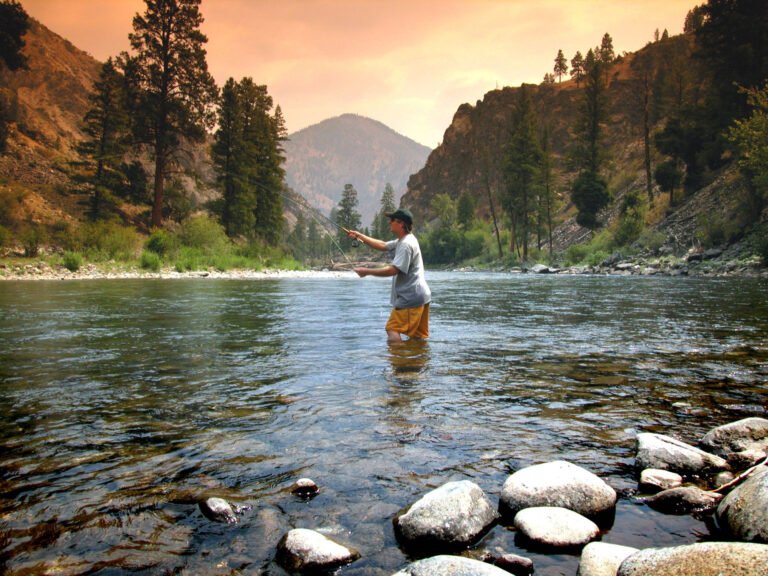
How To Fish Without A Boat: Easy Shore Fishing Tips
Fishing without a boat is not a second-rate way to fish. Shorelines, piers, riverbanks, bridges, surf beaches, canals, and public ponds can all offer steady access to bass, trout, catfish, panfish, walleye, redfish, and many other species. You also avoid boat payments, fuel, storage, repairs, and launch fees.
The key is to fish the water you can reach. Learn where fish find food, cover, shade, current, and safe resting spots. Then match your rod, line, bait, and casting plan to that water. A simple spinning combo, a small tackle box, and a few proven rigs can take you a long way.
This guide explains how to fish without a boat in freshwater, saltwater, surf, and moving water. It covers gear, access, casting, rigging, safety, legal rules, and ways to help beginners, kids, and experienced anglers catch more efficiently from land.

Quick answer: how to fish without a boat
The best way to fish without a boat is to focus on shorelines, piers, bridges, riverbanks, canals, and surf beaches where fish come close to land. Use a 6- to 7-foot medium-light or medium spinning rod, a 2000- to 3000-size spinning reel, 6- to 12-pound line, and simple bait or lures. Study access, water depth, cover, current, weather, and local rules before fishing.

Choose the right shore-based fishing spot
The best shore fishing spots place you near food, cover, depth changes, or moving water. You do not need to cast to the middle of a lake. Fish often stay close to banks because insects, minnows, worms, crayfish, and washed-in food collect there.
Look for changes rather than empty water. A straight bank with the same depth may hold fewer fish than a point, creek mouth, fallen tree, weed edge, riprap wall, or shaded pocket.

Productive places to fish from land
Different shore locations suit different fish and techniques. Use public access points first, and never cross private land without permission.
- Ponds and small lakes: Good for bass, bluegill, crappie, and catfish.
- Rivers and streams: Productive for trout, smallmouth bass, walleye, catfish, and panfish.
- Canals and drainage channels: Often hold bass, carp, catfish, and panfish.
- Piers and docks: Offer deep water, shade, structure, and easy casting.
- Bridges: Bridge pilings create current breaks and cover.
- Reservoir banks: Points and creek arms can attract bass and walleye.
- Surf beaches: Productive for redfish, striped bass, flounder, pompano, and other saltwater fish.
- Jetties and rock walls: May hold saltwater species, but require extra care.
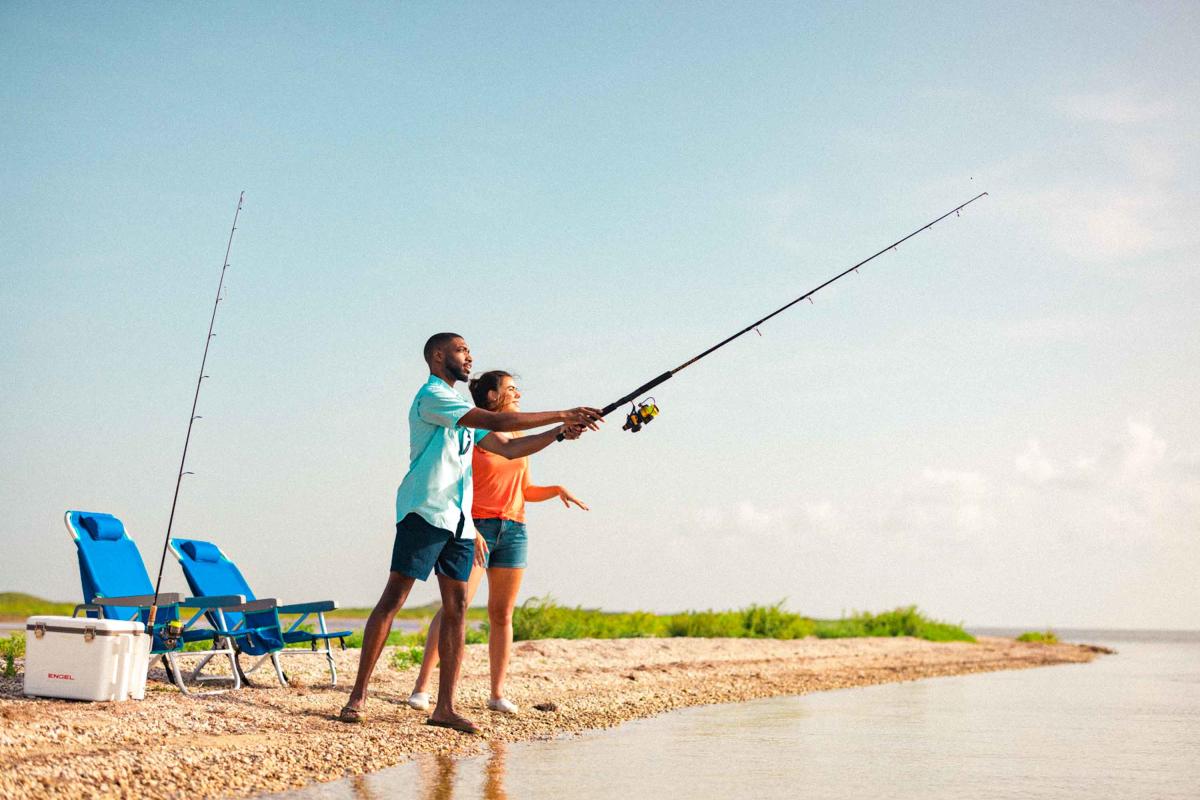
How to read water from shore
Start by watching before you cast. Look for baitfish, birds, surface activity, current seams, weed lines, submerged rocks, and darker areas that may show depth.
A current seam is the line where fast water meets slow water. Fish often rest on the slower side while waiting for food to drift past. A drop-off is a quick change from shallow water to deeper water. It can be hard to see, but a weighted lure can help you find it.
Make a few test casts with a sinker or jig. Count how long it takes to reach bottom. If it takes two seconds in one area and six seconds in another, the bottom depth or shape has changed.
Public access, maps, and scouting
state wildlife agency maps, county park pages, fishing reports, satellite maps, and local tackle shops can reveal useful shore access. Look for boat ramps that allow bank fishing, public parks, fishing piers, greenways, tailwater areas, and marked access easements.
Visit a new area without fishing gear if possible. Check parking, walking distance, steep banks, brush, lights, restrooms, and safe casting space. This matters for parents, older anglers, and anyone carrying a large tackle box.
💡 Pro Tip: A short walk often beats a crowded parking area. Fish may see fewer lures near less-used banks, but always stay on legal public access.
Build a simple shore fishing setup
A practical shore setup needs a rod, reel, line, leader, terminal tackle, lures or bait, and a way to land and handle fish. The best setup depends on target species and water type, but a spinning combo gives most beginners the widest range.
A spinning reel has a fixed spool and an open bail. It is easy to cast and works well with light lures and live bait. A spincast combo uses a push-button reel and is simple for young children. A baitcaster can offer better lure control, but it takes more practice and can create backlash, which is a tangle caused when the spool spins faster than the line leaves it.
Basic rod and reel choices
Rod power describes lifting strength. Ultralight and light rods suit small panfish and trout. Medium-light rods cover small bass, crappie, trout, and walleye. Medium rods handle bass, catfish, larger walleye, and many inshore fish.
Rod action describes where the blank bends. Fast-action rods bend near the tip and provide quick lure control. Moderate-action rods bend deeper and can help keep treble-hook lures pinned.
| Shore fishing goal | Recommended setup | Best suited angler |
|---|---|---|
| Panfish and small trout | 5'6"–6'6" light spinning rod, 1000–2000 reel, 2–6 lb line | Beginners, kids, and anglers using small baits |
| Bass and mixed freshwater | 6'6"–7' medium or medium-light spinning rod, 2000–3000 reel, 6–12 lb line | Most beginners and general-purpose anglers |
| Catfish and larger fish | 7'–9' medium-heavy spinning rod, 3000–5000 reel, 15–30 lb line | Anglers casting bait, sinkers, or larger lures |
| Surf and inshore saltwater | 8'–11' medium or medium-heavy saltwater spinning rod, 4000–6000 reel, 15–30 lb braid | Shore anglers targeting redfish or surf species |
For most people, a 6'6" or 7' medium-light spinning combo is the best first setup. A parent buying for a child may prefer a 5'6" to 6' spincast combo because the shorter rod is easier to control. Experienced anglers may choose a longer rod for extra casting distance or a specialized rod for surf fishing.

Line, leader, and terminal tackle
Monofilament is affordable, flexible, and easy to tie. It works well for beginners, bobbers, live bait, and general freshwater fishing. Fluorocarbon is harder to see underwater and resists abrasion, so many anglers use it as a leader near rocks or clear water. Braided line is thin and strong for its diameter, but it can dig into a reel spool and may need a fluorocarbon or monofilament leader.
A leader is a short section between the main line and hook or lure. Terminal tackle includes hooks, sinkers, swivels, snaps, bobbers, and other items attached at the end of the line.
| Target and water | Main line | Common leader and terminal tackle |
|---|---|---|
| Bluegill, perch, and small trout | 2–6 lb monofilament | Size 6–12 hook, small split shot, small bobber |
| Bass and walleye | 8–15 lb monofilament or braid | 8–15 lb fluorocarbon leader, jigs, soft plastics, or crankbaits |
| Catfish | 15–30 lb monofilament or braid | 1/0–4/0 circle hook, egg sinker, swivel, bait |
| Saltwater inshore fish | 15–30 lb braid | 15–40 lb fluorocarbon leader, jig, spoon, or live-bait hook |
| Surf fishing | 20–40 lb braid or monofilament | Shock leader, pyramid sinker, circle hook, bait rig |
Hook size numbers can seem backward. A size 12 hook is smaller than a size 2 hook. Circle hooks are often a good choice when using bait for fish you plan to release because they may reduce deep hooking when used correctly.

Pack only the tools you will use
Shore anglers must carry everything by hand. A small tackle bag or waist pack is often better than a large box.
Bring:
- Needle-nose pliers or fishing forceps
- Line cutters
- Extra hooks, sinkers, and swivels
- A few bobbers
- Soft plastics or small hard lures
- Bait container, if using live bait
- Measuring tape
- Fishing license
- Small first-aid kit
- Water and sunscreen
- Headlamp for low light
- Landing net when legal and practical
- Phone in a waterproof case
- Trash bag for old line and bait containers
A stringer may help keep legal fish, but it is not ideal for fish you plan to release. A landing net is gentler when it has soft, fish-friendly mesh. Avoid lifting large fish by the line.

Select bait and lures for bank fishing
Shore fishing works with both natural bait and artificial lures. Bait is often easier for beginners, while lures let you cover water and search for active fish. Match the offering to local food and the species you want.
Live bait can include worms, minnows, shrimp, crickets, and other legal choices. Artificial options include jigs, soft plastics, spoons, spinners, crankbaits, and topwater lures.
Simple bait rigs for beginners
A bobber rig is one of the easiest shore fishing methods. Tie a hook to the line, add a small split shot several inches above it, and place a bobber above the weight. Set the bait depth so it stays near weeds, cover, or the bottom.
For bottom fishing, slide an egg sinker onto the main line. Tie on a swivel, then add 12 to 24 inches of leader and a hook. This rig lets the bait rest while the line moves more freely through the sinker.
| Rig | Basic parts | Good choices |
|---|---|---|
| Bobber rig | Bobber, split shot, hook, bait | Bluegill, crappie, trout, perch |
| Carolina-style bottom rig | Egg sinker, swivel, leader, hook | Bass, catfish, carp |
| Jig and soft plastic | Jig head and soft plastic body | Bass, crappie, walleye, inshore fish |
| Slip-float rig | Sliding float, stop, weight, hook | Deep panfish, trout, walleye |
| Fish-finder bait rig | Sliding sinker, swivel, leader, hook | Catfish and surf species |
Use only bait types allowed by your state or local wildlife agency. Some waters restrict live bait, cut bait, treble hooks, lead tackle, or the transport of baitfish.

Lures that cover water from shore
A 1/8- to 1/4-ounce jig is a useful starting point for many freshwater species. Cast it near cover, let it sink, and retrieve it with short lifts. Small inline spinners work well for trout and panfish in moving water.
Soft plastics are versatile and easy to carry. A 3- to 5-inch soft-plastic worm on a Texas rig can work around bass cover. A small paddle-tail swimbait can imitate a baitfish. For walleye, a jig tipped with a soft plastic or live bait can search deeper water.
Crankbaits and spoons help when fish are spread out. Use lures with enough weight to cast safely, but do not exceed the rod’s lure rating.

How to choose lure color and size
Start with natural colors in clear water and bright or dark contrast in stained water. Silver and white can imitate baitfish. Green pumpkin and brown often resemble insects or crayfish. Black can create a strong shape in low light.
Small lures are usually easier for beginners. They also suit panfish, trout, and pressured water. Larger lures may appeal to bigger bass, pike, catfish, or saltwater species, but they require stronger tackle and more space to cast.

Cast and cover water from the bank
The best shore anglers do not make random casts. They work the water in a pattern and avoid walking directly over shallow fish. Begin with the closest water, then cast farther. This keeps you from spooking fish near the bank.
Fan-cast from left to right. Try several angles before moving. Fish may face into current, sit beside cover, or hold at a specific depth.

Use a simple casting plan
Follow this order:
- Cast parallel to the shoreline.
- Cast beside weeds, rocks, wood, or shade.
- Cast past the target and retrieve through it.
- Fan-cast at several angles.
- Change depth before changing spots.
- Move 20 to 50 feet if the water looks unproductive.
- Repeat the pattern at the next likely feature.
Do not cast into the center just because it is far away. A bass may sit beside a tree ten feet from shore. A trout may hold in a current seam only a few yards away. A catfish may feed along the bottom near a creek mouth.

Control depth and retrieve speed
Count a lure down before you start the retrieve. If it reaches bottom after five seconds, try a two-second or four-second count on later casts. This helps you cover different depths without a fish finder.
Change only one factor at a time. Try a slower retrieve, then a faster one. Add pauses. Use short hops with a jig. Let a soft plastic sit beside cover. These small changes can show how fish respond.
Experienced anglers often keep notes about water level, wind, cloud cover, lure, depth, and fish activity. A phone note can reveal patterns after several trips.
Fish current and wind
In rivers, cast upstream or across the current and let the bait move naturally. Keep enough line control to detect a bite. Fish may hold behind rocks, along eddies, under bridge shadows, or where a smaller creek joins the main river.
Wind pushes plankton and baitfish toward a bank. This may make a windy shoreline worth trying, even when casting feels harder. Use a heavier lure within your rod’s rating and keep your line low to reduce wind bow.
Fish common shore locations by species
Each species uses shore water in a different way. Learn the food and cover it prefers instead of using one method everywhere.
Bass often hold near wood, grass, docks, rocks, and points. Trout favor cool, oxygen-rich water, current seams, pools, and shaded banks. Catfish commonly feed near the bottom, especially near deep holes, creek mouths, and outside bends.
Bass fishing from the bank
For bass fishing without a boat, focus on cover and depth changes. Use a medium or medium-light spinning rod with 8- to 12-pound line. A 3- to 5-inch soft-plastic worm, small jig, spinnerbait, or shallow crankbait gives you several ways to search.
Cast beyond a log, weed edge, or rock and retrieve through the target. Let the lure pause when it reaches cover. Bass may strike during the pause, so keep a finger on the line and watch for a slight jump or sideways movement.
Bank anglers should avoid standing in open view. Walk softly, keep a low profile, and make longer casts when water is clear.
Trout fishing from shore
Trout often respond to small spinners, spoons, jigs, flies, worms, and prepared bait where legal. Use a light or ultralight spinning rod with 2- to 6-pound line in small streams and ponds.
In rivers, cast upstream and retrieve at a speed that matches the current. In lakes, fish near inlets, outlets, spring inflows, shaded banks, and areas where insects gather. Fly anglers can use a 3- to 5-weight fly rod for small streams, but a spinning rod with a casting bubble may suit beginners who do not yet cast fly line.
Check special trout rules. Some waters allow only artificial lures or barbless hooks.
Catfish fishing from land
Catfish are a strong target for shore anglers because they often feed near the bottom. Use a medium-heavy spinning rod, 15- to 30-pound line, a sliding sinker, swivel, leader, and circle hook. Cut bait, worms, chicken liver, shrimp, or legal prepared bait may work, depending on local rules.
Cast near deep bends, creek mouths, submerged channels, dams, and bridge areas. Place the rod in a holder, keep the drag set correctly, and check the bait at regular intervals.
Do not leave a rod unattended where children, wildlife, or other anglers could reach it. Large catfish can pull hard, and unsecured gear can enter the water.
Panfish and crappie from the bank
Panfish are often the best choice for children and first-time anglers. Use a 5'6" to 6'6" light spinning or spincast combo, 2- to 6-pound monofilament, a small hook, split shot, and a bobber.
Fish beside docks, brush, weed lines, shade, and shallow cover. Crappie may hold deeper than bluegill, especially in warm weather. Adjust the bobber depth until the bait reaches the fish.
A small tackle box with size 6 to 12 hooks, red worms, crickets, tiny jigs, and a few bobbers can cover many basic trips.
Saltwater and surf fishing from shore
Saltwater shore fishing demands corrosion-resistant gear and careful rinsing. A 9- to 11-foot medium or medium-heavy surf rod helps cast beyond breaking waves. For calmer inshore areas, a 7' to 8' medium spinning rod may be easier to carry.
Use 15- to 30-pound braided line with a fluorocarbon leader suited to the fish and structure. A pyramid sinker can hold bait in surf, while spoons, jigs, soft plastics, and plugs let you search for active fish.
Common targets include redfish, striped bass, flounder, pompano, bluefish, and smaller sharks in areas where legal. Read local rules closely because saltwater limits, hook rules, seasons, and access rules can change by location.
Rinse the rod, reel, pliers, and lure hooks with fresh water after every saltwater trip. Do not blast water into the reel. Let gear dry fully before storage.
Stay safe while fishing without a boat
Shore fishing removes boat risks, but it adds other hazards. Slippery rocks, steep banks, traffic, lightning, heat, insects, strong surf, deep mud, and unstable ice can turn a simple trip into an emergency.
Tell someone where you are going and when you expect to return. Carry a charged phone, watch the weather, and avoid isolated areas after dark.
⚠️ Safety Warning: Never wade into moving or deep water just to reach a better casting angle. Wear a properly fitted personal flotation device when wading, fishing from a kayak, or fishing near water where a fall could become dangerous. Choose a U.S. Coast Guard–approved PFD when one is required or recommended.
Wading and slippery banks
If you wade, use felt or rubber soles as allowed by local rules. A wading belt can slow water from filling your waders. Carry a staff in strong current and keep your steps short.
Never trust clear water to show its depth. Avoid wading during rising water, after heavy rain, or near dams and spillways. If you fall, turn onto your back, point your feet downstream, and move toward shore when safe.
Hooks, knives, sun, and heat
Wear polarized sunglasses to protect your eyes from hooks and reduce surface glare. Keep hooks covered while walking through brush or crowded areas. Use pliers to remove deep or difficult hooks instead of forcing them with bare fingers.
Apply sunscreen, wear a hat, drink water, and take breaks in hot weather. A small first-aid kit should include bandages, antiseptic wipes, tweezers, and supplies for minor hook scratches.
Night fishing and remote areas
Use a headlamp with a spare battery. Keep one hand free while walking. Avoid climbing wet rocks or entering closed areas for a better view.
Fish with a partner when possible. If you fish alone, share your exact access point and vehicle details. Do not rely on a cell signal near remote rivers, marshes, or beaches.
Follow regulations and protect fish
A fishing license is required in many U.S. states for anglers above a certain age. Rules vary by state, species, water, season, and method. Check the current regulations from the state or local wildlife agency before fishing.
Pay attention to size limits, bag limits, closed seasons, bait restrictions, hook rules, line limits, and protected areas. Some waters ban lead sinkers, barbed hooks, live bait, or the use of fish as bait.
📜 Check Local Regulations: Carry proof of your license when required, and confirm whether the water is public. A public shoreline does not always mean every nearby bank is open to fishing.
Handle released fish with care
Wet your hands before touching a fish. Keep it out of water for as little time as possible. Support the fish’s body, avoid squeezing the gills, and remove the hook with forceps.
If a fish is deeply hooked, cut the line close to the hook when local guidance supports that choice. Do not pull hard and cause more damage. Use circle hooks correctly with steady pressure rather than a sharp hook-set when fishing bait.
Reduce shore fishing waste
Old fishing line can trap birds, turtles, fish, and mammals. Collect line scraps and place them in a recycling tube or trash container. Never leave bait containers, hooks, soft-plastic packages, or drink cans on the bank.
Avoid trampling spawning beds, cutting live vegetation, or disturbing nesting birds. Keep fish slime and bait off shared benches and clean up your station before leaving.
🌿 Conservation Note: A clean bank protects access for everyone. Pick up a few extra pieces of line or trash when you leave, even if they are not yours.
Fix common shore fishing problems
Most shore anglers face the same problems: snags, poor casting distance, tangled line, crowded banks, and fish that seem out of reach. Small changes often solve them.
The table below matches common problems with practical fixes. Start with the simplest change before buying new gear.
| Problem | Likely cause | Practical solution |
|---|---|---|
| Lure stays near shore | Too light, strong wind, or shallow water | Use a heavier lure within the rod rating |
| Frequent bottom snags | Fishing heavy cover or rough bottom | Raise the lure, use a weedless rig, or reduce sinker size |
| Line tangles on spinning reel | Overfilled spool or loose loops | Remove some line and close the bail by hand |
| Bait slides off hook | Hook is too large or bait is loose | Match hook size to bait and use a smaller piece |
| Fish break off | Weak knot, worn line, or drag too tight | Retie, inspect line, and loosen the drag |
| No bites | Wrong depth, speed, or location | Change one factor, then move to new cover |
Avoid snags and lost tackle
Use a weedless hook around grass and wood. Cast beyond the snag when possible and retrieve the lure through a safer angle. If you get stuck, point the rod at the lure and pull steadily with the line, not the rod tip.
Do not wrap line around your hand. If a lure is stuck in a tree or across a channel, break it off safely rather than climbing or entering unsafe water.
Improve casting distance
Use line that matches the lure and rod. Very heavy line creates more resistance. An overfilled spinning spool causes loops, while an underfilled spool reduces distance.
Keep the line roller clean. Load braid with a little monofilament backing so it does not slip on the spool. Use a smooth casting motion rather than forcing the rod. A compact lure with a streamlined shape often casts better than a wide lure of the same weight.
Manage crowded fishing areas
Give other anglers room. Do not cast across someone else’s line or stand in the only clear path. If a bank is crowded, fish the edges, arrive early, or choose a less famous access point.
Ask before fishing close to someone. A short, friendly conversation can prevent crossed lines and help you learn what depth or bait is working.
Keep shore fishing affordable
You can start fishing without a boat for less than the cost of many single-day boat trips. Current prices vary by brand and region, but a basic setup often costs about $35 to $90. A more durable rod and reel may cost $100 to $250, while specialized surf or saltwater gear can cost more.
Do not buy a fish finder, premium reel, or large tackle collection before you know where and how you will fish. Put early money into a comfortable rod, a reliable reel, fresh line, sharp hooks, and safe access.
| Budget level | What it can include | Best for |
|---|---|---|
| Under $50 | Basic spincast combo, hooks, bobbers, sinkers, and bait | Kids and occasional beginners |
| $50–$125 | Medium spinning combo, line, small tackle box, and several lures | New freshwater anglers |
| $125–$300 | Better spinning reel, spare spool or rod, net, pliers, and varied tackle | Regular shore anglers |
| $300 and up | Specialized surf, saltwater, fly, or multiple species setups | Experienced anglers with a clear use |
A gift buyer should focus on the angler’s water and target fish. The best fishing gift for a child may be a short spincast combo and a small tackle box. The best gift for a bass angler may be a medium spinning rod, quality line, and a useful landing net.
Gear that is worth upgrading
Upgrade when your current gear limits your fishing, not because a newer package has more features. A smoother drag, better line control, stronger guides, and improved corrosion resistance can matter for regular anglers.
For saltwater, choose a reel designed for saltwater use when possible. Freshwater-only reels may corrode faster. Check the current product page for materials, drag rating, line capacity, warranty, and care instructions because features change between model versions.
Gear you can often skip
Most beginners do not need:
- A fish finder for a small pond
- A large baitcasting reel
- Ten tackle boxes
- Expensive lures in every color
- A huge surf rod for a small creek
- A stringer for catch-and-release fishing
- A boat-style cooler for a short walk
- Multiple rod holders in a crowded public area
Simple gear helps you learn. Once you understand your local water, you can add specialized tackle with a clear reason.
Clean, store, and maintain your gear
Good gear care helps a rod, reel, and line last longer. Rinse saltwater gear with low-pressure fresh water after every trip. Wipe it dry and let it air out before placing it in a case.
Check guides for cracks. A damaged guide can cut line during a cast or fight. Inspect monofilament and fluorocarbon for nicks. Replace line when it feels rough, coils badly, or shows sun damage.
A simple maintenance checklist
Use this routine after each trip:
- Remove bait, dirt, and weeds.
- Rinse saltwater gear with fresh water.
- Dry the rod and reel.
- Check the line for rough spots.
- Retie worn leaders.
- Sharpen or replace dull hooks.
- Empty wet tackle trays.
- Store soft plastics separately if they damage other lures.
- Loosen the reel drag during long-term storage.
- Keep rods out of direct heat and sunlight.
Do not soak a spinning reel or spray high-pressure water into it. Add reel oil and grease only where the manufacturer recommends. If a reel feels rough after cleaning, ask a repair shop rather than forcing the handle.
Know when line and hooks need replacement
Signs it is time to replace line include repeated break-offs, deep coils, discoloration, flattened sections, and visible abrasion. Replace hooks when points are dull, bent, rusty, or unable to catch on a fingernail.
Replace a rod when the blank has a crack, the reel seat will not hold the reel, or a guide is loose and cannot be repaired. A small guide repair often costs less than a new rod.
Tips for beginners, kids, and gift buyers
The best first fishing trip should be easy to manage. Choose a safe, open bank with room to cast, little current, and a high chance of seeing panfish. Avoid steep rocks, heavy brush, fast rivers, and crowded jetties for a child’s first outing.
Keep the first session short. One to two hours is often enough. Let the child help with bait, bobber depth, and simple casts, but an adult should control hooks, knives, and fish handling.
👪 Parent or Gift-Buyer Note: A short rod, push-button spincast reel, large bobber, and barbless practice hook make learning less stressful. Buy a life jacket, sunglasses, and sunscreen before adding advanced tackle.
A first trip plan
- Check the license and local regulations.
- Choose a public, safe access point.
- Pack water, snacks, sunscreen, and a first-aid kit.
- Tie a simple bobber rig before leaving home.
- Set the bait 1 to 3 feet below the bobber.
- Cast near shade, weeds, docks, or visible cover.
- Keep the rod tip up and watch the bobber.
- Use pliers to remove hooks.
- Release fish gently unless keeping them is legal and planned.
- Pack out every piece of line and trash.
A gift buyer does not need to guess every technical detail. A local tackle shop can match a rod, reel, line, and bait to a nearby lake or river. Bring the angler’s height, target fish, budget, and usual fishing location.
Try alternatives to standard bank fishing
Fishing without a boat includes more than standing on a bank. A kayak, canoe, rented boat, pier, or guided trip can expand access, but each option adds cost, safety needs, and transport concerns.
A kayak can reach quiet coves and shorelines that are hard to walk. It also requires a properly fitted PFD, weather planning, and knowledge of local water. A fishing pier gives access to deeper water without wading, but it may be crowded and can require a fee.
Shore fishing versus kayak fishing
Shore fishing costs less and is easier to start. Kayak fishing offers mobility and can reach open water, but it requires storage, transport, balance, and safety training.
Do not use a kayak as a shortcut around skill. Take a basic paddling or boating safety course if you are new to small craft. Wear a U.S. Coast Guard–approved PFD every time.
Shore fishing versus fly fishing
Fly fishing can work well from banks and streams. A 3- to 5-weight fly rod suits many trout and panfish situations. Larger 7- to 9-weight outfits can handle bigger bass, salmon, redfish, and saltwater species.
Fly gear has a learning curve. Beginners who want a simpler start can use a spinning rod with small lures or a casting bubble. Experienced anglers may choose fly gear when presentation, light flies, and shallow water matter most.
Shore fishing versus ice fishing
Ice fishing does not require a boat, but it has serious hazards. Use an ice fishing rod, small reel, light line, jigs, and a shelter only after checking ice conditions with local experts.
Ice thickness can vary across the same lake. Never judge safety by appearance alone. Wear flotation gear when appropriate, carry ice picks, fish with a partner, and tell someone your plan. Take an ice safety course if you are new to frozen water.
Know when to ask a local tackle shop or guide
Local knowledge can save time and prevent unsafe choices. Ask what species are active, which public access points are open, what bait is legal, and what line strength suits the area.
A tackle shop may also spool your reel correctly, show you how to tie a knot, repair a guide, or recommend a rod that fits your travel distance. A licensed guide can teach current reading, surf safety, fly casting, or local conservation rules.
Ask a professional when:
- You are unsure whether land is public.
- You plan to fish strong current or surf.
- You want to use a kayak or waders.
- You keep breaking line on large fish.
- You need help choosing saltwater gear.
- You are new to ice fishing.
- You cannot identify a local regulation.
- You want to learn advanced casting.
Frequently asked questions
Q: Can you catch bass without a boat?
A: Yes. Bank anglers can catch bass near weeds, wood, docks, rocks, creek mouths, shade, and points. A medium spinning rod with 8- to 12-pound line and a soft-plastic worm, jig, spinnerbait, or small crankbait is a practical starting setup. Results vary with water level, season, pressure, and local bass behavior.
Q: What is the best rod for fishing from shore?
A: For most freshwater shore anglers, a 6'6" to 7' medium-light or medium spinning rod is the most useful choice. It can cast small lures and bait while handling bass, trout, walleye, and panfish. Choose a longer medium or medium-heavy rod for catfish or surf fishing.
Q: Is a spinning reel or baitcaster better for bank fishing?
A: A spinning reel is easier for beginners and works well with light lures, live bait, and thin line. A baitcaster offers precise control with practice but can create backlash. Choose a spinning reel for a first setup, children, and mixed shore fishing.
Q: How far should I cast from shore?
A: Cast only as far as needed to reach fish-holding water. Fish may be close to the bank, especially near cover, shade, current, or a drop-off. Start close, then work farther out. A longer cast is not always a better cast.
Q: What bait works best for shore fishing?
A: Worms are a flexible choice for panfish, trout, bass, and catfish where legal. Minnows, shrimp, crickets, cut bait, and prepared bait may also work. Match bait to the species and check local rules before transporting or using live bait.
Q: How do I fish a river without a boat?
A: Fish current seams, deep pools, eddies, rock edges, undercut banks, and creek mouths. Cast upstream or across the current, keep contact with the lure, and allow bait to move naturally. Avoid fast or rising water unless you have proper training and safety gear.
Q: Can I fish saltwater from the beach with freshwater gear?
A: Light freshwater gear may work for small fish in calm inshore water, but surf and larger saltwater species need stronger rods, reels, line, and leaders. Saltwater also speeds corrosion. Rinse freshwater gear after use, and choose saltwater-rated equipment for regular beach fishing.
Q: How can I cast farther from the bank?
A: Use a lure weight within the rod rating, fill the spinning spool correctly, select suitable line, and use a smooth casting motion. Wind-resistant lures and oversized line reduce distance. Do not force the cast or use a lure that is too heavy for the rod.
Q: Do I need a fish finder to fish without a boat?
A: No. You can locate productive water by reading depth changes, current, cover, baitfish, bird activity, wind, and shoreline structure. A fish finder is useful in a kayak or rented boat, but it is usually unnecessary for a first bank fishing setup.
Q: How long does fishing line last?
A: Line life depends on sunlight, abrasion, use, and storage. Monofilament may need replacement at least once a season for frequent anglers, while braid can last longer if it remains clean and undamaged. Inspect line before every trip and replace any section that feels rough or shows nicks.
Q: Should I use a landing net when fishing from shore?
A: A landing net helps with larger fish, high banks, rocks, and catch-and-release fishing. Choose soft mesh and a handle long enough for your access point. Do not drag fish across rocks or lift a heavy fish by the line.
Q: What should a child use for a first fishing trip?
A: A 5'6" to 6' spincast combo, 4- to 8-pound line, a bobber, small hook, split shot, and worms or crickets is a simple choice. Pick a safe, open bank with panfish. An adult should manage hooks, knives, and fish handling.
Q: Do I need a fishing license to fish from shore?
A: In many U.S. states, yes. Age exemptions and license types vary. Check the current rules from your state or local wildlife agency, including size limits, bag limits, seasons, bait restrictions, and special water regulations.
Final advice for successful boat-free fishing
Fishing without a boat rewards observation more than expensive gear. Start with a legal, safe access point and a simple spinning combo. Learn to identify cover, current, depth changes, shade, and bait activity before adding specialized equipment.
Use bait when you want a simple, patient approach. Use lures when you want to cover water. Move in small steps, change one variable at a time, and keep notes about what you see. A short walk, a careful cast, and a clean release can teach you more than a crowded tackle box.
The right shore setup depends on the angler. Beginners and kids usually do best with a light spinning or spincast combo. Bass anglers may prefer a medium spinning rod and soft plastics. Catfish anglers need stronger line and bottom rigs. Surf anglers need longer rods and saltwater care. Experienced anglers can add fly rods, baitcasters, telescopic rods, or kayak gear when the water calls for it.
Check local regulations before every new trip, tell someone your plan, wear the right safety gear, and leave the shoreline cleaner than you found it. You do not need a boat to become a skilled angler. You need access, practice, patience, and a clear plan.