How To Fly Fish Mountain Lakes: Tips For High Country
Mountain lakes offer some of the clearest and most rewarding fly fishing in freshwater. They also test an angler in ways that warm, lowland rivers do not. Thin air, steep trails, cold water, strong wind, deep drop-offs, and changing insect life can turn a simple day trip into a real backcountry lesson.
The good news is that you do not need expensive gear or years of experience to learn how to fly fish mountain lakes. You need a balanced rod and reel, the right leader and flies, a plan for reading the water, and enough patience to let the lake show you what is happening. Trout are the main target, but bass, panfish, and other species may also live in lower-elevation mountain lakes.
This guide explains how to choose gear, find fish, select flies, cast from shore or a small boat, stay safe, follow local rules, and release fish with care. It also covers practical choices for beginners, experienced anglers, children, and gift buyers.

Quick Answer: How to Fly Fish Mountain Lakes
The best way to fly fish mountain lakes is to start near stream inlets, shallow weed beds, rocky points, and drop-offs. Use a 9-foot, 5-weight fly rod with floating line for general trout fishing, a 9-foot leader ending in 4X or 5X tippet, and small dry flies, nymphs, or streamers. Watch insects, wind, depth, and fish movement. Fish slowly, change one factor at a time, and check local rules before casting.

Why Mountain Lakes Fish Differently
Mountain lakes often hold cold-water species such as rainbow trout, cutthroat trout, brook trout, brown trout, and lake trout. Some lakes also contain kokanee, whitefish, bass, or panfish. The species list depends on elevation, water temperature, stocking history, food supply, and local habitat.
A mountain lake is not simply a wide, slow river. Fish can move through several depth zones in one day. They may feed in two feet of water at dawn, then drop to 15 feet when the sun rises. Wind can also push plankton and insects toward one bank, making one side of the lake much more productive than the other.
Many high lakes have limited food. That can make trout willing to feed, but it can also make them cautious. Clear water gives fish more time to inspect your leader, fly, and presentation. A careful approach matters more than a hard cast.
Common Fish in Mountain Lakes
Trout are the most common fly-fishing target in mountain lakes. Rainbow and cutthroat trout often feed near shore, around inlets, and over shallow shelves. Brook trout favor cold water, rocky cover, and submerged structure.
Lake trout are different. They often spend much of the year in deeper water. You may need a sinking line, weighted streamer, or boat-mounted fish finder to reach them. In some lakes, lake trout rise to feed near the surface during low light, but do not assume that surface action will last all day.
Bass and panfish may live in warmer mountain lakes. A 5- or 6-weight rod with streamers, poppers, or larger nymphs can work well. Check the lake’s fish survey or ask a local fly shop before choosing a target species.
How Elevation Changes Your Day
High elevation affects both fish and anglers. Water stays cold, weather can shift fast, and the sun feels stronger than it does at lower elevations. A calm morning may become windy by noon.
The air is also thinner. Your hike may take longer than the map suggests. Pack more water, food, and clothing than you think you need. A beautiful lake is still a remote place if a storm moves in or an ankle turns on the trail.

Choose a Fly-Fishing Setup That Fits the Lake
A 9-foot, 5-weight fly rod is the most useful starting point for many mountain lakes. It can cast dry flies, nymphs, and small streamers. A medium-fast action gives enough power for wind while still protecting light tippets.
“Weight” describes the fly-line size a rod is built to cast. “Action” describes how much of the rod bends during a cast. A fast-action rod bends mostly near the tip and casts well into wind. A moderate-action rod bends deeper and often feels easier for beginners.
A 4-weight rod can be more enjoyable for small trout and calm weather. A 6-weight rod helps with larger streamers, heavier nymphs, and strong wind. If you are buying one setup for mixed mountain-lake use, a 5-weight is usually the safest choice.
Rod, Reel, and Line Choices
Your fly reel does not need a complex drag for small trout, but it must balance the rod and hold the fly line plus backing. A smooth drag helps if a large trout runs toward deep water. Look for a corrosion-resistant frame if you fish in wet conditions, even though mountain lakes are freshwater.
Floating line should be your first line. It supports dry flies, indicators, shallow nymphs, and many lake presentations. Add a sinking-tip or full-sinking line later if you often target deep trout or lake trout.
A 20- to 30-pound backing section gives you insurance against a long run. Most small trout will not use much backing, but proper backing fills the reel and keeps the fly line from developing tight coils.
| Lake situation | Recommended fly setup | Best suited to |
|---|---|---|
| Small trout near shore | 8- to 9-foot 3- or 4-weight rod, floating line | Beginners, kids, calm water |
| General trout fishing | 9-foot 5-weight rod, floating line | Most anglers and mixed conditions |
| Wind or large streamers | 9-foot 6-weight rod, floating or sinking-tip line | Experienced anglers |
| Deep lake trout | 6- to 8-weight rod, sinking line, strong leader | Anglers with boat access or depth knowledge |
A 3- or 4-weight setup feels light and fun, but it may struggle in wind. A 6-weight setup handles big flies better, but it can feel heavy when casting tiny dries all day. Match the rod to the lake, not only to the fish.
Leaders, Tippet, and Terminal Gear
A leader is the clear tapered section between the fly line and the fly. Tippet is the thin final section that you replace as it wears or becomes too short. For general trout fishing, start with a 9-foot, 4X or 5X tapered leader.
Use 5X tippet for small dry flies and calm, clear water. Use 4X for larger flies, nymphs, wind, or bigger trout. Move to 3X when casting streamers or fishing around rocks and branches.
Carry spools of 3X, 4X, 5X, and 6X fluorocarbon or nylon tippet. Fluorocarbon sinks and is less visible under water. Nylon floats better and is often easier for beginners to knot. Neither material makes poor presentation disappear.

Pack the Right Gear for a Mountain Lake
The best mountain-lake gear is light, simple, and useful in changing weather. Avoid carrying every fly and tool you own. A small chest pack or sling pack can hold the essentials without slowing your hike.
Bring polarized sunglasses, a hat, sunscreen, water, food, rain gear, warm layers, and a first-aid kit. Polarized lenses reduce glare and help you see cruising fish, drop-offs, submerged logs, and rocks. They also protect your eyes from errant hooks.
A landing net with a rubber bag helps reduce damage to trout. Long-nose pliers or hemostats help remove hooks. Carry a small line clipper, spare leaders, tippet, floatant, split shot if legal, strike indicators, and a few flies in waterproof boxes.
A Practical Packing List
The table below separates items that help you fish from items that help you return safely. Both groups matter when the lake sits several miles from a road.
| Gear group | Useful items | Why it matters |
|---|---|---|
| Fly tackle | Rod, reel, floating line, backing, leaders, tippet | Covers most trout situations |
| Flies and tools | Dry flies, nymphs, streamers, forceps, clippers | Supports changing food and water depth |
| Safety gear | Water, first aid, map, headlamp, rain shell | Helps when weather or travel changes |
| Fish care | Rubber net, hook remover, wet towel | Supports gentle catch and release |
| Personal protection | Polarized glasses, sunscreen, hat, layers | Reduces glare, sun, cold, and injury |
Pack a small repair kit. Include spare rod sections if you have them, a few knots worth of tippet, duct tape, and a way to secure loose gear. For a child or first-time angler, a simple waist pack may work better than a large vest.
Clothing and Footwear
You may not need waders to fly fish a mountain lake. Shore fishing can produce fish, especially near inlets, outlets, weed lines, and rocky points. Wet wading can work in warm weather, but mountain water often stays cold even on a sunny day.
If you wade, use wading boots with felt-free soles where required. Many areas restrict felt to reduce the spread of invasive organisms. Clean, drain, and dry waders, boots, nets, and boats before moving to another waterway.
Layered clothing works better than one heavy jacket. Add a waterproof shell, gloves, and a warm hat even during summer trips. Lightning, hail, and strong wind can arrive quickly above treeline.
⚠️ Safety Warning: Check the forecast before hiking or boating. Tell someone your route and return time. If you fish from a boat, wear a properly fitted U.S. Coast Guard–approved personal flotation device. Do not rely on calm water at the trailhead; mountain weather can change within minutes.
Read the Lake Before You Cast
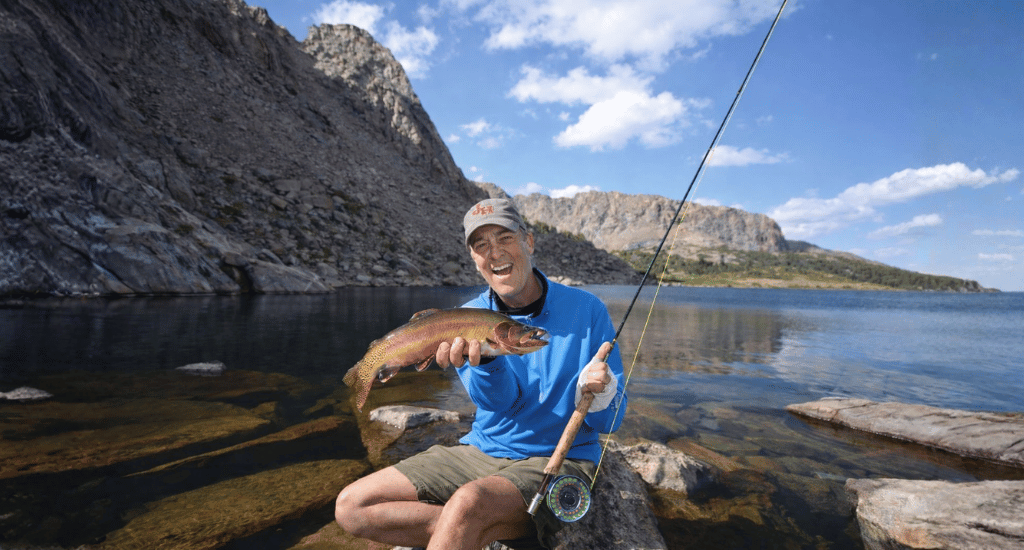
The best way to find fish in a mountain lake is to study the water before making a cast. Look for food, cover, depth changes, current, and wind. Fish use these features because they provide food, oxygen, shelter, or a better place to ambush prey.
Start at the inlet. A stream brings cool, oxygen-rich water and often carries insects into the lake. Trout may hold where the current slows, along the edge of a plume, or just outside the moving water.
Next, check the outlet. Fish may gather where water leaves the lake, but some outlets have special regulations or closed areas. Never assume a productive-looking spot is legal to fish.
Productive Shore Features
Shoreline structure gives trout a reason to stay in one area. Fish the water beside a feature, not only the feature itself. Trout often sit a few feet away from rocks, weed beds, or a current seam.
| Lake feature | What it can offer fish | First presentation to try |
|---|---|---|
| Inlet stream | Insects, cool water, oxygen | Nymph or small dry fly |
| Rocky point | Current, depth, ambush area | Woolly Bugger or leech pattern |
| Weed edge | Insects, minnows, cover | Small nymph or streamer |
| Drop-off | Easy access to deep water | Nymph under indicator |
| Windblown bank | Plankton and drifting insects | Dry fly or emerger |
| Outlet | Flow and food | Check rules, then nymph carefully |
A drop-off is one of the most useful features to find. It may sit only a rod length from shore. Cast along the edge rather than straight into the deepest water. Let the fly reach the target depth before beginning a slow retrieve.
Use Wind as a Food Map
Wind is not always a problem. It can push insects, plankton, and small baitfish toward the downwind bank. If the wind is safe to fish in, inspect the bank receiving the most surface drift.
Watch for foam lines, trapped insects, birds, and small rings. A line of bubbles may mark a food lane. Birds diving near shore may point to baitfish or rising insects.
Strong wind can make casting unsafe. If you cannot control your back cast, move to a sheltered bank or stop fishing. A perfect drift is not worth a hook in an ear.
Fish Depth Changes Through the Day
At dawn, trout may cruise the shallows to feed. As sunlight reaches the water, they may move deeper or hold under ledges and weed edges. Cloud cover can keep fish shallow for longer.
Use a strike indicator to suspend a nymph above the bottom. Start with 4 to 6 feet between the indicator and fly. If you do not see fish or feel taps, change the depth by 2 feet.
A fish finder can help from a canoe, drift boat, or fishing kayak. It can show depth and structure, but it does not replace knowledge of local rules or safe boating practice. A portable sonar unit is most useful when you are targeting deep lake trout or searching unfamiliar water.

Select Flies Based on Food and Water Depth
Fly choice should match what fish are eating, but depth often matters more than the exact pattern. A perfect fly fished too high or too fast may fail. A simple fly at the right depth can work well.
Carry a small selection of dry flies, nymphs, emergers, leeches, sculpins, damselflies, dragonflies, and baitfish patterns. Sizes 10 through 18 cover many mountain-lake situations, though hatch size can vary widely.
Dry Flies and Surface Feeding
Use dry flies when you see rises, floating insects, or trout sipping in a steady rhythm. Good starting patterns include Parachute Adams, Griffith’s Gnat, Elk Hair Caddis, Stimulators, and small ant patterns.
Cast beyond the feeding fish and place the fly on the same path as the natural insects. Let it drift without drag. Drag means the fly moves unnaturally because the line or leader pulls it.
If fish rise near your fly but do not eat, change size, pattern, or leader length. Start with size before changing everything. A smaller fly or longer tippet often helps in clear water.
Nymphs and Emergers
Nymphs imitate insects below the surface. They are often the most reliable choice when you see no surface activity. Try a Pheasant Tail, Hare’s Ear, Copper John, Zebra Midge, or small Callibaetis nymph.
Fish nymphs under an indicator near drop-offs, weed edges, and inlet currents. You can also use a tight-line method in shallow water by keeping the fly line off the surface and watching the leader.
An emerger imitates an insect moving from the bottom to the surface. If trout rise slowly and leave small dimples, an emerger may work better than a fully floating dry fly.
Streamers and Leeches
Streamers imitate baitfish, leeches, sculpins, and larger food. They can help you cover water and locate active fish. Woolly Buggers, balanced leeches, Slumpbusters, and small baitfish patterns are useful choices.
Cast across a drop-off or along a rocky bank. Let the fly sink for 3 to 10 seconds, then retrieve with short strips. Vary the speed. Some fish prefer a slow crawl, while others follow a faster, uneven retrieve.
A sink-tip or full-sinking line helps keep the fly down. Do not add excessive weight without checking local rules. Some lakes ban lead split shot or restrict certain tackle.
| Food source | Fly examples | Typical size range |
|---|---|---|
| Midges | Zebra Midge, Griffith’s Gnat | 16–22 |
| Mayflies | Pheasant Tail, Callibaetis nymph | 12–18 |
| Caddisflies | Elk Hair Caddis, soft hackle | 10–16 |
| Ants and beetles | Foam ant, beetle pattern | 10–16 |
| Leeches | Woolly Bugger, balanced leech | 6–12 |
| Small baitfish | Minnow or sculpin streamer | 4–10 |
Do not treat these sizes as fixed rules. Local insects may be larger or smaller. Turn over a few shoreline rocks, inspect floating debris, and watch the surface before choosing a fly.
🌿 Conservation Note: Use barbless hooks when allowed, or pinch down the barb with forceps. Wet your hands before touching a trout, keep it in the water, and limit air exposure to a few seconds. Never leave discarded tippet or line on the bank.

Present Flies From Shore, a Boat, or a Kayak
Shore fishing is the simplest and safest way to begin. It also teaches you how fish use the lake edge. Walk quietly, keep your shadow off shallow water, and avoid false casting directly over fish.
Stand back from the bank when possible. A low profile can matter in clear water. Make one or two careful casts before moving to a new angle.
A float tube, canoe, or fishing kayak can open more water, but it adds safety concerns. Cold water and wind are serious risks. Keep your tackle organized, wear a PFD, and know how you will return to shore if the wind changes.
Shore-Fishing Presentation
Begin by casting parallel to the bank. This keeps your fly in the shallow feeding zone longer than a cast straight toward the middle. Retrieve streamers beside rocks, weed beds, and drop-offs.
For an indicator rig, cast toward the target depth and mend the line. Mending means moving the fly line to reduce drag and allow the flies to drift naturally. Make small mends instead of large splashes.
Move every 10 to 15 minutes if you see no signs of fish. Change location before changing every fly in your box. A better angle can solve a problem that a new pattern cannot.
Boat and Kayak Presentation
A boat lets you fish drop-offs, submerged points, and open-water lanes. Anchor or drift so the wind moves you across likely structure. Cast ahead of the drift and let your flies work through different depths.
A fishing kayak is quiet and efficient, but it has limited space. Use a rod holder, secure loose flies, and keep hooks away from your legs and clothing. Do not stand in a kayak unless it is built for stable stand-up fishing and you have practiced in calm water.
Use a fish finder only if you can operate it without losing focus on navigation and weather. Keep your route, shoreline access, and emergency plan in mind.

Follow This Step-by-Step Mountain-Lake Plan
A simple plan prevents random casting. Fish the highest-probability water first, then adjust based on what you observe. The following process works for beginners and still gives experienced anglers a useful starting framework.
1. Check Rules and Conditions
Confirm the fishing license requirement, open dates, bag limits, size limits, hook rules, bait restrictions, and access rules. Some mountain lakes sit in national forests, parks, wilderness areas, or private areas with different regulations.
Check the weather, trail condition, water temperature, wind, and storm risk. If boating, review launch points and required safety gear. Tell someone where you are going.
📜 Check Local Regulations: Rules can limit barbed hooks, lead sinkers, bait, float tubes, drones, motors, or overnight access. Confirm current information with the state wildlife agency, land manager, or local ranger station before your trip.
2. Observe for Ten Minutes
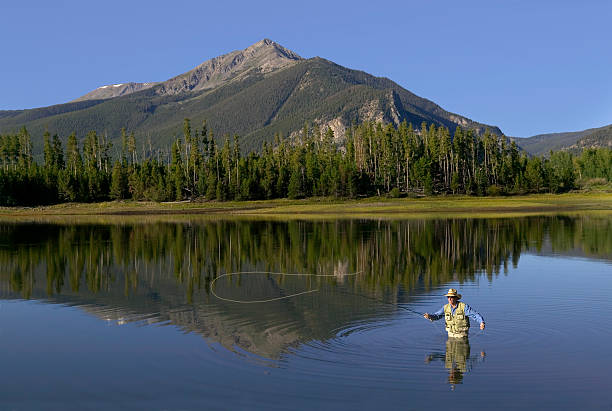
Do not rush to the first open bank. Spend ten minutes looking for rises, insect activity, baitfish, birds, wind lanes, and changes in water color. Note where the sun and your shadow fall.
Look for cruising fish in shallow water. Polarized sunglasses can reveal pale flashes, moving shadows, and submerged shelves. If you see no fish, focus on structure and food rather than guessing.
3. Start With a Simple Rig
Tie on a 9-foot 4X leader. Add 2 to 3 feet of 5X tippet if you need a smaller dry fly. For nymphing, attach a strike indicator and start with a depth of 4 to 6 feet.
Choose one dry fly, nymph, or streamer that matches the conditions. Avoid changing flies after every cast. Give each presentation enough time to show whether the depth and retrieve are right.
4. Fish the Edges First
Cast along the bank, near rocks, beside weeds, and across inlet seams. These areas often hold food and provide cover. Keep your first casts short and controlled.
Allow the fly to sink before retrieving a streamer. With a dry fly, repair the line so the fly drifts freely. With a nymph, watch the indicator for stops, dips, or sideways movement.
5. Change One Variable at a Time
If you do not get a response, change depth first. Then change retrieve speed, location, fly size, and finally fly pattern. Changing one factor helps you learn what the fish want.
For example, add 2 feet to the nymph depth and fish the same bank. If that does not help, slow the retrieve. This approach creates a clear picture instead of a blur of random changes.
6. Move Carefully and Rest the Water
Do not pound one spot for an hour. Fish a section, rest it, and return later when light, wind, or insect activity changes. Trout may move into shallow water after clouds cover the sun.
Walk slowly and keep noise low. Rocks carry sound through shallow water. Avoid dragging nets, dropping gear, or stomping along the shoreline.
7. Land and Release Fish Properly
Play the fish with steady pressure. Keep the rod bent, but do not lift a heavy trout high overhead. Guide the fish toward a rubber net and keep it partly submerged.
Wet your hands before touching it. Remove the hook with forceps, take a quick photo while supporting the fish in the water, and release it facing into gentle current or open water.

Avoid These Common Mountain-Lake Mistakes
Many failed trips come from poor depth control, poor planning, or too much gear. Fixing these issues can improve your day without buying a new rod.
| Common mistake | What happens | Better choice |
|---|---|---|
| Fishing only the middle | The fly misses shoreline fish | Start near structure and drop-offs |
| Using one depth all day | Fish move below the presentation | Adjust indicator depth |
| Casting too soon | Fish spook in clear water | Observe before casting |
| Carrying only dry flies | You miss subsurface feeding | Pack nymphs and streamers |
| Ignoring wind direction | You miss food-rich banks | Check the downwind shore |
| Wading too far | You lose access to safe footing | Fish from shore first |
| Overloading the pack | Hiking becomes slow and tiring | Carry compact essentials |
Another mistake is using a leader that is too short. Short leaders can work with streamers, but they may spook fish in clear, calm water. Try a 9- to 12-foot leader when trout are wary.
A poor hook set also causes missed fish. With a dry fly, lift the rod smoothly after the fish takes. Do not strike hard as you might with a spinning reel. With nymphs, set when the indicator moves in an unusual way.
Beginners often false cast too much. Each false cast gives fish another chance to see the line. Make fewer casts and focus on accuracy, line control, and a soft landing.
Make the Trip Work for Beginners, Kids, and Experienced Anglers
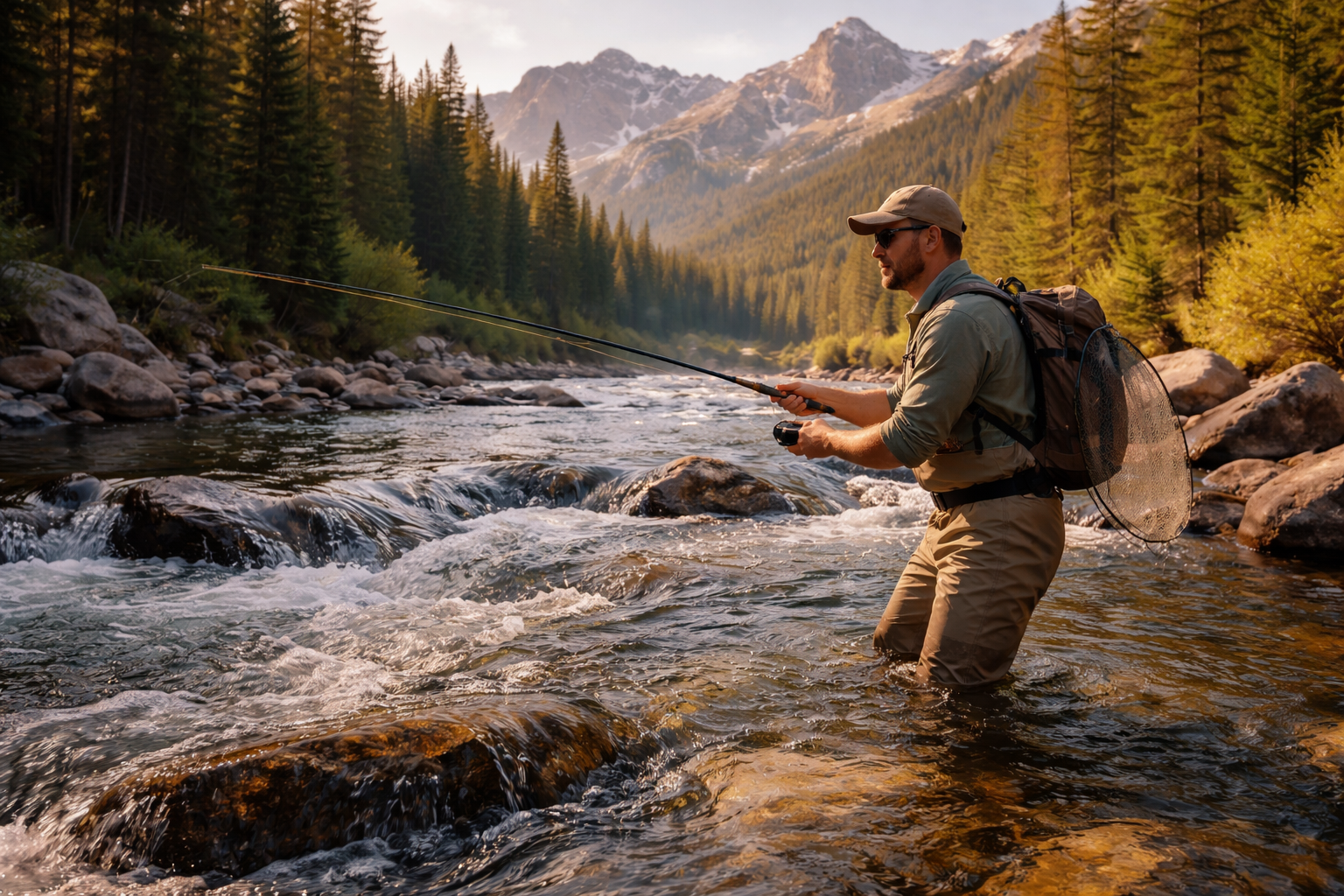
A mountain-lake trip should match the person holding the rod. A child may need a shorter session and simple targets. A skilled angler may want to explore depth, hatches, and technical presentations.
For beginners, use a 9-foot 5-weight rod, floating line, 9-foot leader, and a small set of dry flies, nymphs, and streamers. Practice casting in an open area before reaching the lake. Start with shore fishing and avoid difficult wading.
For kids, a 3- or 4-weight fly rod can feel easier to control, but a 5-weight may be more practical if adults share the setup. Keep hooks covered when walking. Set a short goal, such as spotting one rise or making five accurate casts.
Gift buyers should avoid choosing a fly reel based only on bearing count or appearance. A balanced rod, line, reel, leader, and case matter more. Ask about the angler’s height, target species, local water, and casting experience before buying.
| Angler | Useful setup | Main priority |
|---|---|---|
| First-time adult | 9-foot 5-weight, floating line | Easy casting and versatility |
| Child or small angler | 7.5- to 9-foot 3- or 4-weight | Low weight and simple handling |
| Traveling angler | Four-piece 5-weight, protective tube | Portability and repair support |
| Advanced trout angler | 4- to 6-weight, spare lines | Depth and presentation options |
| Lake-trout specialist | 6- to 8-weight, sinking line | Reaching deep water |
Spinning gear remains a useful alternative. A 6.5- to 7-foot medium-light spinning rod with 4- to 8-pound monofilament or fluorocarbon can be easier for new anglers. Spincast combos are simple for young children. Telescopic rods pack well, but their joints need careful cleaning and inspection.
Baitcasters suit anglers who want control with heavier lures, while spinning reels are easier for light tackle. Ice fishing rods and surf fishing setups are not appropriate substitutes for ordinary mountain-lake fly fishing. Match the tool to the technique.
👪 Parent or Gift-Buyer Note: A lesson, local guide trip, or casting class may be a better gift than a large fly box. Good instruction helps a new angler use simple gear with confidence.

Plan for the Seasons
Mountain lakes may remain frozen well into spring. Access, insect life, water temperature, and fish depth change quickly after ice-out. Check local reports before hiking to a lake that may still be unsafe or inaccessible.
| Season | Fish behavior | Useful approach |
|---|---|---|
| Ice-out and early spring | Fish feed in cold shallows | Slow streamers and small nymphs |
| Late spring | Insects increase near inlets | Nymphs, emergers, and small dries |
| Summer mornings | Trout may feed near shore | Dry flies and shallow nymphs |
| Summer afternoons | Fish often seek depth | Deep nymphs or sinking lines |
| Early fall | Cooler water restores activity | Streamers and terrestrials |
| Late fall | Fish may hold deeper or spawn | Follow closures and use care |
Spring and Ice-Out
After ice-out, trout often feed in shallow water because it warms first. Slow your retrieve and allow streamers to sink. Small nymphs can work near inlets and sheltered banks.
Do not walk on soft ice or fish beside unstable ice shelves. Ice thickness can vary across one lake. Ask a local ranger or guide about current conditions.
Summer
Summer often brings the most varied insect activity. Fish early and late, especially on bright days. Look for mayflies, caddisflies, midges, ants, beetles, damselflies, and dragonflies.
Warm afternoons can stress trout in shallow lakes. If water temperatures rise beyond the safe range for the local species, stop targeting trout or switch to a better time of day. Check guidance from the local wildlife agency.
Fall
Fall can bring cool air, strong winds, and aggressive streamer fishing. It may also bring spawning fish. Avoid walking on spawning beds and do not target fish that are actively spawning if local guidance discourages it.
Respect seasonal closures. Some high lakes close to protect spawning trout, winter habitat, or sensitive shore areas.

Understand Cost, Durability, and Gear Care
A basic fly-fishing setup can cost less than a premium rod alone. Current pricing ranges from budget kits near $100 to several hundred dollars for a well-built rod, reel, line, and case. Premium setups can cost much more, but they do not remove the need for good technique.
For a beginner, a complete kit with a 5-weight rod, reel, floating line, backing, leader, and case may be the most practical value. Check that the line is included. Some kits show a reel but require a separate line and backing.
A better rod may feel lighter and recover faster after a cast. A better fly line may shoot more smoothly and float longer. Those upgrades can matter more than an expensive reel when fishing small mountain trout.
| Budget tier | What to expect | Best for |
|---|---|---|
| Entry level | Basic graphite or composite kit, simple reel | Beginners and occasional trips |
| Midrange | Better line, lighter rod, stronger case | Regular anglers |
| Premium | Refined action, low weight, higher finish quality | Frequent or advanced anglers |
Graphite rods are light and sensitive but can break if hit against rocks or crushed in a vehicle door. Fiberglass rods are often slower and more forgiving, but they may feel heavier. Aluminum reels resist impact well, while stainless parts can improve wear and corrosion resistance.
Clean the rod after each trip. Rinse grit from the ferrules, wipe the blank with fresh water, dry the reel, and loosen the drag before storage. Keep flies dry and inspect leaders for nicks.
Do not force rod sections apart with pliers. Twist gently while pulling straight. Store the rod in its tube, away from heat and direct sunlight. Replace leaders when they become rough, cloudy, badly coiled, or too short.
🔧 Quick Fix: If a floating line sinks in small spots, clean it with the line maker’s approved cleaner. If it still sinks after cleaning, the coating may be worn. Do not use household solvents, which can damage the line.

Know When to Hire a Guide or Ask a Local Shop
A local fly shop can save you hours of guesswork. Ask about current water levels, insect size, access, closures, leader length, and productive depth. Shops also know which lakes are safe for beginners and which require a long hike or technical approach.
A guide is a good choice when you have limited time, fish remote water, need boat access, or want to improve quickly. Guides can teach casting, reading water, knot tying, fish handling, and local safety.
Ask for a guide who works within the lake’s regulations and follows sound conservation practices. A good guide should explain why a tactic works, not simply hand you a rod and point.
Take a professional boating safety or wading course if you plan to use a kayak, float tube, or boat on cold mountain water. For remote trips, wilderness first aid training may be useful.

Frequently Asked Questions
What fly rod weight is best for mountain lakes?
A 5-weight fly rod is the most versatile choice for many mountain lakes. Use a 3- or 4-weight for small trout and calm weather. Choose a 6-weight when wind, large streamers, or bigger fish are common.
Can beginners fly fish mountain lakes?
Yes. Beginners can start from shore with a 5-weight rod, floating line, 9-foot leader, and a few nymphs, dry flies, and streamers. A short lesson can improve casting and reduce frustration.
Do I need waders to fly fish a mountain lake?
No. Many fish feed near shore, so you can begin without waders. If you wade, use safe footing, avoid deep or fast water, and check local rules on wading footwear.
What flies should I bring to a mountain lake?
Bring small dry flies, midges, mayfly nymphs, caddis patterns, ants, beetles, leeches, and Woolly Buggers. Carry sizes 10 through 18, then adjust after observing local insects.
How deep should I fish a nymph?
Start 4 to 6 feet below the indicator near shore. Adjust in 2-foot steps until the fly reaches the fish. In deep water, use a sinking line or weighted pattern when regulations allow.
Is a sinking line necessary?
No. A floating line covers many shore situations. A sinking or sinking-tip line helps when fish hold deep, especially during bright afternoons or when targeting lake trout.
Can I use a spinning rod instead?
Yes. A spinning rod can be easier for beginners, kids, or anglers who do not want to learn fly casting. A medium-light spinning setup with 4- to 8-pound line works for many small trout, but follow local lure and bait rules.
How do I protect trout in cold mountain lakes?
Keep the fish wet, use a rubber net, pinch barbs when legal, remove the hook quickly, and limit photos. Avoid squeezing the fish or placing it on dry rocks.
What should I do if a storm arrives?
Stop fishing if lightning, hail, high winds, or dangerous visibility develops. Move away from exposed shorelines and ridges. Tell someone your plan before the trip, and carry a map, headlamp, rain shell, food, and water.
Are mountain lakes open to fishing all year?
Not always. Some have closed seasons, spawning closures, special tackle rules, or access limits. Check the current regulations from the state wildlife agency and land manager before fishing.
Final Advice for Your First Mountain-Lake Trip
Start with a simple 5-weight fly rod, floating line, 9-foot leader, and a small box of nymphs, dry flies, and streamers. Reach the lake early, observe for ten minutes, and fish the edges before searching deep water. Let depth, wind, insects, and fish movement guide your changes.
Mountain-lake fly fishing rewards calm choices. A careful approach, a clean drift, and a safe plan matter more than owning every fly pattern. Protect the water, release fish with care, pack out line and trash, and leave the shore as wild as you found it.