How To Fish For Mackinaw: Expert Lake Trout Tips
mackinaw is one of the most exciting freshwater fish to target. Also called lake trout, this cold-water predator can grow large, fight hard, and live in deep lakes that seem almost empty. The good news is that you do not need a giant boat or a wall of expensive gear to start. You need the right depth, a steady presentation, strong knots, and a plan for finding fish.
Mackinaw fishing changes with the season. In summer, lake trout often hold deep and may require downriggers, lead-core line, divers, or a fish finder. In spring and fall, they can move into shallower water, where shore anglers, kayak anglers, and boat fishermen can reach them with spoons, jigs, and live bait where legal. Ice anglers use short rods, heavy jigs, and sonar to work the same fish through the winter.
This guide explains how to fish for mackinaw in freshwater lakes. It covers gear, line, lures, bait, depth, trolling, jigging, shore fishing, ice fishing, boat safety, regulations, and fish care. It also helps beginners, experienced anglers, parents, and gift buyers choose a setup that fits their water and budget.

Quick answer: how to catch mackinaw
The best way to fish for mackinaw is to find cold, deep water near structure, then place a spoon, jig, plug, or legal bait close to the fish. Use a medium-heavy or heavy rod, 10- to 20-pound line, and a fluorocarbon leader. Troll in summer, jig in deep water or through the ice, and check local rules before fishing.

Understanding mackinaw and their habitat
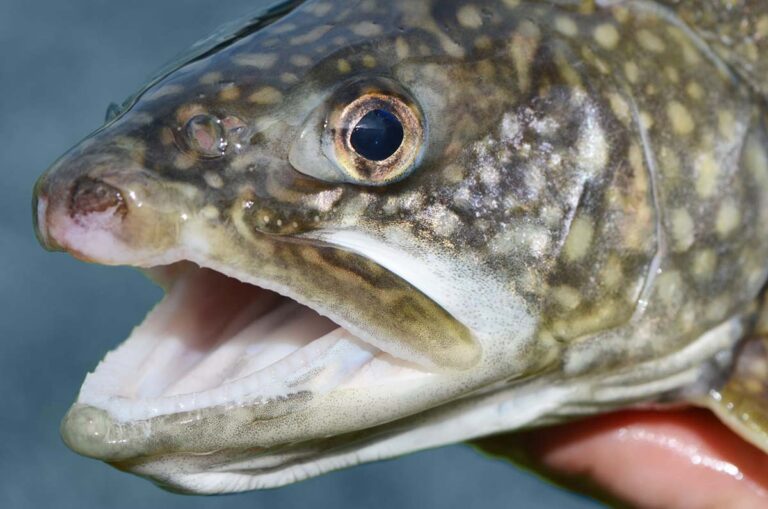
Mackinaw are lake trout, a freshwater char in the salmon family. They prefer cold, clean water and need more oxygen than many warm-water species. In many lakes, they spend much of the year below the thermocline, which is the layer where water temperature changes quickly.
Lake trout are not always on the bottom. They may suspend over deep basins, follow schools of ciscoes or smelt, or sit beside rock piles, humps, reefs, drop-offs, and steep points. A fish finder helps, but the basic rule is simple: look for cold water, bait, and a change in depth.
Mackinaw often feed by sight and vibration. A lure that flashes, shakes, or rises and falls can draw a strike even when fish are not actively chasing. This is why slow, controlled movements often work better than fast retrieves.
| Mackinaw location | What to look for | Productive method |
|---|---|---|
| Deep basin | Bait, arches, and cold water | Trolling or vertical jigging |
| Rocky point | Sharp depth change and current | Casting spoons or jigging |
| Reef or hump | Fish near the top or down the side | Trolling or jigging |
| Shoreline in fall | Bait and cooling water | Casting, drifting, or bait |
| Under ice | Fish marks near bottom or suspended | Vertical jigging |
The key takeaway is to fish the depth where mackinaw are holding, not just the deepest water in the lake. A 100-foot basin may be empty while a 45-foot reef edge is full of life.

How mackinaw behave through the year
In spring, lake trout often move into shallower water because the surface is still cool. This is one of the easiest times for shore anglers and small-boat fishermen. Cast spoons along rocky banks, points, and steep breaks. Trolling at 1.5 to 2.5 miles per hour can also work well.
As summer arrives, warm surface water pushes mackinaw deeper. Fish may hold from 40 to more than 100 feet, depending on the lake. Use a fish finder to locate the thermocline and bait. Downriggers, lead-core line, copper line, and diving devices can place lures at the right depth.
In fall, lake trout may move shallow again for spawning. Some lakes close certain areas or restrict fishing during this period, so local rules matter. Where fishing remains open, fish rocky shorelines, creek mouths, reefs, and gravel points with spoons, jigs, and flies.
Winter concentrates the work. Ice anglers often find lake trout in deep water near the bottom, but suspended fish are common. A sonar unit can show whether the fish are below, above, or beside your lure.

Mackinaw compared with other freshwater fish
Mackinaw are different from bass, trout, catfish, panfish, and walleye in a few important ways. They tolerate cold water and often use depths that are difficult to reach with basic tackle. They also have large mouths, strong bodies, and sharp teeth that can damage light line.
A bass angler may already own a good spinning reel, but a light bass rod can feel underpowered around deep lake trout. A trout angler may have suitable spoons but need heavier line and a stronger leader. A catfish angler may have enough power, yet a very heavy bottom rig can reduce lure action.
Fly rods can work during shallow spring or fall periods. They are less practical for deep summer fish unless you use specialized sinking lines and know the water well.
Choose gear for the water you fish
The best mackinaw setup depends on depth, method, and fish size. A beginner fishing from shore may need only a spinning rod, reel, spoons, and a landing net. A boat angler trolling deep water may need a downrigger, planer board, sonar, rod holder, and heavier line.
Rod power describes how much force a rod takes to bend. Action describes where the rod bends. A fast-action rod bends near the tip and gives strong lure control. A moderate-action rod bends farther down and can help keep treble hooks pinned.
For most lake trout fishing, medium-heavy power is a useful starting point. Choose heavy power when trolling large deep-diving plugs, using wire or copper line, or targeting unusually large fish.
| Fishing method | Rod suggestion | Main line | Leader |
|---|---|---|---|
| Shore casting | 7 to 9 feet, medium-heavy spinning rod | 20- to 30-pound braid | 12- to 20-pound fluorocarbon |
| Boat trolling | 7 to 9 feet, medium-heavy or heavy rod | 10- to 20-pound mono, braid, lead core, or copper | 15- to 25-pound fluorocarbon |
| Vertical jigging | 6 to 7.5 feet, medium-heavy fast-action rod | 20- to 30-pound braid | 12- to 20-pound fluorocarbon |
| Ice fishing | 28- to 36-inch medium-heavy ice rod | 10- to 20-pound braid or mono | 10- to 15-pound fluorocarbon |
| Fly fishing | 8- to 10-weight fly rod | Sinking fly line | 10- to 20-pound tippet or leader |
These are starting ranges, not fixed rules. Match your line to the lure, cover, hook size, and local fish size.

Spinning reels for beginners and shore anglers
A 3000- to 5000-size spinning reel is a strong choice for many beginners. Look for a smooth drag, a metal or reinforced handle, and enough spool capacity for at least 150 yards of your chosen line. A front drag is easy to adjust while fighting a fish.
Spinning reels are simple to cast and do not create the backlash common with baitcasters. Backlash is a tangle caused when a baitcasting spool spins faster than the lure pulls line. For a child, gift buyer, or first-time angler, a spinning combo is often easier to learn than a baitcaster.
Use 20- to 30-pound braided line for long casts and good sensitivity. Add a 3- to 6-foot fluorocarbon leader with a strong knot or small swivel. Monofilament is more forgiving and floats slightly, but it has more stretch and thicker diameter.
Baitcasters and trolling reels
Baitcasters offer precise casting and strong control, but they require practice. They suit experienced anglers who cast heavy spoons, jigs, and plugs near structure. Choose a reel with a reliable drag and a spool that holds enough line for your depth and method.
For trolling, line-counter reels are useful because they show how much line is out. This makes it easier to repeat a productive presentation. Conventional trolling reels also work well with lead-core line, copper, wire, or heavy monofilament.
A reel gear ratio tells you how many times the spool turns for each handle turn. A lower ratio gives more cranking power. A medium ratio is a practical choice for deep trolling and heavy lures.
Line, leaders, hooks, and terminal tackle
Braided line has a small diameter and little stretch. That makes it useful for deep jigging and long casts. It can cut into fingers, slip on a bare spool, and dig into itself under pressure, so add backing and handle it with care.
Monofilament stretches and costs less. It can be useful for trolling because the stretch softens sudden surges. Fluorocarbon is harder to see underwater and resists abrasion, which makes it a common leader material.
Use strong swivels, split rings, and snaps. Small hardware can fail before the line does. Treble hooks should be sharp, but they also create a greater handling risk. Keep pliers close and avoid placing fingers near a mackinaw’s mouth.
| Line type | Strengths | Limits |
|---|---|---|
| Monofilament | Low cost, stretch, easy knots | More stretch and thicker diameter |
| Braided line | Thin, sensitive, long casting distance | Can dig in and needs careful handling |
| Fluorocarbon | Abrasion resistance and low visibility | Stiffer and often more costly |
| Lead-core line | Reaches depth while trolling | Requires special knots and storage care |
| Copper or wire | Deep trolling control | Demands proper guides and reel setup |
Pick line for the method, not simply for the highest pound rating. A very heavy line can reduce lure action, while line that is too light can break at the boat.

Rigs and lures that catch lake trout
Mackinaw fishing does not require a huge tackle box. A small group of proven lure types can cover most situations. Carry spoons, jigs, soft plastics, crankbaits, plugs, swivels, hooks, sinkers, and replacement split rings.
Spoons are among the most useful lake trout lures. Their flash imitates injured baitfish, and their wobble works during both casting and trolling. Heavy metal spoons reach deep faster. Use silver, white, blue, green, gold, or glow patterns based on light and water color.
Jigs work well for vertical fishing. Pair a 1- to 3-ounce jig with a soft plastic minnow, tube, or paddle tail. In deep water, a heavy jig gets down quickly and stays near the sonar mark.
| Lure or bait | Best use | Basic presentation |
|---|---|---|
| Metal spoon | Casting and trolling | Lift, flutter, or steady retrieve |
| Jig and soft plastic | Deep vertical fishing | Drop below fish, then snap and pause |
| Large plug | Trolling over structure | Run near the target depth |
| Tube or minnow imitation | Jigging or casting | Short lifts with long pauses |
| Live bait where legal | Still fishing or drifting | Keep near bottom or a marked depth |
| Fly streamer | Shallow spring and fall water | Strip, pause, and change depth |
Start with silver or glow when you are unsure. Then adjust based on water clarity, cloud cover, depth, and the baitfish in the lake.

Trolling for mackinaw
Trolling is one of the most effective ways to cover deep water. The goal is to place a lure in the zone where lake trout are holding and keep it there. Boat speed, lure depth, line angle, and lure action all matter.
A common starting speed is 1.2 to 2.2 miles per hour. Some days require a slower crawl. Other days, active fish respond to a faster speed. Watch the rod tip. A spoon should pulse or wobble, not spin like a propeller.
Downriggers are useful because they place the lure at a known depth. A downrigger uses a weighted ball and release clip. The fishing line clips to the weight, then releases when a fish strikes. Check cable, clips, and mounting hardware before every trip.
Lead-core line changes color at set intervals, often every 10 yards. It can help you estimate depth, but actual depth changes with speed, lure size, line length, and current. Use a depth chart as a starting point, not a promise.
Jigging for deep lake trout
Vertical jigging is direct and exciting. Position the boat over a mark, lower the jig to the fish or slightly below it, then lift it with short, sharp motions. Let the lure flutter down after each lift.
Some mackinaw hit on the rise. Others strike as the jig falls. Keep a finger on the line and watch for slack, a tap, or a sudden heaviness. Set the hook with a firm lift rather than a wild swing.
If fish appear 10 feet above the bottom, do not keep dragging the jig on the floor. Hold it in the fish’s level. Change the height, pause length, and lift speed before changing lures.
Casting from shore or a pier
Shore fishing works best where deep water lies close to land. Search for steep banks, rocky points, public piers, dam faces, creek mouths, and areas where a contour map shows a quick drop.
Cast beyond the target zone, allow the spoon to sink, and count it down. Retrieve with a steady wobble, or lift the rod and let the lure flutter. Change the count until you learn how deep the lure travels.
A long 8- or 9-foot spinning rod can improve casting distance. It also helps keep line away from shoreline rocks. Wear shoes with solid grip, and do not climb wet rocks for a better angle.

Fishing through the ice
Ice fishing for mackinaw needs heavier tackle than many panfish setups. A 28- to 36-inch medium-heavy ice rod, a strong reel, and 10- to 20-pound line are common starting points. Use a short leader if the water is clear and fish are cautious.
Begin near steep breaks, points, reefs, and deep basin edges. Drill several holes when safe and legal. Use a flasher or portable fish finder to learn how fish react to the lure.
A glow jig, tube, minnow imitation, or spoon can work. Lift the lure 1 to 3 feet, pause, and watch the line. Lake trout may rise several feet before striking.
⚠️ Safety Warning: Never judge ice safety by color alone. Ice thickness can change near springs, inlets, outlets, currents, pressure cracks, and moving water. Wear a flotation suit or U.S. Coast Guard–approved personal flotation device when conditions call for it, carry ice picks, tell someone your plan, and take a local ice-safety course if you are new to hard-water fishing.
Find mackinaw with maps, electronics, and depth control
Finding lake trout is often harder than choosing a lure. Start with a lake map or digital contour chart. Mark deep basins, underwater points, reefs, humps, saddles, and creek channels.
A fish finder shows depth, bottom shape, bait, and fish marks. Traditional sonar displays marks on a scrolling screen. Forward-facing sonar can show fish and lures ahead of the boat, but it costs more and takes practice.
The fish finder is a tool, not a magic answer. Learn to read bottom hardness and depth changes. A sharp line on the screen may show a hard bottom. A thick cloud may show bait. Individual arches may be fish, but not every arch is a lake trout.
| Fish finder clue | What it may mean | What to do |
|---|---|---|
| Fish tight to bottom | Lake trout feeding on bottom prey | Jig close, but avoid constant dragging |
| Fish suspended | Chasing bait or traveling | Troll or hold the lure at their level |
| Bait cloud | Food source nearby | Work the edges and lower part of the cloud |
| Sharp depth break | Travel route or ambush area | Make repeated passes across the break |
| Empty screen | No fish or poor sonar settings | Move, adjust range, or slow down |
Run several passes over a promising area. One blank pass does not prove the spot is empty. Wind, current, boat direction, and lure depth can change the result.

Control depth during a troll
Depth control is the heart of summer mackinaw fishing. A lure that runs 15 feet above the fish may never be noticed. A lure that digs into bottom on every pass may foul or lose its action.
Use your downrigger counter, lead-core colors, line-counter reel, diving planer, or weighted line to repeat a depth. Keep notes about boat speed, line length, lure type, and water depth. Simple notes can save hours on the next trip.
Turn across the contour instead of always traveling straight. The lure rises on one side of the turn and drops on the other. That change can trigger a following fish.
Read water temperature and bait
A temperature probe is helpful but not required. If your lake has a known temperature range for mackinaw, use that as a guide. In general, focus on cold, oxygen-rich water and nearby bait.
Baitfish may appear as clouds, streaks, or scattered marks. Mackinaw can be near bait, below it, above it, or just outside it. Test more than one depth before moving away.
Wind can push surface food and create current. A windy shoreline may become productive in spring or fall, while a calm day may make deep structure easier to fish.
A step-by-step mackinaw fishing plan
A clear plan helps beginners stay calm and helps experienced anglers test water faster. Follow these steps, then adjust based on local conditions.

1. Check rules, weather, and access
Read the state or provincial fishing regulations before you leave. Confirm the required fishing license, lake trout season, size limit, bag limit, bait rules, hook rules, and open areas.
Check wind, waves, temperature, lightning, and launch conditions. A small boat or kayak can become unsafe on a large lake even when the morning looks calm.
📜 Check Local Regulations: Rules may restrict the number of rods, use of live bait, lead tackle, barbed hooks, or fishing during spawning periods. Confirm current details with your state wildlife agency, tribal authority, park office, or local fishery manager.

2. Choose a method
Use casting when mackinaw are shallow. Choose trolling when fish are spread over a large area or hold deep. Use vertical jigging when sonar shows fish below the boat. Ice fishing works when safe ice covers productive structure.
Do not force one method all day. A shore angler may cast spoons in the morning, while a boat angler may troll until sonar reveals a useful jigging mark.
3. Prepare the rod and reel
Spool the reel evenly. Check the first several feet of line for rough spots. Tie on a leader and test every knot with steady pressure.
Set the drag before the first cast. Drag is the reel’s friction system that lets line leave under pressure. It should protect the line while allowing a strong fish to run.
A simple rule is to begin with moderate drag, then tighten it slightly if the fish moves toward cover or the hook does not stay secure. Do not lock the drag completely.
4. Find a depth change
Use a map and sonar to find a point, reef, hump, breakline, or basin edge. Make a few passes at different depths. Watch for bait and fish marks.
If trolling, keep the lure near the target zone. If jigging, lower the lure below the fish and work it upward. If casting, count the lure down and repeat the cast that reaches the productive depth.
5. Change one variable at a time
Change lure color, speed, depth, or action. Do not change everything at once. You want to learn what caused a bite or a follow.
Try a slower speed first. Then adjust depth. Next, change the lure size or color. Keep notes so you can repeat the pattern.
6. Fight the fish with steady pressure
Keep the rod bent and the line tight. Do not pump the rod high, then reel slack line. Long, smooth lifts are safer for the hook.
A mackinaw may surge near the boat. Keep the drag working and let the fish run when needed. Clear other lines quickly if you are trolling.
7. Land it with the right tools
Use a landing net with a deep rubber bag. Rubber reduces tangles and is kinder to fish than rough mesh. Keep long-nose pliers, hook cutters, and a measuring board ready.
If releasing the fish, keep it in the water as much as possible. Support its body with wet hands. Do not squeeze the gills or hang a large fish by its jaw.
8. Record the details
Write down depth, lure, speed, water temperature, weather, and location. This turns one useful trip into a pattern. Over time, your notes become more valuable than a box full of random lures.

Common mackinaw fishing mistakes
Most failed trips come from poor depth control, weak connections, or moving too soon. Small changes can make a big difference.
| Mistake | Why it hurts | Better choice |
|---|---|---|
| Fishing only the deepest water | Mackinaw may be on structure or suspended | Check depth changes and bait |
| Using light trout gear | Heavy fish can break line or bend hooks | Use medium-heavy or heavy tackle |
| Trolling too fast | Lure may rise or lose its action | Start near 1.2 to 2.2 mph |
| Dragging a jig constantly | Fish may ignore or foul the lure | Lift, pause, and hold it at fish level |
| Ignoring line wear | Abrasion causes sudden breaks | Check the leader after rocks or fish |
| Keeping drag too tight | Hook or line can fail during surges | Use a smooth, moderate drag |
| Handling fish on dry ground | Removes protective slime and adds injury | Use wet hands and a rubber net |
Do not assume a quiet screen means the lake has no fish. Sonar settings, cone angle, speed, and depth can hide fish. Move slowly and learn your equipment.

Weak knots and damaged leaders
Inspect the leader after each fish, snag, or contact with rocks. Lake trout have teeth, rough mouths, and enough strength to expose a weak knot.
Retie when fluorocarbon becomes cloudy, nicked, or curled. Replace damaged snaps and split rings. If you use braid, check the connection between braid and leader often.
Poor hook control
Large hooks catch skin easily. Keep the fish in the net while removing hooks. Use a hook remover for deep hooks, and carry a small cutter in case a treble hook becomes embedded.
Parents should teach children to hold pliers by the handle and keep faces away from swinging lures. A barbless hook can make release safer where local rules allow it.
Cost, durability, and gear-care basics
A basic mackinaw setup can cost less than a full deep-trolling system. Current pricing ranges from about $100 to $250 for a basic rod, reel, line, and a few lures. A complete boat system with sonar, downriggers, trolling rods, and reels can cost far more.
You do not need every tool on the first trip. Start with one method. Add equipment after you learn what your lake demands.
| Budget level | Typical setup | Best for |
|---|---|---|
| Entry level | Spinning combo, braid or mono, leaders, spoons, net | Beginners and shore anglers |
| Mid-range | Medium-heavy rod, quality reel, sonar, jigs, plugs | Regular boat or kayak anglers |
| Advanced | Downrigger, line-counter reels, multiple rods, premium sonar | Deep-water trolling specialists |
| Ice setup | Heavy ice rod, compact reel, sonar, spoons, shelter gear | Ice anglers targeting lake trout |
Durability often depends on care more than price. Rinse reels after use, dry them before storage, and keep sand away from the drag and spool. Do not spray high-pressure water into bearings.
If you fish saltwater for species such as redfish, surf fish, or pier fish, use saltwater-rated reels and rinse them with fresh water after every trip. Mackinaw live in freshwater, but anglers often share gear between trips. Corrosion can still damage guides, hooks, snaps, and reel parts.

Storage and travel
Remove lures before transporting rods. Cover treble hooks or place them in a tackle box. Store rods in sleeves so guides do not bend or scrape.
For travel, telescopic rods are compact, but they may not provide the same strength or action as a one-piece or two-piece rod. A telescopic rod can suit a casual shore angler or gift buyer who values portability. Check every section for cracks before fishing.
Kayak anglers should secure rods, pliers, nets, and tackle boxes with leashes. Keep the deck clear so a hook does not catch clothing or skin during a sudden wave.
👪 Parent or Gift-Buyer Note: For a child or new angler, choose a simple spinning combo with a medium-heavy rod, a smooth reel, and a small box of single-hook or covered lures. Avoid buying a specialized downrigger setup unless you know the angler has a boat and wants to troll deep water.
Conservation, release, and safe fish handling
Mackinaw grow slowly in many lakes. That makes careful handling and honest harvest decisions important. Keep fish only when legal and when you plan to use them.
For catch and release, prepare before landing the fish. Wet your hands, keep the net in the water, and remove the hook quickly. Avoid touching the gills or squeezing the belly.
Barbless hooks can reduce handling time. Circle hooks are useful for some bait methods, but they are not ideal for every lure presentation. Follow local rules and use the hook style that fits the method.
🌿 Conservation Note: Never leave fishing line, soft plastics, hooks, or bait containers on shore or ice. Discard line in a recycling tube or secure trash bag. Lost line can injure birds, mammals, and fish.
Boat and shore safety
Wear a properly fitted U.S. Coast Guard–approved PFD when boating, kayaking, or fishing near deep water. A PFD is not a substitute for weather awareness or safe boat handling.
Tell someone where you are going and when you plan to return. Carry a charged phone in a waterproof case, basic first aid, a flashlight, drinking water, sun protection, and extra clothing.
On shore, avoid standing above breaking waves or climbing wet rocks. Polarized sunglasses reduce glare and can help you see rocks, drop-offs, and submerged hazards.
Which setup fits each angler?
The best mackinaw gear is not the most expensive gear. It is the setup that matches your access, experience, target depth, and fishing style.
| Angler | Recommended setup | Why it fits |
|---|---|---|
| New shore angler | 8-foot medium-heavy spinning combo | Easy casting and useful reach |
| Experienced boat angler | Line-counter reel and trolling rod | Repeatable depth control |
| Ice angler | 30-inch medium-heavy ice rod and sonar | Short, strong, and sensitive |
| Child or young beginner | Balanced spinning combo with simple lures | Easier to cast and safer to learn |
| Fly angler | 8- to 10-weight rod and sinking line | Useful for shallow seasonal fish |
| Kayak angler | Compact spinning setup and secure net | Portable and manageable in limited space |
A beginner should avoid buying gear designed only for 150-foot trolling if they fish from shore. An experienced angler should avoid a light panfish setup if the lake holds large fish. Gift buyers should ask where the person fishes, whether they own a boat, and whether they prefer casting, trolling, or ice fishing.
FAQs about fishing for mackinaw
Q: What is the best bait for mackinaw?
A: The best bait depends on local rules and the lake’s natural forage. Legal live bait, cut bait, and baitfish imitations can work. Check whether live bait is allowed, where it may be collected, and whether special hook rules apply. Spoons, jigs, and soft plastics are easier to store and use.
Q: What size hook should I use for lake trout?
A: Hook size depends on the lure or bait. Many anglers use strong hooks roughly in the range of size 1 through 2/0 for bait and larger hooks on big jigs or plugs. Match the hook to the bait and fish size. Always check local hook restrictions.
Q: How deep should I fish for mackinaw?
A: Fish where the mackinaw are holding. That may be 10 to 30 feet in spring or fall, and 40 to more than 100 feet in summer on some lakes. Use a contour map and fish finder. Do not assume the deepest water is the best water.
Q: Can I catch mackinaw from shore?
A: Yes, especially in spring and fall when lake trout move into cooler shallow water. Look for public piers, steep banks, rocky points, dam faces, and shorelines near deep water. A long spinning rod and heavy spoon can improve casting range.
Q: Is braid or monofilament better for lake trout?
A: Braid gives more sensitivity and a smaller diameter, which helps with deep jigging and long casts. Monofilament has stretch and costs less, which can help while trolling. Many anglers use braid with a fluorocarbon leader for an all-purpose spinning setup.
Q: Do I need a downrigger to catch mackinaw?
A: No. A downrigger makes precise depth control easier, especially in deep summer water, but lead-core line, copper line, weighted line, diving planers, and vertical jigging can also reach lake trout. Shore anglers do not need a downrigger.
Q: What speed should I troll for lake trout?
A: Start near 1.2 to 2.2 miles per hour, then adjust. The correct speed depends on lure type, water temperature, depth, wind, and fish activity. Watch the lure action and sonar. Slow down if the lure rises or spins.
Q: Can I use a bass rod for mackinaw?
A: A heavy bass rod may work for small lake trout or shallow casting, but many bass rods lack the power and line capacity needed for large fish in deep water. A medium-heavy or heavy rod is a safer general choice.
Q: Are mackinaw good to eat?
A: Lake trout can be good table fish when handled and cooked properly. Follow local possession limits and health advisories. Keep only what you will use, chill it quickly, and release fish that you do not plan to eat.
Q: How do I release a large lake trout?
A: Keep the fish in the water or in a deep rubber net. Wet your hands, support the body, avoid the gills, and remove the hook with pliers. Take a quick photo at water level, then hold the fish facing into gentle current until it swims away.
Q: What should I carry in a mackinaw tackle box?
A: Carry spoons, jigs, soft plastics, swivels, snaps, split rings, hooks, sinkers, leaders, spare line, pliers, hook cutters, and a measuring board. Add glow lures and a small flashlight for low-light or ice fishing.
Q: Can I fish for mackinaw from a kayak?
A: Yes, but choose calm water and plan carefully. Use a stable kayak rated for your total weight, secure all rods and tackle, wear a U.S. Coast Guard–approved PFD, and avoid conditions that exceed your skill. Deep-water kayak fishing deserves extra caution because lake conditions can change quickly.
Q: How long does mackinaw fishing gear last?
A: A quality rod can last many years if it avoids impacts and extreme bending. Reels may need cleaning, drag service, or replacement sooner. Line, leaders, hooks, and split rings are consumable parts. Replace them when they show wear rather than waiting for a lost fish.
Q: What is the difference between mackinaw and lake trout?
A: They are the same fish. “Mackinaw” is a common name used in parts of the United States, while “lake trout” is the standard common name used by fisheries agencies and anglers across much of North America.
Final thoughts on catching mackinaw
The best way to fish for mackinaw is to match your method to the season and depth. Cast spoons when fish move shallow. Troll when they spread through deep water. Jig when sonar places fish below the boat, and use a short, strong setup through the ice.
Start with a medium-heavy spinning combo if you are new. Learn your lake before buying advanced gear. Pay attention to depth, bait, speed, lure action, and line condition. With safe habits, legal tackle, and careful fish handling, mackinaw fishing becomes less like guessing and more like solving a cold-water puzzle.