How To Fish For Salmon From Shore: Shore Fishing Tips
Salmon are powerful fish, and catching one from shore can feel like a small battle between you, the fish, and the river or coast. You do not need a boat, an expensive reel, or years of experience to begin. You need the right place, the right timing, a balanced setup, and a plan that fits the water.
Shore anglers catch salmon in rivers, tidal channels, beaches, piers, jetties, and lake outlets. The best method changes with the species and location. A spinning rod may be ideal for casting spoons in a river. A surf rod may suit beach fishing for salmon in salt water. A fly rod can work well in clear streams, while a bait setup may help beginners cover deep runs with less casting skill.
This guide explains how to fish for salmon from shore in clear steps. It covers salmon behavior, rods and reels, line, leaders, hooks, lures, bait, knots, casting, reading water, landing fish, safety, local rules, and conservation. It also includes practical advice for beginners, experienced anglers, parents, and gift buyers who want to choose useful gear instead of buying a setup that does not fit the fish or water.

Quick Answer: How Do You Fish for Salmon From Shore?
The best way to fish for salmon from shore is to match your rod, line, lure, and presentation to the salmon species and water. Use a 9- to 10-foot medium or medium-heavy spinning rod, a 3000- to 5000-size reel, 20- to 30-pound braided line, and a 10- to 20-pound leader. Cast across or slightly upstream, control your lure near the salmon’s travel lane, and check local rules before fishing.

Understand the Salmon You Are Targeting
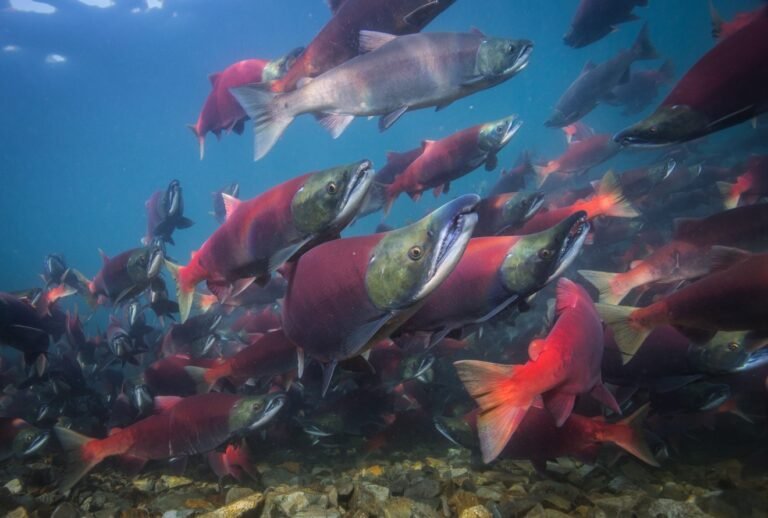
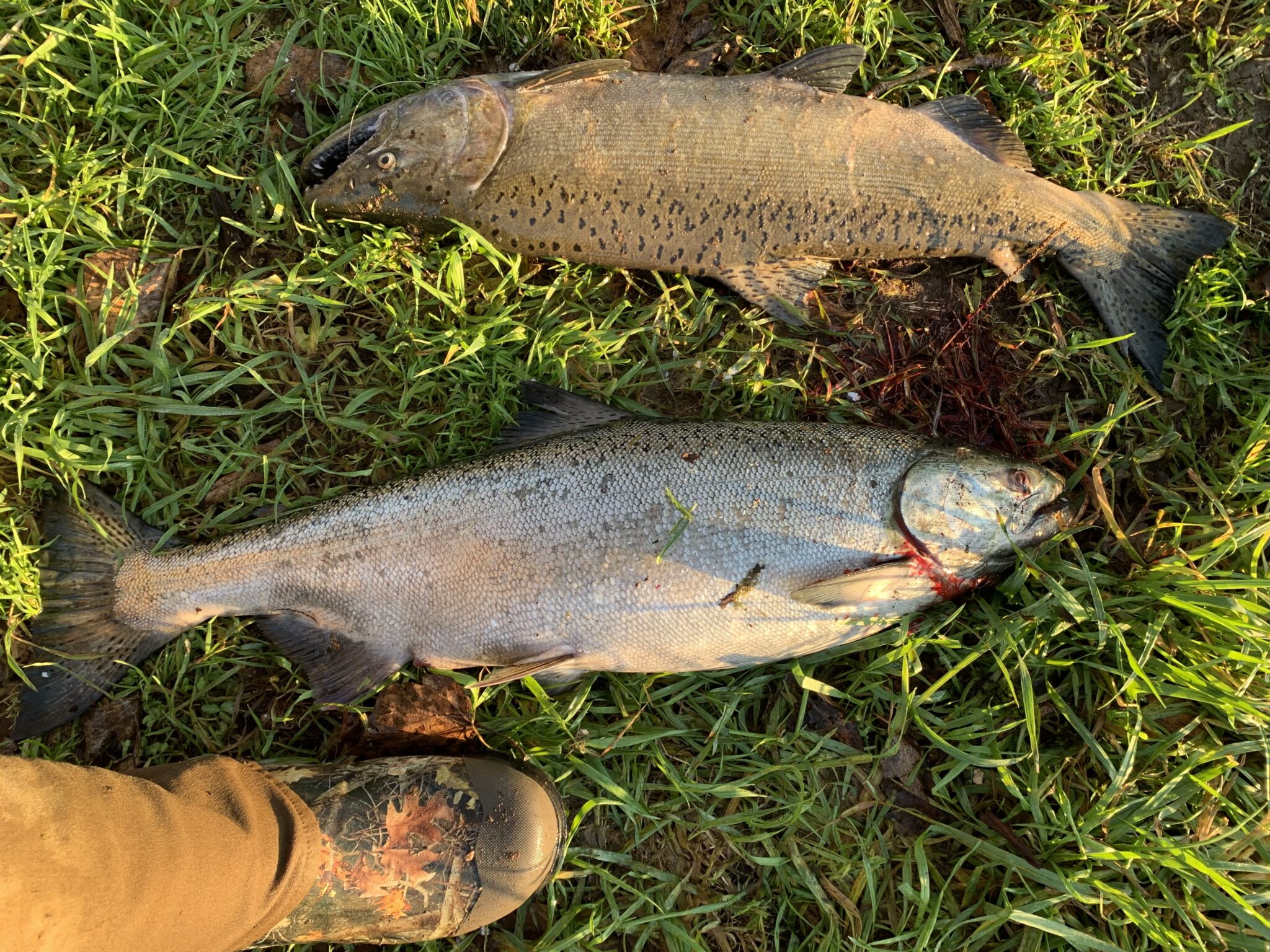
Salmon do not act the same in every place. A Chinook salmon in a deep river may need heavier gear than a pink salmon in a small stream. A coho near a tidal beach may respond to a moving spoon, while a sockeye in a clear river may require a legal drift presentation.
Salmon also change behavior during their life cycle. Some feed actively in salt water before entering rivers. Others may feed less during the spawning run but still react to movement, color, scent, or a lure entering their space. This is why a method that works in one river may fail only a few miles away.

Salmon Species and Shore Fishing Conditions
The species below are common targets for shore anglers, but local runs vary. Always identify the fish before keeping it, because some species have different rules or may be protected.
| Salmon species | Common shore water | Useful approach |
|---|---|---|
| Chinook | Large rivers, tidewater, beaches | Heavy spinning gear, plugs, spoons, roe where legal |
| Coho | Rivers, estuaries, beaches, piers | Spoons, spinners, jigs, flies, bait where allowed |
| Sockeye | Rivers and lake outlets | Legal drift methods, flies, small lures where permitted |
| Pink | Small rivers, beaches, tidal water | Light to medium spinning gear, small spoons and jigs |
| Chum | Rivers, estuaries, beaches | Strong tackle, large flies, spoons, legal bait methods |
chinook require the most care when choosing tackle because large fish can exceed 20 pounds. Pink salmon often suit beginners because they may be smaller and can be targeted with lighter gear. For a child, a medium spinning setup is usually easier than a long surf rod or fly rod.

Freshwater, Saltwater, Surf, and Pier Salmon Fishing
Freshwater salmon fishing often takes place in rivers, streams, channels, and lake outlets. Look for current seams, deep pools, gravel edges, submerged logs, and places where fast water meets slow water. Salmon use these areas to rest or move with less effort.
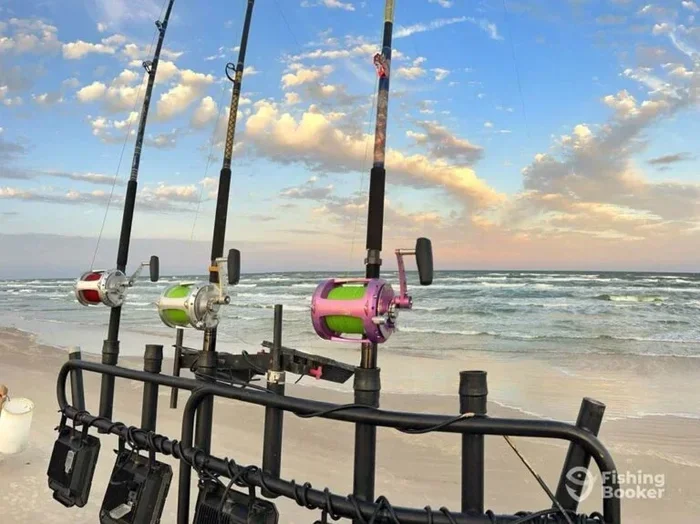
Saltwater salmon fishing includes beaches, rocky shorelines, piers, jetties, and estuaries. Fish may follow baitfish close to shore during low light, tide changes, or active feeding periods. In surf fishing, you must cast beyond breaking waves while keeping enough line control to detect a strike.
Pier fishing allows you to reach deeper water without wading. It also gives access to current and structure. The tradeoff is crowding, limited casting space, and a greater need for safe hook handling.
Choose Gear That Matches Salmon and Shore Conditions
The right shore salmon setup balances casting distance, line control, strength, and comfort. A long rod can improve casting range, but a shorter rod may be easier for children or anglers fishing tight riverbanks. A medium-power rod may work for smaller salmon, while a medium-heavy rod gives more control around strong current and structure.
Rod power means how much force it takes to bend the rod. Rod action means where the rod bends. A fast-action rod bends near the tip and gives quick lure control. A moderate-action rod bends farther down the blank and can help keep treble-hooked fish connected.

A Practical Shore Salmon Setup
For many river and estuary situations, start with a 9- to 10-foot medium or medium-heavy spinning rod. Pair it with a 3000- to 5000-size spinning reel with a smooth drag and enough spool capacity for long casts.
A 3000-size reel suits smaller salmon, pink salmon, and lighter river work. A 4000- or 5000-size reel offers more line capacity and drag strength for Chinook, surf conditions, or heavy current. A reel with about 15 pounds of usable drag can handle many shore situations, but the rod, knots, and line must also match.
| Gear part | Good starting range | Best fit |
|---|---|---|
| Spinning rod | 9–10 feet, medium to medium-heavy | Rivers, estuaries, beaches |
| Spinning reel | 3000–5000 size | Beginners and general shore use |
| Main line | 20–30 lb braid or 12–20 lb mono | Distance and strength |
| Leader | 10–20 lb fluorocarbon or mono | Clear water and abrasion |
| Lure weight | 1/2–2 ounces | Rivers, piers, and light surf |
| Hook range | Size 1 to 2/0, as legal | Bait, flies, and single-hook rigs |
This setup suits an adult beginner who wants one flexible outfit. An experienced angler may choose a 10- to 11-foot rod for surf distance or a specialized float rod for controlled drift work. For a child, reduce the rod length to 7 or 8 feet and use a lighter lure that the child can cast safely.
Spinning Reels, Baitcasters, and Spincast Combos
A spinning reel is the best first choice for most salmon shore anglers. It casts light and medium lures with little practice, handles braided line well, and does not create the backlash that can occur with a baitcaster. Backlash is a nest of line caused when a baitcaster spool spins faster than the lure pulls line away.
A baitcaster can give experienced anglers strong control and accurate casts. It works well for heavier plugs, jigs, and large spoons. It is less forgiving for beginners, especially when wind affects the lure.
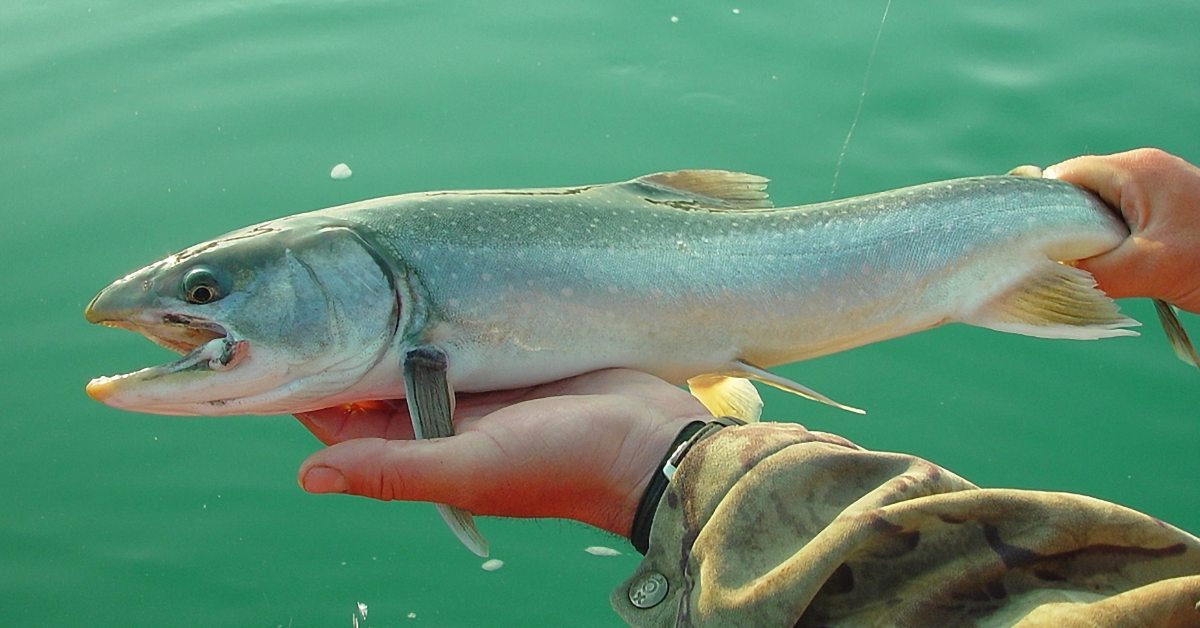
A spincast combo is simple and often suits young children. It may be fine for small salmon in open water, but many low-cost spincast reels have limited drag strength and line capacity. Treat a spincast combo as an entry-level or gift option, not a universal salmon setup.
Fly Rods, Telescopic Rods, and Travel Options
Fly fishing for salmon from shore requires a rod matched to the species, fly size, current, and local rules. A 9-foot 7- or 8-weight fly rod may suit smaller salmon and moderate rivers. Larger Chinook, strong current, and heavy flies may call for a 9- or 10-weight setup.
Telescopic rods are easy to carry and useful for travel. Their compact size can help anglers who hike to remote banks or travel by plane. However, the joints need regular cleaning, and a telescopic rod may not feel as crisp or strong as a one-piece or two-piece rod.
Ice fishing rods are not designed for normal shore salmon casting. Their short length limits casting distance and line control. Use one only for a specific legal ice-fishing situation, not for riverbanks, beaches, or piers.

Pick the Right Line, Leader, and Terminal Tackle
Line choice affects casting, bite detection, abrasion resistance, and fish control. Braided line has a thin diameter and low stretch, so it casts far and transmits lure movement well. Monofilament has more stretch and floats, which can help with some bobber or bait presentations. Fluorocarbon is stiff, sinks, and is less visible underwater than many lines.
A common setup uses 20- to 30-pound braided main line tied to a 10- to 20-pound leader. Use a heavier leader near rocks, logs, docks, or large fish. Use a lighter leader when the water is clear and salmon are cautious, but do not reduce strength so far that a fish breaks off.

Braided Line Versus Monofilament
Braided line is a strong choice for long casts and deep water. Its small diameter cuts through wind better than thick monofilament. Its low stretch helps you feel a lure touch bottom or a fish pick up bait.
Monofilament remains useful for beginners because it is cheap, easy to tie, and forgiving during sudden runs. It also costs less to replace after a bad wind knot. For a child or a first setup, 15- to 20-pound monofilament may be easier to learn with than braid.
| Line type | Main strength | Main limitation | Best user |
|---|---|---|---|
| Braided line | Long casts and high strength | Can cut hands and slip on knots | Experienced or distance-focused anglers |
| Monofilament | Low cost and easy knots | More stretch and thicker diameter | Beginners and children |
| Fluorocarbon | Low visibility and abrasion resistance | More costly and stiff | Leaders and clear water |
| Fluorocarbon-coated mono | Softer than full fluorocarbon | Not as abrasion resistant | General leader use |
The main difference between braid and monofilament is stretch. Braid gives direct contact, while monofilament acts like a soft shock absorber. If you use braid, add a leader and learn a reliable connection such as an FG knot, Alberto knot, or double uni knot.

Hooks, Swivels, Sinkers, Bobbers, and Leaders
Terminal tackle means the small gear at the end of your line. This includes hooks, sinkers, swivels, snaps, leaders, floats, and lure connections. Use strong components with smooth eyes and clean finishes.
A barrel swivel can reduce line twist when fishing bait or spinning lures. A snap can make lure changes fast, but use a small, strong snap that does not affect lure movement. Egg sinkers, pencil leads, and split shot can help reach a salmon’s depth, but weight rules differ by location.
Circle hooks may reduce deep hooking when used with bait, especially if you allow the fish to move off before applying steady pressure. Do not jerk hard with a circle hook. Barbless hooks can make release easier and may be required in some waters.
Select Lures and Baits That Fit the Water
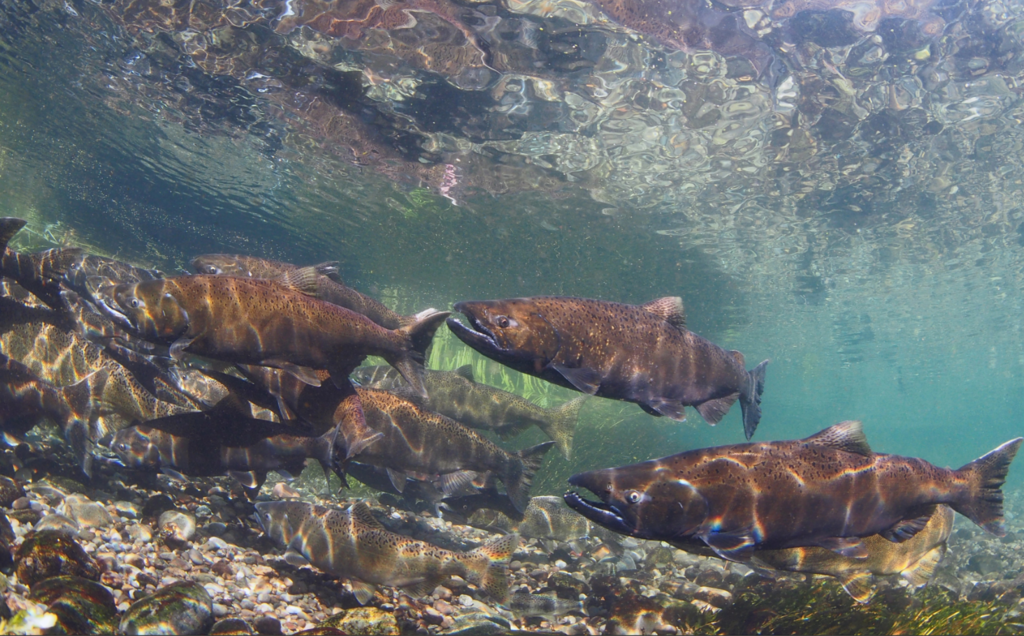
The best salmon lure is not always the largest or brightest option. It must reach the right depth, move at a useful speed, and remain legal for the water. Spoons, spinners, jigs, plugs, soft plastics, and flies all have a place.
Spoons flash and wobble as they move. They work well in rivers, estuaries, beaches, and piers. Spinners create vibration and flash, which can help in stained water. Jigs sink fast and work well in deeper water or strong current.

Spoons, Spinners, Jigs, and Plugs
Choose a 1/2- to 1-ounce spoon for many rivers and estuaries. Move toward 1 1/2 or 2 ounces for surf, deep current, or strong wind. Silver, chrome, blue, green, pink, orange, and brass are common colors, but water clarity and light should guide your choice.
Spinners suit smaller rivers and active fish. A size 3 to 5 spinner may fit pink salmon, coho, or smaller Chinook. Keep the blade turning at a steady speed. If it stops, slow your retrieve or check for weeds.
Jigs work for vertical or long casts. Cast upstream or across the current, let the jig sink, and lift it with short hops. Plugs can be productive for large salmon in deep rivers, but they require stronger tackle and careful hook checks.

Bait, Roe, Flies, and Soft Plastics
Roe, shrimp, sand shrimp, herring, and cut bait are used in some salmon fisheries. Bait can be effective, but it also brings strict rules in many rivers. Some waters ban bait, scent, treble hooks, or exposed hooks during parts of the season.
Soft plastics can imitate eggs, small fish, shrimp, or worms. They work best when rigged with a hook or jig head that matches the size of the bait. A plastic that is too large may look unnatural or fall outside local tackle rules.
Flies can imitate eggs, leeches, nymphs, and small baitfish. Salmon fly fishing from shore may require a two-handed rod, a switch rod, or a standard single-handed fly rod. The best choice depends on casting room, current, and the species.
| Presentation | How to fish it | Good water type |
|---|---|---|
| Spoon | Cast, allow it to sink, then retrieve with a steady wobble | River, beach, pier |
| Spinner | Cast across current and keep the blade turning | Small and medium rivers |
| Jig | Let it sink, then lift and drop it | Deep rivers and piers |
| Float and bait | Drift bait at a controlled depth | Rivers and tidewater |
| Fly | Swing, strip, or drift based on current | Rivers and estuaries |
| Plug | Cast and retrieve at a selected depth | Deep rivers and strong current |
A small tackle box should hold several lure weights, spare leaders, hooks, swivels, split rings, pliers, and a line cutter. Gift buyers should choose a simple box with labeled compartments instead of a large box filled with random tackle.

Find Productive Shore Water
Salmon often use the same water features for rest, travel, and feeding. Learning to read the shoreline can matter more than owning extra lures. Watch the surface, current, depth changes, baitfish, birds, and other anglers.
In rivers, focus on seams where fast water meets slow water. Check the head and tail of pools, the inside bend, deep slots, gravel bars, and the edge of submerged structure. Salmon may move through shallow water but rest in deeper, slower pockets.
River Features to Fish
A current seam is a visible line between two water speeds. Cast slightly upstream and allow your lure to travel through the seam. Keep your rod tip high enough to control line, but not so high that wind creates a large bow.
The head of a pool is where faster water enters deeper water. Salmon may pause there before moving upstream. The tail of a pool is where water shallows and speeds up. Fish may hold nearby, but wading across the tail can disturb fish and create a safety risk.
Look for undercut banks, boulders, fallen trees, and deep slots. These features provide cover and reduce current pressure. Do not stand directly on a narrow travel lane if you can fish from farther back.
Beaches, Piers, Jetties, and Estuaries
On beaches, salmon may travel close to shore when baitfish move in. Fish during low light, tide changes, or periods when birds and bait are active. Walk slowly and cast from different angles instead of staying in one spot and repeating the same cast.
Piers offer depth, but current can create dangerous tangles. Keep hooks covered while moving, and never cast over another angler’s line. A landing net with a long handle may be useful from a pier, while a short net is easier on a rocky bank.
Jetties can hold fish but often have slippery rocks and breaking waves. Wear footwear with strong grip, stay away from the edge, and do not fish alone in rough conditions. A personal flotation device may be appropriate near deep water, even when you are standing on shore.
Use Tide, Light, Weather, and Water Flow
Tide movement can bring baitfish and salmon close to shore. A moving tide often creates more current than a slack tide, but the best period varies by location. Ask a local tackle shop about the tide stages that usually produce safe and legal access.
Low light can make fish less wary. Overcast skies may reduce glare. Rain can change river color and flow. A sudden rise in water may open new travel lanes, while dirty flood water can make lure fishing difficult.
A simple fishing log helps you find patterns. Record the date, tide, water level, weather, lure, depth, and fish activity. Experienced anglers use notes to replace guesswork with repeatable choices.
Rig and Cast for Salmon From Shore
A good shore salmon rig puts the lure or bait in the fish’s path while keeping enough control to detect a strike. Start with a clean spool, a strong connection, and a leader that matches the cover. Check every knot before casting.
Set your reel drag before the first cast. Drag is the reel’s pressure system that lets line leave the spool under heavy force. Set it tight enough to control the fish, but loose enough to protect the line during a hard run.
A Simple Spinning Rig
Use this basic rig for many river and estuary situations:
- Spool the reel with 20- to 30-pound braid or 15- to 20-pound monofilament.
- Attach a 2- to 4-foot leader with a strong knot.
- Add a spoon, spinner, jig, or legal bait hook.
- Check that the hook point is sharp.
- Set the drag before you cast.
- Cast across or slightly upstream.
- Let the lure reach the target depth.
- Retrieve at a steady speed while watching the line.
If the lure spins instead of wobbling, inspect the snap, split ring, and leader. If the line twists, change the lure connection or use a swivel where appropriate.
How to Cast for Distance and Control
Face the target with your feet about shoulder width apart. Hold the rod with your finger against the line. Open the bail, swing the rod behind you, and cast forward with a smooth motion. Release the line when the rod points toward the target.
Do not use only your arm. A smooth body turn and steady rod load create better casts with less effort. Stop the line with your finger just before the lure lands, then close the bail by hand to reduce loose loops.
For river fishing, accuracy often matters more than maximum distance. Cast near the seam, boulder edge, or deep slot. In surf fishing, distance matters more, but wind and wave angle can make a shorter cast more productive.
Drift, Swing, and Retrieve Methods
A drift lets bait or a lure move with the current. Cast upstream, mend the line if needed, and keep the presentation near the selected depth. Mending means repositioning line on the surface so current does not pull the lure away from its path.
A swing carries a lure across current in an arc. This method works well with spoons, spinners, and flies. Keep slight tension so you can feel a strike without dragging the lure too fast.
A straight retrieve works for active fish. Change speed, depth, and pause length. If a lure gets follows but no strikes, try a slower retrieve or a small change in color and size.
Follow a Step-by-Step Shore Salmon Plan
A planned approach saves time and reduces random lure changes. Begin with safety and regulations, then study the water before making your first cast. Move only when you have tested the likely holding areas with a clear presentation.
This process works for beginners and remains useful for experienced anglers. You can make it more advanced by adding a fishing log, water-temperature notes, and species-specific lure choices.
- Check the rules before leaving home. Confirm the fishing license, open season, salmon species rules, daily limit, size limit, hook type, bait rules, and area closures.
- Check weather and water conditions. Avoid unsafe surf, flood water, lightning, and high winds.
- Choose a safe access point. Look for stable footing, room to cast, and a clear path to land a fish.
- Identify the likely travel lane. Study seams, pools, current edges, tide lines, baitfish, and depth changes.
- Rig a lure that reaches the water column. Start with a medium spoon, spinner, jig, or legal bait rig.
- Make short test casts. Check lure action, current speed, bottom depth, and line control.
- Cover the water in a pattern. Change angle, distance, depth, and retrieve speed before changing everything.
- Move carefully when the area is quiet. Walk along the bank or pier without stepping into fish-holding water.
- Set the hook with control. Use a firm lift or steady pressure that suits the hook style.
- Fight the fish with the rod low to the side. Keep pressure away from rocks and logs while allowing the drag to work.
- Land the fish safely. Use a net when possible, or guide the fish into shallow water without dragging it over rocks.
- Release or keep it by the rules. Handle released salmon with wet hands and limit air exposure.
Fight and Land a Salmon Safely
Salmon often make a fast first run. Keep the rod bent but avoid lifting the fish straight up with the rod. Use side pressure to turn the fish away from logs, rocks, pilings, and strong current.
Do not try to stop a large salmon by locking the drag. A tight drag can break the leader, pull the hook, or damage the rod. Let the fish run when needed, then gain line when it turns.
Use a Landing Net and Proper Tools
A rubber or coated landing net is kinder to fish and reduces hook tangles. Choose a handle length that fits your water. A long handle helps from piers and steep banks. A shorter net is lighter for hiking and easier in small streams.
Carry long-nose pliers, forceps, a line cutter, spare leaders, and a hook file. Keep pliers attached to a lanyard near fast water. Do not place loose hooks in a pocket or on the ground.
A stringer should only be used when local rules allow it and you intend to keep legal fish. Never use a stringer for a fish you plan to release.
Catch-and-Release Best Practices
Wet your hands before touching a salmon. Keep the fish in the water whenever possible. Support its body with one hand and avoid squeezing the belly or holding the gill covers.
Remove the hook with pliers. If the hook is deep, cut the line close to the hook instead of forcing it out. Keep the fish’s air time short, and revive it facing into gentle current until it swims away.
🌿 Conservation Note: Use barbless hooks when allowed, pack out damaged line, and never leave bait, hooks, or plastic on the bank. Lost line can harm birds, mammals, and fish long after the fishing day ends.
Safety Matters More Than a Long Cast
Shore fishing can look calm while hiding serious risks. Slippery rocks, rising water, breaking waves, hooks, cold temperatures, and remote access can turn a simple trip into an emergency. Tell someone where you are going, when you expect to return, and what access route you will use.
Wear polarized sunglasses to reduce glare and protect your eyes from hooks. Use a personal flotation device near deep water, on jetties, or while fishing from a kayak. A U.S. Coast Guard-approved PFD is the right standard for boating and kayak fishing.
Wading and River Safety
Never assume clear water is shallow or safe. Use a wading belt, felt or rubber soles suited to local rules, and a wading staff when needed. Cross only where the current is slow and the bottom is visible.
If water reaches above your knees and pushes hard against your legs, turn back. Do not cross while carrying a fish, net, or open tackle box. Fish with a partner in remote areas.
Check water levels before you go. Rivers can rise fast after rain, dam releases, or snowmelt. If the water looks higher or faster than expected, choose a different spot.
Surf, Jetty, and Pier Safety
Do not turn your back on waves. Watch the water for several minutes before walking onto a jetty or rock shelf. Wear a PFD near breaking water, and leave when wind or swell increases.
Keep hooks covered while walking through a crowd. Announce casts when people are nearby. On a pier, watch for overhead wires, railings, and other anglers.
For kayak fishing, wear your PFD from launch to landing. Bring a whistle, phone in a waterproof case, paddle leash where appropriate, and a plan for wind and tide. A fish finder can help locate depth, but it does not replace a weather check or navigation skills.
⚠️ Safety Warning: Check the forecast, water level, tide, and access conditions before fishing. Do not wade in flood water, fish exposed rocks during rough surf, or enter a kayak without a properly fitted U.S. Coast Guard-approved PFD.
Common Shore Salmon Fishing Mistakes
Most poor results come from a mismatch between the presentation and the water, not from a lack of expensive gear. Anglers often cast too far, fish too fast, use a weak leader, or stand where salmon need to pass.
Fix one variable at a time. Change depth before changing color. Change retrieve speed before buying another lure. This approach helps beginners learn and helps experienced anglers avoid wasting a tide.
| Mistake | Why it hurts | Better choice |
|---|---|---|
| Using gear that is too light | Weak control and broken leaders | Match rod and line to salmon size |
| Casting without reading water | Missed travel lanes | Study seams, depth, and current |
| Fishing too fast | Lure leaves the strike zone | Slow down and test depth |
| Ignoring knots | Lost fish and gear | Test every connection by hand |
| Standing in the fish lane | Spooks fish and blocks others | Fish from behind the edge |
| Over-tightening drag | Breaks line or pulls hooks | Let the drag work |
| Keeping illegal fish | Violates rules and harms runs | Check species and limits first |
| Leaving line on shore | Creates wildlife hazards | Pack out all line and tackle |
The best shore anglers remain flexible. If the river rises, move to a softer edge. If the tide falls, check a deeper channel. If the water clears, use a longer leader and a smaller presentation.
Build a Budget-Friendly Salmon Setup
You can fish for salmon without buying the most expensive rod or reel. Current pricing ranges from about $80 to $150 for a basic spinning combo, $150 to $350 for a stronger general-purpose setup, and more for specialized surf, float, or fly gear. Check the latest listing because materials, features, and prices change.
The reel’s drag and line capacity matter more than a high bearing count. A reel with a smooth, sealed drag and corrosion-resistant parts may last longer in salt water than a reel marketed with many bearings but poor sealing.
| Budget level | Expected setup | Best for |
|---|---|---|
| Under $100 | Basic 7–9 ft combo, mono line | Kids, beginners, small salmon |
| $100–$250 | 9–10 ft rod, 3000–5000 reel, braid | General river and estuary use |
| $250–$500 | Stronger rod and saltwater-rated reel | Frequent anglers and larger salmon |
| $500 and up | Specialized surf, float, or fly outfit | Experienced anglers and focused travel |
A beginner should spend first on a dependable reel, sharp hooks, and a correct line setup. An experienced angler may spend more on reduced weight, better balance, smoother drag, corrosion resistance, and a rod designed for a specific lure range.
For gift buyers, avoid guessing at a highly specialized fly rod or surf setup. A quality pair of polarized sunglasses, a landing net, pliers, a tackle box, or a local tackle-shop gift card may be more useful.
Saltwater Corrosion and Gear Care
Salt water damages reels, guides, hooks, snaps, pliers, and line. After saltwater fishing, rinse the rod and reel with a light freshwater spray. Do not use a high-pressure stream, which can drive salt deeper into bearings and seals.
Wipe the gear dry, loosen the drag, and store the reel in a dry place. Inspect line near the leader knot and check guides for cracks. Replace rusty hooks, bent split rings, and rough leaders.
| Task | When to do it | What to check |
|---|---|---|
| Light freshwater rinse | After every saltwater trip | Salt, sand, and spray |
| Wipe and dry | Before storage | Reel body and guides |
| Inspect leader | Every trip | Nicks, knots, abrasion |
| Check hooks | Before each outing | Sharpness and rust |
| Loosen drag | During storage | Drag washers |
| Deep clean reel | As needed | Handle, bail, spool, and line roller |
Good gear care can extend the life of a setup, but it cannot repair a cracked rod, damaged drag, or badly corroded bearing. Replace parts before they fail beside the water.
🔧 Quick Fix: If a spinning reel develops line loops, close the bail by hand after each cast, check that the spool is not overfilled, and inspect the line roller for dirt. Remove a few yards of damaged line if the problem continues.
Tips for Beginners, Kids, and Gift Buyers
The best salmon setup for a beginner is the one that feels balanced and is easy to use. A 9-foot medium spinning rod may suit an adult on a river or beach. A 7- or 8-foot medium rod is easier for a child to hold, cast, and control.
Teach children to stand behind the casting line, wear eye protection, and keep hooks covered until the adult gives permission to cast. Use practice plugs in an open area before adding hooks. Start with short casts and simple retrieves.
👪 Parent or Gift-Buyer Note: For a child, choose a light spinning combo with a comfortable handle, simple drag controls, and a reel that closes smoothly. Avoid buying a large surf rod or heavy baitcaster unless the child already has the strength and skill to use it safely.
A Simple First-Day Lesson
Begin by showing the angler how the bail, drag, handle, and line work. Let them hold the rod while you explain that the rod bends and the drag gives line during a strong run.
Next, practice casting with a rubber plug. Teach them to look behind and beside them before each cast. Once they can cast safely, use a small spoon or legal lure with a single hook if possible.
Give the new angler one clear job at a time. They can watch the line, count the lure down, or turn the reel handle. Fishing becomes less stressful when the lesson feels like a game instead of a test.
What to Pack for a Shore Salmon Trip
A small, organized pack is safer than a large tackle box filled with loose gear. Bring only what fits the species, water, and forecast.
- Fishing license and required stamps
- Rod, reel, spare line, and leader
- Two or three lure styles
- Pliers and line cutters
- Landing net
- Polarized sunglasses
- Wading belt or PFD when needed
- Water, food, sunscreen, and warm layers
- Phone in a waterproof case
- Bag for trash and old fishing line
A cooler can carry food or legal fish, but it adds weight on long walks. If you use one, keep it stable and do not place it where it blocks a safe exit route.
Know the Rules and Protect Salmon Runs
Fishing regulations can change by river, season, tide zone, and salmon species. A license may be required for freshwater, saltwater, or both. Some locations require a salmon stamp, catch card, report card, or special permit.
Rules may cover open dates, daily limits, size limits, bait, scent, lead, hook size, barbs, lure count, and whether you may fish from a certain bank. Some waters allow only artificial flies or single hooks. Others close when salmon numbers drop.
📜 Check Local Regulations: Before fishing, confirm the current rules with your state wildlife agency, provincial agency, tribal fishery authority, or local harbor office. Do not rely only on an old regulation book, a social media post, or advice from another angler.
Release wild or protected salmon with wet hands and minimal handling. Keep only legal hatchery or marked fish when the rules require it. Learn how to identify clipped fins, tags, or other local marks before keeping a fish.
Never move salmon, eggs, or baitfish between waters. Dispose of unused bait properly. Clean mud and plant material from boots, waders, nets, and kayaks to reduce the spread of invasive species.
When to Ask a Local Tackle Shop or Guide
A local tackle shop can answer questions that general articles cannot. Staff may know which access points are open, which lure weights reach the current, and whether the run is safe for beginners. Ask what species are present, what line strength is common, and which rules changed recently.
A licensed fishing guide can shorten the learning curve. This is useful when you are traveling, fishing a large river, or trying to target a species such as Chinook in heavy current. A guide can also teach safe wading, boat handling, fly casting, and fish handling.
Ask for help when your knots fail, your reel has salt damage, or you cannot identify a salmon. Professional advice costs less than a lost fish, a damaged reel, or a dangerous mistake.
Frequently Asked Questions
Q: What is the best rod length for salmon fishing from shore?
A: A 9- to 10-foot rod is a strong general choice for river, estuary, beach, and pier fishing. It offers casting distance and line control. Use a shorter 7- or 8-foot rod for children, tight banks, or small salmon. Choose a longer surf rod when distance and wave height demand it.
Q: What line should I use for salmon from shore?
A: Use 20- to 30-pound braided line with a 10- to 20-pound monofilament or fluorocarbon leader for many situations. Use heavier line near rocks, logs, strong current, or large Chinook. Beginners may prefer 15- to 20-pound monofilament because it is easier to tie and costs less.
Q: Can I catch salmon with a spinning reel?
A: Yes. A spinning reel is the easiest reel type for most shore anglers. It casts light and medium lures well and does not create baitcaster backlash. Choose a 3000- to 5000-size reel with a smooth drag and enough line capacity.
Q: What lure works best for salmon from shore?
A: Spoons, spinners, jigs, plugs, flies, and legal bait rigs can all work. Start with a 1/2- to 1-ounce spoon or spinner for rivers and estuaries. Use heavier lures for surf or strong current. The right lure depends on species, depth, water color, current, and local rules.
Q: What colors are good for salmon lures?
A: Silver, chrome, brass, pink, orange, blue, and green are common choices. Use bright colors in stained water or low light and more natural finishes in clear water. Lure action, depth, and retrieve speed often matter as much as color.
Q: Is braid better than monofilament for salmon?
A: Braid casts farther and gives better sensitivity because it has little stretch. Monofilament is cheaper, easier to tie, and more forgiving for beginners. Braid with a fluorocarbon or monofilament leader is a flexible choice for experienced shore anglers.
Q: Do I need waders to fish for salmon from shore?
A: No. Many salmon are caught from dry banks, beaches, piers, and jetties. Waders can help you reach water, but they also add risk. If you wade, use a belt, wear suitable footwear, check the current, and avoid deep or fast water.
Q: Can children fish for salmon from shore?
A: Yes, if the location is safe and the setup fits the child. Use a 7- or 8-foot spinning rod, light-to-medium power, and a simple lure. Practice with a hookless plug first. An adult should manage sharp hooks, landing, rules, and water safety.
Q: How do I know when a salmon is near shore?
A: Look for jumping fish, baitfish, birds, current seams, surface disturbances, fresh fish movement, and other signs of a run. These signs do not guarantee a bite. Salmon may travel through an area quickly or hold below the surface.
Q: How should I set the drag for salmon?
A: Set the drag firmly enough to control the fish but not so tight that the line breaks during a run. Test it by pulling line from the spool with the rod held at a safe angle. The correct setting depends on line strength, leader strength, hook size, and cover.
Q: What should I do if a salmon runs downstream?
A: Keep steady side pressure and move along the bank if it is safe. Do not hold the rod straight up or lock the drag. Follow the fish when possible, guide it away from rocks and logs, and call for help if the bank becomes unsafe.
Q: Are barbless hooks better for salmon?
A: Barbless hooks can make release faster and reduce handling time. They may also be required by local regulations. Use steady pressure during the fight, because slack line can let a barbless hook come free.
Q: Can I use live bait for salmon?
A: Only where local rules allow it. Some rivers and seasons ban bait, scent, or specific hook styles. Check the current rules before buying bait. Legal bait may include roe, shrimp, herring, or other options, but regulations vary widely.
Q: Is a fish finder useful for shore salmon fishing?
A: A fish finder is less useful from a normal riverbank than from a kayak or boat. It can help kayak anglers understand depth and structure, but it does not replace water reading. Never let electronics distract you from weather, tide, current, or boat safety.
Q: How long does salmon fishing gear last?
A: A well-cared-for rod can last many years, while reels may need service sooner, especially in salt water. Signs it is time to replace gear include a cracked rod, rough reel bearings, a damaged drag, bent guides, repeated line failure, or a reel that no longer closes or turns smoothly.
Final Thoughts
Shore salmon fishing rewards preparation more than expensive gear. Start with a balanced spinning setup, learn to read current or tide, use a legal presentation, and practice safe fish handling. A 9- to 10-foot medium or medium-heavy rod, a 3000- to 5000-size spinning reel, suitable line, and a small selection of spoons, spinners, jigs, or flies will cover many situations.
Match the setup to the angler. Beginners benefit from simple spinning gear. Experienced anglers may want specialized rods, stronger reels, float systems, or fly tackle. Kids need shorter rods, lighter lures, close supervision, and a safe place to learn. Gift buyers should focus on comfort, fit, and useful tools rather than flashy extras.
Most of all, follow the rules and protect the fishery. Check the license and season, respect private property and other anglers, pack out line, and release fish with care. The goal is not just one memorable salmon at the end of the line. It is learning how the water works and leaving a healthy run for the next angler.