How To Know What Fish Are In A Lake: Simple Guide
A lake can look quiet on the surface while holding several fish species below. The best way to find out what fish are in a lake is to combine local fishing records, state stocking data, habitat clues, and direct observation. A fish finder can help confirm where fish gather, but it cannot always identify the species.
This process works for a first-time angler, a parent choosing a fishing spot for a child, and an experienced angler planning a serious bass, trout, catfish, or walleye trip. You do not need expensive gear to start. A notebook, polarized sunglasses, a simple rod, and good local information can reveal a great deal.

Quick Answer: How Do You Know What Fish Are in a Lake?
To know what fish are in a lake, check your state wildlife agency’s stocking reports and lake surveys first. Then study the lake’s habitat, talk with local bait shops and anglers, and watch for fish, bait, spawning beds, birds, and surface activity. A fish finder can show depth and fish marks, while fishing with different baits can provide useful clues. No single method proves every species is present.
Start With Reliable Lake Information
The fastest way to learn what fish live in a lake is to find official information before you go. Many public lakes have fish surveys, stocking records, depth maps, and management reports. These records often provide a better starting point than guesses based on the lake’s size or location.
A lake may contain fish that are not easy to catch. It may also have species that were stocked years ago but now exist in low numbers. Treat every source as a clue, then compare several clues before making a firm plan.
Check State Wildlife Agency Records
Every U.S. state has a fish and wildlife agency, although the name varies. Search the agency website for the lake name plus terms such as:
- Fish survey
- Lake survey
- Stocking report
- Fisheries management
- Fish population
- Depth map
- Angler report
- Sampling results
Agency reports may list largemouth bass, smallmouth bass, bluegill, crappie, channel catfish, flathead catfish, trout, walleye, muskie, northern pike, carp, or other species. They may also show average fish size and the number of fish found during electrofishing or net surveys.
Electrofishing uses a controlled electric current to briefly stun fish so biologists can measure, identify, and release them. It is a sampling tool, not a complete count of every fish in the lake. A survey can miss deep fish, cover-oriented fish, and species that avoid the sampling area.

Look for Stocking Records
Stocking records show which fish were placed in a lake and when. This information is useful for trout, walleye, striped bass, catfish, and other managed species. A stocking event proves fish were introduced, but it does not prove that many remain today.
Fish survival depends on water temperature, oxygen, food, predators, disease, harvest, and habitat. Some stocked trout may leave through a stream or die when summer water becomes too warm. Some fingerling bass may grow into adults and reproduce for many years.
| Information source | What it can tell you | Main limitation |
|---|---|---|
| State stocking report | Species stocked, date, and number | Does not prove current abundance |
| Fisheries survey | Species found, size, and population clues | Covers only sampled areas |
| Lake map | Depth, channels, points, and structure | Does not identify fish species |
Official records are most useful when you read the date and survey method. A report from several years ago still offers direction, but current fishing pressure and habitat changes may have altered the lake.
Read Local Regulations
Fishing regulations can also reveal the species that managers expect anglers to catch. Look for size limits, bag limits, closed seasons, tackle rules, and special regulations for trout, bass, walleye, muskie, or panfish.
Some lakes have rules that protect spawning fish or improve size structure. Others may restrict live bait, barbed hooks, lead sinkers, or the use of baitfish. Always check the current rules from your state or local wildlife agency before fishing.
📜 Check Local Regulations: You need a valid fishing license in most U.S. states. Confirm the lake’s current rules, fish limits, size limits, closed seasons, bait restrictions, and hook requirements before you cast.
Use the Lake’s Habitat as a Fish Clue
The best way to predict fish species is to match fish with the habitat they need. Fish are not spread evenly across a lake. Each species favors certain water temperatures, depths, cover, bottom types, and food sources.
A shallow, weedy lake may support bass, bluegill, crappie, carp, and catfish. A cold, deep lake with rocky shorelines may support trout or walleye. A warm, muddy reservoir may hold largemouth bass, channel catfish, white bass, shad, and crappie.
Study Depth and Lake Shape
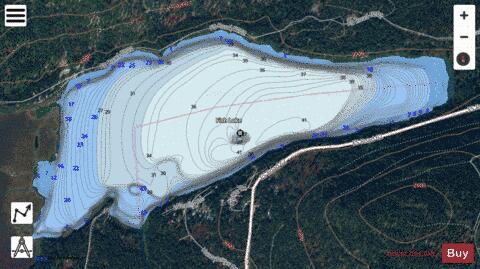
A bathymetric map shows underwater depth. It may also show creek channels, humps, points, flats, drop-offs, and submerged roads. These features help you understand where fish can feed, rest, spawn, and escape from heat.
Fish often use depth changes because they create travel routes. A point that reaches from shore into deep water can act like an underwater hallway. A creek channel can guide fish from a shallow flat to a deep basin.
Look for these map features:
- Shallow flats
- Steep points
- Creek channels
- Submerged timber
- Rock piles
- Weed lines
- Deep holes
- Dam faces
- Inlets and outlets
A simple paper map can help a beginner. An experienced angler may use a GPS chart, mapping app, or boat-mounted sonar. A shore angler can still benefit by finding steep banks, visible points, and creek mouths.
Identify Cover and Structure
Cover is something that fish can hide in or around. Examples include weeds, brush, fallen trees, docks, rocks, and boat ramps. Structure describes the shape of the lake bottom, such as a ledge, point, hump, or drop-off.
Bass often use wood, weeds, docks, and rocky banks. Crappie may gather around brush piles, standing timber, and bridge supports. Bluegill often use shallow cover and spawning areas. Catfish may hold near channels, deep holes, flats, or inflowing water.
| Habitat clue | Fish it may support | What to look for |
|---|---|---|
| Weed beds and lily pads | Bass, bluegill, crappie | Baitfish, frogs, insects |
| Rocky points and steep banks | Bass, walleye, perch | Crayfish, current, depth changes |
| Muddy creek arms and deep holes | Catfish, carp, crappie | Warm water, food wash, low light |
These patterns are not guarantees. Fish behavior changes with season, weather, water clarity, fishing pressure, and food supply. Use habitat to choose where to investigate, not to assume a species is present.
Watch the Water’s Food Chain
Fish follow food. If you see small minnows near a bank, larger fish may use the same area. If insects hatch near the surface, trout, bluegill, and other fish may rise to feed. If crayfish shells appear along rocky shorelines, bass and walleye may have a useful food source nearby.
Birds can also provide clues. Loons, herons, gulls, cormorants, and kingfishers may gather where baitfish are easy to reach. Birds do not identify the fish species by themselves, but they show where food activity occurs.
Look for:
- Small fish near rocks or weeds
- Insects on the water
- Crayfish shells
- Frog activity
- Diving birds
- Baitfish dimples
- Larger fish chasing bait
- Fish scales along a shoreline
Learn the Fish Species Common in Lakes
Knowing the appearance and habits of common freshwater fish makes lake research easier. You do not need to become a fisheries biologist. Start with the species most likely to occur in your region and learn their basic habitat needs.
A local field guide or state fish identification page can help. Take clear photos of any fish you catch. Photograph the side of the fish, keep the fish wet, and release it quickly if you do not plan to keep it.

Bass
Largemouth bass favor warm water, cover, and ambush points. Look near weeds, wood, docks, rocks, and shaded banks. Their upper jaw usually extends past the rear edge of the eye.
Smallmouth bass prefer clearer water, rocky areas, points, and moderate depth. They often occur in lakes with rock, gravel, or cool inflows. Their upper jaw usually does not extend far past the eye.
Bass may strike soft plastics, crankbaits, spinnerbaits, jigs, live bait, or topwater lures. Catching a bass confirms that bass are present in that area, but one catch does not show how many bass live in the lake.
Trout
Trout need cooler, well-oxygenated water than many warmwater species. They may live in spring-fed lakes, deep reservoirs, mountain lakes, or lakes that receive seasonal stocking.
Rainbow trout have a pink or red side stripe. Brown trout often show dark spots and a golden or brown color. Lake trout usually live in deep, cold water and may require a boat, downrigger, or specialized sonar.
Trout may feed on insects, small fish, and crustaceans. Fly rods, spinning reels, small spoons, inline spinners, and light monofilament are common choices. Check whether the lake receives seasonal trout stocking before buying specialized trout gear.
Panfish
Panfish is a broad term that includes bluegill, redear sunfish, crappie, perch, and similar small freshwater fish. These species are common targets for beginners, children, and families because simple tackle can work well.
Bluegill often have a deep body and a small mouth. Crappie have a larger mouth and a more compressed body. Yellow perch show dark vertical bars and often travel in groups.
A spincast combo with 4- to 8-pound monofilament, a small hook, split shot, and a bobber is a practical starter setup. It is also a useful gift for a child because it is simple to cast and easy to maintain.
Catfish
Channel catfish, blue catfish, and flathead catfish prefer different conditions. Channel catfish often use creek channels, flats, and current. Blue catfish can grow large in rivers and reservoirs. Flathead catfish often prefer warm, slow water and may use deep cover.
Catfish have whisker-like barbels called sensory organs. They use smell and taste to locate food. Common baits include worms, cut bait, chicken liver, stink bait, and live bait where legal.
A medium or medium-heavy spinning rod with 10- to 20-pound line can suit smaller channel catfish. Larger fish may require stronger rods, heavier line, larger hooks, and more drag capacity. The best setup depends on the expected fish size and the cover near shore.
Walleye and Other Predators
Walleye often favor cool, clear water, rocky points, gravel, deep edges, and low-light periods. Their large eyes help them feed in dim water. Anglers may use jigs, minnows, crankbaits, and live bait rigs.
Northern pike and muskie prefer lakes with suitable forage and vegetation. They have sharp teeth and need careful handling. A wire or heavy fluorocarbon leader may prevent bite-offs, depending on local rules and the lure used.
White bass, hybrid striped bass, and other schooling predators may chase baitfish in open water. A fish finder can help locate these schools, but surface birds and bait activity can also reveal them.
| Species group | Common habitat | Useful first clue |
|---|---|---|
| Bass | Wood, weeds, docks, rocks | Ambush cover and baitfish |
| Trout | Cold, clear, oxygen-rich water | Stocking data or cold inflows |
| Panfish | Shallow cover and weed edges | Small fish, insects, and beds |
| Catfish | Channels, holes, flats, inflows | Muddy water and food sources |
| Walleye | Rock, gravel, points, deep edges | Cool water and low light |
Species groups often overlap. A rocky point may hold bass, walleye, perch, and baitfish at different times. The most useful clue is the combination of habitat, season, depth, and food.
Ask People Who Fish the Lake
Local knowledge can save hours of guesswork. A nearby bait shop often knows which fish anglers are catching, what baits work, and which parts of the lake receive pressure. Shop staff also know whether reports are current or based on old stories.
Ask clear questions instead of asking only, “What is biting?” Try questions such as:
- What species do people catch here most often?
- Is the lake stocked with trout or walleye?
- Are bass or crappie being caught from shore?
- What size hooks and line are common here?
- Are live minnows legal on this lake?
- Where can I find a current depth map?
- What species should a beginner target?
Experienced anglers may give general answers rather than exact spots. Respect that choice. You can still learn a lot by asking about depth, habitat, seasons, and safe access.

Use Fishing Reports Carefully
Fishing reports can identify active species, but they are snapshots. A report from last weekend may not match today’s water temperature or weather. A report may also focus on one species because that is what the angler wanted to catch.
Compare several reports. Look for repeated mentions of the same species over time. Pay attention to the date, water level, water clarity, bait, depth, and section of the lake.
Check Marinas, Clubs, and Public Records
Boat ramps, marinas, fishing clubs, and local conservation groups can offer useful information. Some clubs publish tournament results that reveal the presence and size of bass, walleye, or other sport fish.
Public meeting notes may mention fish kills, invasive species, habitat work, or stocking plans. Search the lake name with terms such as “fisheries meeting,” “habitat project,” or “invasive species.”
Do not treat social media posts as proof. A photo may come from a different lake, an old season, or a private stocking event. Verify important claims with a state agency or local fisheries office.
Use a Fish Finder Without Misreading It
A fish finder sends sound waves into the water and displays the returning signals. It can show depth, bottom shape, vegetation, and suspended objects. Some units use down imaging, side imaging, or scanning sonar to create more detailed views.
A fish finder can help answer, “Where are objects or fish-like marks?” It cannot always answer, “Which species are those fish?” Sonar marks may represent fish, bait, vegetation, bubbles, debris, or interference.

Learn the Basic Sonar View
On traditional sonar, a fish may appear as an arch because it moves through the sonar beam. A fish directly under the transducer may create a stronger mark. Fish on the edge of the beam may appear as shorter lines or weak marks.
Large arches do not always mean large fish. Boat speed, sensitivity, depth, fish position, and sonar settings affect the image. A group of small fish may appear as a cloud, while a single fish may show as a line.
Start with simple settings. Use the unit’s automatic mode, then learn how depth range, sensitivity, frequency, and chart speed change the display. Practice in shallow water where you can compare sonar images with visible cover.
Match Sonar With Habitat
Sonar works best when paired with a lake map and known fish behavior. If you see marks near a brush pile, you may have fish using cover. If you see a dense cloud above a deep basin, it may be baitfish. A line of marks along a break may show fish traveling through a depth change.
Side imaging can help locate timber, rock, weed lines, and bait away from the boat. Down imaging can show more detail below the boat. These tools are useful for boat fishing and kayak fishing, but they add cost and require practice.
| Tool | Best use | Limitation |
|---|---|---|
| Traditional sonar | Depth and fish-like marks below the boat | Species identification is uncertain |
| Down imaging | Detail under the boat | Narrow viewing area |
| Side imaging | Finding cover and structure beside the boat | Needs steady movement and setup |
| Shore observation | Surface activity and visible habitat | Cannot view deep water |
For a beginner, a basic sonar unit may be enough. An experienced angler who fishes large reservoirs may value GPS mapping and side imaging. A gift buyer should consider whether the angler owns a boat or kayak before purchasing electronics.
💡 Pro Tip: Mark the depth, habitat, and time whenever you see fish marks. After several trips, patterns become clearer. The notes are often more useful than a single impressive sonar image.
Fish the Lake as a Simple Identification Test
Fishing can provide direct evidence, but your method should be controlled. Use a few presentations that cover different parts of the water column. This helps show whether the lake has shallow panfish, mid-depth predators, bottom feeders, or suspended fish.
You do not need a large tackle box. A bobber rig, a bottom rig, a small jig, and one moving lure can test several possibilities.

Build a Basic Search Kit
A simple lake search kit may include:
- A 6- to 7-foot medium-light spinning rod
- A spinning reel with a smooth drag
- 6- to 10-pound monofilament
- Small hooks from size 6 to size 10
- Split shot and small sinkers
- Bobbers
- Small jigs
- Soft plastics
- Inline spinners
- Worms or legal live bait
- Needle-nose pliers
- A landing net
- Polarized sunglasses
- A small tackle box
Rod power describes how much force a rod needs to bend. Action describes where it bends, such as near the tip or farther down the blank. A medium-light, fast-action spinning rod is a flexible choice for panfish, trout, small bass, and light lake work.
A spincast combo is often easier for children and new anglers. A spinning reel offers better control and more lure options. A baitcaster suits experienced anglers who need accurate casting with heavier lures, but it can create backlash when set up or cast poorly.
Test Different Depths
Start shallow, then work deeper. Use a bobber to suspend bait at 2, 4, and 6 feet. Cast near weeds, docks, shade, rocks, and drop-offs. If nothing happens, change the depth before changing every piece of tackle.
A bottom rig can test for catfish, carp, bullheads, and other bottom-feeding fish. A small jig or soft plastic can test for crappie, bass, perch, and other active fish. A spinner or small crankbait can reveal whether predators are willing to chase.
Record the result:
- Bait or lure used
- Depth
- Water temperature, if available
- Water clarity
- Location type
- Time of day
- Fish species
- Fish size
- Weather
This turns a casual trip into a small field study. It also helps you avoid changing too many variables at once.
Use Seasons to Narrow the Possibilities
Fish behavior changes throughout the year. Water temperature affects metabolism, spawning, feeding, and depth. Seasonal patterns cannot prove that a species is in the lake, but they can make a search more efficient.
Spring may bring fish into shallow water. Summer often pushes some fish deeper or into shade. Fall can create strong feeding activity as fish prepare for colder months. Winter may concentrate fish in deep water or under ice, depending on the lake and species.

Spring Clues
In spring, warming water draws many fish toward shallow flats, creek arms, and protected bays. Bass and panfish may move near spawning areas. Trout may feed near cool inflows. Catfish may become more active as water warms.
Look for gravel, sand, firm bottom, and protected shorelines. Avoid walking through visible spawning beds. Repeated disturbance can harm eggs and nesting fish.
Summer Clues
In summer, warm surface water may hold bluegill, bass, and baitfish early and late in the day. During bright, hot periods, fish may move deeper, seek shade, or hold near oxygen-rich inflows.
Thermal layers can form in deep lakes. The upper layer may be warm, while the lower layer is colder but low in oxygen. Fish often gather near the transition zone, called the thermocline, when conditions allow.
Fall and Winter Clues
Fall can bring baitfish and predators toward creek mouths, points, and windblown banks. Crankbaits, jigs, spoons, and live bait may all help locate active fish.
In winter, fish may slow down. Ice fishing rods, small jigs, tip-ups, and sonar can help in safe conditions. Never assume ice is safe because another person is on it. Ice thickness varies across springs, currents, vegetation, and moving water.
| Season | Places to investigate | Likely clues |
|---|---|---|
| Spring | Protected bays, flats, creek arms | Warming water and shallow fish |
| Summer | Shade, deep edges, weed lines, inflows | Temperature and oxygen changes |
| Fall | Points, creek mouths, windblown banks | Baitfish and predator activity |
| Winter | Deep basins and safe ice areas | Slow fish and concentrated marks |
⚠️ Safety Warning: Wear a U.S. Coast Guard–approved PFD when boating, canoeing, or kayak fishing. Check weather before leaving, tell someone your plan, and take a boating safety course if you operate a boat. For ice fishing, check local ice conditions and use proper ice safety equipment.
Compare the Main Ways to Identify Lake Fish
Each method has a different level of cost, speed, and confidence. The strongest answer usually comes from combining official records with habitat study and direct evidence.
A beginner may need only a phone, map, polarized sunglasses, and simple tackle. An advanced angler may add sonar, water-temperature tools, underwater cameras, or a GPS mapping system.
| Method | Cost and skill | Confidence level |
|---|---|---|
| Wildlife agency records | Usually free; low skill | Good for known managed species |
| Local bait shop reports | Free to low cost; low skill | Useful but time-sensitive |
| Habitat study | Free; moderate observation | Shows what may fit the lake |
| Direct catch | Low to moderate; basic skill | Strong proof of that species |
| Fish finder | Moderate to high; practice needed | Shows fish-like marks, not certainty |
| Underwater camera | Moderate; clear water helps | Can show fish shape and behavior |
No method is perfect. A direct catch is strong evidence, but it reflects one location and time. A survey is scientific, but it samples only part of a lake. Sonar covers water quickly, but species identification remains uncertain.
Pros and Cons of Common Methods
The table below shows why experienced anglers use more than one source. It also helps gift buyers choose useful equipment instead of buying electronics that may not fit the angler’s boat or skill level.
| Method | Pros | Cons |
|---|---|---|
| Official records | Reliable, often free, includes management data | May be old or incomplete |
| Local reports | Current and practical | Can be biased or vague |
| Catching fish | Confirms a species directly | Takes time and skill |
| Fish finder | Finds depth, structure, and fish-like marks | Costs money and needs practice |
| Underwater camera | Shows fish and cover clearly | Water clarity and light limit use |
For most beginners, start with records, a local shop, and simple fishing. For experienced anglers, sonar and mapping can improve search speed. For a child or gift buyer, a basic rod combo and a safe, easy-access lake may provide more value than an advanced fish finder.
Look for Physical Signs of Fish
Fish leave clues even when they do not bite. Surface activity, bubbles, feeding marks, spawning beds, and damaged baitfish can help you narrow the search.
Walk slowly along the bank. Wear polarized sunglasses to reduce glare and see into shallow water. Avoid stomping near the edge, since fish in clear water may detect vibration and move away.

Surface Activity
Watch for:
- Splashes
- Swirls
- Baitfish jumping
- Small dimples
- Fish chasing near the bank
- Foam lines
- Insects disappearing from the surface
- Birds diving repeatedly
A single splash may be a carp, bass, turtle, bird, or falling branch. Repeated activity in the same area is more useful. Note the time and wind direction, then return later to see whether the pattern repeats.
Spawning Beds
Spawning beds often look like pale, round patches in shallow water. Bluegill beds may occur in groups. Bass beds may be larger and more spread out. Fish can also spawn on gravel, vegetation, wood, or other firm surfaces.
Do not handle fish from beds unless necessary. If you catch one, keep it in the water as much as possible and release it near the capture area. Use barbless hooks where required or where practical.
Baitfish and Invertebrates
Turn over a small rock near the shore and look for crayfish, insect larvae, snails, and other food. Do not destroy habitat or remove animals when local rules prohibit it. A seine net may require permission or may be illegal in some waters.
Food clues are most useful when paired with fish habitat. Crayfish near rocks suggest a food source for bass or walleye. Insects near a cold inlet may attract trout or panfish. Minnows near weeds may attract bass, crappie, pike, or other predators.
Use Water Conditions to Refine Your Search
Water clarity, temperature, oxygen, current, and level affect where fish spend time. These conditions can also explain why a species appears in a survey but not during your trip.
Clear water often lets fish see predators and anglers from farther away. Fish may move deeper, under cover, or into low light. In stained water, fish may rely more on vibration, smell, and sound.

Water Temperature
A low-cost thermometer can improve your notes. Measure the surface temperature from the same type of location each trip. A boat angler can compare surface readings with deeper readings when using suitable equipment.
Temperature ranges vary by species and region, so avoid treating one number as a rule. Instead, use the reading to compare conditions. A cold spring may attract trout. A warming cove may attract bass and panfish. A hot, stagnant area may have poor oxygen.
Water Clarity
Water clarity changes lure choice and fish behavior. In clear water, natural colors, lighter line, and longer casts may help reduce disturbance. In stained water, brighter colors, vibration, and scent may help fish locate a presentation.
Fluorocarbon is a low-stretch line often used as a leader because it is less visible underwater than many lines. Monofilament is affordable and forgiving for beginners. Braided line is thin and strong for its diameter but may need a leader and careful knot work.
Inflows and Outflows
Where water enters or leaves a lake, current can bring food and oxygen. Fish may gather near culverts, creeks, spillways, springs, and dam areas. These places can also be dangerous.
Never fish below a dam or near strong current without understanding the hazards. Keep away from restricted areas and follow posted rules. A life jacket is especially important around moving water, steep banks, and boat launches.
Know Which Gear Helps You Identify Fish
Gear cannot replace observation, but the right tools make the process easier. Choose gear based on the fish you expect, the water type, and your skill level.

Rod and Reel Choices
For general lake fishing, a 6- to 7-foot medium-light or medium spinning rod is a useful starting point. Pair it with a 1000- to 2500-size spinning reel and 6- to 10-pound line for panfish, trout, small bass, and light rigs.
A medium rod with 8- to 12-pound line suits larger bass, walleye, and moderate catfish. A medium-heavy rod with 12- to 20-pound line may fit heavier cover or larger catfish.
A telescopic rod is portable and useful for travel, but compact joints can collect dirt and may wear sooner if stored wet. An ice fishing rod is short and designed for vertical presentations, not ordinary bank casting. A fly rod suits anglers who want to study insects and present flies, but it requires different casting skills.
Terminal Tackle
Terminal tackle means the small items at the end of the line. It includes hooks, sinkers, bobbers, swivels, leaders, and snaps.
A small tackle box should include:
- Hooks in several sizes
- Split shot
- Egg or barrel sinkers
- Bobbers
- Swivels
- Fluorocarbon leaders
- Soft plastics
- Jigs
- Small spinners
- Pliers
- Line cutters
Use the lightest practical tackle that matches the fish and cover. Heavy gear can reduce the feel of small bites. Very light gear can break when a strong fish reaches wood or weeds.
Supporting Tools
Polarized sunglasses help you see shallow fish and protect your eyes from hooks. A landing net reduces handling stress, especially for trout and larger fish. Long-nose pliers help remove hooks safely.
For kayak fishing, secure rods, tackle boxes, pliers, and landing nets so they cannot roll overboard. Keep weight low and balanced. Do not stand in a kayak unless it is designed for stable standing and you have practiced in safe water.
Follow a Step-by-Step Lake Investigation
A repeatable plan prevents random casting. It also helps children and new anglers understand how observations connect with fishing results.
1. Choose a Legal Access Point
Confirm that the lake allows fishing from the shore, pier, boat, or kayak. Check parking rules, launch fees, private property, and restricted areas. Carry your fishing license and any required permits.
2. Find an Official Lake Profile
Read the latest stocking report, survey, depth map, and regulations. Write down every confirmed or likely species. Mark the report date.
3. Study the Habitat
Use a map and your own eyes. Find shallow flats, deep water, rocks, weeds, timber, creek mouths, docks, and points. Choose two or three areas with different habitat types.
4. Watch Before You Cast
Spend 10 minutes observing. Look for baitfish, birds, insects, swirls, beds, and shade. Record wind direction, water clarity, and surface conditions.
5. Start With Simple Tackle
Use a bobber rig or small lure first. Fish two or three depths. Move slowly and make controlled changes. Do not switch bait after every cast.
6. Test the Bottom
Use a small sinker or jig to learn whether the bottom is soft, rocky, weedy, or covered with wood. Do not drag hooks through areas where they can snag dangerous debris.
7. Record Every Catch
Take a quick photo if you need help with identification. Wet your hands before touching the fish. Release it promptly unless you plan to keep it legally for food.
8. Verify the Species
Compare the fish with a state fish identification guide. Look at fin shape, body markings, mouth shape, scales, and tail. If you are unsure, ask a fisheries biologist or local tackle shop.
9. Compare Results With Official Data
If you catch bluegill, bass, or catfish that match the lake survey, your evidence is strong. If you catch an unexpected species, report it to the wildlife agency when appropriate, especially if it may be invasive.

Avoid Common Mistakes
The most common mistake is assuming that a lake contains a species because another nearby lake does. Lakes differ in temperature, oxygen, food, access, stocking history, and connected waterways.
Another mistake is trusting one fish finder mark. A sonar display can look convincing, but it may show weeds, debris, or baitfish. Use sonar to guide your search, then confirm species through a catch, underwater image, or reliable survey.
| Mistake | Why it causes trouble | Better approach |
|---|---|---|
| Trusting an old report | Fish populations change | Check dates and current notices |
| Fishing only one depth | Fish may be deeper or shallower | Test several depths |
| Using heavy gear for all fish | Small bites become hard to feel | Match line and rod to species |
| Guessing from one sonar mark | Marks are not always fish | Match sonar with habitat and catches |
| Ignoring regulations | Rules vary by lake | Check the current agency guide |
Do not handle fish with dry hands. Do not leave cut line, bait containers, or hooks on the bank. Do not release aquarium fish, live bait, or unwanted species into a lake.
🌿 Conservation Note: Wet your hands before handling fish, support large fish with both hands, keep air exposure short, and cut the line near a deeply hooked fish when removal may cause more harm. Dispose of old monofilament and braid in a recycling bin or line collection tube.
Understand Fish Identification Limits
Even skilled anglers can misidentify fish. Young fish may not show adult colors. Water clarity can change how markings look. Hybrid species may share features with both parent species.
Use several features rather than one color. Check the mouth, body shape, fin placement, tail, spots, stripes, and scale pattern. Regional identification guides are better than random online photos because species names and hybrids vary by area.
An underwater camera can help in clear water. It may show fish shape and behavior, but murky water, low light, vegetation, and depth can limit the view. Never place a camera where it could snag boat traffic, swimmers, or wildlife.
If you find an unfamiliar fish, do not move it to another waterway. Photograph it, note the location, and contact the state wildlife agency. This is especially important for invasive carp, snakeheads, gobies, or other species restricted in your region.
Decide What Information Matters Most
You do not need to know every species before your first trip. Focus on the information that changes your plan.
For a beginner, the key questions are:
- Is fishing legal at this lake?
- What species are common?
- Can I safely reach the water?
- What simple bait or lure fits those species?
- What line and hook size should I use?
- What are the current limits?
For an experienced angler, add depth, forage, seasonal movement, water temperature, fishing pressure, and structure. For a gift buyer, focus on access, safety, ease of use, and the angler’s target species.
Match the Research to the Angler
A child may enjoy catching bluegill from a dock more than searching for deep lake trout. A new angler may need a spincast combo and a bobber. A bass angler may prefer a medium baitcasting setup, soft plastics, jigs, and a fish finder.
| Angler | Useful information | Practical setup |
|---|---|---|
| Beginner | Common species, access, simple rules | Spincast or spinning combo |
| Child or family | Safe shore access, panfish, easy bait | Short rod, bobber, small hooks |
| Bass angler | Cover, depth, forage, seasonal patterns | Medium casting or spinning setup |
| Trout angler | Stocking, temperature, inflows | Light spinning or fly setup |
| Catfish angler | Bottom type, channels, fish size | Medium-heavy rod and strong line |
| Boat angler | Maps, sonar, launches, hazards | GPS, fish finder, PFD |
The right answer depends on the goal. “What fish are in this lake?” is different from “What fish can I catch from shore with my child?” Start with the trip you actually want to take.
Budget Notes for Finding Lake Fish
Research does not have to be expensive. Free agency reports, public maps, local libraries, and conversations at a bait shop can provide strong information.
Current pricing ranges from little or nothing for maps and reports to several hundred dollars for advanced sonar and mapping systems. A basic spinning or spincast combo often costs far less than a complete boat electronics package. Check the latest listing for updated features and prices.
| Budget level | Useful tools | Best for |
|---|---|---|
| Free to low | Agency reports, maps, notebook, sunglasses | Beginners and shore anglers |
| Moderate | Spinning combo, tackle, thermometer, landing net | Families and regular anglers |
| Higher | Sonar, GPS mapping, underwater camera | Boat anglers and advanced users |
Spend first on safe access, a valid license, suitable line, hooks, and simple bait. Electronics can wait until you know how often you fish and what type of water you use.
Frequently Asked Questions
Q: Can a fish finder tell me exactly what species are in a lake?
A: Usually, no. A fish finder can show depth, structure, vegetation, and fish-like marks. It cannot reliably separate bass from walleye or crappie from perch in every situation. Use sonar with lake surveys, habitat clues, and direct catches.
Q: What is the easiest fish to identify in a lake?
A: Bluegill, largemouth bass, trout, catfish, and yellow perch are often easy to identify with practice. Use a regional fish guide because young fish, hybrids, and local species can look different.
Q: How do I know if a lake has bass?
A: Check state survey reports, tournament results, local fishing reports, and bass-friendly habitat such as weeds, wood, docks, rocks, and shallow spawning areas. A legal catch is direct confirmation.
Q: How do I find out if trout are stocked in a lake?
A: Search your state wildlife agency’s stocking schedule or trout management page. Confirm the stocking date, species, access rules, and seasonal regulations. Stocked trout may not remain in the lake after conditions change.
Q: Can I tell what fish are in a lake by looking from shore?
A: You can find clues, but not every species. Polarized sunglasses may reveal bluegill, carp, bass, spawning beds, baitfish, and shallow trout. Deep fish usually require a survey, sonar, camera, or fishing test.
Q: What bait catches many kinds of lake fish?
A: Worms, small jigs, soft plastics, and small spinners can attract several freshwater species. Local rules may restrict live bait or baitfish. Match hook size and line strength to the fish you expect.
Q: Is a spinning reel better than a baitcaster for lake research?
A: A spinning reel is easier for beginners and works well with light line, small lures, and bobber rigs. A baitcaster offers control with heavier lures but requires more practice. Choose the reel that fits your skill and target species.
Q: How can I identify a fish without hurting it?
A: Wet your hands, support the fish, keep it out of water for only a few seconds, and take one clear photo. Do not squeeze the body or hold a fish by the gills unless you have the training and the species permits it.
Q: Should I use a stringer when I catch fish?
A: Only keep fish when local rules allow it and you intend to eat them. A live stringer can harm fish you later release and may attract predators. A legal cooler with clean water or immediate processing is better for fish you keep.
Q: How do I know if an unfamiliar fish is invasive?
A: Compare it with your state’s invasive species guide and contact the wildlife agency if unsure. Do not release or transport a suspected invasive fish. Follow local instructions for reporting and disposal.
Q: What is the best rod for finding lake fish as a beginner?
A: A 6- to 7-foot medium-light spinning rod with 6- to 10-pound monofilament is a flexible choice for panfish, trout, small bass, and light rigs. For young children, a spincast combo may be easier to cast.
Q: Can birds prove that a lake has a certain fish species?
A: No. Birds show that food is present, but they do not identify the fish. Use bird activity as a location clue, then confirm species through records, habitat, sonar, or a catch.
Final Advice
The most dependable way to know what fish are in a lake is to build evidence in layers. Start with current wildlife agency records. Add a depth map, habitat study, local reports, and careful observation. Then fish several depths with simple, legal presentations and record what you find.
You do not need a boat, advanced sonar, or a wall of tackle to begin. A modest spinning reel, light line, small hooks, bobber, polarized sunglasses, and a safe access point can teach you a great deal. As your skills grow, add a thermometer, mapping app, fish finder, or specialized gear for bass, trout, catfish, walleye, or panfish.
The lake will not reveal every secret in one trip. Think of each outing as one page in a field guide that you write yourself. With good records, careful observation, safe practices, and respect for the fish, you can turn a question about an unknown lake into a clear and useful fishing plan.