How To Fish Flooded Lakes: Proven Bass Fishing Tips
Flooded lakes can look confusing. Fresh water covers old roads, fields, brush, and trees. Fish do not vanish, though. They often move to new cover, new feeding lanes, and safer depths. The key is to stop fishing the lake as if it were normal. Instead, treat the flooded area as a new map with fresh edges, cover, and current.
Bass may hold on flooded bushes and tree trunks. Crappie often use submerged timber, while catfish may follow channels and feed near inflowing water. Trout, walleye, and panfish can also gather around creek mouths, points, and newly covered structure. Your job is to find the depth, cover, and food that match the species you want.
This guide explains how to fish flooded lakes from shore, a boat, or a kayak. It covers safe scouting, fish location, rods and reels, line choices, lures, live bait, seasonal patterns, and conservation. It also explains what beginners, parents, and experienced anglers should change when water levels rise.

Quick answer: Find new cover, old structure, and moving water
The best way to fish a flooded lake is to locate areas where new cover meets old depth changes. Start with creek channels, roadbeds, points, flooded bushes, timber, and inflowing water. Use a fish finder when boating, then test the area with jigs, soft plastics, crankbaits, live bait, or bobbers. Fish slowly at first, watch your line, and adjust depth often.
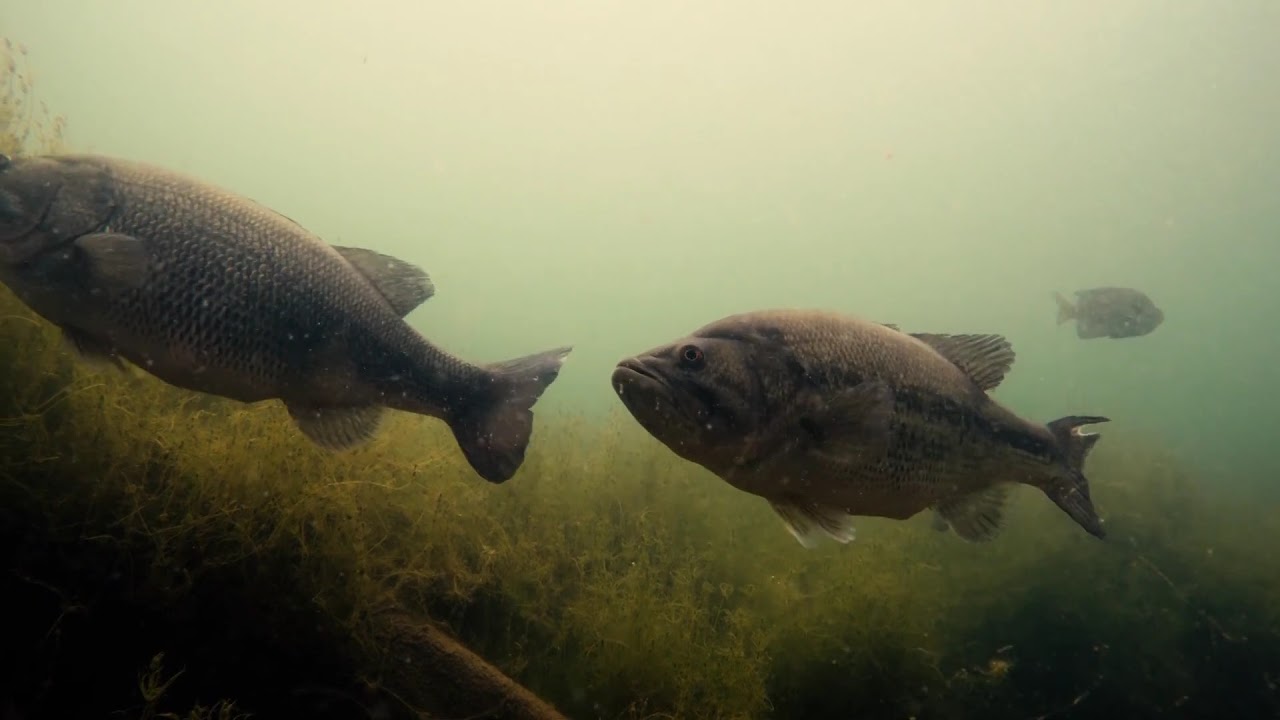
Flooded lakes reward anglers who study the water. A flooded shoreline may look full of fish, but visible cover is only one part of the picture. The best spots often combine cover with a drop-off, a channel, hard bottom, or a steady food source.
The most useful rule is simple: fish the transition. A transition can be brush beside deep water, a muddy creek joining clear water, or a flooded road crossing a creek channel. These places give fish food, shelter, and a quick escape route.
Why rising water changes fish location
Rising water gives fish access to places that were dry or too shallow before. New water covers grass, weeds, brush, trees, fence lines, and fields. It also washes insects, worms, seeds, and small animals into the lake.

Fish often move shallow during the first part of a flood. Bass may enter bushes or newly covered grass to feed. Bluegill and other panfish can move into shallow cover. Catfish may roam muddy water because the flood carries food into the lake.
As the water stays high, fish may spread out. Some remain in shallow cover, while others return to creek channels, old creek bends, and deeper timber. Weather, water color, sunlight, temperature, and current all affect this move.
The old lake still exists below the new water
Flooding changes the surface, but it does not erase the land below. Old creek channels, ditches, roadbeds, pond dams, rock piles, and submerged points remain important. Fish often use these features as travel routes.

A flooded lake is like a new house built on an old foundation. The rooms look different, but the floor plan still matters. An old creek channel may guide fish beneath flooded brush. A submerged road may offer a firm path across soft bottom.
Use a map, a lake contour chart, or a mapping app to find these features. If you have a fish finder, mark depth changes and cover as you travel. Even a basic depth finder can show where the bottom drops from 8 feet to 15 feet.
Current creates a food line
Water flowing into a flooded lake carries oxygen and food. The flow may enter through a creek, culvert, drain, spillway, or open channel. Fish often position near the edge of that flow rather than in the strongest water.
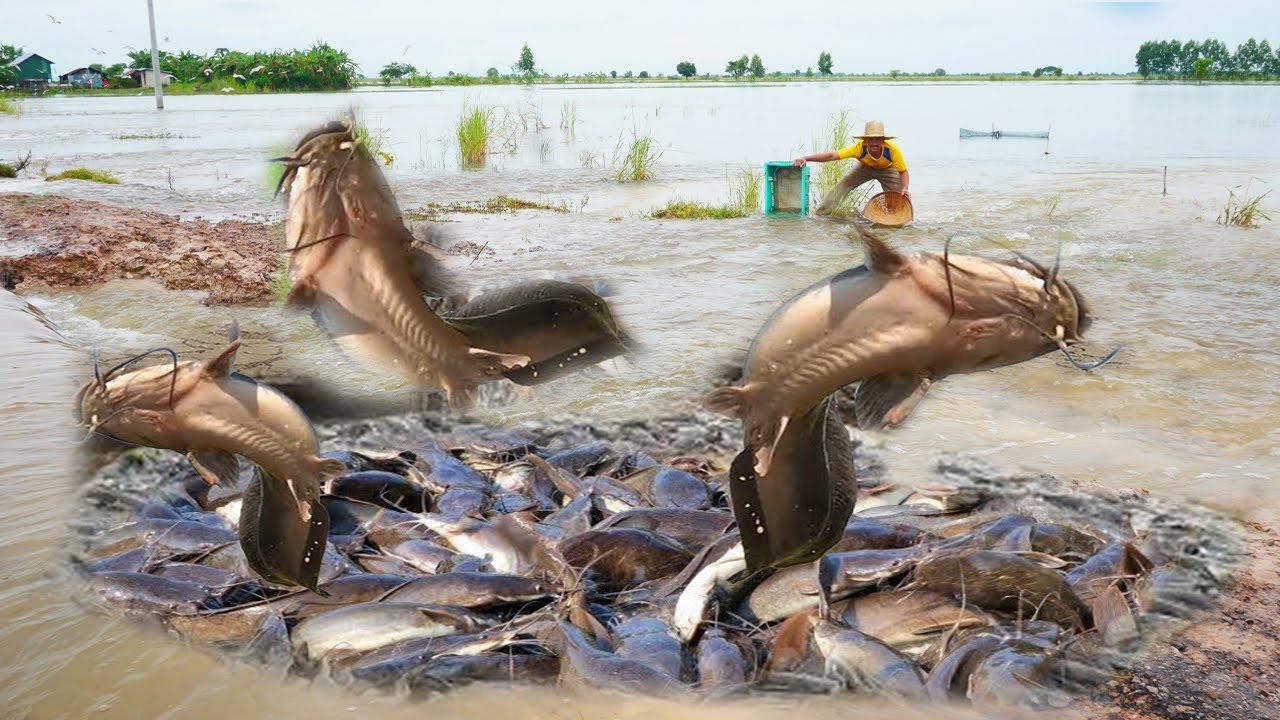
Look for a seam where clear water meets muddy water. Also check the downstream side of a point, tree, rock, or brush pile. These areas let fish face into the current while using less energy.
Do not assume every creek mouth is productive. Very cold, dirty, or fast water can push fish away. Test the area, check the temperature if possible, and compare it with nearby water.
| Flood condition | Likely fish response | First area to check |
|---|---|---|
| Fresh water covers brush | Fish may feed in shallow cover | Bush edges and pockets |
| Muddy inflow enters lake | Bait may gather near cleaner water | Clear-muddy water seam |
| Water level stays high | Fish may spread or shift deeper | Creek channels and old roads |
| Strong current enters | Fish may hold out of the flow | Downstream eddies and points |
| Water begins to fall | Fish often leave shallow cover | First drop and channel edge |
These are starting points, not rules. Fish behavior changes with species and weather. Let bites, sonar marks, and depth changes guide your next move.
Find high-value flooded structure
The best flooded-lake spots offer more than one reason for fish to stay. A tree in 3 feet of water may hold fish for a short time. A tree beside an old creek channel may hold fish through changing conditions.

Search for structure that connects shallow feeding water to deeper refuge. This can include a flooded point, a brush line beside a channel, or a roadbed crossing a creek. These locations act like fish highways with nearby food and cover.
When fishing from shore, focus on accessible edges. When fishing from a boat, work both the shallow cover and the first depth change outside it. Do not spend all day casting at the most visible tree.
Flooded bushes and grass
Newly flooded bushes can attract bass, crappie, bluegill, and other fish. In clear water, fish may sit inside the cover. In muddy water, they may hold on the outside edge where they can find food.
Use a weedless soft plastic, jig, spinnerbait, or live bait near bushes. A weedless hook has its point protected from wood or weeds. This helps reduce snags, but it does not eliminate them.
Pitch or cast beyond the target, then bring the bait through the outer branches. If the lure enters the cover too loudly, let it rest. Many bites feel like extra weight rather than a hard strike.
Flooded timber and tree rows
Standing timber gives fish shade, cover, and ambush points. It also creates a serious hazard for boats. Tree tops can sit just under the surface, while trunks and limbs may be difficult to see in muddy water.

Use your fish finder at idle speed to locate timber lines. Mark individual trees that sit near a channel or depth change. If you catch a fish, make another careful pass and check the same depth.
For bass, try a Texas-rigged soft plastic, jig, or compact spinnerbait. For crappie, small jigs under a bobber can work well around isolated limbs. For catfish, use a cut-bait or live-bait rig near deeper timber and channel edges where legal.
Old roads, fences, and hard-bottom areas
Old roads and bridge approaches often create firm travel routes. They may also include gravel, concrete, or packed clay that differs from the surrounding soft bottom. Fish can use these edges even when no cover is visible.

A roadbed is especially useful when it crosses a creek channel or drops into deeper water. Cast along the edge, not only across the top. Use a jig, crankbait, Carolina rig, or live bait to explore the bottom.
Fences can also hold fish, but they are easy to snag. Mark them on your map and approach with care. Never run a boat at speed through unknown flooded timber or old structures.
Points, creek bends, and submerged islands
Flooded points extend into deeper water and give fish several depth choices. Creek bends create outside edges, current changes, and deeper holes. Submerged islands can offer shallow feeding areas beside deeper water.
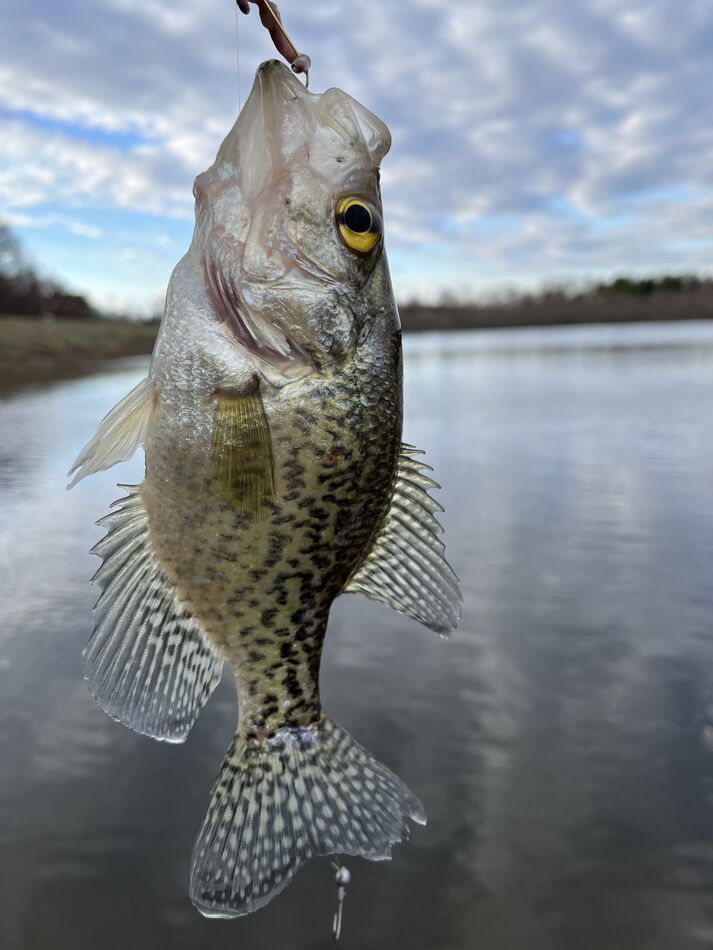
Start on the deeper side of a point. Then work toward the shallow tip. If fish are active, they may sit on top or near the edge. If the sun is bright or the water cools, they may slide down the slope.
Use contour lines to find sharp bends and points. A tight group of contour lines means a steep drop. A wide gap means a flatter area. Both can hold fish, but steep edges often give you a smaller area to search.
Match your gear to the fish and cover
The right tackle depends on the target species, cover, depth, and lure weight. A beginner does not need a large collection. One dependable spinning combo can catch bass, crappie, catfish, and panfish with simple changes.

Experienced anglers may carry baitcasters for accurate casting, heavier line for thick cover, and specialized rods for crappie or catfish. Gift buyers should favor a simple setup that is easy to cast and repair.
“Power” means how much force a rod needs to bend. “Action” means where the rod bends. A medium-power, fast-action rod bends mostly near the tip and works well for many bass lures. A light-power rod bends more easily and suits panfish.
| Target or method | Rod and reel setup | Line and terminal tackle |
|---|---|---|
| Bass in light cover | 6-foot-6 to 7-foot medium spinning rod, 2500–3000 spinning reel | 8–12 lb braid with 8–12 lb fluorocarbon leader |
| Bass in heavy timber | 7-foot medium-heavy baitcasting or spinning rod | 30–50 lb braid, strong hook, weedless lure |
| Crappie around brush | 6–10-foot light crappie rod or 6-foot-6 light spinning rod | 4–8 lb monofilament, size 4–8 hook, small jig |
| Catfish near channels | 7–8-foot medium-heavy rod with spinning or baitcasting reel | 15–30 lb mono or braid, sinker matched to current |
| Panfish from shore | 5-foot-6 to 7-foot light spinning or spincast combo | 4–8 lb monofilament, small bobber and hook |
| Walleye near drops | 6-foot-6 to 7-foot medium-light spinning rod | 8–10 lb braid with 8–12 lb fluorocarbon leader |
These pairings are broad starting points. Choose stronger line when wood is thick or large fish are present. Use lighter tackle only when it still lets you control fish safely.
Spinning reels, baitcasters, and spincast combos
Spinning reels are the easiest choice for most beginners. They cast light lures well and have less risk of backlash. A 2500 or 3000-size spinning reel fits many freshwater applications.

Baitcasters offer control and accuracy around flooded trees. A baitcaster uses a spool that spins during the cast. “Backlash” means the spool spins faster than the lure and creates a tangle. Beginners can learn it, but a spinning reel is often faster to master.
Spincast combos are simple for kids and casual anglers. They work well with bobbers, small jigs, and live bait. They are less suitable for heavy cover or repeated hard fights because the enclosed mechanism may have lower capacity and drag strength.
Line choices for flooded cover
Monofilament is affordable, flexible, and easy to knot. It floats more than fluorocarbon, which helps with bobbers and some topwater lures. It also stretches, so it can cushion sudden runs.
Fluorocarbon sinks and is less visible under water. It works well as a leader near clear water. Braid has little stretch and high strength for its diameter. It cuts through some vegetation but can dig into reel spools and may be easier for fish to see.
| Line type | Strengths | Limits |
|---|---|---|
| Monofilament | Low cost, easy knots, useful for bobbers | More stretch and memory |
| Fluorocarbon | Sinks, abrasion resistance, low visibility | Stiffer and often more costly |
| Braided line | High strength, low stretch, long life | Visible, can slip on bare spools |
| Braid with leader | Strong main line with a less visible leader | Extra knot must be tied well |
For a first setup, 8–10 lb monofilament on a light or medium spinning reel is hard to beat. For bass in heavy wood, 30–50 lb braid with a short fluorocarbon leader gives more control.
Hooks, sinkers, swivels, and leaders
Terminal tackle means the small items at the end of your line. It includes hooks, sinkers, bobbers, swivels, and leaders. Keep several sizes because flooded lakes can require fast changes.

Use a slip sinker for catfish when fish can move with the bait. Use a small split shot for panfish. A slip bobber lets you fish deeper water while still seeing a bite. Use a swivel when line twist becomes a problem, but avoid adding one when it changes the lure action.
Hook size should match the bait and fish. A size 6 or 8 hook suits many panfish baits. Bass soft plastics often use 2/0 to 4/0 hooks, depending on bait size. Check local rules before using live bait, treble hooks, lead tackle, or multiple hooks.
Choose presentations that work around cover
Flooded lakes call for controlled presentations. You need a lure or bait that reaches fish without hanging on every branch. You also need to watch your line because many bites happen as the bait falls.

Start with a simple search bait when you do not know where fish are. Then slow down after you locate cover or get a bite. This two-step approach saves time and prevents you from fishing one tree for an hour without information.
Soft plastics and Texas rigs
A Texas rig uses a soft plastic bait, an offset hook, and a bullet sinker. The hook point sits near or just under the plastic. This makes the bait more weedless than an exposed hook.
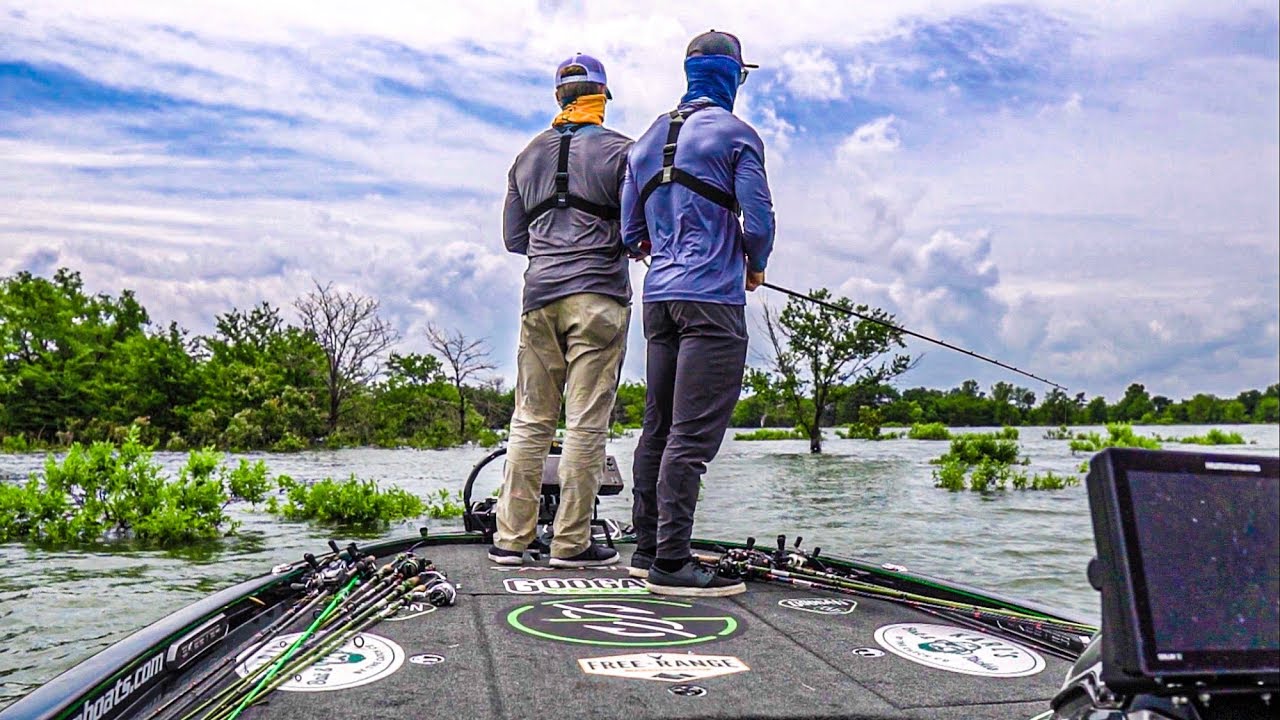
Use a 4- to 6-inch worm, creature bait, or craw near flooded bushes and timber. Cast past the target. Let the bait fall on a semi-slack line, then lift it gently. Pause beside limbs and at the base of trees.
A pegged sinker stays close to the bait. An unpegged sinker can separate slightly and make the bait move differently. Use the pegged style in heavy cover and test the unpegged style on cleaner bottoms.
Jigs and compact lures
Jigs work well because they present a compact meal and can move through cover. A bass jig with a weed guard suits wood and brush. A small marabou or hair jig can catch crappie and panfish.
Choose a 1/4- to 3/8-ounce jig for many bass situations. Use lighter jigs in shallow water or when fish are suspended. Match the color to the water: darker colors often show better in stained water, while natural colors can suit clear water.
Swim a jig over brush, hop it along a roadbed, or let it fall beside a tree. Watch for a line jump or a heavy feeling. Set the hook with control rather than yanking hard into unknown cover.
Crankbaits and spinnerbaits
Crankbaits cover water and help you locate active bass. Choose a shallow-running crankbait near flooded bushes or a medium-diving model along a drop. A square-bill crankbait can deflect off wood, but it can still snag.
Spinnerbaits are useful in wind, stain, and low light. Their blades create flash and vibration. Try a 3/8-ounce model around bushes, timber edges, and creek mouths. Keep the lure moving just fast enough to work.
Do not rely on one lure style. A crankbait may find active fish, while a soft plastic catches fish that refuse a fast presentation. The change from speed to patience often matters more than color.
Live bait and bobbers
Live bait is a strong choice for beginners, kids, and anglers who want a simple presentation. Minnows can work for crappie and bass where legal. Worms and prepared baits can suit panfish and catfish.
Set the bobber depth so the bait sits near the cover or along the drop. If you see fish marks at 8 feet, start the bait at 6 to 8 feet and adjust. Avoid placing a hook deep in a fish if you plan to release it.
Use a landing net for larger fish. Keep pliers nearby. A child should fish with an adult who can manage hooks, sinkers, and fish handling.
| Presentation | Best starting area | Main adjustment |
|---|---|---|
| Texas-rigged worm | Bushes, wood, flooded grass | Change sinker weight |
| Weedless jig | Timber and brush | Alter hop and pause length |
| Spinnerbait | Windy banks and stained water | Change blade size or speed |
| Shallow crankbait | Wood and flat flooded banks | Match running depth |
| Slip bobber and live bait | Brush, channels, and open pockets | Change bait depth |
| Cut bait | Deeper channels and current edges | Adjust sinker for bottom contact |
Each presentation has a job. Start with the one that fits the cover and water clarity. Switch when the fish, snags, or depth tell you to do so.
Use a fish finder without ignoring the shoreline
A fish finder can show depth, bottom shape, submerged timber, and sometimes fish. It does not replace judgment. A screen may show fish that are inactive, bait that is not a target, or clutter from heavy cover.
Begin with a slow idle over the area. Mark creek channels, brush piles, hard spots, and sharp depth changes. Set waypoints so you can return to the same feature from a safe angle.
If you fish from a kayak, use a compact unit with a transducer that fits your hull. Keep the battery secured and protected from water. On a small boat, learn the lake map before using the motor near flooded timber.
Shore and pier fishing
Shore anglers can catch fish in flooded lakes, but access may be limited. Look for public ramps, fishing piers, bridges, parks, and safe points. Never cross private land without permission.
Fish the edge of the bank, not only the center of a cove. Cast parallel to shore so your lure stays in the strike zone longer. Try a bobber near brush, then search deeper with a jig or sinker rig.
Wear polarized sunglasses to reduce glare and see branches near the surface. Bring a small tackle box, pliers, extra hooks, and a landing net. Avoid standing under unstable trees or on eroded banks.
Kayak fishing and boat safety
Flooded lakes contain hidden stumps, logs, fences, and rocks. Wear a properly fitted U.S. Coast Guard–approved personal flotation device at all times. Check the weather, tell someone your plan, and carry a phone or emergency device in a waterproof case.
Kayak anglers should stay clear of strong current and flooded trees. Keep hooks secured when moving. Use an anchor system only when you understand how current and wind affect the kayak.
Boat operators should idle through unfamiliar flooded areas. Keep a safe distance from other boats, swimmers, and anglers. Take a boating safety course if you are new to operating a motorized boat.
⚠️ Safety Warning: High water can hide hazards that were easy to see before the flood. Never run at speed through unknown timber, near submerged roads, or across a flooded field. Wear your PFD, check the forecast, and leave if lightning or severe weather approaches.
Follow seasonal and water-level patterns
Water level matters as much as the calendar. A lake that rose yesterday fishes differently from one that has stayed high for a month. Watch the direction of the water, not only its depth.
Fresh rising water often pushes food toward new cover. Stable high water can spread fish across the flooded zone. Falling water often pulls fish toward channels, drains, and the first drop.
Water temperature also changes the pattern. Warm conditions can increase shallow feeding. Cold conditions may place fish near deeper structure or slow their movement. Trout and walleye may react differently from bass and catfish, so identify your target first.
| Water stage | Bass approach | Panfish and crappie approach | Catfish approach |
|---|---|---|---|
| Rising quickly | Fish new bushes and shallow edges | Check fresh cover and creek mouths | Fish inflows and muddy flats |
| High and stable | Search cover beside channels | Find brush at a set depth | Work channels and deeper timber |
| Beginning to fall | Fish exits and first drops | Follow brush toward deeper water | Check drains and current routes |
| Clear after flood | Use natural colors and quieter baits | Fish precise cover | Use smaller, natural baits |
| Muddy after flood | Use vibration and darker colors | Try slower bait near cover | Cover active inflows and eddies |
Use this table to form a plan, then test it. One part of a lake may be clear while another remains muddy. Local rain can create several patterns on the same day.
Spring and early warm-water floods
Spring floods often carry worms, insects, and small baitfish into newly covered areas. Bass may move shallow to feed and spawn, but not every shallow fish is preparing to spawn. Water temperature and bottom type matter.
Look for hard bottom, protected pockets, and nearby deeper water. A medium spinning rod with 10 lb monofilament works well for beginners using small jigs, soft plastics, or live bait. Experienced bass anglers may use a medium-heavy baitcaster and 30–40 lb braid around thick wood.
Respect spawning fish and local rules. Some waters have special seasons, protected species, or limits on where and how you may fish.
Summer floods
Summer floodwater can cool some areas and add oxygen, especially near flowing water. Shade becomes important. Fish may hold under bushes, beside timber, or on the shaded side of a point.
Fish early and late when light levels are low. During the day, probe deeper edges and shaded cover. Keep live bait cool, drink water, and use sunscreen and polarized sunglasses.
Do not leave fish on a hot deck. Wet your hands before handling them, and release them quickly when appropriate.
Fall and winter high water
Fall floods can push baitfish into creeks, coves, and new cover. Bass, walleye, and catfish may use channel edges as they move. Slow-moving presentations can work when water cools.
Winter flooding often makes fish less active. Fish deeper structure and use smaller baits when needed. An ice fishing rod is not suitable for open-water flooded-lake fishing unless the manufacturer designed it for that use. Choose a normal open-water rod with enough length to control line around wood.
A practical step-by-step plan
A good plan keeps you from making random casts. Start broad, gather clues, and then slow down. This method works from shore, a kayak, or a larger boat.
1. Check rules, access, and weather
Confirm your fishing license, access rights, boating rules, and species regulations. Check size limits, bag limits, closed seasons, bait rules, and tackle restrictions. Some areas limit lead sinkers, barbed hooks, or live bait.
Look at the weather and water-level report. Tell someone where you plan to fish and when you expect to return. Pack water, a first-aid kit, a knife, pliers, sunscreen, and a charged phone.
2. Study the map before launching
Find old creek channels, roadbeds, points, drains, bridge areas, and steep banks. Mark public access and avoid restricted zones. Choose three to five areas instead of trying to fish the entire lake.
A lake map gives you a starting plan. It does not show every new limb, fence, or shallow hazard. Treat the water as unknown until you scout it at low speed.
3. Check water color and temperature
Look at the water before you choose a lure. Clear water lets fish see farther. Muddy water reduces visibility but may make vibration and movement more important.
Check temperature in several locations if you have a thermometer. Compare creek water with the main lake. A small temperature difference can help you decide whether fish may prefer the inflow or nearby water.
4. Start with a search presentation
Use a spinnerbait, crankbait, jig, or live-bait bobber to learn where fish are active. Cover the outside edge of bushes first. Then cast into open pockets and along the first drop.
Keep track of depth, cover, and retrieve speed when you get a bite. The details are more useful than the exact cast. A fish caught in 7 feet near a channel gives you a pattern to test.
5. Slow down on productive cover
After finding fish, switch to a soft plastic, jig, or precise live-bait rig. Make shorter casts to the best branches, tree bases, or channel edges. Let the bait pause longer than feels natural.
Watch the line during the fall. Set the hook when the line moves sideways, jumps, or feels heavy. In thick cover, use enough power to move the fish away from branches, but do not use reckless force.
6. Recheck the spot from a new angle
Wind, sun, and boat position can change the presentation. Move a few yards and cast along the opposite side. Fish may face into current or position on the shaded side.
If the bite stops, check a nearby spot with the same structure. Fish often move short distances as light and water flow change. A productive pattern is more valuable than one lucky catch.
Common mistakes on flooded lakes
Many anglers fish flooded lakes too fast, too shallow, or too close to visible cover. The most common mistake is assuming every flooded tree is equal. Fish prefer certain trees, depths, bottoms, and current positions.
Another mistake is ignoring safety. A flooded lake can look calm while hiding serious boat hazards. Good fishing starts with a safe route and a plan to get home.
| Mistake | Why it hurts | Better choice |
|---|---|---|
| Casting only at visible trees | Fish may use nearby channels | Fish cover plus depth change |
| Running fast through new water | Hidden hazards can damage a boat | Idle and scout |
| Using one depth all day | Fish move with light and current | Change depth often |
| Fishing heavy cover with light line | Fish can reach branches | Match line to cover |
| Setting the bobber too shallow | Bait may miss the fish | Adjust to sonar or depth clues |
| Ignoring local rules | You may face fines or harm fish | Check the wildlife agency |
Use mistakes as feedback. If you snag every cast, change the hook or angle. If you get no bites, change depth before changing every lure in your box.
How to handle and release fish
Flooded-lake fishing can produce strong fish that fight near cover. Handle them quickly and with care. Wet your hands before touching a fish, and keep it out of water for as little time as possible.
Use a landing net for larger bass, walleye, and catfish. Do not drag a fish across dry ground. Remove hooks with pliers. If a hook is deep, cut the line close to the hook instead of causing more damage.
Circle hooks can reduce deep hooking when used with bait, but they must be used correctly. Do not perform a hard, sharp hook-set with a circle hook. Follow local rules for hook type and bait.
🌿 Conservation Note: Take photos quickly, support the fish in the water, and release it headfirst when it is ready. Collect loose line and dispose of it properly. Monofilament can injure birds, turtles, and other wildlife.
Keep only legal fish that you plan to eat. Follow size and bag limits. Never move live fish or bait between lakes unless the local wildlife agency allows it.
Budget, beginner, and gift-buying advice
You can start fishing flooded lakes without expensive electronics or a large tackle collection. A basic medium spinning combo, 8–10 lb monofilament, a few hooks, split shot, bobbers, worms, and two or three lures can cover many situations.
A beginner should value ease of use. A spinning reel or spincast combo is usually simpler than a baitcaster. A 6-foot-6 to 7-foot medium spinning rod is a useful all-purpose choice for bass, panfish, and small catfish.
Experienced anglers may spend more on a fish finder, mapping, braid, specialty rods, and waterproof storage. These tools improve control and efficiency, but they do not replace reading the water.
| Budget level | Useful setup | Best suited to |
|---|---|---|
| Entry level | Spincast or light spinning combo, mono, bobber, hooks, sinkers | Kids and first-time anglers |
| Mid-range | Medium spinning combo, spare spool, braid, leader, soft plastics | Beginners who fish often |
| Advanced | Baitcaster, specialty rods, sonar, mapping, organized tackle | Experienced boat anglers |
| Shore-focused | Medium spinning rod, compact tackle box, net, polarized glasses | Bank and pier anglers |
| Kayak-focused | Shorter rod, secure tackle, compact sonar, PFD | Kayak anglers with safety skills |
Current pricing varies by brand and store. Spend first on a dependable reel, strong line, good hooks, and safety gear. A costly rod will not fix poor knots or an unsafe route.
👪 Parent or Gift-Buyer Note: For a child, choose a simple spincast combo, soft practice lure, barbless hooks for practice, polarized glasses, and a properly fitted PFD. Avoid gifting a complicated baitcaster unless the child already enjoys casting practice.
Gear care after fishing flooded water
Floodwater can carry mud, sand, plant debris, and dirty water into your gear. Clean your tackle after each trip. Pay special attention to reel handles, drag areas, guides, hooks, and line.
Rinse freshwater gear with clean water, then dry it fully. Do not blast a spinning reel with a high-pressure hose. Strong water pressure can push grit deeper into the reel.
Check the line for rough spots after fishing timber. Run the last several feet between your fingers. Replace line when it feels nicked, cloudy, brittle, or badly coiled.
| Gear item | After each trip | Replace or service when |
|---|---|---|
| Fishing line | Check for nicks and clean dirt | It feels rough, brittle, or weak |
| Hooks | Dry and check points | Point is dull, bent, or rusty |
| Spinning reel | Wipe and air-dry | Drag sticks or handle feels gritty |
| Baitcaster | Wipe, dry, check spool | Backlash persists after cleaning |
| Rod guides | Wipe and inspect | Insert is cracked or missing |
| Life jacket | Dry and inspect straps | It is damaged or fails inspection |
Saltwater gear needs extra care, but freshwater floodwater still carries grit. If you fish brackish water, redfish, or surf areas, use saltwater-rated reels and rinse them after every trip. Freshwater-only reels may corrode faster in salt.
When to ask a local tackle shop or guide
A local tackle shop can give better advice than a generic lure list. Ask about current water level, access, bait rules, safe launch points, and productive depth. Bring the species you want to target and the gear you already own.
A guide can help when the lake has dangerous timber, strong current, restricted access, or complex navigation. A professional can also teach sonar use, boating safety, and fish handling.
Ask for help if your reel has a rough drag, your rod guide is cracked, or your line repeatedly fails. Small repairs cost less than losing a fish, damaging a boat, or creating a safety problem.
Frequently asked questions
Q: What is the best bait for fishing a flooded lake?
A: There is no single best bait for every flooded lake. Soft plastics, jigs, spinnerbaits, crankbaits, worms, minnows, and cut bait all have useful roles. Match the bait to the species, cover, water clarity, and local rules. Start with a weedless lure near cover and live bait under a bobber when fishing with beginners or kids.
Q: Where do bass go in a flooded lake?
A: Bass often use flooded bushes, grass, timber, creek mouths, points, and roadbeds. The strongest areas usually combine cover with a depth change or current. Fish the outside edge first, then work deeper into the cover. During falling water, check the route leading from shallow cover to the nearest channel.
Q: How deep should I fish in flooded water?
A: Start at the depth where you find cover, bait, or a sharp bottom change. In new high water, fish may be shallow, but they can also hold along old channels below the flooded area. Change your bobber or lure depth in small steps. A fish finder helps, but shore anglers can learn by testing 2, 4, 6, and 8 feet.
Q: Is braid better than monofilament around flooded trees?
A: Braid provides high strength and little stretch, so it can help move fish away from wood. Monofilament costs less and is easier for beginners to use. Braid with a fluorocarbon leader offers a useful balance in clear water. Check for abrasion often because no line is immune to sharp branches, metal, or rocks.
Q: Can I fish a flooded lake from shore?
A: Yes, if you have legal and safe access. Try public piers, bridges, ramps, parks, and points. Cast parallel to the bank and fish visible cover, creek mouths, and deeper edges. Wear polarized sunglasses, avoid unstable banks, and never enter private property without permission.
Q: Should I use a fish finder in a kayak?
A: A fish finder can help locate channels, depth changes, and timber, but it is optional. A compact unit suits many kayaks if the battery and transducer are secured. Learn basic kayak safety first. Wear a U.S. Coast Guard–approved PFD, avoid strong current, and keep hooks and rods secure while moving.
Q: What rod is good for flooded-lake bass fishing?
A: A 6-foot-6 to 7-foot medium spinning rod with a fast action is a flexible choice for beginners and light cover. For heavy timber, a 7-foot medium-heavy rod gives more power. Pair it with a 2500–3000 spinning reel or a properly adjusted baitcaster. Use line strong enough for the cover and fish size.
Q: Are crankbaits safe to use around flooded trees?
A: Crankbaits can catch fish around wood, but treble hooks snag easily. Use a shallow-running model near the outer edge, cast beside branches, and keep your hook-removal pliers ready. A square-bill crankbait may deflect from wood, but it can still hang up. Switch to a weedless jig or soft plastic when snags become constant.
Q: How do I fish for crappie in flooded timber?
A: Start with a small jig or minnow under a bobber near isolated limbs, brush piles, and creek channels. Test several depths until you find the fish. A light spinning rod, 4–8 lb monofilament, and a small hook or jig work well. Keep your bait outside the thickest branches until you know how the fish are positioned.
Q: Can I use an ice fishing rod in a flooded lake?
A: An ice fishing rod is designed for short-range fishing through a hole and may not cast or control line well in open water. Use a normal freshwater spinning or baitcasting rod for flooded-lake fishing. A longer rod gives better casting distance and line control around cover.
Q: How do I know when a flooded lake is unsafe?
A: Treat unknown flooded water as unsafe when it has strong current, floating debris, hidden timber, lightning, high wind, or poor visibility. Idle through unfamiliar areas and wear your PFD. Tell someone your plan and carry communication gear. Take a boating or kayak safety course if you lack experience.
Q: Do I need a fishing license for a flooded lake?
A: In most U.S. waters, you need a valid state fishing license unless an exemption applies. Regulations may also cover species, size, bag limits, seasons, bait, hooks, and lead tackle. Check the current rules from the state or local wildlife agency before fishing.
Flooded lakes are not random. They are old landscapes under new water. Once you connect the visible cover with the hidden channels, roads, points, and current lines, the lake becomes easier to read.
Start with safe scouting. Use a simple rod and reel that fits your skill level. Fish the edges first, change depth often, and slow down when you find the right combination of cover and structure. Whether you fish for bass, crappie, catfish, panfish, trout, or walleye, the best plan is one that respects the water, the fish, and your own limits.