How To Store Fishing Rods In Garage: Space-Saving Tips
Store rods off the floor, clean and dry, on racks with even support.
If you’ve ever found a warped rod or rusty reel in spring, you know the pain. I’ve set up many garage systems for myself and friends, and I’ll walk you through how to store fishing rods in garage spaces the right way. You’ll get pro tips, simple DIY racks, and a step-by-step setup that protects your gear and fits your budget. Stick with me, and your rods will be ready when the bite is on.
Why Proper Garage Rod Storage Matters
Your garage is hot in summer, cold in winter, and often damp. Those swings can warp blanks, corrode guides, and destroy line memory. A small habit change can save a season’s worth of gear.
Good storage keeps rods straight, dry, and safe. It also clears floor space and keeps hooks away from kids and pets. If you’ve wondered how to store fishing rods in garage areas without damage, the answer starts with control: support, airflow, and safety.
Think of a rod like a bow. A constant bend weakens it. Support it in two or three points, keep reels dry, and avoid pressure on the tip. These basics prevent most failures.
Quick Checklist Before You Mount Anything
Walk your garage and note these points. It takes five minutes and avoids weeks of regret.
- Climate: Pick a spot with little sun and stable air. Away from the garage door is best.
- Moisture: Keep gear off the floor. Avoid damp corners and water heaters.
- Safety: Keep hooks above eye level. Store sharp lures in boxes or sleeves.
- Space: Measure ceiling joists and wall studs. You’ll need solid anchors.
- Access: Place daily-use rods low and travel tubes higher.
- Pests: Avoid spots near bird seed or trash to reduce rod sock chewing or nesting.
This checklist is the base for how to store fishing rods in garage spaces without headaches later.

The Best Storage Methods (Pros, Cons, and Picks)
There is no single right answer. The best setup fits your gear count, ceiling height, and budget. Below are the top options I install most often.
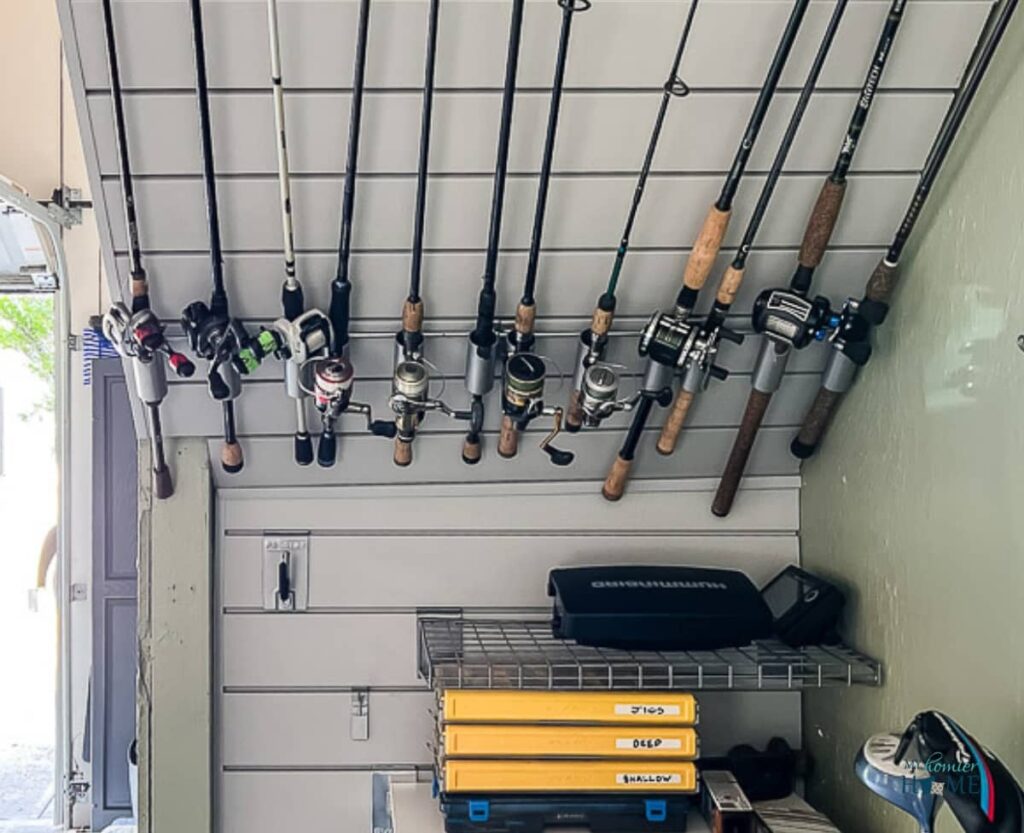
Horizontal Ceiling Racks
- Best for: Low ceilings, many rods, out-of-the-way storage
- Pros: Uses dead space, protects from foot traffic, very stable
- Cons: Ladder needed, risk of dust and heat near roofline
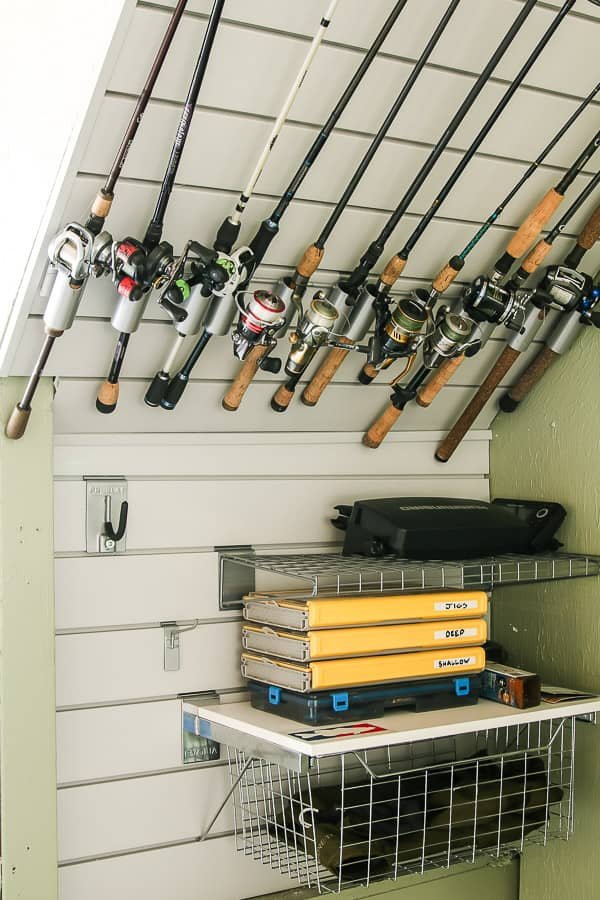
- Tips: Support rods near butt and midsection. Leave the tip free from pressure. Use foam-lined cradles or wide hooks.
When clients ask how to store fishing rods in garage ceilings, I suggest a two-rail track so reels hang between rails without rubbing.
Vertical Wall Racks
- Best for: Quick access, display, small collections
- Pros: Easy grab-and-go, great airflow, simple to install on studs
- Cons: Needs wall space, can snag if lures are left on
- Tips: Use soft clips that don’t crush the blank. Leave 2–3 inches between rods.
Freestanding Floor Racks
- Best for: Renters, flexible layouts, apartments with garage bays
- Pros: No drilling, portable, fits in a corner
- Cons: Can tip if top-heavy, floor moisture risk
- Tips: Add rubber feet. Keep it off bare concrete by using a mat.
DIY Low-Cost Options
- PVC rack: Drill angled holes in a PVC board for butts and add a foam slit bar for tips.
- Utility hooks: Heavy-duty, rubber-coated hooks on studs for horizontal storage.
- Pool noodles: Slit and screw to a furring strip as a soft guide holder.
DIY is a smart path for anyone learning how to store fishing rods in garage setups on a budget.
Travel Tubes and Hard Cases
- Best for: High-end rods, long-term or off-season storage
- Pros: Max protection from crush and dust
- Cons: Slower access, can trap moisture if not dried first
- Tips: Dry rods fully, loosen ferrules gently, and add a desiccant pack.
No matter the method, make sure rods sit straight and dry. That is the core of how to store fishing rods in garage spaces well.
Step-by-Step: Set Up a Safe Rod Wall Rack
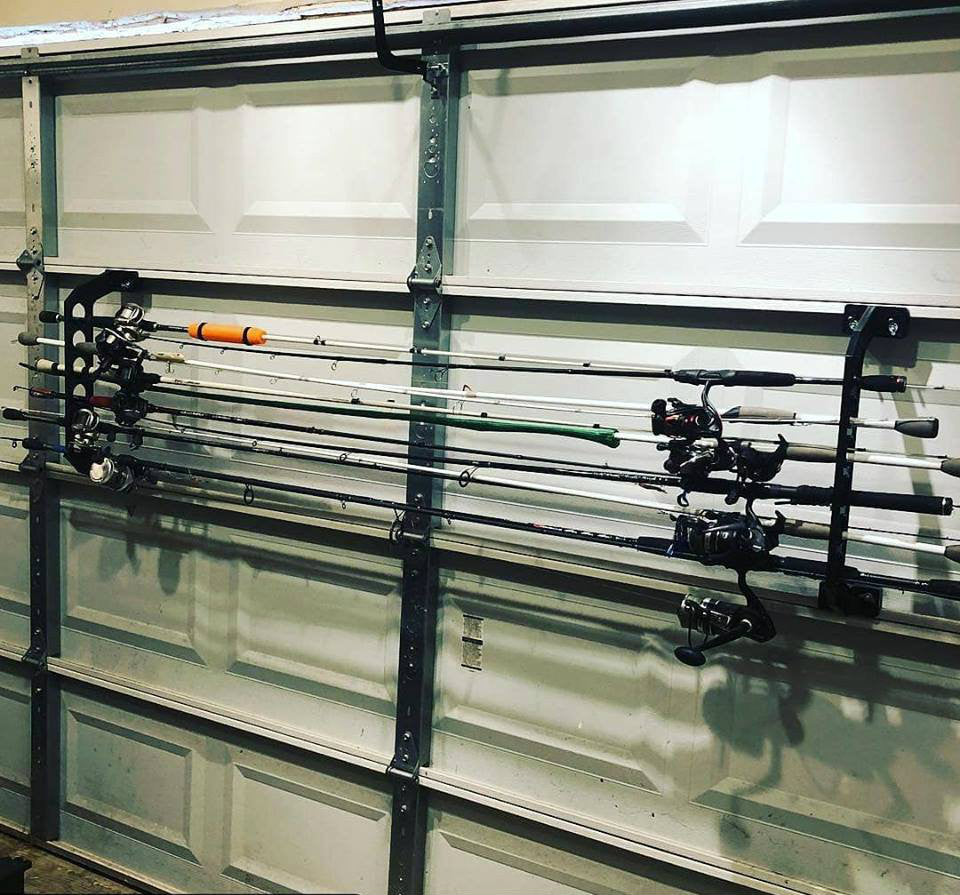
This method is fast, clean, and sturdy. Plan on 30–45 minutes for six to eight rods.
- Pick the wall. Choose a shaded interior wall away from doors and water.
- Find studs. Mark two studs about 3–4 feet apart with a stud finder.
- Mount the butt rack. Screw a lower rack or bar at hip height so butts sit snug.
- Mount the tip rack. Screw a foam or soft-clip bar 20–24 inches above the butt rack.
- Spacing. Leave space for big reels. Keep rods 2–3 inches apart to stop rubbing.
- Prepare the rods. Wipe them dry, remove lures, and add rod socks if you have them.
- Load reels down. Place heavy reels low so the center of mass stays close to the wall.
- Final check. Tug each clip, confirm level, and test for snags.
If a friend asks me how to store fishing rods in garage walls, this is the exact process I teach. It balances access and safety without overthinking it.
Protect Rods, Reels, Lines, and Lures
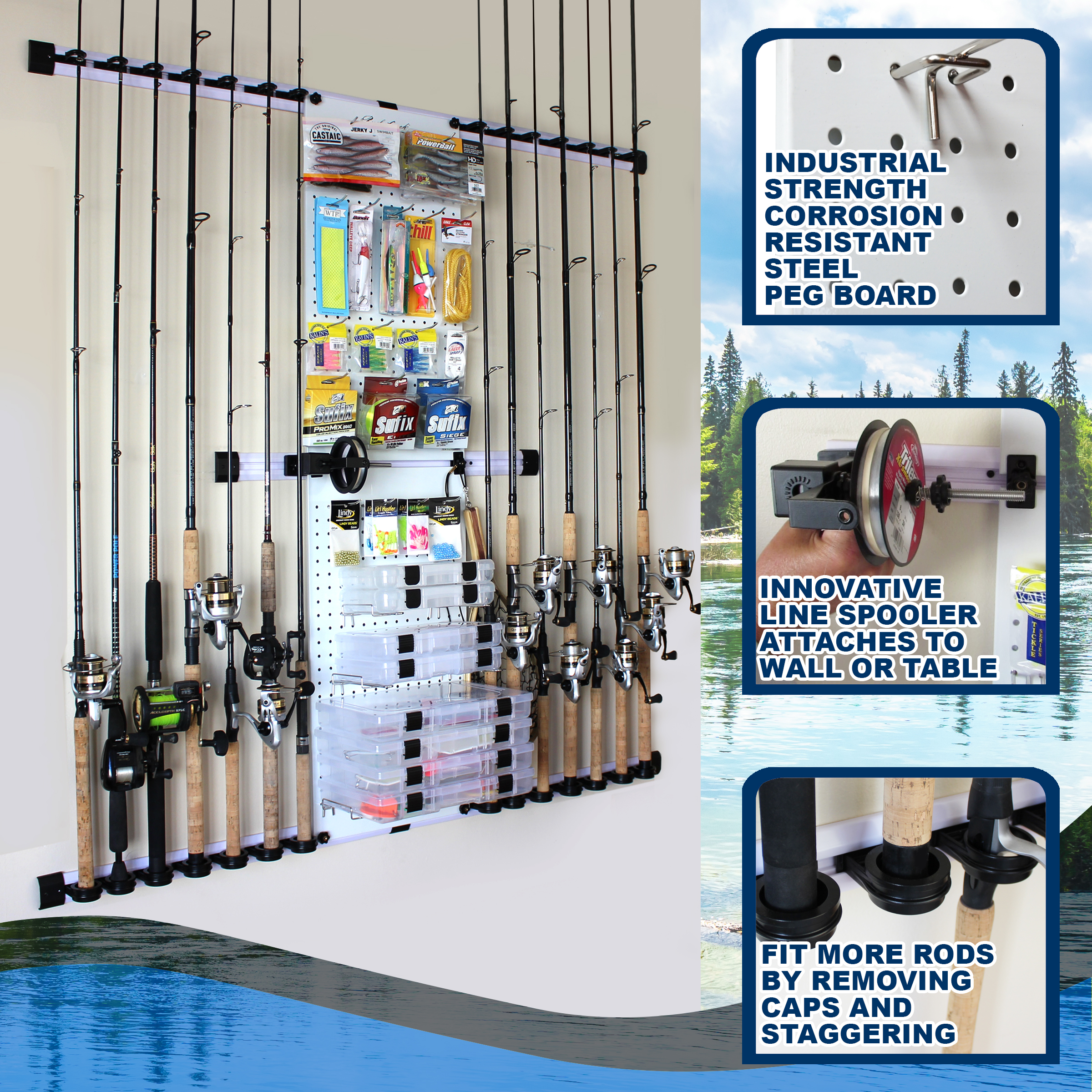
Storage is more than a rack. A few small habits protect the pieces that fail first.
- Clean and dry: Rinse with fresh water after salt trips. Pat dry. Wipe guides with a soft cloth.
- Lube light: A drop of oil on reel handles and a tiny bit on line rollers. Avoid heavy grease.
- Drag loose: Back off drag and bail tension to stop compression on washers.
- Line care: Avoid tight wraps in storage. Loose spools reduce line memory and kinks.
- Covers: Use rod socks and reel bags, or old T-shirts for reels.
- Desiccant: Place a small desiccant pack on the rack shelf to cut moisture.
- Hook safety: Store lures in boxes. If you must leave a lure on, bury the hook in a keeper and add a lure cover.
These habits are the hidden edge in how to store fishing rods in garage spaces for the long term.

Seasonal Storage: Summer Heat and Winter Cold
Heat speeds corrosion and weakens some epoxies. Cold stiffens line and can crack some grips. Both increase condensation swings.
- Summer: Keep rods away from the roofline where heat pools. Add a small fan for airflow if the garage bakes.
- Winter: Dry fully before storage to prevent freeze-thaw in guide rings. Keep rods off cold concrete.
- Year-round: Use silica gel near reels. Check guides with a cotton swab for chips that fray line.
If you only remember one tip on how to store fishing rods in garage seasons, remember this: even support plus dry air beats fancy gear every time.
Common Mistakes to Avoid
Small errors add up. I’ve made all of these at least once.
- Storing rods under a bike rack where tires crush tips on swing-in.
- Hanging rods by the tip top. This bends and weakens the blank.
- Leaving tight line on the reel all winter.
- Storing wet rods in sealed tubes without desiccant.
- Using small metal hooks that dent the blank over time.
- Forgetting to back off reel drag.
Dodging these pitfalls is half of how to store fishing rods in garage setups like a pro.
Space-Saving Layouts for Small Garages
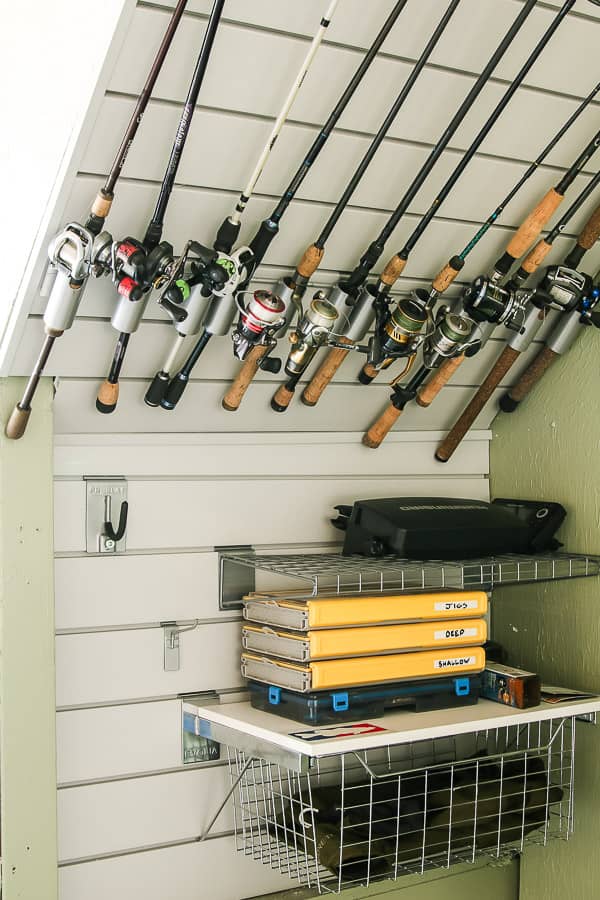
Tight on space? Use vertical layers and dead zones.
- Overhead joists: A two-strap ceiling rack for long surf or fly rods.
- Behind the door: A shallow wall rack clears door swing if mounted high.
- Cabinet doors: Inside a closet or utility cabinet with soft clips.
- Track system: A wall track with moveable hooks to adjust for rod length.
- Corner stand: A triangular freestanding rack that tucks into a corner.
These tricks show how to store fishing rods in garage nooks without giving up parking space.
Budget and Gear Checklist
Set a target and buy once. You can upgrade later.
- Wall or ceiling rack: Basic to premium options.
- Soft clips or foam: Protects blanks from dents.
- Heavy-duty screws and anchors: Into studs or concrete with proper anchors.
- Rod socks and reel covers: Cheap insurance for guides and finishes.
- Desiccant packs and a small fan: Control moisture and air.
- Utility mat: Keeps floor racks off damp concrete.
- Label tape or tags: Mark rod power, action, and line so you grab fast.
If you want a simple answer for how to store fishing rods in garage spaces on a budget, pick a stud-mounted wall rack, add socks, and keep a desiccant jar nearby. That setup beats 90% of problems.
Frequently Asked Questions of how to store fishing rods in garage
Is horizontal or vertical storage better?
Both work if rods are supported well. Horizontal racks need two or three support points, while vertical racks need soft clips that do not pinch the blank.
Can I leave reels on my rods in the garage?
Yes, if the area is dry and cool. Loosen the drag, wipe reels after trips, and use covers to stop dust and corrosion.
Will heat in the garage damage my fishing rods?
Prolonged high heat can soften epoxies and trap moisture. Store away from the roofline, add airflow, and keep rods out of direct sun.
How do I prevent rust on guides and reel parts?
Rinse with fresh water, dry fully, and use a light oil on moving parts. Add desiccant packs near your rack and avoid sealed cases when gear is damp.
What’s the safest spot to mount a rack?
An interior wall on studs away from doors, windows, and water sources. Keep rods above eye level but low enough for easy access.
How many support points should a rod have?
Two is fine for most rods, three for heavy or long surf rods. Avoid any point load on the tip.
Can I store rods in tubes long term?
Yes, if they’re bone-dry and you add desiccant. Open and air them out every month to prevent stale moisture.
Should I remove lures before storage?
It’s best to remove them. If not, use lure covers and secure hooks to the keeper to avoid snags.
Do rod socks really help?
They prevent guide scratches and reduce dust. They also stop rods from rubbing when stored close together.
How often should I check stored rods?
Do a quick check monthly. Look for rust spots, loose wraps, or dents where supports touch the blank.
Conclusion
Good storage is simple: even support, dry air, safe access. Choose a rack that fits your space, clean and dry your gear, and loosen reel drags. That core plan is how to store fishing rods in garage spaces without stress.
Set up one rack this week and label your rods. You will fish more and fix less. Want more garage gear tips and DIY plans? Subscribe for updates or drop your questions in the comments so I can help with your setup.