How To Fish For Crappie From Shore: Easy Crappie Tips
Crappie are one of the best fish for shore anglers. They live in lakes, ponds, rivers, and reservoirs across much of the United States. They also respond well to simple tactics. A light spinning rod, a small hook, a bobber, and live minnows can be enough to get started.
The challenge is finding the fish from land. Crappie move with the season, water temperature, light level, and available cover. They may hold near brush, fallen trees, bridge pilings, weed edges, docks, or drop-offs. From shore, your success often depends less on expensive gear and more on choosing the right bank, depth, bait, and presentation.
This guide explains how to fish for crappie from shore in clear steps. You will learn what gear to use, how to rig live bait and lures, where to look, how to adjust depth, and how to handle fish with care. The advice works for beginners, kids, experienced anglers, and gift buyers who want to build a simple crappie setup.

The quickest way to catch crappie from shore
The best way to fish for crappie from shore is to target cover, use a light spinning or spincast setup, and place a small jig or live minnow at the depth where fish are holding. Start near docks, brush, fallen trees, bridge areas, and creek channels. Fan-cast several depths, move often, and watch local rules for licenses, seasons, size limits, and daily bag limits.

Crappie have thin mouths. A light hook and smooth drag help prevent pulled hooks. “Drag” is the reel setting that lets line slip when a fish pulls. Set it light enough to protect 4- to 8-pound line.
A bobber makes depth changes easy. A jig lets you cover more water. Many anglers carry both so they can switch when fish stop responding.
Understand where shore crappie hold
Crappie are cover-oriented fish. They use cover for shade, ambush points, and protection from larger predators. Cover can be natural, such as brush and trees, or man-made, such as docks, seawalls, bridge supports, and fish attractors.
From shore, look for places where deep water sits close to the bank. A steep bank, creek mouth, submerged point, or channel bend can be more useful than a flat, empty shoreline. Crappie may move shallow to feed, then slide back toward deeper water when sunlight increases.

Look for cover and depth together
A brush pile in three feet of water may hold fish during a warm spring morning. The same fish may move to 10 or 15 feet by afternoon. Cover matters, but depth often tells you how to fish that cover.
Search for these high-value areas:
- Fallen trees with branches in several depths
- Brush piles near a creek channel
- Dock posts and shaded boat slips
- Bridge pilings
- Riprap banks near deep water
- Weed edges
- Points that extend into a lake
- Creek mouths and small coves
- Steep banks with submerged timber
- Public fish attractors marked on maps

Use shore access to your advantage
A good bank spot lets you cast near fish without standing on top of them. It should also give you room to move and land fish safely. Avoid spots where brush traps your line on every cast.
Look for a bank with several casting angles. One position may let you cast along a dock. Another may reach brush in deeper water. A broad area helps you test different depths instead of relying on one exact cast.
Read water color, wind, and light
Crappie often feed better when light is low. Early morning, late afternoon, and cloudy days can make shallow shore fishing more productive. Wind can push plankton and small baitfish toward one bank, which may draw crappie with them.
Slightly stained water can help fish feel secure. In very clear water, use longer casts, thinner line, and quieter movements. Avoid stomping on docks or dropping tackle on hard surfaces.
Gear for bank-fishing crappie
A light spinning rod is the most flexible choice for shore crappie. A 6-foot-6-inch to 7-foot rod with light or ultralight power works well for small jigs, bobbers, and live bait. “Power” describes how much force it takes to bend a rod. “Action” describes where the rod bends, such as near the tip or farther down the blank.
A light rod bends easily and makes small crappie feel strong. It also helps cast small lures. Beginners may prefer a spincast combo because it is simple to operate. Experienced anglers often choose a spinning reel for better control with light line.

Recommended shore setup
| Gear item | Practical choice | Why it works |
|---|---|---|
| Rod | 6-foot-6-inch to 7-foot light or ultralight | Casts small baits and protects light line |
| Reel | 1000 to 2500 size spinning reel | Holds enough line without adding much weight |
| Main line | 4- to 8-pound monofilament | Simple, low cost, and forgiving |
| Leader | 2- to 6-pound fluorocarbon | Less visible in clear water |
| Hooks | Size 6 to 10 light-wire hooks | Fits minnows and small natural baits |
| Jigs | 1/32- to 1/16-ounce | Matches small crappie forage |
| Bobber | Small fixed or slip bobber | Shows light bites and controls depth |
| Net | Small rubber or nylon landing net | Reduces dropped fish at the bank |

Monofilament is often the best line for a first setup. It stretches, costs little, and works well with bobbers. Fluorocarbon is harder to see underwater and sinks, but it can be stiffer. Braided line has little stretch and strong diameter, yet it may need a fluorocarbon leader around clear-water crappie.
A 1000-size spinning reel suits beginners, kids, and anglers who walk along the bank. A 2500-size reel offers more line capacity and may feel better for longer casts. You do not need a high gear ratio or a large drag system for crappie.
Live bait gear
Live minnows are a classic crappie bait. Use a small bucket with an aerator, or carry only enough bait for the trip. Keep minnows cool and out of direct sun. A small dip net makes it easier to remove bait without damaging it.
Use a float that matches the bait size. A large bobber creates too much resistance when a crappie takes the minnow. A small float moves more easily and gives a better signal.
Artificial lures
Small jigs are the main artificial lure for shore crappie. Common sizes range from 1/32 to 1/16 ounce. Use marabou, hair, or soft-plastic bodies in white, chartreuse, pink, black, or natural colors.
Small crankbaits can work around shallow cover, though they snag more often. Tiny inline spinners may catch crappie in moving water. Soft plastics are easy to store and do not require a live bait bucket.
Helpful shore tools
A few small tools make the trip safer and easier:
- Long-nose pliers for removing hooks
- A compact tackle box
- A landing net
- Nail clippers or line cutters
- Polarized sunglasses
- A small towel
- A measuring board
- A phone in a waterproof case
- Hand sanitizer
- A trash bag for used line and bait containers
Polarized sunglasses reduce glare and help you see submerged branches, shallow fish, and unsafe footing. They also protect your eyes from a swinging hook.
Rigs that work from the bank
The three most useful crappie rigs from shore are the bobber-and-minnow rig, the fixed jig rig, and the slip-bobber rig. Each one solves a different problem. Start with the simplest rig, then change when the fish or water demands it.
Bobber and live minnow rig
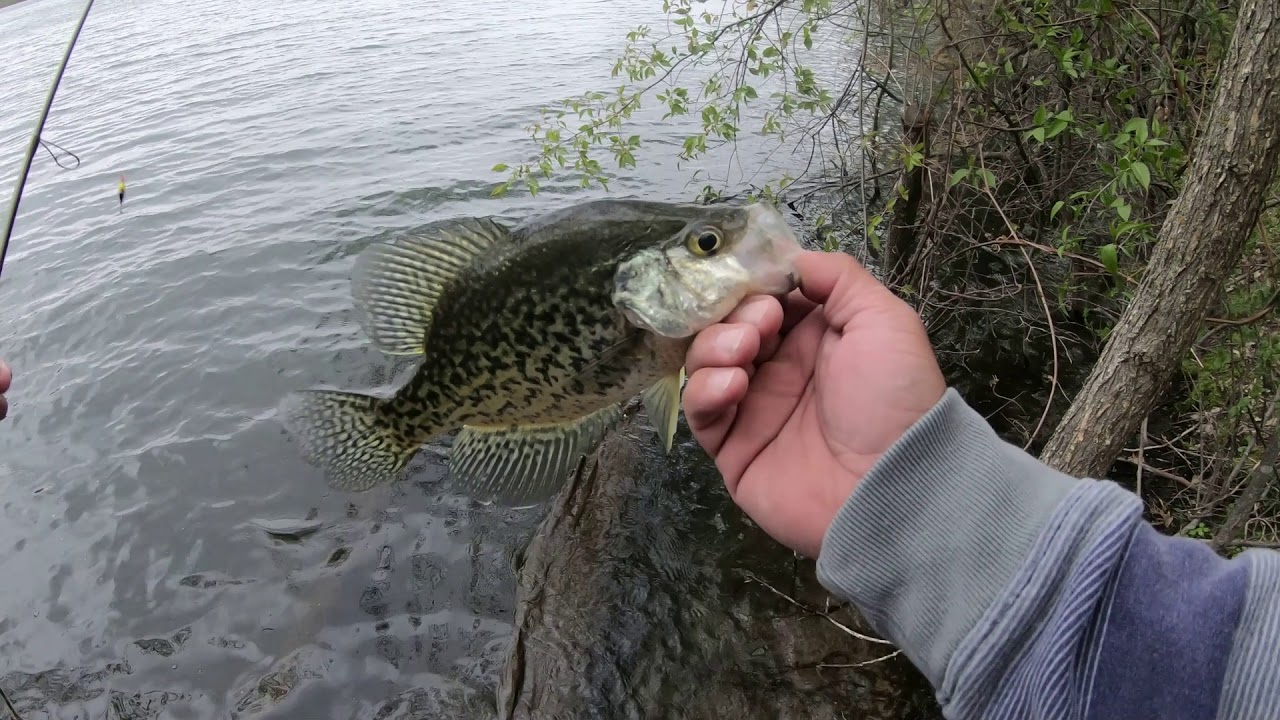
This rig is an excellent choice for beginners, kids, and anglers fishing around visible cover. Tie a small hook to the end of your line. Place a split shot 6 to 12 inches above the hook. Add a bobber 2 to 5 feet above the hook.
Hook the minnow lightly through the lips or just behind the dorsal fin. Cast past the cover, then let the bait drift near it. Keep the bobber close enough to the cover to reach fish, but far enough away to limit snags.

Slip-bobber rig
A slip bobber works best when crappie hold deeper than your rod can easily cast with a fixed float. The line slides through the float until it reaches a small stop. You can set the bait 8, 12, or even 20 feet deep while still casting the rig.
A basic slip-bobber rig includes:
- A bobber stop
- A small bead
- A slip bobber
- A split shot or small sinker
- A swivel, if needed
- A leader
- A light hook
Test the rig beside the bank before casting far. Make sure the bobber stands upright and the hook reaches the chosen depth.

Jig under a float
A jig under a float gives you more action than a still minnow. Tie a 1/32- or 1/16-ounce jig below a small float. Set the depth so the jig hangs above the cover.
Let wind or current move the float. You can also twitch the rod tip gently. Pause after each movement. Crappie often take the jig while it hangs still.
Bare jig or double-jig rig
A single jig works well when fish are shallow or scattered. Cast it near cover, count it down, and retrieve it slowly. The countdown helps you learn the depth.
Some anglers use two jigs on one line. This can help locate fish at different depths, but check local rules first. Several states limit the number of hooks or lures a person may use.

Rig comparison
| Rig | Best use | Main limitation |
|---|---|---|
| Fixed bobber and minnow | Shallow cover and beginner fishing | Harder to fish very deep |
| Slip bobber and minnow | Deep brush and steep banks | Takes longer to rig |
| Jig under a float | Cover with a slow presentation | Requires attention to movement |
| Bare jig | Searching water and active fish | More skill needed to detect light bites |
| Double jig | Finding depth and fish location | May be restricted and snags easily |

A fixed bobber is usually the best first choice for a child or new angler. A slip bobber suits an experienced angler who knows fish are deep. A bare jig is better for someone who enjoys casting and reading line movement.
How to fish for crappie from shore step by step
The best bank anglers use a simple search plan. They do not stay in one place for an hour without changing anything. They test depth, cover, bait, and speed in a logical order.

1. Check access, weather, and rules
Before leaving, confirm that the bank is open to fishing. Check the weather, wind, water level, and local regulations. Bring a valid fishing license if your state requires one.
Check crappie size limits, daily bag limits, closed seasons, and hook rules. Some waters restrict live bait, lead tackle, or the number of rods. Rules may differ between a lake, river, public park, and private pond.
📜 Check Local Regulations: State wildlife agencies publish the current rules for licenses, seasons, size limits, creel limits, bait, and tackle. Regulations can change by water, so check the exact lake or river before fishing.

2. Start near the easiest cover
Begin with docks, bridge pilings, fallen trees, or marked fish attractors. These areas are easier to target than a featureless bank. Look for a spot where deep water is within casting range.
Do not cast directly into the center of thick brush on your first attempt. Start along the outside edge. Crappie often sit where open water meets cover, and your rig will come back with fewer snags.
3. Set your first depth
In spring or warm weather, begin 2 to 4 feet deep near shallow cover. If you get no bites, move to 5 or 6 feet. In summer or bright conditions, try 8 to 12 feet near a drop-off or submerged brush.
A depth change of 1 or 2 feet can make a major difference. Crappie may gather in a narrow band. If one angler catches fish at six feet, match that depth rather than guessing.
4. Make quiet, accurate casts
Cast beyond the target when possible. Bring the bait toward the cover with a slow retrieve or gentle drift. A splash directly on top of fish can scatter them in clear, calm water.
Use side-arm casts around low branches. Keep your hook point covered when walking through brush. A compact telescopic rod can help with travel, but check its guides and joints often because they may wear faster than a one-piece rod.
5. Let the bait settle
After the cast, allow the minnow or jig to settle. Many bites happen during the first few seconds. Keep the line slightly tight, but do not pull the bobber toward you.
Watch for more than a full bobber dunk. A crappie may lift the bait, causing the bobber to lie flat or move sideways. A small tap in the line can also signal a bite.
6. Work a search pattern
Fan-cast from left to right. Try several angles around the same cover. Then repeat the process at a new depth.
If using a jig, count it down after the cast. Try a slow lift, a short pause, and another lift. If the fish bite after a five-count, repeat that count on the next cast.
7. Set the hook with a smooth lift
Crappie have fragile mouths. Do not jerk hard. Lift the rod firmly and reel at a steady pace.
Keep the rod tip up when the fish approaches shore. Use a landing net for larger crappie or areas with rocks and steep banks. Net the fish headfirst when possible.
8. Handle the fish well
Wet your hands before touching a crappie. Support its body and avoid squeezing the belly. If you plan to release it, remove the hook quickly and keep the fish out of water for only a few seconds.
If you keep fish within the legal limit, use a clean stringer or cooler with ice. Do not leave fish in warm water for long periods. Clean your catch soon after the trip.

Seasonal shore patterns
Crappie do not stay in one place all year. Their movements change with water temperature, spawning behavior, food, sunlight, and water level. The exact timing varies by region, but the broad pattern is useful.

Spring
Spring is often the most popular time for bank crappie fishing. As water warms, fish may move toward shallow coves, gravel, wood, and protected pockets. Shore anglers can reach these areas when they are close to land.
Use small jigs, minnows, and bobbers. Start shallow in the morning. If the sun rises high or a cold front passes, test deeper water near the same cover.
Summer
Summer crappie often move deeper or hold in shade. Look for creek channels, bridge areas, deep brush, and shaded docks. Early morning and late evening may offer better shallow access.
A slip bobber helps place bait near deep cover. A longer rod may improve casting distance, but do not sacrifice control for length. A 7-foot light rod is a useful balance for most banks.
Fall
Cooling water can push baitfish toward creek arms and coves. Crappie may feed more actively and move through several depths. Fan-cast jigs around points, channel edges, and brush.
Keep moving until you find signs of baitfish or several bites. Fall can reward a mobile approach more than sitting in one spot.
Winter
Cold water often slows crappie movement. Fish may hold deep and react to small, slow presentations. A slip bobber with a minnow can keep bait in the strike zone.
Shore access may be poor in winter. Wear layers, keep your hands warm, and avoid steep banks covered with mud, ice, or wet leaves. Never walk onto ice unless you have proper training and verified safe ice conditions.
| Season | Shore location | Presentation |
|---|---|---|
| Spring | Shallow coves, wood, gravel, protected banks | Minnow under bobber or slow jig |
| Summer | Deep brush, creek channels, shade, bridge areas | Slip bobber or deep jig |
| Fall | Points, creek mouths, baitfish areas | Fan-cast small jigs |
| Winter | Deep cover and steep breaks | Slow minnow or suspended jig |
Spring is often the easiest season for new shore anglers because fish may move within casting range. Summer and winter require more depth control. Fall rewards anglers who cover water.
Bait and lure choices
Live minnows remain a strong option because they move naturally and appeal to crappie in many water types. They also help beginners learn where fish are holding. The main drawbacks are cost, storage, and the need to keep them alive.
Jigs are cleaner and easier to carry. They allow you to cover water and repeat a depth. A 1/32-ounce jig falls slowly, while a 1/16-ounce jig casts farther and reaches deeper water faster.
Color and size
Start with white, chartreuse, pink, black, or a two-color combination. In clear water, natural or subtle colors may look better. In stained water, brighter colors can be easier for fish to find.
Size matters more than color in many situations. If fish tap the lure but do not take it, try a smaller soft plastic or a slower fall. If you cannot reach the fish, increase jig weight slightly.
Live bait versus artificial lures
| Option | Strength | Limitation |
|---|---|---|
| Live minnow | Natural action and easy presentation | Needs an aerated container |
| Soft-plastic jig | Low mess and many color choices | Requires casting skill |
| Marabou jig | Slow, subtle movement | Can snag in thick cover |
| Small spinner | Flash and vibration | Less effective in heavy wood |
| Tiny crankbait | Covers water quickly | Higher snag risk |
A beginner or child may learn faster with a live minnow under a bobber. A traveling angler may prefer soft plastics because they fit in a small tackle box. An experienced angler often carries both to adapt to depth and fish activity.
Common mistakes that reduce shore success
Many empty trips come from a few simple errors. The good news is that most are easy to fix. Change one factor at a time so you know what helped.
| Problem | Likely cause | Better move |
|---|---|---|
| No bites in shallow water | Fish moved deeper or light is bright | Try a slip bobber and deeper cover |
| Bobber moves but fish are missed | Hook is too large or angler waits too long | Use a smaller hook and lift smoothly |
| Constant snags | Bait is placed inside thick cover | Fish the outside edge and raise the rig |
| Line breaks at the bank | Drag is too tight or line is damaged | Retie, check knots, and loosen drag |
| Minnows die quickly | Heat, crowding, or poor water | Use cool water and an aerator |
| Fish follow but do not strike | Lure is too large or fast | Downsize and slow the retrieve |
| No distance with a jig | Lure is too light for the rod or line | Use thinner line or a slightly heavier jig |
Do not use a large bass hook for crappie. A size 6 to 10 light-wire hook is often a better match. The hook must be sharp, but it should not overpower the bait.
Avoid walking the same bank with your bobber at one depth all day. Change depth first, then bait, then location. This simple order prevents random changes.
Do not set the drag too tight. A crappie can make a short run, and a tight drag can tear the hook from its thin mouth. Inspect the last two feet of line after fishing around wood or rocks.
Safety and shore etiquette
Shore fishing looks low risk, but wet rocks, steep banks, hooks, heat, and sudden weather can create real problems. Wear shoes with good traction. Keep knives and pliers closed when not in use. Carry drinking water and sun protection.
Tell someone where you will fish and when you expect to return. Watch for storms, rising water, and fast current. Never stand near an unstable bank or climb on a slick retaining wall for a better cast.
⚠️ Safety Warning: Keep hooks away from faces and hands, especially when children cast. Wear polarized eye protection, check the weather, and leave the bank when lightning approaches. If you fish from a kayak, wear a U.S. Coast Guard–approved personal flotation device at all times.
If you wade, use a wading belt and avoid water that reaches above your safe level. Do not wade alone in unfamiliar rivers. A light current can become dangerous after rain or dam releases.
Keep the bank clean. Take used line, bait containers, hooks, and plastic home. Discarded monofilament can harm birds, turtles, and other wildlife.
👪 Parent or Gift-Buyer Note: A 6-foot spincast combo, 6-pound monofilament, small bobber, and size 8 hooks make a simple starter kit for a child. Add blunt-tip pliers, sunglasses, and a small tackle box. Adult supervision matters most around hooks, water, and steep banks.
Budget planning and useful upgrades
You do not need expensive equipment to fish for crappie from shore. A basic setup can cost less than a specialized bass or walleye outfit. Current pricing ranges from low-cost combo kits to premium graphite rods and smooth spinning reels.
| Budget level | Typical setup | Best for |
|---|---|---|
| Entry level | Spincast combo, monofilament, bobber, hooks | Kids and first-time anglers |
| Mid-range | Light spinning rod, 1000-size reel, jigs, net | Regular bank anglers |
| Higher level | Sensitive graphite rod, quality reel, multiple rigs | Experienced anglers who fish often |
Cheap gear can work well, but check the guides, reel seat, bail, and drag before buying. The parts that often fail first are worn line, bent hooks, cracked bobbers, weak snaps, and damaged reel bail springs.
A quality landing net can be a better upgrade than a more expensive reel. It prevents fish from hitting rocks at your feet. A small tackle box with separate lure sections also saves time and protects hooks.
You usually do not need a baitcasting reel for crappie. Baitcasters can offer control with heavier lures, but they are harder to cast with tiny jigs and can suffer backlash. A spinning reel or spincast combo is more suitable for most shore anglers.
You also do not need a fish finder to start. A portable fish finder may help an advanced angler map depth from a kayak, but it cannot replace careful shore observation. From land, maps, contour charts, visible cover, and repeated casts often provide enough information.
Care for crappie gear
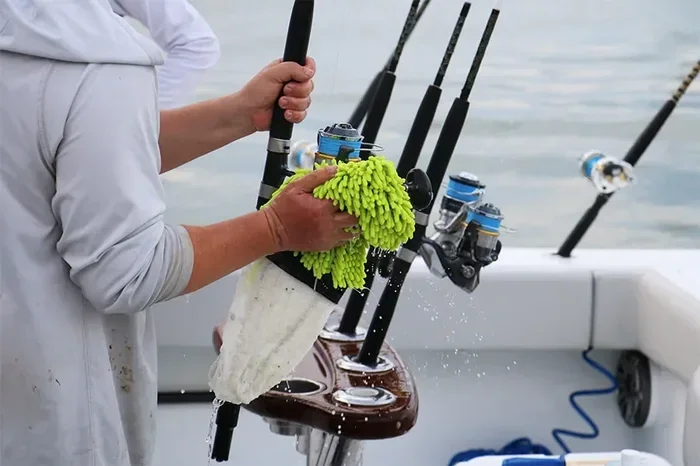
Freshwater gear still needs care. Rinse dirt from the rod guides and reel body. Wipe the reel dry after fishing. Store the rod away from direct heat and avoid leaning it on the tip.
After each trip
- Check the final 2 to 3 feet of line
- Retie if the line feels rough
- Dry wet tackle before closing the box
- Remove minnows and bait residue
- Rinse mud from the reel handle
- Store hooks in a dry compartment
- Empty the landing net and let it dry
Monofilament can last a season or longer when stored well, but replace it sooner if it shows curls, nicks, or sun damage. Fluorocarbon can weaken after repeated abrasion. Braided line may last longer, but its leader and knot still need regular checks.
Saltwater anglers need more care than freshwater crappie anglers. Crappie are freshwater fish, but some shore anglers use the same gear for redfish, trout, or surf fishing. Do not assume a freshwater-only reel will resist salt. Rinse saltwater gear with fresh water, dry it, and follow the reel maker’s service instructions.
| Gear | Care task | Replacement sign |
|---|---|---|
| Monofilament | Check for nicks and memory | Rough, brittle, or heavily coiled line |
| Spinning reel | Wipe and inspect bail | Grinding, slipping, or frozen bail |
| Rod guides | Check for cracks | Line frays at one guide |
| Hooks | Dry and sharpen lightly | Rust, bent point, or weak wire |
| Bobbers | Store dry and uncracked | Water inside or damaged stem |
| Landing net | Rinse and dry | Torn mesh or broken frame |
Improving your results over time
Keep a small fishing log. Write down the date, water level, weather, location, depth, bait, and time of each bite. After several trips, patterns begin to appear.
Notice whether bites come close to shore or at the end of the cast. Record whether fish prefer a minnow, chartreuse jig, black jig, or slow-moving lure. This information is more useful than buying another box of random tackle.
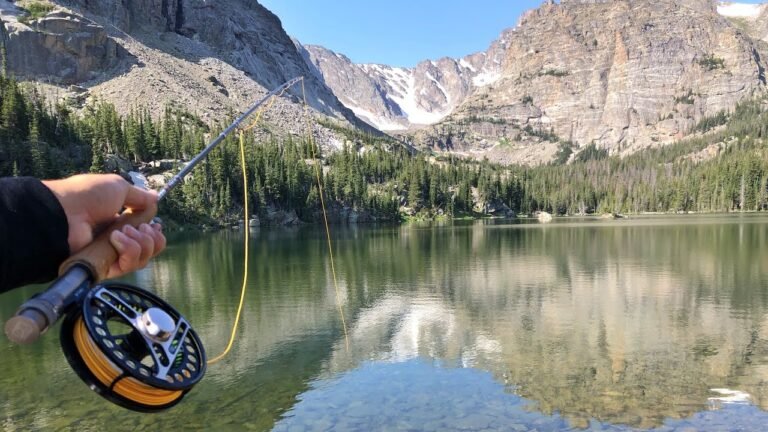
Experienced anglers can add a small float-and-fly setup or a light 7-foot rod for longer casts. A fly rod can present tiny jigs or flies, but it takes more practice and open casting space. It is not the easiest first choice around trees, docks, or crowded banks.
A telescopic rod is convenient for travel and gift giving. It fits in a car or backpack, but the joints need inspection. A one-piece or two-piece rod often gives better sensitivity and fewer connection issues.
Crappie conservation and responsible harvest
Crappie are popular panfish, and heavy harvest can affect local populations. Follow the daily limit and keep only the fish you plan to eat. If the water has a slot limit or special regulation, measure fish carefully.
For catch and release, wet your hands first. Keep the fish close to the water. Use barbless hooks when practical, or flatten the barb with pliers if local rules allow it. Avoid using a stringer for fish you plan to release.
Return fish quickly, especially during hot weather. Crappie can suffer from stress when held out of water. If a hook is deeply swallowed, cut the line close to the hook rather than causing more injury.
🌿 Conservation Note: Never release live bait into a lake or river unless local rules clearly allow it. Baitfish can spread disease or introduce species that do not belong in that water. Dispose of unused bait as local wildlife agencies recommend.
Questions anglers often ask
Q: What is the best bait for crappie from shore?
A: Live minnows are one of the most reliable choices for beginners because they provide natural movement. Small jigs and soft plastics are better for anglers who want to cover water, avoid bait care, or fish many locations. The best choice can change with water clarity, depth, season, and local forage.
Q: How deep should I fish for crappie from the bank?
A: Start 2 to 4 feet deep near shallow cover in spring or low light. If you do not get bites, test 5 to 10 feet near brush, docks, bridge pilings, or creek channels. Change depth in small steps until you find the zone where fish are holding.
Q: What size hook should I use for crappie?
A: Size 6, 8, or 10 light-wire hooks work well with small minnows and natural bait. Use the smallest hook that holds the bait securely. A large, heavy hook can reduce bait action and tear a crappie’s thin mouth.
Q: Is monofilament or fluorocarbon better for crappie?
A: Monofilament is usually better for beginners because it is soft, affordable, and easy to tie. Fluorocarbon is less visible underwater and sinks, which can help in clear water or with jigs. Many anglers use 4- to 8-pound monofilament as the main line and a lighter fluorocarbon leader.
Q: Can I catch crappie with a regular bass rod?
A: Yes, but a medium bass rod may not cast tiny jigs well and can feel stiff with small fish. A light or ultralight rod gives better control with small baits. Use your bass setup if needed, but choose a small bobber and live bait to reduce the need for very light lure casting.
Q: Are spinning reels better than spincast combos?
A: Spinning reels cast light lures farther and offer more control. Spincast combos are simpler and often suit kids, casual anglers, and gift buyers. Choose spinning gear for frequent fishing or tiny jigs; choose spincast gear for ease of use.
Q: Should I use a bobber for crappie?
A: A bobber is useful when fish hold at a known depth or when you want a clear bite signal. It works especially well with live minnows and for new anglers. Remove the bobber when fish are scattered, active, or deeper than a fixed float can reach.
Q: How do I avoid losing crappie at the bank?
A: Keep the drag light, use fresh line, and avoid lifting fish by thin line. Keep the rod bent and guide the fish away from rocks and brush. A small landing net is one of the best low-cost tools for preventing losses.
Q: Can I use braided line for shore crappie?
A: Yes, but light braid may be harder to manage for new anglers and can be visible in clear water. Use a fluorocarbon leader if needed. Braided line works well for anglers who fish around heavy cover, make long casts, or want low stretch.
Q: How much does a basic shore crappie setup cost?
A: A basic setup can include a low-cost spincast combo, 4- to 8-pound line, hooks, split shot, a few bobbers, and small jigs. Current prices vary by brand and store. Spend first on fresh line, sharp hooks, and a usable landing net rather than decorative tackle.
Q: Can I fish for crappie from a pier or dock?
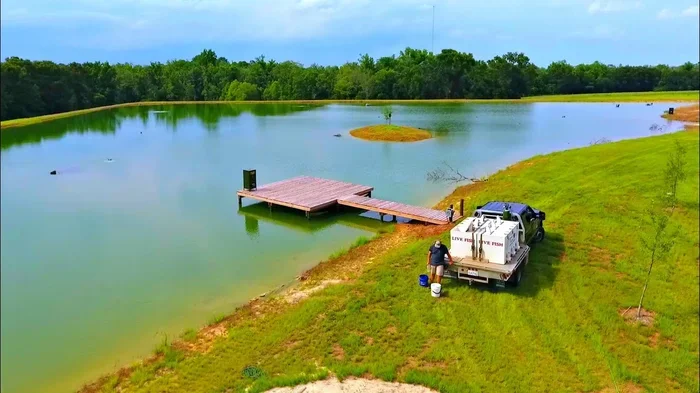
A: Yes. Piers and docks can place you near shade, posts, brush, and deeper water. Fish the edges first, then work the posts at several depths. Watch for local rules about access, rod limits, bait, and whether fishing is allowed on that structure.
Q: Do I need a fishing license to catch crappie?
A: In most U.S. states, adults need a fishing license on public water, though exemptions may apply for age, disability, free-fishing days, or private ponds. Rules vary. Check the state wildlife agency before fishing and carry proof when required.
Q: What should I do if a crappie swallows the hook?
A: Do not pull hard. If the hook is deep, cut the line close to the hook and release the fish quickly when regulations allow. A long hook-removal tool can help with some fish, but forcing the hook out may cause more harm.
Final advice for shore anglers
Shore crappie fishing becomes much easier when you treat it as a depth-and-location search. Start with visible cover near deep water. Use a small bobber and minnow if you want the simplest path, or carry 1/32- and 1/16-ounce jigs when you want to cover more water.
Your first setup does not need to be costly. A 6-foot-6-inch to 7-foot light spinning rod, a 1000-size reel, fresh 4- to 8-pound line, small hooks, and a landing net can handle most bank situations. For children and casual anglers, a spincast combo may be easier. For frequent anglers, a light spinning outfit offers more control.
Move when the bank gives you no clues. Change depth before changing everything else. Watch the water, protect the fish, follow local regulations, and leave the shoreline cleaner than you found it. With a simple plan and a little patience, every trip can teach you more about where crappie live and how they feed.