How To Fish Pressured Lakes: Proven Bass Fishing Tips
pressured lakes can make even skilled anglers feel as if the fish have vanished. The bass stop chasing. Trout move after dark. Panfish ignore the same bobber and bait that worked last week. Heavy boat traffic, clear water, repeated lure pressure, changing weather, and too many anglers can all teach fish to avoid danger.
The good news is that pressured fish still need food, oxygen, shelter, and the right water temperature. They do not become impossible to catch. They become more selective. The best way to fish a pressured lake is to reduce noise, study overlooked water, change your presentation, and let the fish tell you what to do.
This guide explains how to fish pressured lakes for bass, trout, walleye, catfish, panfish, and other freshwater species. It covers shore fishing, kayak fishing, boat fishing, lure choice, live bait, line, leaders, electronics, seasonal patterns, and catch-and-release care.
Quick answer: fish pressured lakes with less noise and more detail
The best way to fish a pressured lake is to target low-traffic areas, fish during low-light periods, use smaller or more natural baits, and slow your retrieve. Start with a map, weather report, and water-temperature check. Use light line when cover allows, cast beyond likely fish, and repeat productive areas from new angles. Follow local license, bait, hook, size, and bag rules.

Why pressured lakes fish differently
A pressured lake is water where fish face frequent fishing activity, boat traffic, shoreline noise, or repeated exposure to common lures and bait. Pressure does not always reduce the fish population. It often changes fish behavior.
A largemouth bass may still live beside a dock, but it may leave when a boat approaches. A trout may still feed near a spring, but only at dawn or after dark. A walleye may move deeper after several boats troll the same break.
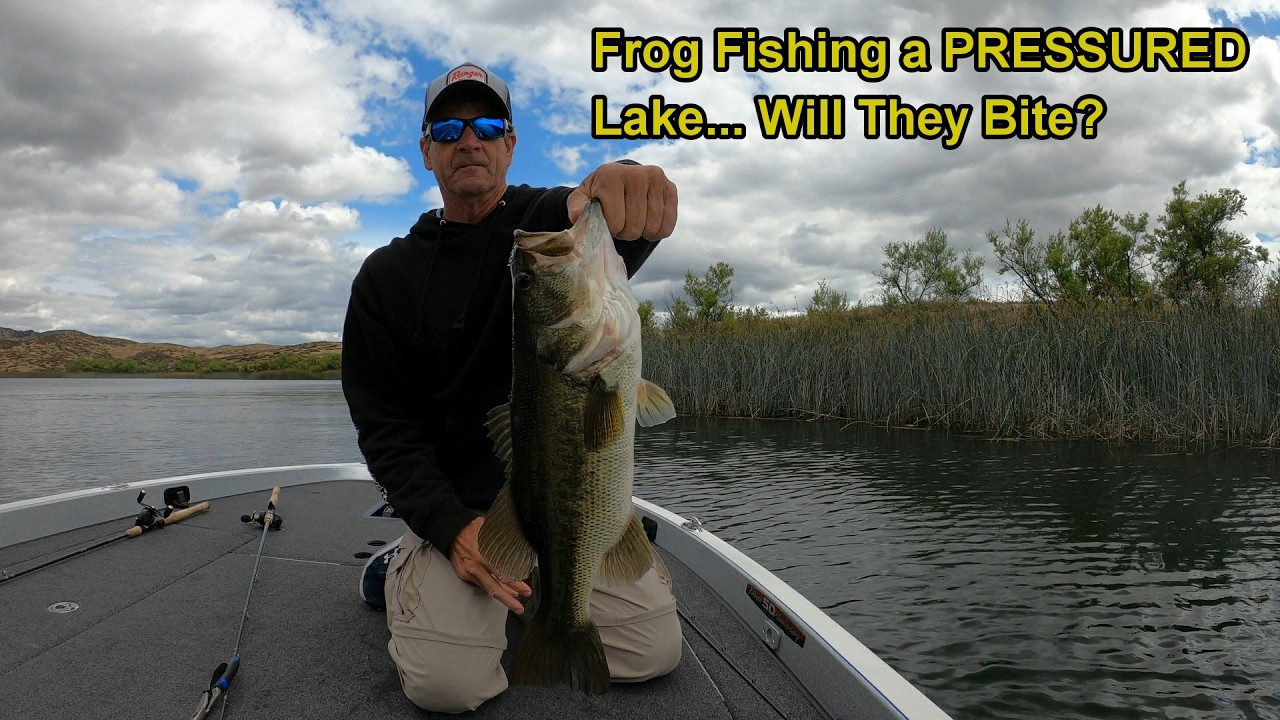
Fish learn through risk. They may avoid bright colors, loud lures, heavy line, sudden movement, or areas where they have been hooked before. Clear water makes this effect stronger because fish can inspect your bait from a distance.
The main signs of a pressured lake
You may be fishing a pressured lake if you notice several of these signs:
- Many boats, kayaks, or anglers use the same points.
- Shoreline access areas receive daily fishing traffic.
- Fish follow lures but do not strike.
- Bass bite only during dawn, dusk, or bad weather.
- Trout refuse common spinners or flies.
- Panfish become hard to catch around docks and brush.
- Fish move away from trolling motors or boat shadows.
- Electronics show fish but bites remain rare.
- Local anglers report that the lake has “gone quiet.”
These signs do not prove that pressure is the only issue. Water temperature, oxygen, forage, spawning cycles, storms, and fishing skill also matter.

Pressure changes fish behavior, not their basic needs
Even cautious fish must eat. They still seek cover, current, shade, deep water, soft bottoms, weed edges, and food. Your job is to find the places where those needs overlap.
Look for locations that give fish safety and food at the same time. A rock point beside deep water is often better than a bare rock point. A weed edge near a creek channel is often better than a large flat with no depth change.
Think of a pressured lake as a crowded store. Most shoppers use the front door. Fish the side door.
| Pressure sign | Likely fish response | Useful adjustment |
|---|---|---|
| Heavy boat traffic | Fish move shallow, deep, or into cover | Fish early, late, or away from main routes |
| Clear water | Fish inspect baits closely | Use natural colors, smaller lures, and longer casts |
| Repeated lure use | Fish avoid common movement and sound | Change speed, depth, angle, or bait type |
| Shoreline crowds | Fish leave easy banks | Walk farther and target less obvious cover |
| Loud electronics or trolling motors | Fish become wary in shallow water | Approach slowly and cast from a distance |
Use this table as a starting point, not a fixed rule. Fish may react in different ways on different lakes.

Find fish by studying the lake, not the crowd
The best way to locate fish in a pressured lake is to study structure, depth, food, and water conditions before choosing a lure. A lake map can reveal more than watching where other anglers cast.
Begin with a topographic map or a lake-mapping app. Mark creek channels, humps, points, submerged roads, old river beds, weed lines, steep banks, flats, and deep holes. Then compare those features with current wind, sunlight, water clarity, and temperature.
Fish secondary structure near major structure
Most anglers know that fish like points, docks, weed beds, and drop-offs. Pressured fish often avoid the most obvious part of that cover. They may hold on a small rock, stump, ditch, or depth change nearby.
For example, do not fish only the tip of a main-lake point. Check:
- The windy side of the point.
- The first deep break outside the point.
- A small rock pile near the point.
- A grass edge that meets the point.
- A creek channel crossing the point.
- Shade on the bank side during bright sun.
This secondary structure receives fewer casts. It can hold fish that have learned to avoid the main target.
Use wind to find active water
Wind can help you fish pressured lakes because it breaks up the surface and moves plankton and baitfish. A windy bank may have more food and less visibility for fish.
For bass, try a wind-blown bank with a crankbait, spinnerbait, swimbait, or moving jig. If the wind is strong, move slightly deeper and use a heavier lure that stays in contact with the bottom.
For trout and walleye, wind can push food toward a point, weed line, or shallow shelf. For catfish, wind may stir a soft bottom and increase feeding in nearby areas.
Do not treat wind as an automatic reason to fish shallow. Check water clarity and temperature first.
Use electronics without chasing every mark
A fish finder can show depth, cover, bait, and water temperature. It cannot identify every mark with certainty. A curved line may be a fish, bait, plant, or signal error.
Use electronics to find patterns. Look for several related clues:
- Baitfish near a depth change.
- Fish marks below or beside the bait.
- A water temperature that fits the season.
- Cover near an escape route.
- A bottom type that suits the target species.
Once you find a promising area, turn off unnecessary alarms and move quietly. A fish finder is a tool, not a substitute for observation.
💡 Pro Tip: Mark productive spots with notes such as “windy side,” “fish at 18 feet,” or “jig worked after two casts.” A map with details becomes more useful each season.

Match the approach to the target species
The best tactic for pressured bass is not always the best tactic for pressured trout or panfish. Each species responds to different water, food, and risk.
| Species | High-percentage areas | Presentations to test |
|---|---|---|
| Bass | Weed edges, docks, rock, brush, creek channels | Ned rigs, shaky heads, jigs, soft plastics, crankbaits |
| Trout | Springs, inflows, shade, deep edges, current | Small spoons, flies, live bait where legal |
| Walleye | Points, humps, weed edges, drop-offs | Jigs, minnows, blade baits, crankbaits |
| Catfish | Deep holes, channels, flats near food | Cut bait, worms, stink bait, bottom rigs |
| Panfish | Brush, docks, weed pockets, deep cover | Small jigs, worms, flies, tiny spinners |
| Redear or larger sunfish | Hard bottom, vegetation, spawning areas | Small worms, soft plastics, compact jigs |
These are broad patterns. Local forage, water temperature, lake level, and regulations can shift fish locations.

Bass in clear, heavily fished water
Pressured bass often respond well to compact soft plastics and quiet presentations. A 3- to 4-inch worm, creature bait, Ned rig, or small jig can look less threatening than a large, loud lure.
Use a spinning reel when you need light line and long casts. A 6-foot-10-inch to 7-foot-3-inch medium-light or medium spinning rod works well for many finesse rigs. Spool it with 6- to 10-pound fluorocarbon or 10- to 15-pound braided line with a 6- to 10-pound fluorocarbon leader.
A baitcaster can be better around heavy grass, wood, or docks. A 7-foot medium-heavy rod with a fast action and 12- to 17-pound line gives more control. Power means how much force a rod needs to bend. Action means where it bends. Fast-action rods bend near the tip and help with precise hook sets.
Fish your bait slowly, but do not make every cast identical. Drag the bait, pause it, shake it in place, or hop it once and let it rest. A pressured bass may need several seconds to inspect a bait.
Trout in clear lakes and reservoirs
Trout often become cautious when anglers repeatedly cast the same spoons, spinners, and dough baits. Smaller lures, lighter leaders, and longer casts can help.
Try a 6- to 7-foot light spinning rod with 2- to 6-pound monofilament or fluorocarbon, based on cover and fish size. Monofilament floats slightly and has stretch. Fluorocarbon sinks and is less visible underwater, but it can be stiffer and harder for beginners to manage.
For fly anglers, match the hatch when possible. That means choosing a fly that resembles the insects or small food fish currently available. Small nymphs, midges, streamers, and dry flies may all work at different times. Watch the surface before choosing a fly.
Panfish under docks and around brush
Panfish may seem easy, but large bluegill, crappie, and perch can become selective after steady pressure. Use a small hook, light line, and quiet entry.
A 4- to 6-pound monofilament line works well for many beginner setups. Try a size 6 to 10 hook for worms, or a 1/32- to 1/16-ounce jig for crappie and bluegill. A small bobber helps beginners see bites, but a fixed float can limit depth. A slip bobber lets you fish deeper water while still showing a light bite.
A spincast combo is a good choice for kids and new anglers because it is simple to cast. More experienced anglers may prefer a light spinning reel for better distance and lure control.
Catfish in pressured lakes
Catfish often tolerate more scent and noise than bass or trout, but heavily fished catfish may still avoid crowded banks and common bait stations. Fish at night, after rain, or near a current source when conditions allow.
Use a medium-heavy spinning or baitcasting setup with 15- to 30-pound line, depending on fish size and cover. A sliding sinker rig keeps the fish from feeling the sinker as quickly. Use a swivel, leader, and circle hook when legal and suitable for the bait.
Circle hooks work best when you allow the fish to load the rod rather than making a hard hook set. Check local rules before using them, especially when fishing live or cut bait.

Choose natural tackle, but do not go too light
Light tackle can fool pressured fish, yet the lightest possible line is not always the right answer. You must balance low visibility with enough strength to land the fish safely.
Line test is the approximate weight rating of fishing line in pounds. A 6-pound line may break under less or more than that number due to knots, abrasion, age, and sudden force. Cover and fish size matter more than a simple line label.
| Situation | Line choice | Leader and terminal tackle |
|---|---|---|
| Clear water, open bottom | 4- to 8-pound fluorocarbon or mono | Small hooks, light jigs, compact lures |
| Clear water with weeds | 10- to 15-pound braid | 6- to 10-pound fluorocarbon leader |
| Heavy wood or docks | 12- to 20-pound fluorocarbon | Strong hooks and abrasion-resistant knots |
| Deep jigging | 10- to 20-pound braid | Fluorocarbon leader matched to cover |
| Catfish near rocks | 15- to 30-pound mono or braid | Strong swivel, leader, and hook |
| Trout in open water | 2- to 6-pound mono or fluorocarbon | Small swivels and thin leaders |
Braid has little stretch and casts well. It also has a visible profile in clear water, so many anglers add a fluorocarbon leader. Monofilament is forgiving and affordable. Fluorocarbon is dense and less visible underwater, but it needs careful knot tying.
Do not ignore hooks. A sharp, thin-wire hook can improve hookups with small baits. Replace rusty, bent, or dull hooks instead of forcing a bad hook set.

Downsize before you change everything else
Many anglers respond to a tough bite by buying more tackle. Start with size. A 5-inch soft plastic may become a 3-inch bait. A large crankbait may become a small jerkbait. A full-size jig may become a compact finesse jig.
Downsizing is most useful in clear water, cold water, and high-pressure periods. It is not always correct in muddy water or when large forage is active. Let the lake show you what food is available.
Make your lure move like easy food
A pressured fish may ignore a lure that looks too fast, too loud, or too perfect. Small pauses can make a bait appear weak or injured.
Try these changes:
- Pause a jerkbait for 3 to 10 seconds.
- Drag a worm instead of hopping it.
- Swim a jig just above grass.
- Let a soft plastic fall on slack line.
- Shake a bait without moving it far.
- Cast beyond the fish and bring the lure through the strike zone.
- Change direction when the lure reaches cover.
Avoid shaking the rod so hard that the bait jumps out of the fish’s view. Subtle movement often looks more natural.
Change the angle before changing the lake
One of the most useful pressured-lake tactics is to fish the same area from a different angle. Fish may see a lure from one direction and ignore it from another.
A bass beside a dock may face into the shade. A cast from the sunny side may pull the bait away from its line of sight. A cast under the dock or parallel to the edge may keep the lure in the strike zone longer.
Try casting:
- Across the target.
- Parallel to the bank.
- From deep water toward shallow water.
- From shallow water toward deep water.
- Upwind and downwind.
- Across the current or inflow.
- From the opposite side of a point.
Long casts help in clear water because they keep the boat, kayak, or angler farther away. If you fish from shore, walk slowly and cast before stepping close to the bank.
Approach shallow water like it is glass
Noise travels through water. Dropped pliers, hard steps in an aluminum boat, a banging tackle box, and a fast trolling motor can push fish away.
Use a paddle or electric motor at low speed when approaching shallow cover. Keep the anchor rope, net, and tackle organized. Avoid dragging a kayak over gravel near a likely holding area.
From shore, keep your shadow off the water when possible. Wear muted clothing and avoid standing directly over the edge. Polarized sunglasses reduce glare and help you see cover, weed lines, and fish movement.
Use stealth gear and smart boat control
A quiet boat does not guarantee bites, but it reduces one source of pressure. Keep your trolling motor on a low setting. Turn off unnecessary sonar pings in very shallow water if your unit allows it. Do not run over a shallow flat and expect fish to return at once.
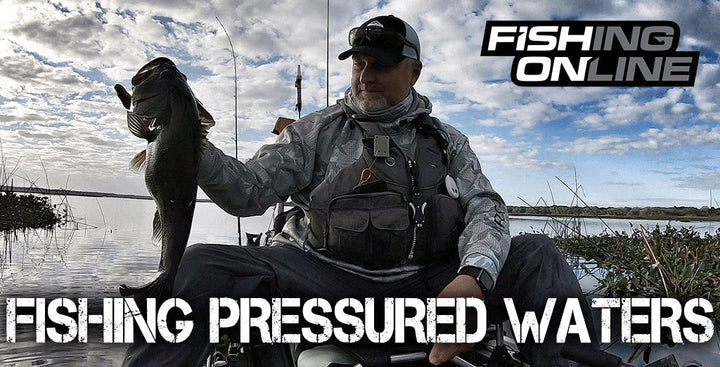
A kayak can be useful on pressured lakes because it creates less noise and reaches narrow water. Check the kayak’s weight capacity before loading a cooler, fish finder, battery, rods, and tackle. Always wear a U.S. Coast Guard–approved personal flotation device.
⚠️ Safety Warning: Wear your life jacket while boating, kayak fishing, or traveling in rough water. Check the weather, tell someone your plan, carry water and sun protection, and keep hooks and pliers secured when moving.
Fish low-light windows and overlooked time periods
Dawn and dusk often offer the best chance to reach active fish before boat traffic builds. Cloud cover, wind, rain, and falling light can also reduce the visibility that makes fish cautious.
The best time is not always the first hour of the day. On some lakes, fish feed after the lake quiets in the evening. On others, a warm afternoon may trigger shallow activity. Keep notes instead of relying only on common sayings.
| Time or condition | Good targets | Approach |
|---|---|---|
| First light | Bass, trout, walleye, panfish | Topwater, small moving lures, shallow cover |
| Bright midday | Deep bass, trout, catfish | Drops, shade, deep weed edges, bottom rigs |
| Windy afternoon | Bass, walleye, trout | Wind-blown points, banks, and bait lines |
| After a light rain | Bass, catfish, panfish | Fresh inflows, muddy edges, shallow cover |
| Evening | Bass, catfish, walleye, trout | Slow lures, live bait, dark or natural colors |
| Calm clear night | Trout, bass, walleye | Quiet banks, subtle lures, low light |
Night fishing has extra risks. Use a headlamp, keep hooks covered, bring a charged phone, and avoid boating without proper navigation lights and experience.
Seasonal changes still matter
Pressure cannot erase seasonal fish movement. It can make the fish use less obvious parts of the seasonal zone.
In spring, bass may move toward warming flats, protected coves, and spawning areas. Avoid walking through shallow spawning areas or disturbing visible beds. Trout may gather near inlets and cold-water sources.
In summer, fish often seek shade, depth, current, or oxygen-rich water. Early morning can be productive, but deep structure may hold fish after the sun rises. Walleye may move onto humps or weed edges. Catfish can feed near channels and flats.
In fall, cooling water may bring baitfish toward points, creek arms, and shallow structure. Fish may feed with more urgency, but pressured lakes can still reward smaller lures. In winter, slow presentations, deep water, and exact depth control become more important.
Watch water temperature, but do not worship one number
A temperature reading helps explain fish location. It does not provide a magic bite number. The same temperature can produce different results based on oxygen, light, wind, and forage.
Look for temperature changes across the lake. A small inflow may be warmer or cooler than the main lake. A shaded bank may differ from a sunny bank. A deep pocket may remain stable during a weather swing.
Use a repeatable search plan
Random casting wastes time on pressured lakes. A simple search plan helps you learn what the fish want.
Start with a fast presentation for 10 to 15 minutes. Use a small crankbait, spinnerbait, swimbait, spoon, or jig that covers water. If you get follows, short strikes, or bait activity, slow down and work the area carefully.
If the fast presentation gives no clues, change one factor at a time. Change depth before changing color. Change speed before changing lure type. Change angle before leaving the area.
A practical five-step pressured-lake routine
-
Check the conditions.
Note wind, cloud cover, water clarity, temperature, lake level, and boat traffic. -
Choose three types of spots.
Pick one obvious location, one secondary structure area, and one low-traffic area. -
Start with a search bait.
Cover water at a medium speed. Watch for follows, bait, weeds, rocks, and depth changes. -
Slow down the best clue.
Use a jig, soft plastic, live bait, fly, or bottom presentation. Cast from new angles. -
Record the pattern.
Write down depth, cover, lure size, retrieve, weather, and time. Return only if the conditions match or improve.
This plan helps beginners avoid changing five things after every cast. It also gives experienced anglers a clear way to test a lake rather than simply run spots.

When to leave a spot
Do not abandon a good area after five casts. Pressured fish may need a natural presentation and a quiet approach. Give a key location several angles and two or three speeds.
Still, do not spend an hour on a dead area without evidence. Leave when you see no bait, no cover, no temperature advantage, and no fish activity. Return during a better light, wind, or tide-like feeding window.
The goal is not to fish every inch of the lake. The goal is to find a repeatable condition.

Rigs and presentations that work under pressure
Simple rigs often outperform complex ones because they let you control depth and speed. Choose a rig that fits the species, cover, and bottom.
Finesse soft plastics
A Ned rig, shaky head, drop-shot, or small Texas rig can be effective for pressured bass. Use a compact soft plastic in green pumpkin, smoke, watermelon, black, or another color that matches the water and forage.
A drop-shot keeps the bait above the bottom. It works well around deep rock, brush, and suspended fish. A shaky head moves a worm subtly along the bottom. A Texas rig helps protect the hook in weeds and wood.
Use a spinning reel for light finesse rigs. A 7-foot medium-light rod with a fast action gives good casting distance and sensitivity. Avoid extremely light gear around heavy cover.
Jigs and small blade lures
A compact jig can reach fish that have seen many soft plastics. Choose a 1/8- to 3/8-ounce jig based on depth, wind, and fall speed. Add a small trailer, or use the jig alone when fish want a narrow profile.
Blade baits and small spoons can help locate deep fish in cold water. Keep the lift short and controlled. If the lure slams into rocks or grass, change the angle or weight.
Live bait and natural offerings
Live bait can be a strong option when legal. Worms, minnows, leeches, and insects may appeal to fish that refuse artificial lures. Use the smallest hook and sinker that can reach the right depth.
Live bait requires care. Keep bait cool, aerated, and separate from drinking water. Do not release nonnative bait into a lake. Follow local rules for baitfish transport, collection, and disposal.
Fly fishing on pressured lakes
Fly rods can present small food items with little splash. A 4- to 6-weight fly rod covers many trout, panfish, and small bass situations. Use a floating line for surface flies and a sinking or sink-tip setup for deeper presentations.
Fly fishing is not limited to streams. Shorelines, weed edges, coves, and boat ramps can all hold fish. Make sure your back cast is clear, especially around trees, people, and power lines.

Avoid common pressured-lake mistakes
The most common mistake is fishing the way everyone else fishes. If every boat throws a white spinnerbait along the bank, another white spinnerbait may not add much.
| Mistake | Why it hurts | Better choice |
|---|---|---|
| Using the same lure all day | Fish may recognize the pattern | Change depth, speed, angle, or profile |
| Fishing too close to cover | Boat and shadow can push fish away | Cast past the target and work inward |
| Using heavy line in clear water | Fish may detect the line | Reduce line size when cover allows |
| Making every cast fast | Fish may need time to inspect the bait | Add pauses and slow retrieves |
| Chasing every fish mark | Marks may be bait or clutter | Fish only marks that fit the full pattern |
| Ignoring small cover | Pressured fish often leave obvious cover | Target isolated rocks, stumps, and weeds |
| Keeping poor notes | You repeat unproductive trips | Record depth, weather, and presentation |
The key lesson is to make one clear change at a time. If you change lure, line, depth, and location together, you will not know which factor mattered.
Do not over-finesse the fish
Finesse fishing does not mean using tiny tackle in every situation. A small lure can be hard to cast in wind. Light line can break around wood. A tiny hook can injure a large fish if it is swallowed.
Use gear that matches the fish and cover. If you cannot land the fish safely, your tackle is too light for that location.
Protect fish and follow local rules
Before fishing any lake, check the current regulations from the state wildlife agency or local fish and game department. Rules may cover fishing licenses, seasons, size limits, bag limits, baitfish, lead tackle, barbed hooks, lines, boat access, and protected areas.
📜 Check Local Regulations: Regulations can change by lake and species. Confirm the current rules before your trip, and carry proof of your fishing license when required.
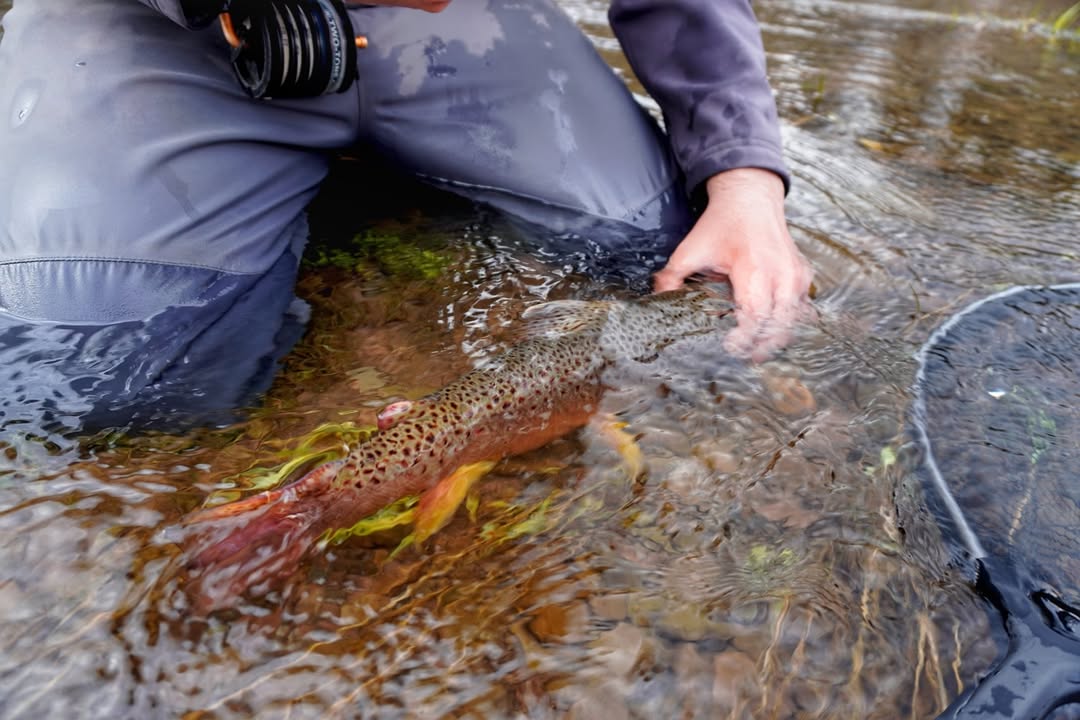
Catch and release works best when fish spend little time out of water. Wet your hands before touching them. Use pliers to remove hooks. Support large fish with two hands, and never squeeze the gills.
If a fish is deeply hooked and legal rules allow release, cut the line near the hook instead of pulling hard. Many hooks can rust away, while torn tissue may cause more harm.
🌿 Conservation Note: Dispose of monofilament, braid, hooks, and soft plastics in a trash container. Discarded line can harm birds, turtles, fish, and other wildlife.
Keep fish in the water when possible
For a quick photo, keep the fish close to the surface. Limit air exposure to a few seconds. Revive tired fish by holding them upright in the water and moving them gently forward only when needed.
Do not use a stringer in areas where regulations require immediate release. A stringer can also expose fish to warm water, predators, and injury.
Handle trout with extra care
Trout are sensitive to warm water and rough handling. Avoid fishing for trout during extreme heat when delayed mortality is likely. Use barbless hooks where required or where practical, and keep the fish wet.
If you plan to keep fish, use a legal method and dispatch them quickly. Keep the catch cool and follow possession limits.
Build a pressured-lake tackle kit on a budget
You do not need a boat full of gear. A small, organized tackle box can cover many situations.
| Budget level | Useful setup | Best suited to |
|---|---|---|
| Entry level | 6- to 7-foot medium spinning or spincast combo, 6- to 10-pound mono, small hooks and jigs | Beginners, kids, shore anglers |
| Mid-range | Medium-light spinning setup, 8- to 10-pound braid, fluorocarbon leaders, finesse baits | Anglers learning pressured bass and trout |
| Advanced | Spinning and baitcasting setups, quality drag, multiple line sizes, fish finder | Experienced anglers covering varied water |
| Specialty | Fly rod, ice rod, kayak electronics, or heavy catfish setup | Anglers focused on one method or species |
Current pricing ranges from low-cost starter combos to premium rod-and-reel systems. A more expensive setup may improve weight, balance, drag smoothness, and line management, but it cannot replace good location and quiet boat control.
For gift buyers, a simple spinning or spincast combo is often safer than buying a specialized baitcaster. A child may need a shorter rod, a simple reel, and a small tackle box rather than a high-end bass setup.
What gear matters most
Spend first on the parts that affect control and reliability:
- A rod with the right power and action.
- A reel with a smooth drag.
- Fresh line with good knots.
- Sharp hooks.
- Polarized sunglasses.
- Long-nose pliers.
- A landing net for larger fish.
- A personal flotation device for boat or kayak use.
Drag is the reel system that lets line leave under pressure. A smooth drag protects light line and reduces sudden breaks. The listed maximum drag is less important than smooth start-up and proper adjustment.
A tackle box does not need dozens of lure colors. Carry a few natural colors, one dark option, one bright option for dirty water, and weights that fit your depth.
Gear care keeps your edge sharp
Pressure often exposes weak gear. A nicked leader, loose reel seat, dull hook, or damaged braid can cost the only bite of the day.
Check the first few feet of line after fishing around rocks, docks, or wood. Run the line between your fingers. Replace it if you feel rough spots, curls, or cuts.
Rinse freshwater gear lightly if it collects dirt or plant matter. Do not blast water into reel bearings. Dry rods and reels before storage. Store soft plastics away from tackle made from materials that can melt or react with them.
| Gear item | Check after use | Replace or service when |
|---|---|---|
| Fishing line | Nicks, memory, fraying, weak knots | It feels rough or breaks during normal use |
| Hooks | Rust, dull points, bent wire | The point will not catch on a fingernail |
| Spinning reel | Drag, bail, line roller | It grinds, sticks, or feels loose |
| Baitcaster | Spool tension, brakes, backlash | It will not cast smoothly after cleaning |
| Rod guides | Cracks or sharp edges | They cut or damage line |
| Pliers | Rust and cutting edges | They no longer grip or cut cleanly |
| Landing net | Loose frame or torn mesh | Fish can escape or mesh causes damage |
Saltwater anglers need extra corrosion care, even when fishing a lake after a coastal trip. Rinse saltwater-rated gear with clean, low-pressure water and dry it fully. Freshwater-only reels may corrode faster if used in salt water.
Tips for beginners, kids, and gift buyers
A beginner should start with one reliable setup and learn depth, casting, knots, and fish handling. A 6- to 7-foot medium spinning combo is a flexible choice for bass, trout, catfish, and panfish when matched with the right line.
Kids often do better with a shorter rod and a simple spincast reel. Choose a rod around 5 to 6 feet, 4- to 8-pound line, small hooks, bobbers, and soft bait. Keep the first trip short and fish where bites are possible, not only where large fish may live.
👪 Parent or Gift-Buyer Note: Avoid gifting loose hooks, knives, or complex baitcasters to a young angler without supervision. Add a small tackle box, polarized sunglasses, pliers, and a life jacket that fits the child.
Experienced anglers may gain more from a better map, a second line class, or a compact electronics upgrade than from another large lure collection. A gift card to a local tackle shop can be useful when the target species and lake are unknown.
A simple first trip plan
For a beginner or child, use this plan:
- Check the license and lake rules.
- Pick a safe shore area with room to cast.
- Tie on a small hook, bobber, and legal bait.
- Set the bait near cover, but not inside thick weeds.
- Keep the line clear of feet, pets, and other people.
- Watch the bobber and reel slowly when it moves.
- Wet your hands before handling a fish.
- Leave the area cleaner than you found it.
This approach teaches observation and fish care without making the trip feel like a technical exam.
Frequently asked questions
How do you catch bass in a highly pressured lake?
Use quiet approaches, long casts, smaller soft plastics, and slow retrieves. Fish secondary cover near points, docks, grass, and creek channels. Change the angle and depth before changing many lure colors.
What is the best lure for pressured bass?
There is no single best lure for every lake. A Ned rig, shaky head, compact jig, small swimbait, or suspending jerkbait can work when matched to depth, cover, and water clarity. The best choice is the one that presents naturally in the active zone.
Should you use fluorocarbon on a pressured lake?
Fluorocarbon can help in clear water because it is less visible underwater and sinks. It is not ideal for every beginner because it can be stiff and develop memory. Monofilament is easier to handle, while braid with a fluorocarbon leader gives casting distance and low stretch.
Is braid too visible for clear water?
Braid can be visible in clear water, especially in thin diameters. Many anglers use braid as a main line and add a 6- to 12-foot fluorocarbon leader. In heavy cover, braid may be a better choice because it resists some abrasion and has little stretch.
Do smaller lures work better on pressured lakes?
Smaller lures often help when fish see many large, moving baits or when forage is small. They are not always best. A larger lure may work during a shad, herring, or large-minnow feed.
How long should you wait before moving from a spot?
Give a high-quality location several casts from different angles and with more than one speed. Move when you have no sign of bait, cover, fish, or a useful condition. Return later if wind, shade, temperature, or boat traffic changes.
Is live bait better than artificial lures on pressured lakes?
Live bait can be very effective, but local rules may limit bait type, transport, or use. Artificial lures give you more control and avoid some bait concerns. The better option depends on species, depth, regulations, and the angler’s skill.
Can you fish a pressured lake from shore?
Yes. Walk quietly, avoid crowded access points, and cast along shade, weed edges, inflows, and changes in bottom depth. Shore anglers should also look for areas that boats cannot reach, such as narrow coves and shallow backwaters.
Are kayaks good for pressured lakes?
Kayaks can reach quiet water with less noise than many larger boats. They are useful for shorelines, coves, and shallow flats. Check the kayak’s weight capacity, wear a U.S. Coast Guard–approved PFD, and avoid rough weather beyond your skill level.
What should you record in a fishing log?
Record date, time, weather, wind, water clarity, water temperature, depth, cover, lure, line, retrieve, and fish response. Notes such as “fish followed but did not strike” can help you choose the next change.
When should you stop fishing for trout in warm weather?
Check local guidance and water temperature. Trout can suffer delayed mortality in warm water even when released. If conditions are stressful, target another species or wait for cooler periods.
Do pressured fish become impossible to catch?
No. Pressure makes fish more cautious and less predictable. They still need food, shelter, oxygen, and suitable temperature. A quieter approach and a better match to the conditions can improve your chances, but no method guarantees a catch.
Final thoughts
Learning how to fish pressured lakes is less about owning secret lures and more about seeing what other anglers miss. Fish the edge beside the edge. Use the wind, shade, depth, and cover. Approach quietly, cast farther, and slow down when the lake gives you a clue.
Start with a clear plan. Use tackle you can control. Change one factor at a time. Protect the fish, follow local rules, and keep notes after every trip.
A pressured lake is not empty water. It is a puzzle with fewer obvious answers. Once you stop racing the crowd and start reading the lake, those answers become easier to find.