How To Find Public Fishing Spots: Best Local Guide
Finding a public fishing spot can feel hard when you do not know where to look. Many anglers drive past good water every day because the access point is hidden behind a park, boat ramp, bridge, public forest, or small county road. The good news is that you do not need a private lake or an expensive boat to find fishable water.
The best public fishing spots often include city ponds, state parks, wildlife areas, reservoirs, rivers, canals, piers, beaches, and community lakes. The key is to combine online maps with local rules, access checks, and a little observation. You also need to match the water to your target fish, skill level, gear, and travel limit.
This guide explains how to find public fishing spots in the United States. You will learn how to use map apps, state wildlife websites, public land records, fishing reports, satellite views, and local tackle shops. You will also learn how to check access, avoid trespassing, choose safe shorelines, and plan a first trip that fits your budget.

The fastest way to find public fishing spots
The best way to find public fishing spots is to start with your state wildlife agency, then confirm access with satellite maps and local land records. Search for public lakes, fishing piers, boat ramps, wildlife management areas, state parks, river access points, and community ponds. Before fishing, check the license rules, season dates, limits, bait rules, and parking conditions.

A good search process has four parts:
- Find water near you.
- Confirm that the shoreline or access point is public.
- Check fishing laws and safety conditions.
- Match your tackle to the fish and water type.
Do not assume that water is public just because you can see it from a road. The water may be public while the bank is private. A bridge may cross a river, but the land below it may still be closed to foot access.
The table below shows where many public fishing spots come from and what each site usually offers.
| Public fishing source | What you may find | Best for |
|---|---|---|
| State wildlife agency | Lakes, rivers, ramps, access maps, regulations | Reliable legal access |
| City or county parks | Ponds, docks, walking paths | Beginners, kids, short trips |
| State parks | Lakes, streams, piers, camp areas | Families and weekend trips |
| Wildlife management areas | Rivers, marshes, ponds, backwater | Bass, panfish, catfish, redfish |
| Public boat ramps | River and reservoir access | Shore anglers and boaters |
| Public piers | Deep water and open access | Saltwater, lake, and urban fishing |
| National forests and public lands | Streams, lakes, and remote water | Trout, bass, and quiet trips |
Start with locations that have clear signs, marked parking, and a known managing agency. These places are easier for first-time anglers than remote water with unclear boundaries.
Use your state wildlife agency first
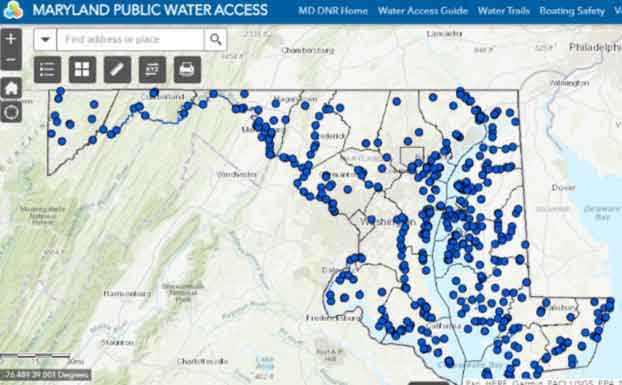
Your state wildlife agency is usually the most trusted source for public fishing access. Depending on the state, it may be called the department of Fish and Wildlife, Department of Natural Resources, Division of Wildlife, or Game and Fish Department. These agencies manage regulations and often publish public access maps.
Search online for:
- “[Your state] public fishing access”
- “[Your state] fishing access map”
- “[Your state] fish stocking map”
- “[Your state] public lakes”
- “[Your state] wildlife management areas”
- “[Your state] fishing regulations”
Look for pages with official government domains, such as .gov. Some agencies offer interactive maps with filters for boat ramps, fishing piers, trout streams, accessible areas, and stocked waters.
Read the access map details
A map marker does not always mean that every type of fishing is allowed. One location may have a boat ramp but no safe place to cast from shore. Another may allow fishing only from a pier. A third may close at sunset or require a parking permit.
Open each location and look for:
- Site name and managing agency
- Parking information
- Shoreline or bank access
- Boat ramp details
- Pier or dock availability
- Restrooms and trash cans
- Wheelchair access
- Hours and seasonal closures
- Water type and fish species
- Special regulations

The agency may also list the lake’s stocking history. Stocking means that fish are placed in the water by a fish and wildlife agency. Stocked trout ponds, for example, can be useful for beginners because the fish are often placed near easy-access areas. Stocking does not guarantee that fish will be present when you arrive, so treat it as a planning clue rather than a promise.
Check public land boundaries
Use the agency map as a starting point, not the final word. Public land may sit next to private property, and a public lake may have only a few legal access points.
Check:
- Property boundary layers
- Posted signs
- Gate locations
- Road ownership
- Parking rules
- Boat launch restrictions
- Easements and public access corridors
An easement is a legal right to cross or use land for a specific purpose. A fishing easement may allow bank access along a stream, but the terms can vary. Read the posted signs and follow the access rules.
📜 Check Local Regulations: Fishing licenses, size limits, bag limits, closed seasons, bait restrictions, lead rules, and barbed-hook rules vary by state and water. Confirm the current rules with your state or local wildlife agency before you fish.
Search maps with the right terms
Google Maps, Apple Maps, and other map apps can reveal public fishing spots that do not appear in a simple search. The quality of your results depends on the words you use. Search terms such as “lake” or “river” are too broad. Add access terms that describe how you plan to fish.

Try these searches:
- Public fishing near me
- Fishing pier near me
- Public boat ramp near me
- Shore fishing near me
- Bank fishing near me
- Trout stream access
- Public lake fishing
- Fishing pond with pier
- River walk fishing
- Kayak launch near me
- Surf fishing access
- County park fishing
- Community lake fishing
Zoom in around the results. Look for parking lots, trails, docks, bridge crossings, ramps, and areas where roads meet the water.
Use satellite view to inspect the shoreline
Satellite view helps you see the shape of a lake and the amount of open bank. It can show coves, points, weed beds, creek mouths, riprap, boat ramps, and shallow flats.
A point is land that extends into the water. Points often attract fish because they create changes in depth and current. A creek mouth is where a smaller stream enters a lake or river. These areas can carry food and cooler water.
Look for:
- Open grass near the water
- Fishing piers or docks
- Gravel banks
- Riprap rocks
- Creek channels
- Inlets and outlets
- Dam faces
- Bridges
- Shaded banks
- Deep water close to shore

Satellite images can be old. A shoreline may have changed, a trail may be closed, or a parking lot may now be private. Use street view, recent user photos, agency pages, and signs at the site to confirm current conditions.
Use topographic maps for depth and terrain
Topographic maps show changes in land height. On some lake maps, depth contours show changes below the water. Closely spaced contour lines often indicate a steep drop. Wide spacing usually means a flatter area.
For shore fishing, look for places where deep water comes close to the bank. These areas can be easier to fish than a long, shallow shoreline. A public point near a creek channel may offer more options than a flat bank with no cover.
For river fishing, topographic maps can show:
- Steep banks
- Floodplains
- Old channels
- Trails
- Roads
- Bridges
- Public forest boundaries
Do not enter a steep bank or flood area without checking current conditions. Water levels can rise fast after rain, even when the sky above your fishing spot is clear.
Find public fishing ponds, lakes, and reservoirs
Public ponds and small lakes are often the easiest places to start. They usually have short walks, calm water, and simple shore access. Many hold largemouth bass, bluegill, redear sunfish, crappie, channel catfish, and carp.

City parks and county parks are especially useful for beginners and families. A child can fish from a safe bank while an adult handles hooks, bait, and landing fish. These areas may also have restrooms, shade, playgrounds, and nearby stores.
The table below matches common public water types with likely fish and useful gear.
| Water type | Common fish | Useful starting gear |
|---|---|---|
| Small city pond | Bluegill, bass, catfish | Spincast or spinning combo, bobber, worms |
| Large reservoir | Bass, crappie, walleye, catfish | Spinning reel, jigs, soft plastics, sinkers |
| Slow river | Catfish, bass, carp, panfish | Medium spinning rod, monofilament, hooks |
| Cold stream | Trout, smallmouth bass | Light spinning rod or fly rod, small lures |
| Tidal river | Redfish, striped bass, catfish | Medium-heavy rod, braided line, leader |
| Public pier | Saltwater or lake species | Spinning reel, sinkers, bait, pliers |
| Surf beach | Redfish, pompano, striped bass | Surf rod, heavier sinkers, long-cast rig |
Choose the water before buying a large amount of gear. A 7-foot medium spinning rod with 8- to 12-pound monofilament can cover many freshwater trips. A child may do better with a 5- to 6-foot spincast combo that is simple to cast and easy to hold.
Look for fish habitat
Fish often use structure, cover, depth changes, and current. Structure is the shape of the bottom, such as a drop-off or channel. Cover is an object that gives fish shade or protection, such as grass, wood, rocks, or a dock.
At public ponds, scan for:
- Fallen trees
- Weed edges
- Drainage pipes
- Small points
- Inlets
- Dark bottom areas
- Docks
- Shade
- Water flowing into the pond
Avoid casting directly into thick cover when you are learning. Start along the edge. A weed line is often easier to fish than the middle of a dense weed bed.
Check fish stocking reports
Stocking reports can help you choose between nearby lakes. A state may stock trout in winter, catfish in small ponds, or walleye in larger reservoirs. Some states also publish survey reports that list bass, crappie, or panfish numbers.
Treat survey data as a guide. A survey may cover only part of a lake. Conditions can change after heat, floods, drought, fish kills, or heavy fishing pressure.
Find public river and stream access
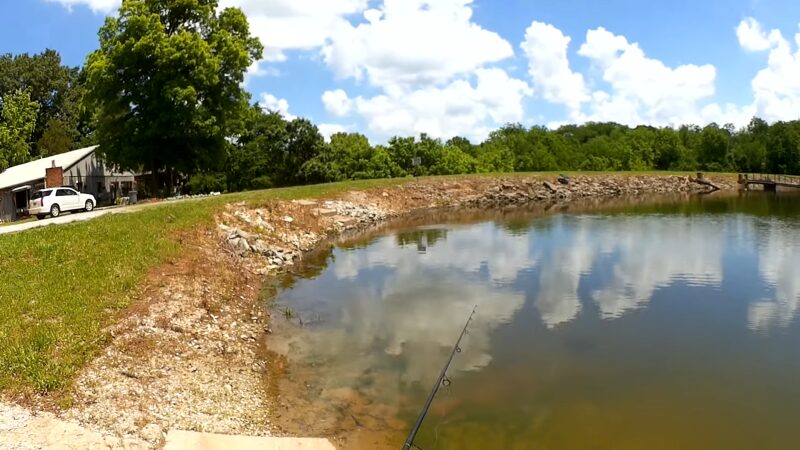
Rivers and streams can offer excellent public fishing, but access rules are more complex than they are at a city pond. The bank may be private even when the river itself is navigable. Public access may be limited to boat ramps, bridge rights of way, parks, or marked fishing easements.
Search for:
- River access
- Public bank fishing
- Canoe launch
- Kayak launch
- Trout access
- Wading access
- Fishing easement
- River park
- Greenway fishing
- Wildlife area river access
Call the managing agency if the access wording is unclear. A short phone call can prevent a trespass warning or a wasted trip.
Use bridges and public crossings carefully
Bridges can be useful places to study a river. They may reveal deep holes, current seams, rock piles, and access trails. However, a bridge does not always provide legal or safe fishing access.
Check for:
- A marked public parking area
- A sidewalk or trail
- Guardrails
- No-trespassing signs
- Fast traffic
- Steep banks
- High water
- Private driveways
Never park on a narrow shoulder if it blocks traffic or creates a risk. Never climb over guardrails to reach the water.
Understand current and water levels
River water changes faster than pond water. Heavy rain upstream can raise the river several hours later. A river that looks calm at one access point may have strong current around a bend or below a dam.
For river fishing:
- Check the current gauge if one is available.
- Look at rainfall upstream.
- Avoid wading during rising water.
- Wear wading boots with good traction.
- Use a wading belt when wearing chest waders.
- Carry a staff in slippery water.
- Tell someone your plan.
A wading belt helps keep water from filling your waders if you fall. It does not make chest wading risk-free. If you are new to wading, start in shallow water with a local guide or experienced angler.
⚠️ Safety Warning: Do not fish below a dam, spillway, or fast-water outlet unless the area is clearly open and you understand the hazards. Wear a properly fitted personal flotation device when boating or kayak fishing. A U.S. Coast Guard–approved PFD is the right choice.
Find public saltwater fishing spots
Saltwater access includes beaches, public piers, jetties, bridges, marsh edges, inlets, and boat ramps. Search tools that work for freshwater may miss these locations, so use terms such as “public beach fishing,” “shore fishing,” “surf fishing,” “public pier,” and “jetties.”

Saltwater access can be affected by tides, storms, beach rules, parking fees, and seasonal closures. Some beaches allow swimming but not fishing during busy hours. Others allow fishing only in marked areas.
Choose between beach, pier, and jetty fishing
Each saltwater access type has different demands.
- Beach fishing: Requires long casts and heavier sinkers. It can target redfish, striped bass, pompano, drum, and sharks, depending on the region.
- Pier fishing: Gives access to deeper water without a boat. It may produce mackerel, snapper, flounder, croaker, or other local species.
- Jetty fishing: Reaches current and deeper water but adds slip, wave, and hook hazards.
- Marsh bank fishing: Can be productive for redfish and sea trout, but soft mud and private boundaries are common.
- Public boat ramp fishing: May offer bank access, but do not block boats or fish in the launch lane.
A 9- to 12-foot surf rod is common for beach fishing, but the right length depends on the beach, casting space, bait weight, and local species. A 7-foot medium-heavy spinning rod can suit many pier anglers. Use a saltwater-rated reel when possible, especially if you fish often in surf or spray.
Plan around tides and weather
Tide changes move water through inlets, marshes, and tidal rivers. Moving water can change where fish hold, but the best tide varies by species and location. Check a local tide chart and compare it with access times.
Wind also matters. Strong onshore wind can create rough surf and poor casting conditions. Offshore wind can make a beach look calm while pushing water and bait in a different direction.
Rinse saltwater gear with fresh water after each trip. Dry the reel before storage. Do not blast a spinning reel with high-pressure water because pressure can push salt deeper into the reel.
🌿 Conservation Note: Use a landing net or wet hands when handling fish. Support the body, keep air time short, and release the fish quickly when regulations or your choice call for catch and release. Cut tangled line and place used monofilament in a recycling bin or trash container.
Ask local tackle shops and fishing clubs
A local tackle shop can provide information that maps cannot. Staff often know which public access points are open, which ramps are muddy, and which waters have safe bank access. They can also help you avoid buying the wrong line, hooks, sinkers, or lures.

Ask clear questions:
- Where can I fish from shore legally?
- Is this access open before sunrise or after sunset?
- What species are common there?
- What hook size works for the local bait?
- Is the bottom rocky, muddy, or weedy?
- Do I need a leader?
- Are there parking or launch fees?
- Is the water safe for children?
- What bait is legal right now?
- Which areas should beginners avoid?
A good shop may recommend a simple setup instead of an expensive one. For example, it may suggest a 6-foot-6 medium spinning rod, 10-pound monofilament, a size 6 hook, a small bobber, and live bait for panfish. That setup may be more useful at a local pond than a high-end baitcaster.
Use fishing reports with care
Fishing reports can show recent patterns, but they are snapshots. A report may describe a lake after rain, a river during a low-water period, or a pier during a strong tide. Conditions may change by the time you arrive.
Look for repeated information across several reports:
- Species being caught
- Water level
- Water clarity
- Bait or lure type
- Time of day
- Depth
- Weather
- Access problems
Avoid reports that make guaranteed claims. Fish behavior varies with water temperature, pressure, food supply, weather, and fishing pressure.
Join local groups respectfully
Local fishing clubs, conservation groups, and online communities may share access information. Read the group rules and avoid asking for exact secret spots. Instead, ask about public areas, legal access, and safe launch points.
Share useful information after your trip without posting private locations or fragile habitat. Crowding can damage small fisheries and create conflicts with nearby residents.
Choose a public fishing spot by angler type
The right spot depends on who is fishing. A quiet trail may suit an experienced angler but frustrate a parent with a stroller. A busy pier may be easy to reach but stressful for a beginner learning to cast.

Use the table below to narrow your search.
| Angler type | Public spot to seek | Why it fits |
|---|---|---|
| First-time adult | City pond or marked pier | Easy access and simple water |
| Child or family | Park pond with shade and restrooms | Short walks and safer surroundings |
| Bass angler | Reservoir point, lake cove, or river bank | Cover, depth, and moving water |
| Trout angler | Stocked stream or public cold-water access | Clear target and light tackle |
| Catfish angler | Slow river bank or reservoir cove | Room for bait and bottom rigs |
| Fly angler | Public trout stream or wide river flat | Back-cast space and flowing water |
| Kayak angler | Legal launch with calm water | Easier entry and controlled travel |
| Surf angler | Public beach with open casting room | Space for long casts and rod holders |
A parent should prioritize access, shade, bathrooms, and safe casting space over reports of large fish. An experienced bass angler may accept a longer hike if the location has deeper water and better cover.
👪 Parent or Gift-Buyer Note: For a child, choose a public spot with a clear bank, low foot traffic, and no need to wade. A short 5- to 6-foot spincast combo, 6- to 8-pound monofilament, bobber, and small hooks are easier to manage than a baitcaster.
Match your gear to the public water
Public fishing does not require a large tackle collection. A simple setup works better when you know the depth, fish, bottom, and access conditions.

Here are common choices:
- Spinning reels: Versatile and easy to cast. Good for bass, trout, panfish, catfish, and many pier trips.
- Spincast combos: Simple for beginners and kids. They reduce line tangles but offer less control and durability than many spinning reels.
- Baitcasters: Useful for experienced bass anglers who need accurate casts and heavier lures. They can create backlash, which is a tangle caused by the spool spinning faster than the lure.
- Fly rods: Designed to cast a weighted line rather than a heavy lure. A 4- to 6-weight fly rod suits many trout and panfish situations.
- Telescopic rods: Compact for travel. They are handy for hiking and car storage but need careful cleaning and inspection.
- Ice fishing rods: Short rods with soft tips for use through an ice hole. They are not a general replacement for a shore rod.
Rod power describes how much force it takes to bend the rod. Light power suits small fish. Medium power covers many general freshwater uses. Medium-heavy power helps with larger fish, heavy cover, and some saltwater work.
Rod action describes where the rod bends. Fast action bends near the tip and gives a quick feel. Moderate action bends farther down and can help keep treble-hooked fish pinned.
Start with a basic freshwater setup
For a new adult angler, consider:
- 6-foot-6 to 7-foot medium spinning rod
- 2500 or 3000-size spinning reel
- 8- to 10-pound monofilament
- Size 6 to 10 hooks
- Small bobbers
- Split shot sinkers
- 1/16- to 1/4-ounce jigs
- Soft plastics
- Needle-nose pliers
- Small tackle box
- Landing net
Line test means the approximate strength rating of the line in pounds. It is not a promise that the line will never break. Knots, abrasion, drag settings, and sharp rocks can lower real-world strength.
Use fluorocarbon as a leader when abrasion resistance or low visibility matters. Use braided line when you want low stretch and high strength for its diameter. Braid often needs a monofilament or fluorocarbon leader and careful knot work.
Choose terminal tackle for the bottom
Terminal tackle is the small gear at the end of your line. It includes hooks, sinkers, swivels, bobbers, leaders, and snaps.
Use:
- A bobber for shallow fish and easy depth control
- A light jig for panfish, trout, and bass
- A bottom rig for catfish
- A swivel to reduce line twist
- A leader near rocks, teeth, or rough cover
- Circle hooks where required or helpful for bait fishing
Do not use more weight than needed. Heavy sinkers reduce sensitivity and can damage fish if used carelessly. Check local rules for lead tackle, especially in trout waters, wildlife areas, and waters with special restrictions.
Compare public fishing spots before you travel
A strong location is not only one with fish. It must also be legal, safe, reachable, and suitable for your gear.

Use this simple scoring method. Give each location a score from 1 to 5 for access, safety, target fish, travel time, and comfort. A nearby pond that scores well in every category may be a better choice than a famous lake that requires a long hike and has no open bank.
| Factor | Score 1 means | Score 5 means |
|---|---|---|
| Legal access | Unclear or restricted | Clearly marked public access |
| Shore access | Steep or blocked | Open bank, dock, or pier |
| Target fish | No useful information | Species match your goal |
| Safety | Fast water or unsafe bank | Stable ground and clear rules |
| Travel | Long drive or rough road | Easy trip from home |
| Comfort | No shade or restroom | Useful family facilities |
Take a screenshot of the map, access page, and regulations before leaving. Cell service may be weak near rivers, forests, and remote reservoirs.
Bring a paper backup if you are traveling far. Write down the access road, parking area, emergency address, and nearest town.
Check access, parking, and opening hours
Many public fishing spots fail because anglers arrive outside the permitted hours. Some parks close at sunset. Some boat ramps have gates. Some piers close during storms or construction.

Before you go, check:
- Opening and closing hours
- Seasonal access
- Parking fees
- Boat launch fees
- Fishing license rules
- Restroom hours
- Dog rules
- Camping rules
- Fire restrictions
- Construction notices
- Flood or storm closures
Do not park in front of a ramp. Boat users may need the full lane to back down. If bank fishing is allowed near a ramp, stand well away from launching boats.
Confirm that the bank is public
The most common access mistake is confusing public water with public land. Look for signs that say:
- Public fishing access
- State park
- Wildlife management area
- National forest
- County park
- City park
- Public boat ramp
- Fishing easement
Be careful with “no trespassing,” “private property,” and “residents only” signs. Do not cross fences, gates, yards, or private roads without permission.
Plan for walking distance
A map pin may sit near water but still require a long hike. Check the walking route, slope, surface, and distance from parking. This matters for older anglers, young children, anglers carrying coolers, and anyone using a wheelchair.
A landing net, tackle box, folding chair, and cooler add weight. If the walk is long, carry only the tackle you need. A small shoulder bag or backpack can be easier than a large box.
Learn what to look for when you arrive
Finding a public fishing spot is only the first step. Once you arrive, spend a few minutes reading the water before tying on a lure.

Look for:
- Baitfish near the bank
- Birds feeding
- Insects above the water
- Surface dimples
- Current seams
- Weed edges
- Fallen wood
- Rocks
- Sudden depth changes
- Shade
- Water flowing into or out of the area
Start with easy water. Fish the edge of cover before casting into the thickest part. If you use live bait, set the depth so the bait stays near the likely feeding zone.
For lures, begin with a small spinner, jig, soft plastic, or shallow crankbait. Change one factor at a time. If you change lure, depth, line, and location at once, you will not know what helped.
Move when the water gives no clues
Do not stay in one place for hours just because it is public. Public access does not mean every section holds fish at all times.
Move after 15 to 30 minutes if:
- You see no signs of life
- The water is too shallow for the target fish
- The bottom is featureless
- The current is too strong
- Your bait is untouched
- You cannot cast safely
Move a short distance first. Try a point, shade line, current edge, or depth change before leaving the entire site.
Avoid common public fishing mistakes
Many poor trips result from planning errors rather than a lack of fish. A small amount of preparation can prevent most of them.
| Common mistake | Better choice |
|---|---|
| Trusting an old map photo | Confirm with current agency pages and signs |
| Fishing private shoreline | Check property lines and access signs |
| Bringing too much tackle | Pack for the species and water |
| Ignoring weather | Check wind, storms, heat, and water levels |
| Using hooks that are too large | Match hook size to bait and fish |
| Leaving line on the bank | Cut it and place it in a bin |
| Fishing near boat traffic | Move away from ramps and lanes |
| Forgetting a license | Buy and carry the required license |
A common beginner error is choosing gear for the largest fish in the lake. Heavy line, large hooks, and oversized lures can make small fish harder to catch and reduce casting distance. Match the setup to the typical fish, not the biggest fish someone once caught there.
Another mistake is arriving at noon in a hot, open pond with no shade. Early morning, late afternoon, cloudy periods, and moving water can offer more comfortable conditions, but fish activity still varies by species and weather.
Know the rules before you cast
Fishing laws protect fish populations and reduce conflicts among anglers. Rules can change by state, county, lake, river section, season, and species.
Check for:
- License requirements
- Youth and senior exemptions
- Daily bag limits
- Possession limits
- Minimum and maximum lengths
- Closed seasons
- Protected species
- Legal bait
- Hook restrictions
- Lead restrictions
- Trotline or jug-line rules
- Fishing method limits
- Night fishing rules
- Boat registration rules
Some waters have special regulations that are stricter than statewide rules. A lake may require artificial lures only. A trout stream may limit hook size or prohibit bait. A saltwater area may require a separate registration even when the fishing license is free.
📜 Check Local Regulations: Regulations can change without much notice after drought, disease, stocking, or conservation action. Check the latest state wildlife agency page for the exact water you plan to fish.
Follow catch-and-release best practices
Catch and release works best when fish spend little time out of water. Wet your hands before touching the fish. Avoid squeezing the body or touching the gills.
Use barbless hooks when allowed. Pinch down the barb if you plan to release fish and can still remove the hook safely. Carry forceps or long pliers for deep hooks.
For larger fish:
- Keep the fish in the water when possible.
- Support the belly and jaw correctly.
- Do not hold a heavy fish by the lower jaw alone.
- Take a quick photo.
- Release the fish facing into gentle current.
- Watch until it swims away.
Do not release unwanted bait, aquarium fish, or invasive species into public water. Dispose of bait according to local rules.
Use public fishing spot apps and digital tools
Apps can speed up your search, but each tool has limits. A crowd-sourced pin may be helpful but may not confirm legal access. A fish-finder map may show depth but not shoreline ownership.
Useful digital tools include:
- State wildlife agency maps
- Google Maps or Apple Maps
- Satellite imagery
- Topographic map apps
- Tide charts
- River gauge websites
- Weather radar
- Fishing report apps
- Public land boundary maps
- Offline navigation apps
Save maps for offline use when possible. Remote public land may have weak service. Mark the parking area, trailhead, boat ramp, and emergency exit before you leave.
Use depth maps and fish finders wisely
A fish finder can help boat and kayak anglers locate depth changes, bait, and bottom structure. It does not replace local knowledge or safe navigation. Fish symbols can also be misleading if the unit settings are wrong.
For kayak fishing, choose a legal launch with calm water and a clear return route. Bring a U.S. Coast Guard–approved PFD and wear it. A kayak can turn quickly in wind, current, and boat wakes.
Do not carry more gear than your kayak can safely support. Check the manufacturer’s weight capacity for the kayak, seat, cooler, and all equipment.
Plan a safe public fishing trip
Safety starts before you leave home. Tell someone where you are going, when you expect to return, and who is with you.
Pack:
- Fishing license
- Phone in a waterproof case
- Water and snacks
- Sunscreen
- Polarized sunglasses
- Hat
- First-aid kit
- Pliers or forceps
- Insect repellent
- Extra line
- Flashlight
- Weather layer
- Personal flotation device for boating
Polarized sunglasses reduce glare and help you see shallow hazards, but they do not replace eye protection from hooks. Wear them when casting, especially with children nearby.
Use hook covers and keep knives closed when not in use. Teach children to look behind them before casting. A large circle of safe space matters more than a long cast.
Respect heat, storms, and cold
Heat can become dangerous during a long shore trip. Drink water before you feel thirsty. Take breaks in shade. Leave if lightning approaches.
Cold water creates a serious risk even when the air feels warm. Avoid unstable banks and wear proper layers. Never walk onto ice unless local authorities or trained experts confirm safe conditions. Ice thickness can vary over a few feet because of springs, current, wind, and moving water.
For ice fishing, tell someone your plan, carry ice picks, wear flotation gear suited to the activity, and take an ice-safety course if you are new. Do not rely on a single thickness estimate for the entire lake.
Estimate the cost of finding public fishing spots
Finding the location is often free. The main costs are licenses, fuel, parking, bait, tackle, food, and safety gear.
Current prices vary by state and brand, but these broad ranges can help with planning.
| Trip budget | What it may cover | Best for |
|---|---|---|
| Under $25 | Bait, hooks, sinkers, and a short local trip | Angler with existing gear |
| $25–$75 | Basic tackle, bait, parking, and fuel | Beginner or child’s first trip |
| $75–$200 | Entry spinning or spincast setup and tackle | New angler building a kit |
| $200–$500 | Better rod and reel, net, bag, and safety gear | Regular freshwater angler |
| $500 or more | Specialty gear, kayak items, electronics, or travel | Experienced or mobile angler |
A modest setup can be enough for many public waters. Spend first on a comfortable rod, reliable line, sharp hooks, pliers, and a license. Add specialized lures and electronics after you learn what your local water requires.
Do not buy a baitcaster for a child simply because it looks advanced. A spincast combo or spinning reel usually offers a faster learning curve. Experienced bass anglers may prefer a baitcaster for control, but beginners should expect a practice period.
Keep public fishing gear clean and ready
Gear care matters even on freshwater trips. Sand, grit, mud, and plant debris can damage reels, guides, zippers, and tackle boxes.
After each trip:
- Remove wet bait and trash.
- Rinse saltwater gear with fresh water.
- Wipe rods and reel bodies.
- Dry hooks before storing them.
- Check line for nicks.
- Loosen the reel drag for storage.
- Remove water from tackle boxes.
- Store rods out of direct heat.
Inspect the first several feet of line before every trip. Replace line when it feels rough, curls badly, turns brittle, or shows cuts. Monofilament may need replacement more often than braid because heat and sunlight can weaken it.
Check rod guides for cracks. A damaged guide can cut line during a cast. Look for loose reel seats, bent hooks, rusted split rings, and dull pliers.
Know what breaks first
Hooks often rust first after saltwater use. Line can weaken from rocks, dock edges, and fish teeth. Rod tips break when rods are stored carelessly or loaded in vehicles. Reel handles and bail springs can suffer after drops or heavy use.
Carry simple backups:
- Extra spool of line
- Spare hooks
- Split shot
- Swivels
- Bobbers
- A backup lure
- Small pliers
- Tape or a basic repair kit
A small repair kit can save a full day when you are several miles from a tackle shop.
🔧 Quick Fix: If a spinning reel feels rough after a saltwater trip, stop fishing it hard. Rinse it gently with fresh water, dry it, and check the manufacturer’s care instructions. Do not force the handle or spray high-pressure water into the reel.
Build a repeatable public fishing plan
The easiest way to find better spots over time is to keep notes. Record the date, water level, weather, access point, bait, lure, depth, and fish activity.
A simple fishing log can include:
- Location name
- Legal access notes
- Parking details
- Water temperature if known
- Weather and wind
- Tide or river level
- Fish seen
- Bait used
- Lure used
- Depth
- Results
- Problems at the site
You do not need to catch fish to learn from a trip. You may discover that the bank is too steep, the parking area closes early, or the water becomes unsafe after rain. That information improves your next decision.
After several trips, compare locations. You may find that one pond suits quick evening trips, one river works best after low rain, and one pier is best during a certain tide. This is how a list of random map pins becomes a useful personal fishing map.
When to ask a guide or local expert
A local guide can help when access is confusing, water is dangerous, or your target fish requires specialized skills. This is especially useful for fly fishing, surf fishing, kayak fishing, ice fishing, deep wading, and saltwater trips.
Ask for help when:
- You cannot tell whether access is legal.
- The river has strong or changing current.
- You plan to wade for the first time.
- You want to fish from a kayak in tidal water.
- You are new to surf casting.
- You need help reading a depth map.
- You want to target a species with special rules.
- You are unsure how to handle a large fish.
A tackle shop can often answer basic questions for free. A licensed guide can offer more direct instruction and local safety knowledge. For boating, consider a boating safety course. For ice fishing, seek formal ice-safety training instead of relying only on online advice.
Frequently asked questions
Q: How do I find free public fishing spots near me?
A: Search your state wildlife agency website for public fishing access, then use a map app to confirm parking and shoreline access. Check city parks, county ponds, state parks, wildlife management areas, public piers, boat ramps, and river greenways. “Free” may refer to access only; you may still need a fishing license or parking permit.
Q: Can I fish anywhere from a public lake?
A: No. Public water does not always mean public shoreline. Fish only from marked public land, public piers, legal boat launches, or posted access easements. Follow signs and stay outside private property. Ask the managing agency if the boundary is unclear.
Q: What is the best public fishing spot for beginners?
A: A small city pond or county park with open bank, shade, parking, and restrooms is often the best choice for beginners. These sites work well with a spincast combo or light spinning rod, bobber, small hooks, and live bait. Choose safety and easy access over reports of large fish.
Q: How can I find public fishing spots for bass?
A: Look for public reservoirs, lake points, creek mouths, river bends, docks, weed edges, fallen trees, and rocky banks. Use state fish surveys and stocking reports for clues. A 6-foot-6 to 7-foot medium spinning rod suits beginners, while experienced bass anglers may prefer a medium or medium-heavy baitcasting setup.
Q: What gear should I bring to a public fishing spot?
A: Bring a rod and reel matched to the water, line, hooks, sinkers, bobbers, lures or legal bait, pliers, a landing net, water, sunscreen, polarized sunglasses, a phone, and your fishing license. Add a PFD for kayaking or boating. Pack less gear for long walks.
Q: Are fishing piers better than shore access?
A: Piers can provide deeper water and stable footing, which helps beginners, children, and anglers who cannot wade. They can also be crowded and may have limited casting room. Shore access gives more freedom to move but may include mud, steep banks, weeds, or private boundaries.
Q: How do I find public trout fishing access?
A: Search your state wildlife agency for stocked trout waters, trout access maps, and public stream easements. Check opening dates, bait rules, size limits, and special tackle regulations. A light spinning rod or 4- to 6-weight fly rod may suit trout, depending on the stream and method.
Q: Can I use Google Maps to find fishing spots?
A: Yes, but use it as a discovery tool rather than proof of legal access. Search for public fishing, boat ramps, fishing piers, parks, and river access. Confirm the site with government pages, recent signs, property maps, and the managing agency.
Q: How do I know if a fishing spot is safe?
A: Look for stable ground, clear parking, marked access, slow or manageable water, and safe casting space. Check weather, river levels, tides, and heat. Avoid unstable banks, fast water, dam outlets, lightning, and unknown ice. Tell someone your plan and wear a U.S. Coast Guard–approved PFD when boating or kayak fishing.
Q: Is a spinning reel or baitcaster better for public fishing?
A: A spinning reel is more forgiving and suits most beginners, children, trout anglers, panfish anglers, and general freshwater trips. A baitcaster offers precise casting and control for experienced bass anglers using heavier lures and line. The main difference is ease of use versus casting control.
Q: Do I need a fishing license at a public park?
A: Usually, adults need a state fishing license unless a specific exemption or free-fishing event applies. Rules vary by state and water. Check the current license requirements, youth exemptions, species rules, and fishing dates with your state wildlife agency.
Q: How often should I replace fishing line?
A: Replace line when it feels rough, shows cuts, becomes brittle, develops severe memory, or has been exposed to heavy abrasion. Inspect monofilament and fluorocarbon often. Braid can last longer, but it still needs replacement after damage, fading, fraying, or repeated abrasion.
Q: What should I do if I find a public spot that is crowded?
A: Fish away from the busiest bank if legal access allows it. Walk to another section, arrive at a different time, or choose a nearby public pond or river access. Do not crowd another angler’s casting space. Keep noise low and leave room around piers and boat ramps.
Q: Should I share a good public fishing spot online?
A: Share general access information when possible, but avoid posting fragile small spots, exact parking details, or sensitive spawning areas. Excessive exposure can lead to litter, crowding, and habitat damage. Protect the place by packing out trash and following all rules.
Final advice for finding better public fishing spots
The best way to find public fishing spots is to build a process instead of chasing random pins on a map. Start with official state or local access information. Confirm the land boundary, parking, hours, water conditions, and current regulations. Then choose a location that fits your target fish, gear, travel time, and safety level.
For a first trip, keep the plan simple. Pick a marked public pond, park lake, pier, or easy river access. Use a light spinning or spincast setup, bring only basic terminal tackle, and spend time watching the water. A calm, legal, easy-to-reach spot is often more valuable than a famous location that does not fit your needs.
Public fishing works best when anglers leave the water better than they found it. Follow local rules, respect private property, protect fish during release, keep hooks and line away from wildlife, and give other anglers room. With a map, a license, safe gear, and a little patience, the next worthwhile fishing spot may be much closer than you think.