How To Catch Big Fish In A River: Proven River Fishing Tips
Big river fish rarely sit in the middle of nowhere. They use current breaks, deep holes, wood, rocks, weed edges, and places where food collects. The key is to read the river before you cast. Find where a large fish can rest with little effort while still reaching bait that drifts past.
This approach works for bass, trout, catfish, walleye, carp, pike, and other freshwater species. It also works from shore, a boat, or a kayak. You do not need the most costly rod or reel. You need the right tackle, a quiet approach, fresh line, and a plan that matches the river.

Quick answer: how to catch big fish in a river
The best way to catch big fish in a river is to locate deep water beside current, cover, or a food source. Use a rod and line suited to the target species, present bait or a lure near the bottom or current seam, and move slowly. Fish low-light periods, check water levels, and make accurate casts. Follow local license, season, size, and bag rules.

Read the river before you choose a lure
Big fish spend energy wisely. Fast current takes energy, so many large fish hold near a seam where strong water meets slow water. They can face into the flow, watch food move by, and move only a short distance to feed.
Look for depth changes first. A deep hole below a shallow riffle can hold catfish, walleye, bass, and trout. A bend in the river often cuts a deeper outside bank. The inside bend may form a shallow bar where baitfish gather.
Current seams are also strong targets. A seam looks like a line where two speeds of water meet. Foam, leaves, and small sticks often reveal it. Cast just into the faster water and let your bait drift toward the slow side.
Wood, rocks, weed beds, bridge pilings, and undercut banks can all attract fish. Cover gives fish shade and a place to ambush prey. Large fish may sit behind a log, beside a boulder, or under a steep bank.
Learn the best river features
Use this simple process when you reach the water:
- Watch the river for five minutes before casting.
- Find the fastest and slowest water.
- Look for a clear current seam.
- Check for depth near shallow water.
- Search for wood, rock, weeds, docks, and bridge supports.
- Watch for baitfish, insects, birds, and surface activity.
- Start with the area that offers food, cover, and a low-energy resting spot.
A fish finder helps from a boat or kayak, but it is not required. From shore, polarized sunglasses can reduce glare and help you see rocks, weed lines, and drop-offs. Avoid standing where your shadow crosses a likely holding area.
Use water level and clarity as clues
River levels change fish location. Rising water can push bait and insects toward flooded banks, grass, and new cover. Falling water may pull fish toward deeper holes, outside bends, and the main channel.
Clear water often calls for smaller lures, lighter leaders, and longer casts. Stained water may favor vibration, sound, larger profiles, and brighter colors. Muddy water can make fish rely more on scent and movement than sight.
| River clue | Likely fish location | Useful first choice |
|---|---|---|
| Rising water | Flooded edges, brush, creek mouths | Spinnerbait, jig, live bait |
| Falling water | Deep holes, outside bends, channel edges | Jig, crankbait, bottom rig |
| Clear water | Shade, depth, rock, low-light cover | Small soft plastic, natural bait |
| Stained water | Current seams and cover | Vibrating lure, cut bait, scented bait |
The main lesson is simple: do not fish every part of the river equally. Start where current, food, depth, and cover meet. That small zone often matters more than an entire mile of empty bank.

Match your gear to the fish and the river
The right setup must control a strong fish without making the presentation too heavy. A beginner should usually start with a spinning combo because it casts light lures with little trouble. An experienced angler may choose a baitcaster for power and control, especially when pitching jigs around wood.
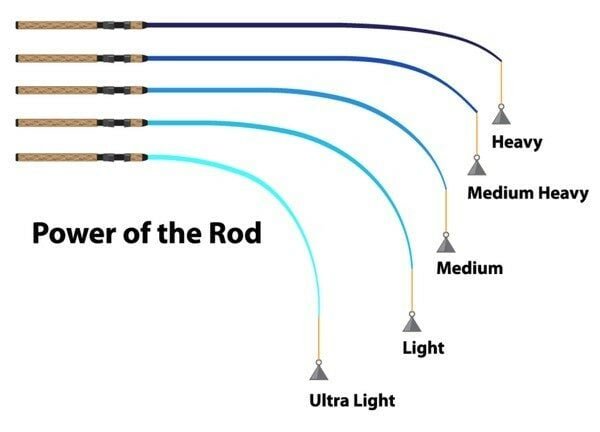
Rod power means how much force a rod needs to bend. Rod action means where the rod bends. A fast-action rod bends near the tip and gives quick hook control. A moderate-action rod bends farther down and can help keep treble-hooked fish attached.
Line test means the rated strength of the line in pounds. It is not a guarantee that the line will always break at that number. Knots, rocks, heat, drag settings, and wear all affect real strength.
| Target and setting | Rod choice | Main line and leader |
|---|---|---|
| Trout in a small river | 6–7 foot light or ultralight spinning rod | 4–8 pound mono or braid with 4–8 pound fluorocarbon leader |
| Bass near cover | 6’8”–7’3” medium-heavy fast rod | 20–30 pound braid with 10–17 pound fluorocarbon leader |
| Walleye in current | 6’8”–7’3” medium fast spinning rod | 10–15 pound braid with 8–12 pound fluorocarbon leader |
| Catfish in deep water | 7–8 foot medium-heavy or heavy rod | 20–40 pound mono or braid with a strong leader |
| Carp from shore | 9–12 foot medium or medium-heavy rod | 15–30 pound mono or braid with a matching leader |
These ranges are starting points, not strict rules. A small river trout setup may be too light for heavy wood. A catfish rig may be too stiff for small panfish. Match your gear to the largest fish you may hook and the cover you must pull it away from.
Choose spinning reels, baitcasters, or spincast combos
A spinning reel is the easiest choice for most river anglers. The spool stays still while the bail guides line out. This makes light lures, live bait, and bobbers easy to cast.
A baitcaster offers strong control and direct contact with the lure. It can be excellent for bass, pike, and heavy jigs. It can also create backlash, which is a tangled loop of line caused by a spool spinning faster than the lure. Beginners should practice with heavier lures in an open area.
A spincast combo is simple and enclosed. It suits young anglers, casual users, and gift buyers who want low setup stress. It may not handle repeated heavy pressure or large fish as well as a quality spinning reel.
Set the drag before the first cast
Drag is the reel system that lets line leave under steady pressure. It protects light line and reduces sudden breaks. Set the drag so a firm pull makes the spool release line, but not so easily that a fish can run without resistance.
A common starting point is about one-quarter to one-third of the line’s rated strength. This is only a guide. Near sharp rocks or heavy wood, anglers may use more pressure, but they must check knots and line often.
Do not lock the drag and rely only on the reel. Keep the rod angle moderate. A rod held high can put too much stress on the blank, especially when a fish surges close to the boat.

Select bait, lures, hooks, and terminal tackle
Terminal tackle means the small items at the end of your line. It includes hooks, sinkers, swivels, bobbers, snaps, beads, and leaders. These parts look simple, but they control how your bait moves and how well you land a fish.
Live bait is often a strong choice for beginners and for species such as catfish, trout, bass, walleye, and carp. Use bait that is legal in your area. Minnows, nightcrawlers, crawfish, shad, and cut bait all work in some rivers, but rules vary.
Lures let you cover water. Soft plastics, jigs, crankbaits, spinnerbaits, spoons, and topwater baits each imitate a different food source. A jig is a weighted hook with a body or skirt. It works near the bottom, around cover, and in current.
Choose a presentation that reaches fish
Big river fish often hold near the bottom or just above it. Your bait should reach that zone without dragging hard across rocks. Add only enough weight to maintain contact.
For a live-bait rig, use a sliding sinker above a swivel and leader. This lets a fish move with less immediate resistance. For a bobber rig, set the depth so the bait travels above the bottom or beside cover.
For bass and walleye, cast upstream or across the current. Let the lure sweep through the seam. Keep the rod tip low when you need the lure to stay deep.
For catfish, place bait near a deep hole, outside bend, or current edge. Cut bait gives off scent. Nightcrawlers can work well when the river has moderate current and many species are present.
Use hook size and leader strength with care
Hook size does not work like a simple ruler. In common sizing, a size 1 hook is larger than a size 8 hook. Circle hooks are often useful with bait for species such as catfish because they can catch in the corner of the mouth when used correctly.
Do not “set” a circle hook with a hard snap. Let the line tighten, then lift the rod smoothly. Always check local rules before using circle hooks or any specific hook style.
Fluorocarbon leader is less visible underwater and resists abrasion. Monofilament is flexible and floats more than fluorocarbon. Braided line is thin and strong, but it has little stretch and can cut into wood or rocks under pressure.
| Tackle type | Best use | Main limit |
|---|---|---|
| Monofilament | Beginners, bobbers, topwater, low cost | More stretch and memory |
| Braided line | Long casts, heavy cover, deep water | Visible and can cut hands if handled poorly |
| Fluorocarbon leader | Clear water and abrasion resistance | Stiffer and often more costly |
| Live bait | Broad species range and simple presentations | Must stay fresh and legal |
| Soft plastics | Bass, walleye, pike, and mixed species | Can tear around sharp cover |
| Crankbaits | Covering current seams and depth changes | Treble hooks snag easily |
The best choice depends on water clarity, cover, species, and skill. Beginners often do well with a medium spinning rod, 10–15 pound braid, and a 10–12 pound fluorocarbon leader. Kids may find a spincast combo and simple bobber rig easier to manage.

Use a step-by-step river fishing plan
A plan keeps you from rushing. Large fish may be close, but a poor approach can push them away before your first cast.
1. Check rules, weather, and access
Carry the proper fishing license. Review size limits, bag limits, closed seasons, bait rules, tackle restrictions, and access rules. Some rivers restrict lead sinkers, treble hooks, live bait, or barbed hooks.
Check rain and river flow before you leave. Fast, rising water can become dangerous within minutes. Wear a U.S. Coast Guard–approved PFD in a boat or kayak. Tell someone where you will fish and when you plan to return.
2. Approach the bank or boat quietly
Walk slowly. Keep low near shallow water. Avoid dragging a tackle box across rocks or dropping pliers on the deck. On a kayak, use short paddle strokes before you reach the target area.
Keep the sun at your back when possible, but do not let your shadow cross the water. Large fish in clear rivers may notice movement above them. Wear polarized sunglasses to protect your eyes and spot hazards below the surface.
3. Start with the easiest fish-holding water
Fish the near bank before making long casts. A large fish may sit under the bank, beside your feet, or in a small pocket behind a rock. Cast to the closest target first so you do not spook fish that are nearby.
Then work the current seam, depth change, and cover. Make several casts from different angles. A lure may pass correctly on one cast and rush above the fish on the next.
4. Cover the water from shallow to deep
Begin near the top if baitfish are active or insects are falling. Move to the middle depth next. Finish near the bottom with a jig, sinker rig, or weighted soft plastic.
Change one factor at a time. Try a slower retrieve before changing lures. Then adjust depth, color, weight, or leader length. If you change everything at once, you will not know what improved the presentation.
5. Set the hook with control
Wait until you feel steady pressure unless the situation calls for a fast hook-set. With soft plastics, a firm lift often works. With treble-hook lures, sweep the rod to the side instead of snapping it high.
Keep the line tight during the fight. Use the rod to guide the fish away from wood and rocks. Let the drag work during strong runs, then gain line when the fish turns.
6. Land the fish safely
Use a landing net for large fish, especially from a kayak or steep bank. A net reduces the need to swing a fish onto land. Wet your hands before touching a fish you plan to release.
Remove the hook with long-nose pliers. Keep the fish in the water as much as possible. Support its body, take a quick photo if needed, and release it facing into gentle current until it swims away.
7. Record what worked
Write down the river level, water clarity, time, weather, lure, depth, and location type. You do not need exact coordinates. A short note can reveal patterns over time.
Experienced anglers often improve because they remember conditions, not just fish size. A small notebook can teach more than buying another box of lures.
Fish at the right time and in the right season
Time of day matters because light changes fish behavior. Dawn and dusk often provide low light and cooler water. Cloud cover can extend the feeding window. Overcast conditions may let fish move into shallower water.
Season also affects depth and food. Spring can bring rising water, spawning behavior, and strong insect activity. Summer may push fish toward deep shade, cool tributaries, and oxygen-rich current. Fall often brings feeding before winter, while cold water can slow movement.
| Season | River pattern | Strong approach |
|---|---|---|
| Spring | Rising flows, cool water, new food sources | Slow jigs, live bait, creek mouths |
| Summer | Warm water, shade, deeper holding areas | Early and late fishing, deep rigs, topwater |
| Fall | Bait movement and cooler water | Crankbaits, jigs, swimbaits, live bait |
| Winter | Slow fish and limited feeding windows | Small baits, deep holes, slow presentation |
Trout often favor cool, oxygen-rich water. Bass may use current breaks, shade, wood, and eddies. Walleye often feed near bottom during low light. Catfish commonly use deep holes, bends, and calmer water beside stronger flow.
These are broad patterns. Local forage and river shape can change everything. A local tackle shop, guide, or fisheries report can help you identify the best areas without guessing.

Adjust your approach for shore, boat, kayak, or wading
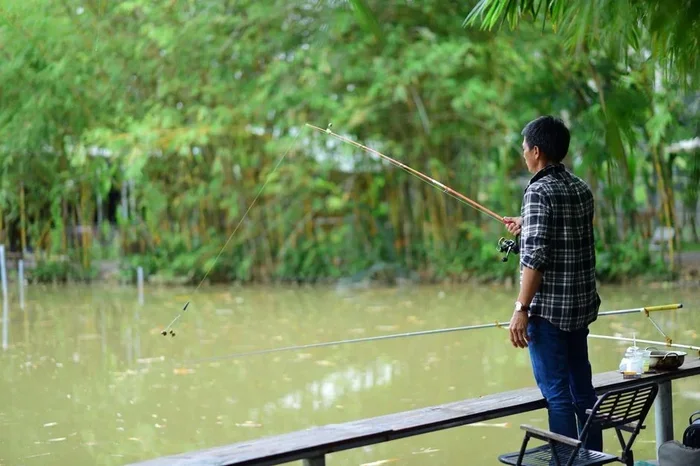
Shore fishing limits your casting angles, but it can place you near undercut banks, creek mouths, and deep bends. Walk slowly and fish each pocket before moving. Pack only the tackle you need in a small tackle box or sling bag.
Boat fishing gives you more angles and access to the main channel. A fish finder can show depth, ledges, and holes, but learn to read the water too. Electronics show structure; they do not always identify a catchable fish.
Kayak fishing offers quiet access, but current and weather raise the risk. Use a stable kayak rated for your body weight, gear, and water conditions. Keep hooks, knives, and pliers secured. Wear your PFD at all times.
Wading can be productive for trout, smallmouth bass, and other river fish. Use a wading belt with chest waders, felt or rubber soles allowed by local rules, and a staff in strong current. Never wade above your comfort level.
⚠️ Safety Warning: Never cross a river because a fish spot looks promising. Check flow, depth, footing, and weather first. Wear a PFD in a boat or kayak, avoid wading alone, and take a boating or river-safety course if you are new to moving water.

Improve your casting and presentation
Accuracy often beats distance. A lure placed one foot from a log may outperform a lure cast far past it. Practice sidearm, underhand, and short roll casts so you can reach tight river targets.
Cast upstream when you want a natural drift. The current carries the bait toward fish. Cast across the flow when you want a swing. Cast downstream only when the current and lure design support that presentation.
Keep your retrieve slow enough to stay near the target. Many anglers retrieve too fast in rivers because the current already moves the lure. Let the water add action before you add speed.
Use a natural drift
A natural drift means your bait moves at about the same speed as nearby food. Mend the line when needed. Mending means lifting or moving line off the water so current does not pull your bait away from the intended path.
Trout and walleye often respond to a clean drift near the bottom. Catfish may respond to bait held in a stable area. Bass may strike a lure that crosses from fast water into an eddy.
Work lures through likely lanes
With a jig, cast upstream and let it touch bottom. Lift it with short hops. Watch for a light tap or a sudden feeling of weight.
With a crankbait, choose a diving depth that reaches the fish without constant snagging. Bounce the lure off rock when possible, then pause after contact.
With a spinnerbait, cast beyond the cover and retrieve along its edge. In dirty water, vibration may help fish locate it. In clear water, use a smaller profile and natural color.
With live bait, keep the hook point clear. A bait that spins or drags unnaturally can look wrong. Check your bait after each cast and replace damaged bait.

Avoid the mistakes that cost big fish
Many lost fish result from small errors. Old line, weak knots, dull hooks, and rushed netting can undo a full day of good work.
| Common mistake | What happens | Better fix |
|---|---|---|
| Using old or damaged line | Breaks near rocks or knots | Replace worn sections and test knots |
| Fishing only the middle | Misses holding water near banks | Check edges, seams, holes, and cover |
| Setting drag too tight | Line or hook fails during a run | Set drag before casting |
| Retrieving too fast | Lure leaves the strike zone | Slow down and match current |
| Holding fish with dry hands | Damages the protective slime coat | Wet hands before handling |
| Carrying too many lures | Slows movement and adds clutter | Pack a small set for depth and cover |
Do not use tackle that is too light just to make a fish feel stronger. Light gear has a place, especially for trout and panfish, but heavy cover demands more control.
Do not strike every bump as a fish. Rocks and wood can feel like bites. Learn the difference by keeping contact and watching how the line moves.
Do not chase one spot for hours without a clue. If the water is right but you see no bait, no current break, and no sign of life, move. Big fish are worth searching for, but empty water is still empty water.

Maintain your gear before and after each trip
River water carries sand, silt, and grit. These particles can damage reel gears and guide inserts. Rinse freshwater gear with clean water, dry it fully, and loosen the drag before storage.
Saltwater anglers need extra care, even when fishing near a tidal river. Saltwater-rated reels often use better seals and corrosion-resistant parts, but no reel is free from care needs. Rinse the outside with low-pressure fresh water and follow the maker’s service instructions.
Check your line by running it between your fingers. Replace it if you find rough spots, flat sections, cuts, or severe memory. Inspect hooks for rust and points. A hook that no longer catches on your thumbnail needs attention.
| Gear item | Check after fishing | Replace or service when |
|---|---|---|
| Main line | Nicks, cuts, fuzz, knots | Damage reaches beyond a short retie |
| Leader | Abrasion and weak knots | It feels rough or cloudy |
| Hooks | Rust, bent points, dull tips | Point rolls or hook bends |
| Spinning reel | Sand, grit, loose handle | Grinding or poor drag appears |
| Baitcaster | Backlash marks and spool play | Bearings grind or spool wobbles |
| Landing net | Torn mesh and loose frame | Fish can pass through damage |
Keep hooks covered in a dry tackle box. Store soft plastics away from lures made of materials that can melt them. Remove wet clothing and dry waders fully to reduce odor, mildew, and material damage.
Choose a practical setup by angler type
The best setup depends on skill, target fish, travel distance, and budget. A new angler should value ease of use. An experienced angler may value casting control, drag smoothness, and a narrow technique range. A gift buyer should choose a complete, simple setup rather than a box of advanced parts.
Best starting setup for beginners
A 6’6” to 7-foot medium-light or medium spinning rod with a fast or moderate-fast action is a flexible choice. Pair it with a 2000–3000 size spinning reel, 8–12 pound monofilament, and a small selection of hooks, sinkers, bobbers, jigs, and soft plastics.
This setup suits smallmouth bass, trout, walleye, panfish, and modest catfish. It is also easier to learn than a baitcaster. Beginners who fish around heavy wood should move to 15–20 pound braid with a suitable leader.
Best setup for kids
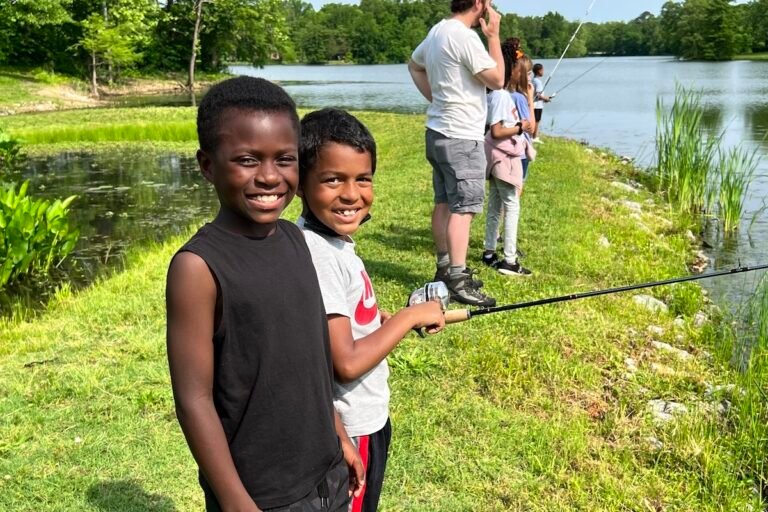
A spincast combo with a 5’6” to 6’6” rod is often easier for a child. Choose a light or medium-light power for panfish and small bass. A short rod is easier to control from shore, but a child may outgrow it sooner.
Use barbless hooks when local rules allow and when an adult is teaching close to shore. Keep pliers, hooks, and bait knives under adult control. A child should fish while wearing a properly fitted PFD near a boat, dock, or moving water.
👪 Parent or Gift-Buyer Note: Buy for the water the angler will actually visit. A simple spinning or spincast combo is usually a better gift than a heavy catfish rod if the person fishes small streams and local ponds.
Best setup for experienced river anglers
Experienced anglers may build separate outfits. A medium-heavy baitcaster with 30–40 pound braid suits bass around wood. A medium spinning setup with 10–15 pound braid can handle walleye and mixed river species. A heavier 7–8 foot rod can help control catfish near deep cover.
A fly rod can be excellent for trout, smallmouth bass, and carp when the river offers room for a back cast. A 5- or 6-weight fly rod handles many freshwater uses. It requires more practice than spinning gear, especially in tight banks and heavy wind.
Telescopic rods help travelers, but compact joints can wear or collect grit. Inspect each section before use. Ice fishing rods are designed for short presentations and should not replace a normal river rod for casting distance or heavy fish.

Know what the trip may cost
You can catch big river fish on a modest setup. Current pricing ranges from low-cost spincast combos to high-end rods, reels, electronics, and specialty tackle. Prices change by brand, materials, warranty, and current product listings.
| Budget level | Typical items | Best fit |
|---|---|---|
| Entry level | Spincast or basic spinning combo, mono, simple terminal tackle | Kids, beginners, casual shore fishing |
| Mid-range | Better spinning reel, braid, leaders, net, pliers | Regular river anglers and gift buyers |
| Advanced | Specialty rods, baitcasters, premium drag, fish finder | Experienced anglers targeting heavy cover or large fish |
Spend first on line, hooks, a landing net, and safe clothing. A costly lure does not fix a poor knot or the wrong location. Buy gear that fits the species and water you fish most.
Used gear can offer value, but inspect rods for cracks and reels for grinding. Ask how the gear was stored. Saltwater exposure, sand, and hard drops can shorten reel life even when the outside looks clean.

Follow fishing laws and protect river fish
A fishing license supports fisheries work and is required in most U.S. states. Rules differ by state, river, species, and section of water. Check the current rules from your state wildlife agency before each trip.
Review limits on bass, trout, walleye, catfish, carp, and other species. Some waters have special size limits, slot limits, closed seasons, bait rules, or artificial-lure-only sections. Lead tackle restrictions may also apply.
📜 Check Local Regulations: Confirm license needs, size and bag limits, closed seasons, hook rules, bait rules, and access laws with the relevant state or local wildlife agency. Printed rules and online pages can change, so use the current version.
Catch and release helps protect large breeding fish, but it must be done well. Wet your hands, avoid squeezing the body, support the fish, and limit air time. Cut the line near a deeply swallowed hook when removal may cause more harm, unless local guidance says otherwise.
Never release aquarium fish, unused live bait, or nonnative species into a river. Dispose of old fishing line in a recycling bin or a secure trash container. Loose line can injure birds, turtles, fish, and pets.
🌿 Conservation Note: Keep only the fish you will use and follow legal harvest limits. A large fish can be a valuable part of the river’s future, not just a photo from today.
Know when to ask a local tackle shop or guide
Local knowledge can save time and prevent unsafe choices. A good tackle shop can explain current river levels, local bait, hook rules, access points, and common target species. Ask what depth fish use now, not only what worked months ago.
A guide may be helpful when the river is large, fast, remote, or hard to read. This is especially true for kayak fishing, wading, winter trips, and travel to unfamiliar water. Choose a guide who puts safety and local rules first.
Ask direct questions:
- What species are active right now?
- Is live bait legal on this section?
- Are there lead or barbless-hook rules?
- Which access points are public?
- How fast is the current?
- What line strength handles the local cover?
- Where should a beginner avoid wading?
- What fish should be released?
You do not need secret spots. You need useful patterns. Learning how a river works will help you find fish in many places.
FAQs about catching large river fish
Q: What is the best bait for big fish in a river?
A: The best bait depends on the species and local rules. Cut bait, live minnows, nightcrawlers, crawfish, and prepared baits can all work. Place bait near a deep hole, current seam, creek mouth, or cover. Keep it fresh and use a hook size that matches the bait.
Q: What rod power is best for large river fish?
A: Medium-heavy power is a useful starting point for bass, large walleye, and many catfish in cover. Medium power works for mixed species and open water. Heavy power suits very large catfish, pike, and strong current. Match rod power to fish size, cover, and line strength.
Q: Is braided line better than monofilament for river fishing?
A: Neither is always better. Braid gives long casts, high strength, and little stretch. Monofilament costs less, stretches more, and works well for beginners and bobber rigs. Many anglers use braid as main line with a fluorocarbon leader in clear water.
Q: How deep should I fish in a river?
A: Start where depth changes near food and current. Fish just above the bottom in deep holes, along ledges, and beside current seams. Adjust your sinker or lure weight until you contact the target zone without constant snags.
Q: What time is best for catching big river fish?
A: Dawn, dusk, cloudy days, and periods of stable water can be productive. Time matters less than location and presentation. In hot weather, fish may move to deep shade and cool current. In cold water, slow presentations near depth often make more sense.
Q: Can beginners use a baitcaster for river fishing?
A: Yes, but a spinning reel is easier to learn. A baitcaster offers control and power around heavy cover, but backlash can frustrate new anglers. Practice with a heavier lure, set spool tension correctly, and use moderate casting force.
Q: How do I land a big fish from shore?
A: Keep the fish in the water while you find a safe landing point. Use a long-handled net when possible. Do not drag a heavy fish over rocks, lift it by the line, or grab it by the gills. Move downstream only if the bank is stable and safe.
Q: Are fish finders useful in rivers?
A: Fish finders are useful from boats and kayaks because they show depth, bottom shape, and structure. They work best when you already understand current and fish behavior. They are less useful from shore unless paired with other mapping or depth tools.
Q: How long does river fishing line last?
A: Line life depends on use, sunlight, heat, storage, and abrasion. Inspect it before every trip. Replace monofilament when it becomes brittle or heavily coiled. Replace braid when it becomes frayed, faded with damage, or rough near the lure. Retie leaders often.
Q: Should I use a landing net for catch and release?
A: Yes. A rubber or coated-mesh net can reduce damage and shorten handling time. Avoid lifting a fish in a deep net for long periods. Wet the net first, support the fish, remove the hook, and return it quickly.
Q: What should I do if a fish swallows the hook?
A: Do not pull hard. If the hook is deep, cutting the line close to the mouth may cause less harm than digging for it. Follow local wildlife guidance and use barbless or circle hooks where suitable and legal.
Q: Can I use an ice fishing rod in a river?
A: Ice fishing rods are made for short, vertical presentations. They are not a good choice for long casts, strong current, or heavy river fish. Use a normal spinning, casting, or fly rod that matches the water and species.
Final advice for finding and landing big river fish
Start with the river, not the lure. Find depth beside current, cover beside food, and quiet water beside fast flow. Then use a simple setup that lets you reach that zone and control the fish.
For most beginners, a medium spinning combo, fresh 8–12 pound line, a fluorocarbon leader, a few jigs, live-bait hooks, sinkers, and a landing net are enough to learn. Experienced anglers can add baitcasters, heavier braid, fish finders, fly rods, and specialty lures as their river skills grow.
Fish slowly, move quietly, check your knots, and change one variable at a time. Respect the current, follow local regulations, and handle released fish with care. The biggest improvement usually comes from understanding where a fish can rest and feed—not from buying one more lure.